-
-
01-title.jpg
-
02-problem.jpg
-
03-act1-delivery.jpg
-
04-act2-door-24deg.jpg
-
05-act3-astar-search.jpg
-
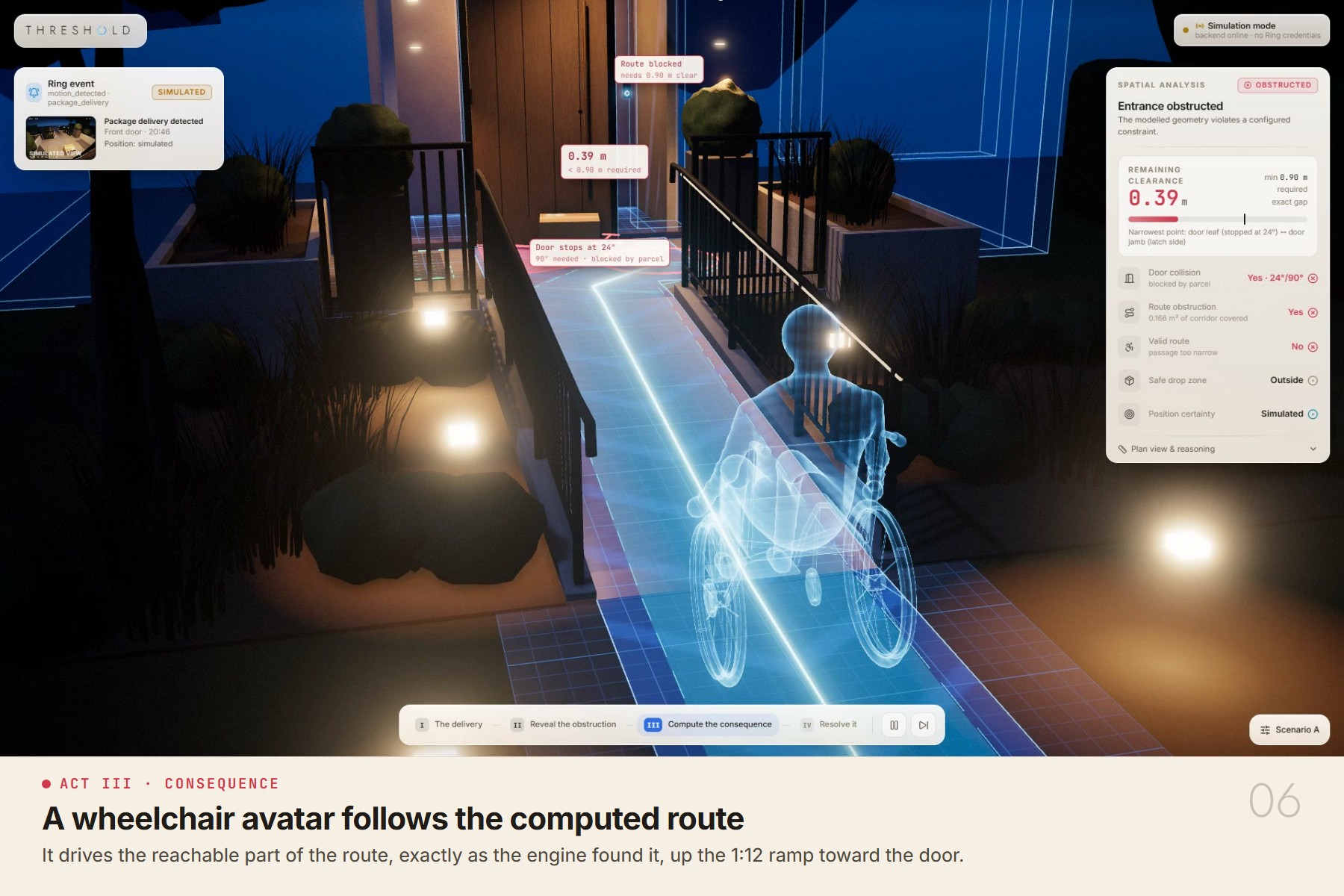
06-act3-avatar-route.jpg
-
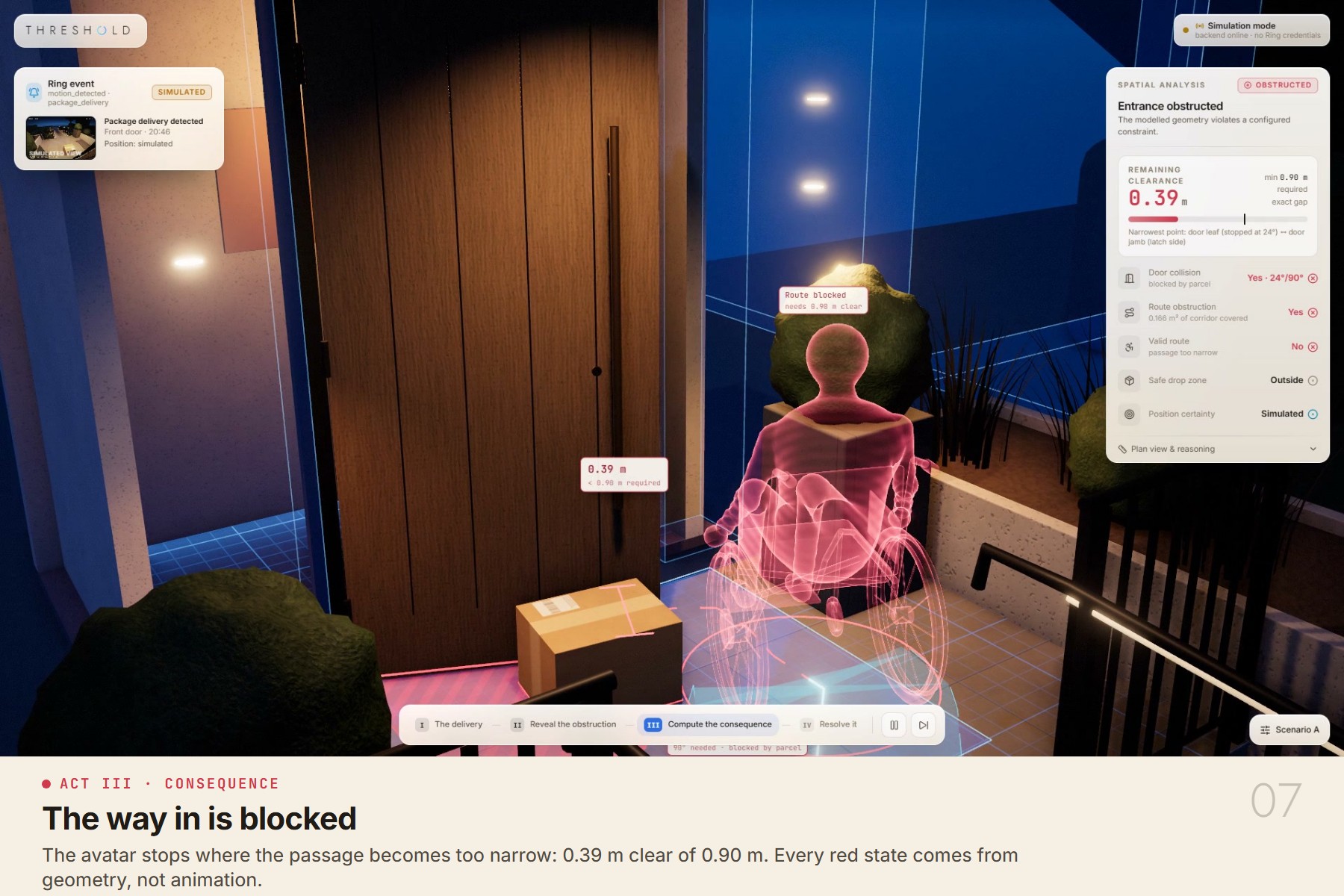
07-act3-blocked.jpg
-
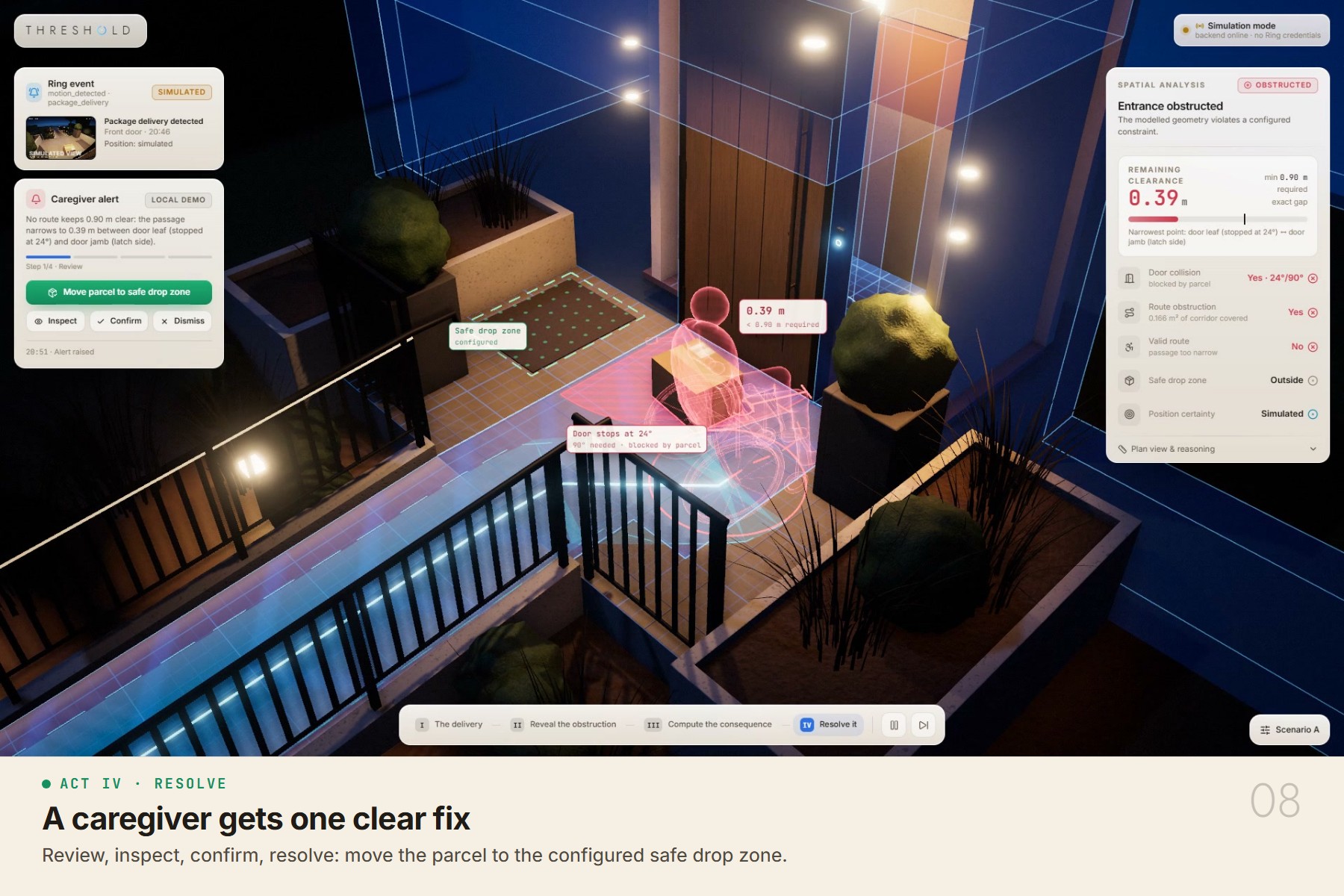
08-act4-caregiver-fix.jpg
-
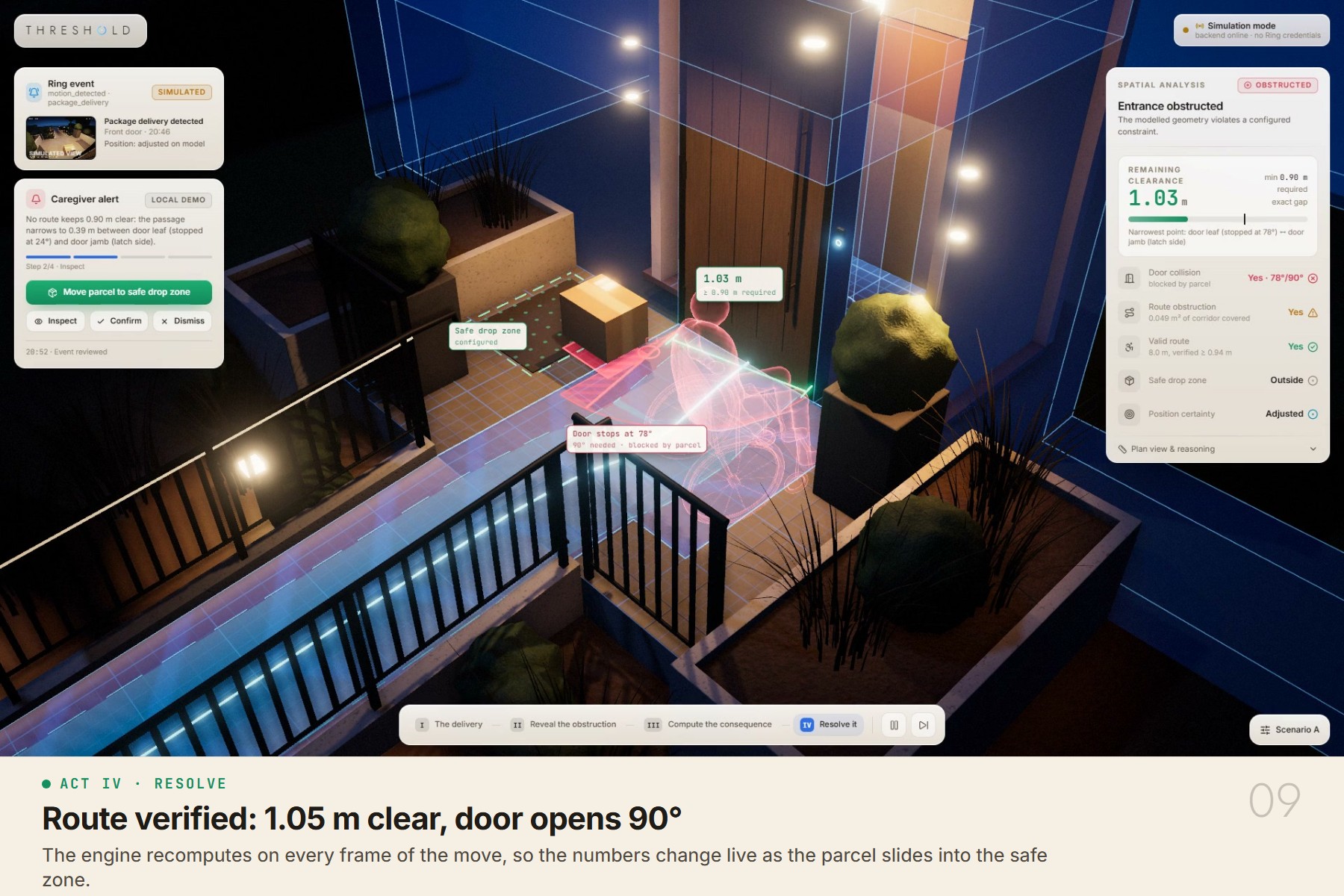
09-act4-route-verified.jpg
-
10-act4-way-in-open.jpg
-
11-explore-drag.jpg
-
12-explore-plan-view.jpg
-
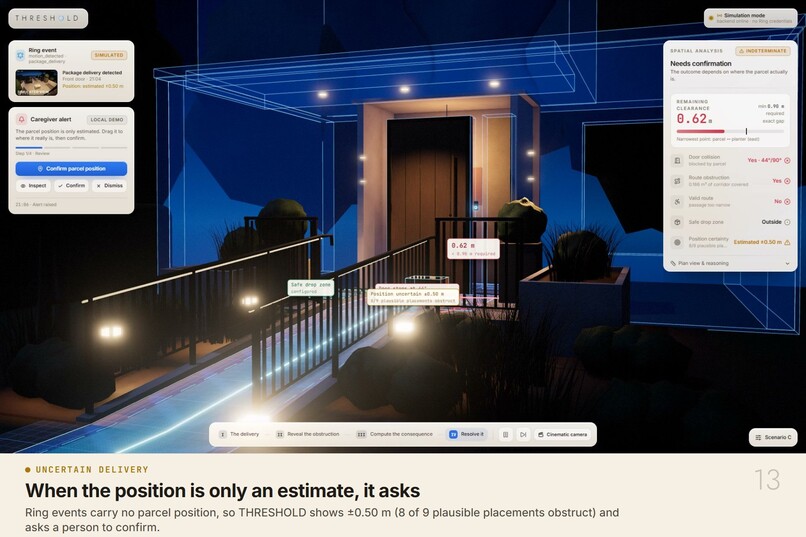
13-uncertain-delivery.jpg
-
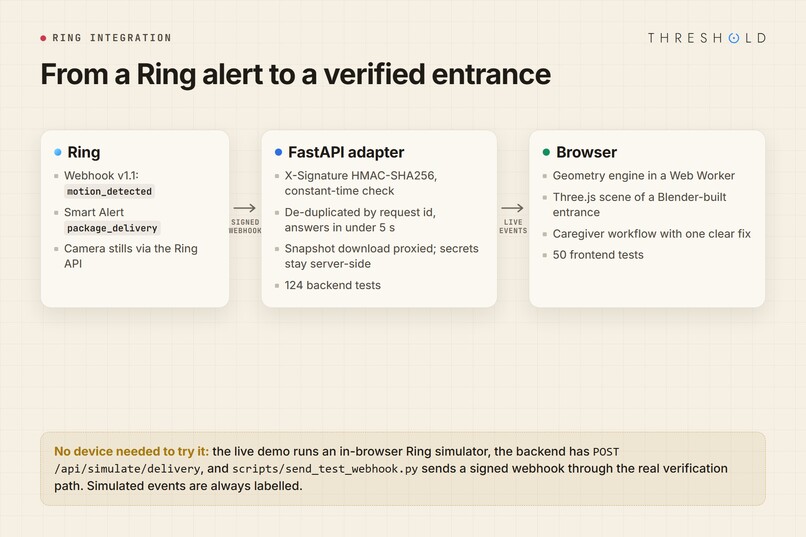
14-ring-integration.jpg
-
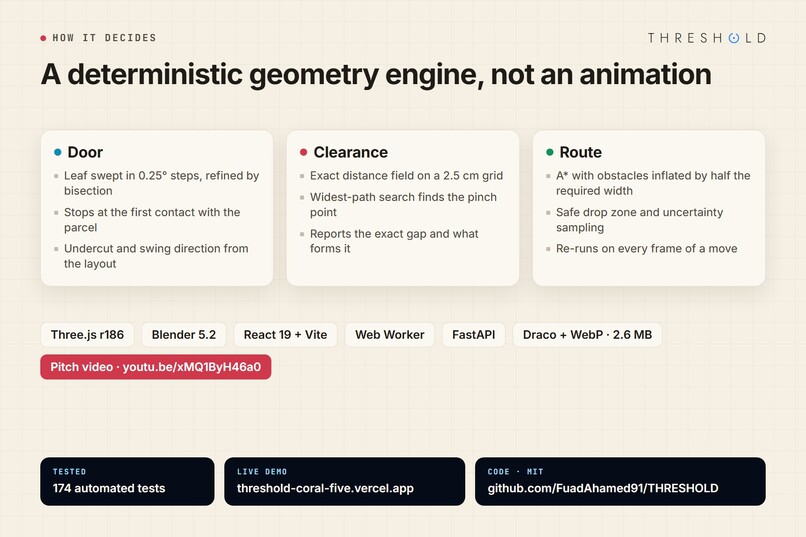
15-geometry-engine.jpg
Inspiration
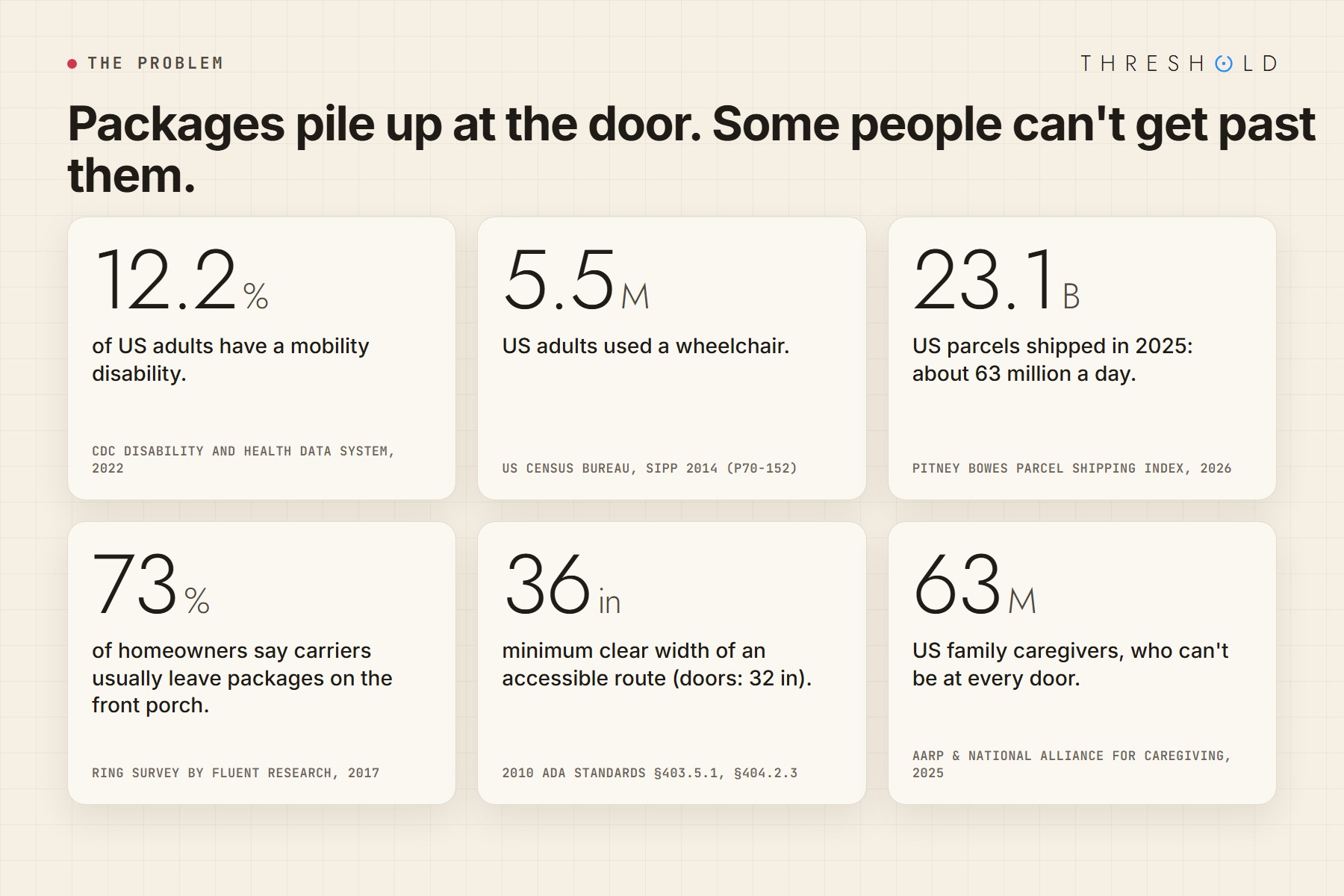
A delivery notification tells you when a package arrives, but not whether it blocks someone's only accessible entrance. For a wheelchair user, a misplaced package can prevent a door from opening or make a ramp unusable.
We built THRESHOLD to turn a simple doorbell event into a meaningful accessibility check.
What it does
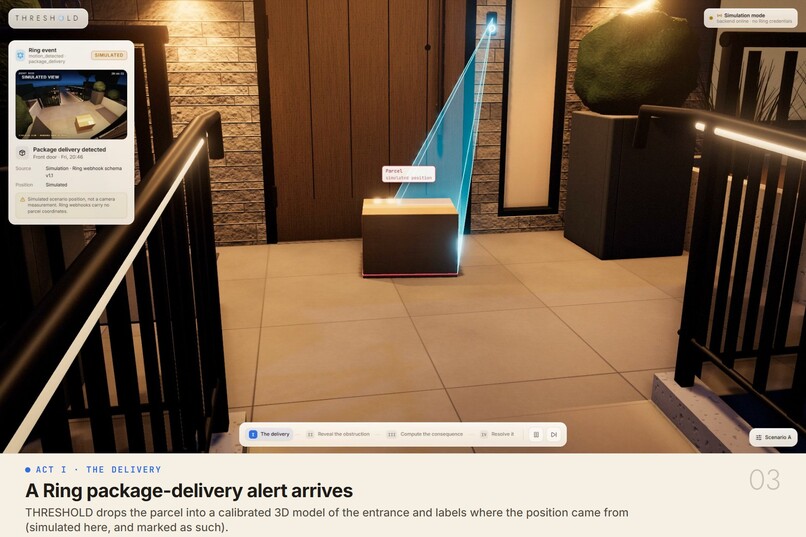
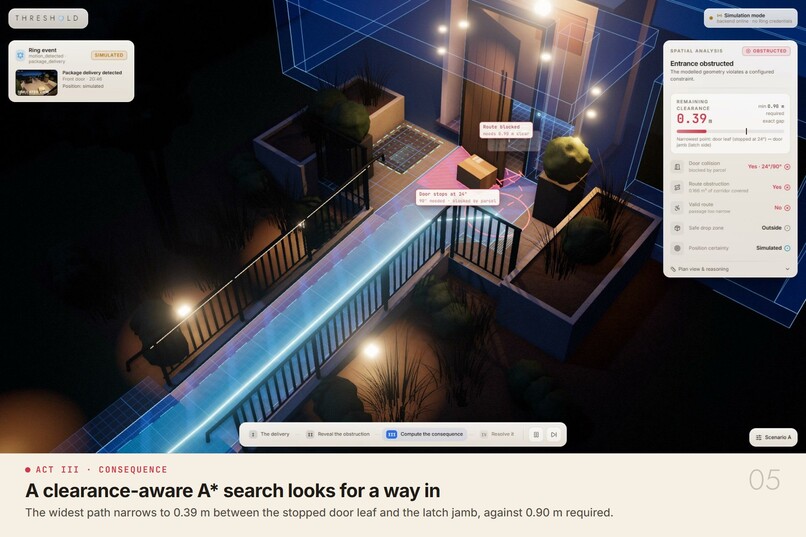
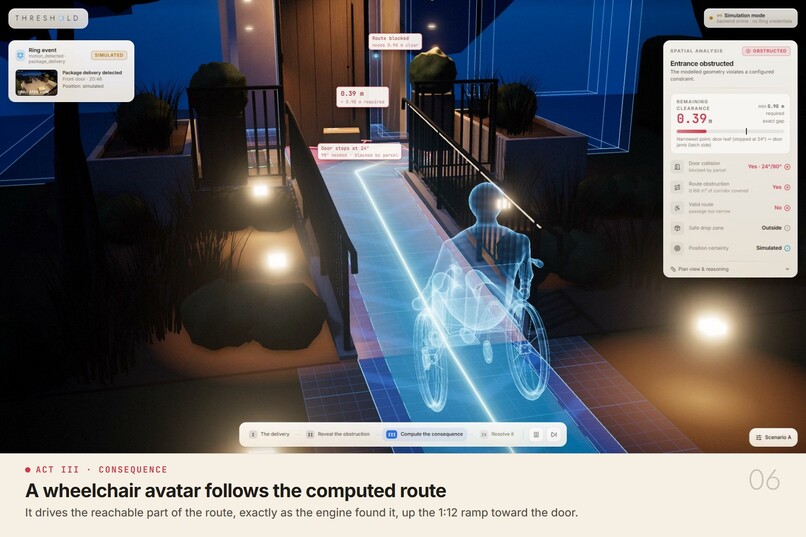
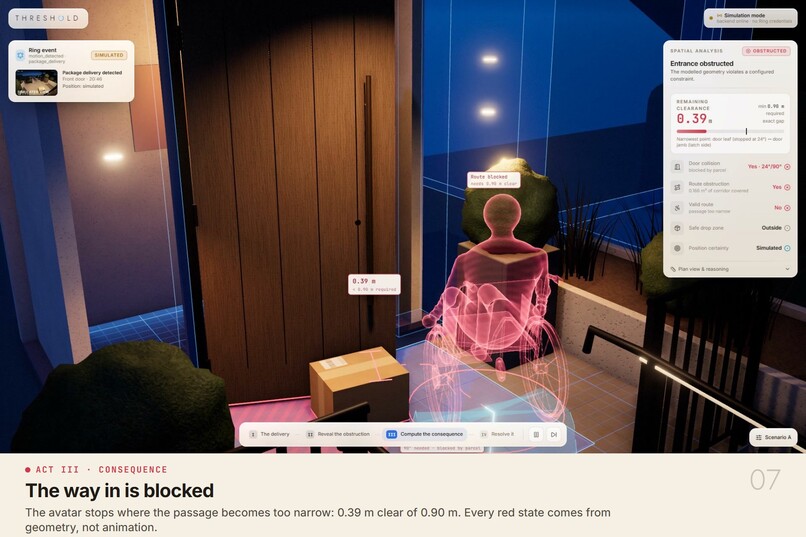
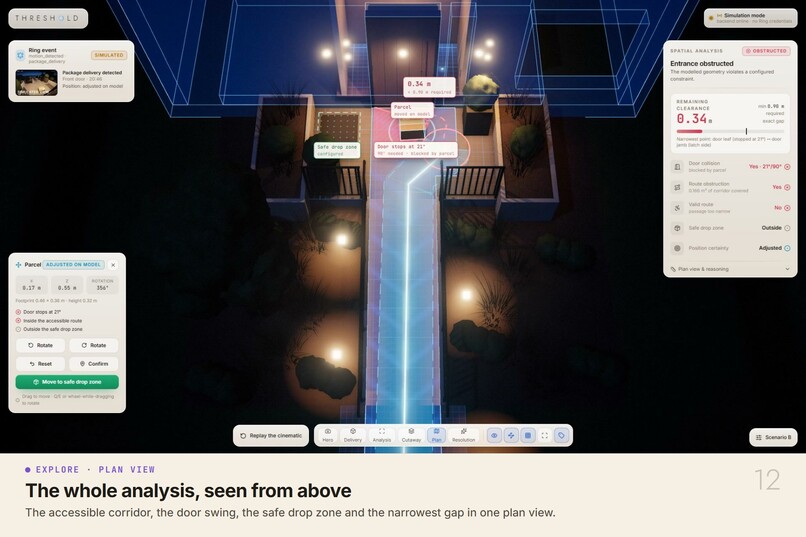
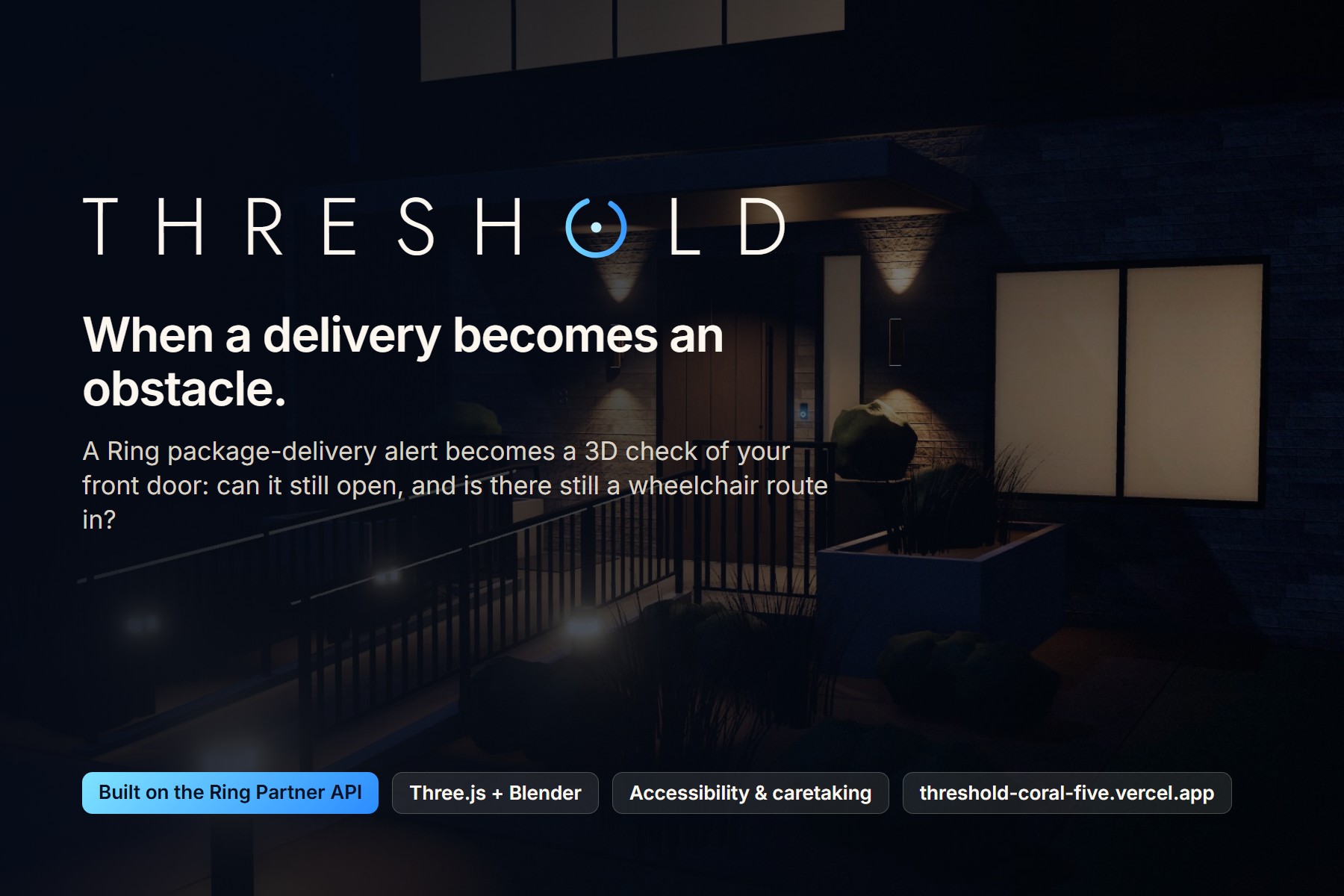
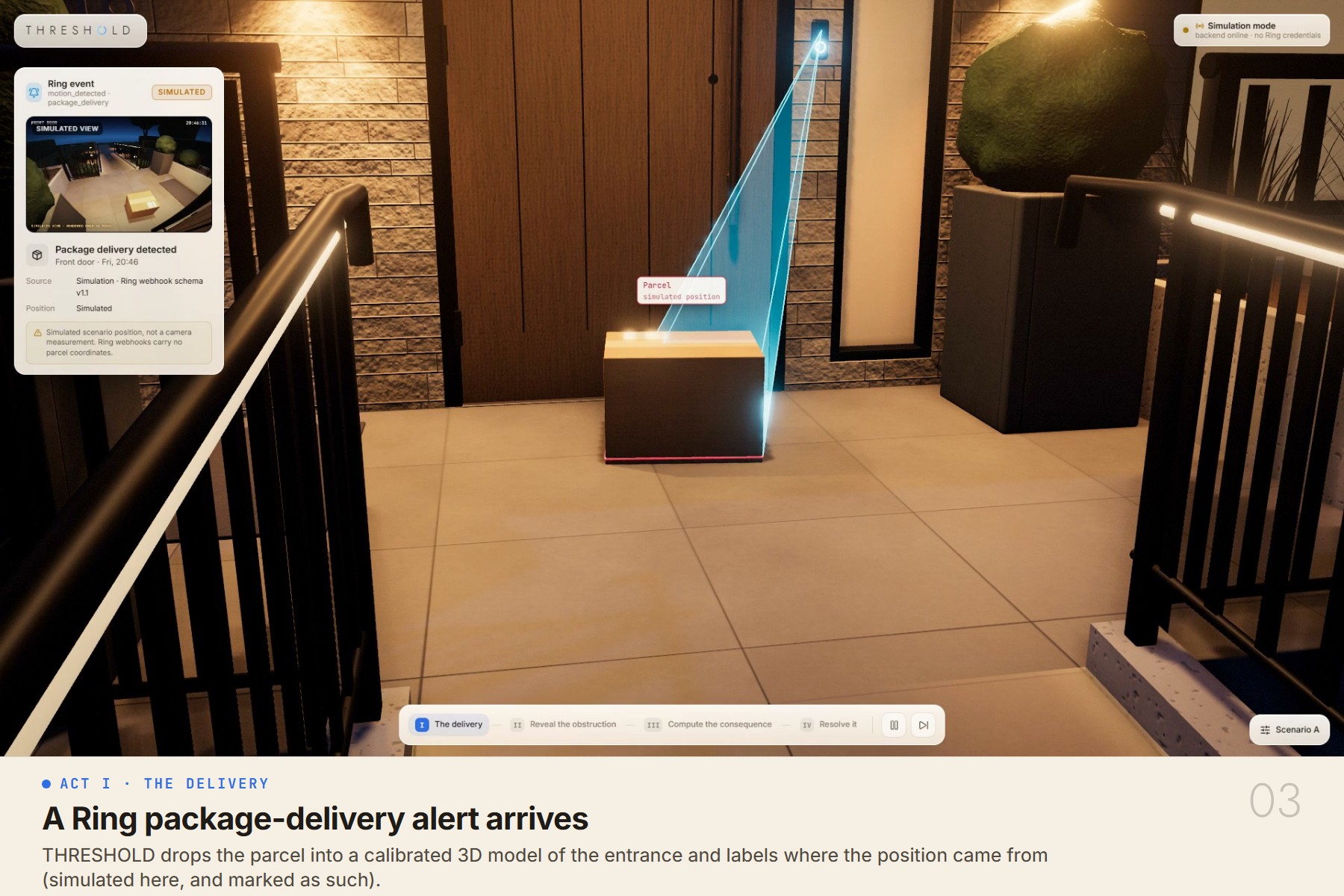
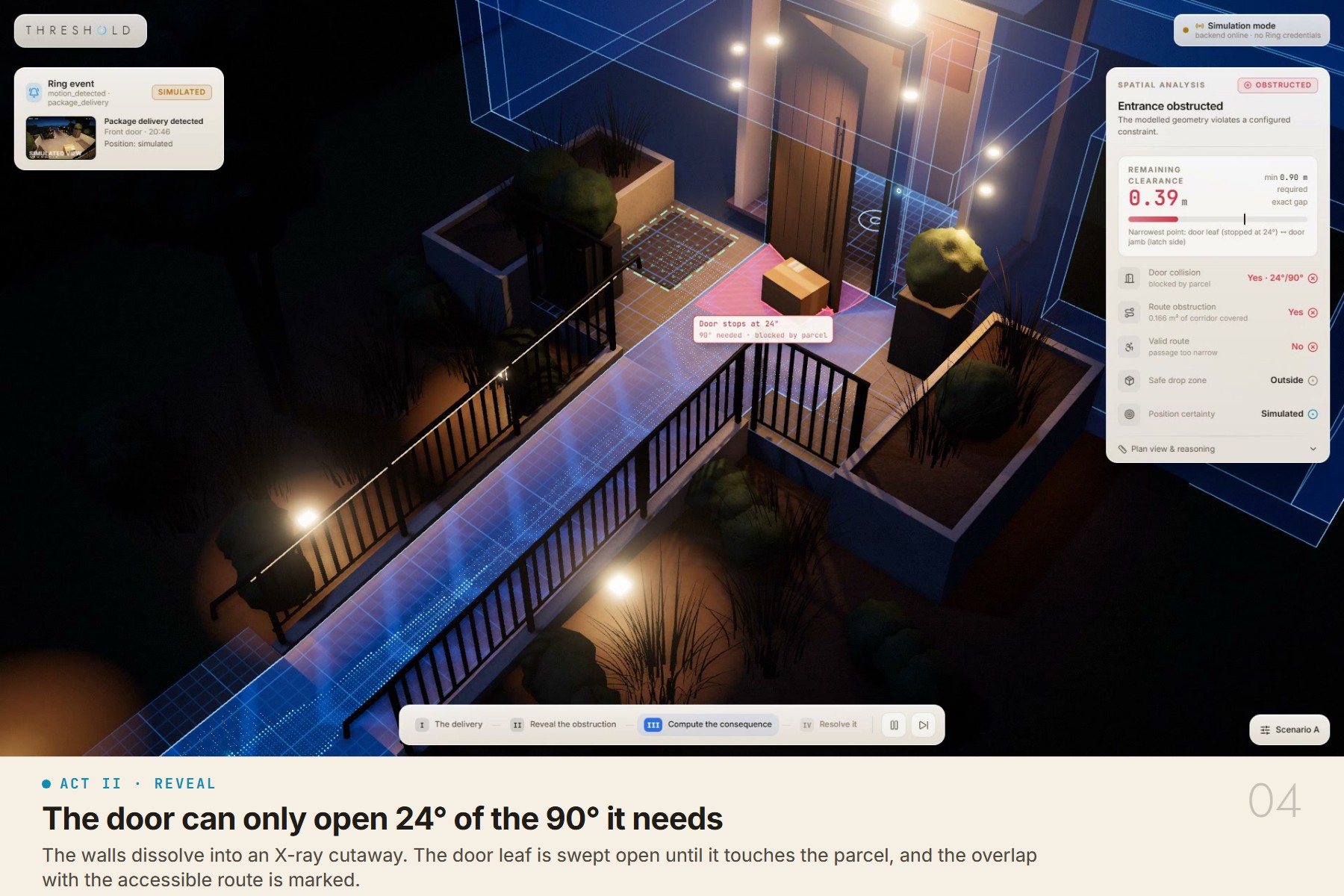
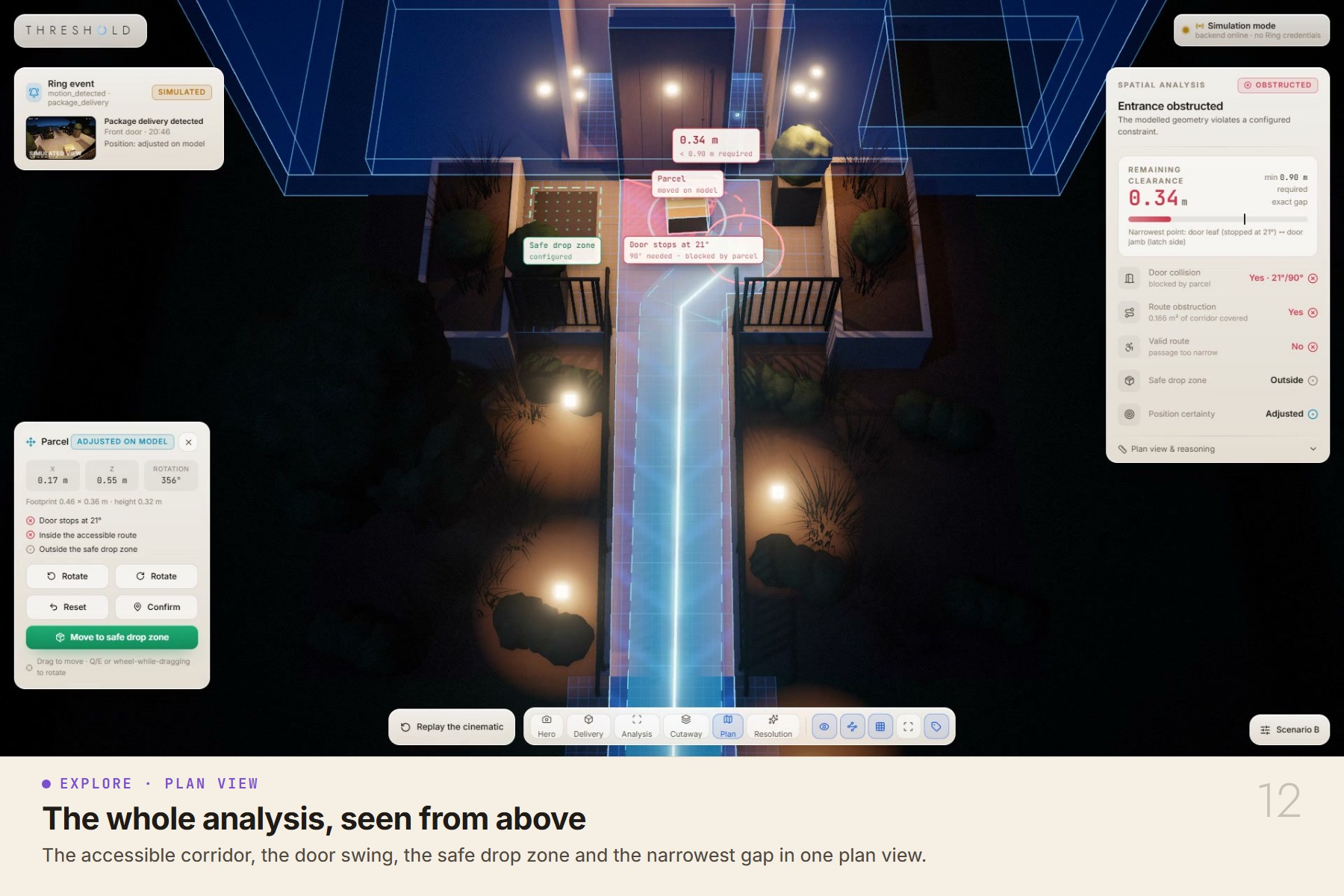
THRESHOLD transforms Ring package delivery events into an interactive 3D model of a home's entrance. It checks door movement, package overlap, available clearance, and whether a wheelchair-accessible route remains open.
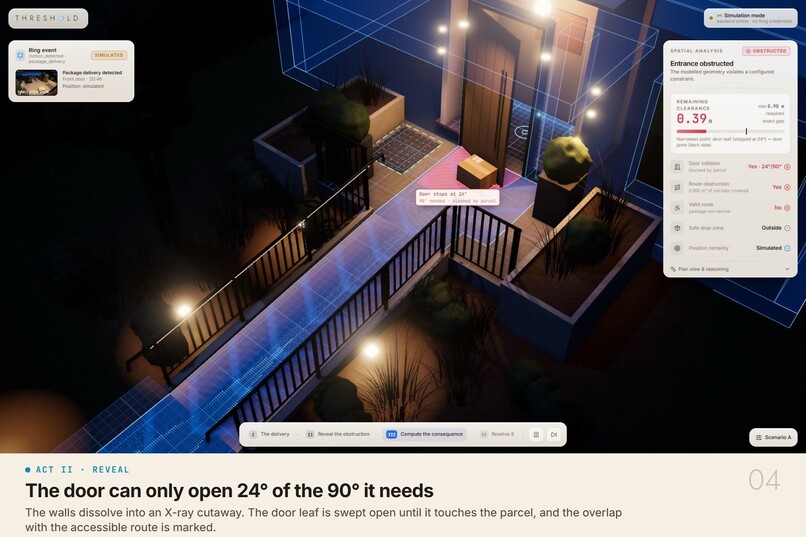
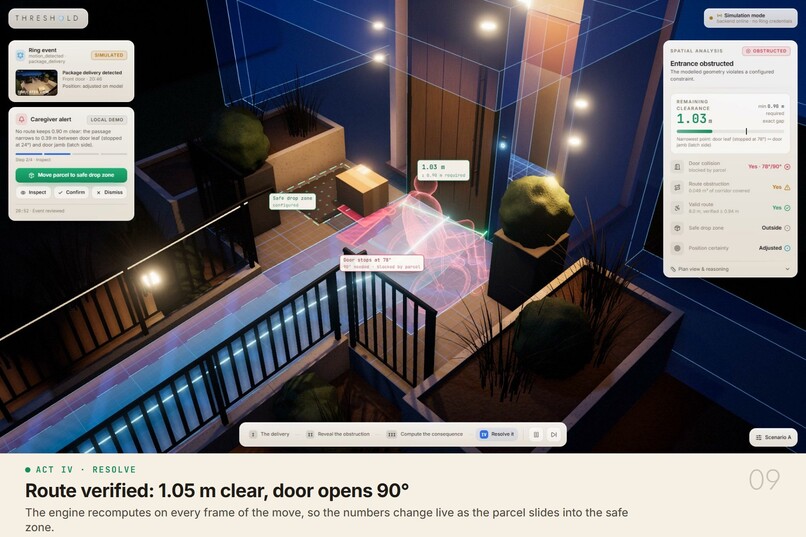
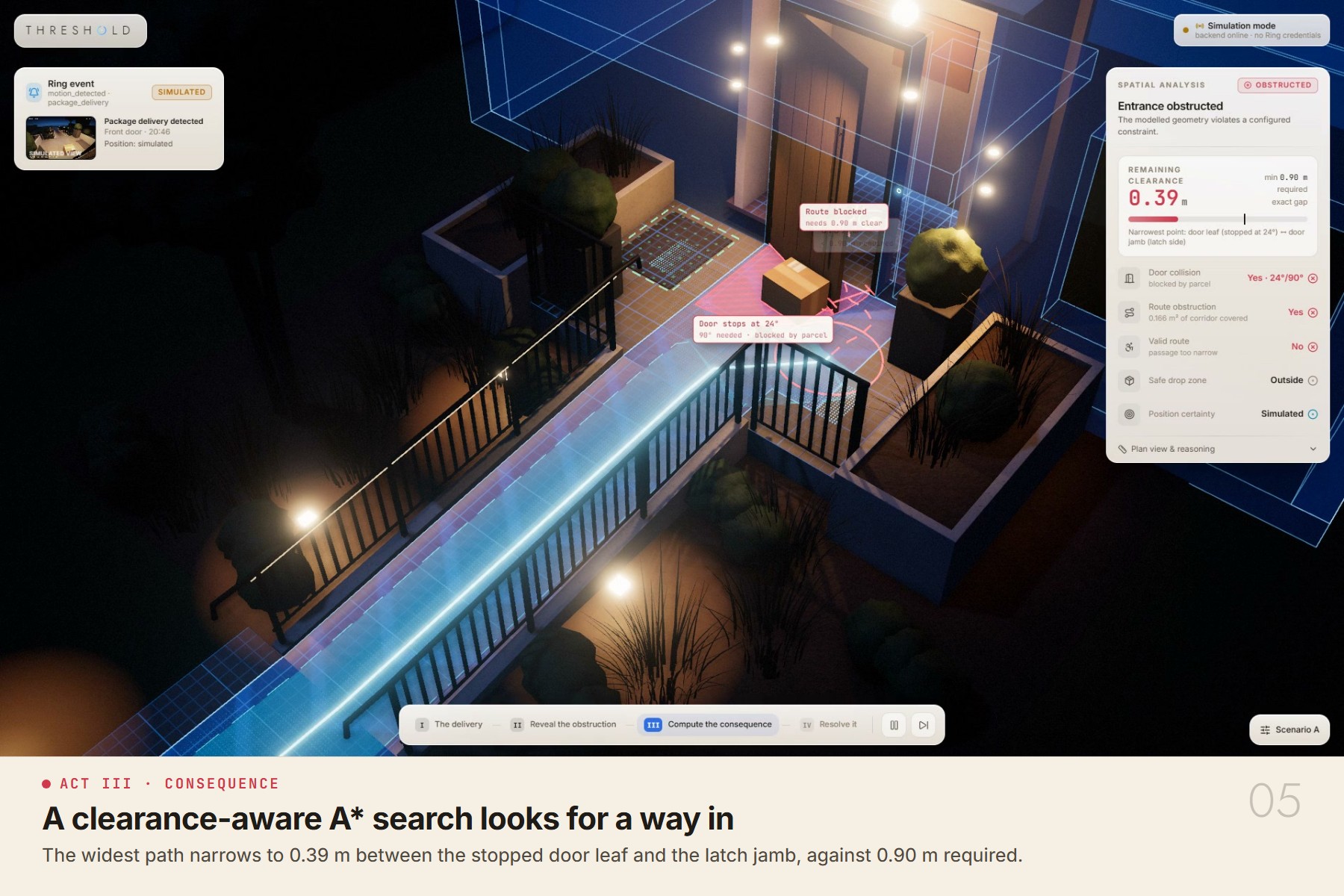
Our demonstration shows a package stopping a door at 24°, leaving only 0.39 m of clearance against a configured requirement of 0.90 m.
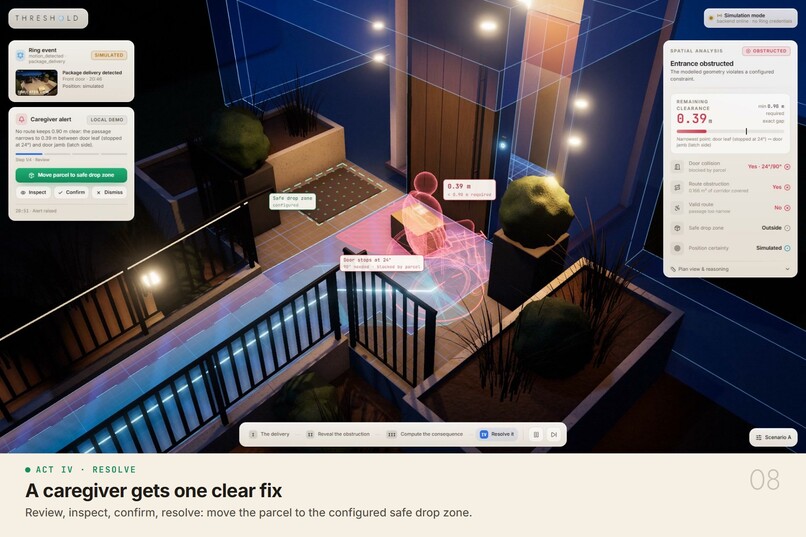
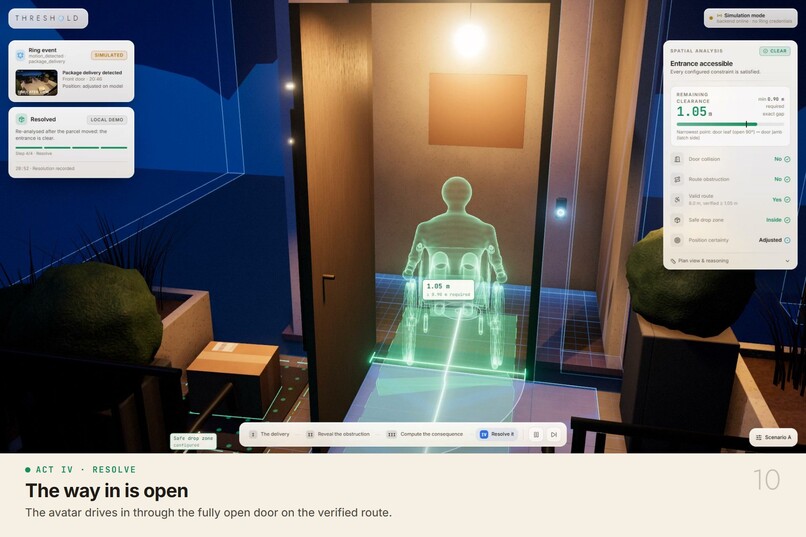
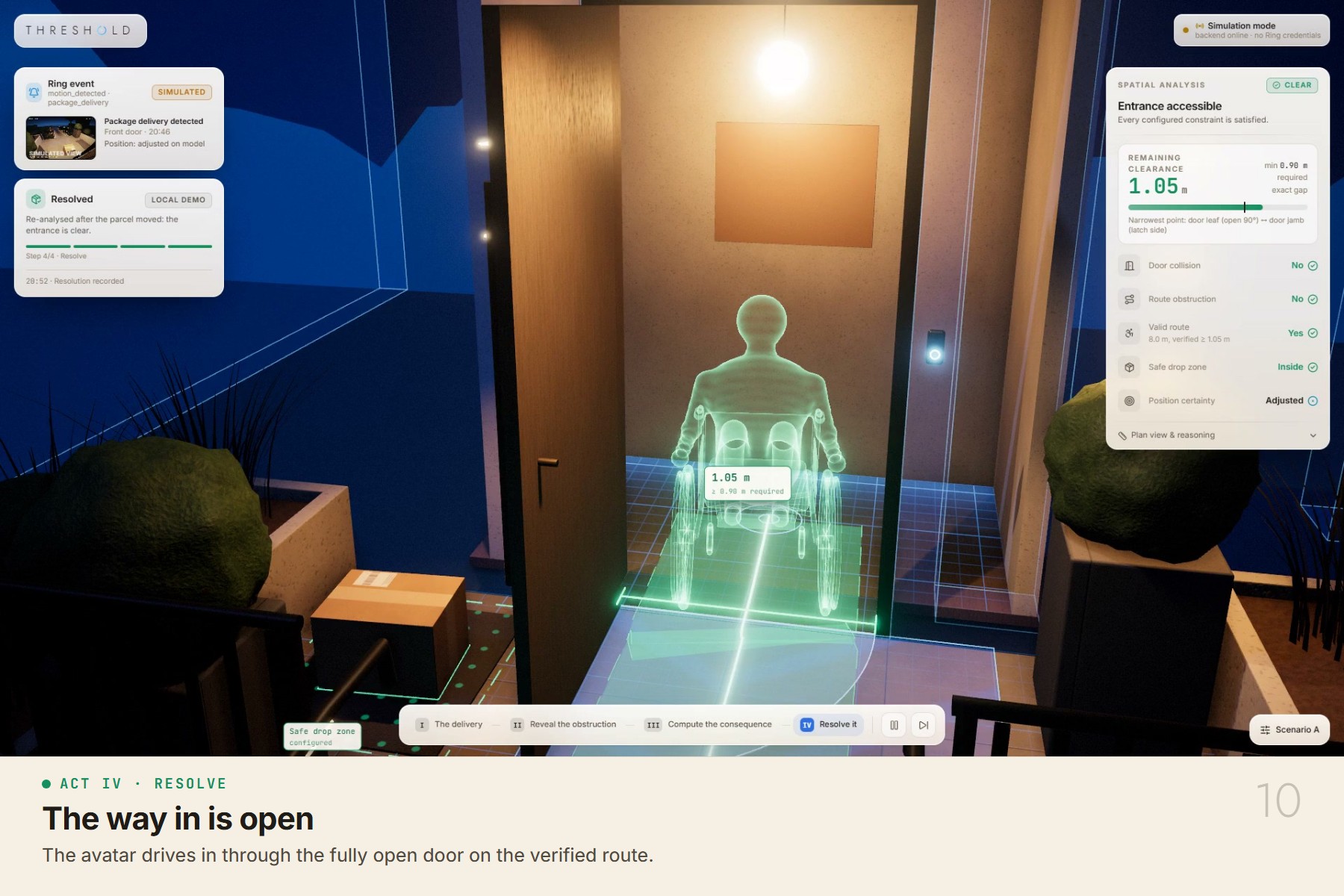
When the package is moved to a safe drop zone, THRESHOLD recalculates the geometry. The door opens to 90°, clearance increases to 1.05 m, and the route becomes accessible again.
The demo uses simulated Ring events and clearly identifies estimated package positions.
How we built it
We used React, TypeScript, Three.js, Tailwind CSS, and Blender to create a cinematic 3D entrance.
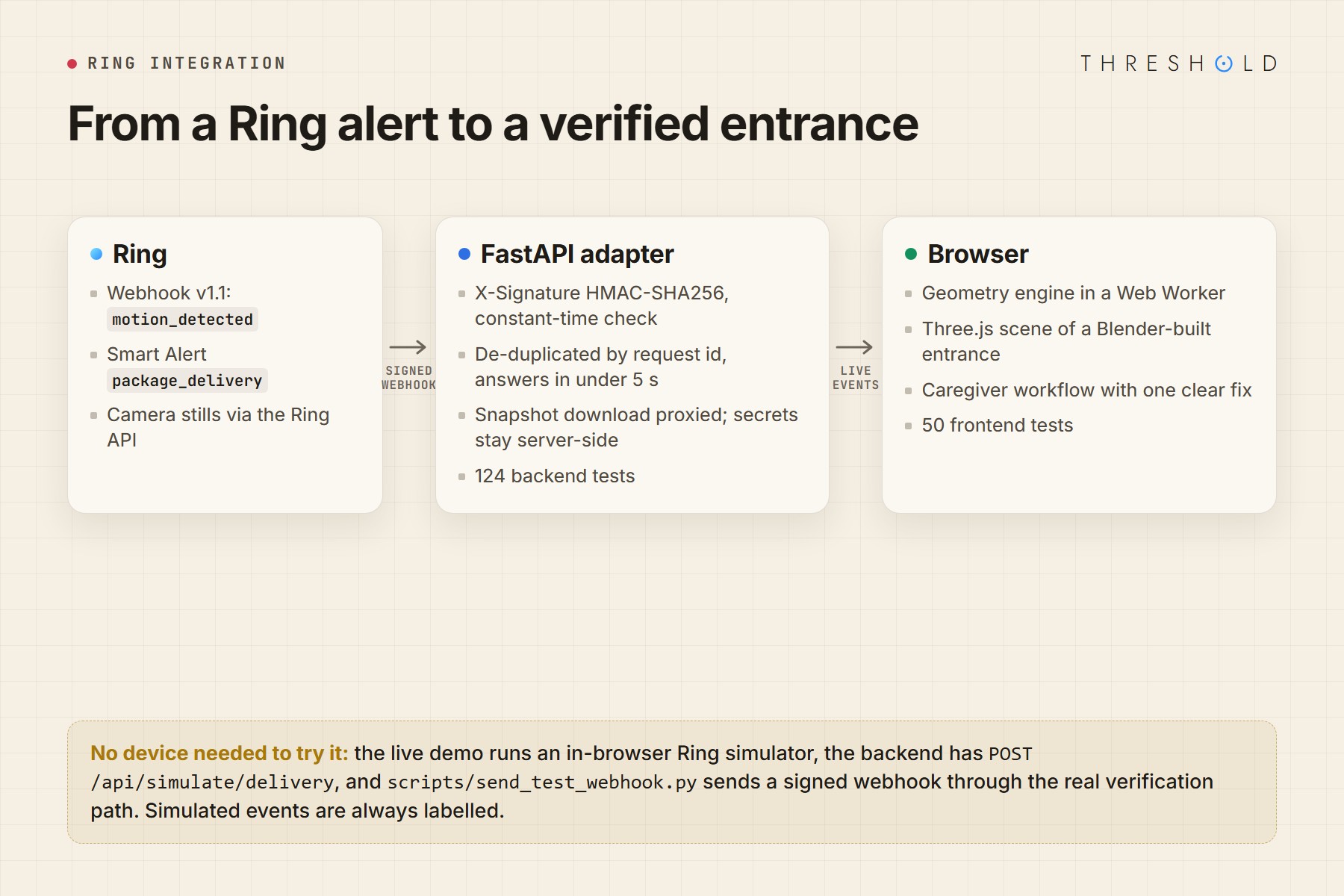
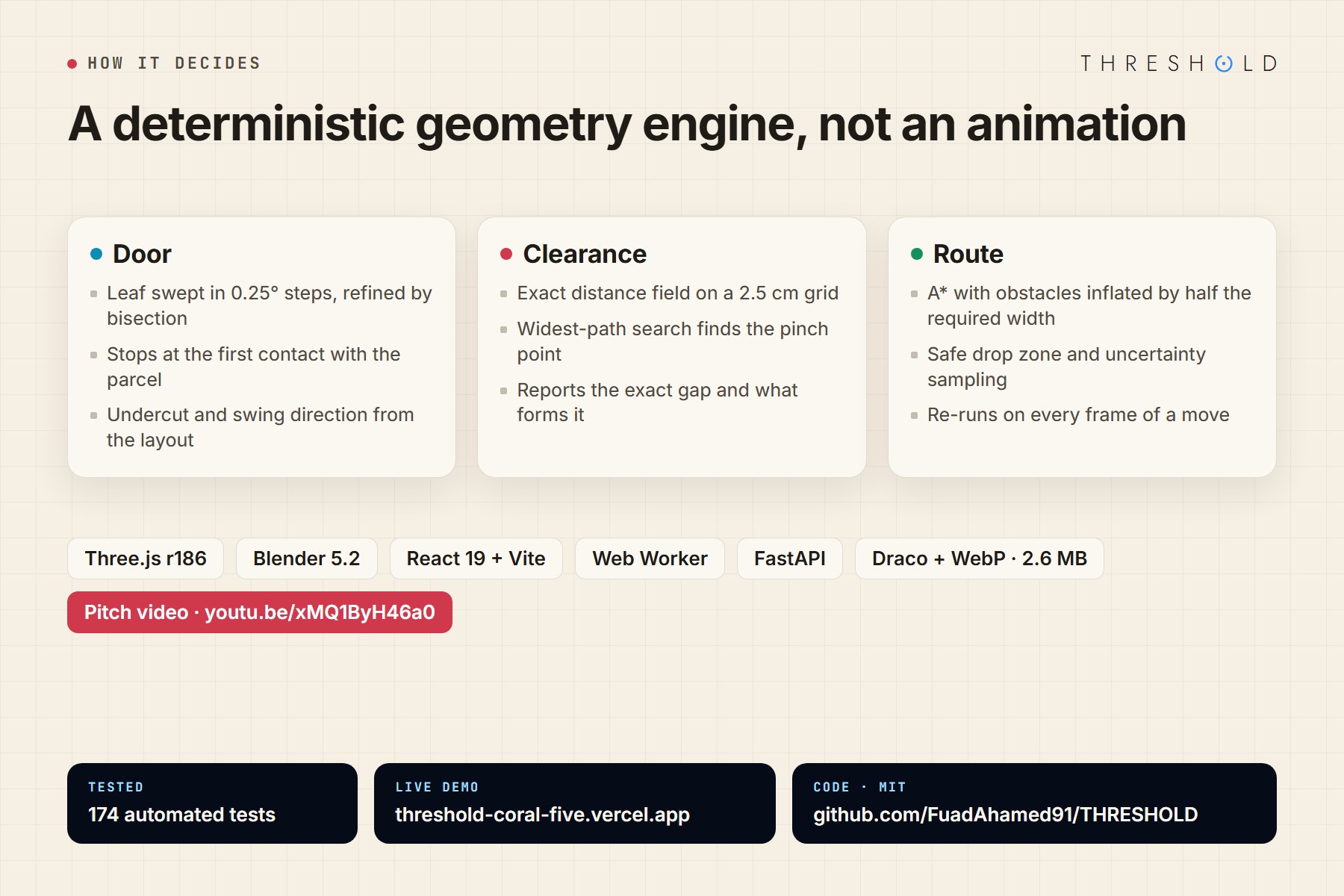
A deterministic geometry engine handles door collisions, route obstruction, clearance measurement, and A* pathfinding. A FastAPI backend implements Ring API operations, signed webhook processing, and event streaming.
We also built automated geometry tests, backend tests, and an end-to-end browser test.
Challenges we ran into
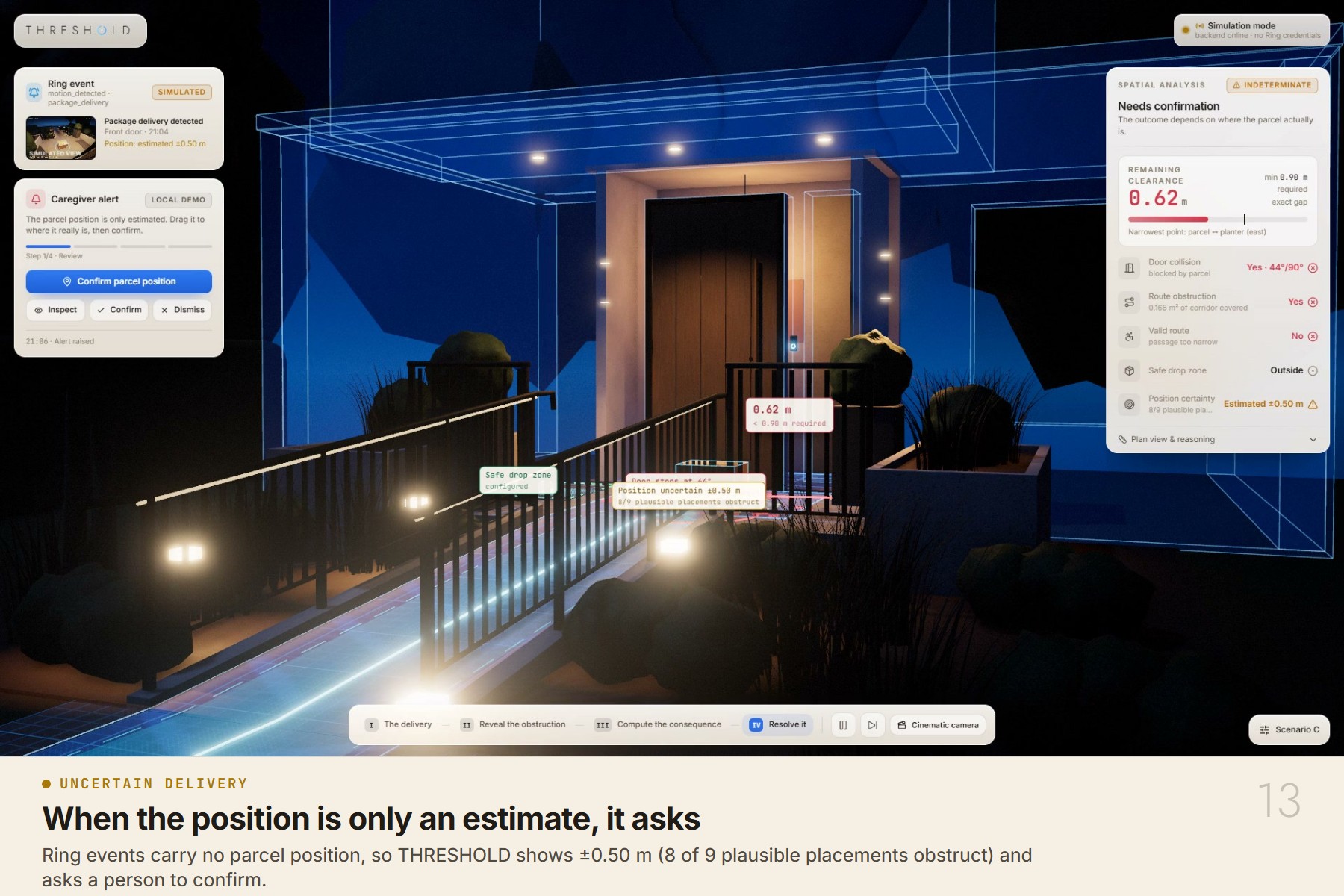
The biggest challenge was turning a delivery event into useful spatial information. Ring events do not provide exact package coordinates, so we designed a calibrated entrance model with explicit placement estimates and uncertainty handling.
We also had to ensure the 3D animations reflected real geometry calculations rather than displaying hardcoded results.
Accomplishments that we're proud of
- Created an interactive architectural 3D experience with a working geometry engine.
- Built a Ring integration backend and clearly labeled simulation mode.
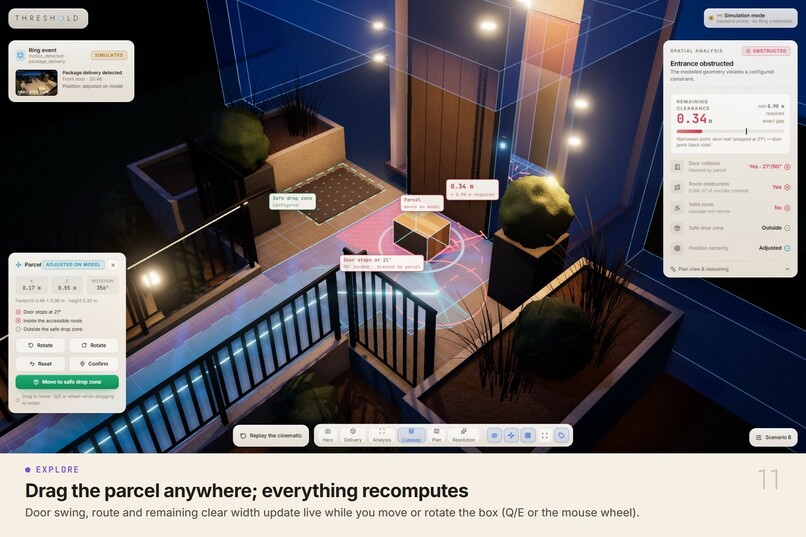
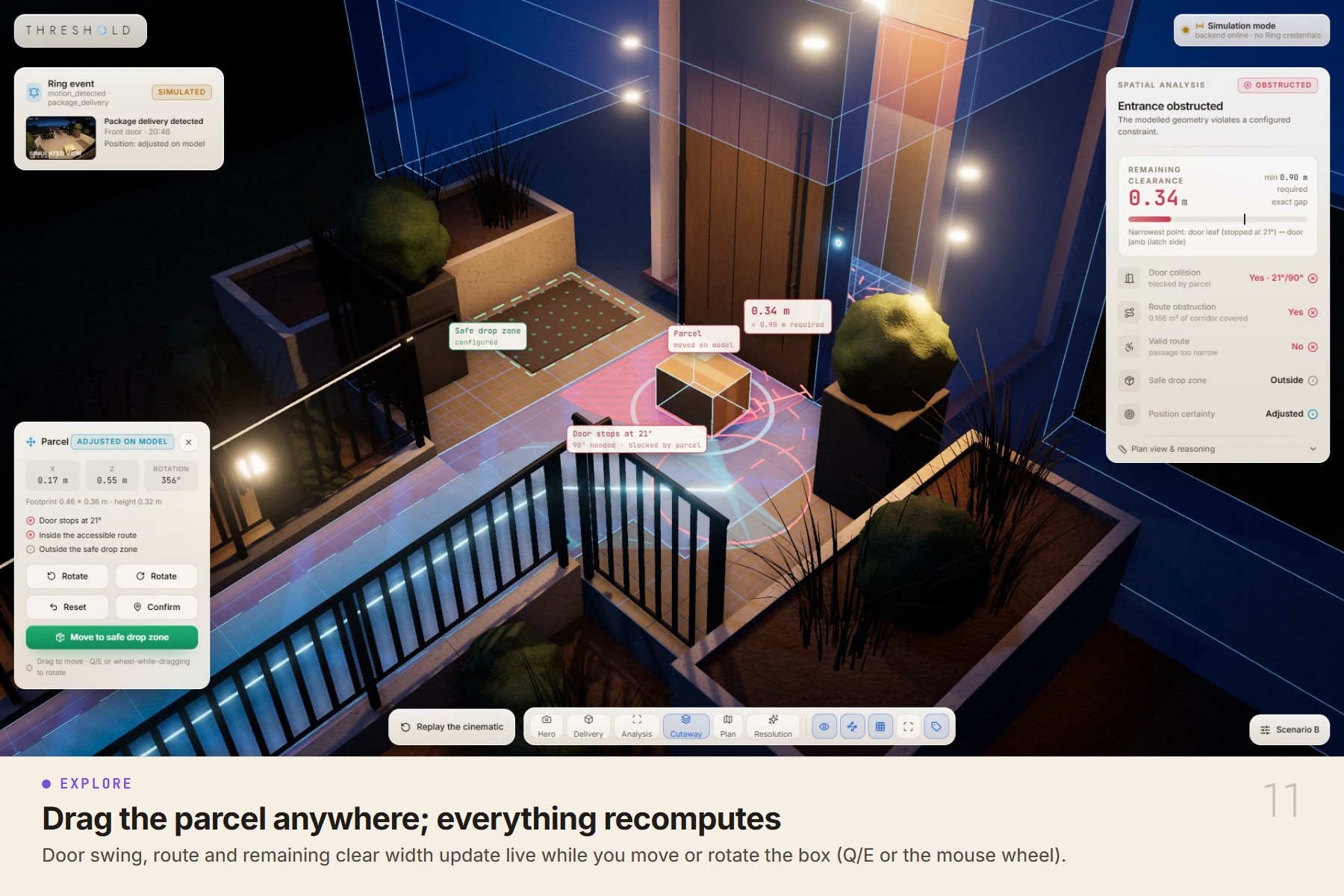
- Made safety measurements change when users move the package.
- Added uncertainty checks to avoid presenting estimated positions as confirmed facts.
What we learned
We learned how to combine event-driven integrations, computational geometry, and real-time 3D rendering into one product.
More importantly, we learned that accessibility systems need explainable measurements and human confirmation, not just automated alerts.
What's next
We want to validate the Ring integration with real devices, support calibration for different homes, improve wheelchair maneuvering analysis, and add real caregiver notifications.
Our goal is simple: make sure a delivery never becomes a barrier to someone's independence.

Log in or sign up for Devpost to join the conversation.