Inspiration
Household food waste is a hidden crisis, where nearly 30% of groceries bought end up in the trash. Many times, people forget about the tomato that is buried in their fridge. Overbuying, poor meal planning, and confusion of "use-by" are several reasons causing this issue. We created Scraps to be the "Second Brain" for your kitchen, where you can turn forgotten ingredients into actionable inventory.
What it does
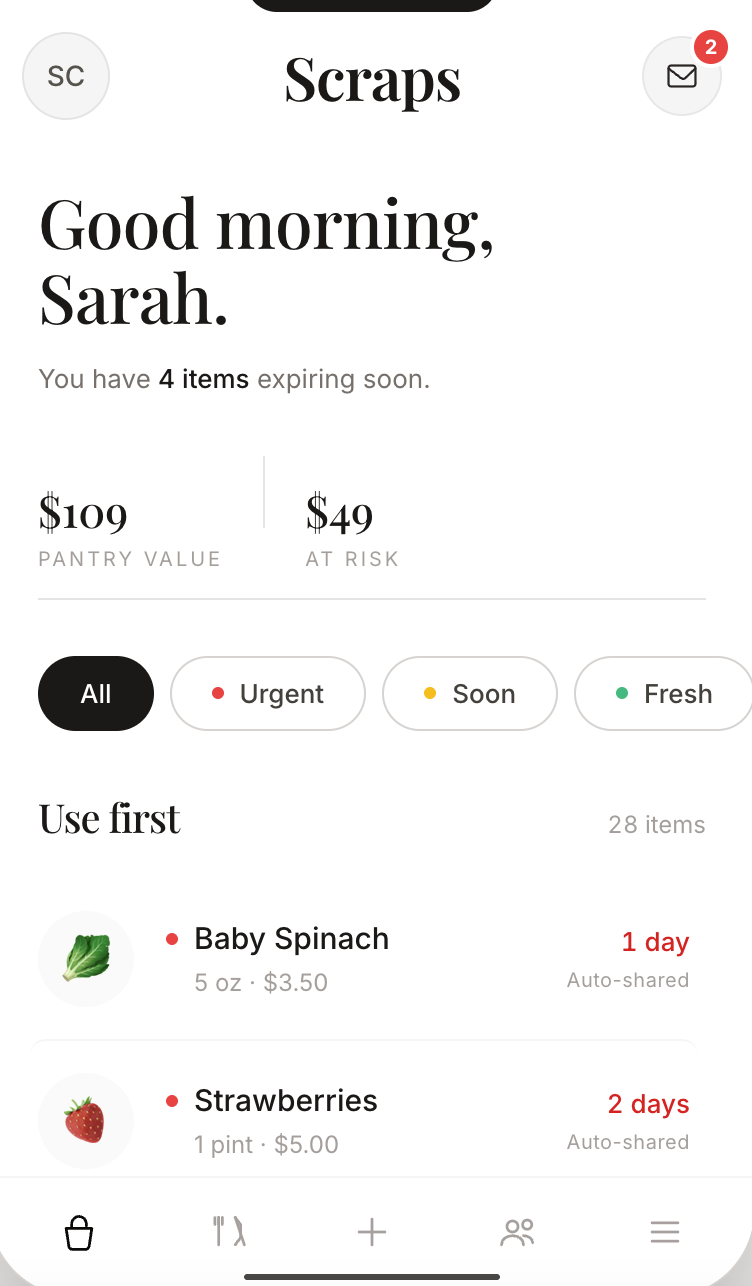
Scraps is an AI-powered ecosystem for sustainable eating. The platform handles the entire lifecycle of a grocery item:
- Item Tracking: Automatically converts pictures of your groceries into a digital inventory using AWS Rekognition.
- Urgency Tracking: Color-codes items (Red, Yellow, Green) based on predicted expiration, prioritizing the foods that need to be eaten first.
- Adaptable Recipes: Suggests meals specifically designed to use the "at-risk" (Red-label) items, reducing waste through creativity.
- The Social Pantry: Be able to connect with your friends! If you have extra cilantro or milk you won't finish, you can "share" it with a community for friends to claim, and also request items from friends' pantries.
How we built it
We built Scraps using a full-stack framework:
- Next.js, React, and Tailwind CSS for a unified framework and seamless interface.
- AWS Rekognition is able to identify objects and categorize from uploaded images
- TheMealDB API dynamically generates recipe recommendations based on available ingredients
- Server-side API architecture for efficient data handling and image processing
- Component-based UI design to create a clean, user-friendly interface
Challenges we ran into
One of the challenges was choosing to integrate AWS Rekognition after having another API (TheMealDB) already implemented. Another challenge was meshing the frontend and backend seamlessly and minimizing debugging errors.
Accomplishments that we're proud of
This project showed us how we can contribute for social good:
- UX for Social Impact: Designed an interface that transforms complex food-recognition data into clear, actionable insights.
- AI-Powered Data Integration: Engineered a TypeScript-based integration that connects AWS Rekognition with our backend infrastructure.
- Scalable Full-Stack Problem Solving: Be able to overcome API integration challenges, debugging errors, and resolving Git version-control conflicts while working as a team and satisfying user experience.
- Collaboration and working on our first hackathon together!
What we learned
We learned how UX design can make complex AI-driven systems approachable and useful for everyday users, especially in addressing food waste and accessibility.
What's next for Scraps
- Building a Real backend infrastructure - Postgres/Supabase Database to store pantry data and individual user responses
- Smarter Ingredient Detection - train a ML model for accurate grocery-level recognition and better detection of produce, packaged foods, and expiration patterns.
Built With
- amazon-web-services
- api
- javascript
- next.js
- react.js
- rekognition
- tailwind
- themealdb
- typescript

Log in or sign up for Devpost to join the conversation.