-
-
THRED. Clinical Workspace
-
THRED. Clinical Workspace
-
THRED. Clinical Workspace
-
THRED. Clinical Workspace
-

THRED. Clinical Workspace
-
THRED. Clinical Workspace
Inspiration
Omega Life works across children’s residential care, education and clinical services, supporting children and young people with complex and evolving needs.
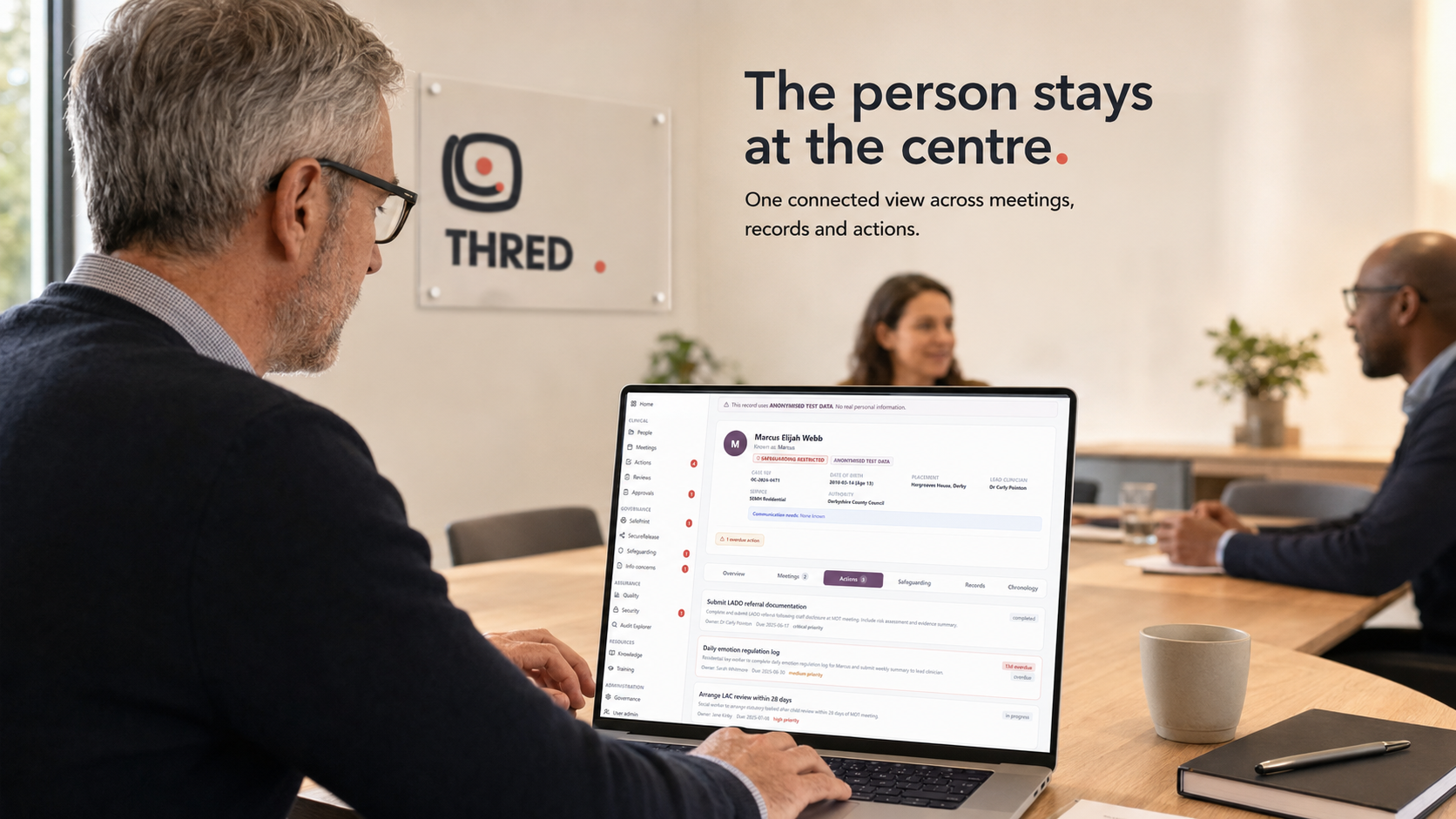
In practice, a person’s clinical picture is rarely contained in one document. Important information develops across clinical sessions, multidisciplinary meetings, assessments, safeguarding discussions, professional observations and actions agreed by different people.
The challenge is not simply collecting more information. It is connecting that information over time, preserving its context and ensuring that important decisions lead to clear, accountable action.
That real operational need inspired THRED.
The name is a purposeful abbreviation of “thread”: the continuous line running through a person’s clinical journey, connecting conversations, records, professional insight, decisions and follow-through.
What it does
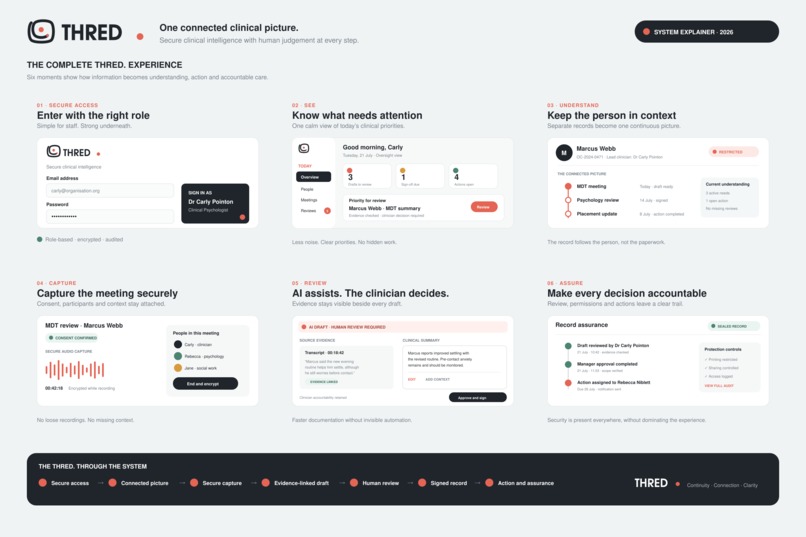
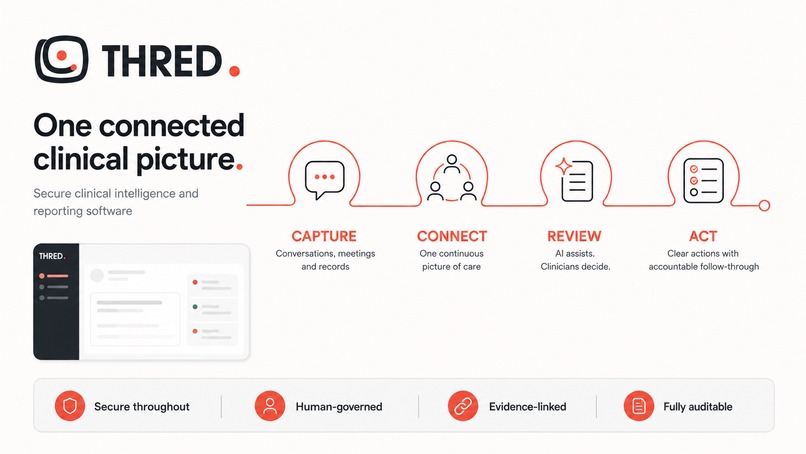
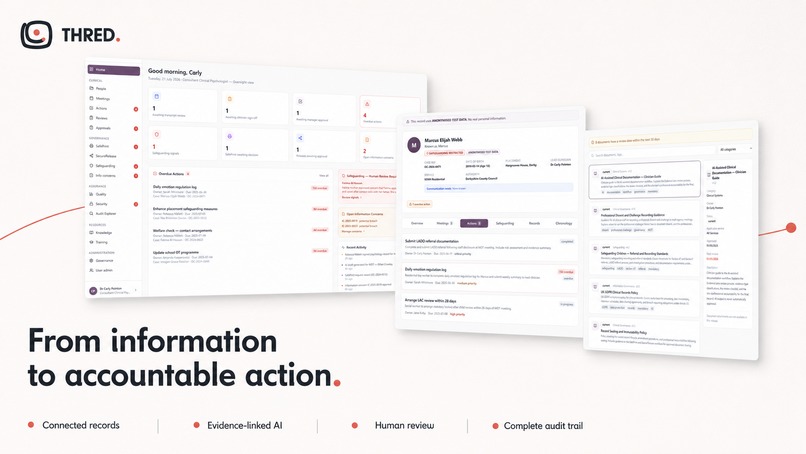
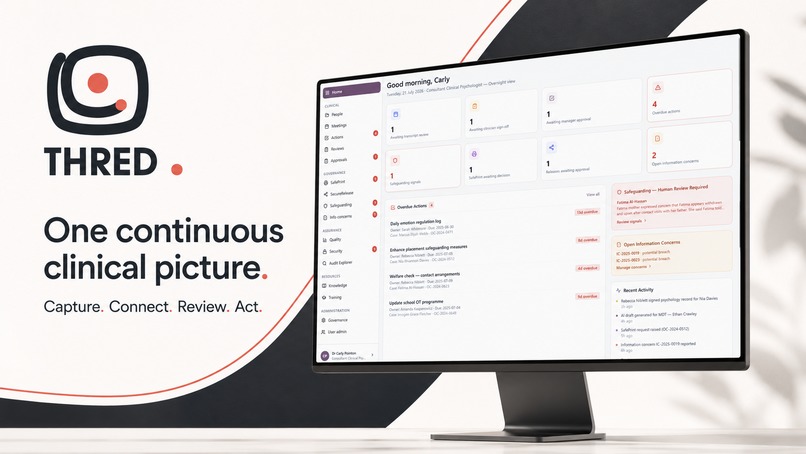
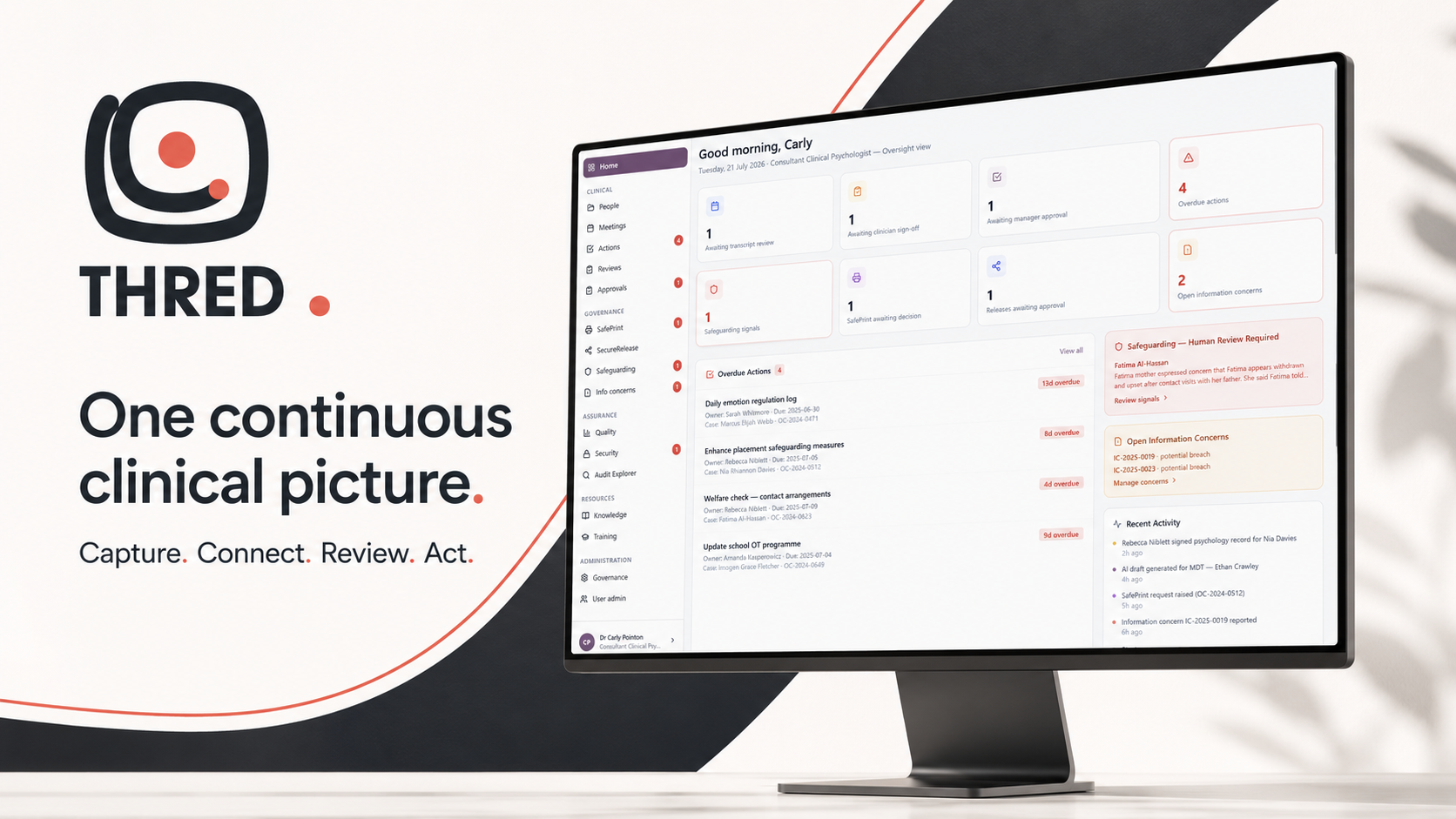
THRED. is a secure clinical intelligence and reporting workspace designed to help multidisciplinary teams build, understand and act upon a continuous clinical picture.
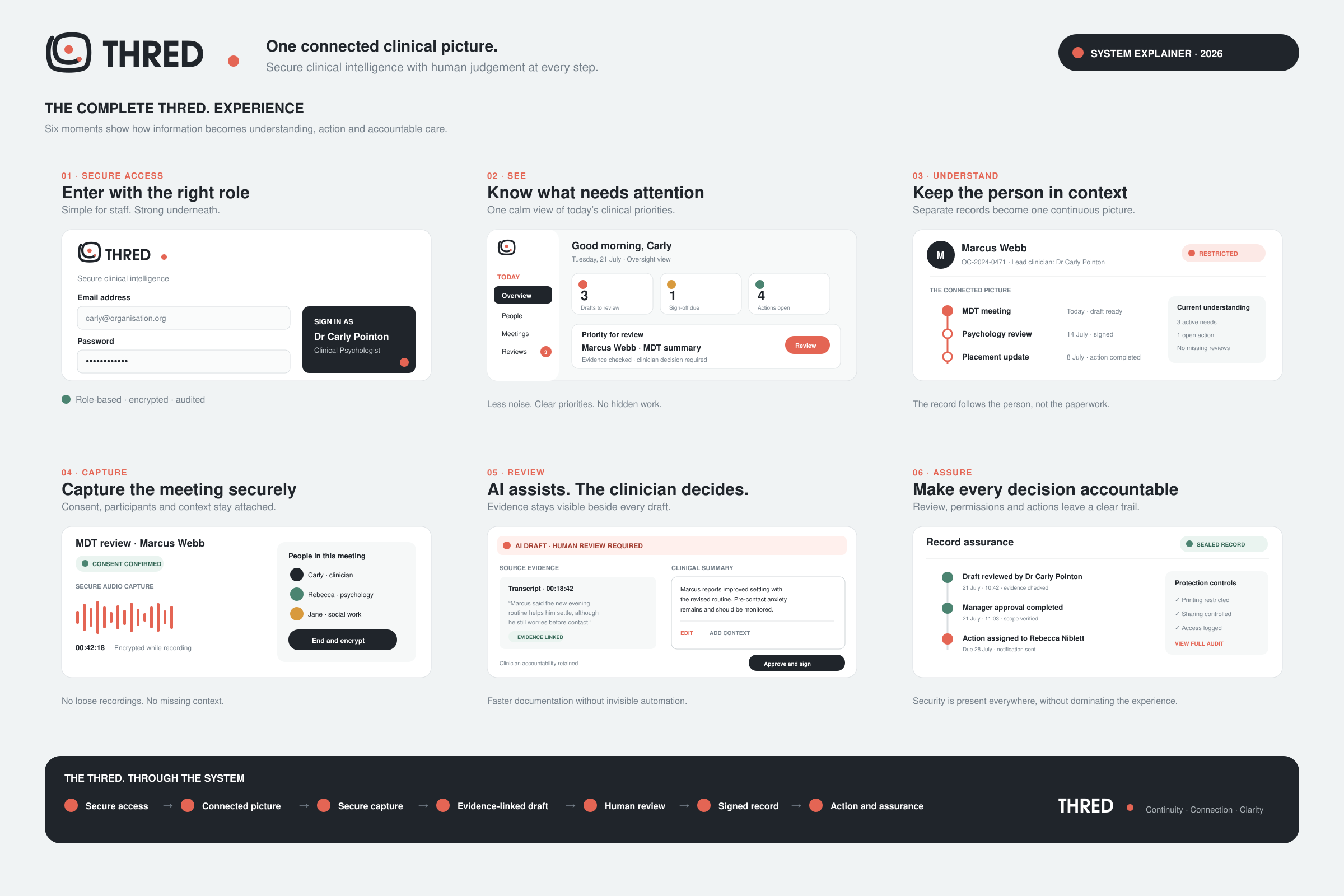
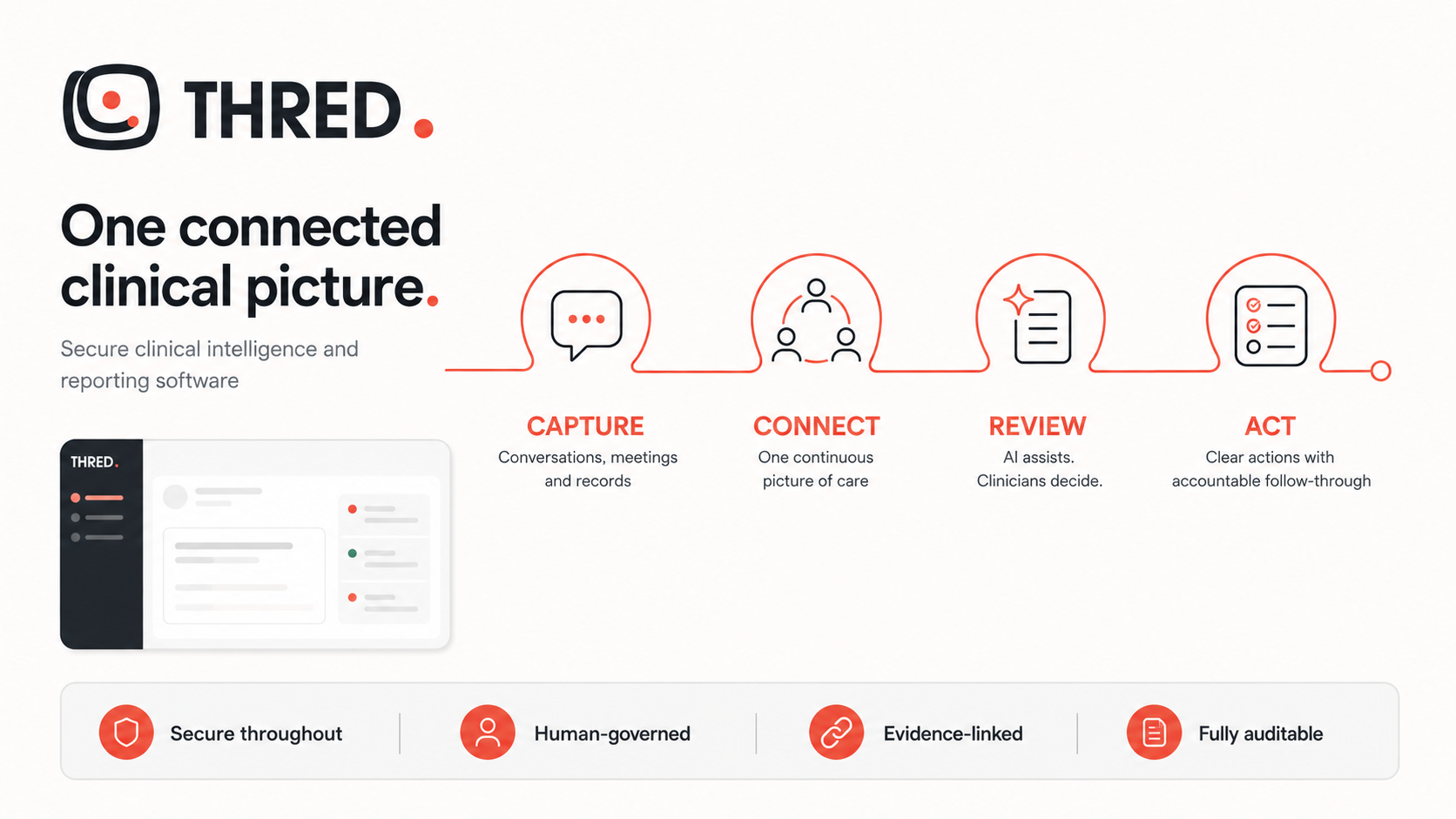
The demonstrated workflow allows a professional to:
- Create a clinical session or multidisciplinary meeting record.
- Capture the discussion and its wider context.
- Use GPT-5.6 to organise complex information into a structured working draft.
- Identify themes, risks, protective factors, decisions and proposed actions.
- Review, correct and approve the AI-supported output.
- Assign actions to named people with deadlines and clear ownership.
- Preserve review, sign-off and audit information as part of the wider record.
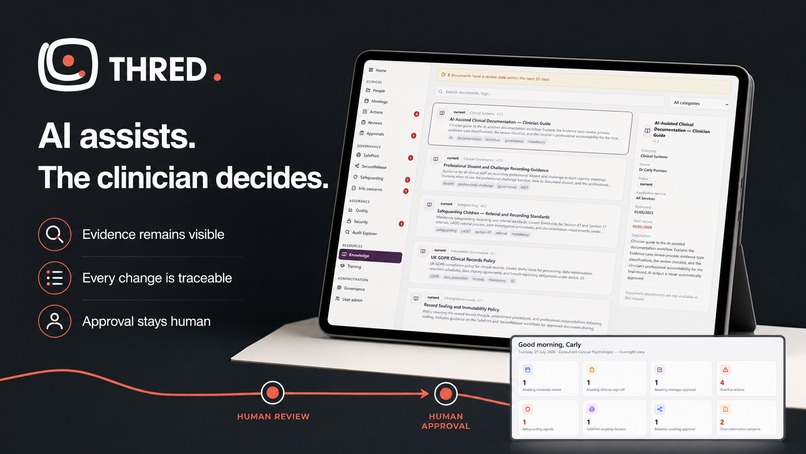
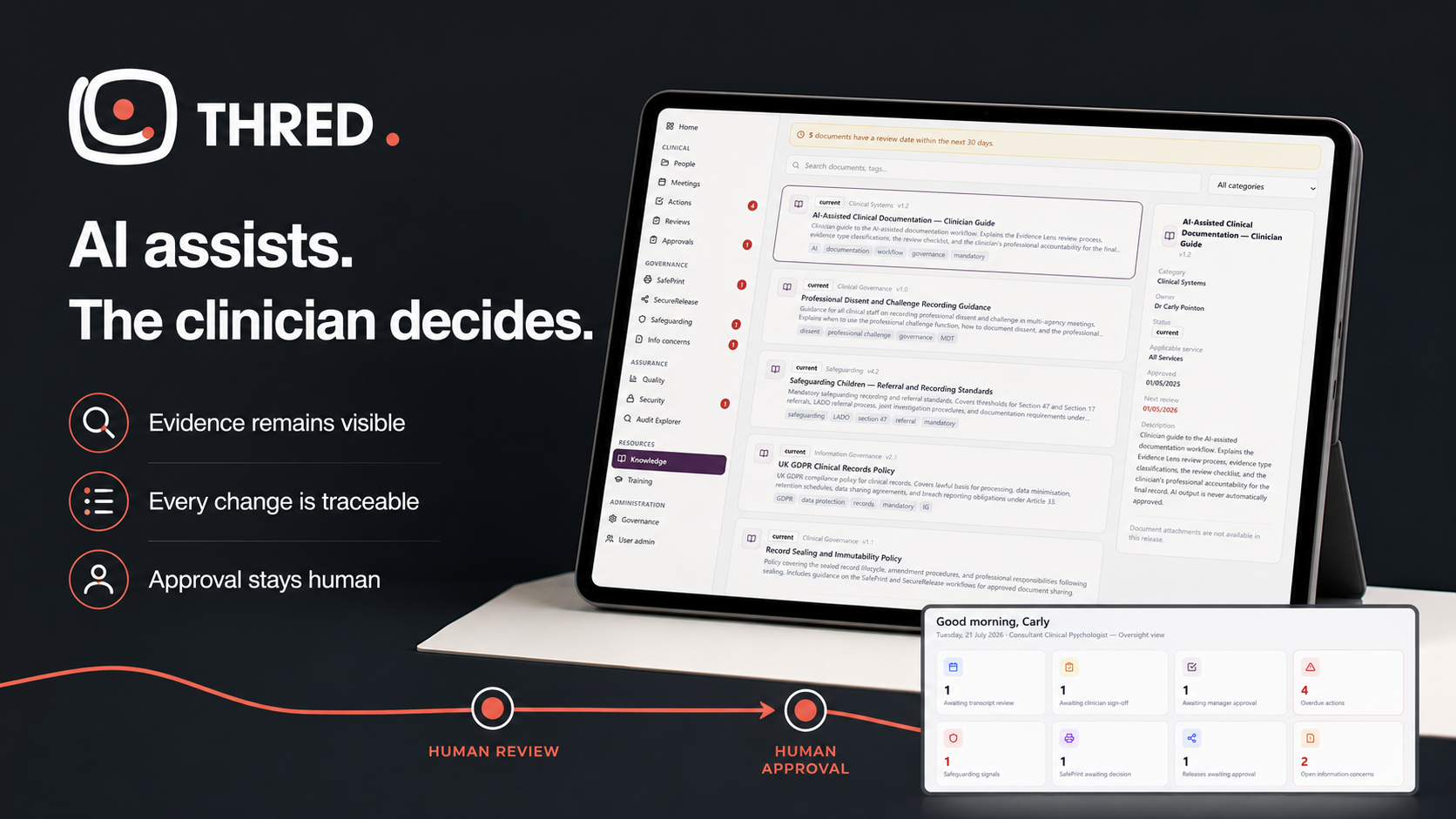
THRED. is not intended to make autonomous clinical or safeguarding decisions. AI-generated content remains a working draft until it has been reviewed by an authorised professional. Professional judgement, safeguarding responsibility and final accountability remain with the human clinical team.
All information used in the submitted demonstration is fictional training data.
How we built it
THRED. was developed as a clinical workspace rather than a generic transcription or meeting-summary tool.
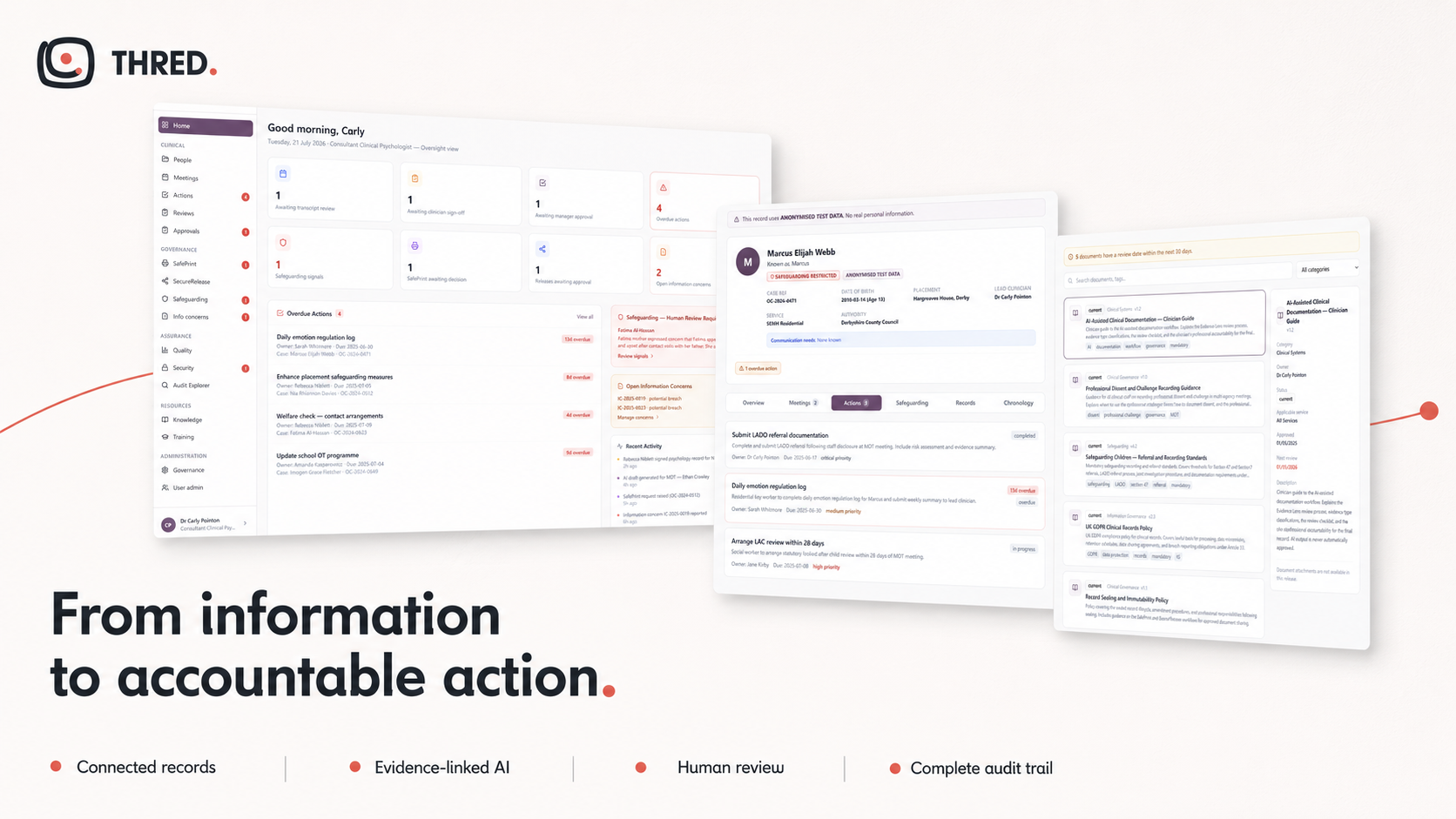
The product connects meeting capture, structured clinical analysis, professional review, action management, quality oversight and governance within one continuous workflow.
GPT-5.6 is used to interpret complex, unstructured discussion and return an organised working draft. The output is structured so that different forms of information, including observations, risks, protective factors, decisions and proposed actions, remain distinguishable and reviewable.
Codex supported the Build Week development process by helping the team inspect and improve the application, refine functionality, identify implementation and safety risks, test workflows and strengthen the overall product experience.
Human review was treated as a central product requirement. The intention is not to remove professional involvement, but to help professionals spend less time reconstructing fragmented information and more time applying their expertise.
Challenges we faced
One of the main challenges was deciding where AI should assist and where it must stop.
Clinical conversations contain nuance, uncertainty and professional judgement. A fluent AI-generated summary could appear authoritative even when it has misunderstood the context. We therefore designed the output as an editable draft and made professional review part of the workflow.
Another challenge was turning complex discussions into useful structure without losing the original meaning. THRED. needed to distinguish between observations, identified concerns, decisions and proposed actions rather than combining everything into a general summary.
We also had to balance usability with accountability. The system needed to reduce administrative burden while maintaining clear ownership, review and follow-through.
For the demonstration, we also needed to show the value of the platform without exposing real information. The submitted workflow therefore uses fictional records created specifically for testing and presentation.
Accomplishments that we are proud of
We are proud that THRED. addresses a genuine operational problem experienced by multidisciplinary care teams.
The platform creates a clear journey from conversation to professional understanding, from understanding to decision, and from decision to accountable action.
We are also proud of the human-review boundary. THRED. demonstrates how advanced AI can support clinical productivity without presenting AI as a replacement for qualified professionals.
The result is more than a meeting summariser. It is the foundation of a longitudinal clinical workspace where information can remain connected, reviewable and actionable over time.
What we learned
We learned that the greatest value of AI in clinical administration is not simply producing text more quickly. Its value comes from helping professionals find structure within complexity while preserving the opportunity to question, correct and approve the result.
We also learned that accountability must be designed into the workflow. Actions need owners, deadlines and status, while AI-assisted records need a clear distinction between generated drafts and professionally approved content.
Codex helped us work more systematically across implementation, testing, documentation and product refinement. GPT-5.6 allowed us to explore a more capable structured-analysis workflow for complex clinical-style discussions.
Most importantly, we reinforced that professional judgement and safeguarding responsibility must remain human.
What’s next for THRED.
The next stage is controlled testing with Omega Clinical professionals using fictional and carefully governed test scenarios.
Future development will focus on:
- Strengthening longitudinal clinical timelines.
- Improving multidisciplinary action tracking and escalation.
- Expanding quality and governance reporting.
- Developing configurable clinical templates.
- Improving accessibility and responsive use.
- Conducting further security, privacy and role-access testing.
- Evaluating structured outputs with clinical professionals.
- Developing integrations only where they can be introduced safely and appropriately.
THRED. is intended to become the place where a person’s developing clinical picture is connected, understood and acted upon over time.
Built With
- artificial
- clinical
- codex
- gpt-5.6
- human-in-the-loop
- intelligence
- openai
- outputs
- structured
- workflow


Log in or sign up for Devpost to join the conversation.