Inspiration
Online scams and social engineering attacks are increasing rapidly across SMS, WhatsApp, email, and fake websites. Many victims are not careless—they are manipulated using urgency, fear, authority, or rewards. We were inspired to build a tool that not only detects scams, but also explains why a message is dangerous and guides users toward safe, real-world actions. ThreatLens Sentinel was inspired by the idea of giving everyday users a personal security operations center (SOC)—simple to use, yet powerful enough to prevent real losses.
What it does
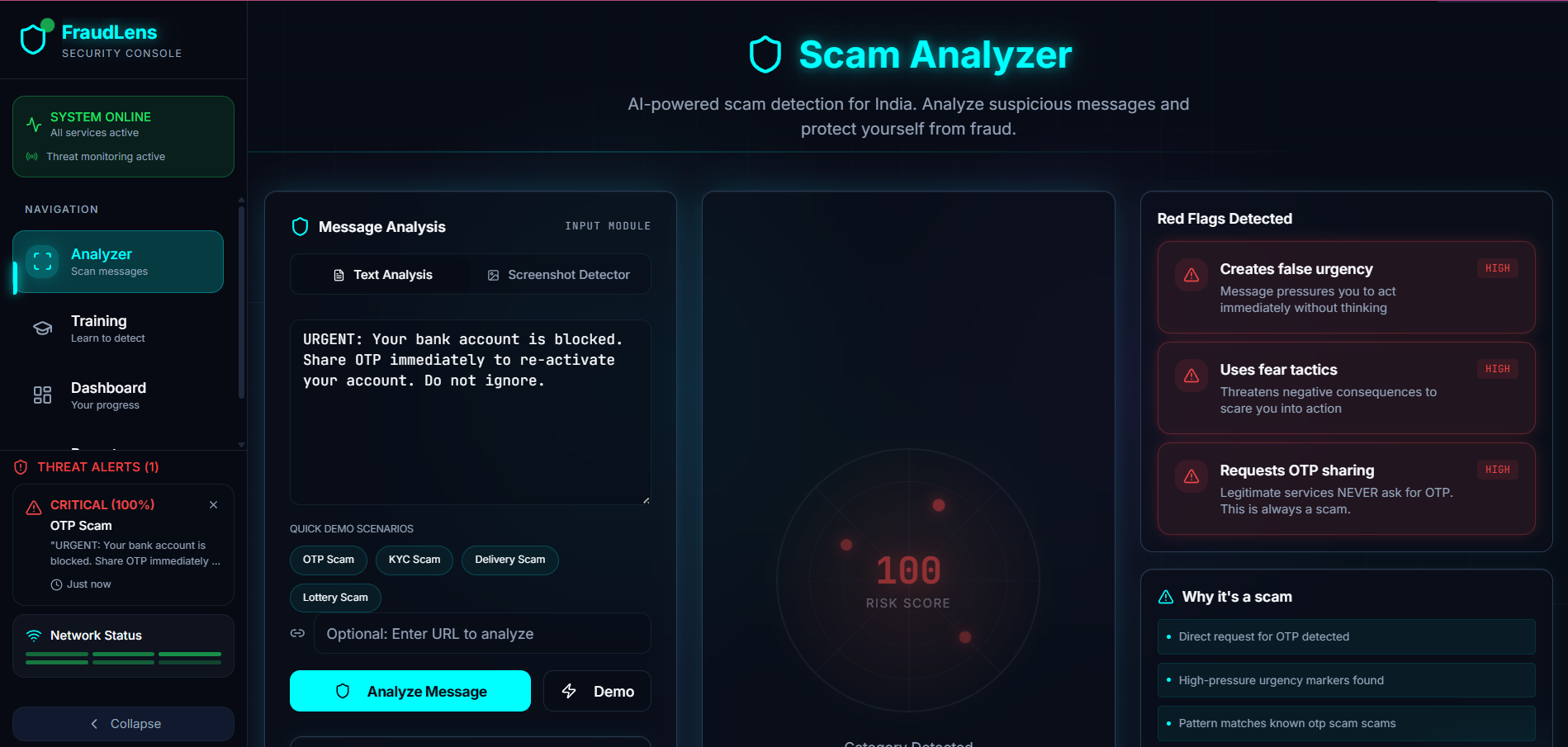
ThreatLens Sentinel helps users identify and respond safely to online scams. Users can paste any suspicious message or link to: Get a Risk Score (0–100) and Threat Level Identify scam categories (OTP scam, KYC scam, delivery scam, lottery scam, etc.) Detect manipulation tactics (urgency, fear, reward, impersonation) View a Message Breakdown with highlighted suspicious phrases Analyze links for shortened URLs, fake domains, and brand impersonation Receive Interactive Safe Actions with step-by-step guidance, including India-specific reporting via: cybercrime.gov.in Helpline 1930 The app also includes: A Training Simulator with real scam scenarios Reports History that automatically saves analyses and allows export One-click Demo Scenarios for fast testing and presentations
How we built it
ThreatLens Sentinel is a fully client-side web application. Tech stack: Vite + React + TypeScript Tailwind CSS for styling shadcn/ui (Radix UI) for accessible components Framer Motion for animations LocalStorage for persistent reports history Deployed on Vercel The detection engine uses a rule-based scoring approach that checks for: urgency and fear-based language OTP/UPI PIN requests impersonation patterns suspicious URLs and shortened links Each analysis generates structured results that are saved and displayed transparently to the user.
Challenges we ran into
Balancing accuracy vs false positives: Legitimate messages sometimes contain keywords like “account” or “verify,” so scoring needed careful tuning.
Explainability: Many scam tools give a score but no reasoning. We solved this with message highlighting and evidence-based feedback.
SPA deployment issues: Client-side routing required proper rewrites when deploying.
Performance vs visuals: SOC-style UI and animations needed optimization to keep the app responsive.
Accomplishments that we're proud of
fully working, production-style prototype (not mock-only) Clear visual proof of detection through message highlighting Persistent Reports History with export and delete features Actionable, India-specific safety guidance A clean, professional SOC-themed UI suitable for real-world use
What we learned
Scam prevention is as much about human psychology as technology. Users trust systems more when results are transparent and explainable. Good UX and demo flow matter as much as core logic in hackathons. Packaging and clarity can significantly elevate a project’s impact.
What's next for Threatlens Sentinel
With more time, we would expand ThreatLens Sentinel into a broader scam-defense platform by adding: A browser extension for real-time scam warnings Multilingual support (Hindi, Tamil, regional languages) Community-driven scam reporting Optional AI-powered explanations and safe reply suggestions Screenshot-based phishing and fake website detection
Built With
- react
- tailwind
- typescript
- vite

Log in or sign up for Devpost to join the conversation.