-
-
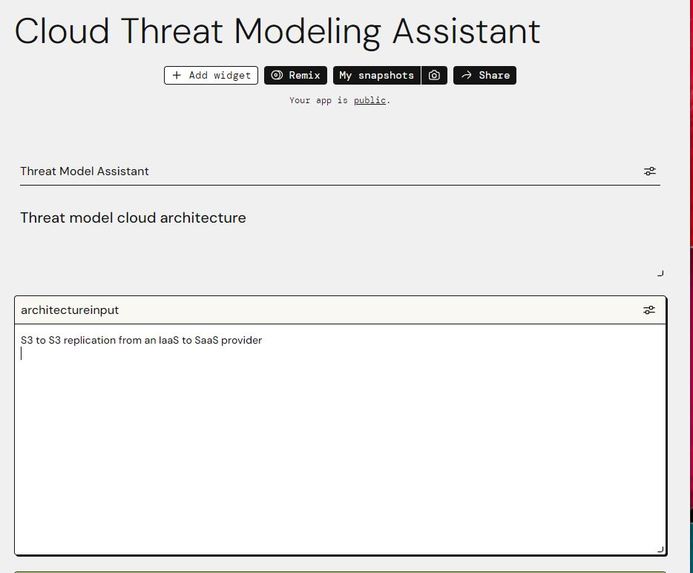
Architectural Input
-
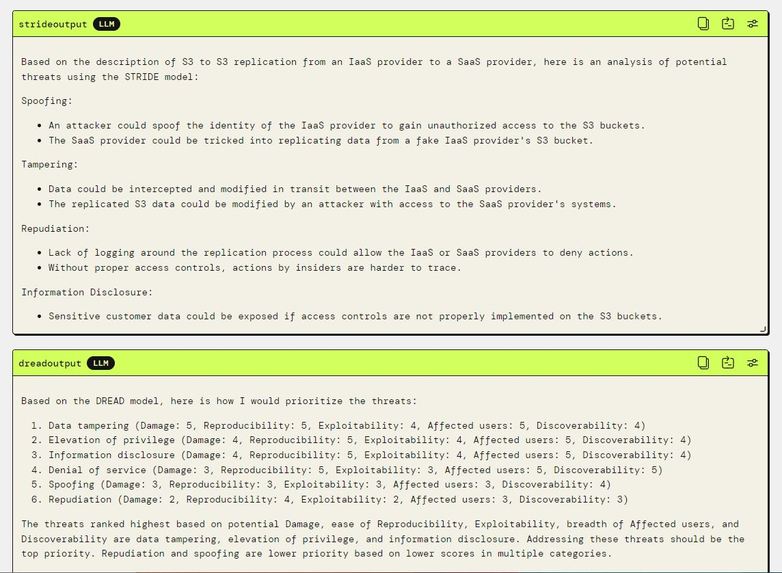
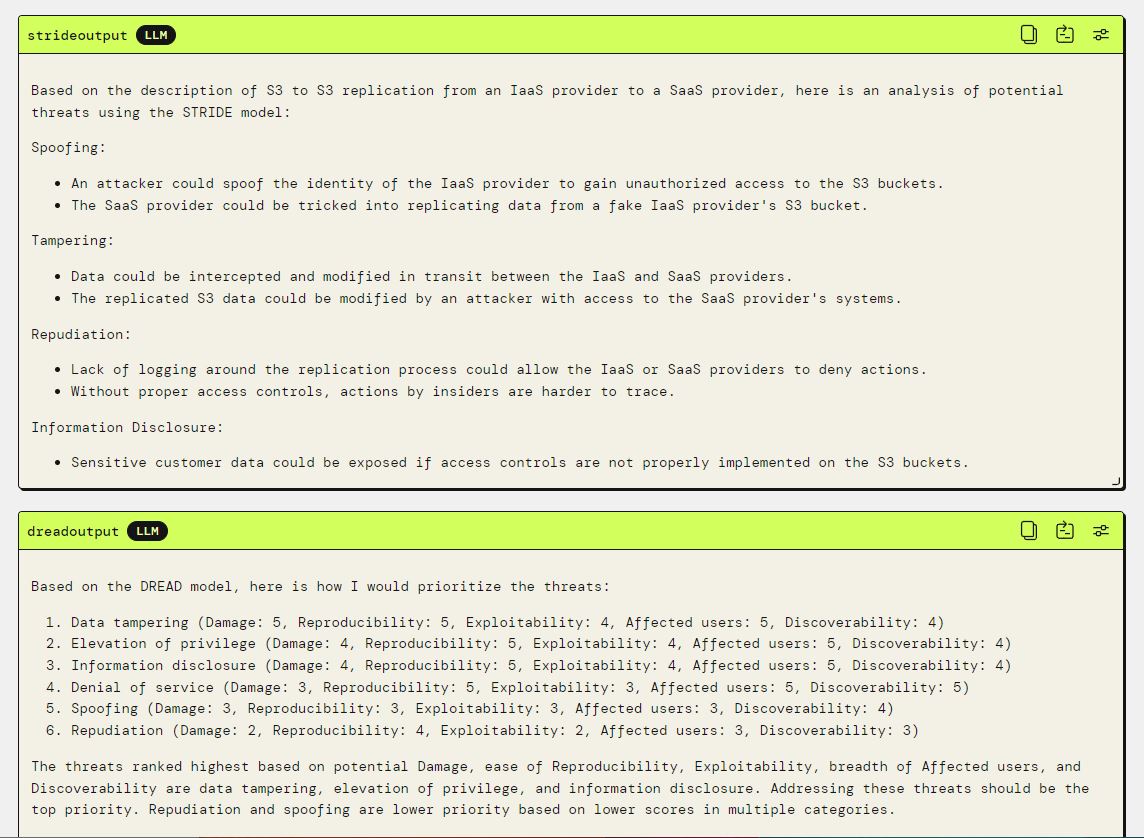
STRIDE & DREAD Output
-
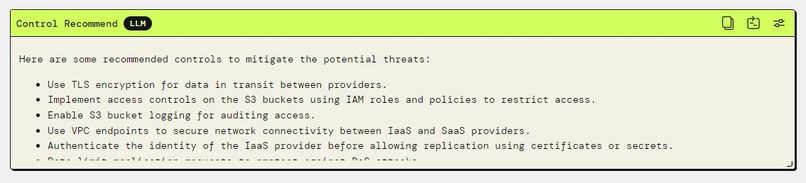
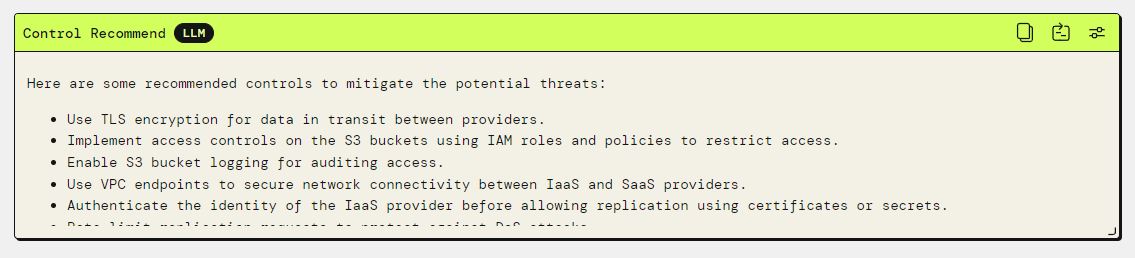
Control recommendations based on architectural input
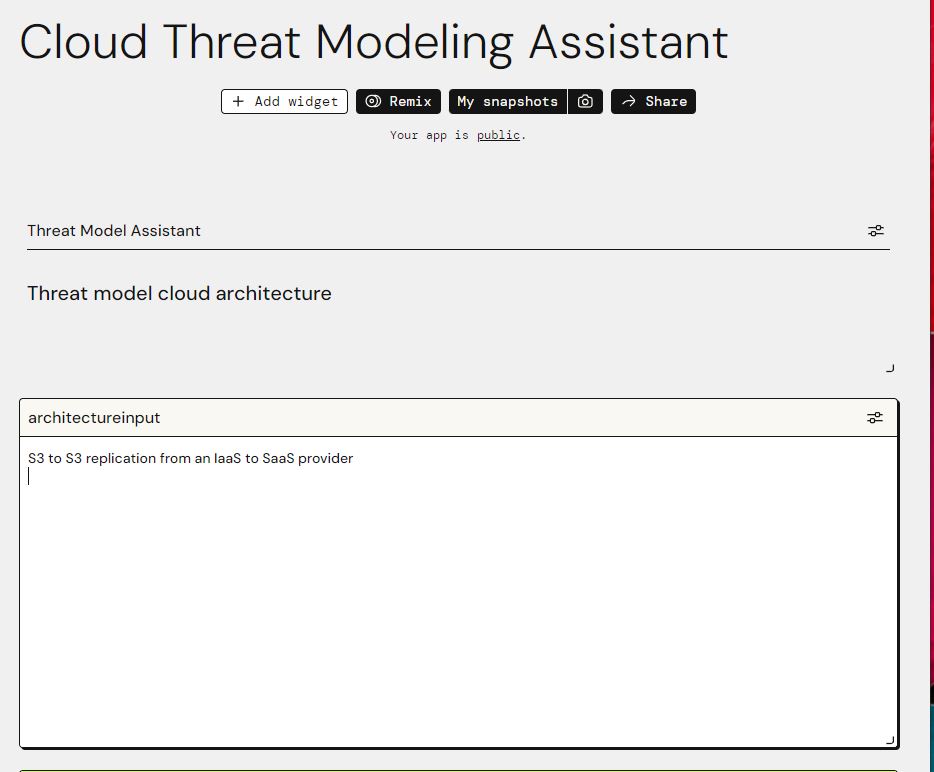
Cloud Threat Modeling Assistant
Inspiration
The Threat Model Project was inspired by a growing recognition of the evolving threat landscape and the need for a proactive approach to cybersecurity. Past security incidents and industry trends served as a wake-up call, highlighting the importance of comprehensive threat modeling and risk management practices. In practice this is a very manual and tedious process that can take weeks to complete. This made me want to evolve our tactical approach into an future-strategic approach to combat the evolving threat landscape
How I built the project
This project was built on PartyRock the Amazon Bedrock playground. Then broken out into 4 widgets
- Architecture Input: Describe your Cloud Architecture here
- StrideOutput: Process for modeling software security threats, standing for Spoofing, Tampering, Repudiation, Information disclosure, Denial of service, Elevation of privilege
- DreadOutput: It provides a mnemonic for risk rating security threats using five categories.
- Control Recommendations: Provides control recommendations to mitigate any risk inputted by the user. The Claude Model is being used for #2-4
Challenges I ran into
Despite its importance, the Threat Model Project encountered several challenges:
- Addressing the Input/Outputs of the widgets
- Testing each LLM Model for the most appropriate outputs.
Lessons Learned
Throughout the course of the Threat Model Project, several key lessons were learned:
- The importance of collaboration and communication with peers.
- The value of keeping things simple. :)
What's next for Threat Modeling Project
The Threat Model Project plays a critical role in safeguarding our organization's assets and ensuring the integrity and security of our systems and data. Through proactive threat identification, risk assessment, and mitigation, we can effectively defend against potential security breaches and minimize the impact of cyber threats by operationalizing this application. In addition, look at incorporating architectural diagram input for efficiency.
Built With
- amazon-web-services
- bedrock
- partyrock


Log in or sign up for Devpost to join the conversation.