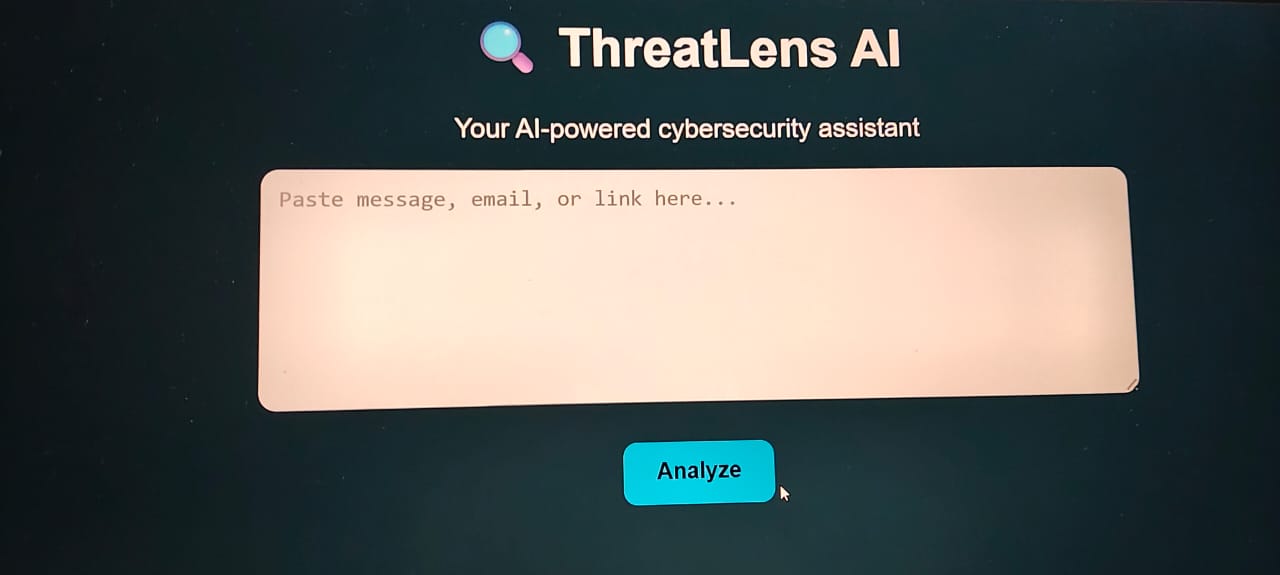
InspirationIn today’s digital world, cyber threats like phishing scams, fake links, and misinformation are growing rapidly. Many users—especially students and beginners—find it difficult to identify these threats in real time.
We were inspired to create ThreatLens AI as a simple and intelligent solution that empowers users to detect and understand online risks before they cause harm
What it doesThreatLens AI is an AI-powered cybersecurity assistant that analyzes user-provided text, emails, or links to detect potential threats.
It classifies content into:
✅ Safe ⚠️ Suspicious 🚨 Dangerous
Along with the classification, it provides:
Clear explanations of the risk Practical safety suggestions Awareness tips to educate users
How we built itWe built ThreatLens AI using a simple yet effective tech stack:
Frontend: HTML, CSS, JavaScript Backend: Python (Flask) AI Integration: Google Gemini API
The core functionality uses Gemini to analyze text inputs with structured prompts. The AI evaluates patterns commonly found in phishing or scam messages and returns a response including threat level, reasoning, and recommended actions.
Example logic:
prompt = f""" Analyze the following message for cybersecurity risks: "{user_input}"
Classify it as Safe, Suspicious, or Dangerous. Explain why and suggest actions.
Challenges we ran into
Designing accurate prompts to get reliable threat analysis from Gemini Balancing between simple UI and meaningful output Ensuring the explanations are easy to understand for non-technical users Handling different types of inputs like links, messages, and mixed content
Accomplishments that we're proud of
What we learnedHow to integrate and effectively use Google Gemini API
The importance of prompt engineering in AI-based applications Basics of building a full-stack application Understanding real-world cybersecurity threats and user behavior
What's next for Threat Lens AI Browser extension for real-time protection
Advanced phishing URL detection system Multi-language support Real-time chatbot for cybersecurity awareness
