Inspiration
Threadstrike began as an experiment to make wrist-directed web shooting feel natural in augmented reality. I wanted to evolve that playful interaction into something meaningful, so the project became a spatial biology game where learners observe and tag virtual creatures in their real surroundings.
What it does
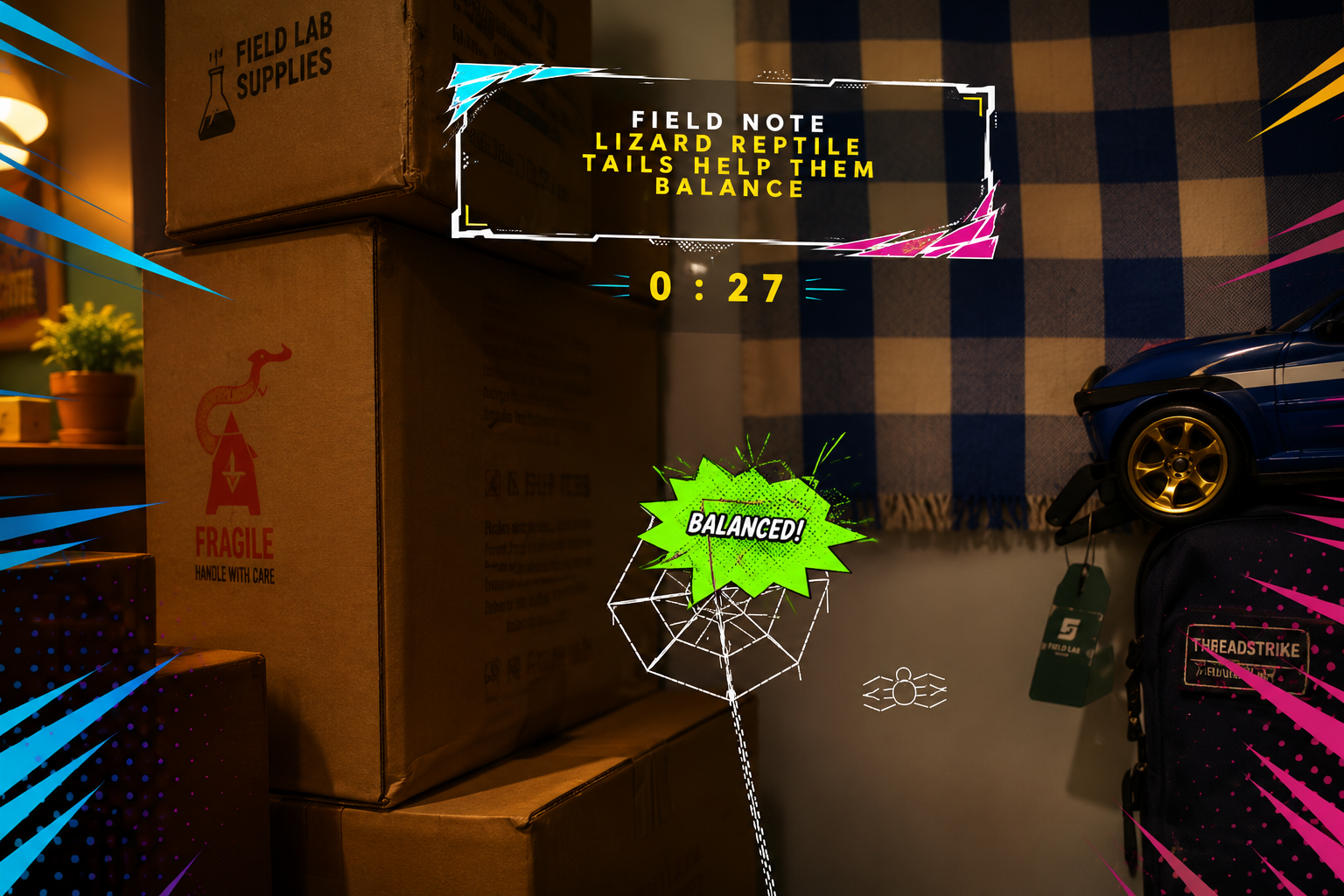
Threadstrike transforms the learner’s environment into an interactive biology field lab.
Players use a custom web-shooting gesture to track and tag procedurally generated specimens on real-world surfaces. The game supports both hands simultaneously, stabilized wrist-to-world aiming, world-mesh targeting, and a procedural hit cursor.
Specimens include:
- Lizards that crawl
- Ants that follow quick surface paths
- Wasps that fly
- Cockroaches that move rapidly and evade targeting
- Frogs that jump using procedural arcs
Each successful tag reveals a short biological fact. Facts are learning feedback—not score. Players must complete the required observations before the survey timer expires to advance.
How I built it
The project was built in Lens Studio with TypeScript, using Codex and GPT‑5.6 throughout development.
Core systems include:
- Slant-tolerant gesture detection
- Unified dual-hand web-shooting logic
- Stabilized wrist-directed raycasting
- Camera and world-mesh surface probing
- Procedural specimen geometry and animation
- Adaptive cursor-avoidance behavior
- Timed surveys and automatic progression
- Dynamic educational HUD content
- Procedural comic impact effects
- Original UI, sound effects, and background music
I collaborated with Codex through rapid testing and focused prompts such as making raycasting more stable, supporting both hands concurrently, improving angled gesture recognition, decoupling spawning from shooting, and turning the game into an educational field-lab experience.
Challenges
The biggest challenges were stabilizing noisy hand-tracking data, making the gesture work at natural wrist angles, spawning creatures without requiring an initial shot, and designing readable world-space UI for Spectacles.
These were addressed using temporal smoothing, anatomical hand-relative measurements, camera-forward world probes, fallback raycasts, configurable Inspector controls, and repeated testing in the lens view.
Accomplishments
- Natural web shooting from either or both wrists
- Five procedurally generated specimen families
- Species-specific crawling, flight, jumping, and evasion
- Endless timed surveys with progressive difficulty
- Biology facts integrated directly into gameplay
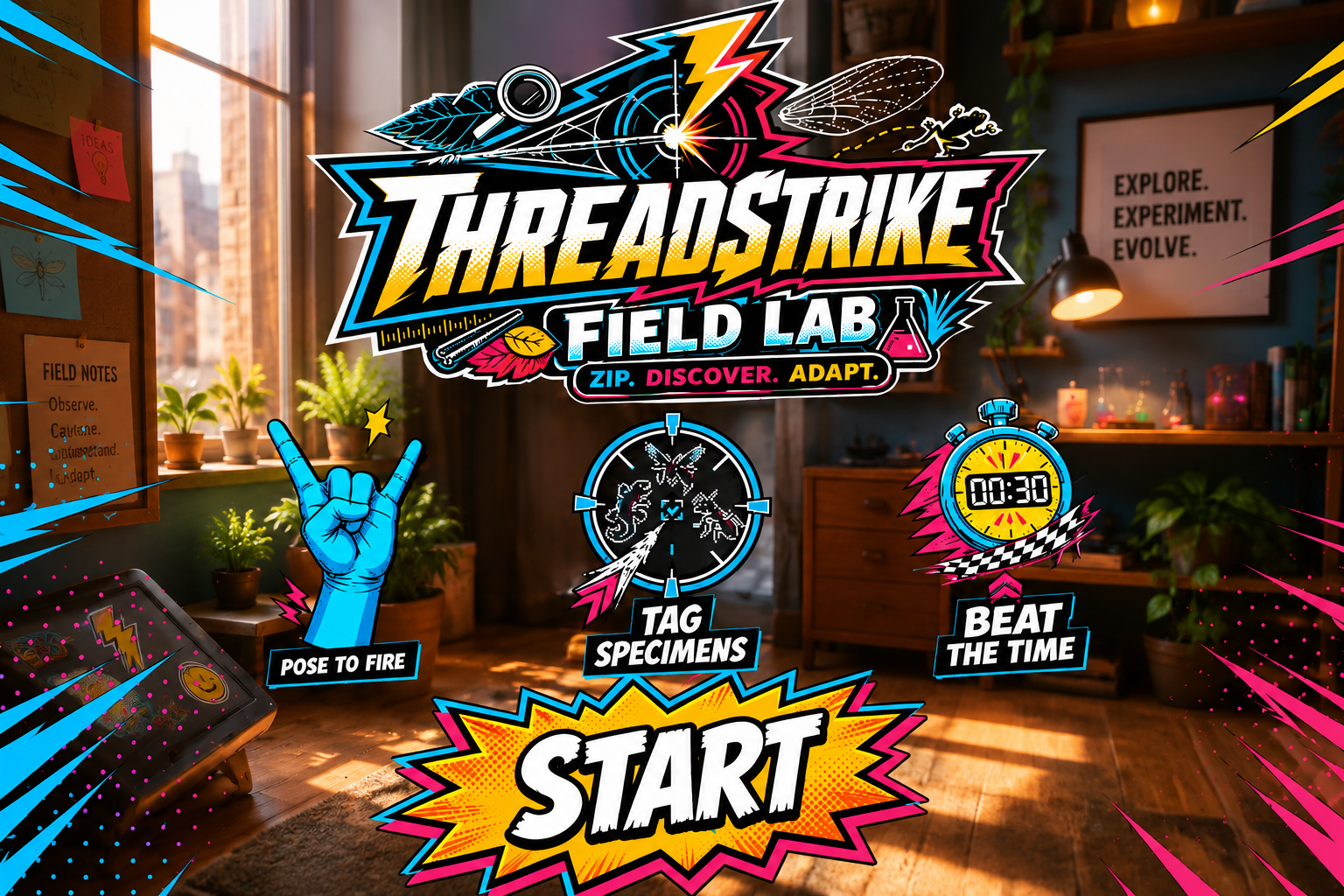
- Complete start, HUD, timer, game-over, and replay flow
- Original comic field-lab identity, SFX, and music
What I learned
Spatial interactions must account for uncertain tracking data rather than treating it as perfectly stable. Natural gestures work better when measured relative to the hand instead of world orientation.
I also learned that educational content is more engaging when it becomes an immediate reward for observation instead of being separated into a quiz.
What’s next
Next steps include additional species, biome-based surveys, a persistent field journal, accessibility controls, curriculum-aligned activities, and cooperative classroom exploration.
Built With
- argame
- augmentedreality
- biology
- codex
- computervision
- educationaltechnology
- gamedevelopment
- gesturerecognition
- gpt-5.6
- handtracking
- interactivelearning
- lensstudio
- openai
- proceduralanimation
- proceduralgeneration
- raycasting
- seriousgames
- shaders
- snapspectacles
- spatialaudio
- spatialcomputing
- typescript
- wearabletechnology
- worldmesh

Log in or sign up for Devpost to join the conversation.