Inspiration
We were inspired by the "last mile" problem in remote exploration. In both deep-earth lithium mining and precision agriculture, there are environments too dangerous, narrow, or delicate for heavy machinery or drones. We looked to the anatomy of the spider,nature’s most versatile climber,to create a platform that could "thread" through these impossible spaces.
What it does
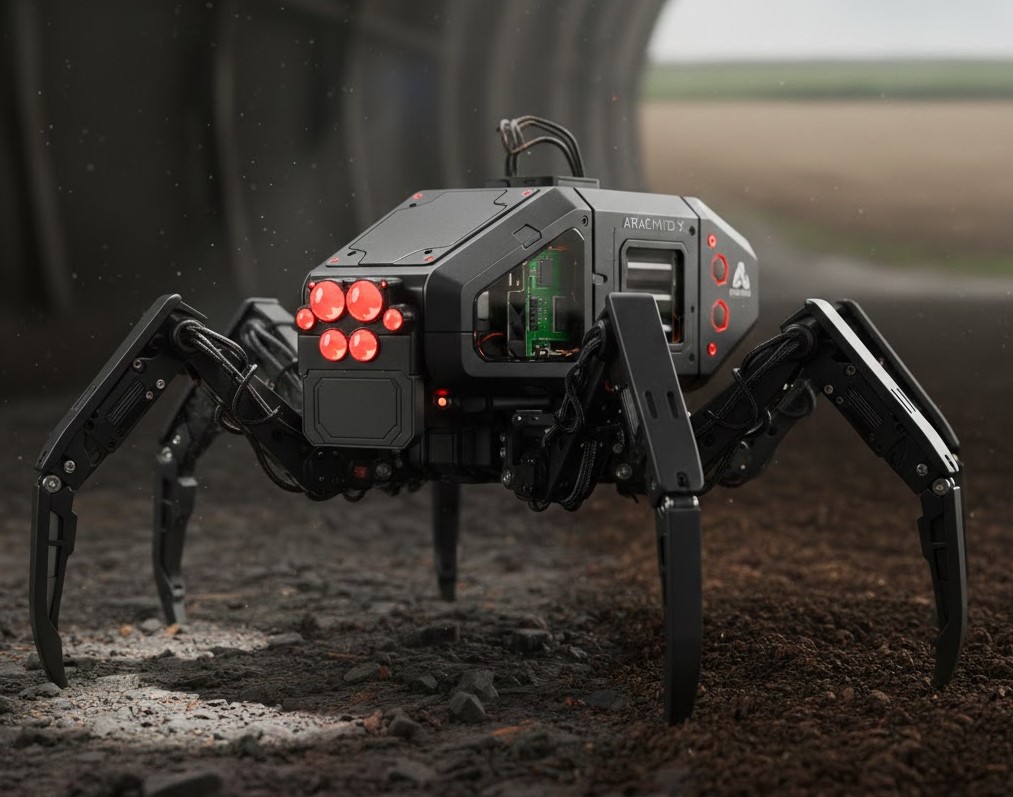
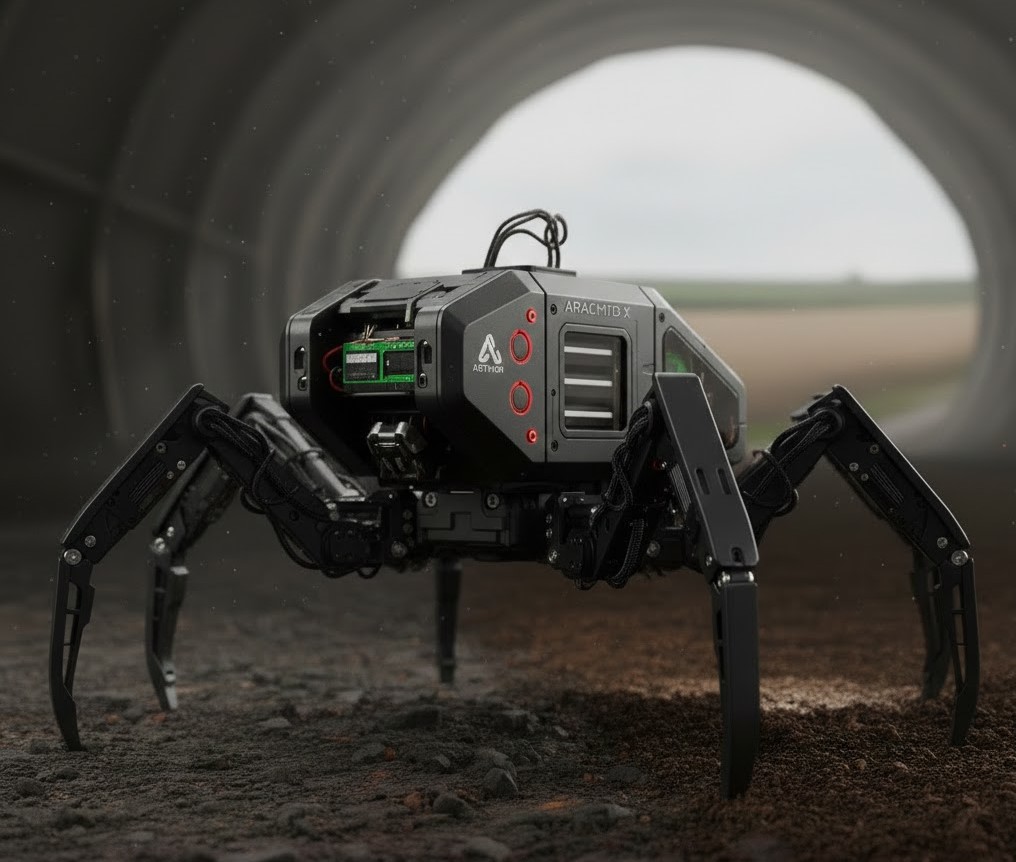
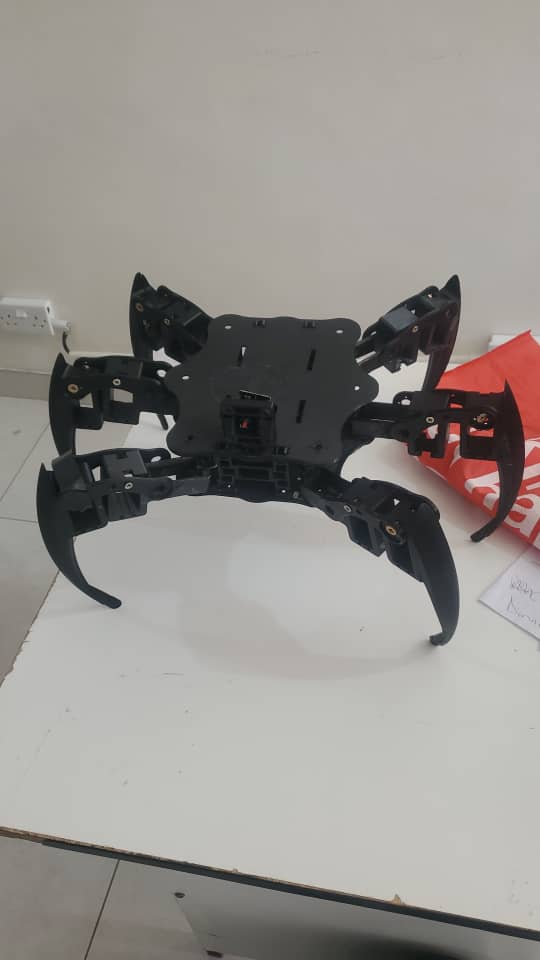
THREADR is a multi-terrain hexapod designed for dual-sector specialized tasks: Exploration: It traverses unstable mine shafts and narrow subterranean fissures to perform real-time spectroscopic analysis, identifying lithium-rich deposits without risking human lives or requiring massive excavation. Precision Agriculture: In the field, THREADR walks between and over crops without compacting the soil like heavy tractors do. It uses its multi-eye sensor array to scan individual plants for nutrient deficiencies, pest infestations, or soil moisture levels at the root level, allowing for "micro-dosing" of water or fertilizer.
How we built it
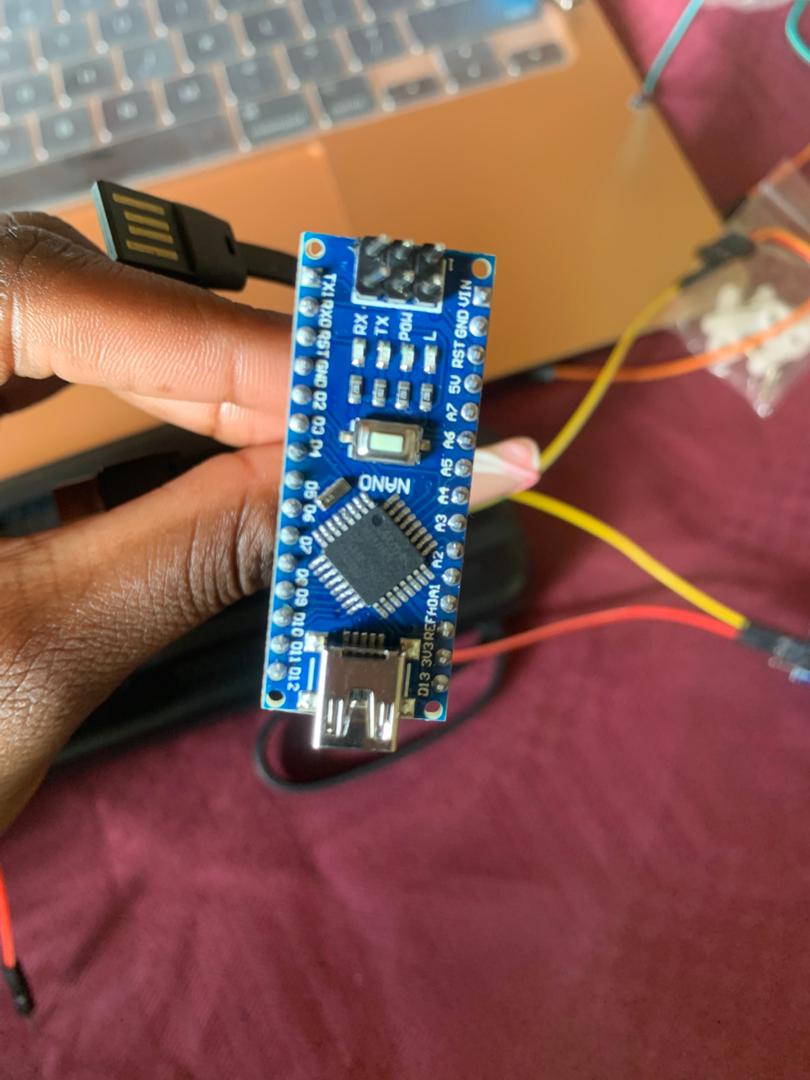
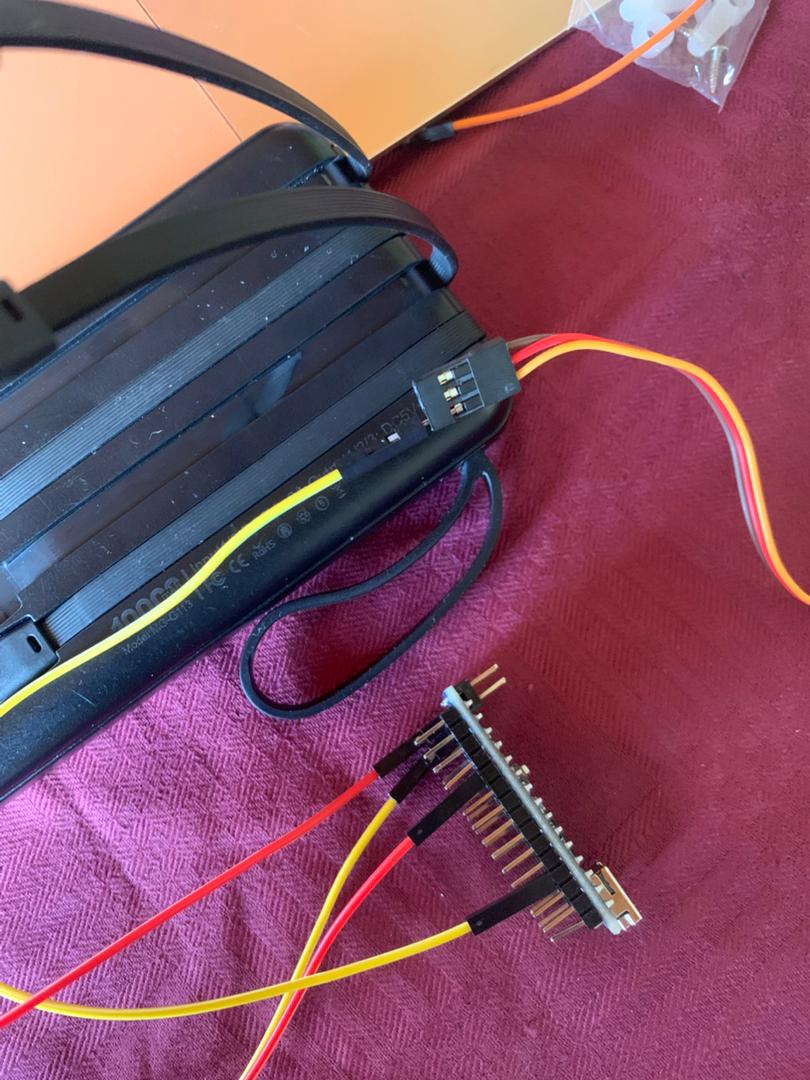
The Brain: We used an Arduino (or Raspberry Pi) as the central processor. It’s the "boss" that tells every leg when to move.
The Muscles: THREADR moves using servo motors at each joint. These are small, affordable motors that allow for precise angles—essential for "spider-like" crawling.
The Skeleton: The frame was designed in CAD software and then 3D printed. This kept the robot lightweight so it doesn't sink into soft farm soil or get stuck in mine crevices.
The Eyes: Instead of expensive mining gear, we used an Infrared (IR) sensor and a high-def camera module to "see" in the dark tunnels and check the color of plant leaves.
Challenges we ran into
The biggest hurdle was balance and gait synchronization. In a mine, the ground is never flat; in a field, the soil can be soft or muddy. We had to develop a "terrain-adaptive" algorithm that allows each leg to independently sense pressure and adjust its grip in milliseconds to prevent slipping or damaging delicate crops.
Accomplishments that we're proud of
Solving Two Problems with One Design: We are proud of creating a "dual-purpose" robot. Usually, mining and farming use completely different tools, but we designed a single mechanical system that can help find lithium for batteries and help farmers grow food more efficiently.
Mastering the Hexapod Logic: We successfully mapped out the complex math needed to move six legs at once. Keeping a robot balanced on uneven mine rocks or soft farm soil is a huge challenge, and our gait design solves that.
The "Eco-Friendly" Footprint: We designed a unique "low-pressure" foot for the robot. This ensures that when it’s in a field, it doesn’t pack down the dirt (soil compaction), which is a major problem with big, heavy tractors that can hurt crop growth.
Smart Exploration Strategy: We developed a plan for the robot to "see" in the dark. By choosing a specific sensor array, we’ve made it possible for THREADR to tell the difference between a regular rock and a lithium-rich mineral without needing a human to be in the dangerous mine shaft.
Weight Optimization: We managed to keep the theoretical design very light. By using a "skeleton" style frame, we’ve ensured the robot uses less battery power, allowing it to stay out in the fields or mines for longer shifts.
What we learned
We learned that robotics is just as much about mechanical empathy as it is about code. To work in agriculture, the robot has to be "gentle" enough not to crush a seedling, but to work in a mine, it has to be "tough" enough to survive a rockfall. Balancing these two extremes taught us a lot about versatile material science.
What's next for THREADR
Solar Charging: We want to add solar panels to THREADR’s back so it can live in a field for months, charging itself during the day and working at night.
AI Pathfinding: Currently, we "drive" it. Next, we want to give it autonomous navigation so it can map a mine or a farm completely on its own.
The "Swarm": Imagine 10 THREADRs working together. One finds the lithium, another marks the spot, and the others keep exploring.
Underground Wireless: Developing a better way to send data through thick rock walls so the robot can go deeper into mines without losing connection.

Log in or sign up for Devpost to join the conversation.