-
-
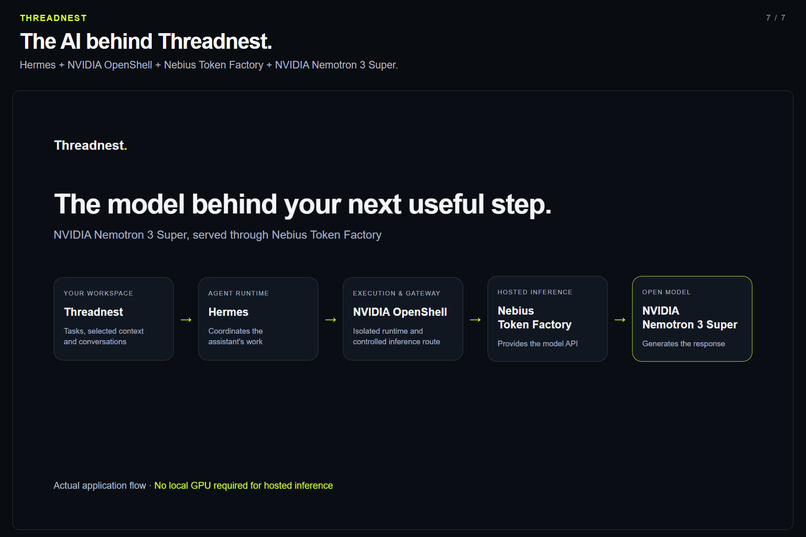
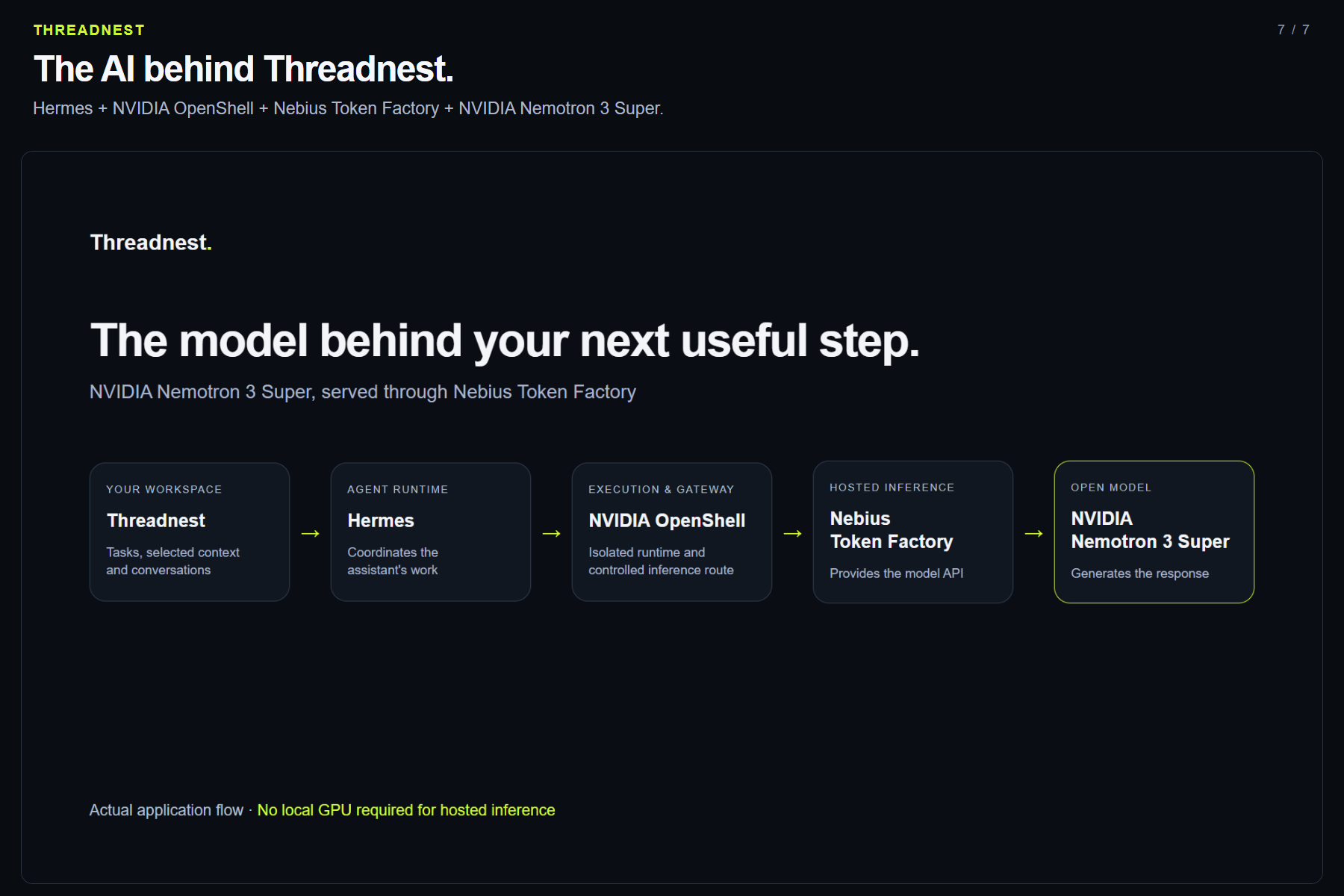
AI architecture
-
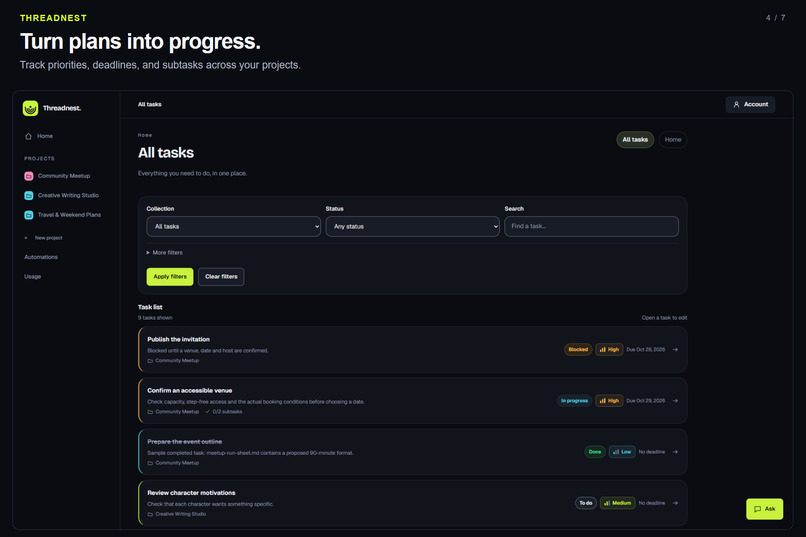
Tasks and deadlines
-
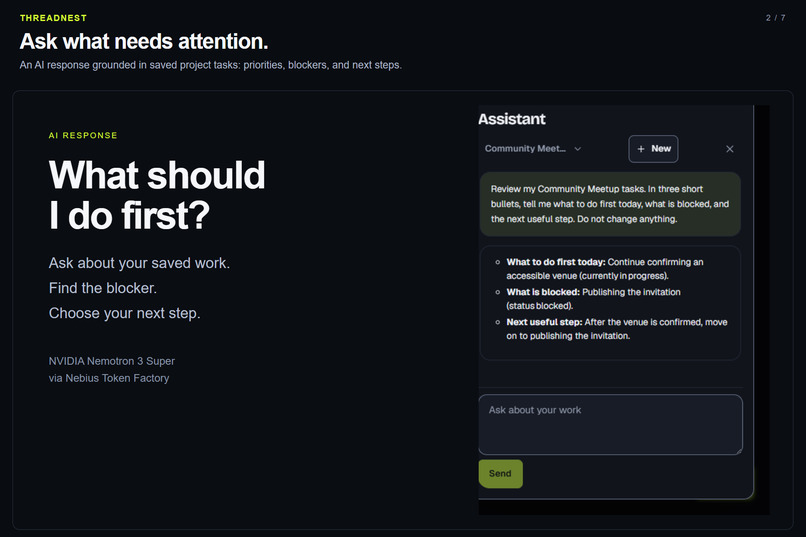
AI assistant
-
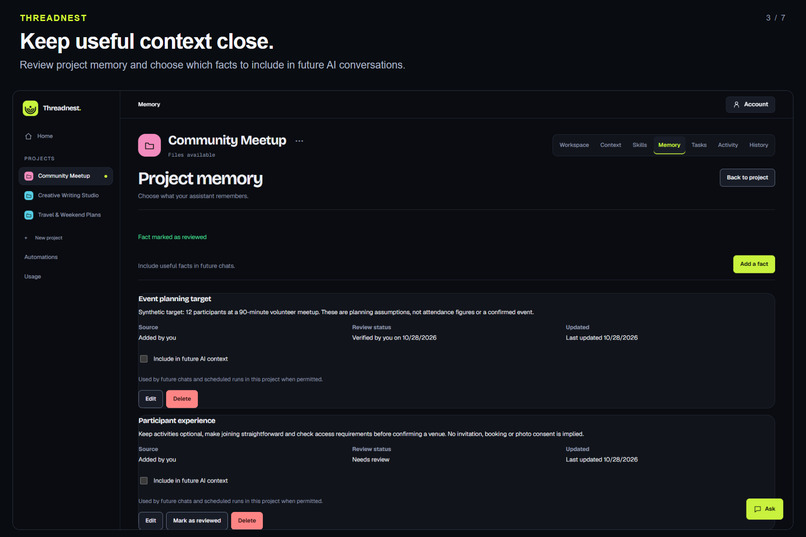
Project memory
-
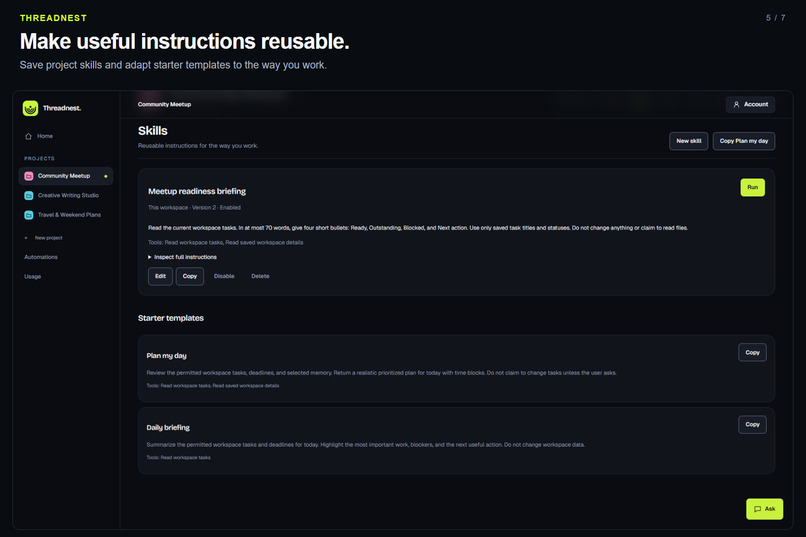
Reusable skills
-
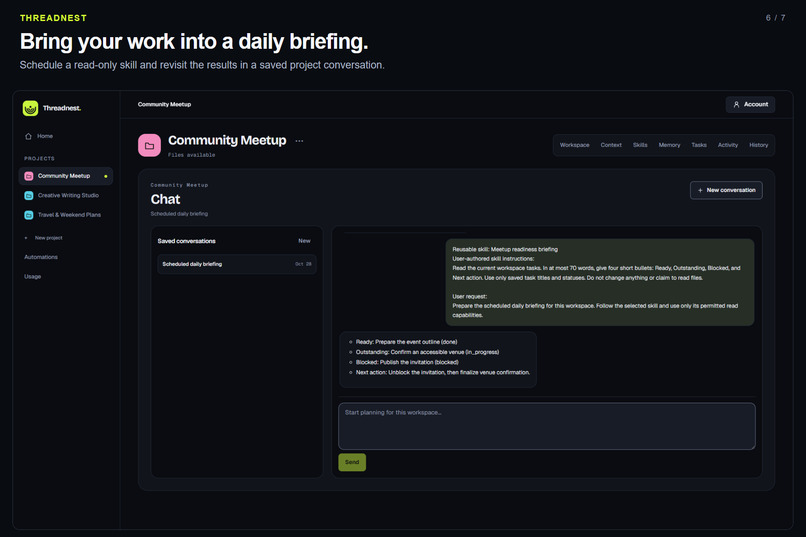
Daily briefings
-
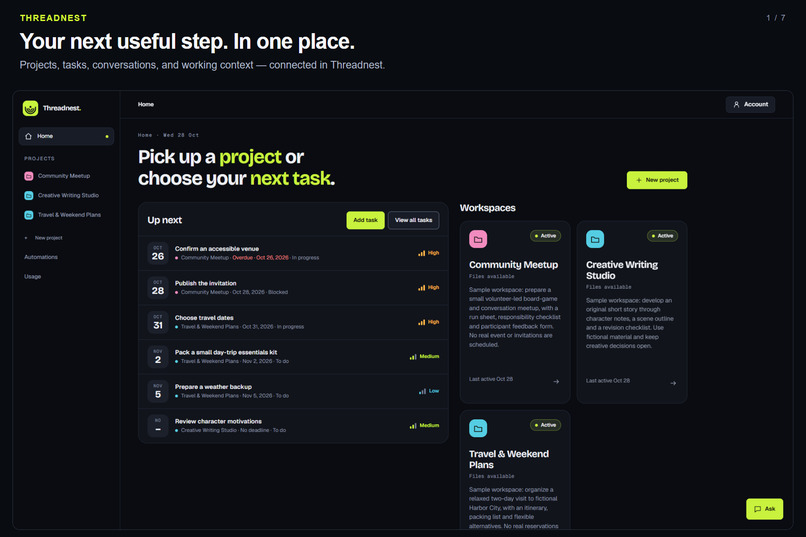
Workspace overview
Inspiration
My plans, notes, and tasks often end up scattered across different tools and AI conversations. Every time I return to a project, I have to rebuild the context: what I was doing, what changed, and what needs attention next.
I built Threadnest to make that easier. The idea is a personal productivity assistant that keeps working context connected and helps turn it into a useful next step.
What it does
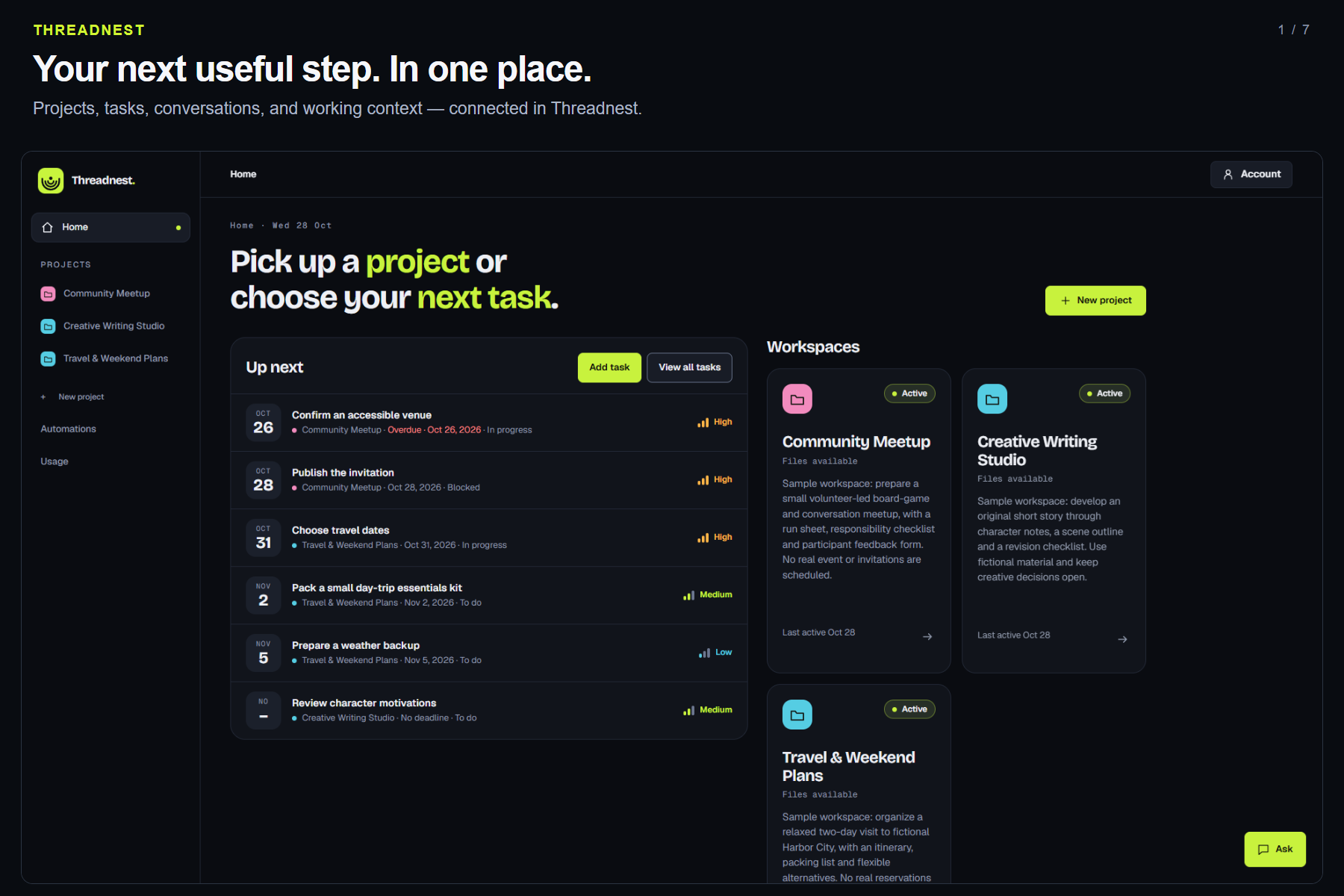
Threadnest brings projects, conversations, files, tasks, and memory into one workspace.
Users can:
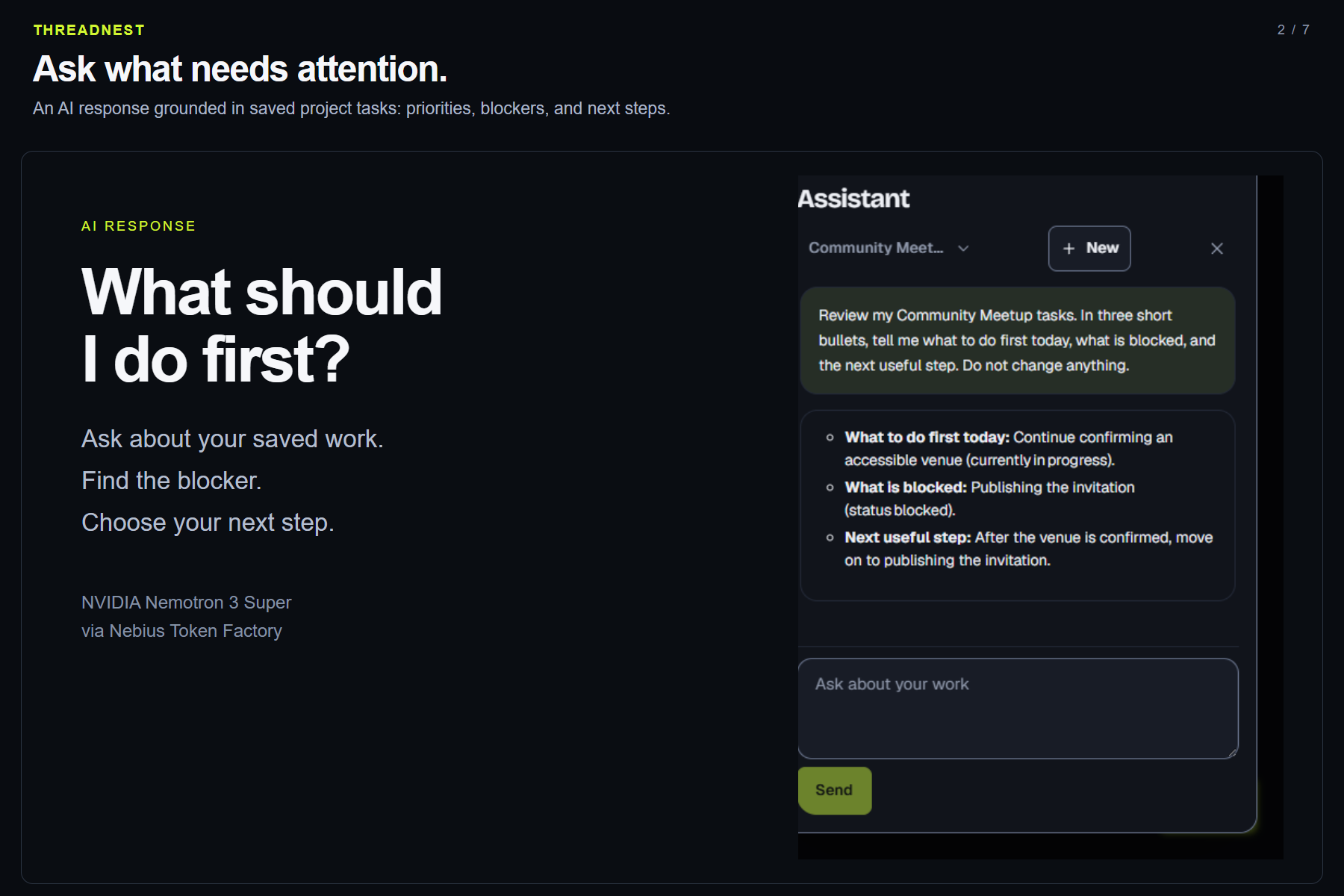
- Ask the assistant what needs attention based on their saved work.
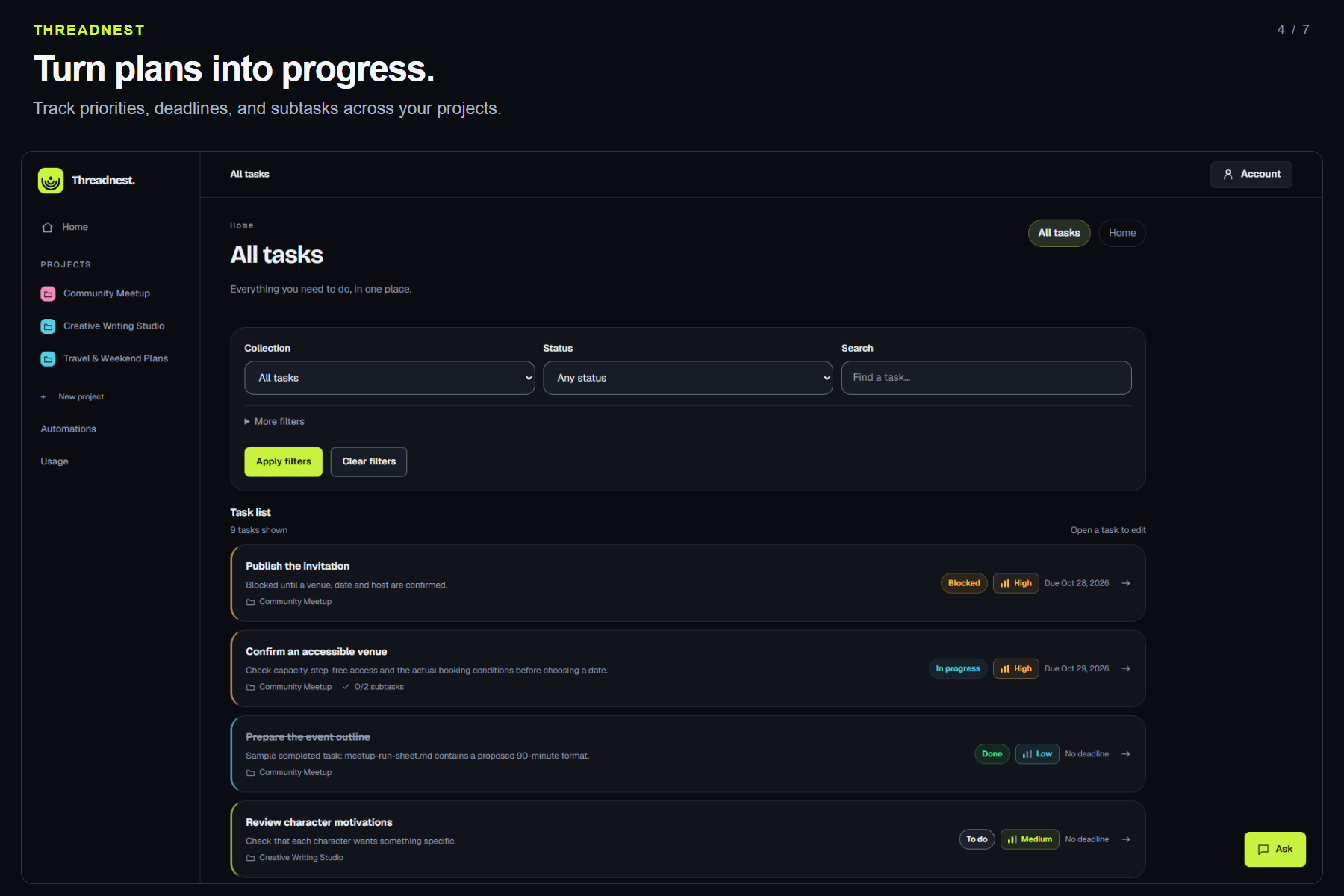
- Organize tasks with priorities, deadlines, and subtasks.
- Choose which files and conversations the assistant can use as context.
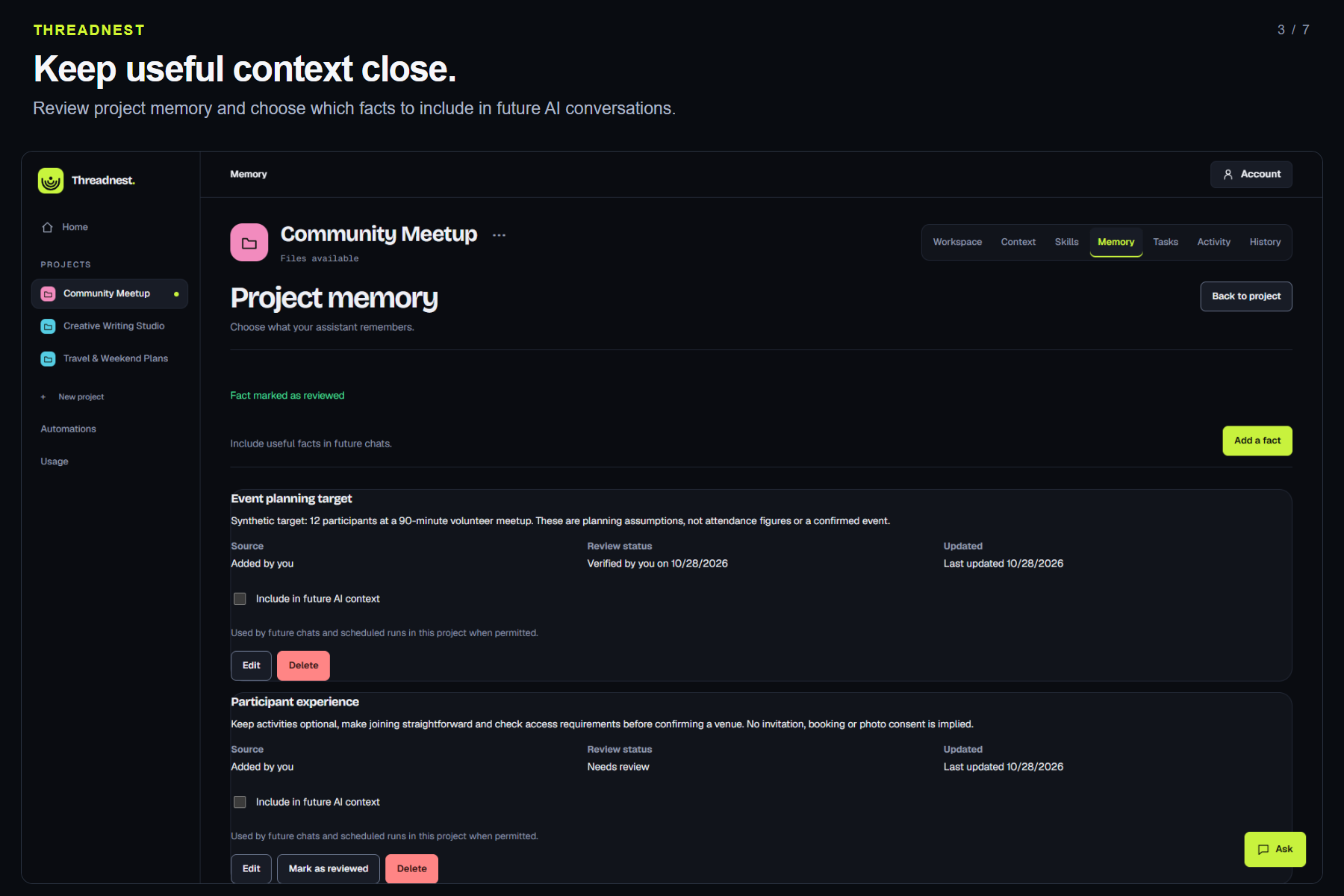
- Review project memory to carry useful details across conversations.
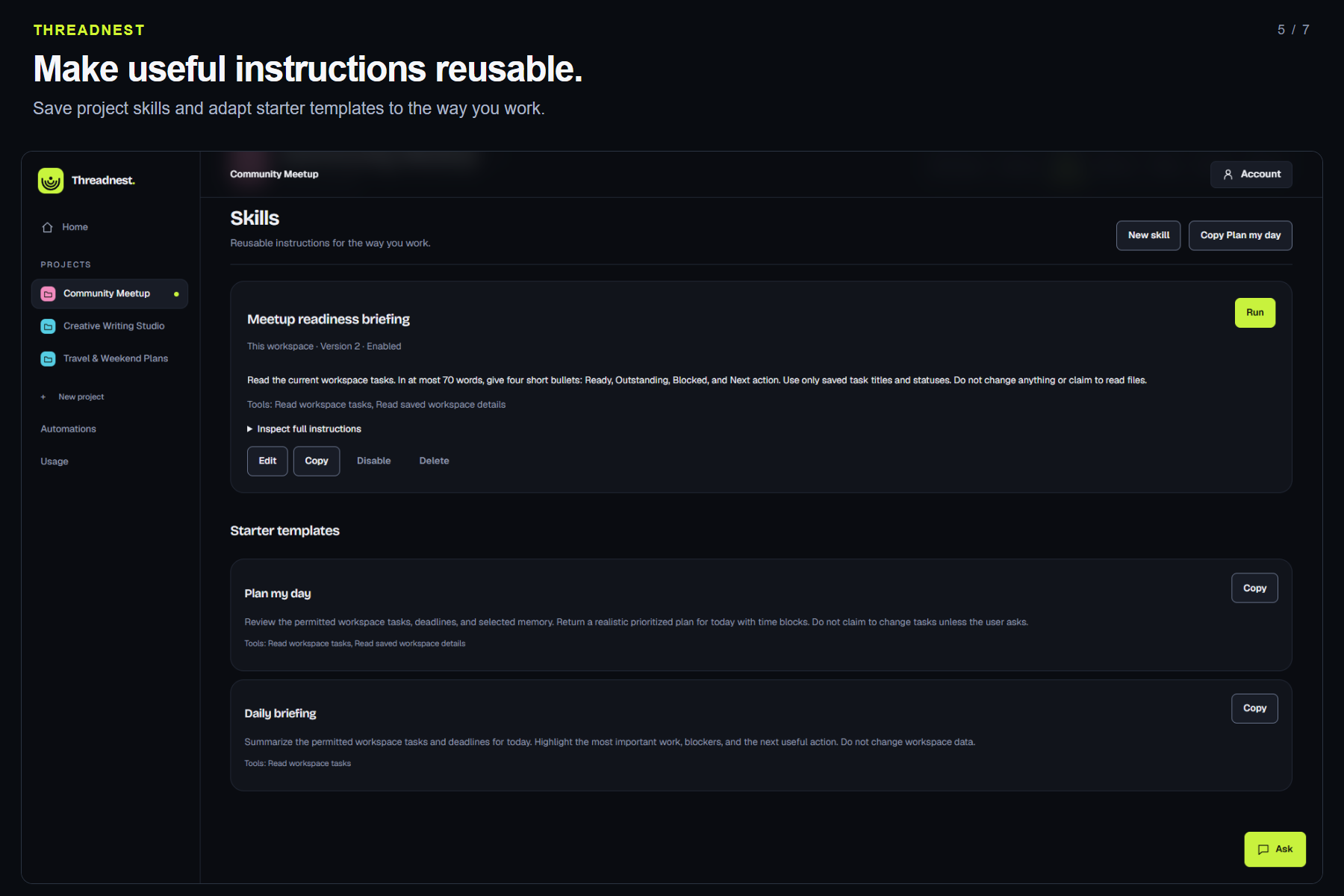
- Save reusable instructions as skills.
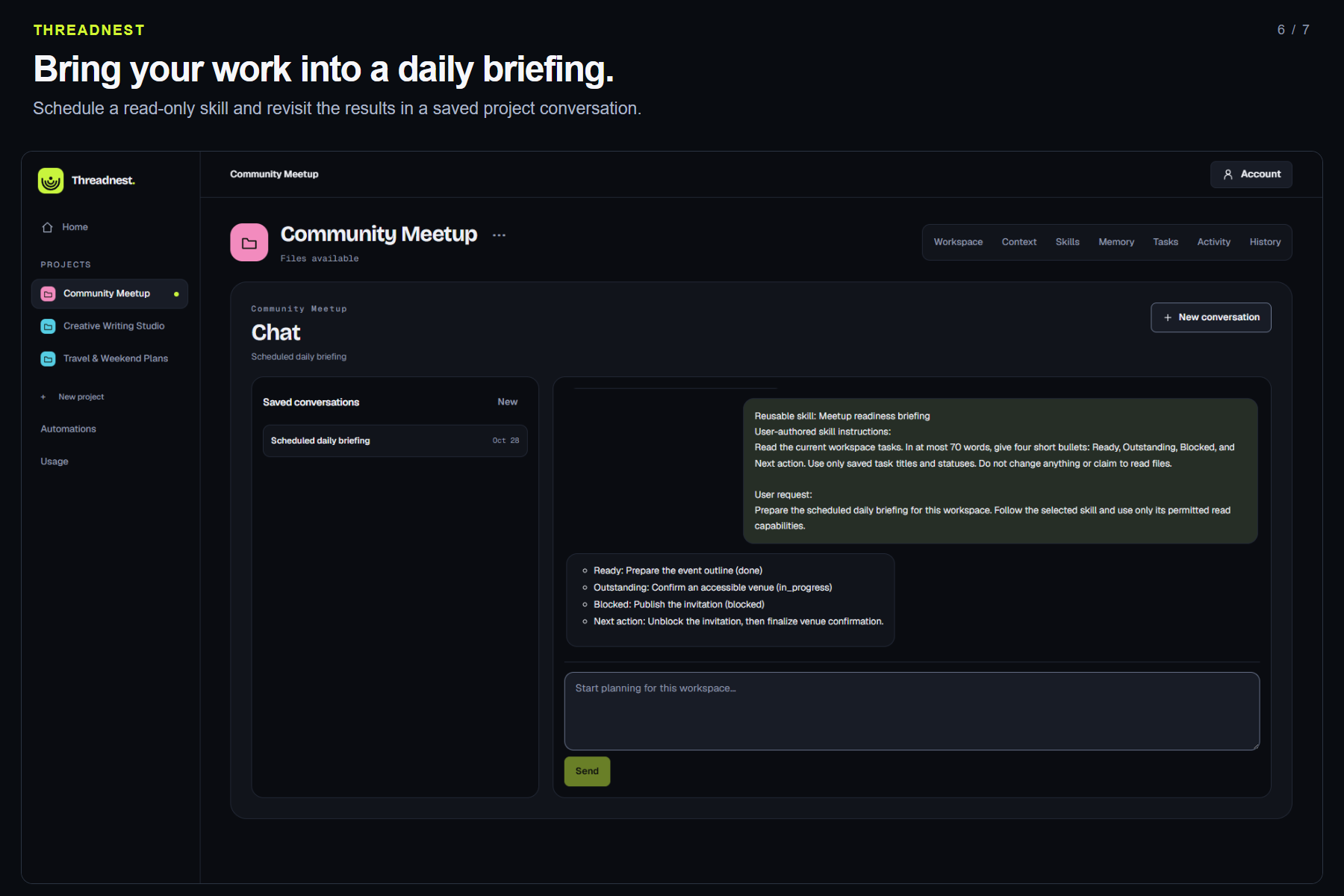
- Schedule read-only briefings and revisit the results in project conversations.
A public showcase and an isolated, editable demo workspace let visitors explore the experience.
How I built it
The frontend uses React and TypeScript, with an Express and TypeScript backend and PostgreSQL for persistent data.
Hermes coordinates the agent workflow, while NVIDIA OpenShell provides the isolated runtime and controlled inference route. The application uses Nebius Token Factory to access NVIDIA Nemotron 3 Super for the AI responses shown in the demo.
This setup lets Threadnest use hosted model inference without requiring users to run a model-serving GPU locally.
Challenges I faced
One challenge was deciding what context the assistant should receive. Sending everything would make conversations harder to control, so I added explicit context selection and reviewable project memory.
Another challenge was connecting AI output to everyday work. Tasks, reusable skills, and scheduled briefings give users ways to act on an answer and return to it later.
Provider connection failures during testing also highlighted the importance of checking the actual response rather than treating a completed request as proof of a useful result.
What I learned
I learned that a useful productivity assistant needs more than a capable model. It also needs relevant context, persistent state, clear controls, and reliable ways to connect an answer to the user's work.
Building Threadnest helped me understand how agent orchestration, an isolated runtime, hosted inference, and a persistent workspace fit together in a working application.
What I’m proud of
I’m proud of bringing these pieces into a connected experience: users can start with a question, inspect the project behind the answer, update their tasks, and reuse the same context in a later briefing.
The demo shows this with realistic projects and real model responses.
What’s next
I want to improve inference reliability, make the source of an answer easier to understand, and refine the experience based on feedback from people using Threadnest for their own projects.
Try it
Working app: https://threadnest.patanin.workers.dev/
Source code: https://github.com/pataninn/Personal-AI-Workspace
Built With
- docker
- express.js
- hermes
- nebius-token-factory
- node.js
- nvidia-nemotron
- nvidia-openshell
- postgresql
- radix-ui
- react
- redux-toolkit
- tailwind-css
- typeorm
- typescript
- vite

Log in or sign up for Devpost to join the conversation.