-
-
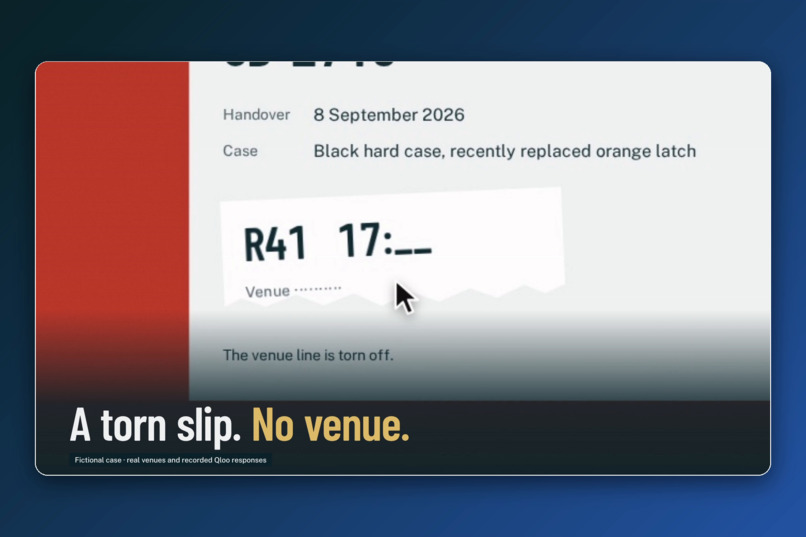
The torn courier slip that came with screening drive SD-2716. The venue line is missing.
-
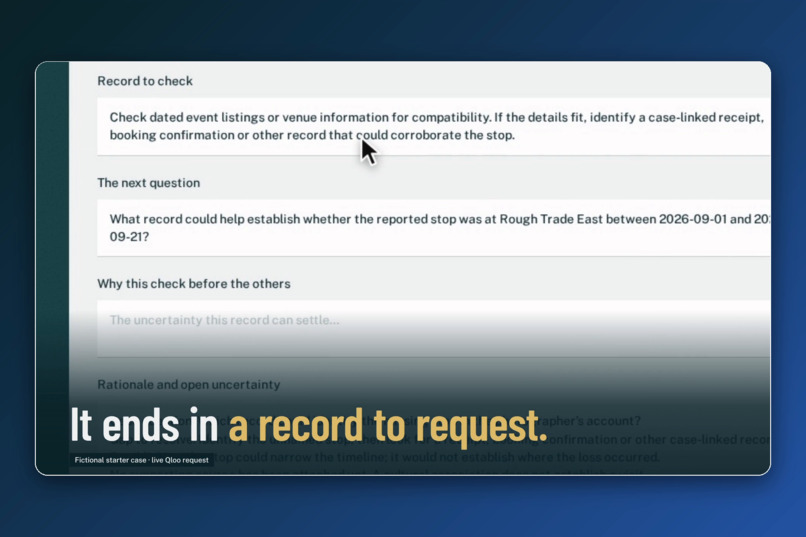
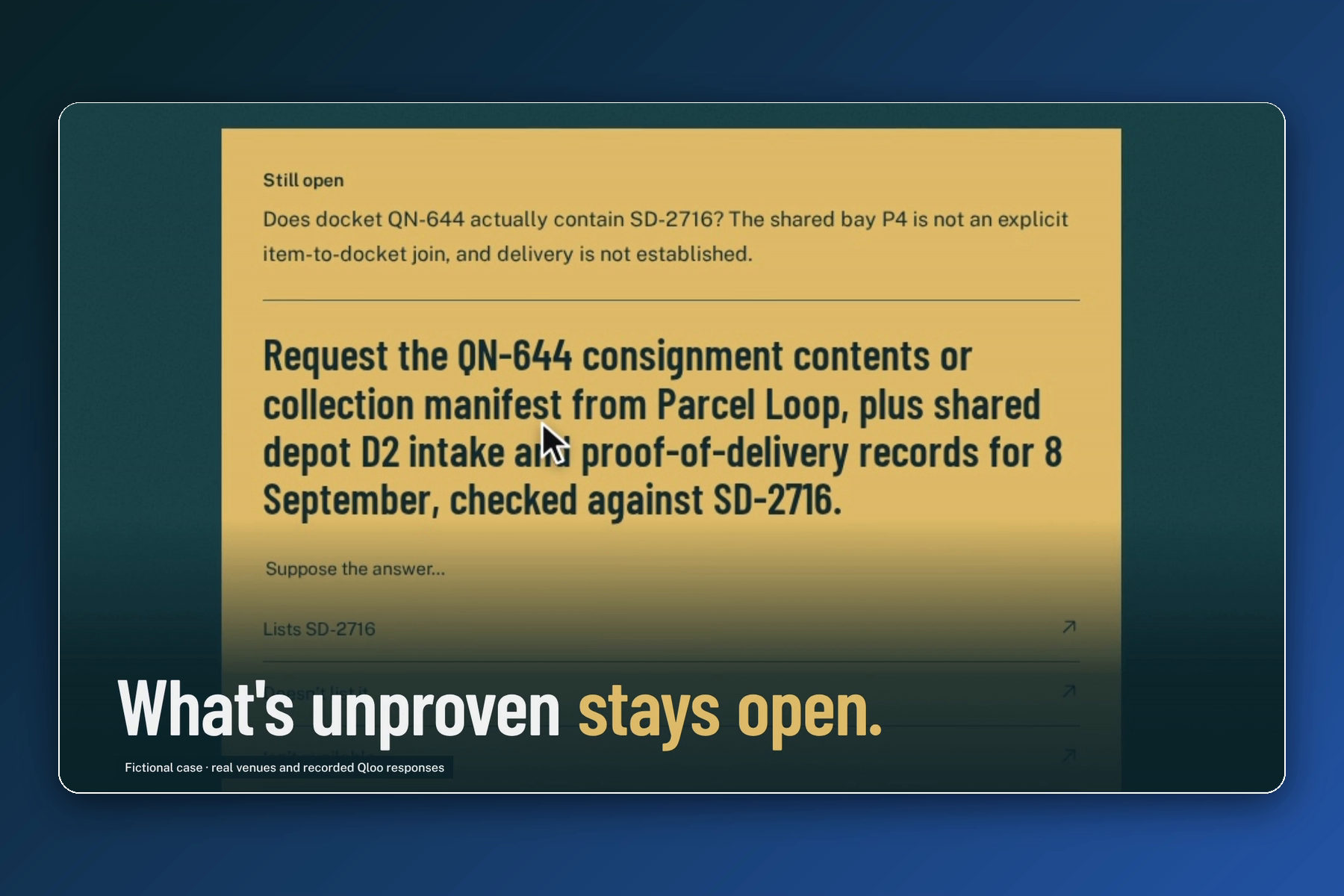
The enquiry names the record to check and the question it should settle.
-
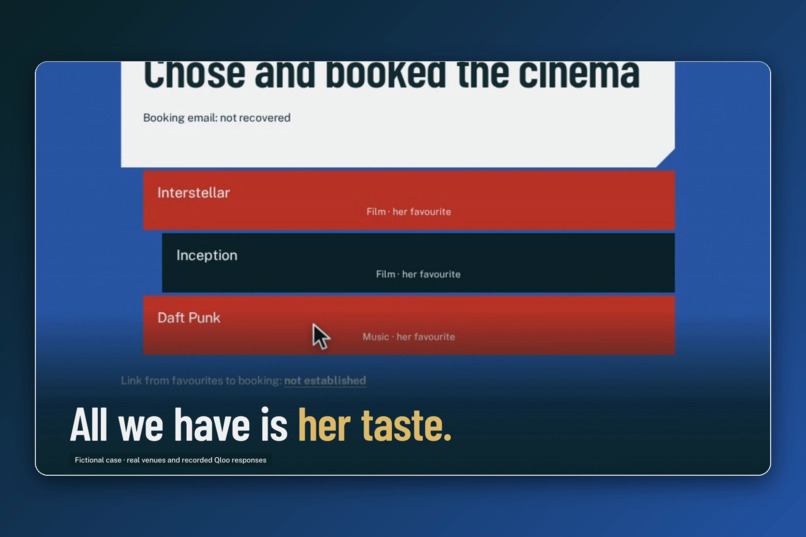
Each reference keeps its origin. The link from her favourites to the booking stays marked as not established.
-
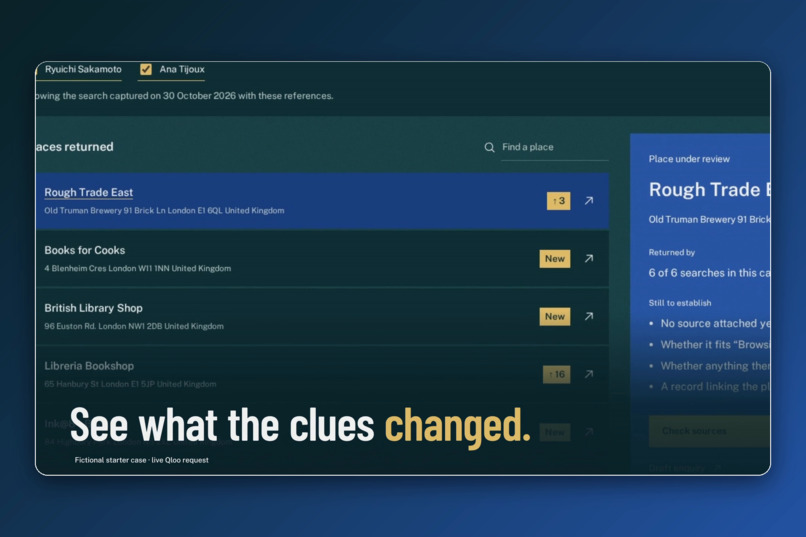
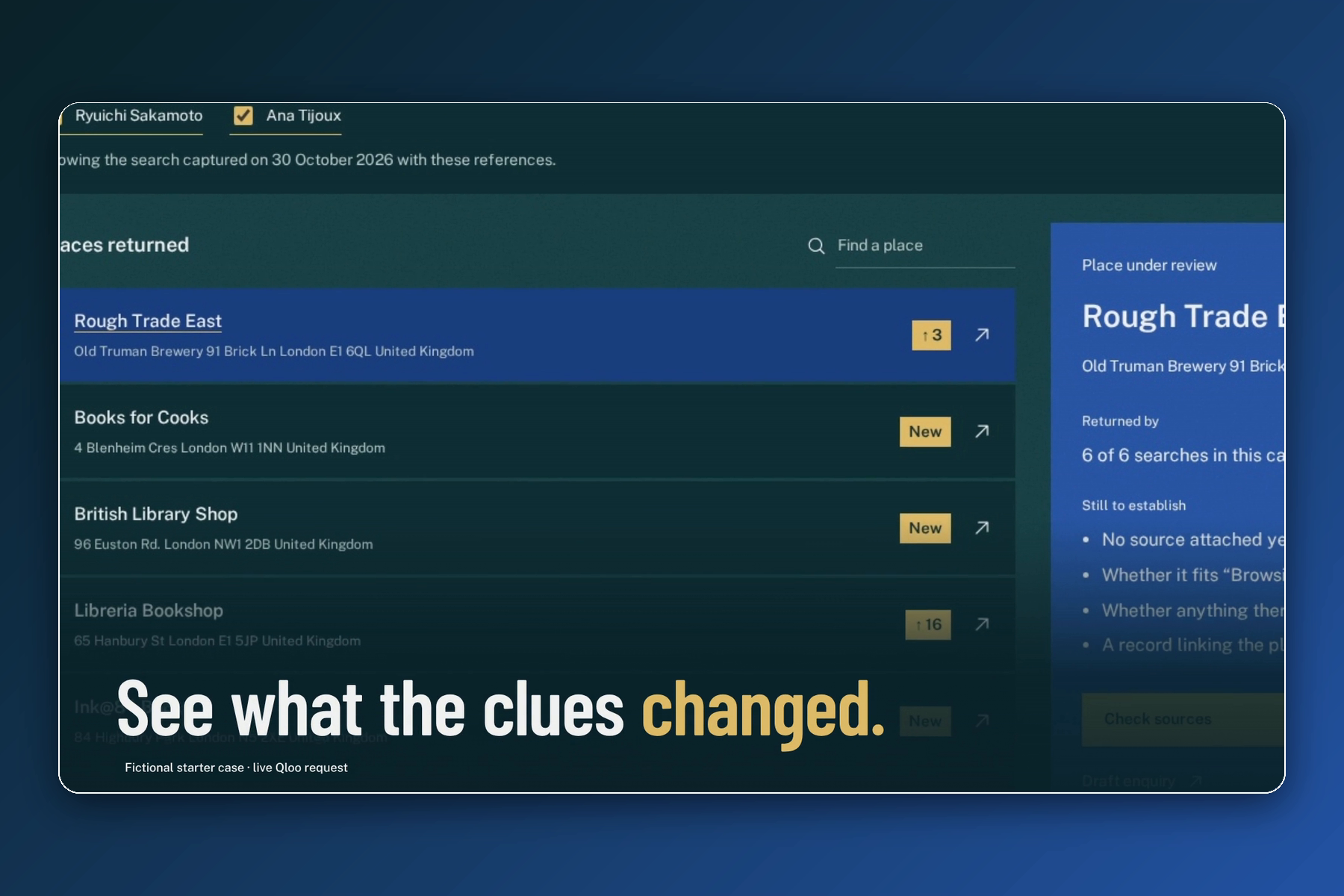
Live results show which places the references moved or surfaced against the control.
-
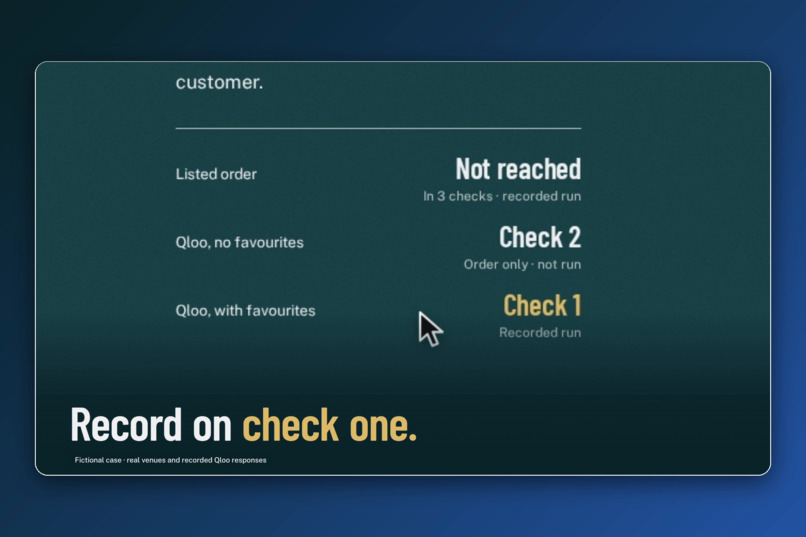
Checks until the record, side by side. The unrun control is labelled explicitly.
-
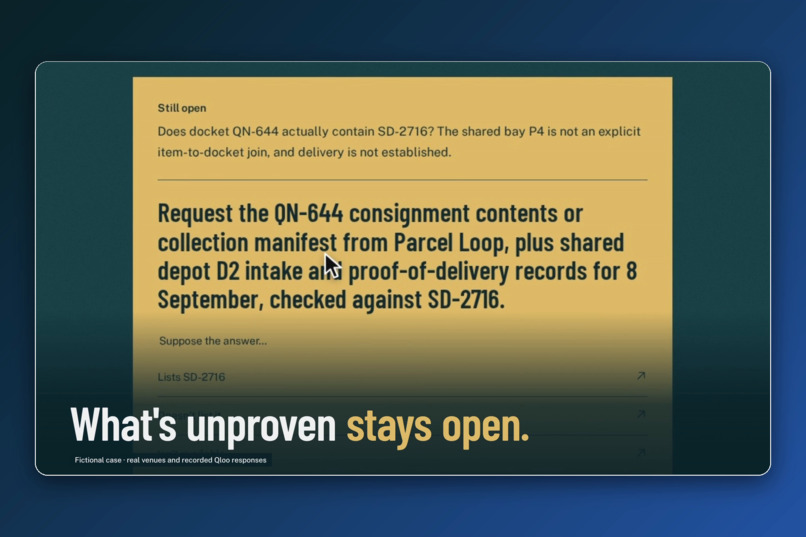
The record supports receiving. The next enquiry addresses the missing consignment link.
-
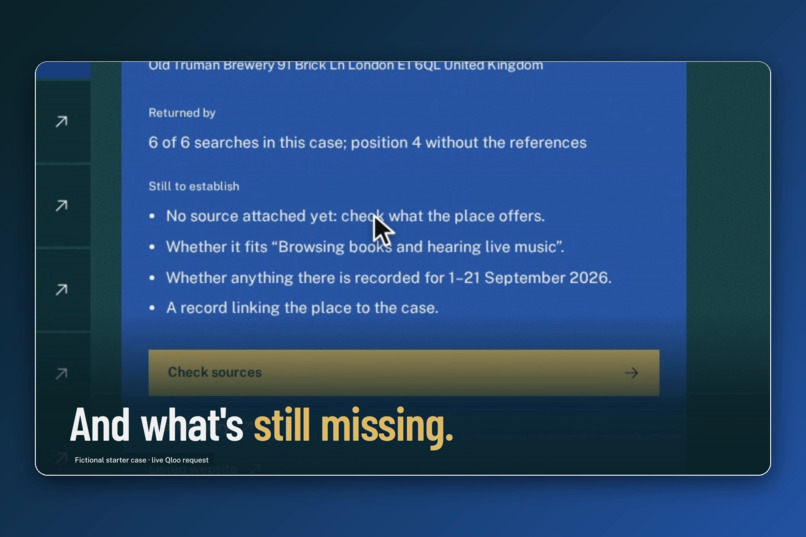
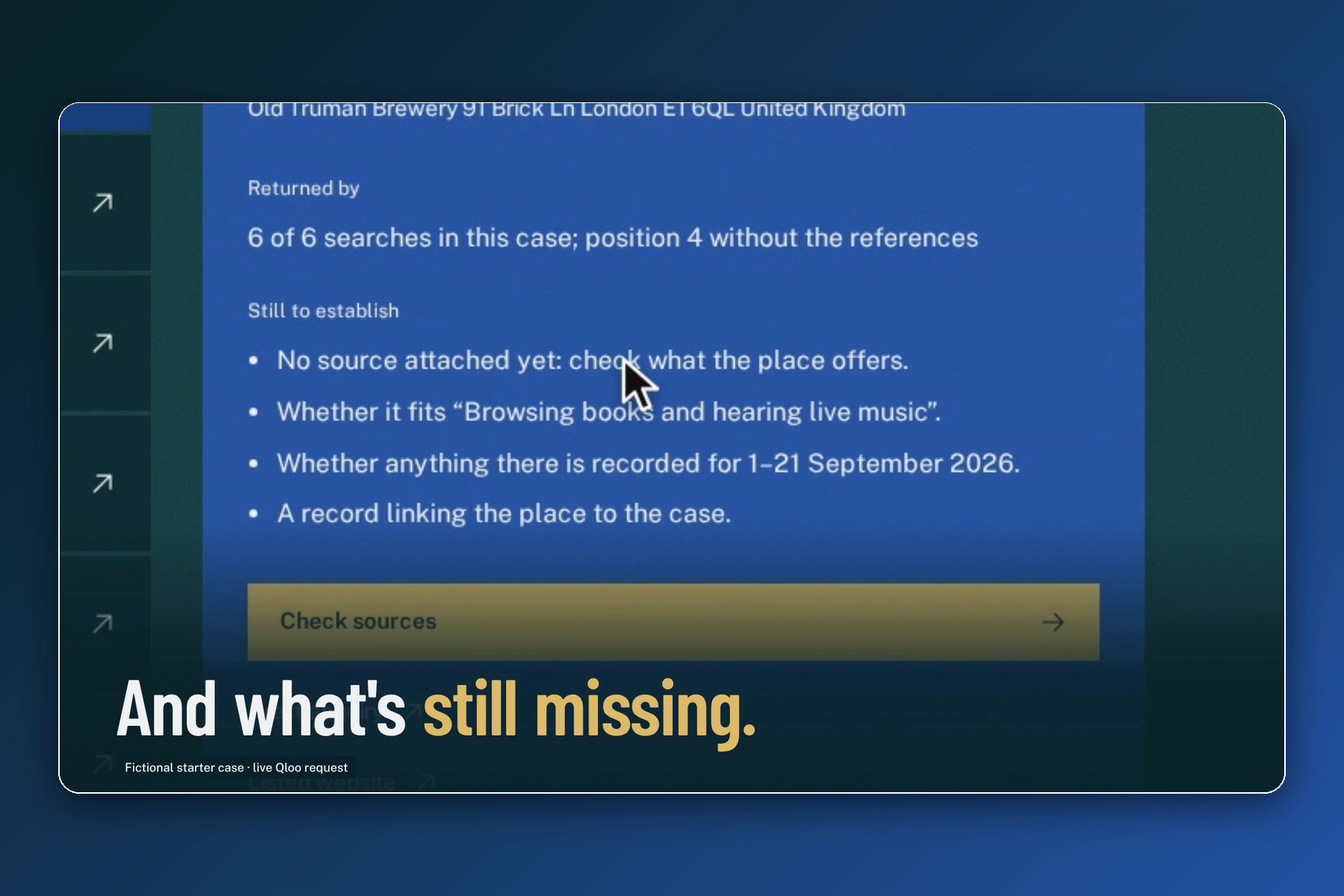
Each place under review lists what is still to establish, including a record linking it to the case.
-
threadline: cultural clues reorder the checks; records decide what happened.
-
 GIF
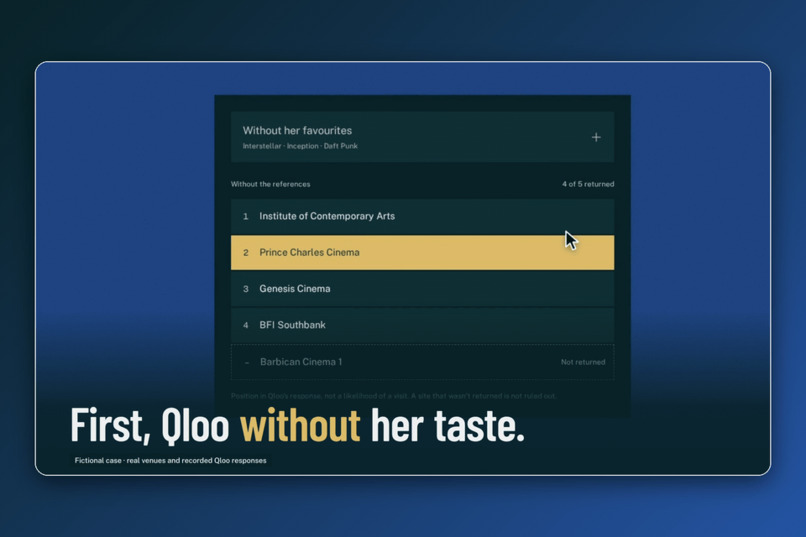
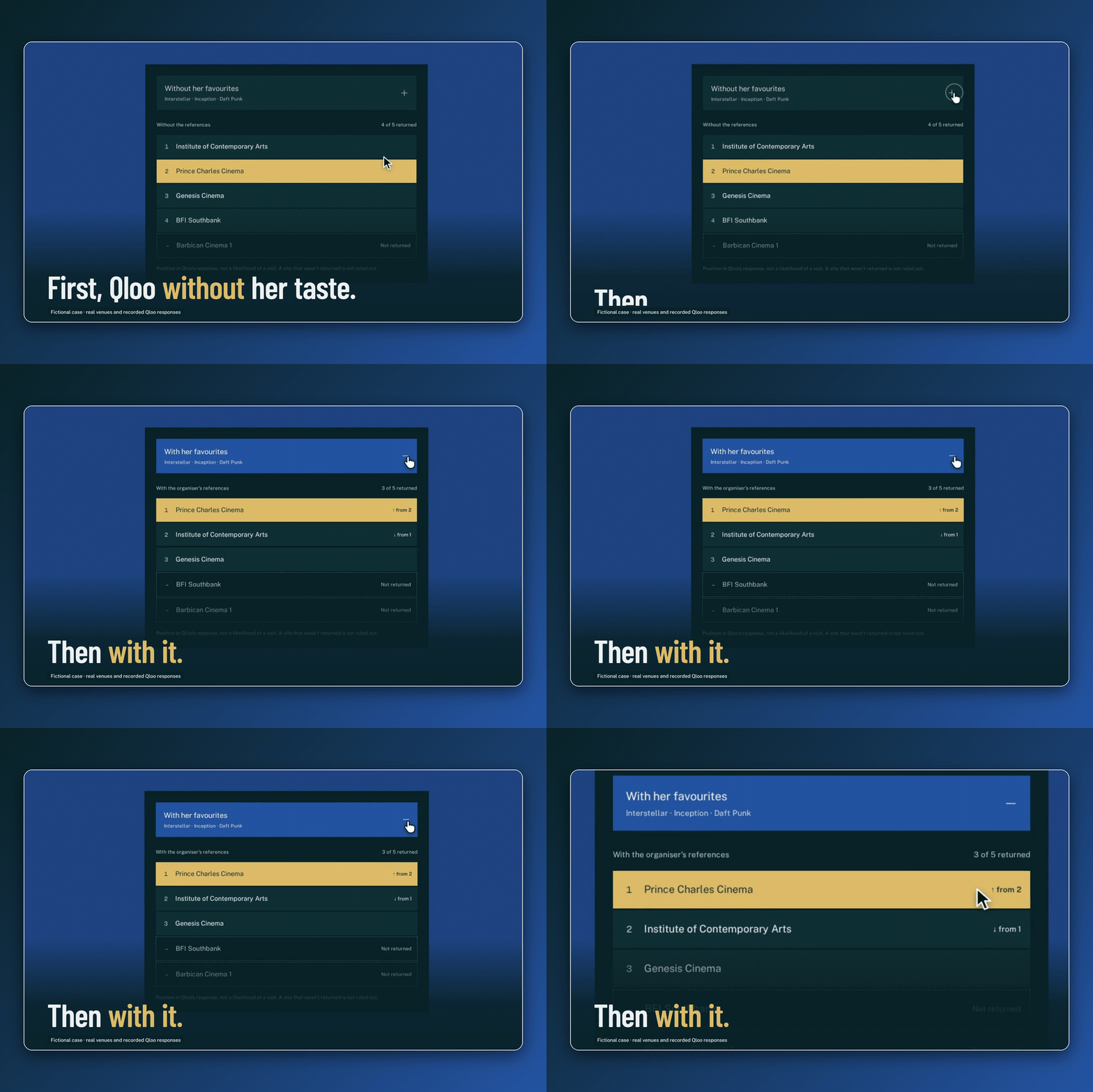
The references move the matching venue from second to first.
-
 GIF
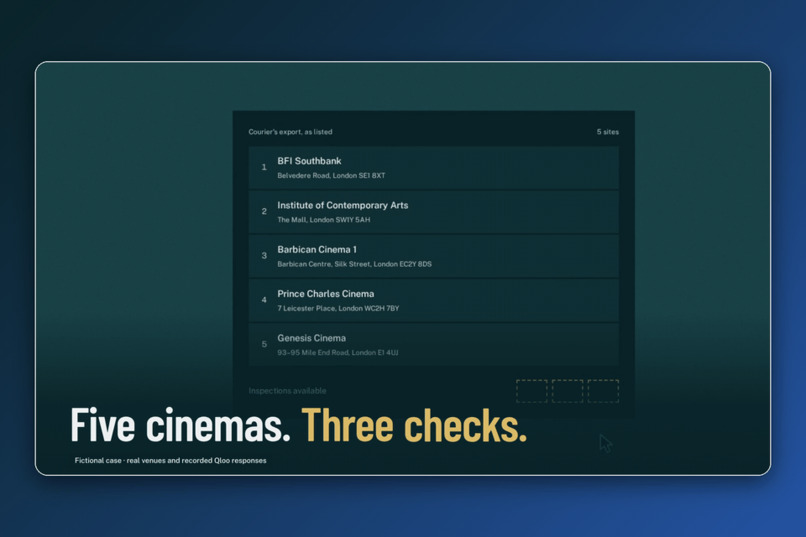
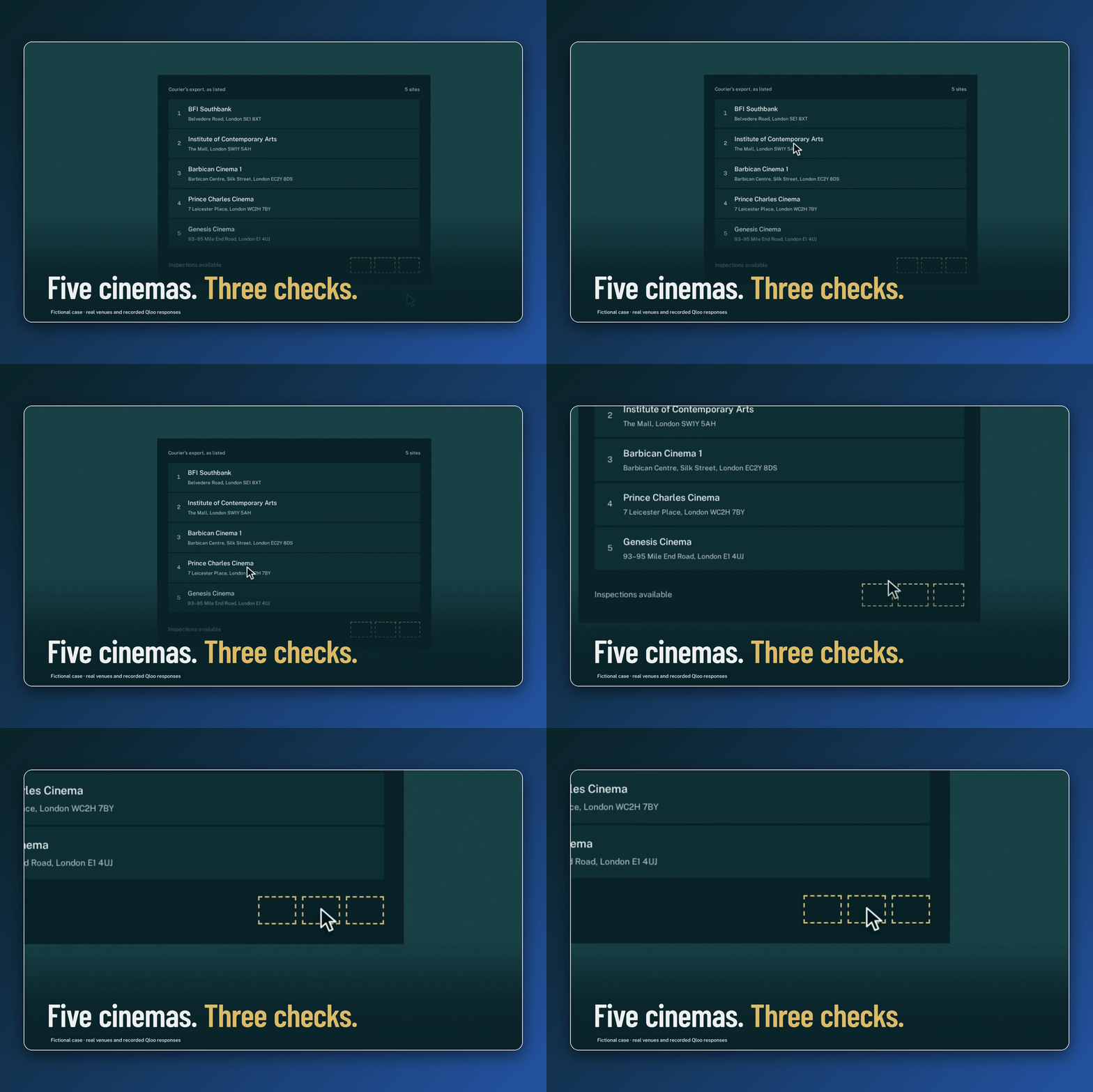
The investigator has three inspections to find a relevant record among five possible sites.
-
 GIF
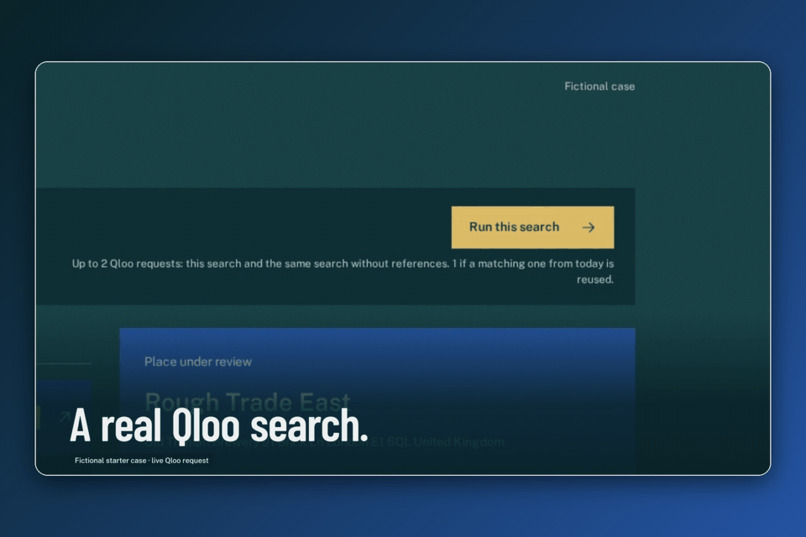
A live search on a fictional starter case, requested alongside the same search without references.
-
 GIF
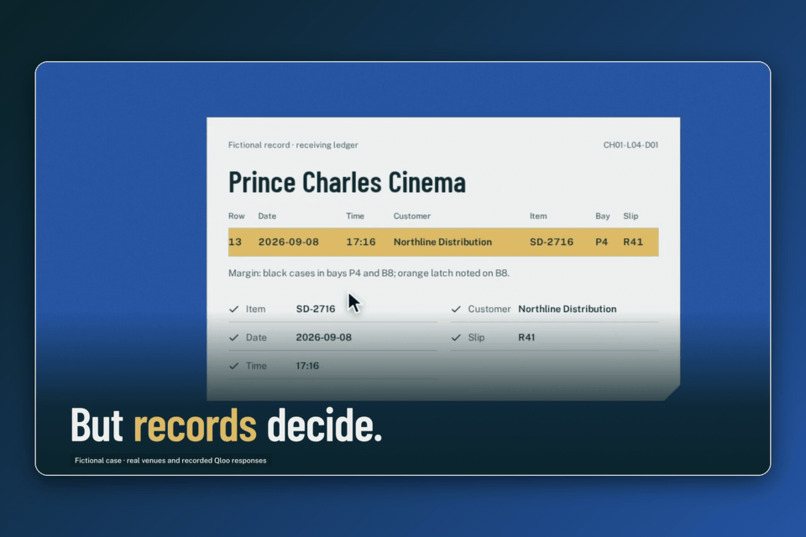
The fictional receiving ledger: row 13 matches the reported customer, date, item and slip.
Inspiration
The next lead should come with a next check.
An investigator has five possible cinemas and a budget of three records checks. Threadline uses Qloo’s cultural intelligence to help decide where to begin. Its AI research agent develops a specific enquiry from the findings and revises the next step when an answer arrives.
In our recorded fictional case, the Qloo-assisted run inspected the matching venue first. The listed-order LLM run used all three inspections without reaching it. The receiving entry then prompted a follow-up enquiry about an unresolved consignment.
Screening drive SD-2716 is unaccounted for after a courier handover. A torn slip is missing its venue line, and the courier’s export lists five London cinemas. The organiser chose the venue and supplied Interstellar, Inception and Daft Punk as favourites during intake. Her booking email remains missing, so the connection between those interests and her choice still needs investigation.
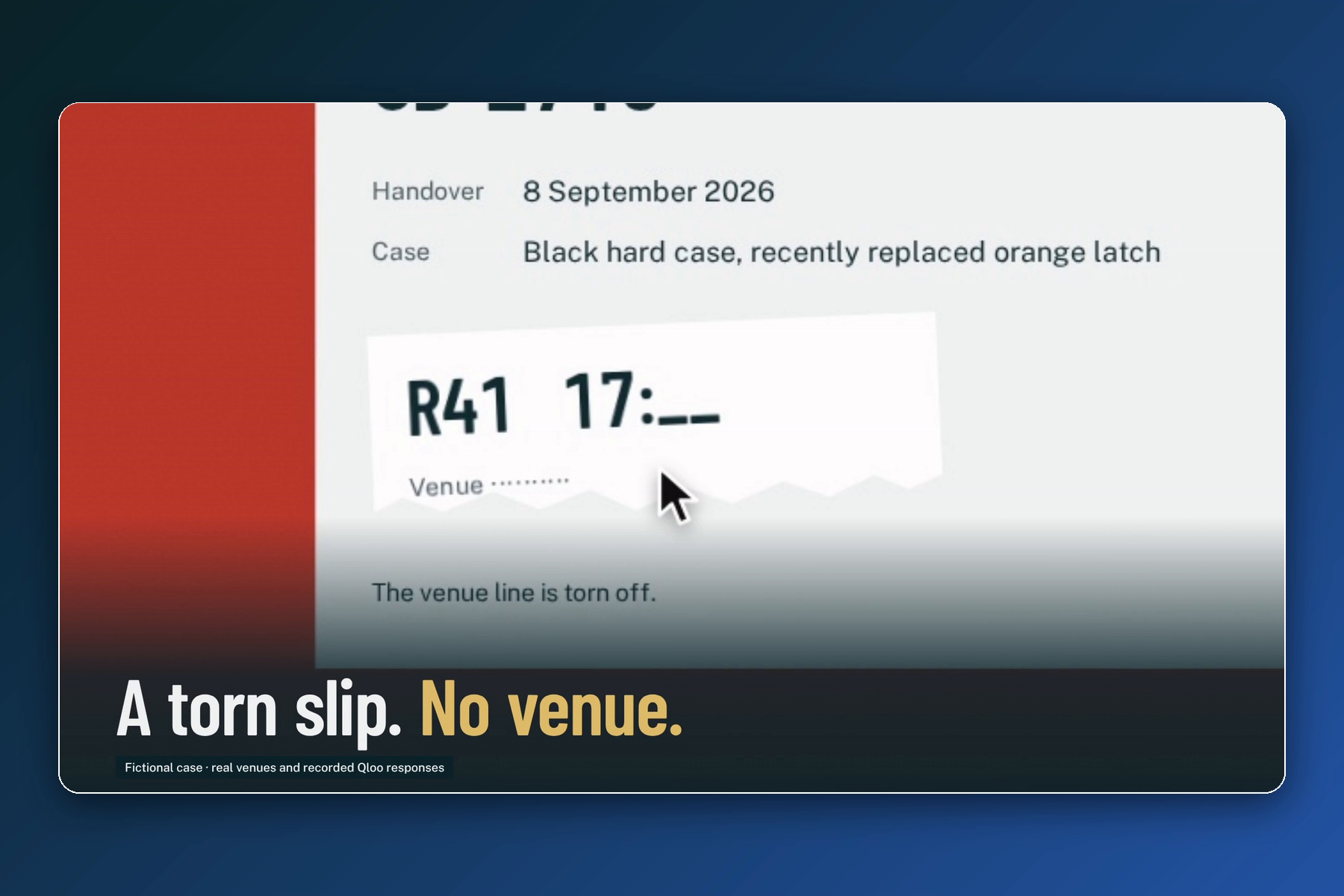
The torn courier slip that came with screening drive SD-2716. The venue line is missing.
Try the investigation: Start with the guided cinema case. To run a fresh Qloo comparison with Gemini, open the live workspace, expand Research agent and select Investigate. The workspace opens a separate editable starter case; if its agent run has already finished, select Start a new investigation.
What it does
Threadline is a working investigation workspace with a guided demonstration. A case moves through Case → Leads → Sources → Next enquiry.
The investigator records the account and the gap to resolve. Each cultural reference carries its origin, and Qloo resolves the reference to a canonical identity for confirmation. Discovery then uses the selected references alongside geographic and activity constraints.
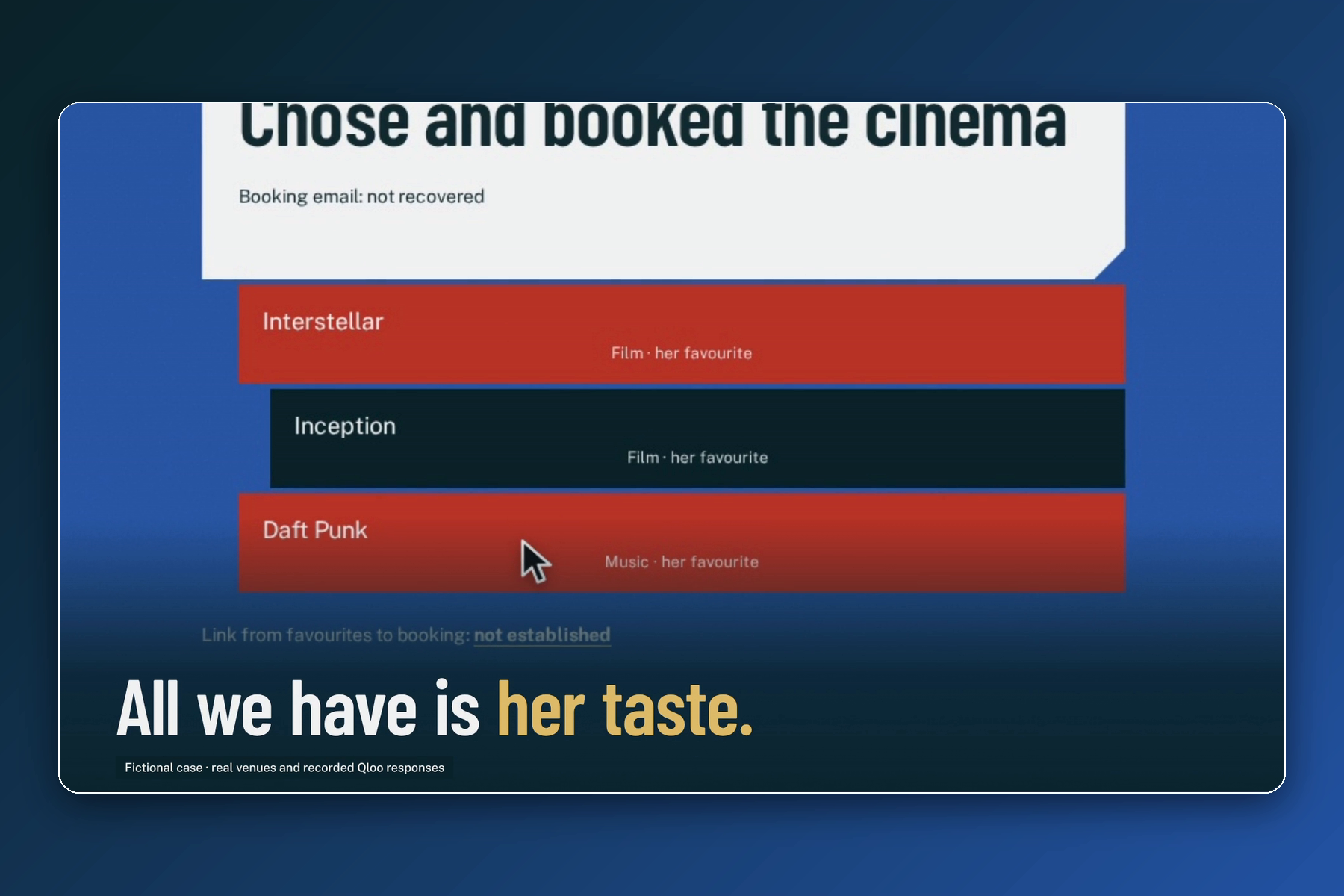
Each reference keeps its origin. The link from her favourites to the booking stays marked as not established.
A paired search shows what those references changed against the same search without them. The comparison preserves the provider’s actual order and exposes differences in the candidate set. Withdrawing a doubtful reference lets the investigator inspect another supported query configuration. Unchanged results remain visible.
The agent chooses a next action from the case state. It can resolve an ambiguous reference or compare places through Qloo. Public-source inspection and investigator-supplied records add material for its next decision. Missing information produces a question for the investigator; sufficient context produces an editable enquiry with a named record target.
Each enquiry includes follow-up branches for a confirming answer, conflicting evidence and an unavailable record. When a response is recorded, Continue investigation passes its actual text into the next run. Previous enquiries and their answers remain in the case history.
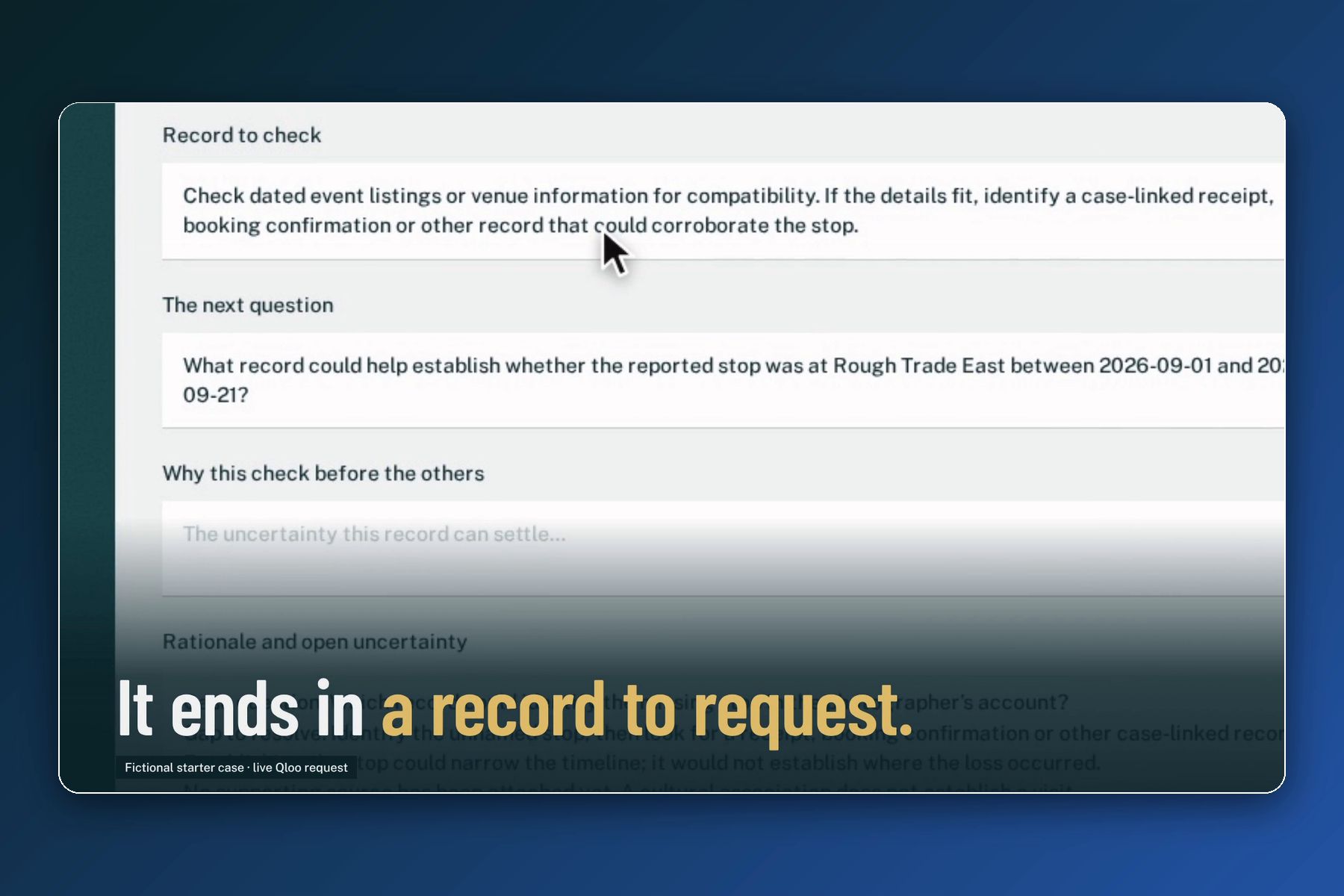
The enquiry names the record to check and the question it should settle.
A sourced Markdown brief makes the work portable for review outside the application.
Where Qloo changes the decision
The recorded demonstration compares five real cinema sites using actual Qloo responses. Its incident and operational records are explicitly fictional.
The two Qloo requests use the same eligible venues and search scope. Adding the organiser’s references moves Prince Charles Cinema from second to first.
| Approach | Matching venue | Execution |
|---|---|---|
| Listed-order LLM run | Not reached in 3 checks | Three sites inspected |
| Qloo without references | Ranked second | Ranking only; inspection sequence not run |
| Qloo with references | Ranked first | Assisted run found the matching record on its first inspection |
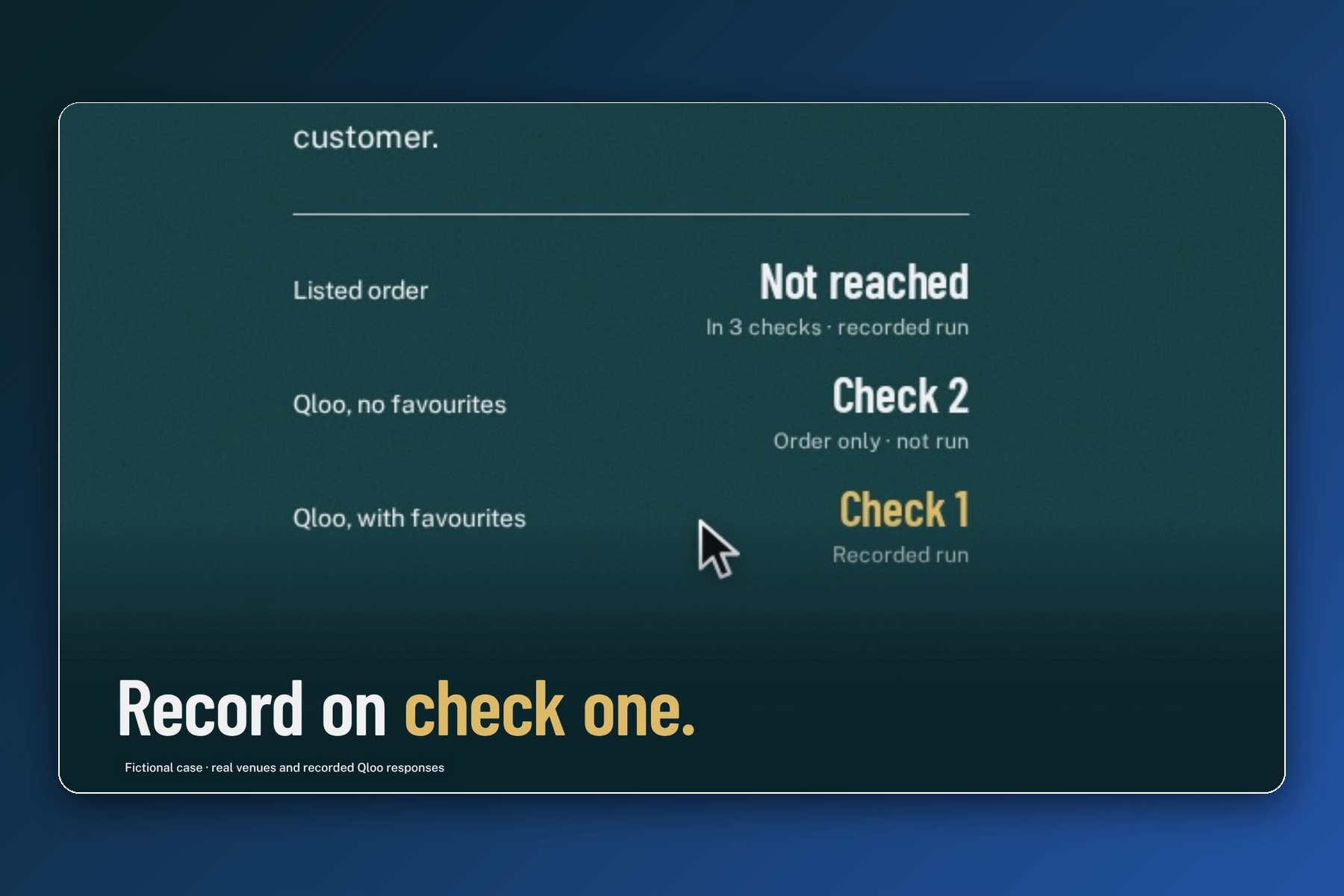
Checks until the record, side by side. The unrun control is labelled explicitly.
That first inspection finds a receiving entry matching the reported customer, date, item serial and slip reference. An onward consignment remains unresolved because the records lack an explicit item-to-consignment link. The next enquiry requests the missing manifest or consignment contents.
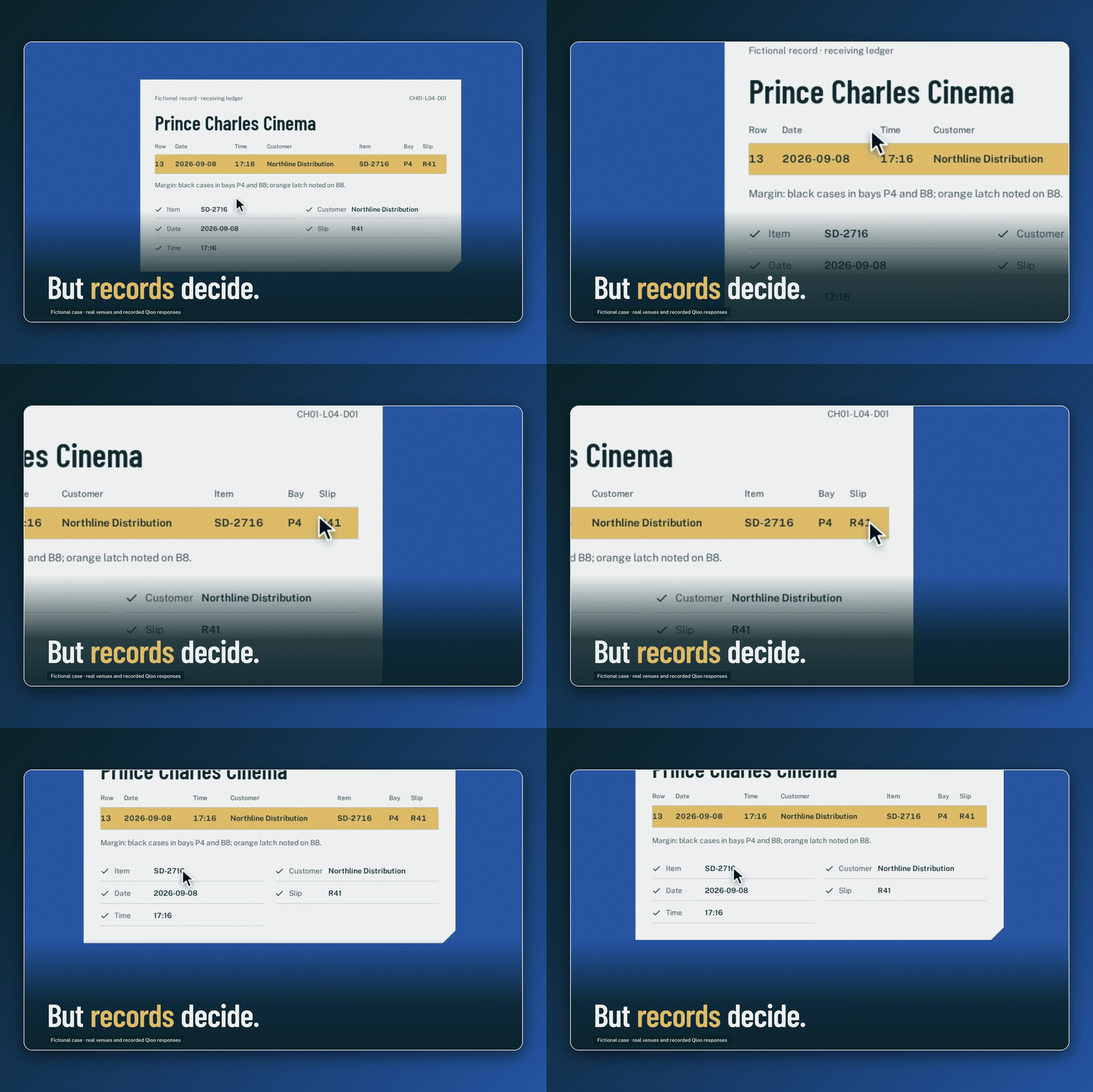
The fictional receiving ledger: row 13 matches the reported customer, date, item and slip.
The demonstrated cultural benefit is one position earlier than Qloo’s unseeded order. The matching venue was already present in the control. This is a concrete result from one fictional case; broader investigative effectiveness remains an evaluation target.
Qloo supplies a structured source of conditional cultural associations that the agent can query and compare. Case-linked records establish what the investigation can support. Threadline keeps that distinction visible throughout the workflow.
How it was built
The interface uses React and TypeScript with Vinext/Vite. Cloudflare Workers runs the server, and Cloudflare D1 stores cases with immutable provider-attempt receipts. Drizzle defines the database schema and migrations.
Gemini 3.8 Flash powers a bounded server-side agent loop. The model selects a structured action, which is validated with Zod before execution. Research tools accept existing case handles and confirmed entity identities. Source inspection follows a server allowlist.
Every seeded discovery is paired with a control under the same recorded scope. A failed control leaves the successful result available with an incomplete-comparison warning. The dedicated retry requests the missing control. Full provider responses remain in receipts while the working case retains compact ranking data.
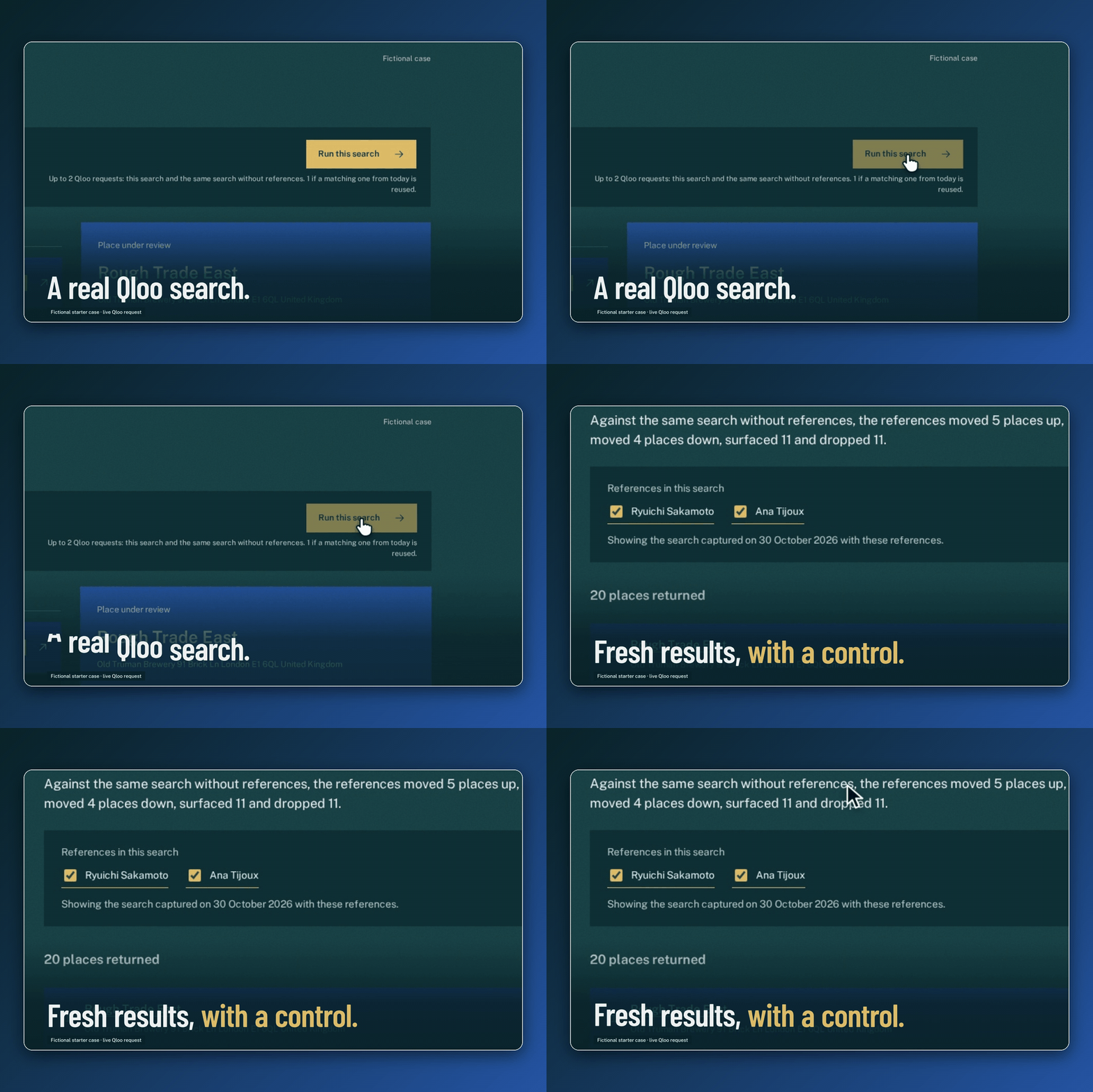
A live search on a fictional starter case, requested alongside the same search without references.
The Research agent panel displays each decision and its outcome, including failures. Server-generated run and step IDs connect the timeline to each provider’s actual attempt counts. A run has a 12-step ceiling, with additional server-enforced usage allowances.
Provider credentials remain server-side. Signed browser sessions isolate saved cases. GitHub Actions validates changes before deploying the merged revision to Cloudflare and checking the live application.
Challenges
The central challenge was keeping the investigation’s claims aligned with its evidence. Cultural affinity provides an ordering signal. A source must still support the fact being used, and an investigator-supplied record needs its provenance preserved.
The research also required a fair control. A changed candidate list can result from a different search area or filter. Threadline records the complete query scope so the comparison can be inspected against the inputs that produced it.
Continuation introduced another challenge: a fresh agent draft must preserve the enquiry that received an answer. The implementation archives that enquiry with its response intact and uses the response passage when planning the next run.
Provider failures needed useful recovery paths. Successful partial results remain available, and the interface exposes the missing comparison or failed step so the investigator can choose how to proceed.
Accomplishments
Threadline brings cultural intelligence into a specific investigative decision and follows that decision through to an editable records enquiry. The guided case gives judges an inspectable example of the mechanism, while the workspace supports live research on a fresh intake.
The deployed application includes a visible agent loop and persistent evidence history. 156 automated tests cover query comparisons, state transitions, ownership isolation and failure handling. Production deployment checks verify the served revision and session behavior alongside the recorded demonstration.
The interface uses a matte, high-contrast visual language built around the case’s documents. The queue animation shows an actual ordering change, and the inspection scoreboard preserves the difference between executed runs and an order-only comparison.
What was learned
Cultural intelligence is most useful when the supplied interests have a plausible connection to the decision being investigated. Several cases in the four-case study left the useful next step unchanged. Those results shaped the applicability guidance and the same-scope controls.
The most consequential distinction was between a promising place and a supported case connection. A precise request for the missing record gives the investigator a defensible next action while keeping the unresolved facts visible.
What’s next
The next evaluation will use fresh cases with sealed answer records and fixed inspection budgets. Independent review will measure whether cultural inputs improve the selected records check across a wider set of situations.
Further product work will make enquiries more specific to the record holder and simplify preparing a fresh case from a supplied candidate set. The same evidence history will carry through each follow-up.
Built With
- cloudflare-d1
- cloudflare-workers
- css
- drizzle-orm
- gemini-api
- github-actions
- qloo
- react
- sqlite
- typescript
- vinext
- vite
- zod


Log in or sign up for Devpost to join the conversation.