Inspiration
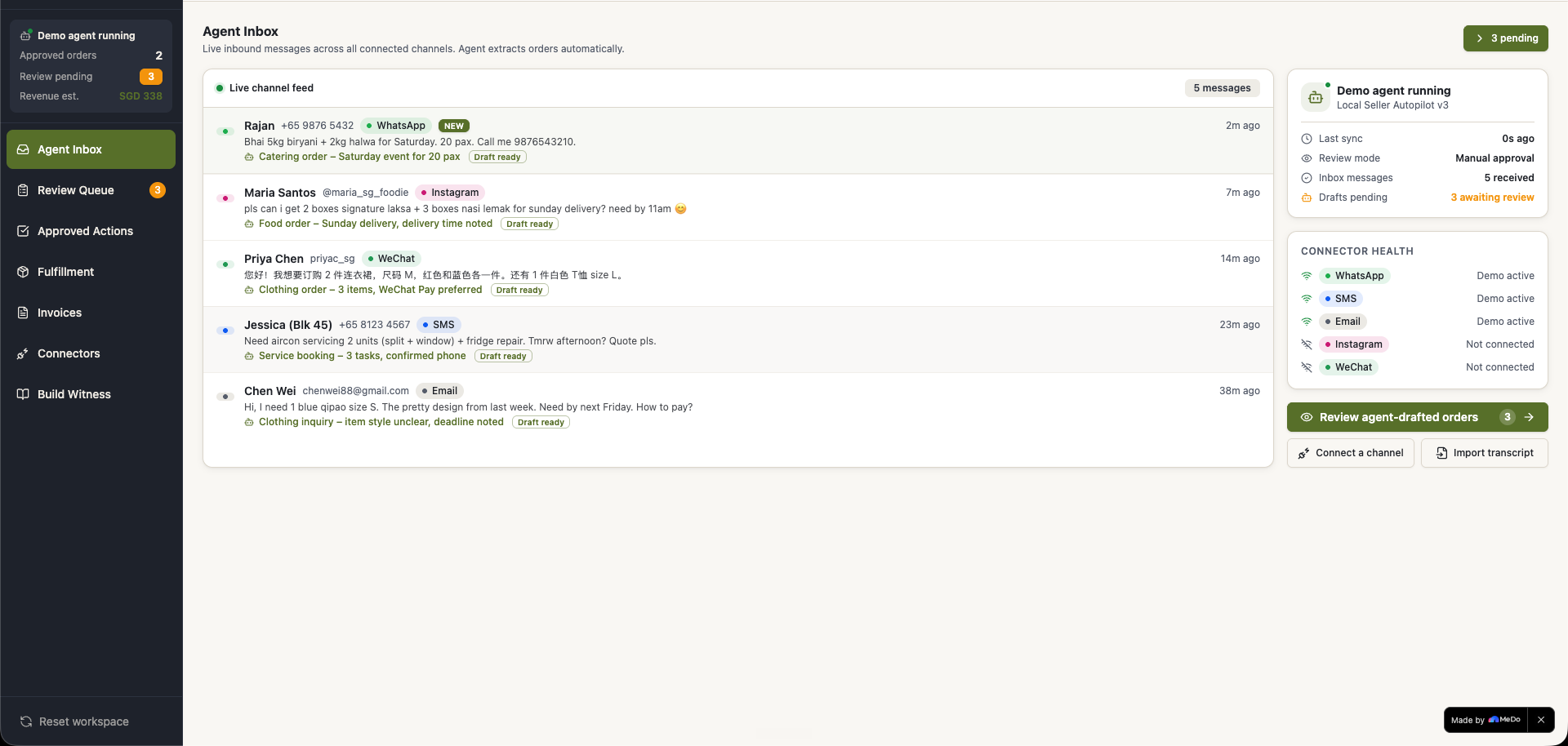
Small local sellers often run real businesses through messy chat threads. Orders arrive as fragments like "3 paneer thali tonight", "blue kurti size M pickup?", mixed with emojis, transliterated language, missing quantities, payment questions, and delivery notes. ThreadCart is built for the moment when a seller needs those scattered messages to become usable business state.
What it does
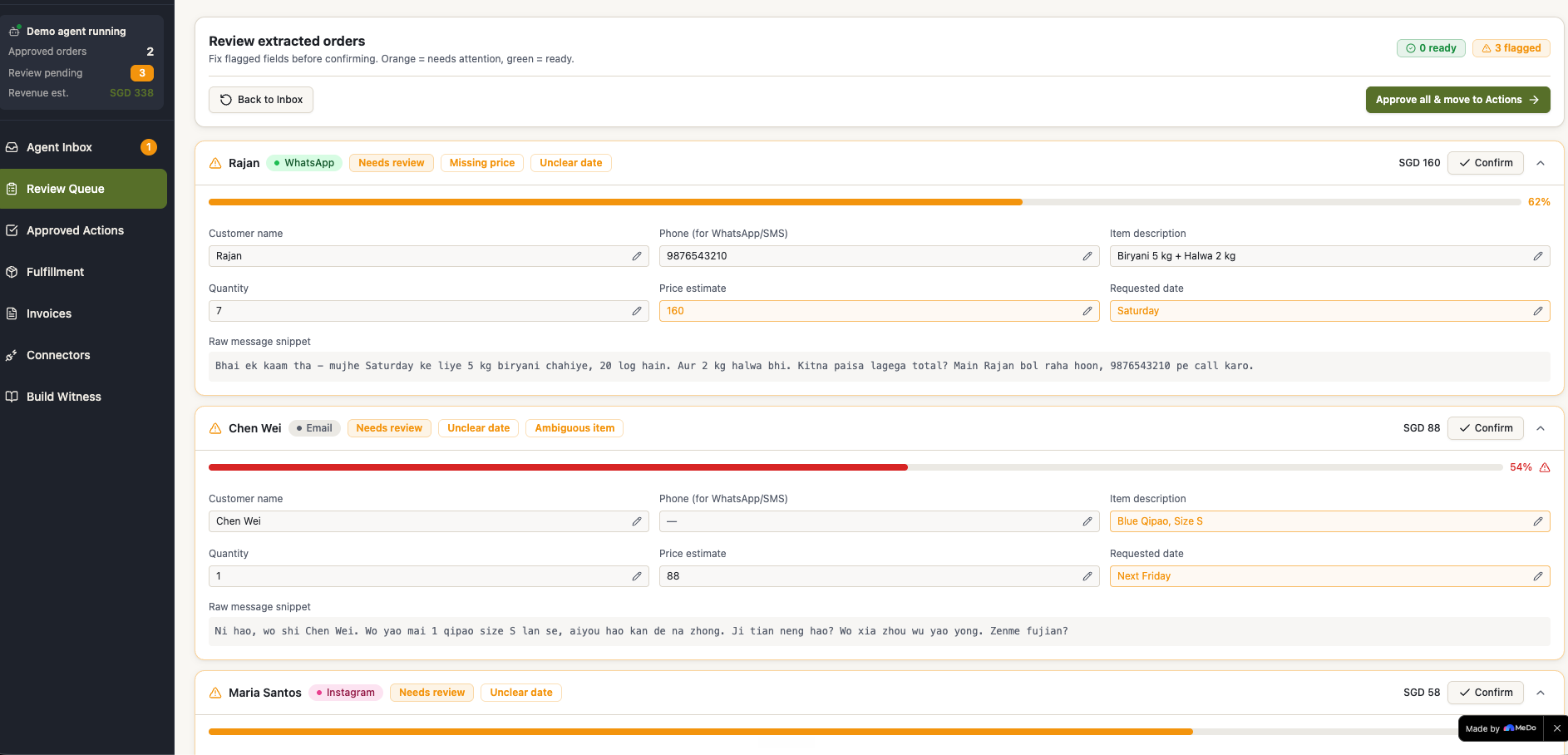
ThreadCart is a MeDo-built commerce cockpit that turns pasted buyer chats into reviewable orders, invoice drafts, fulfillment lanes, and portable records.
- Converts messy multi-channel buyer messages into customers, line items, quantities, totals, status, and notes.
- Shows confidence and exception flags so sellers can review uncertain orders before confirming anything.
- Lets sellers edit extracted fields, then confirm the batch into dashboard state.
- Generates invoice drafts with browser-native copy, print, mail draft, and mark-sent actions.
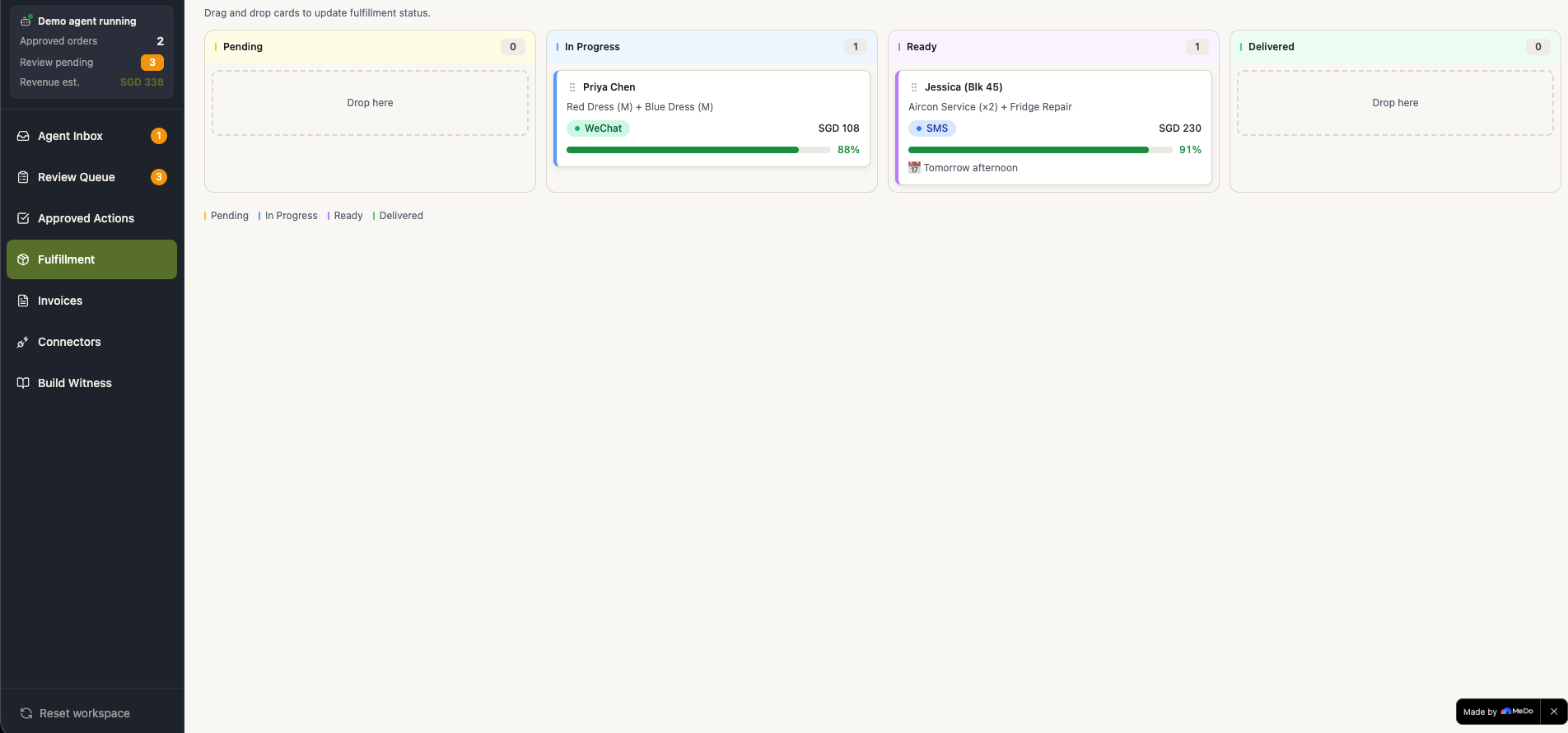
- Tracks fulfillment across intake, review, packing, pickup/delivery, and done lanes.
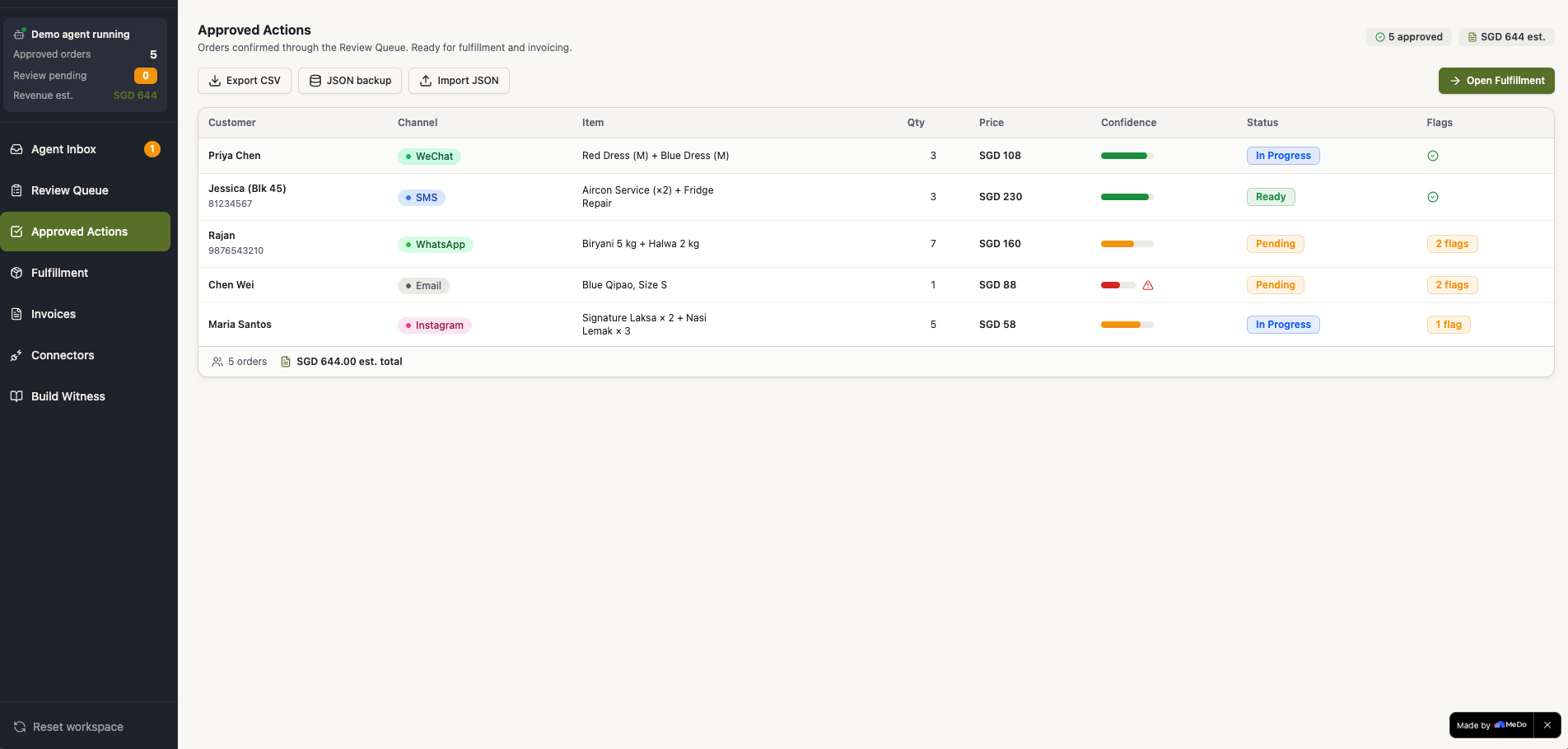
- Exports order/customer CSV files and supports JSON backup/restore.
- Includes a Build Witness screen explaining the MeDo build path, current integrations, and production roadmap.
How we built it with MeDo
The submitted product is the public MeDo app. We built it as a multi-turn MeDo conversation instead of a one-shot prompt:
- Define the Business & E-commerce problem around local sellers receiving messy chat orders.
- Create the intake, extraction, customer, order, invoice, and fulfillment data model.
- Add a review-before-automation queue with confidence scores and missing-field flags.
- Connect confirmed orders to invoice actions and operational lanes.
- Add CSV export, JSON backup/restore, persistence, and a Build Witness screen.
- Refine the first-screen demo so judges immediately see chat-to-commerce transformation.
The strongest MeDo-generated feature is the extraction-to-operations loop: one unstructured chat batch becomes linked customer records, review flags, invoice drafts, fulfillment tasks, and exportable data.
Plugins and APIs used
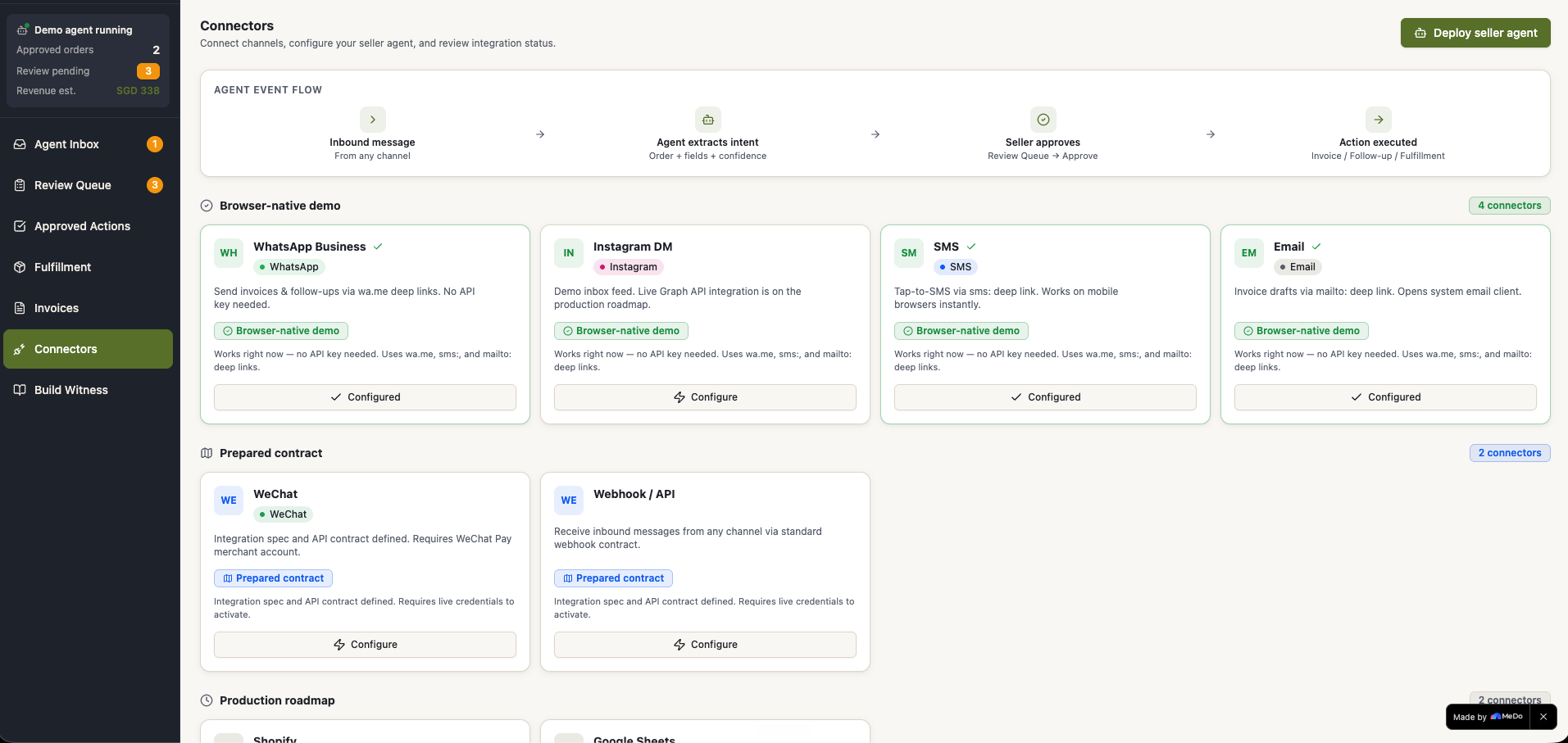
ThreadCart keeps the MeDo-built workflow primary. This submitted version uses browser-native integrations: localStorage persistence, Blob-based CSV/JSON exports, JSON restore, copy actions, window.print, and mailto email drafts. It also defines a clean seller-agent bridge boundary for future advisory review, invoice-copy suggestions, and fulfillment next-action recommendations.
We are not claiming live WhatsApp Business, WeChat, Instagram, Shopify, payment, shipping, or outbound messaging APIs in this submission. Those are production roadmap connectors that should only run after seller approval and account-level consent.
Challenges we ran into
The main challenge was making the app feel genuinely useful without pretending that full commerce automation is safe or verified in a hackathon window. Messaging APIs, payment, delivery, and inventory integrations all require real account setup and consent, so ThreadCart focuses on the highest-value safe core: reviewed extraction, local persistence, invoice drafting, fulfillment state, and portable exports.
Accomplishments that we're proud of
We published a public MeDo app that judges can test without accounts, API keys, live buyer data, or payment credentials. The demo starts from the seller's real pain point: messy incoming messages, not a generic storefront. It also keeps the merchant in control before extracted text becomes business state.
What's next
Next steps are authenticated merchant accounts, server-side storage, richer extraction validation, inventory/tax rules, and opt-in channel connectors. Production integrations would execute only after seller-approved events such as order.confirmed, invoice.ready, followup.requested, and fulfillment.status_changed.
Built With
- browser-apis
- business
- csv-export
- ecommerce
- fulfillment-workflow
- invoice-drafting
- json-backup
- localstorage
- low-code
- medo
- no-code


Log in or sign up for Devpost to join the conversation.