Inspiration
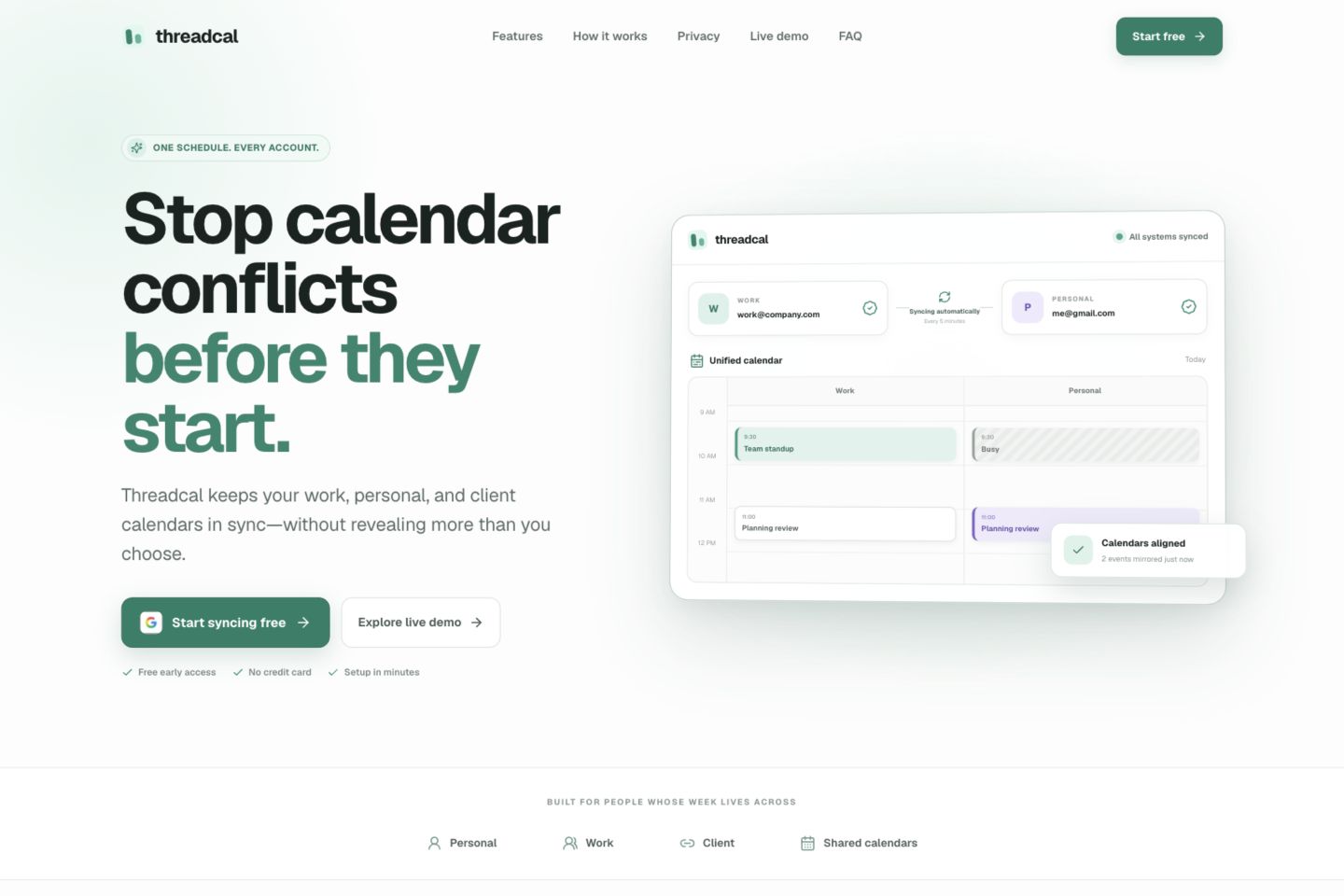
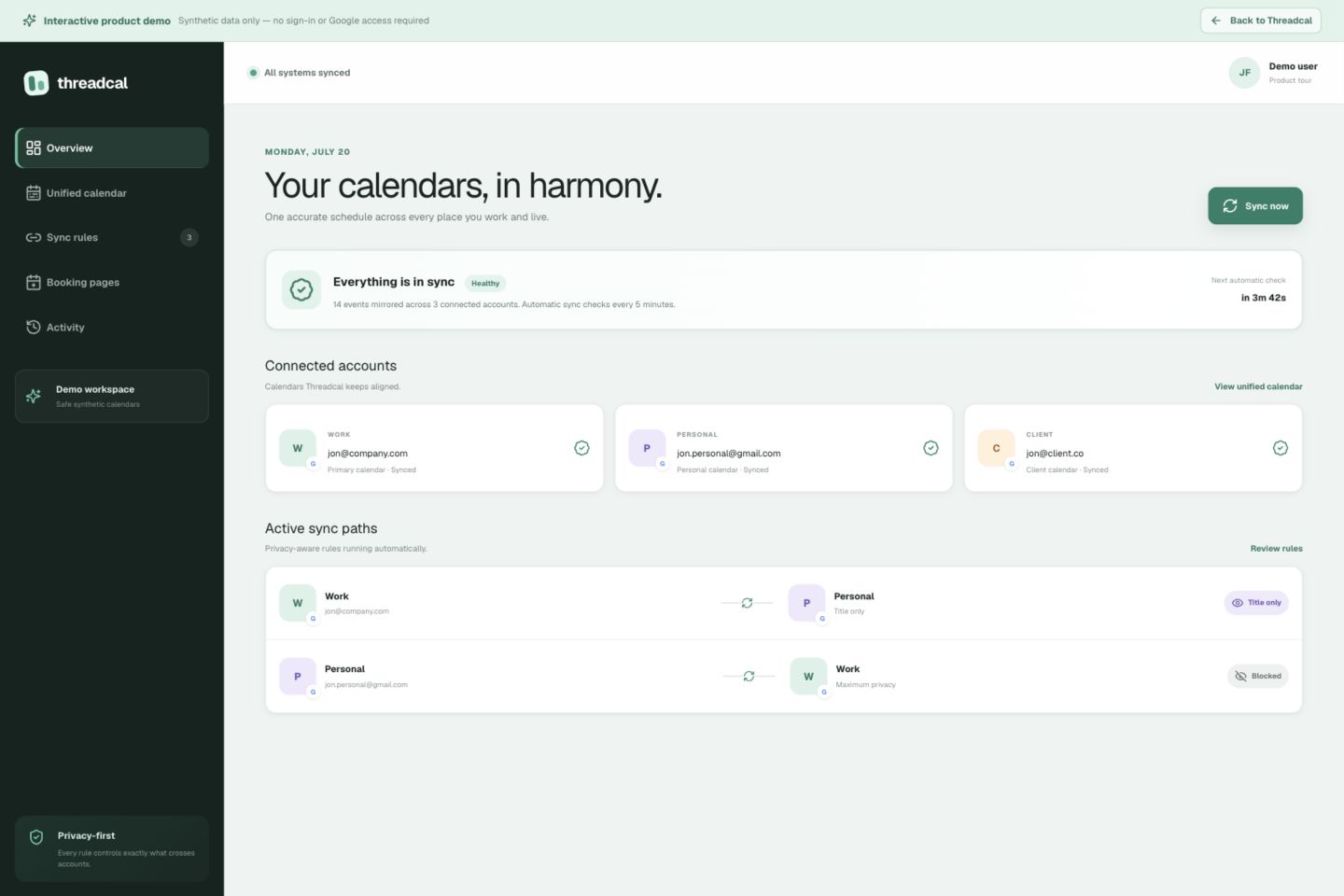
People increasingly live across several calendars: a company Google Workspace account, a personal Gmail account, client environments, and shared family calendars. Each account sees only part of the week, creating double bookings and forcing people to expose more personal context than necessary.
Threadcal gives every account an accurate picture of availability while letting the user decide exactly how much information they share/
What it does
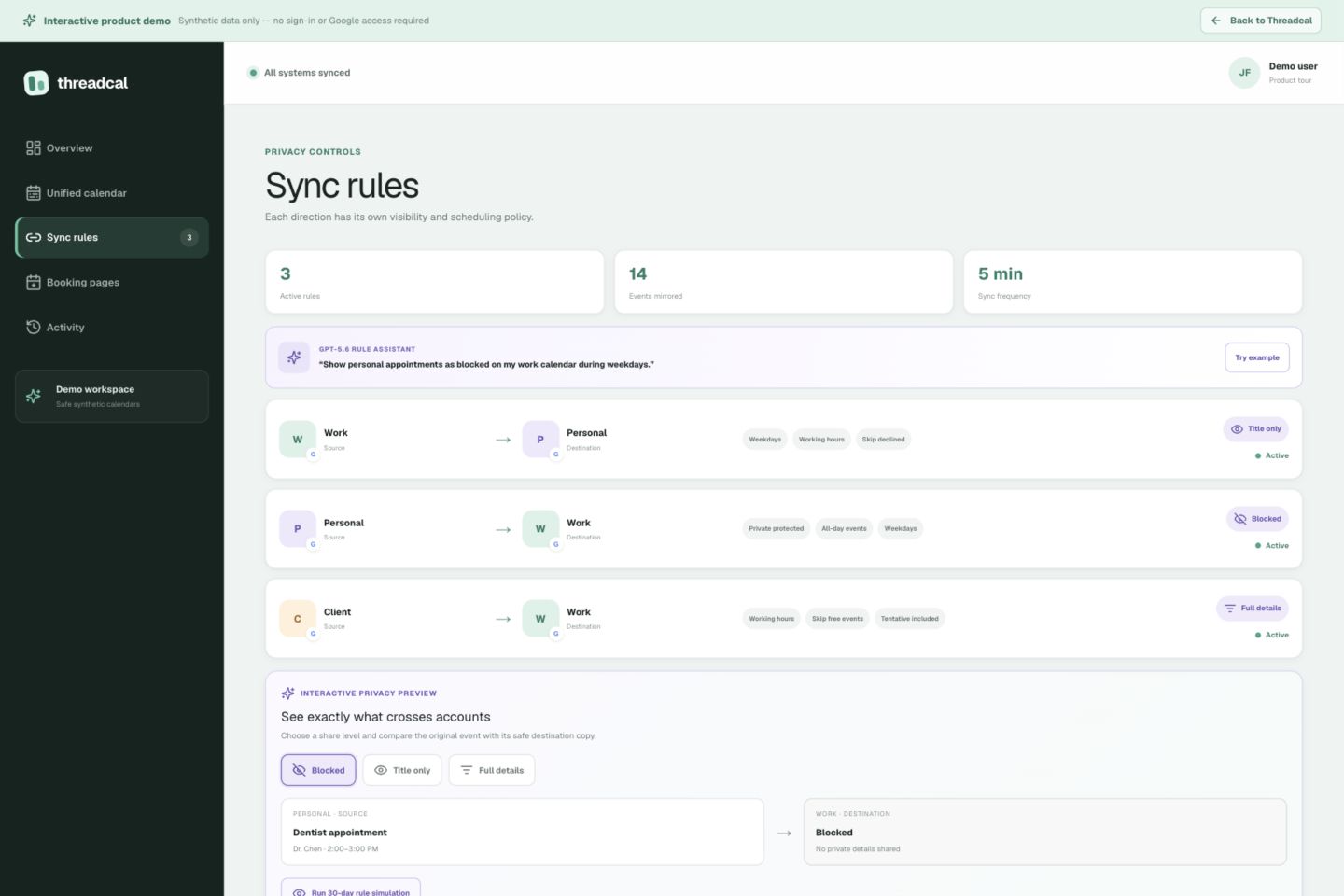
Threadcal connects multiple Google Calendar accounts and synchronizes events through directional privacy rules. A mirrored event can contain full meeting details, only the title, or a generic Blocked label. Users can further control private events, working hours, weekdays, declined and tentative invitations, all-day events, and free events.
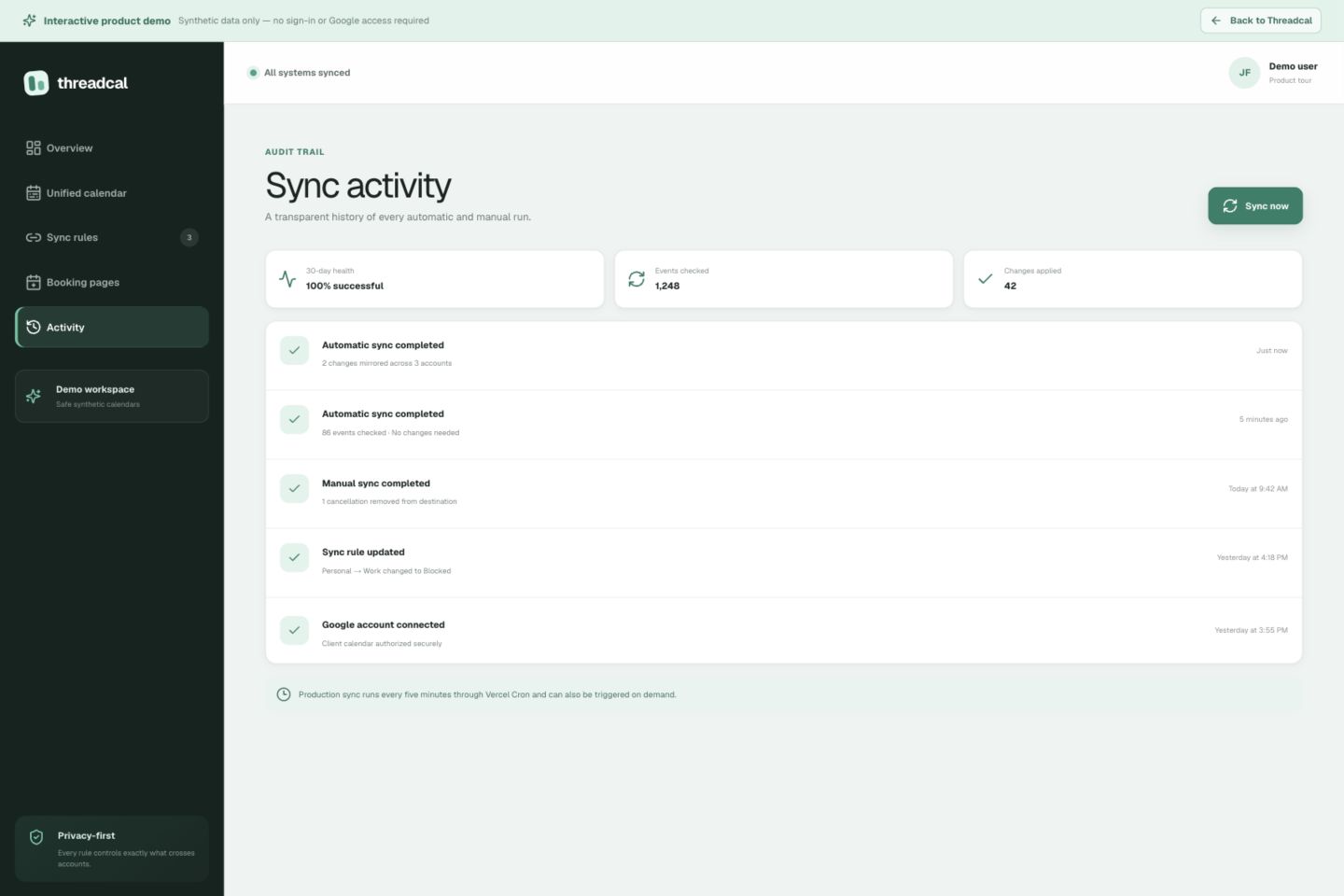
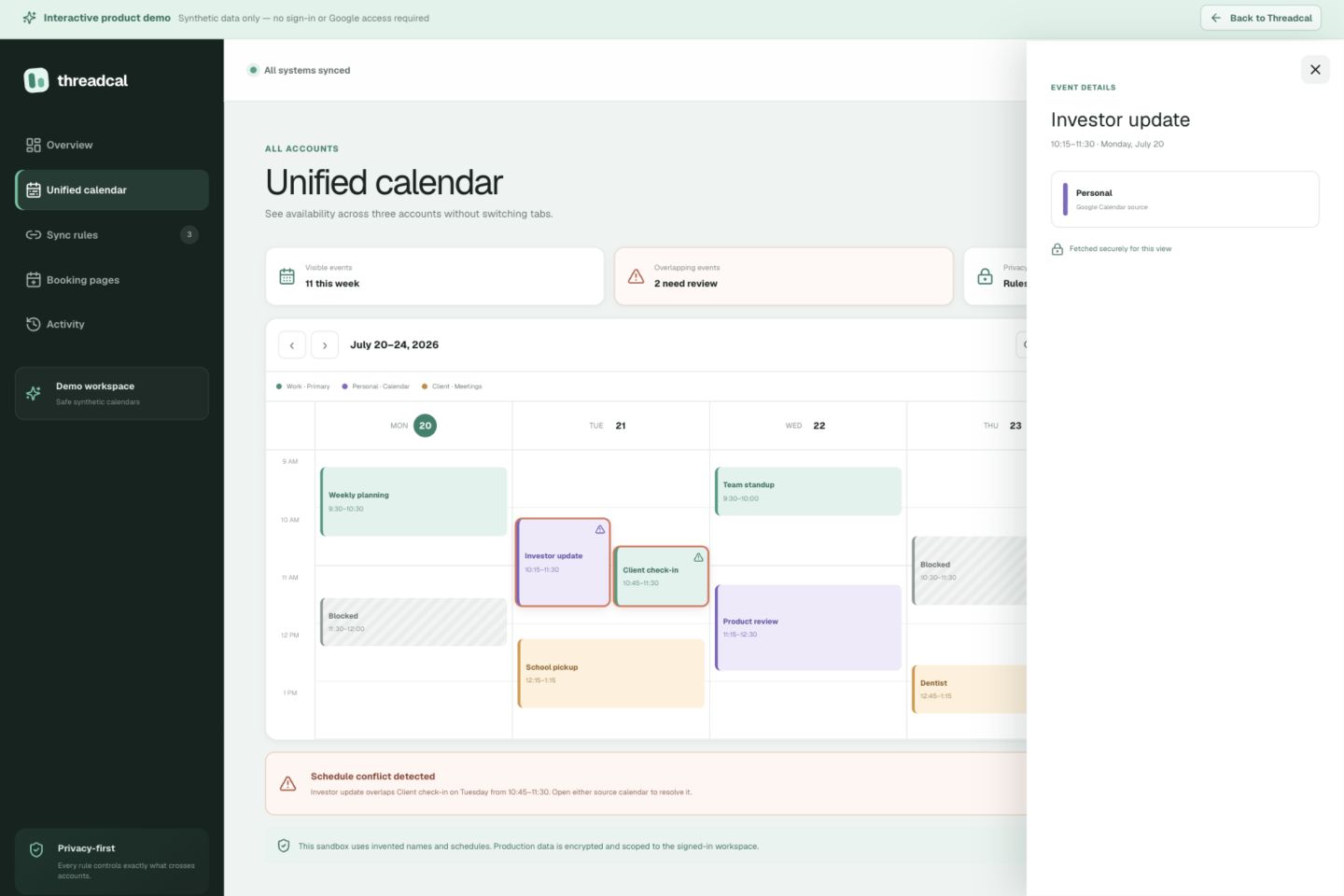
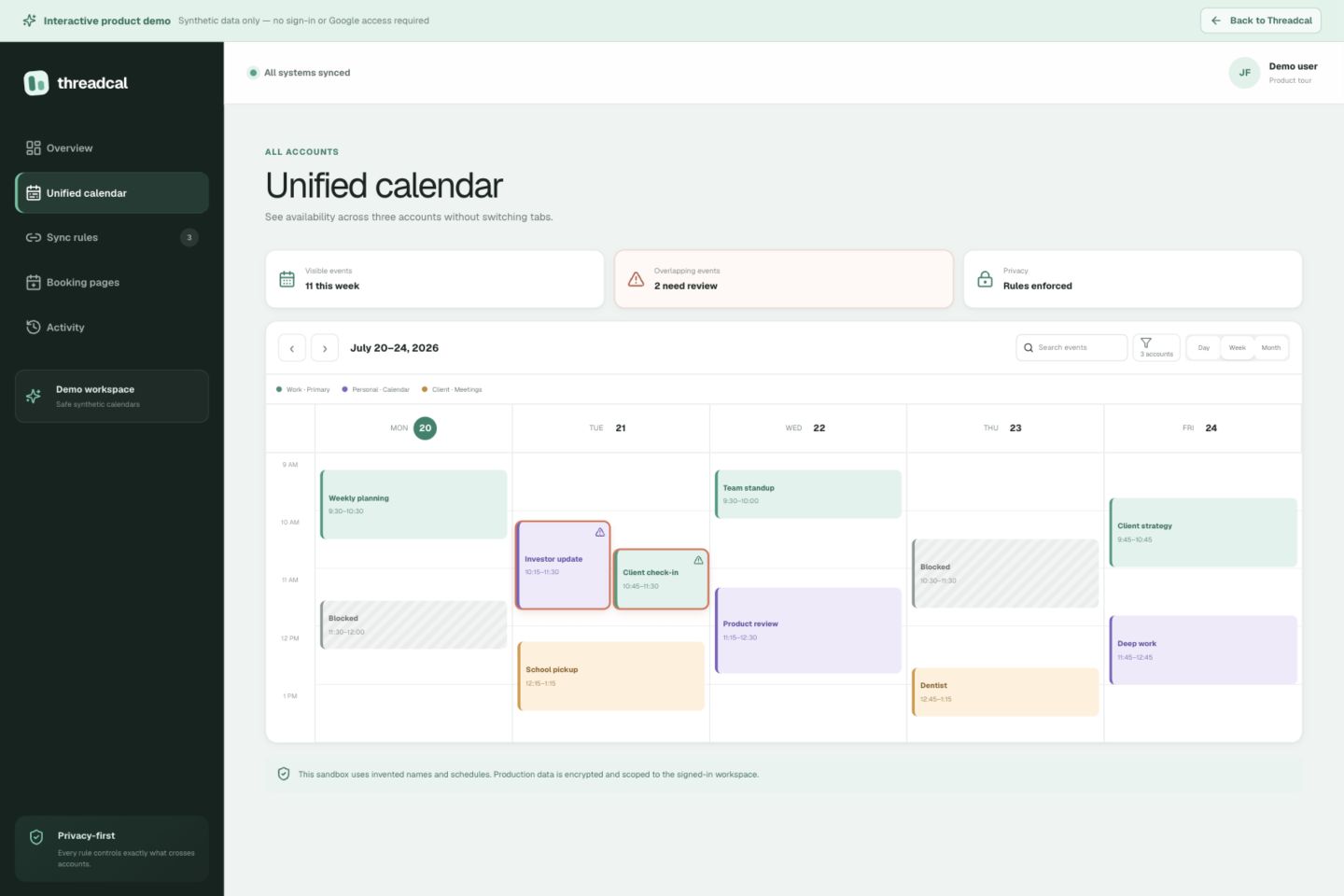
The product includes a consolidated day/week/month calendar with search, account filters, explicit source indicators, an event-detail drawer, and conflict detection. Automatic five-minute synchronization includes a live next-run indicator, on-demand sync, cancellation cleanup, loop prevention, account recovery states, and an activity audit trail.
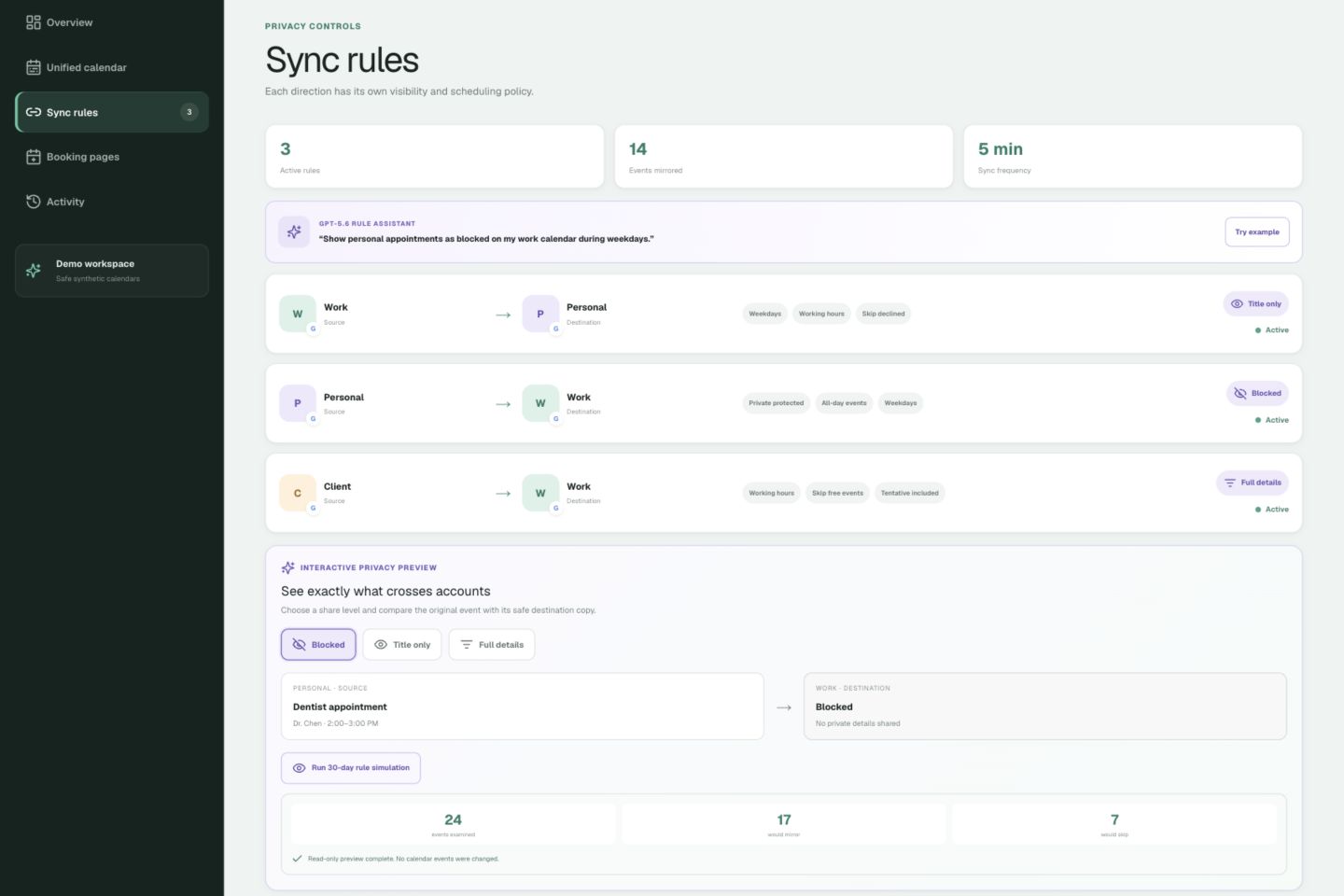
GPT-5.6 turns plain-language requests into structured, confirmation-gated rule drafts. A read-only simulator then applies the actual sync policies to the next 30 days and shows included, skipped, and before/after examples before the user relies on the rule.
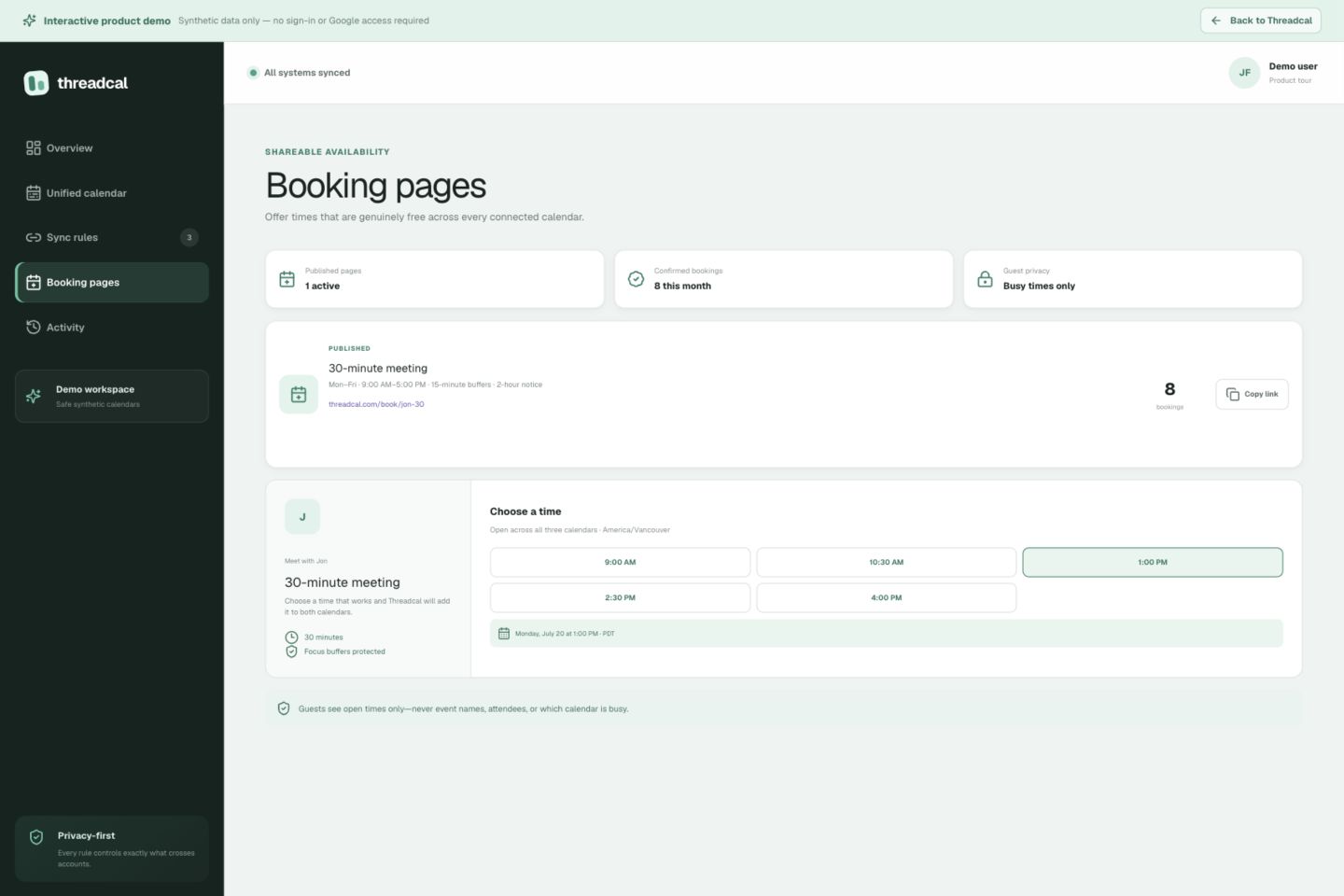
Shareable booking pages expose open times across every selected calendar without revealing underlying events, with configurable availability days, focus buffers, minimum notice, booking horizon, and guest timezone display.
Clerk provides application authentication while a separate Google OAuth flow grants narrowly scoped Calendar access.
How I built it
Threadcal is a Next.js App Router application deployed on Vercel. Neon Postgres stores workspace-scoped accounts, rules, preferences, event mappings, and activity. Google refresh tokens are encrypted with AES-GCM. Vercel Cron triggers idempotent synchronization every five minutes.
The Build Week extension was developed collaboratively in Codex using GPT-5.6. Codex helped replace the temporary session layer with Clerk, design stable identity-to-workspace mapping, audit tenant scoping across API and sync paths, create production OAuth and legal surfaces, build the full SaaS landing experience, implement the public synthetic-data product demo, and add the GPT rule assistant and secure public booking flow. Dated commits and the README separate the pre-existing foundation from work added during the submission period.
Challenges we ran into
Calendar synchronization is deceptively stateful. Event changes, cancellations, repeated runs, mirrored-event loops, and partial provider failures must be handled without corrupting source calendars. Multi-user authentication also had to be introduced without confusing a Threadcal login identity with authorization to access a particular Google Calendar.
The key architectural response was to keep authentication, authorization, and synchronization as separate layers connected by a stable internal workspace identity.
Accomplishments that we're proud of
- Directional privacy rules with three disclosure levels
- Consolidated cross-account calendar and conflict visibility
- Idempotent event mirroring, cancellation cleanup, and loop prevention
- Clerk authentication with workspace-scoped data isolation
- Encrypted Google credentials and explicit OAuth policy disclosures
- Automatic and on-demand synchronization
- Live scheduled-sync countdown and actionable account reconnection states
- Confirmation-gated GPT-5.6 natural-language rule creation
- Read-only rule-impact simulation using the production sync policy engine
- Day, week, and month unified calendar views with search, filters, source indicators, and event details
- Configurable availability and booking pages that protect underlying calendar details
- A safe public product demo requiring no credentials or third-party access
What we learned
Codex was able to take product goals and provide options on the sequence to build things. Using Codex across the entire process, including product decisions, UI, marketing copy, tests, and deployment made this entire process feel like an entire team was behind it.
What's next for Threadcal
The next milestones are Google sensitive-scope verification, Microsoft 365 calendar support, webhook-driven synchronization, distributed rate limiting and observability, managed key rotation, team workspaces, and secure booking reschedule/cancellation links.
Built With
- clerk
- codex
- google-calendar-api
- gpt-5.6
- neon-postgres
- next.js
- openai
- react
- typescript
- vercel

Log in or sign up for Devpost to join the conversation.