-
-
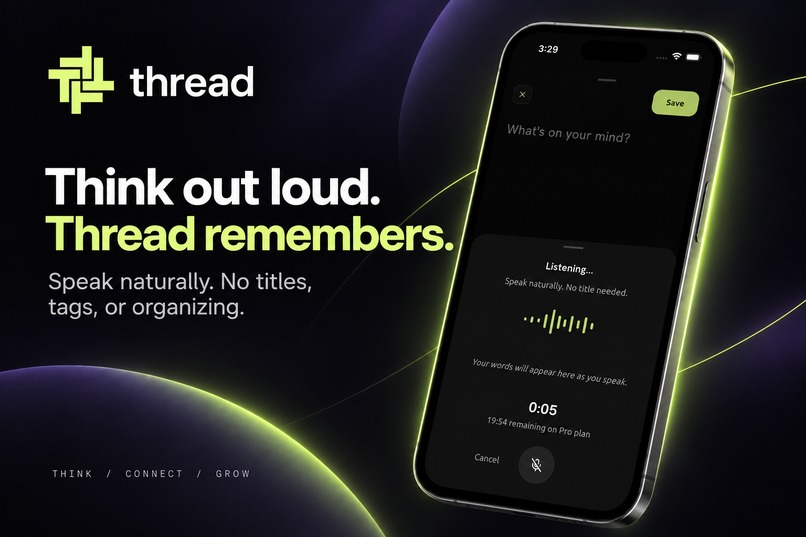
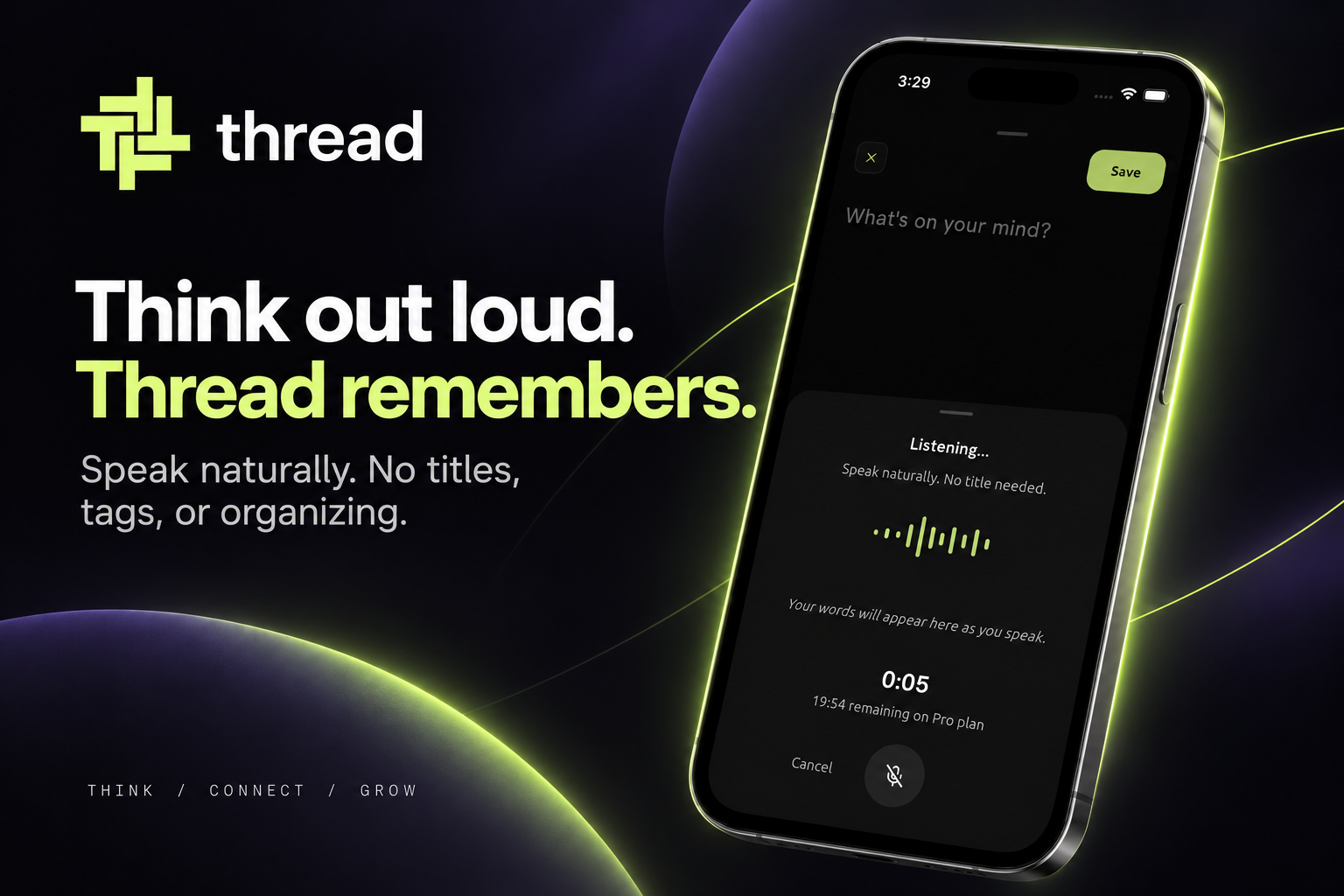
auto voice anotation
-
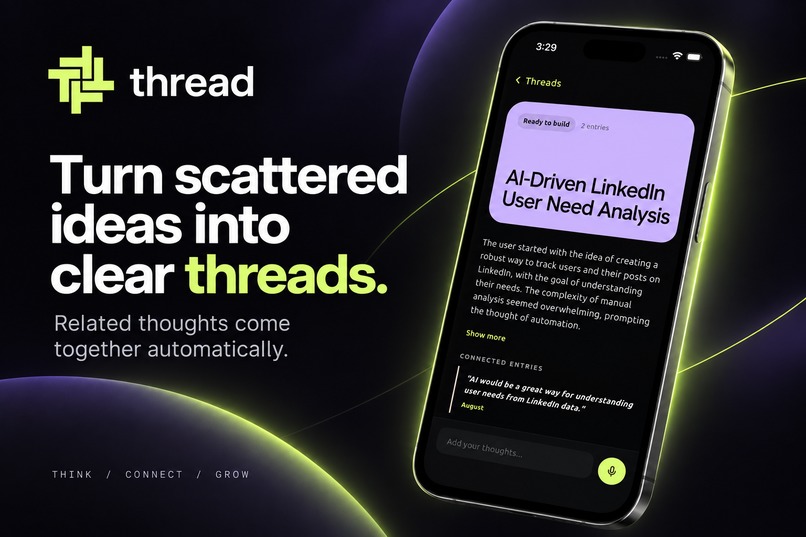
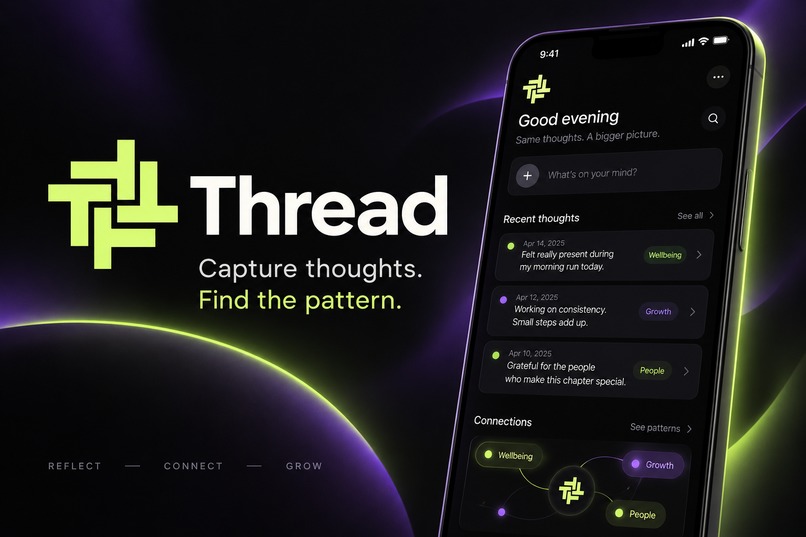
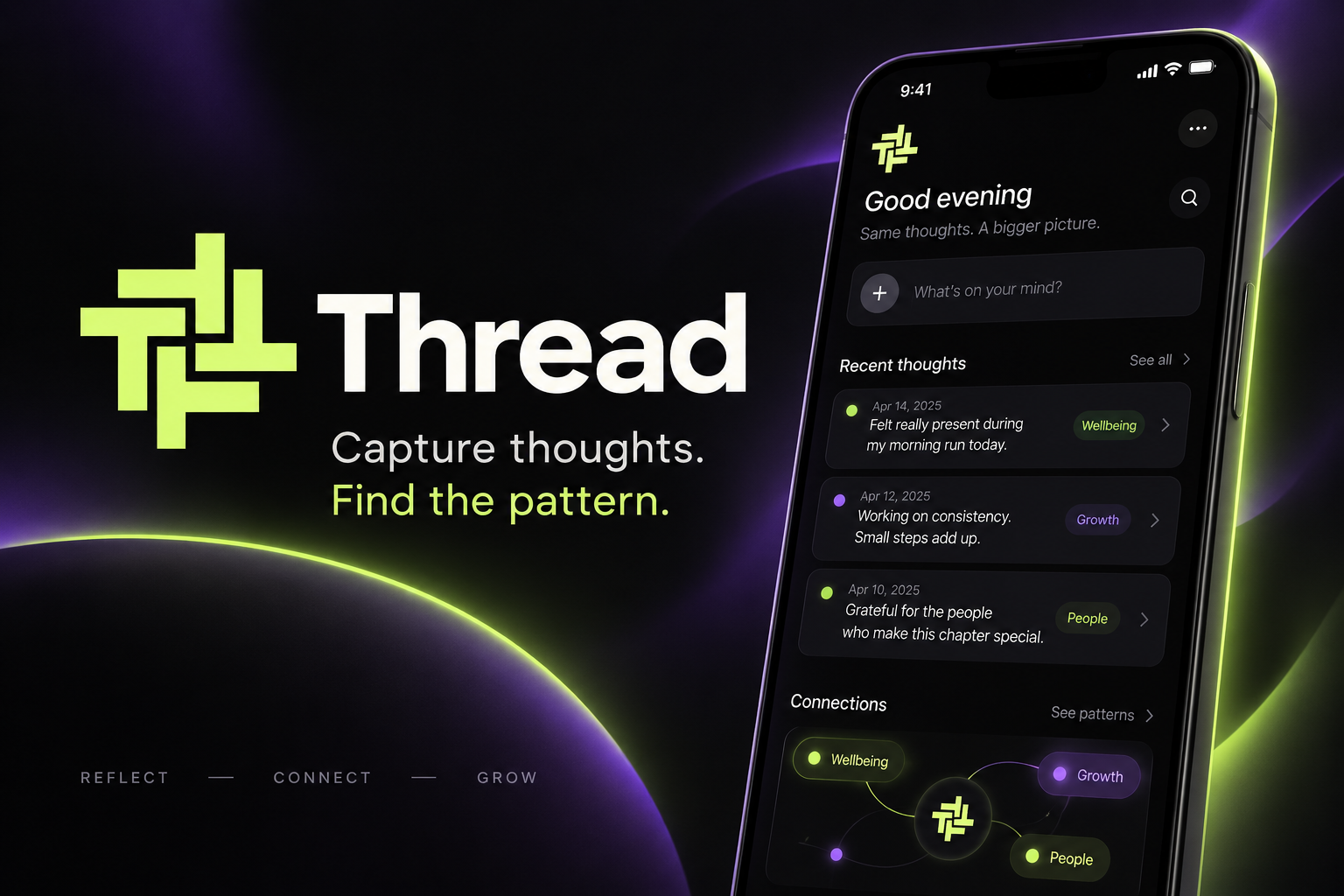
what you think or captured gets auto connected and categorized
-
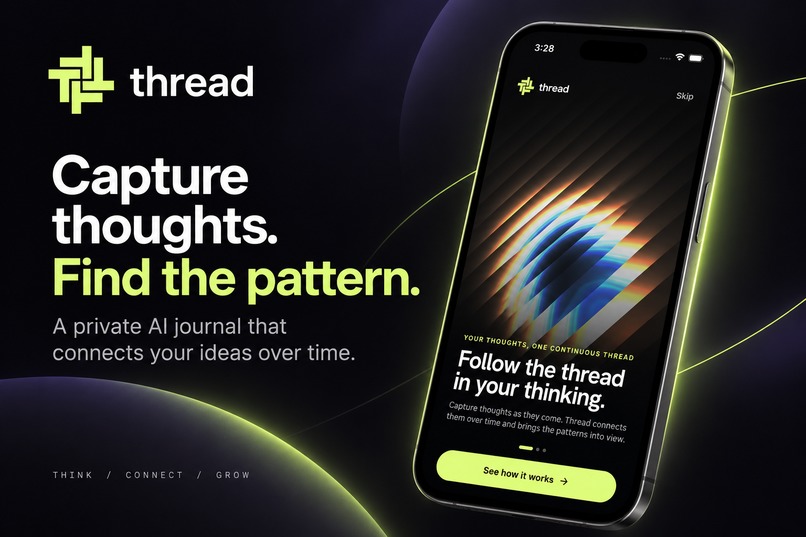
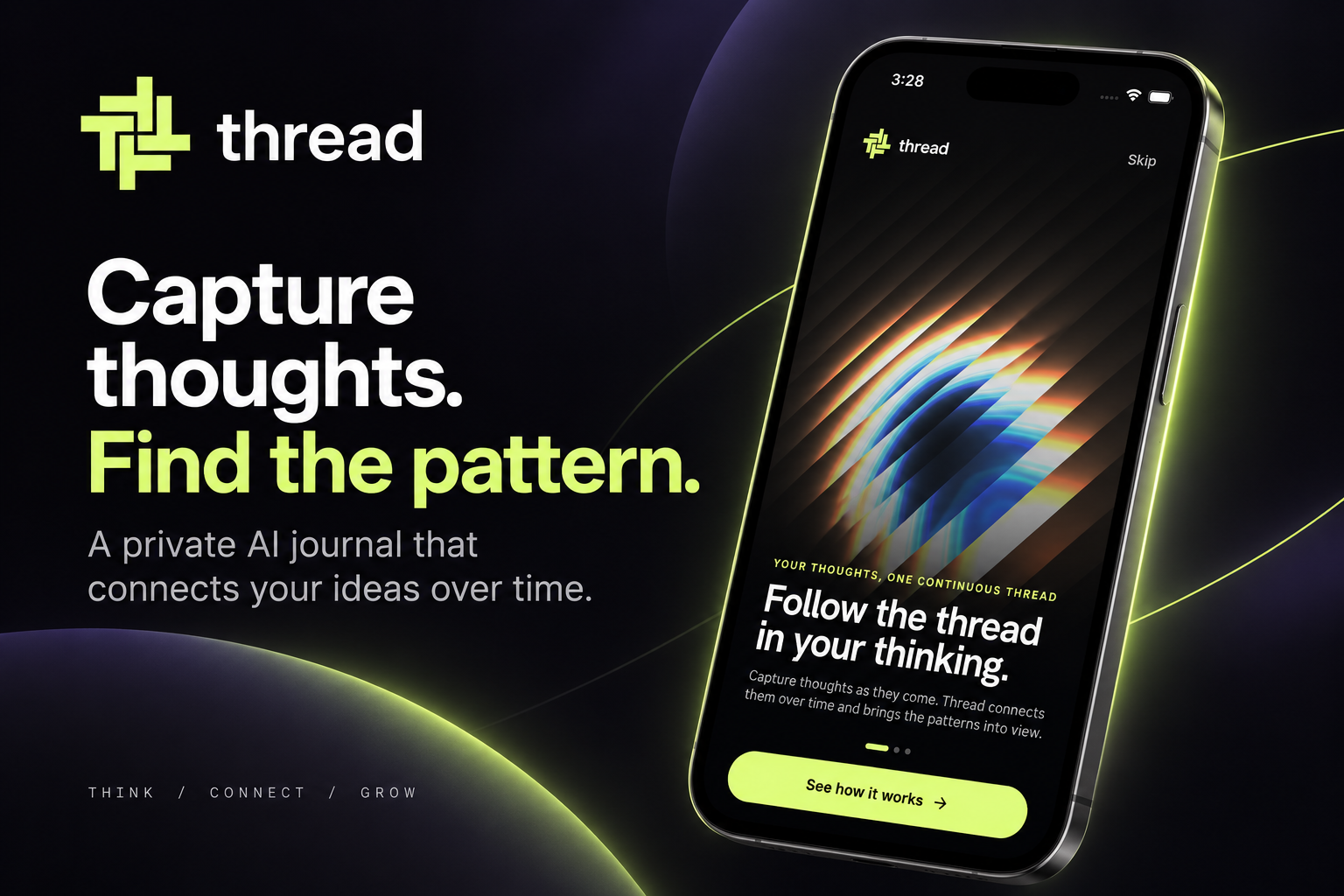
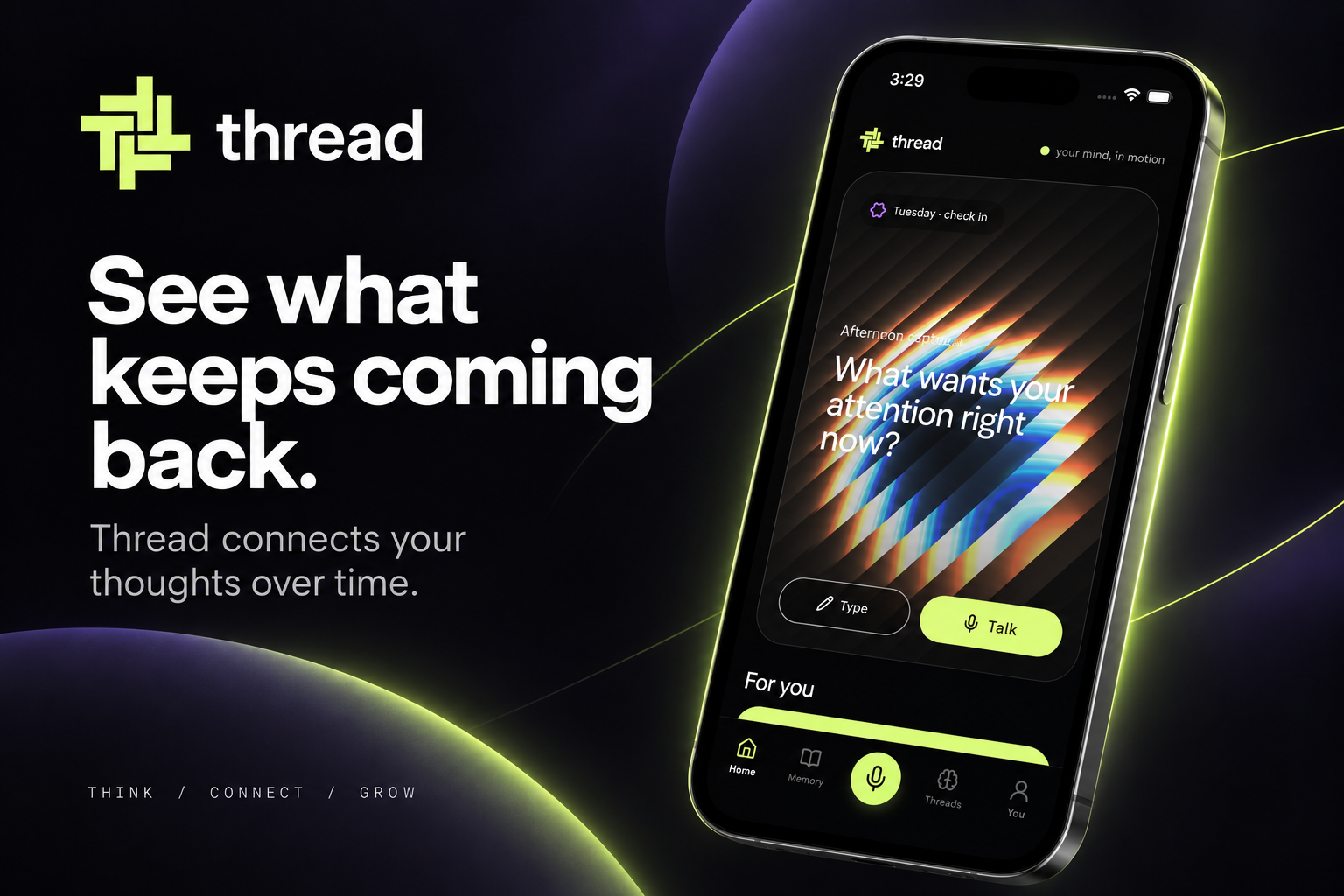
Capature thaughts either by voice or text
-
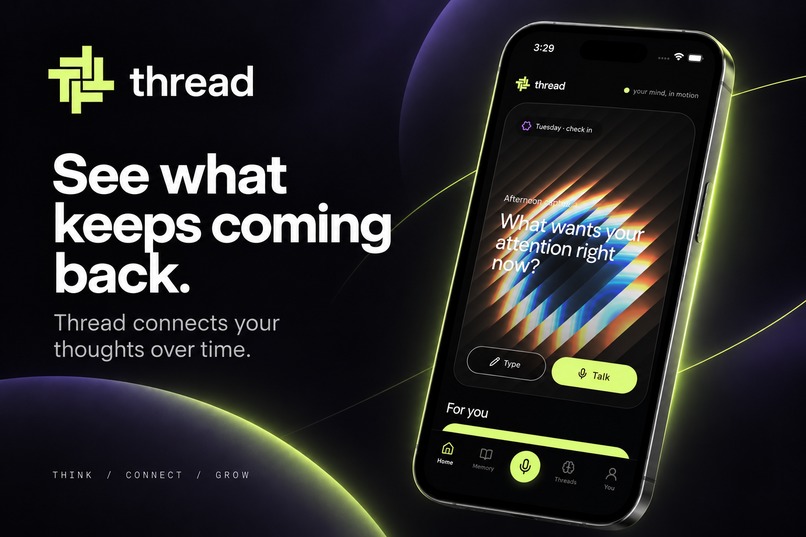
-
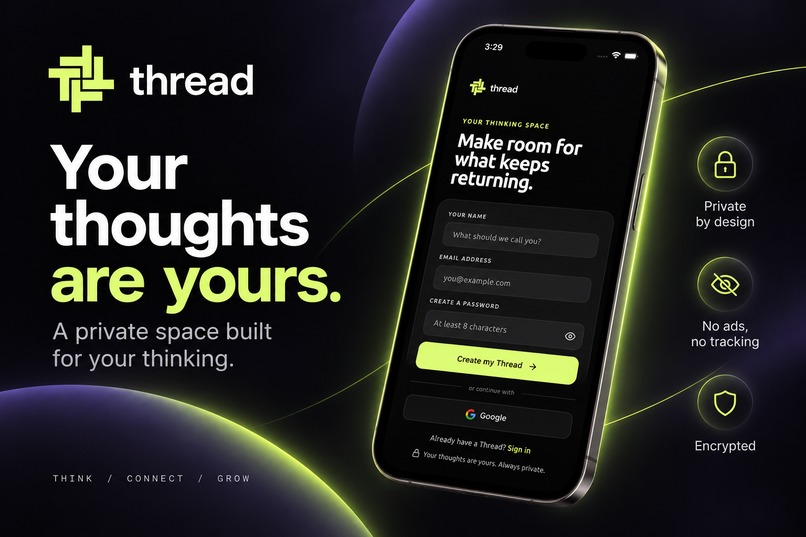
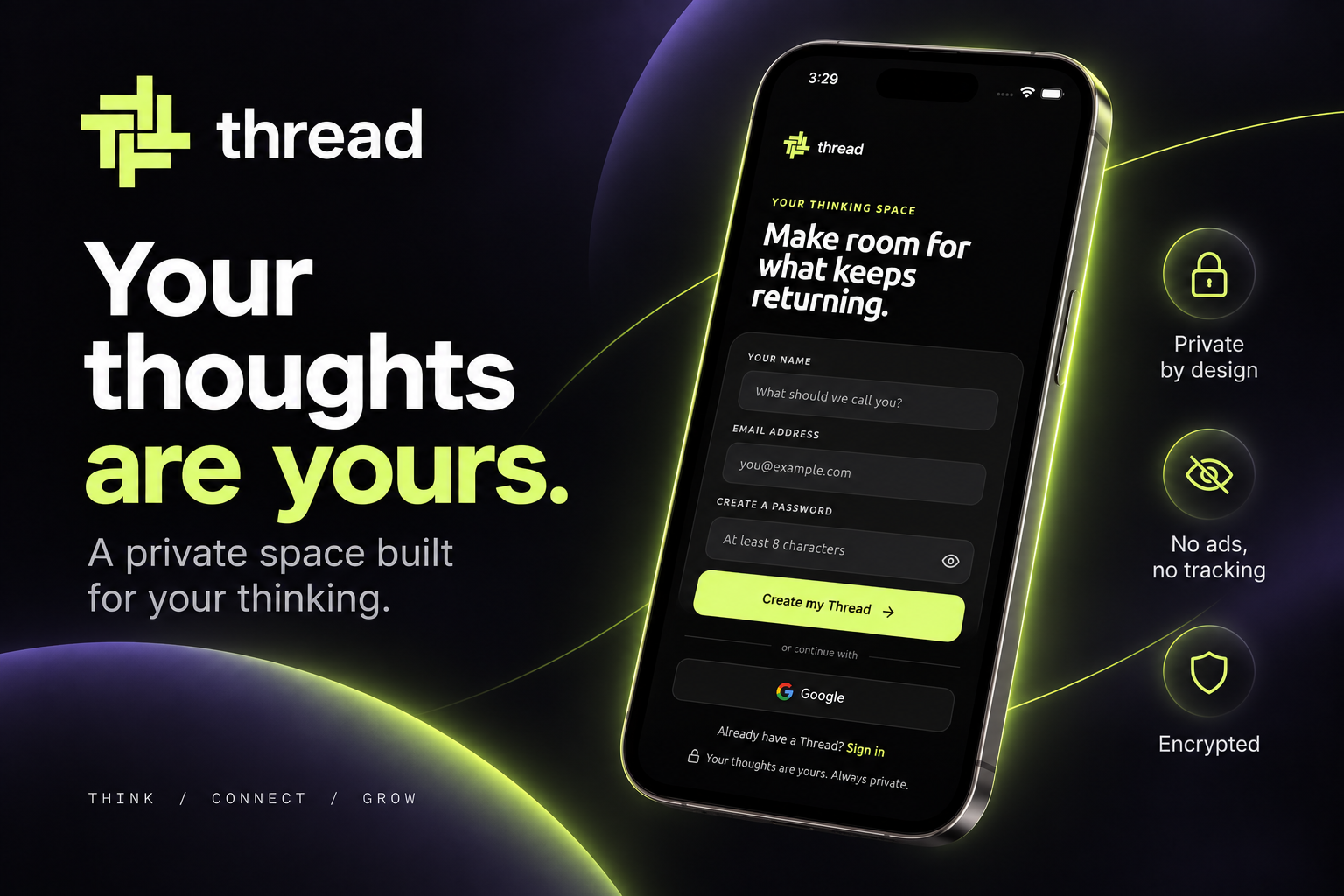
private and only for you to see
-
-
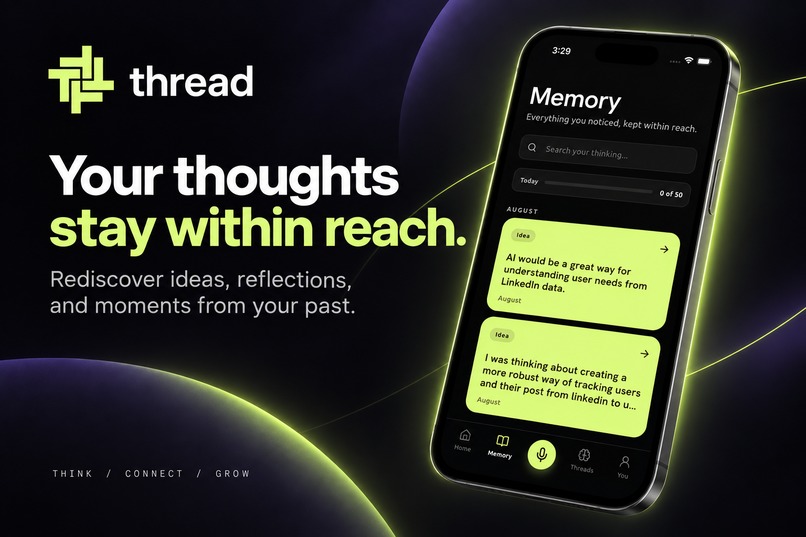
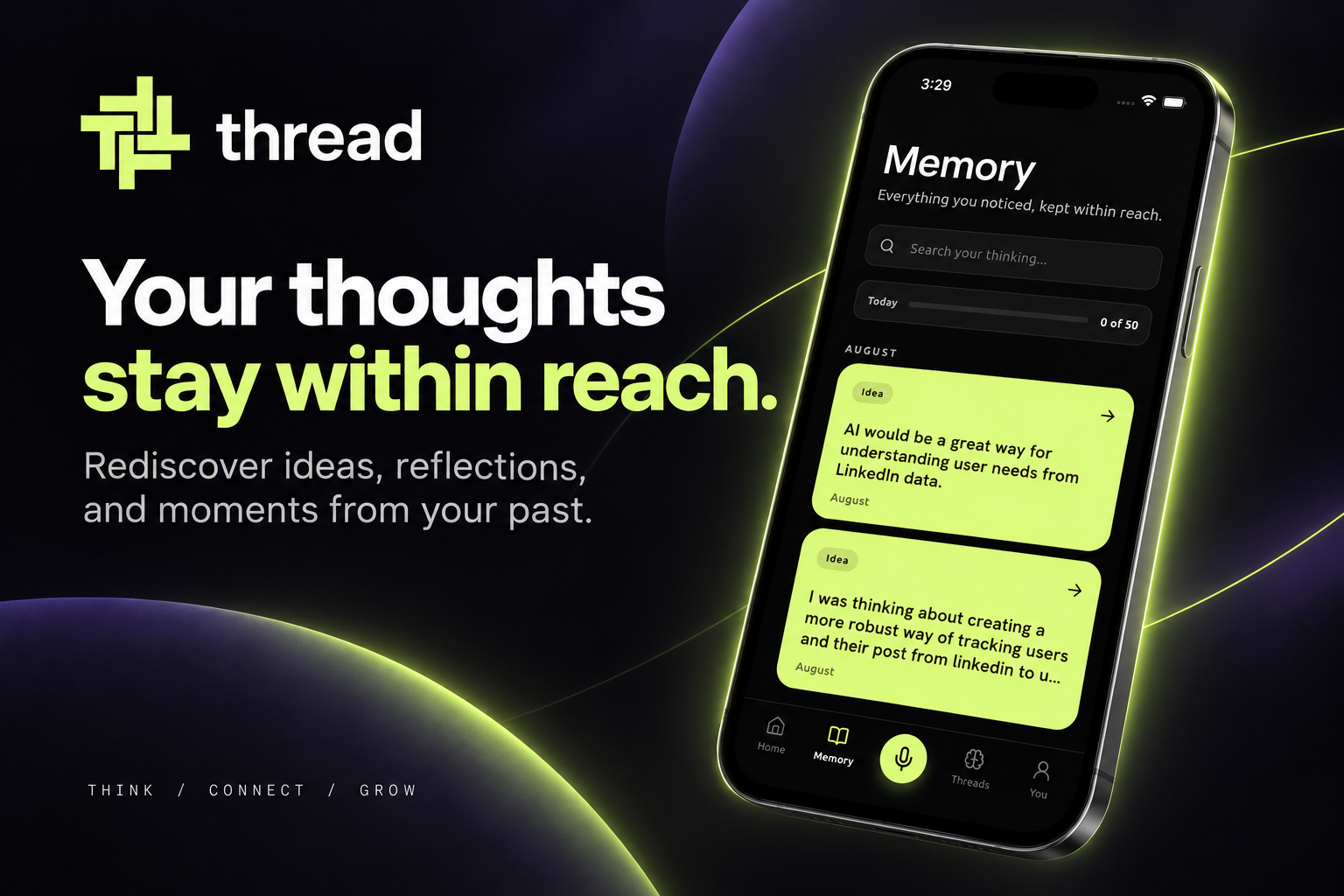
semantic search to find your capture
-

app logo

Why I built Thread
I have a lot of ideas throughout the day.
Some are product ideas, some are problems I notice, some are half-formed thoughts that might become useful later. The problem was never capturing them — I could already put them in Notes, Notion, or a journal.
The problem was what happened afterwards.
Most of those thoughts disappeared into a list and I rarely came back to them. Even when two notes were clearly related, they could be weeks apart and I had to remember the connection myself.
That was the idea behind Thread:
What if a journal could remember how your thoughts relate to each other?
Thread is a private AI journal where you can quickly capture anything by voice or text. Instead of asking you to organize everything into folders, tags, or notebooks, Thread looks for relevant connections between your thoughts over time.
As those connections become stronger, related entries can evolve into a Thread — a clearer representation of an idea, problem, theme, or train of thought that has been developing over multiple entries.
How it works
The experience is intentionally simple:
- Capture a thought by typing or speaking naturally.
- Thread stores it as part of your personal memory.
- Related thoughts are identified as your history grows.
- Connected ideas begin forming into Threads.
- Thread summarizes how the idea has developed and brings the relevant entries together.
- When an idea becomes actionable, it can become something you can continue working on outside the journal.
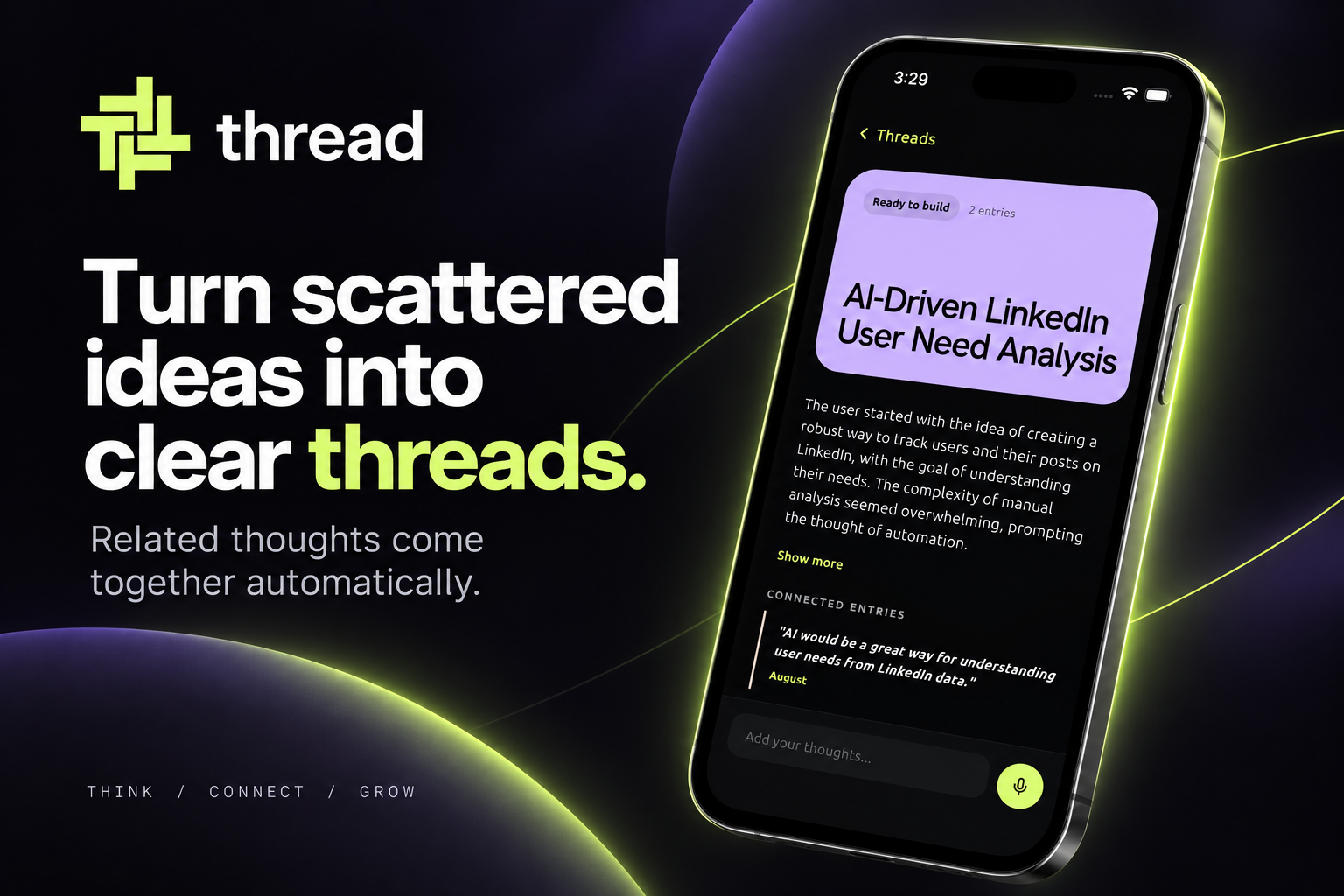
One example from my own testing was an idea about analyzing LinkedIn users and their posts.
I originally captured separate thoughts about collecting user data, understanding user needs, and using AI to automate the analysis. Individually they were just notes. Thread connected them and developed them into a single idea:
AI-Driven LinkedIn User Need Analysis.
That moment represents what I want Thread to do: not generate random ideas for you, but help you continue ideas that were already yours.
Building it
Thread is built as a mobile-first application with Flutter, with a strong focus on making capture as frictionless as possible.
Voice capture was especially important because typing creates friction when an idea appears while walking, working, or doing something else. You can simply open Thread, speak naturally, and save the thought without needing to create a title or decide where it belongs.
AI is used behind the scenes to understand the meaning of entries, identify relationships between them, summarize developing Threads, and surface useful context from previous thoughts.
I also integrated RevenueCat for subscriptions and entitlement management so I could ship Thread as a real consumer product rather than only as a hackathon prototype.
Thread currently has free and paid usage, with paid plans unlocking additional capacity for features such as voice capture and AI-powered memory.
What I learned
One of the biggest things I learned while building Thread is that AI does not always need to generate something new to be useful.
For this product, the most valuable role for AI is memory.
It should understand what you already said, notice when something new relates to it, and bring that context back at the right moment.
I also learned that the experience becomes worse very quickly if the AI tries to be too helpful. I didn't want Thread to constantly interrupt the user with suggestions, questions, or generated content.
The goal became:
Capture first. Intelligence quietly happens afterwards.
That influenced almost every part of the product.
Challenges
The hardest problem was deciding when two thoughts are genuinely related.
Two entries can contain similar words while being completely unrelated, while two genuinely connected ideas might use totally different language. Thread therefore has to reason about the meaning of an entry rather than simply matching keywords.
There was also a product-design challenge: I wanted the AI capabilities to feel powerful without turning the application into another chatbot.
Thread therefore keeps the primary interaction focused on the user's own thoughts. The AI works mostly in the background — connecting, remembering, summarizing, and resurfacing.
Voice capture created another challenge because spoken thoughts are naturally messy. People repeat themselves, change direction mid-sentence, and don't speak in neat titles or bullet points. Instead of forcing users to clean that up, Thread is designed around accepting thoughts naturally.
Finally, privacy was an important consideration from the beginning. A journal can contain some of a person's most private ideas and reflections, so the product is designed around the principle that your thoughts are yours.
What's next
Thread is already available as a working Android application rather than only a concept or prototype.
The next step is making Threads increasingly useful once an idea becomes mature.
For example, a developed product idea could eventually be exported as a structured specification or prompt that can be continued in tools such as coding agents or prototyping platforms.
The long-term vision is simple:
Capture thoughts → connect them → develop them → do something with them.
Most tools help you store information.
I want Thread to help you continue thinking.

Log in or sign up for Devpost to join the conversation.