Inspiration
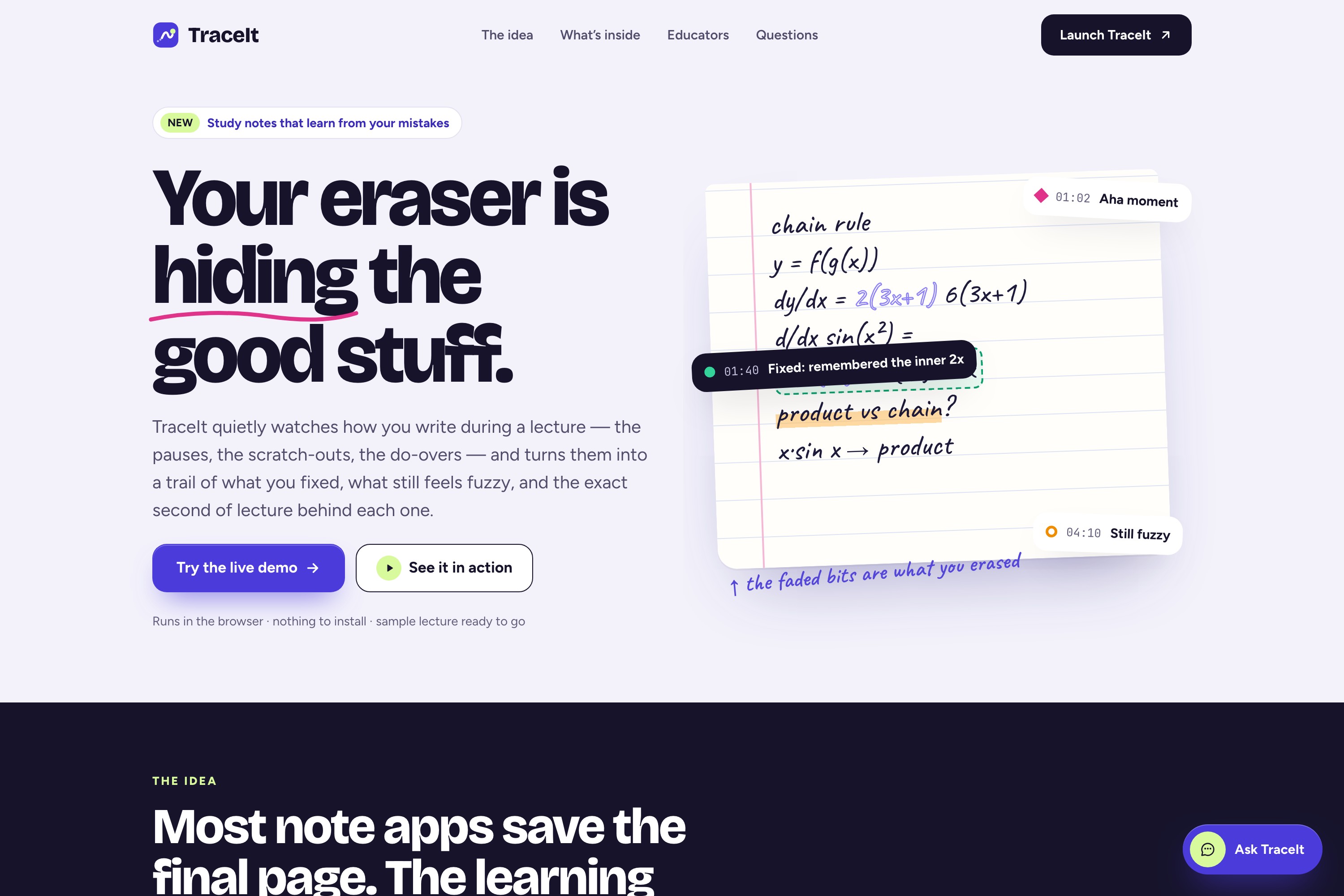
Every student has done it: you write something in a lecture, realize it's wrong, and erase it. The page looks clean, but the moment you got confused is gone, and that's exactly what you needed to study. Your teacher never finds out where the class got lost either.
We kept coming back to one idea: the eraser holds the most useful information in the room, and everyone throws it away.
What it does
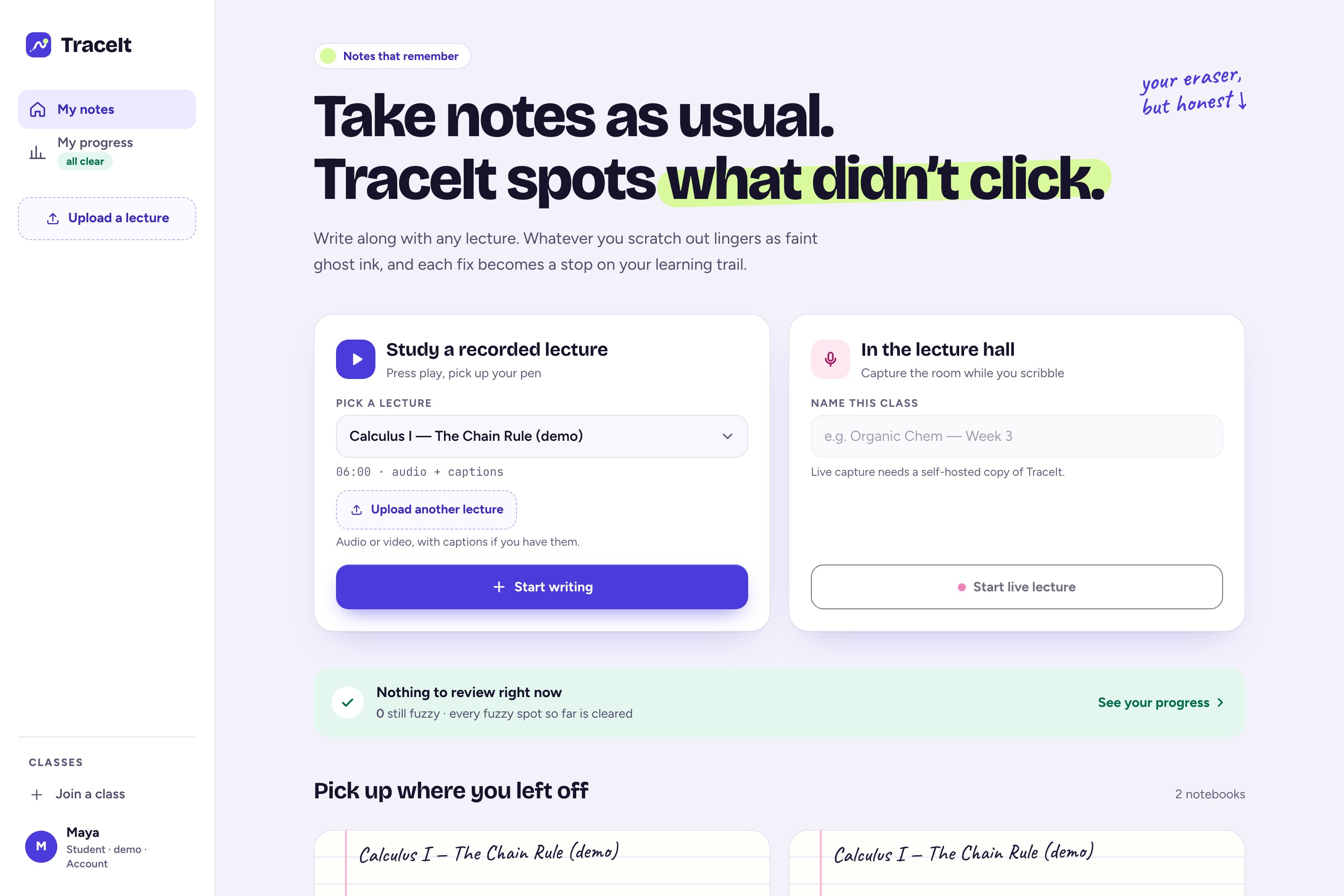
TraceIt is a note-taking app that follows a lecture, recorded or live, and keeps what you erase.
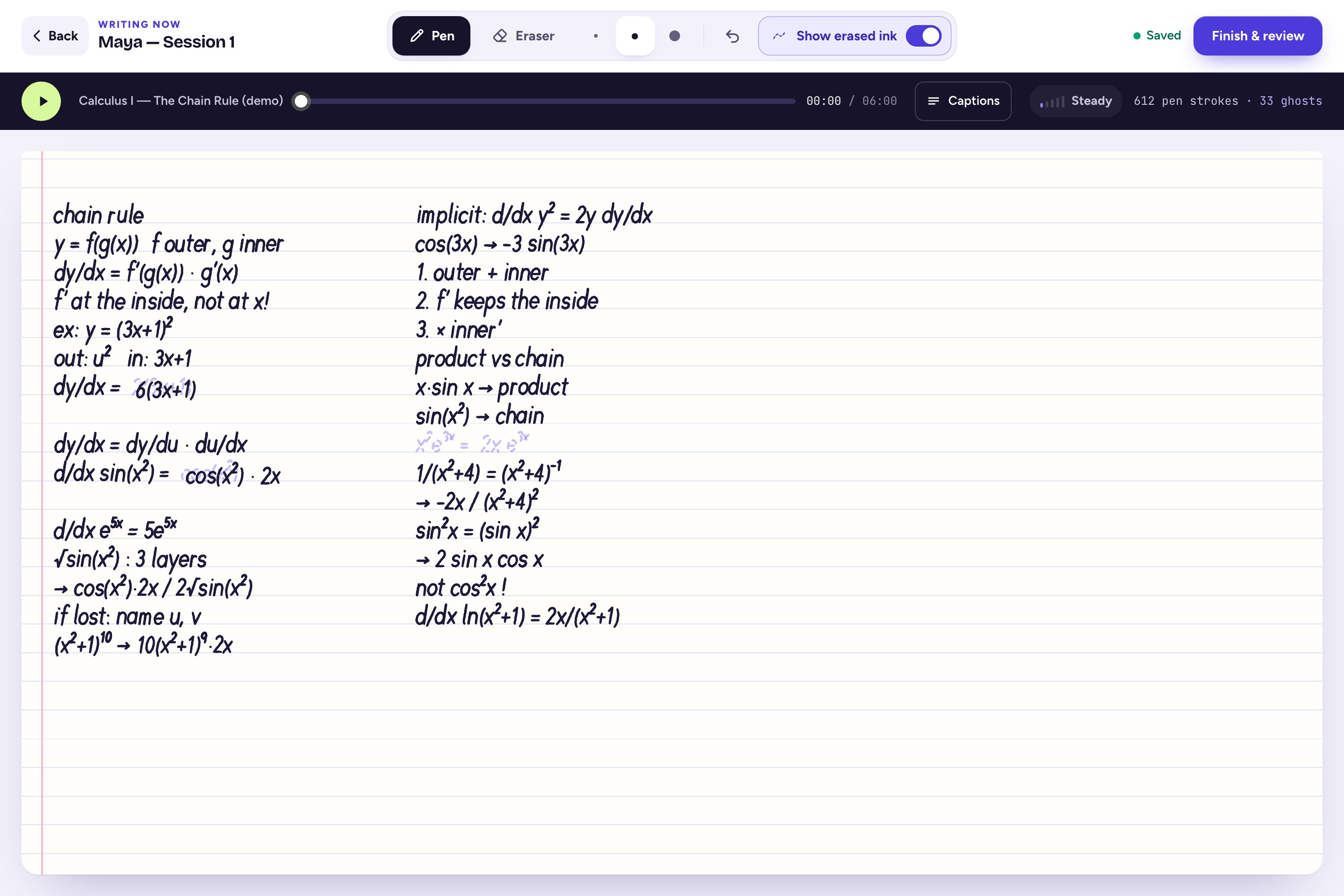
- Write along with the lecture. Pen and eraser in several sizes. Every stroke is tied to the second of the lecture it was written in, and live lectures get captions.
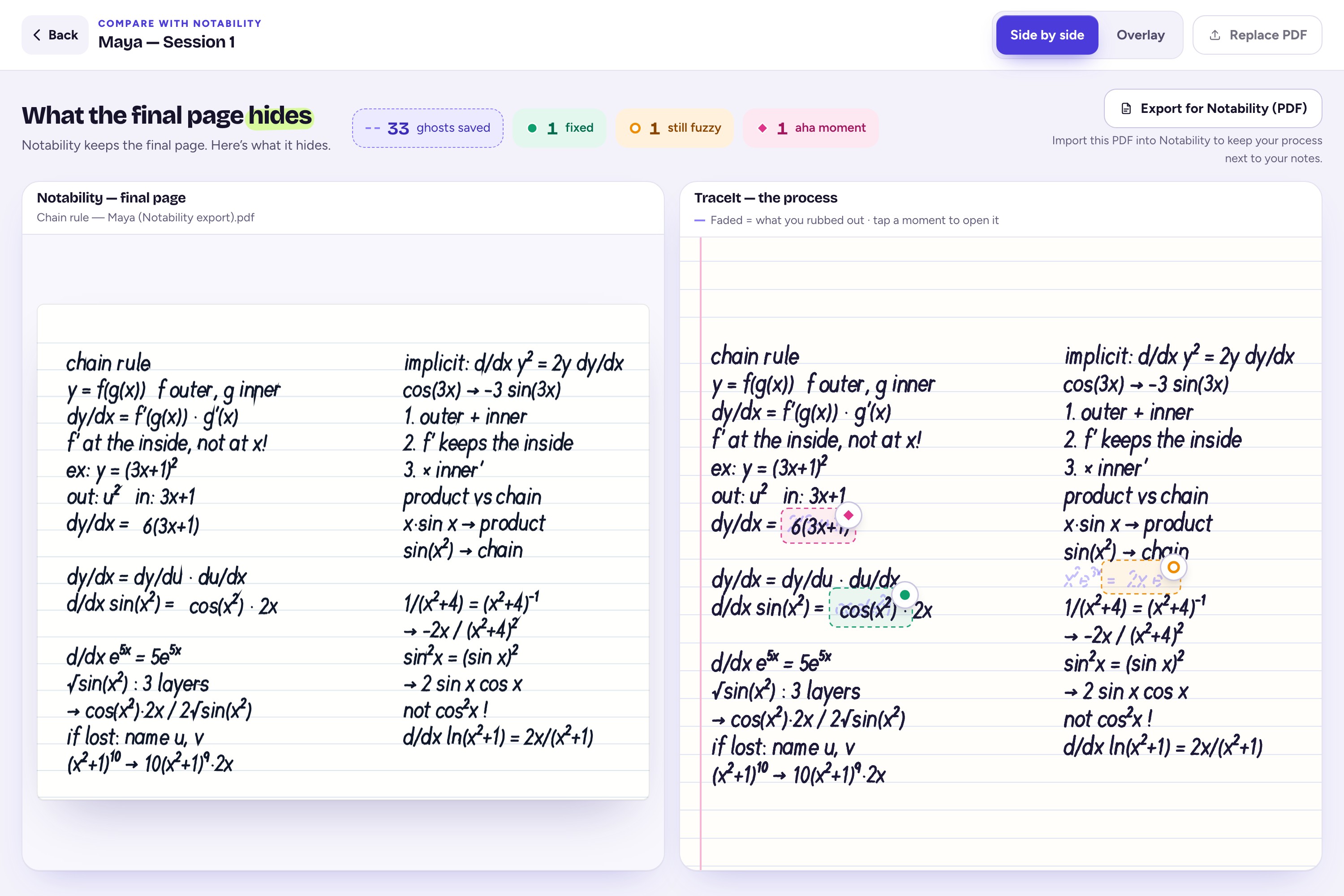
- Nothing is lost. Erased ink stays on the page as faint ghost ink.
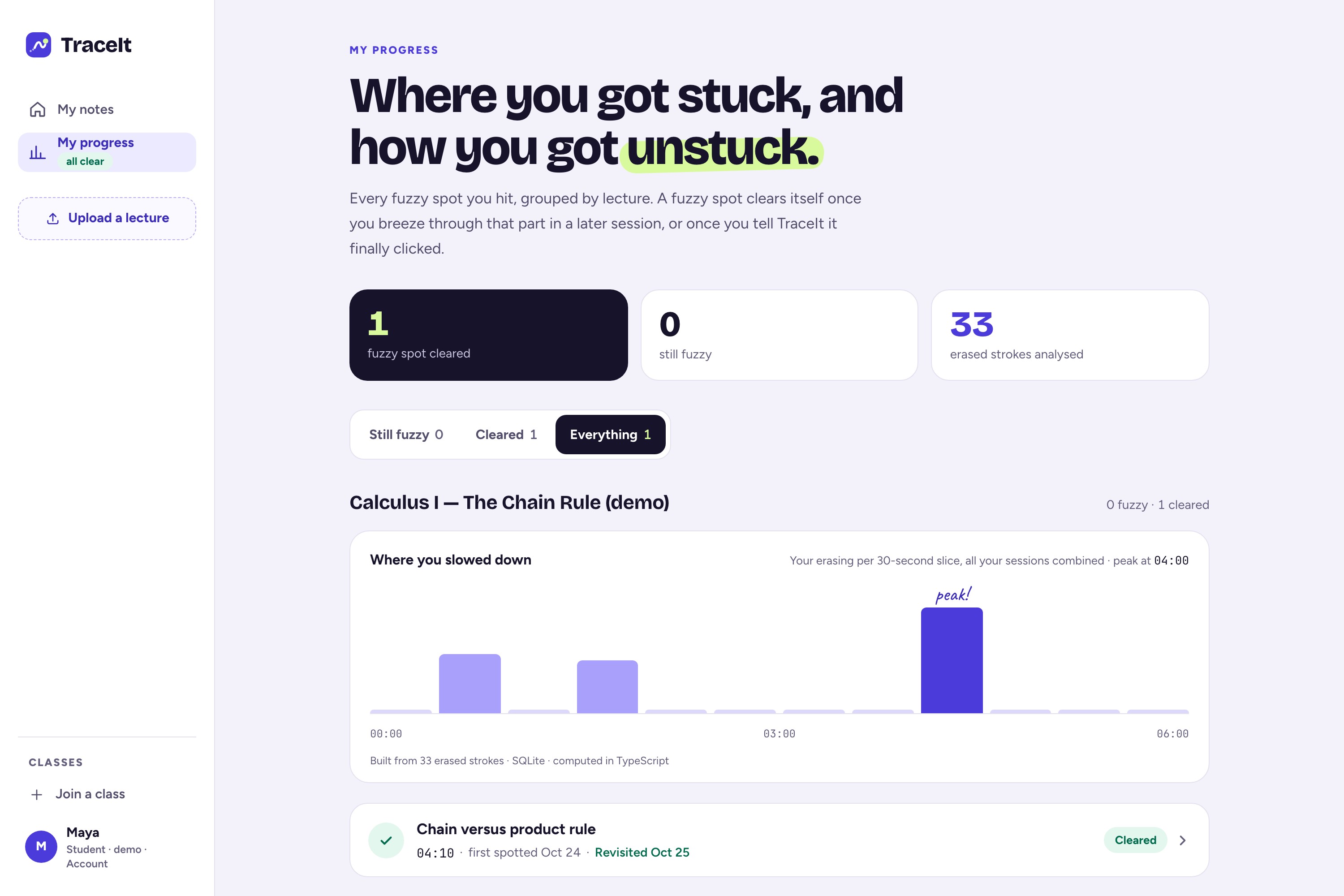
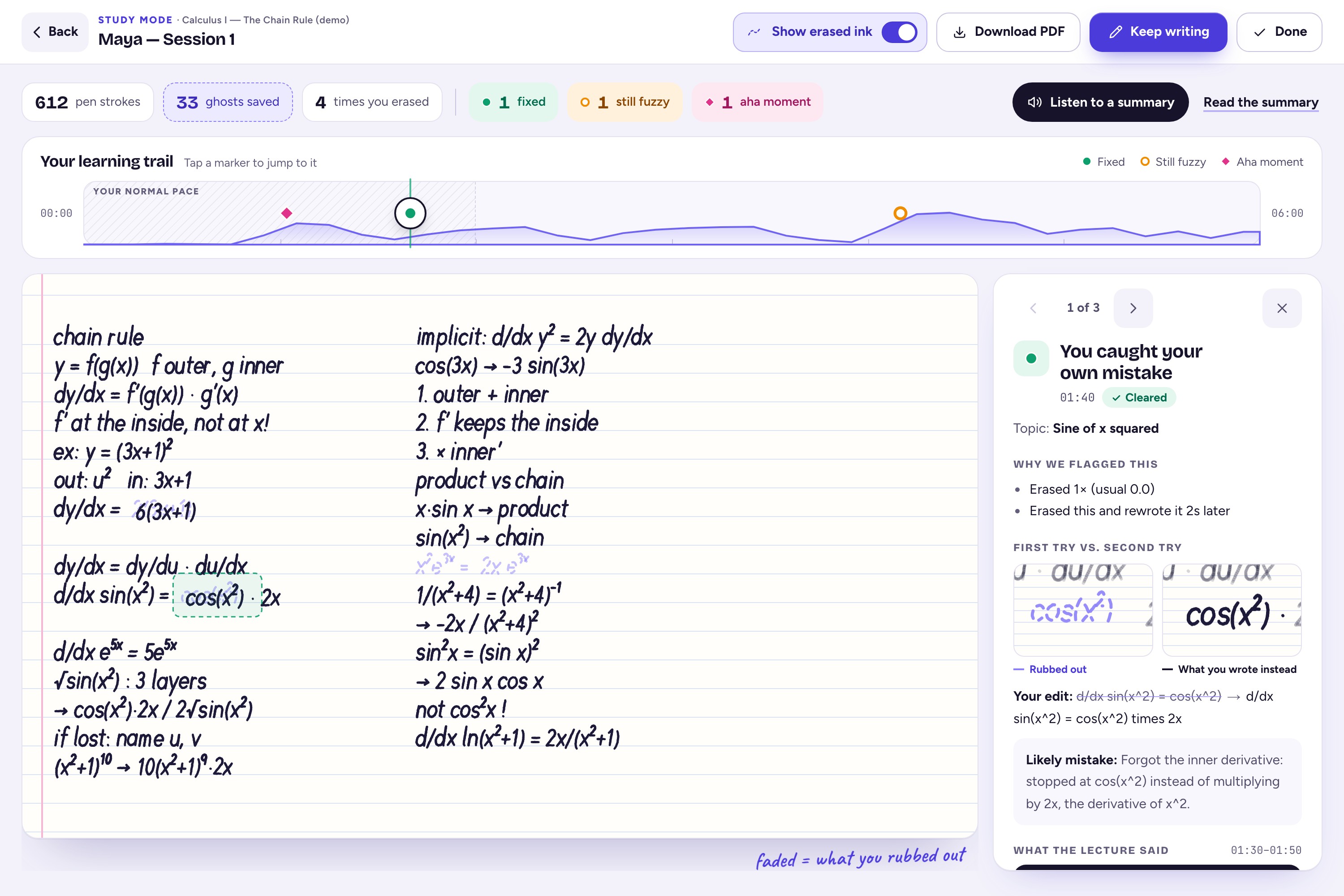
- It spots where you struggled. Your pauses, slow-downs and rewrites are compared with your own normal pace and marked as Fixed, Still fuzzy or Aha moment.
- Review in minutes. Press Finish & review and TraceIt opens your most important moment: your first try, your fix, what the professor said right then, and a quick self-test in 10 languages.
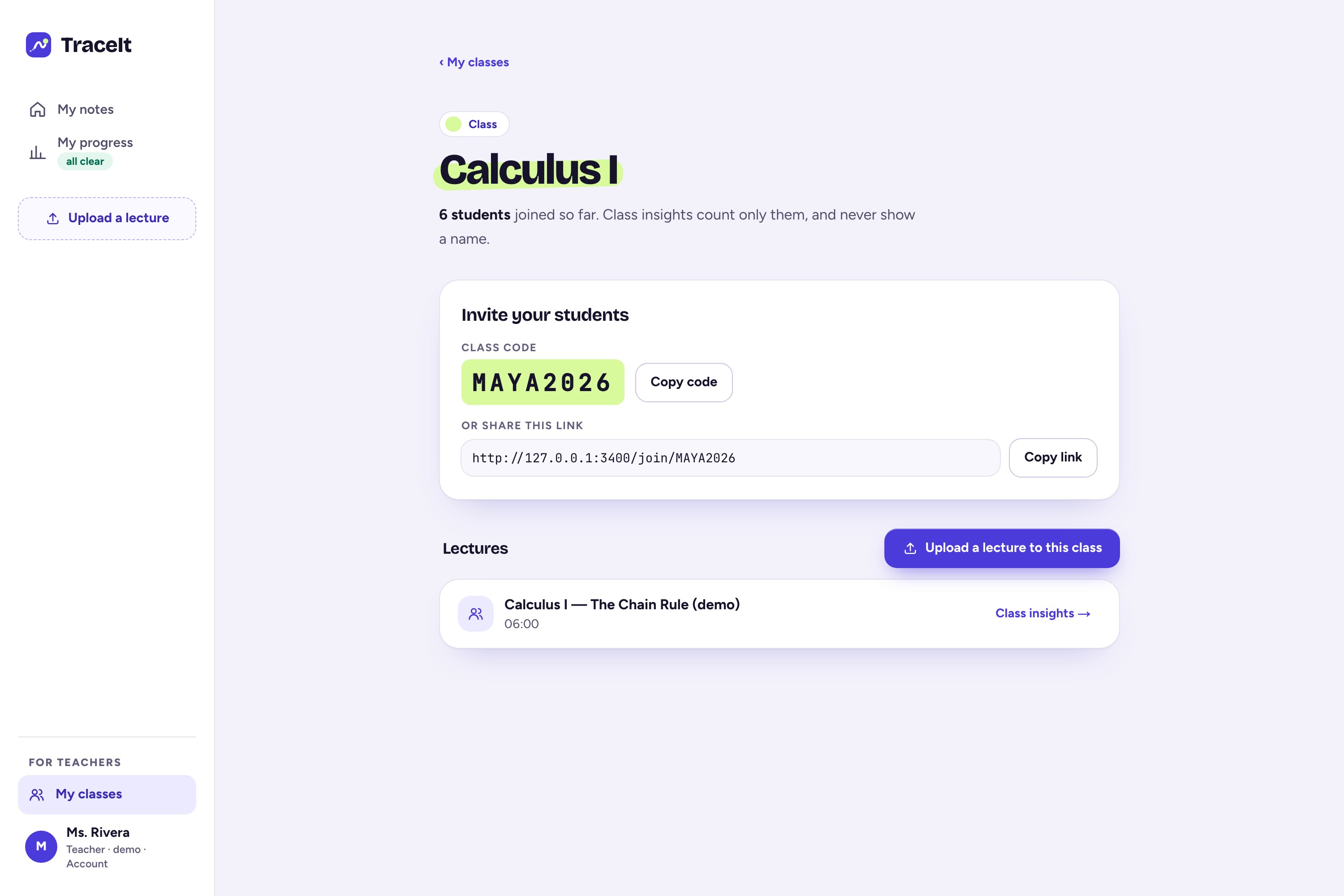
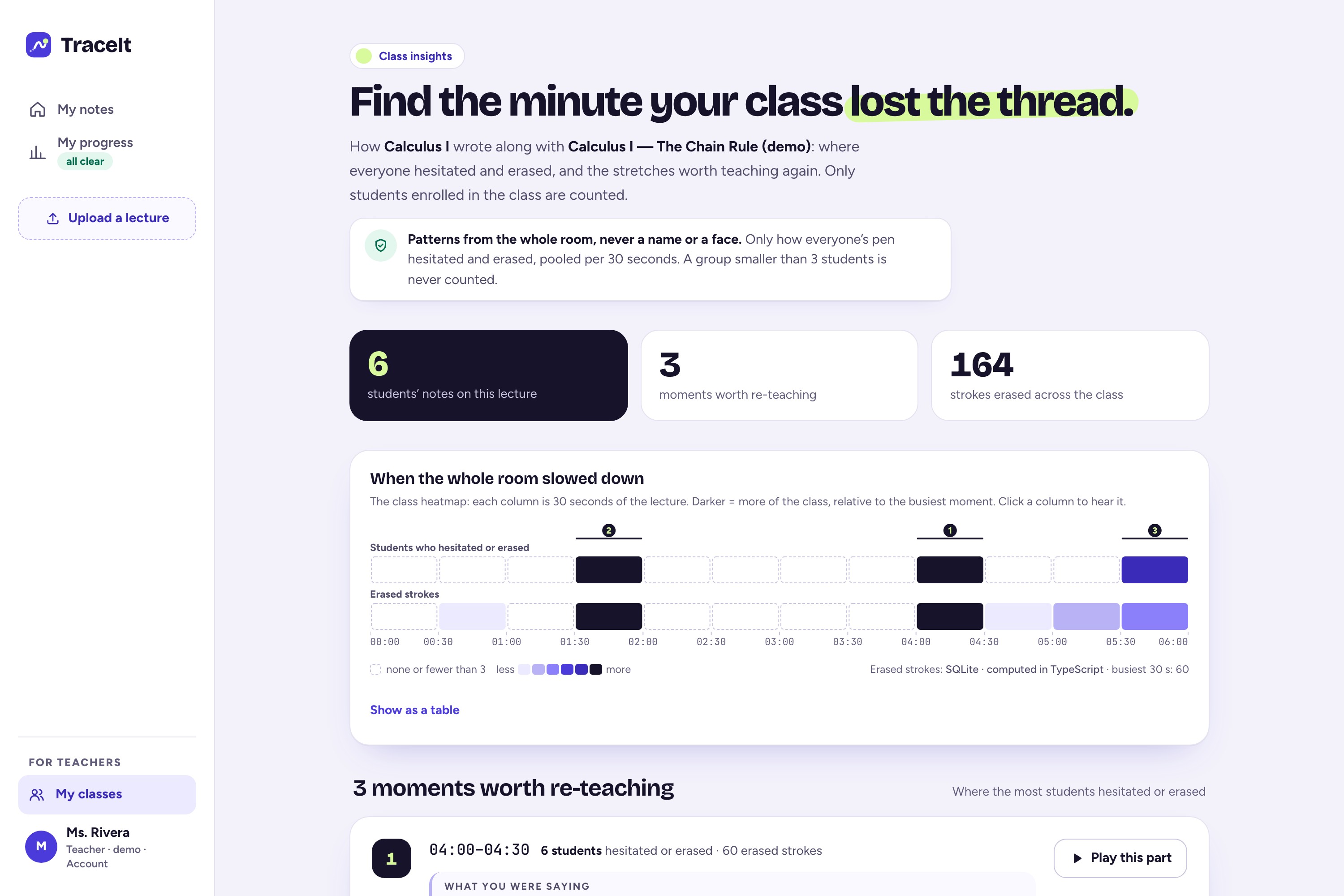
- For teachers. Create a class, share a join code, and see the minutes where the class got stuck. No names, and no group smaller than three.
- Take it with you. Download your notes as a PDF.
How we built it
At CalHacks 13.0 our team of three turned it into a classroom product: accounts, classes with join codes, the teacher view, the step-by-step review, a full redesign and many fixes.
- App: Next.js, React, TypeScript and Tailwind CSS. The canvas records each stroke with its lecture time, speed and pressure.
- Analysis: plain TypeScript rules. They compare 10-second windows with the student's own pace and pair each erase with the rewrite that followed.
- Explanations: Groq writes the explanations and self-tests. Answers are checked on the server, and the app still works without it.
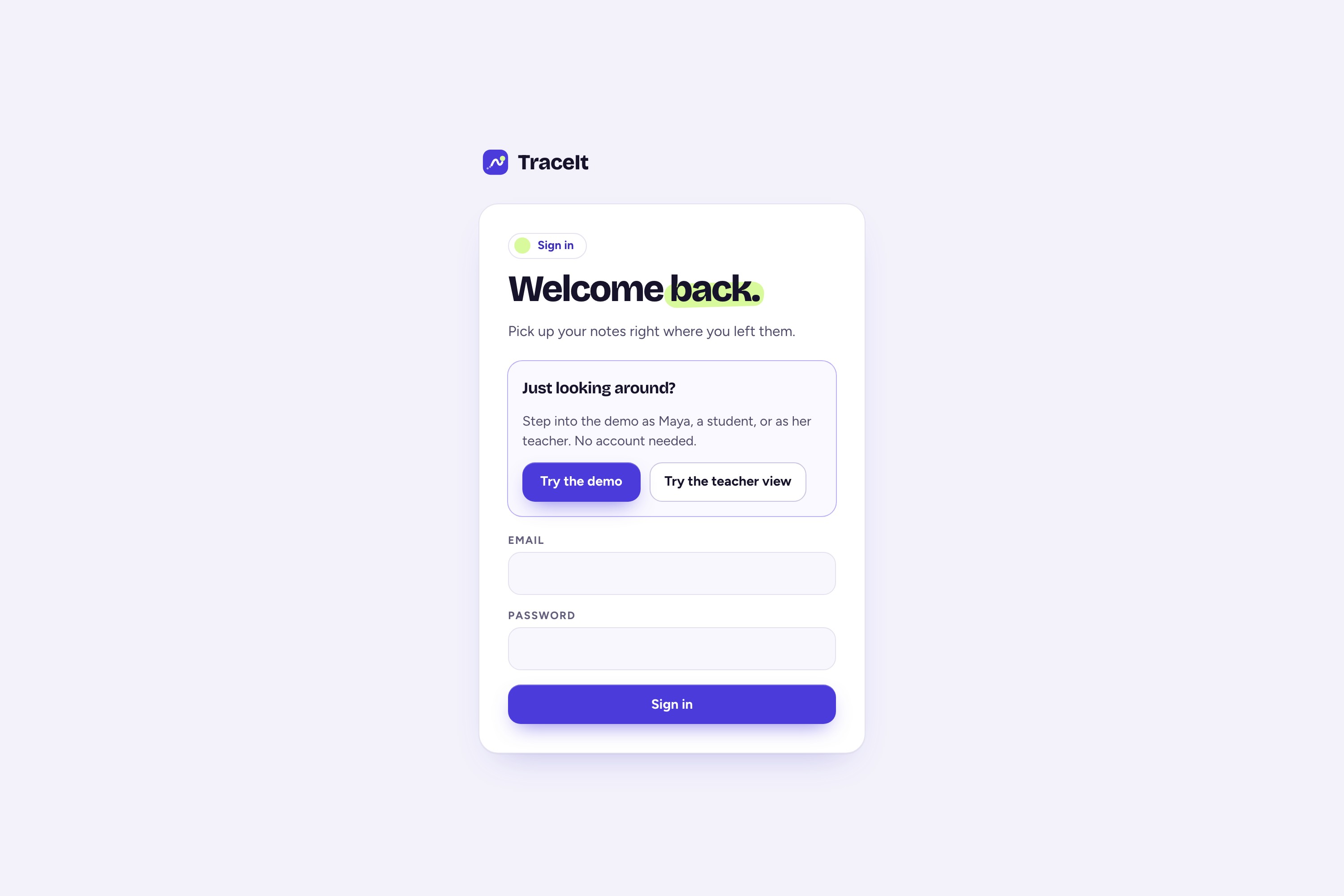
- Accounts: email and password, student and teacher roles, and every page limited to the signed-in user.
- Data and testing: SQLite or Postgres, over 1,000 automated tests, deployed with Docker.
Challenges we ran into
- Mistake or noise? A crossed-out word, a slip of the pen and a diagram look alike to a computer. We tuned the rules until erases matched real corrections and a drawn axis stopped counting as a strike-through.
- Privacy for teachers. Teachers should see where the class struggled, never who. We count only enrolled students and hide any group smaller than three.
- Live captions. Silent microphones and stalled speech services failed without telling anyone, so we added clear warnings.
Accomplishments that we're proud of
- A full loop: a student's erased line becomes a teacher re-teaching the right minute the next day.
- A review that opens straight to what matters.
- Privacy built in from the start.
- Over 1,000 automated tests passing on two databases.
What we learned
The most useful information in a classroom isn't the final answer, it's the path to it. Small things, like plain words on buttons and opening the most important moment first, helped students more than any big feature.
What's next for TraceIt
- Letting students share specific fuzzy spots with their teacher.
- Google Classroom and Canvas roster import.
- An iPad app that works offline.
Built With
- css3
- docker
- elevenlabs
- groq
- html
- html5
- javascript
- next.js
- node.js
- pdf-lib
- pglite
- playwright
- postgresql
- react
- render
- sql
- sqlite
- tailwindcss
- timescaledb
- typescript
- vitest
- web-audio-api
- web-speech-api
- whisper


Log in or sign up for Devpost to join the conversation.