-
-
ThoughtTide
Inspiration
ThoughtTide is inspired by 2016's messy, creative, and surprising internet. In contrast, today’s digital experience feels over-polished, where feeds are curated, and photos are filtered and edited, giving users the pressure to perform well on social media. ThoughtTide is built to bring back imperfection, spontaneity, and serendipitous discovery, encouraging people to create freely and engage with ideas as they evolve. ThoughtTide is a response to the "Performance Pressure" of the 2026 digital landscape. Our research identified a critical pain point: users across diverse archetypes, from 19-year-old art students like Chloe to older immigrants like José, experience significant Linguistic Anxiety and creative blocks due to over-polished, algorithmically-driven feeds. Inspired by the messy, spontaneous nature of the 2016-era internet, ThoughtTide replaces modern "Efficiency" with "Human Resonance." We successfully moved away from toxic metrics (likes/follows) to focus on the Texture of Imperfection, creating a sanctuary where thoughts are treated as evolving currents rather than static data points.
What it does
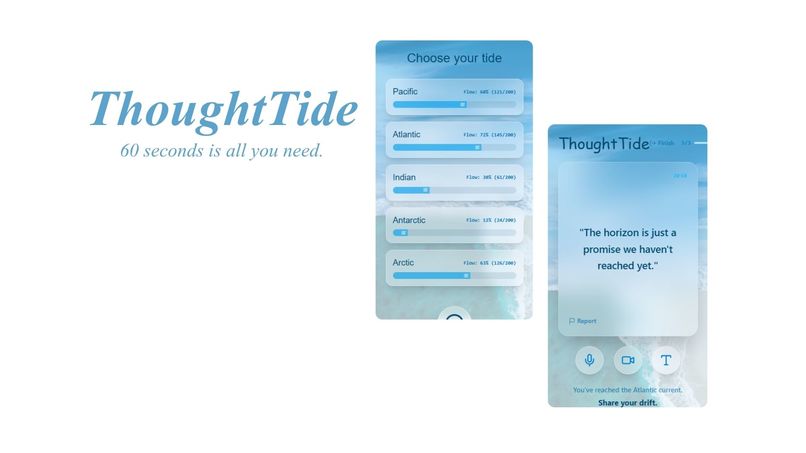
To address these pain points, we developed a high-fidelity mobile experience that prioritizes Doing over Watching. The solution integrates three core features: Tidal Onboarding, where limited-capacity "Oceans" ensure intimate interaction; the 60-Second Studio, a "Low-Stakes" canvas that acts as a psychological pattern interrupt to stop over-editing; and Multimodal Chains, allowing users to respond via voice-to-texture or quick sketches. These components integrate into a seamless flow that validates our "No-Metric" philosophy, proving that functional constraints like time limits can actually lead to emotional freedom and intuitive interaction.
Challenges we ran into
A primary challenge was managing harmful content without disrupting the platform’s unfiltered, free-flowing nature. We solved this by implementing Innovative AI-powered Detection that works in real-time, prompting users to reconsider potentially inappropriate language before it is posted. To support this, we included a "Hold-to-Verify" tactile interaction for human accountability and a 18+ community standard. This multi-layered approach ensures a safe environment for vulnerable "Narrative Weavers" while maintaining the spontaneity that defines the platform, effectively addressing edge cases of user safety and digital ethics.
Design Process & Evaluation
Our design process was rooted in structured ideation and rigorous evaluation. We conducted Jakob Nielsen's 10 Heuristic Evaluation and Expert Walkthroughs to validate our interface. These evaluations confirmed that our "Tidal" navigation provides clear Visibility of System Status, while the multimodal inputs offer the Flexibility required for a diverse user base. By iterating from low-fidelity sketches to a high-fidelity Framer prototype in just 24 hours, we demonstrated a compelling progression from a structural "vibe check" to a functional, accessible solution that prioritizes human connection over digital performance.
Accomplishments that we're proud of
In just 24 hours, we built an interactive ocean experience using Framer for the first time.
What we learned
Our group used Framer for the first time for this project. Despite being new to the platform, we were able to design an interactive, mobile-ready experience where users can share quick thoughts, images, and voice notes in real time. Framer allowed us to rapidly prototype and iterate on our ideas, turning our vision of spontaneous, flowing creativity into an engaging interface that truly captures the spirit of ThoughtTide.
What's next for ThoughtTide
Next, we’re expanding ThoughtTide to support larger oceans and richer interactions, making it easier for more users to participate simultaneously. We’re also exploring new AI-driven features to enhance creativity.
Built With
- figma
- framer

Log in or sign up for Devpost to join the conversation.