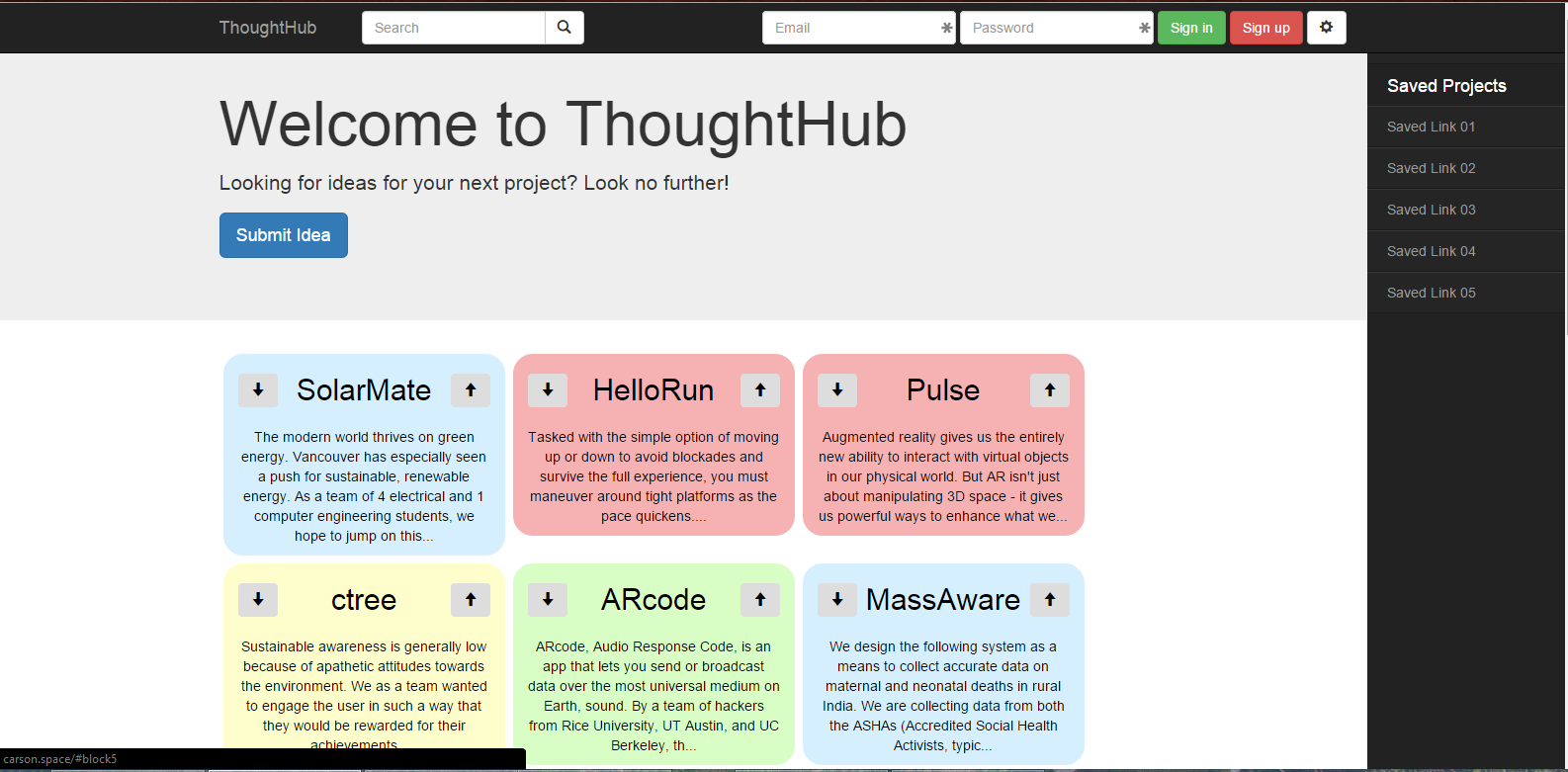
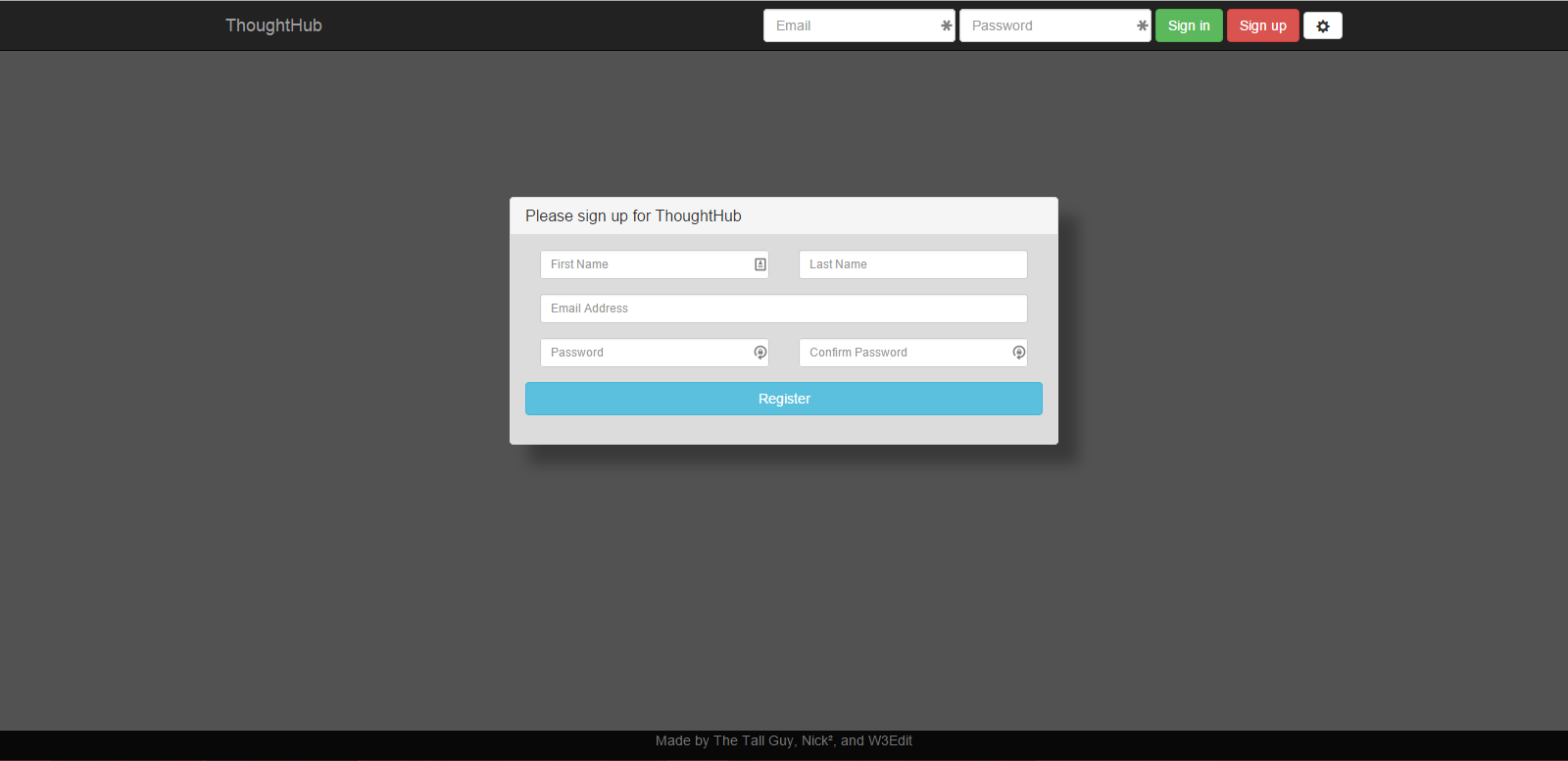
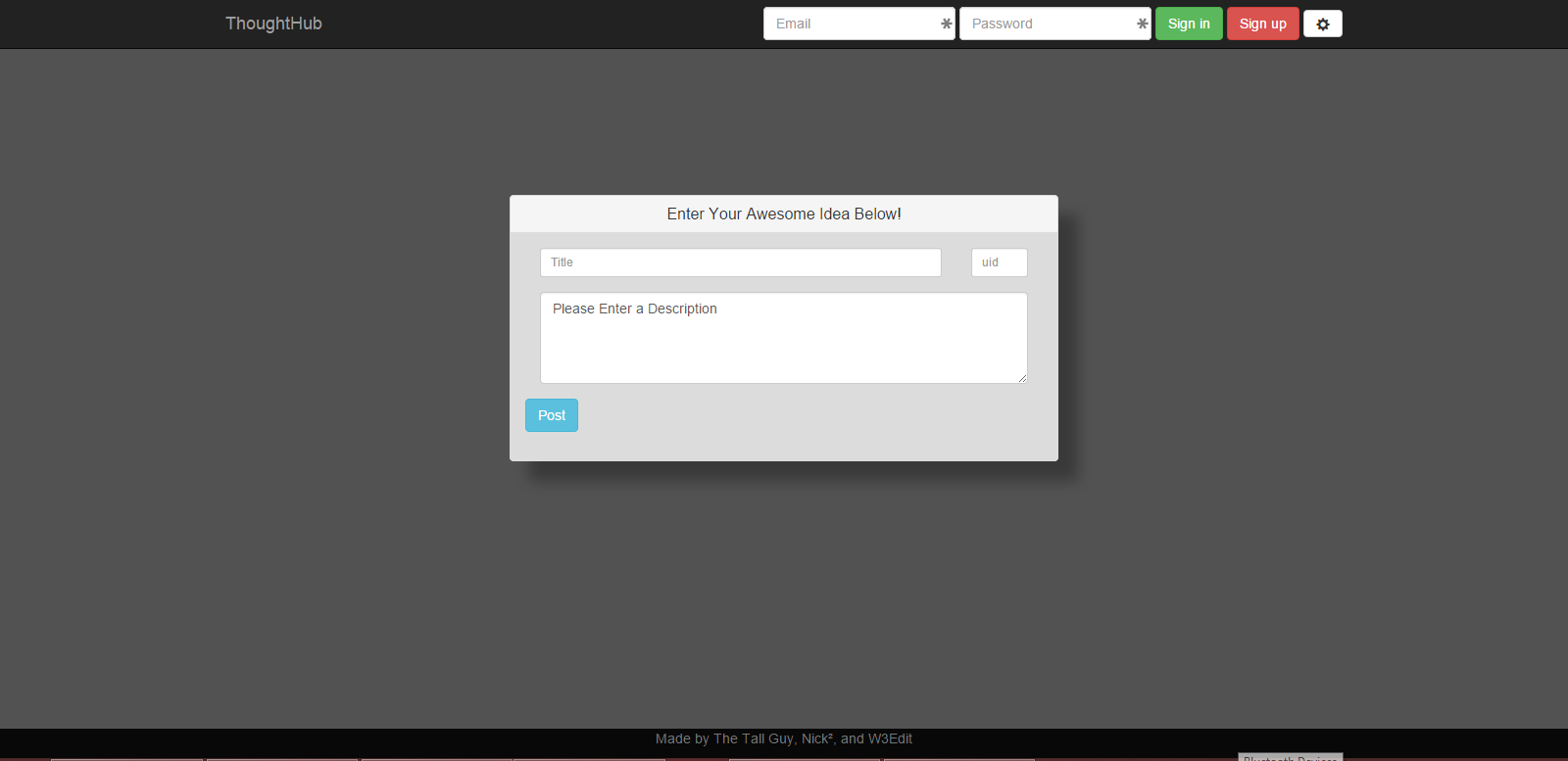
With this website, we wanted to help cultivate creativity through providing easy access to ideas, thought up by anyone willing to share. Our team agrees that a lot of time and talent is wasted because people don’t have the resources needed to achieve their desired goals. A lot of people think of creative ideas daily, but they don’t have the time, money, or skill to implement them. On the other hand, there are individuals who may have immense passion and skill for things like computer science or engineering, but aren’t the best at finding inspiration or thinking of ideas that truly resonate with them. These are the situations where we expect ThoughtHub to be useful. One of the most unique features of this websites is the fact it has room for ambiguity. In other words, users can be as vague or specific with their ideas as they want. We agree that when faced with a lack of motivation or creativity, peers and teachers point us to others’ work. Using these ideas as a basis for a new creations puts constraints your imagination, unintentionally binding your project to the work of others. Why not just push people in the right direction instead? It’s easy to do when you show them vague, “raw” ideas that can spark something in their minds, giving them a direction to go in while still leaving room to make something unique to them. At the same time, idea contributors don’t have to abandon an idea simply because they can’t completely carve it out on their own. The site works similar to a forum, where people post their ideas with tags, which then appear for anyone to see. Then, users who have accounts can “like” or “dislike” an idea based on how much they want to see the project made in the future. They can also comment or work on these ideas in order to contribute in some way, whether it is to help “flesh out” the idea or help actually create it. For convenience, users can save projects they are interested in, showing them on a sidebar that allows them to easily access the desired posts. This website has the potential to allow people to conveniently access ideas and find inspiration for projects. It can be used for things like hackathon, where many good coders, engineers, and other attendees won’t waste as much time trying to think of something new on their own. We also hope to provide a place for people to go to practice coding in a practical sense, and even for freelance coders to find new projects to work on. In the end, this method of crowdsourcing ideas will lead to useful products, new ideas, and it will nurture our imaginations.
ThoughtHub
A New and Exciting Way to Croudsource Ideas
Updates

Leave feedback in the comments!
Log in or sign up for Devpost to join the conversation.