-
-
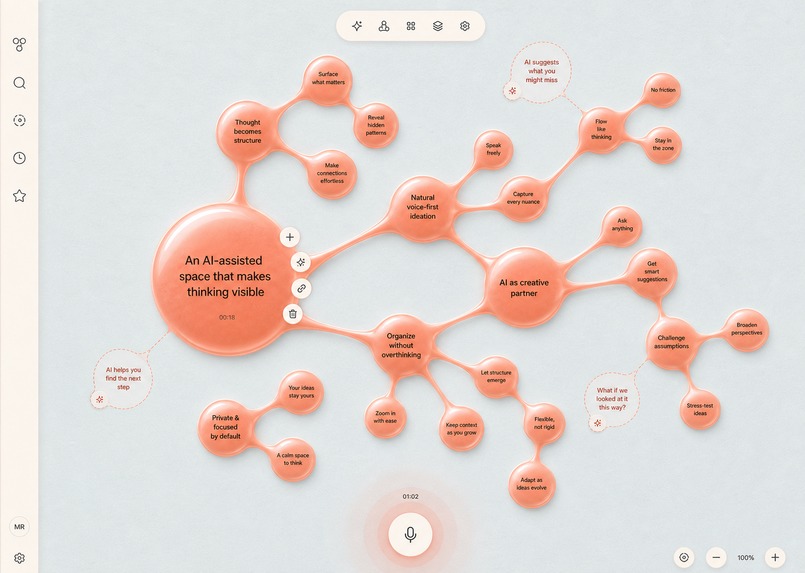
Concept Art
-
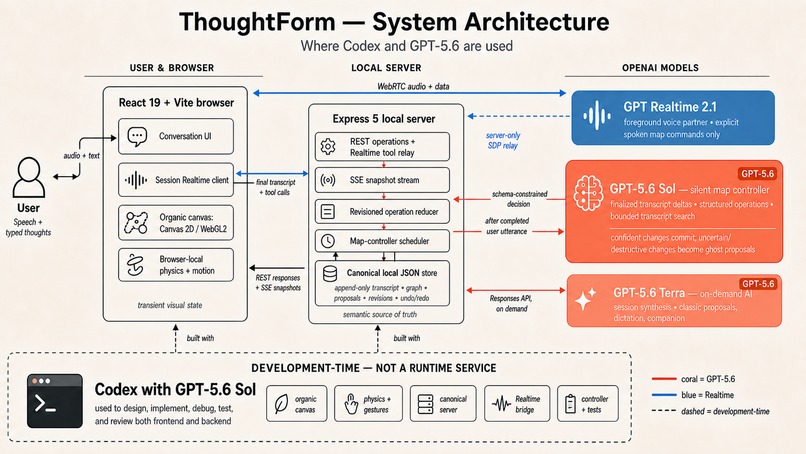
System Architecture
-
Logo
-
Full Logo
Inspiration
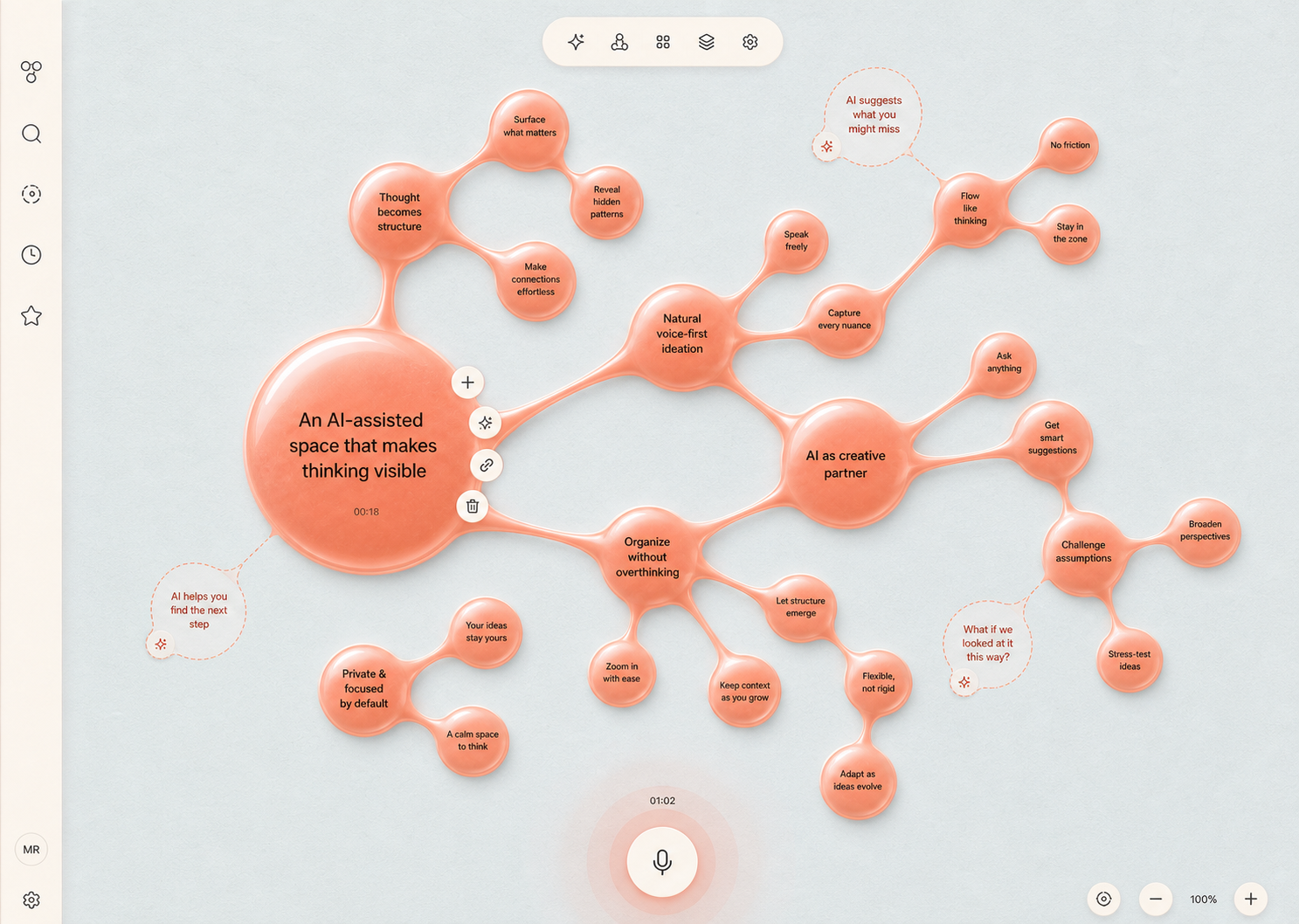
We both have ADHD and implementation used to be the bottleneck, but now that AI can build almost anything you can describe, the real constraint is being able to clearly define what you want. Existing tools don't help much chat gives you walls of text and mind maps lack depth. So we built a way to explore ideas visually and conversationally, helping you get to clarity faster.
What it does
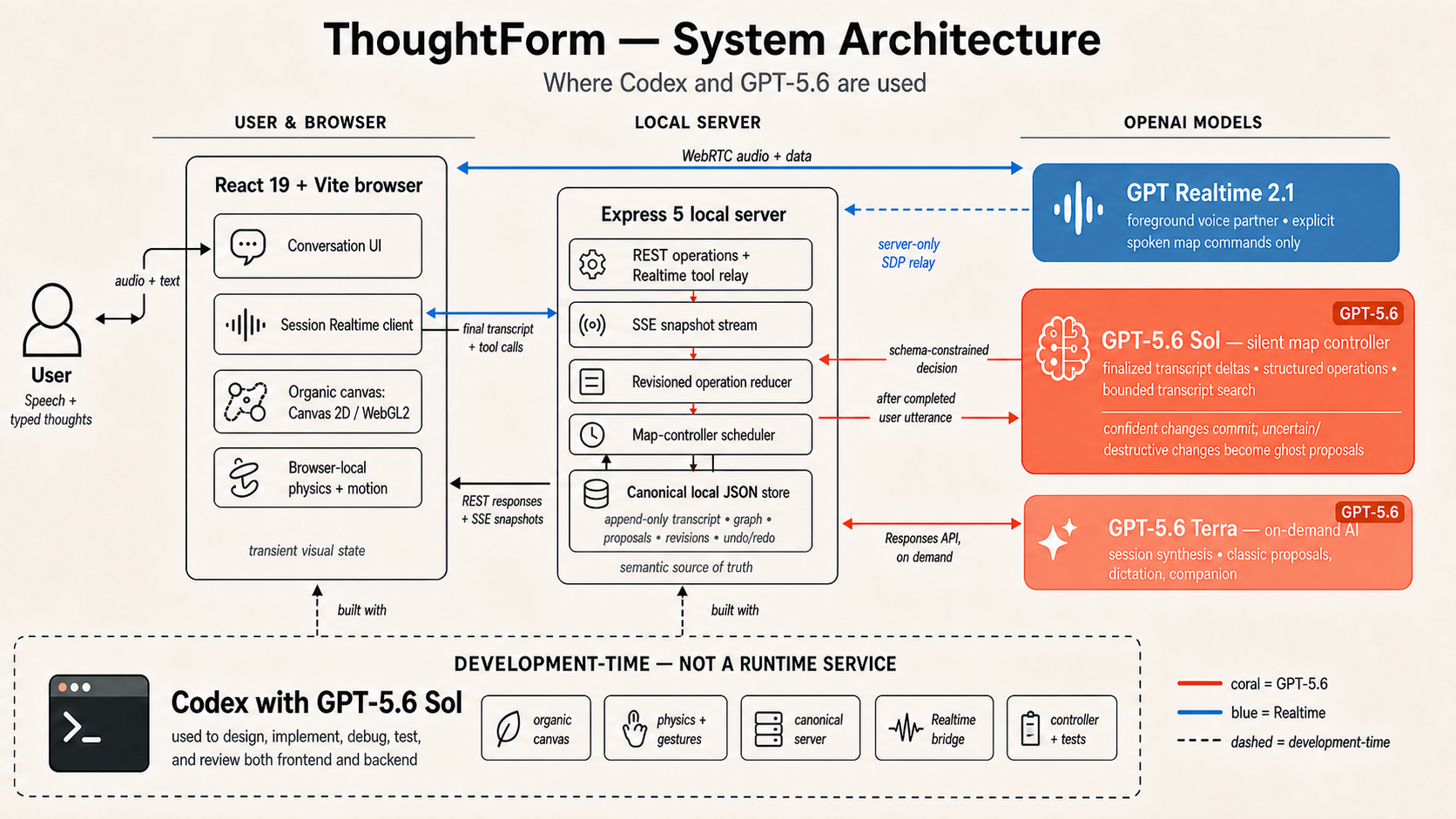
ThoughtForm is a voice-first canvas for brainstorming and refining your ideas. It turns a live AI conversation with Realtime 2.1 into a traceable map, with GPT-5.6 organizing and expanding on your thoughts in the background without interrupting the flow of conversation Inside the product, GPT‑5.6 Sol receives and interprets the transcript from your voice conversation with Realtime 2.1, and makes tools calls to update the UI while you're speaking. It also handles transcript provenance, can make and undo changes, and can proactively expand upon your ideas.
How we built it
We used GPT‑5.6 Sol in Codex as our implementation and debugging partner across the frontend and backend. It helped take our concept images and convert them into a fluid and responsive UI. Codex also tested the app with computer use, tracked down bugs, and built the test suite as we iterated.
Challenges we ran into
Realtime needs to respond immediately, GPT-5.6 needs time to reason over completed thoughts, and the canvas needs to stay fluid without older state overwriting newer changes. We ended up separating those responsibilities, with the server owning the transcript, semantic graph, provenance, revisions, and undo while the browser handles temporary physics and animation. We also had to find the right boundary for autonomy (confirming every change makes the user manage the system, but letting the AI freely rewrite the map makes it stop feeling like their thinking). We wanted reversible changes happen directly while uncertain or destructive interpretations become proposals. And because the interface behaves like one continuous organic material rather than nodes connected by lines, we had to preserve that geometry through dragging, collisions, editing, selection, connection growth, and undo.
Accomplishments that we're proud of
Using realtime api and using codex to build a working prototype we could demo
What we learned
Learning how to best coordinate between two different codex sessions and testing.
What's next for ThoughtForm
Refine the human computer interface from improving the system instruction to allowing ideas to more easily flourish
Built With
- codex
- gpt5.6
- openai
- realtime


Log in or sign up for Devpost to join the conversation.