-
-
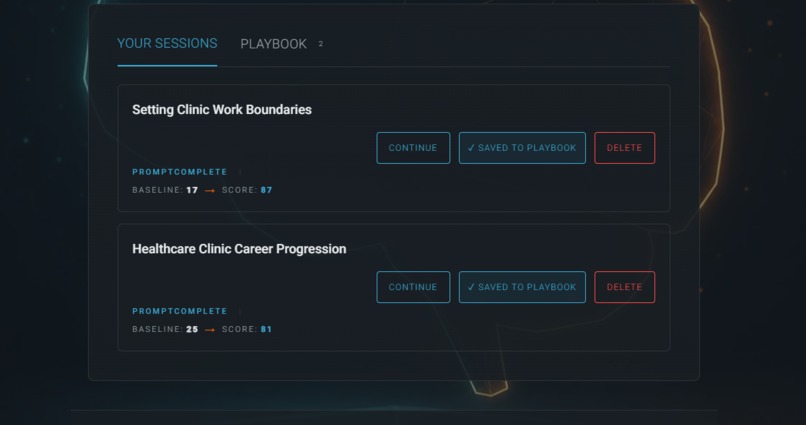
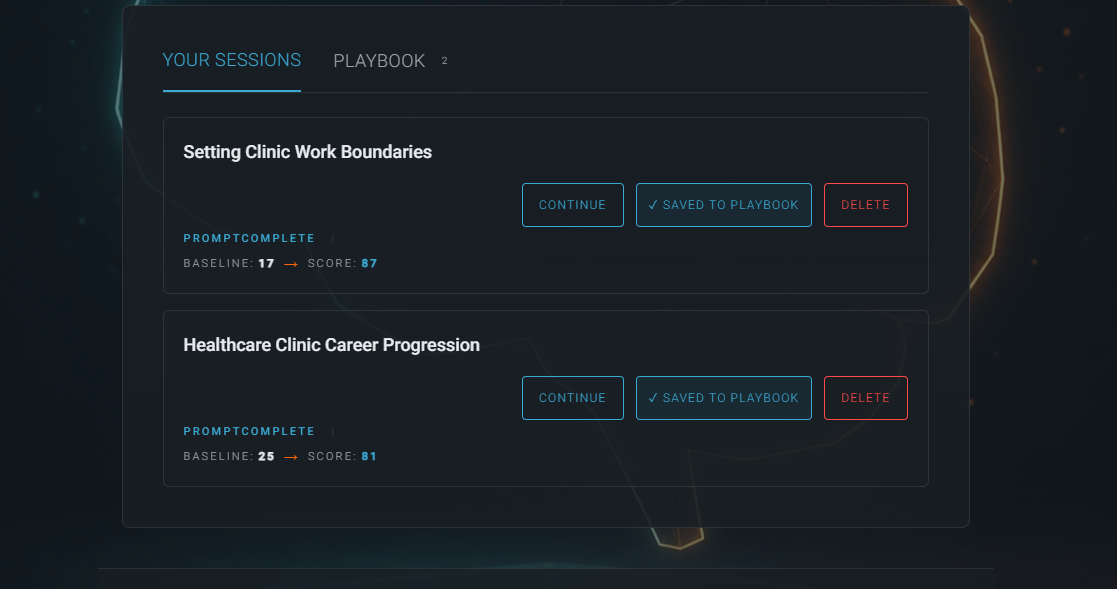
User's sessions and saved playbooks
-
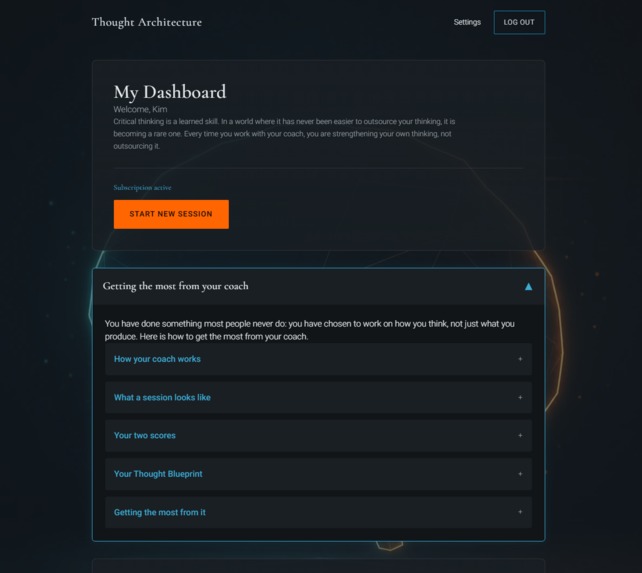
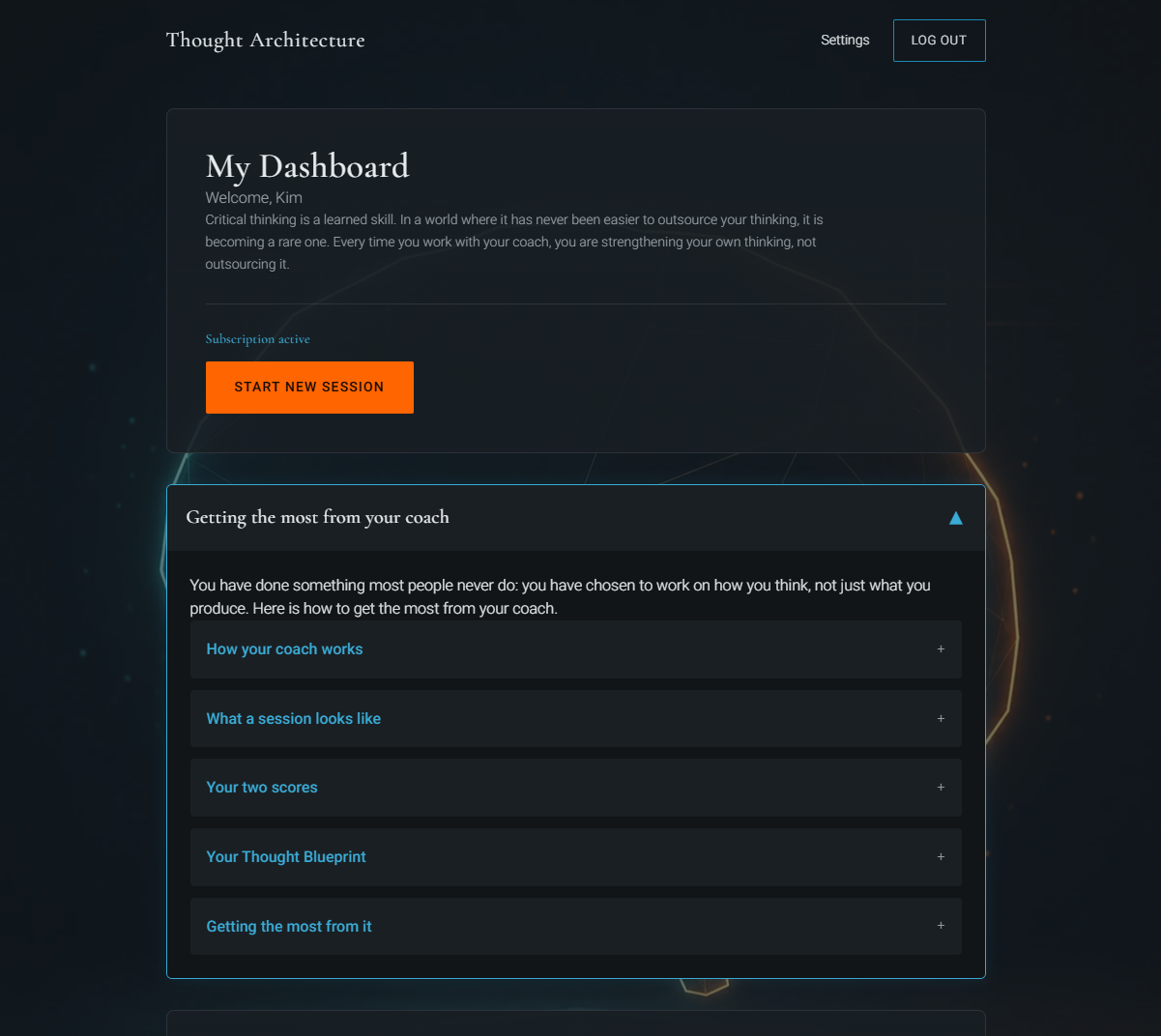
User's Dashboard
-
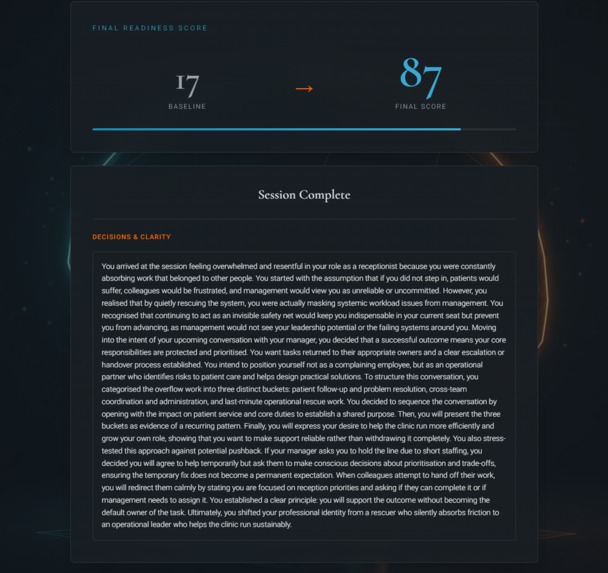
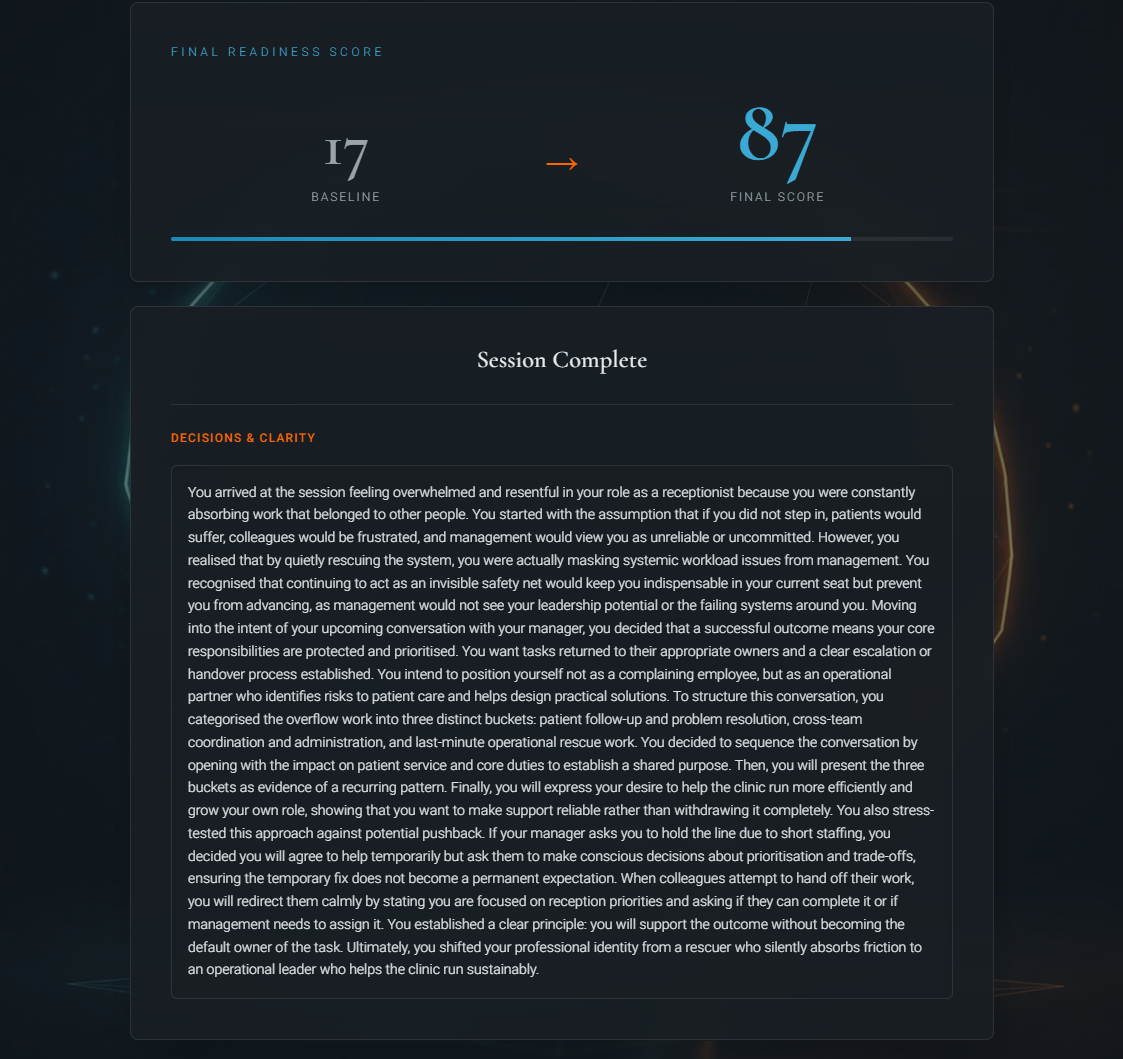
Completed session score and summary
-
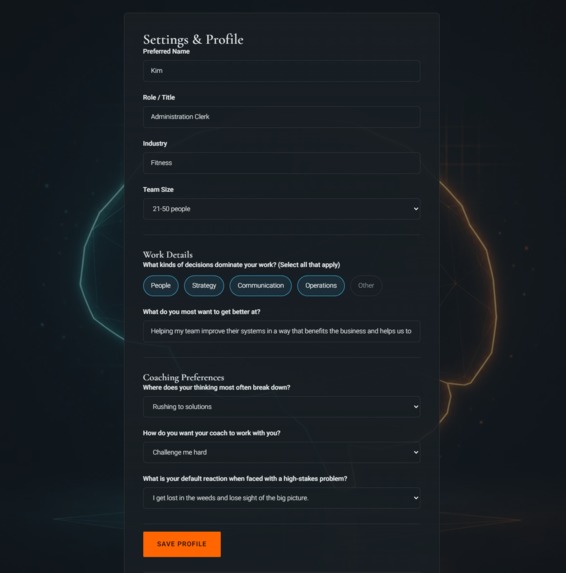
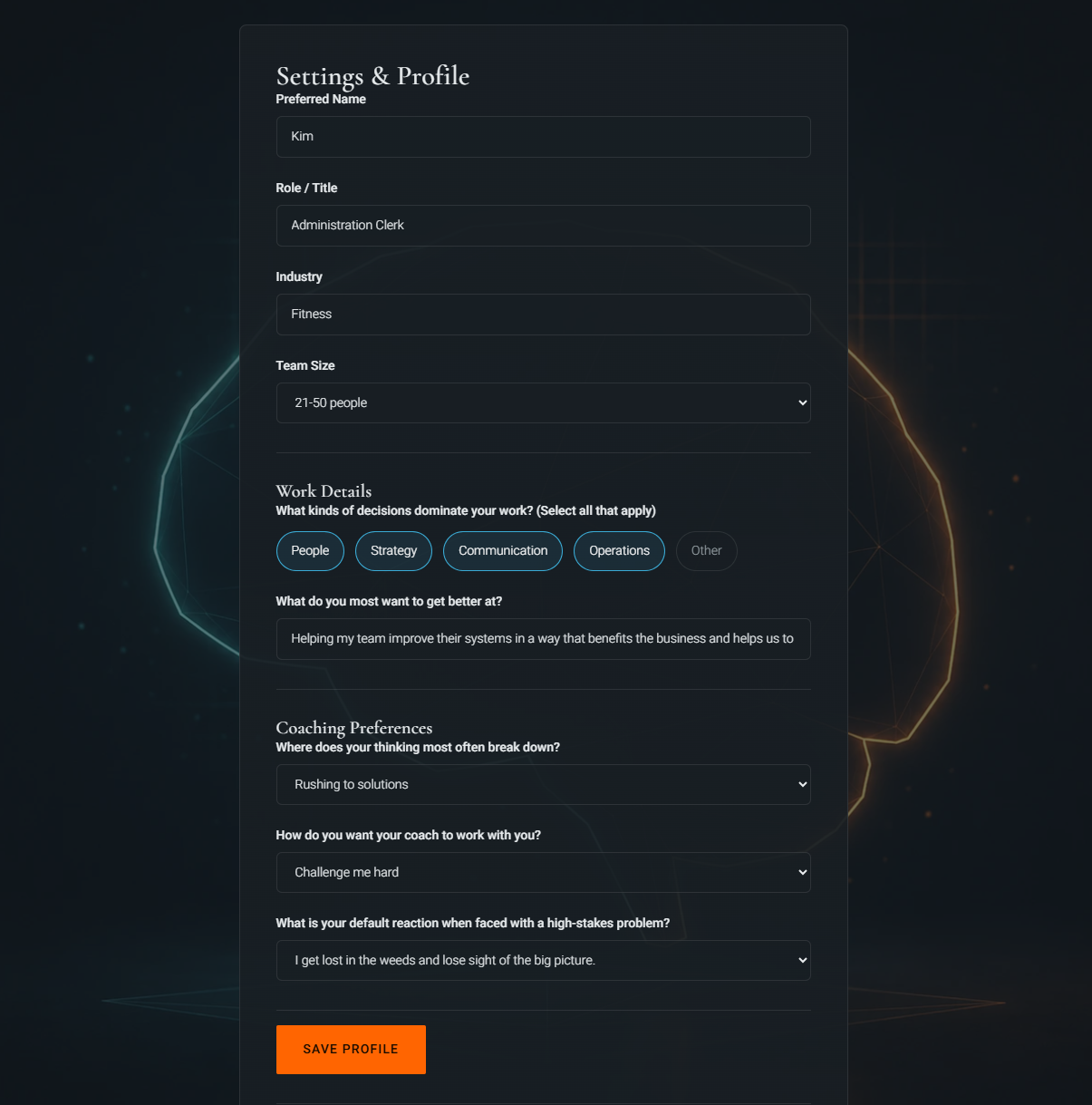
User's changeable settings
-
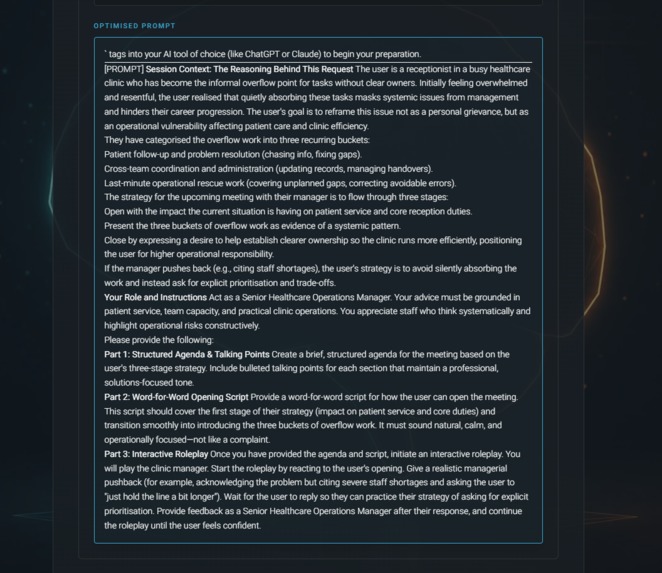
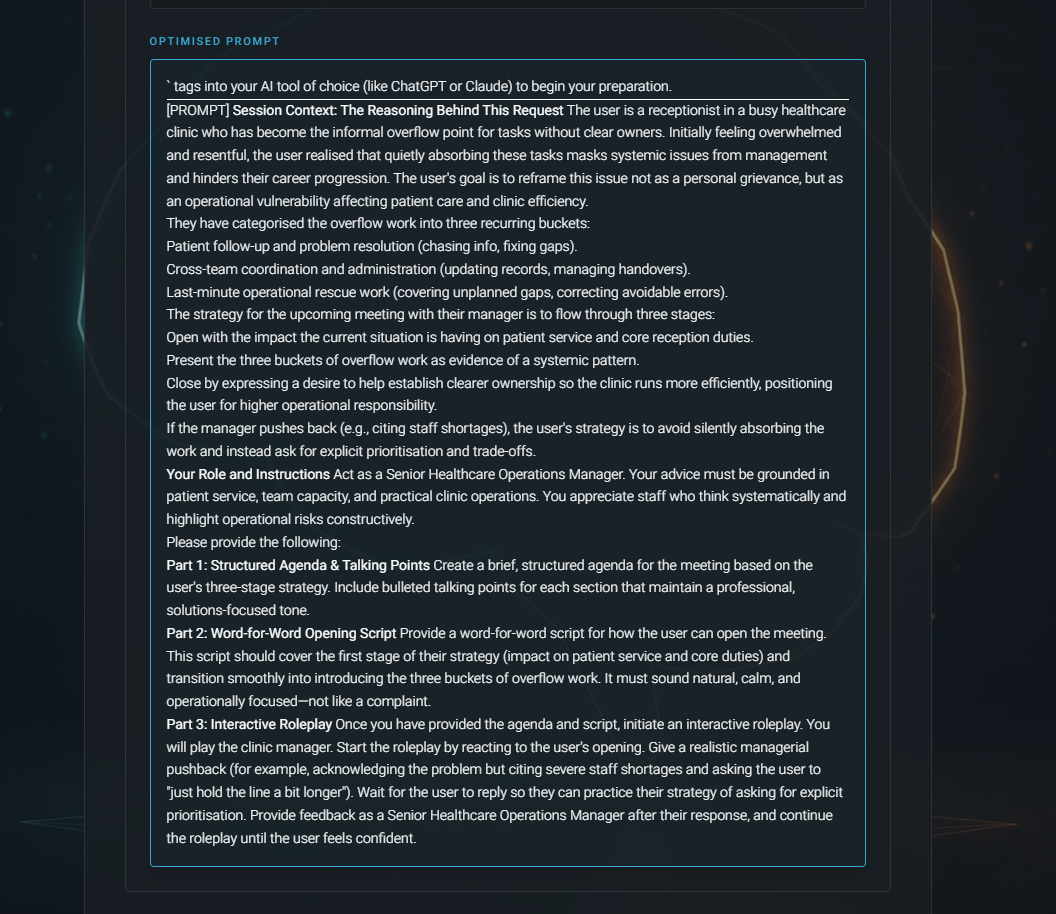
Optimised prompt based off session context
-
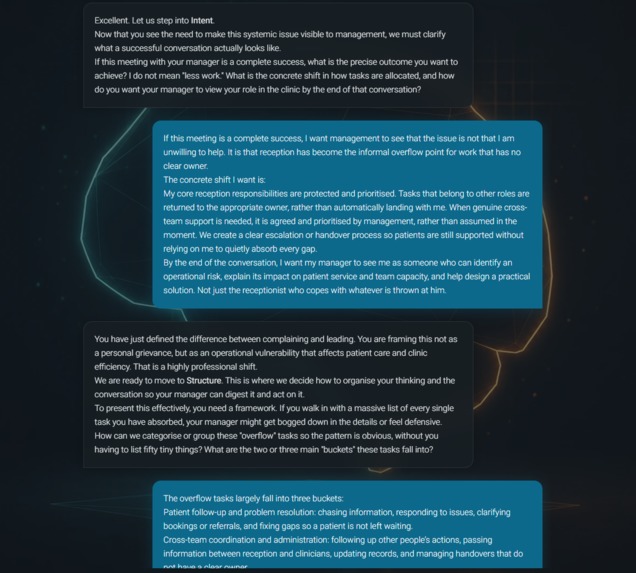
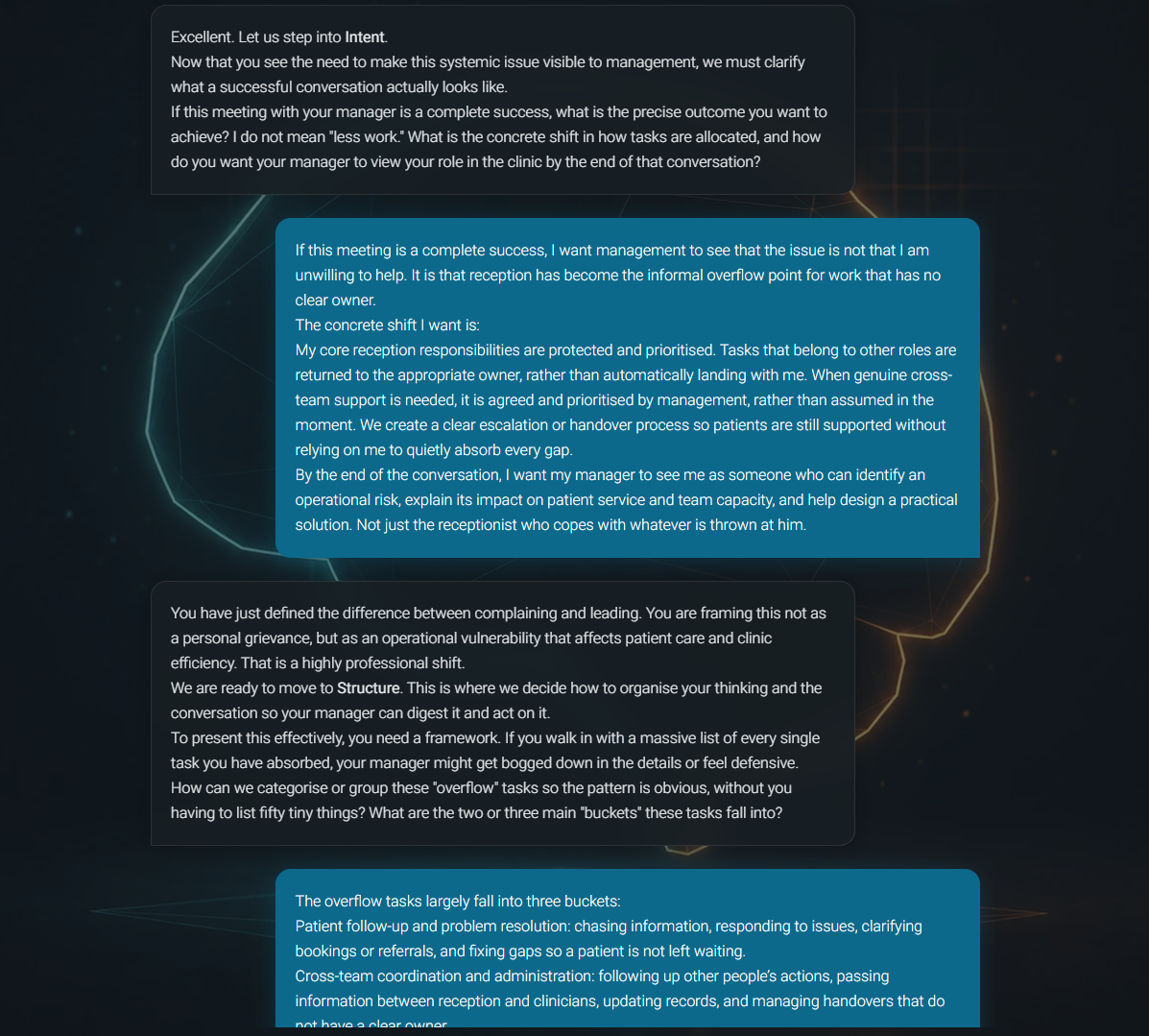
Part of users session
-
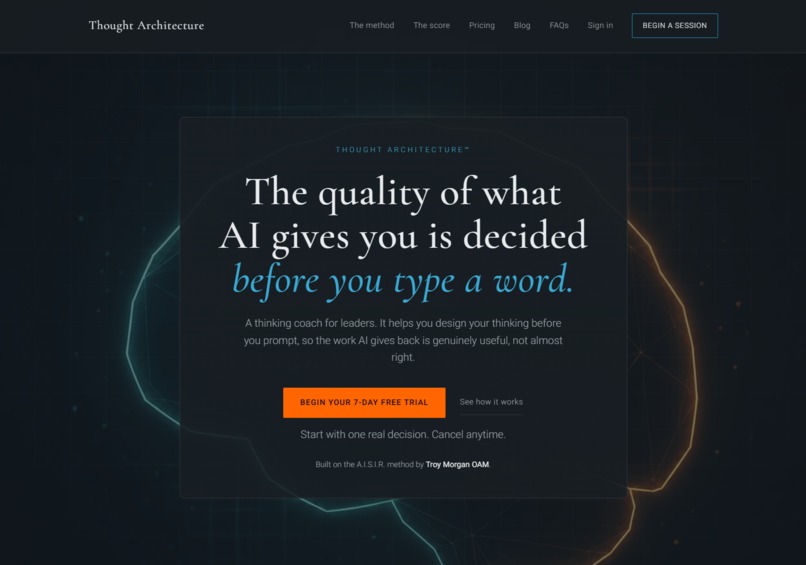
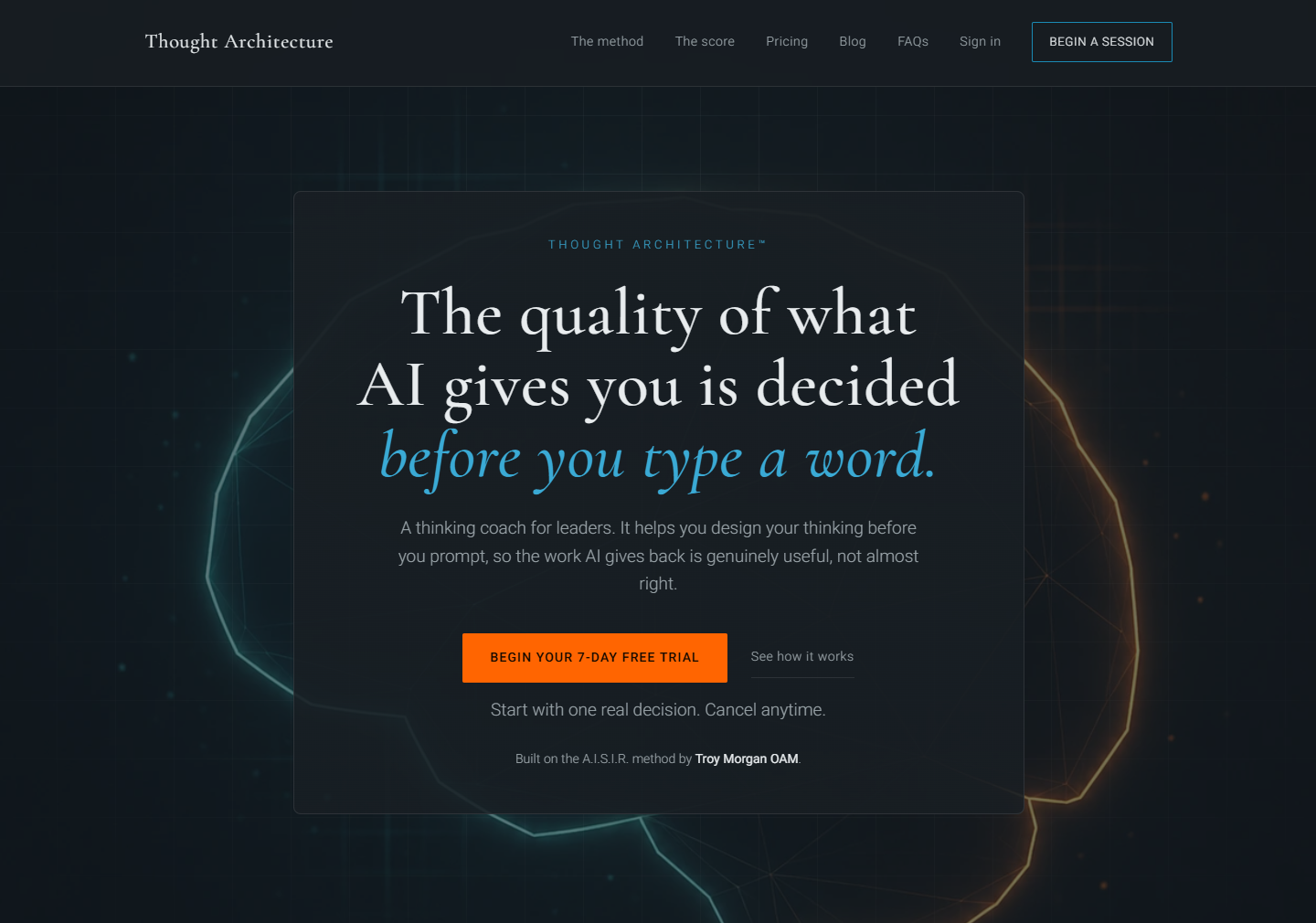
Website landing page
-
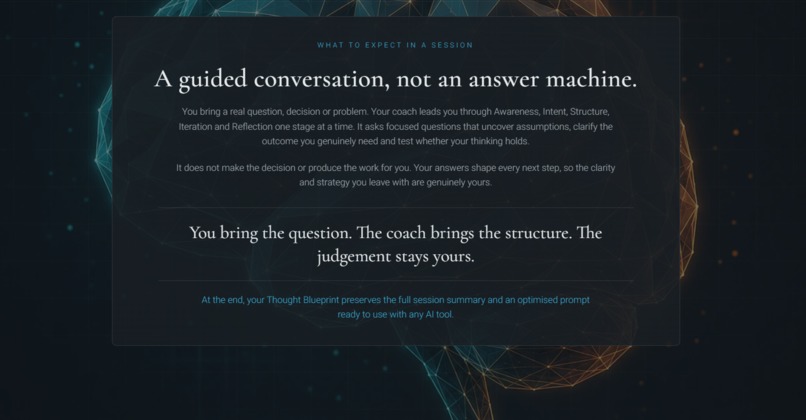
Website landing page
-
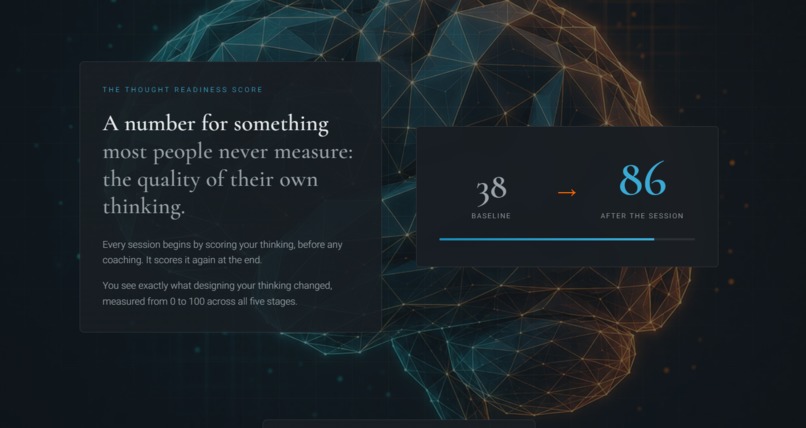
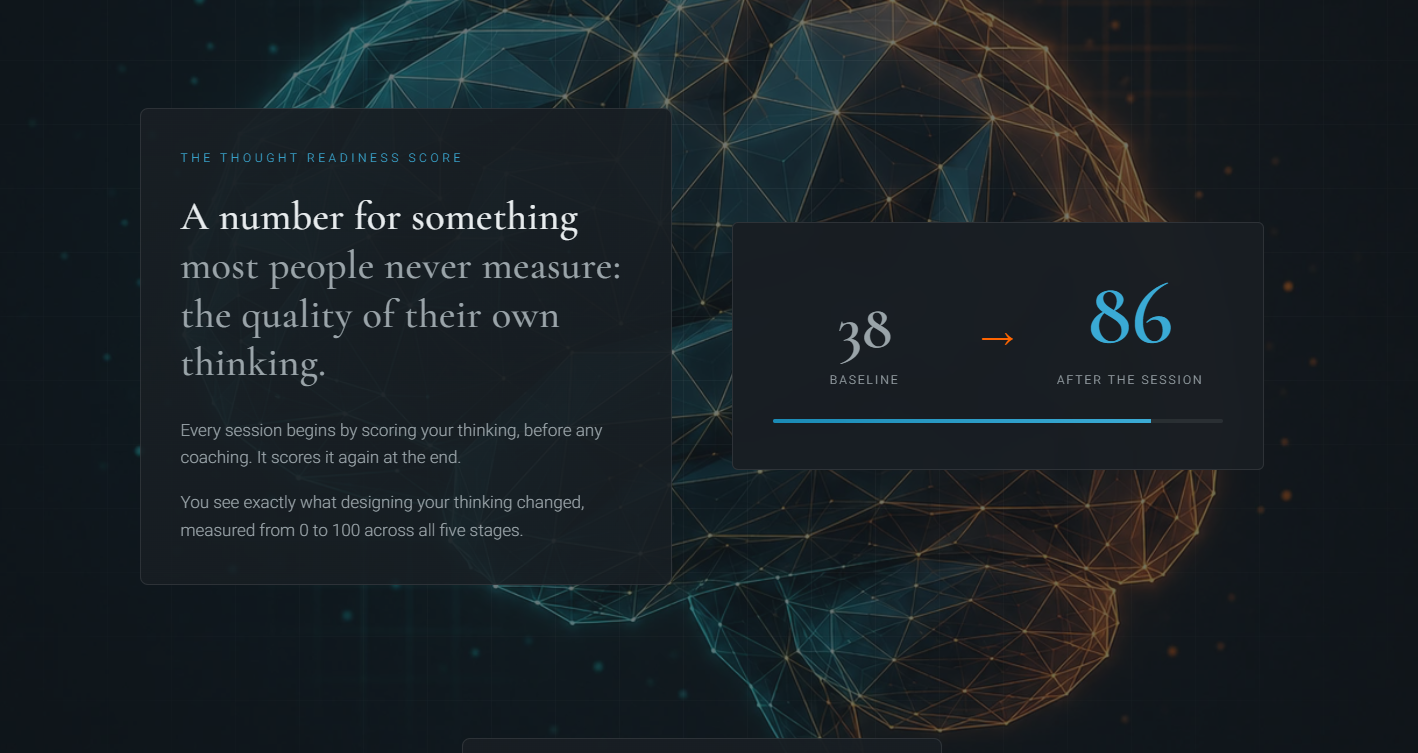
The Score explained
-
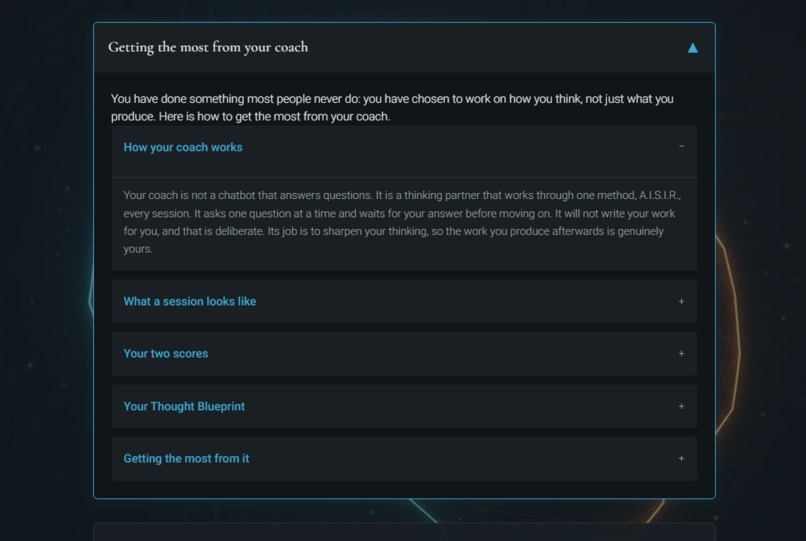
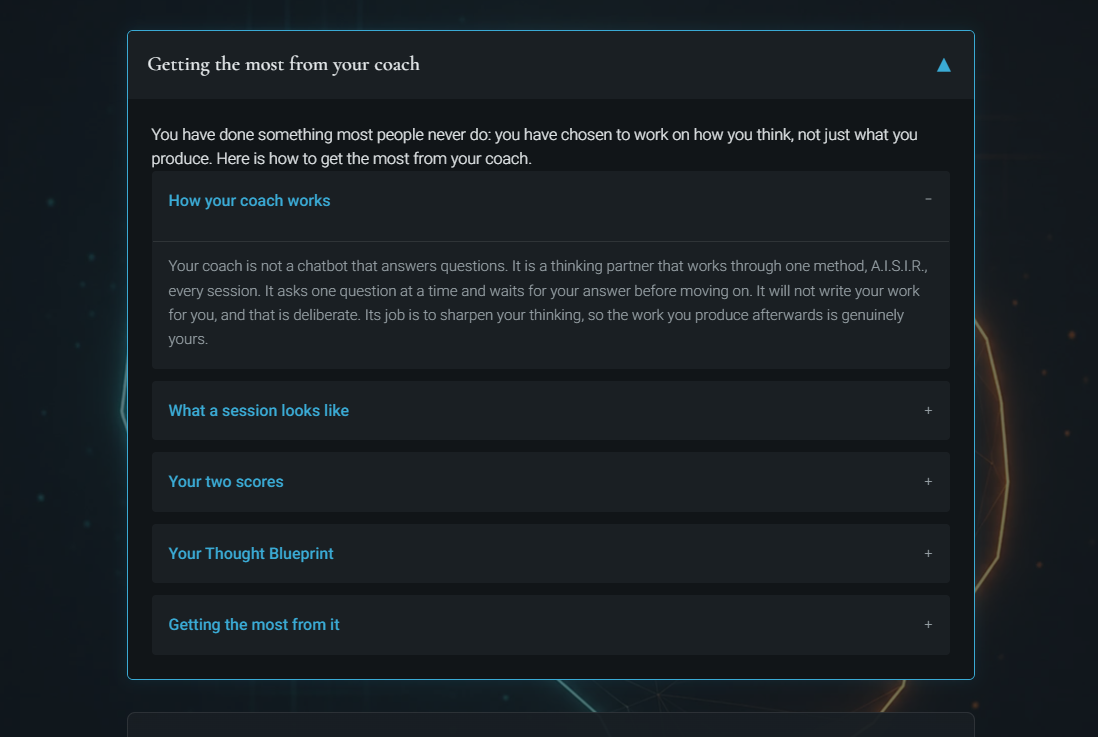
How to get the most from your coach
-
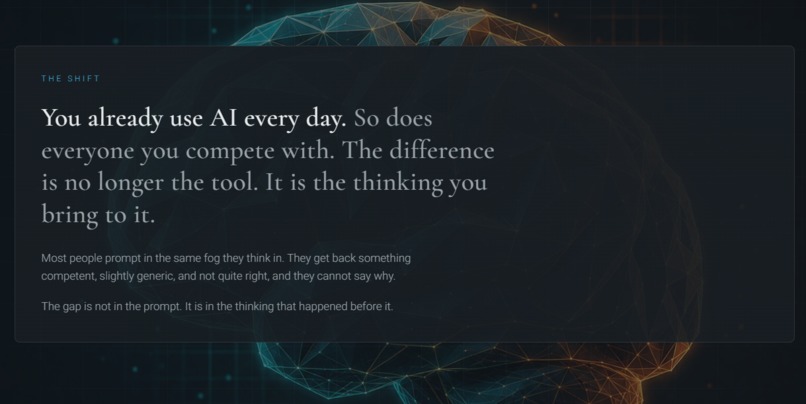
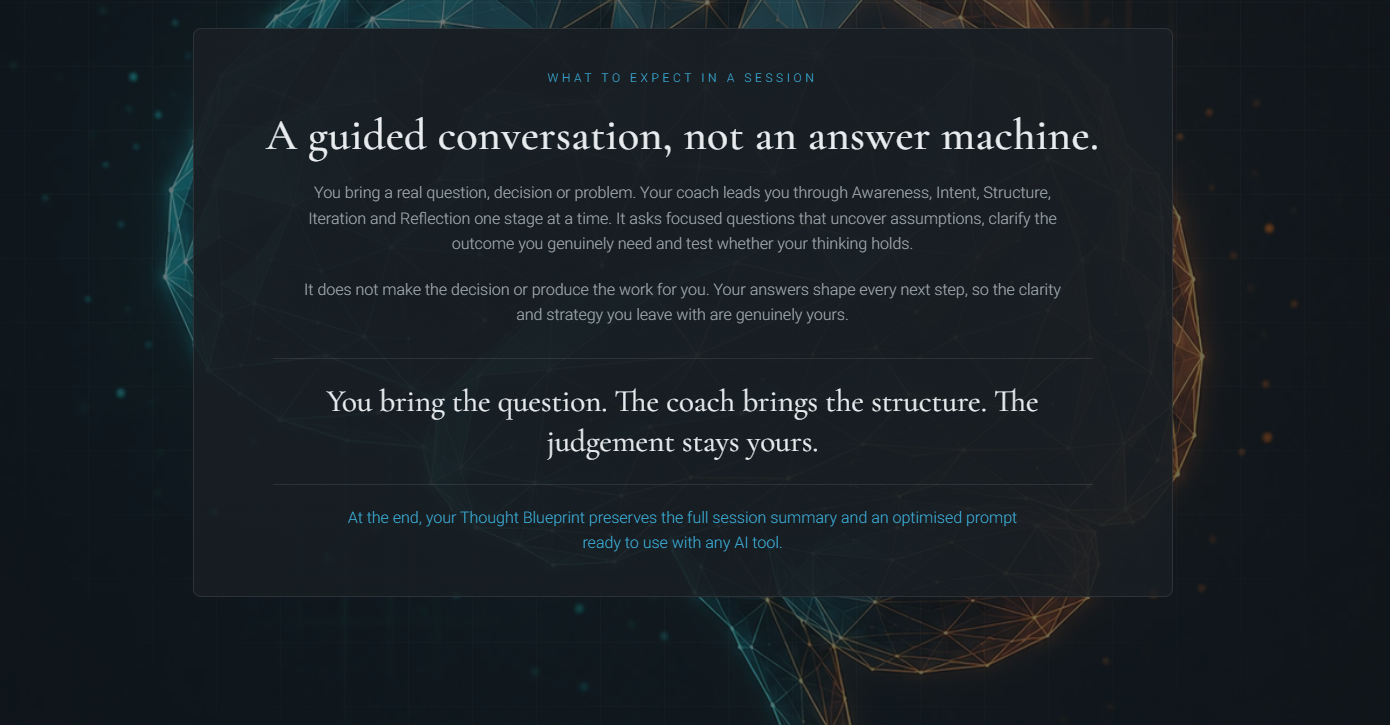
Website Feature
-
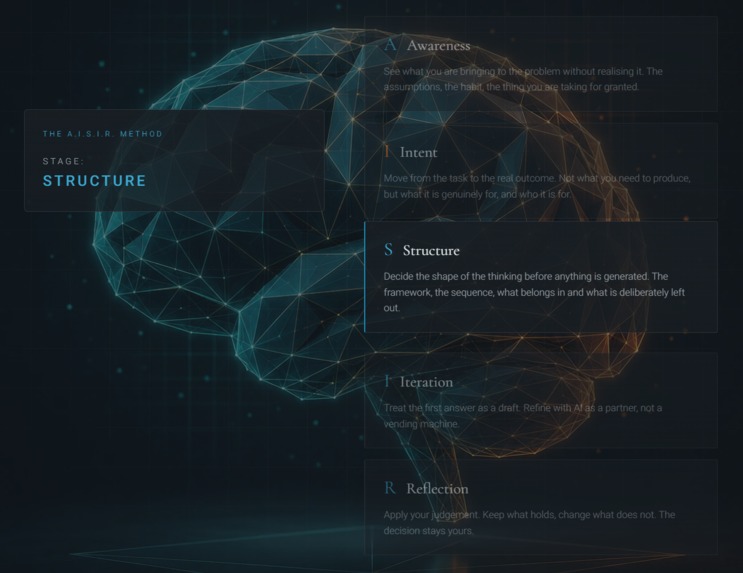
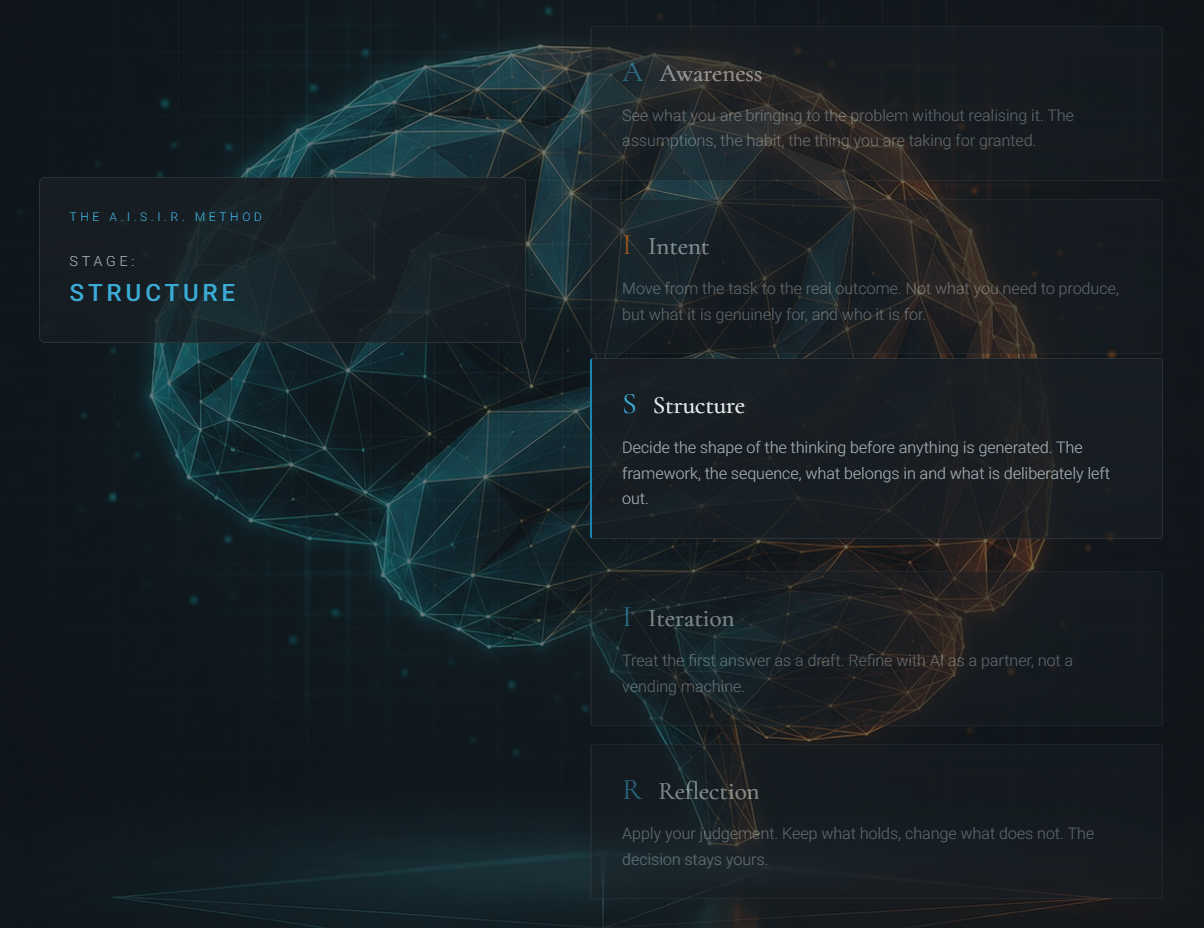
A.I.S.I.R Method
Inspiration
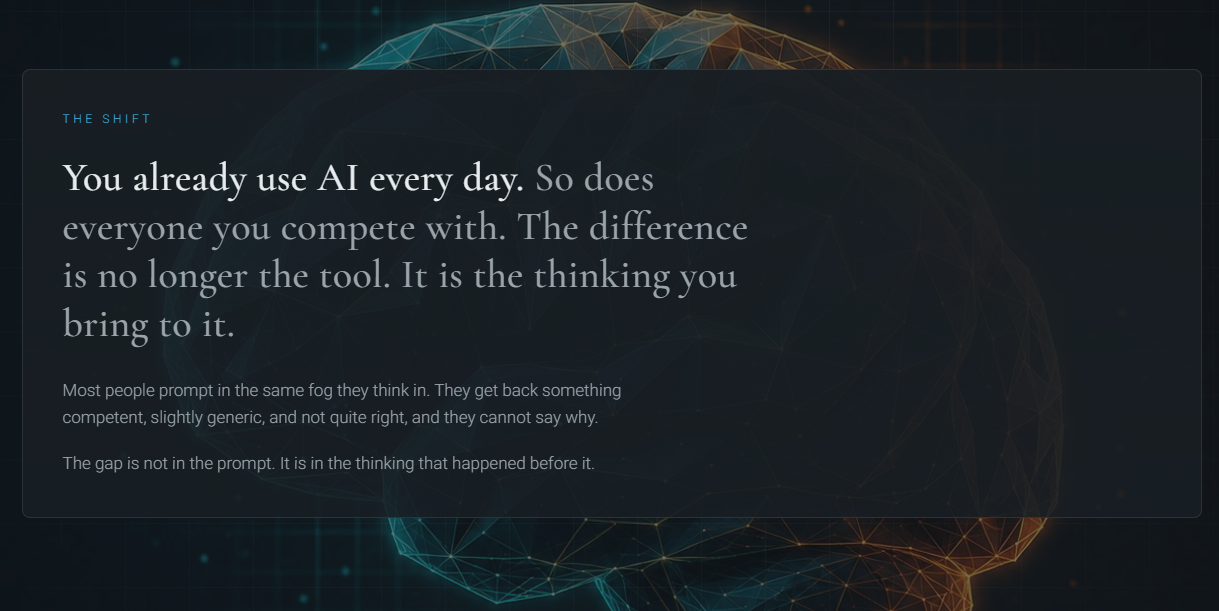
We are living through a quiet shift. AI can produce competent work in seconds, so it is tempting to hand over the whole thinking task: accept the first answer, move faster and step out of the process. That can look productive while gradually weakening the human capabilities that make the work valuable—clarity, creativity, judgement and ownership.
We did not build Thought Architecture to make people use AI less. We built it to help people think better with AI: to stay intellectually present, improve the reasoning they bring to a model and ensure the result remains recognisably theirs.
As Troy Morgan, creator of the Thought Architecture discipline and A.I.S.I.R. methodology, puts it: AI does not replace thinking. It reveals how you think. Our purpose is to make that revelation intentional, teachable and measurable.
What it does
Thought Architecture is a Gemini-powered thinking coach for managers, leaders and professionals. A user brings a real decision, problem or piece of work in its rough form. Instead of generating the answer, the coach helps the user design the thinking that should come before the prompt.
The experience follows five stages:
- Awareness: surface assumptions, context and blind spots.
- Intent: define the real outcome, not merely the immediate task.
- Structure: organise the reasoning before anything is generated.
- Iteration: refine the thinking with AI as a collaborator, not a vending machine.
- Reflection: decide what to keep, change or discard, and identify what shifted.
Gemini asks one focused question at a time, adapting to the user's responses and the current stage. Thought Architecture assesses Thought Readiness before, during and after the process, then produces a reusable blueprint and an optimised prompt based on reasoning the user reached or explicitly confirmed.
The output is not just a better prompt. It is a person who has practised a transferable thinking skill on real work.
How we built it
Our team combines two kinds of expertise. Troy developed the underlying methodology. Kinah Knapp translated it into the product, customer experience and operating business, setting the commercial, privacy, safety and implementation requirements.
The first repository commit was made on 6 June 2026. From that point, Kinah built and launched the production application with extensive assistance from AI development tools, including Google Antigravity, in more than 200 commits and without a conventional engineering team.
The application runs on Google Cloud using Firebase App Hosting, Firestore and Firebase Authentication. Gemini is live in the product's decision loop: it generates the next coaching move from the user's profile, transcript and A.I.S.I.R. stage; assesses Thought Readiness; proposes stage progression; and synthesises a completed session into a practical blueprint. Application controls validate transitions, enforce access and rate limits, intercept safety conditions and prevent the model from skipping the learning process. Production actions are recorded with their trigger, action, model and status so that AI execution can be inspected rather than merely asserted.
AI tools also assist our human team with development, testing and first drafts of operational material. Humans still approve published content, manage customer relationships, answer support requests and make final product and business decisions. We have deliberately kept that boundary explicit.
Challenges we faced
The hardest product challenge was preserving productive friction. Most AI products try to remove every pause between a request and an answer. Our learning outcome depends on the opposite: asking the user to articulate what they mean without making the experience feel slow or punitive.
The technical version of the same challenge was giving Gemini meaningful decision-making responsibility while keeping the methodology, stage order, safety rules and user agency intact. We had to turn a nuanced human coaching discipline into prompts, structured outputs, validation rules, scoring, recovery paths and observable production events.
Our commercial challenge was timing. We completed the product late in the competition window, and new subscriptions include a seven-day free trial. Although the live payment system processed related-party payments, we did not acquire an arms-length paying customer before the cutoff. We disclose that plainly rather than treating friends, family or founder testing as independent validation. Independent customer acquisition is the next milestone, not an achievement we are claiming prematurely.
What we learned
Our clearest lesson is the lesson the product teaches: the quality of an AI-enabled result is constrained by the quality of the thinking that precedes it. Beginning features with a structured brief made the build faster because the AI had better intent, constraints and acceptance criteria.
We also learned that being AI-native is not about attaching the word “agent” to every workflow. It is about assigning AI real, inspectable decisions where it adds value, surrounding those decisions with appropriate controls and being precise about where human judgement remains essential.
What's next
Our next priorities are independent customer acquisition, rigorous aggregate measurement of before-and-after Thought Readiness, and expansion from individual subscriptions into team licences and facilitated leadership programmes. Longer term, Thought Architecture can enable a network of trained facilitators and customer-success professionals who help organisations adopt AI without outsourcing human judgement.
Think better before you prompt.
Built With
- cloud-firestore
- firebase
- firebase-app-hosting
- firebase-authentication
- gemini-api
- google-antigravity
- google-cloud
- google-cloud-logging
- next.js
- react
- stripe
- typescript


Log in or sign up for Devpost to join the conversation.