-
-
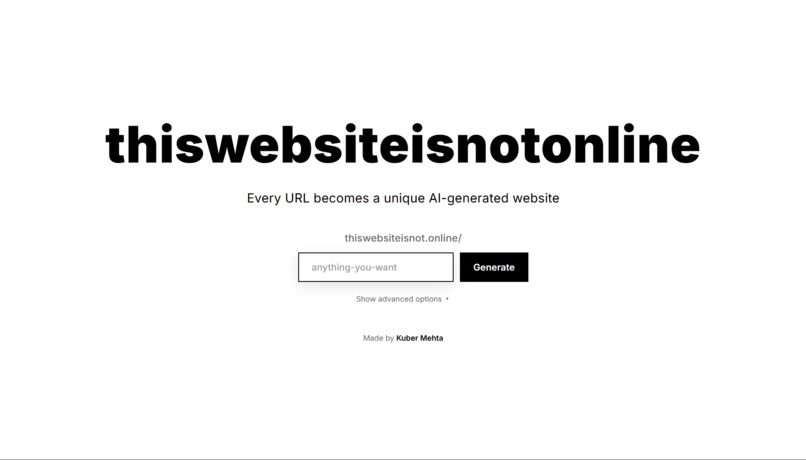
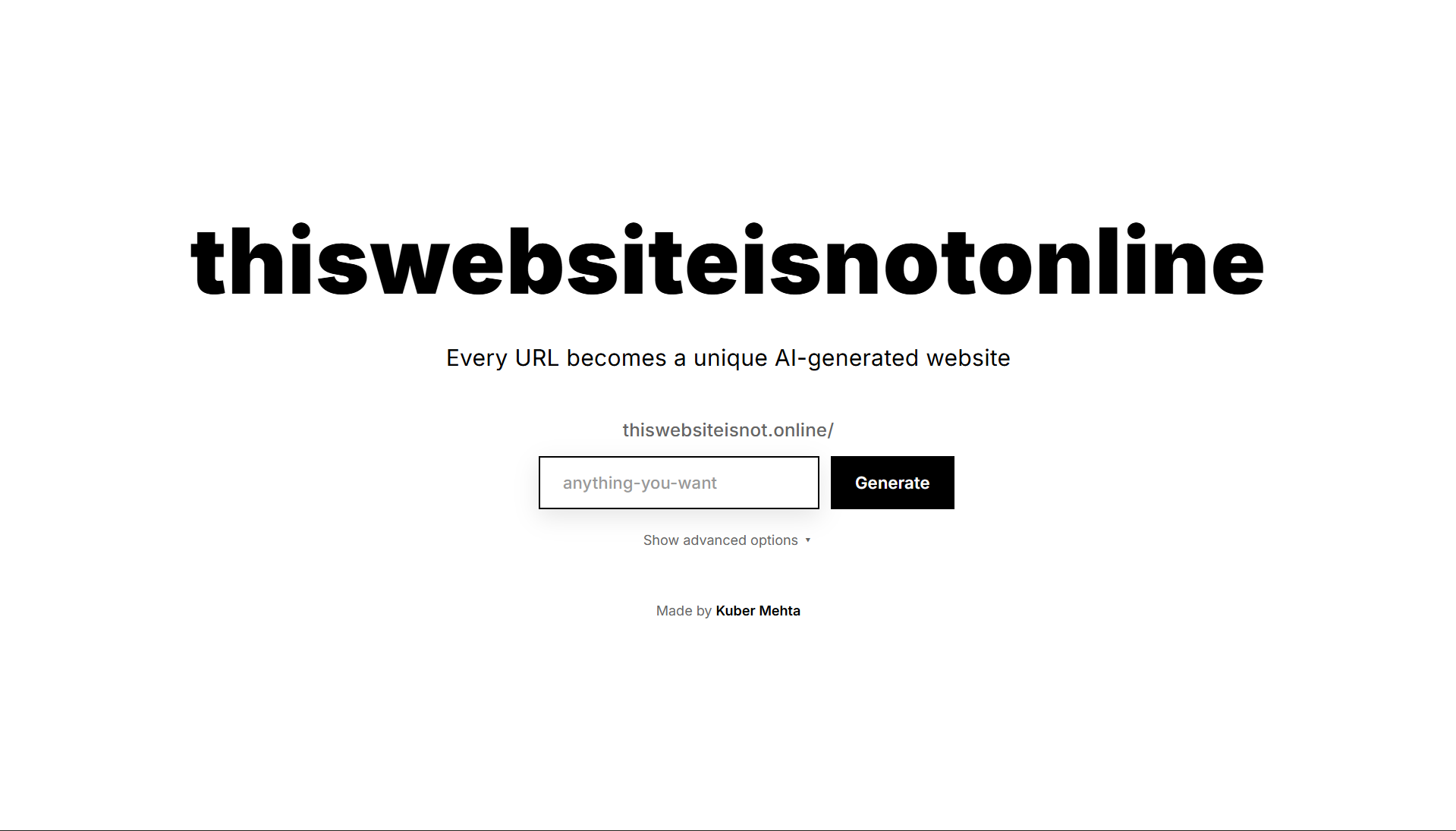
Home Page
-
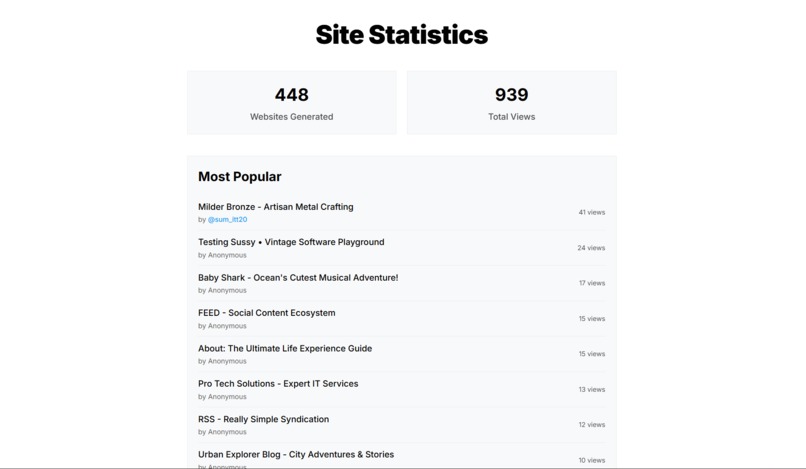
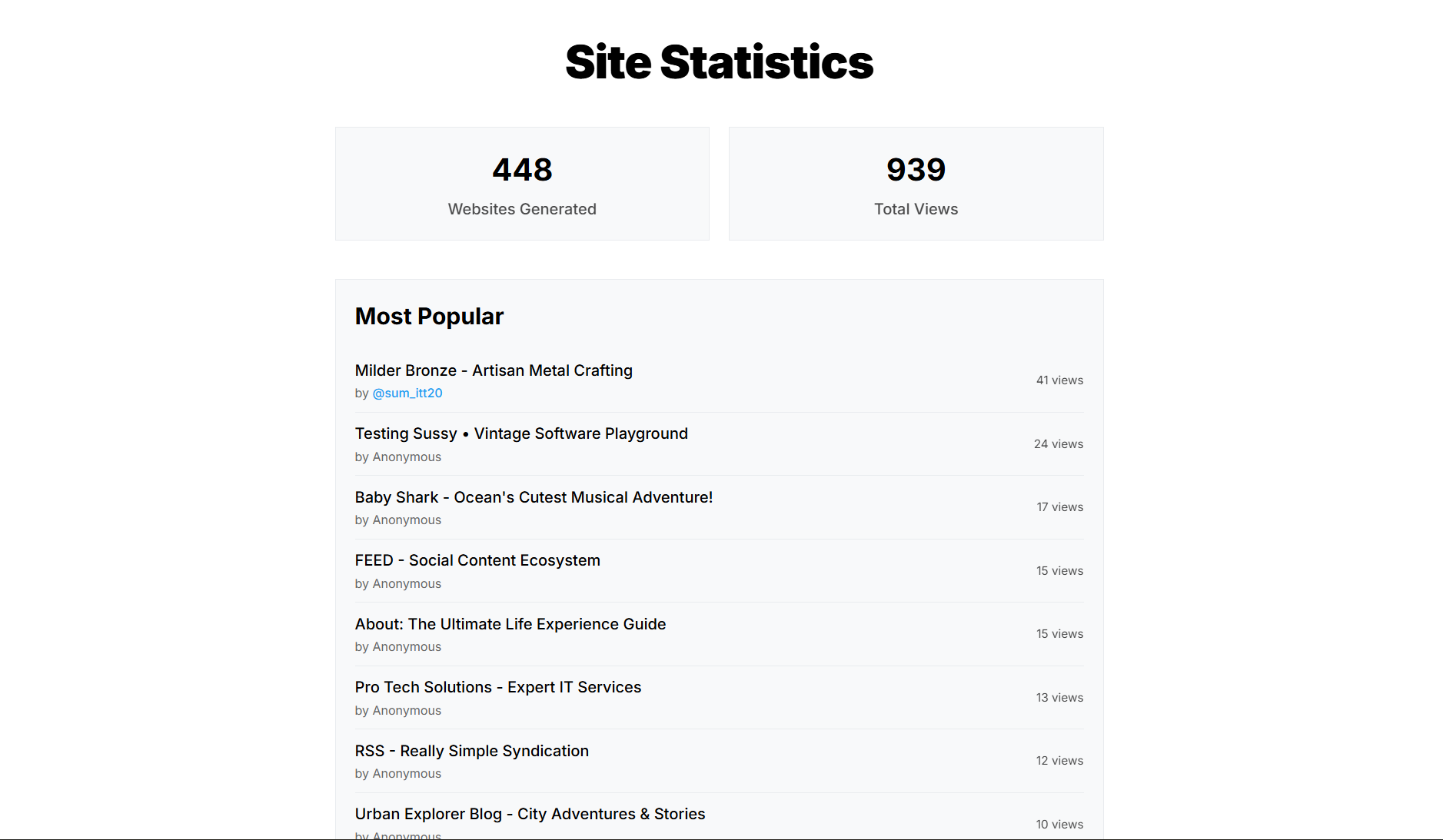
Statistics
-
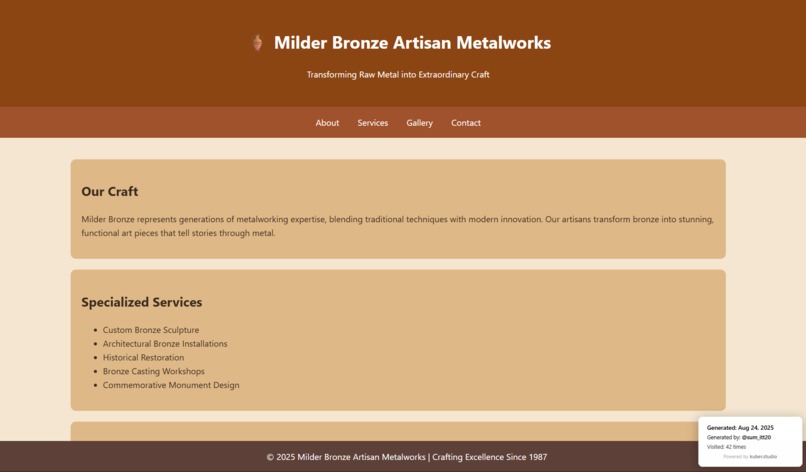
Example Site 1
-
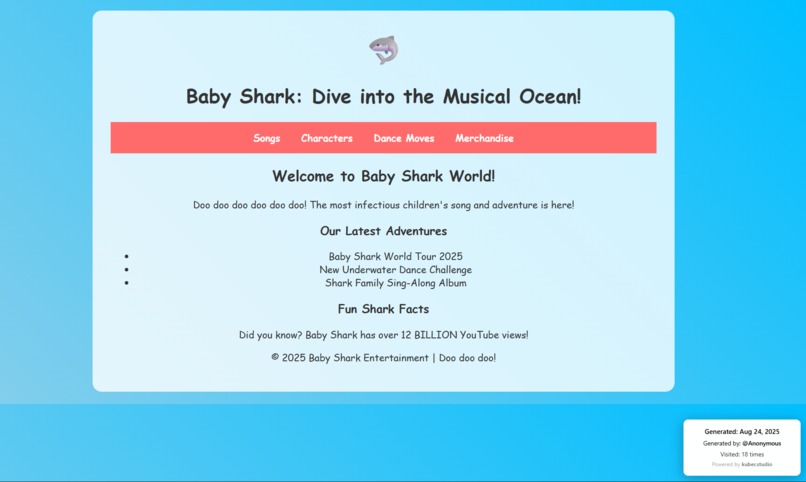
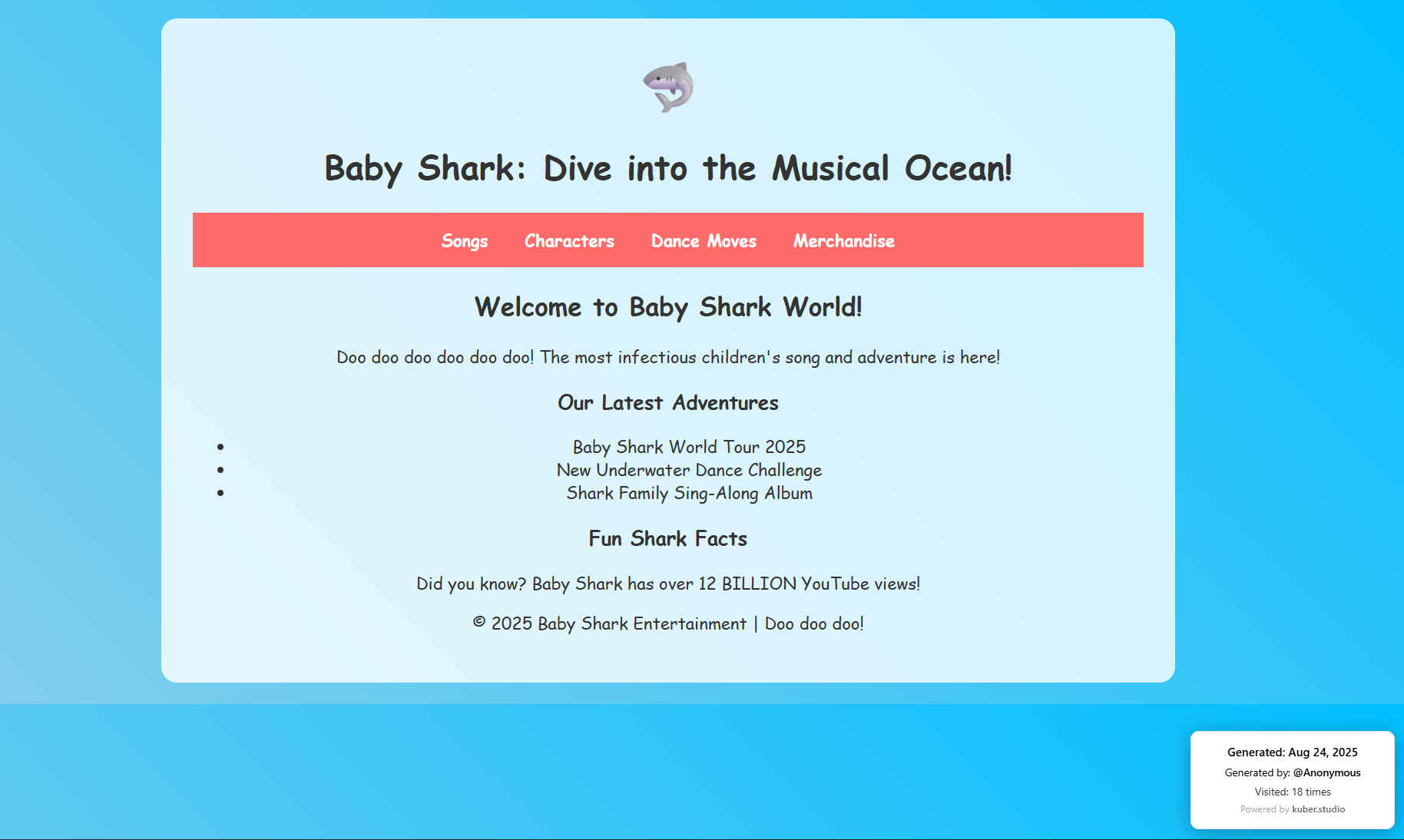
Example Site 2
-
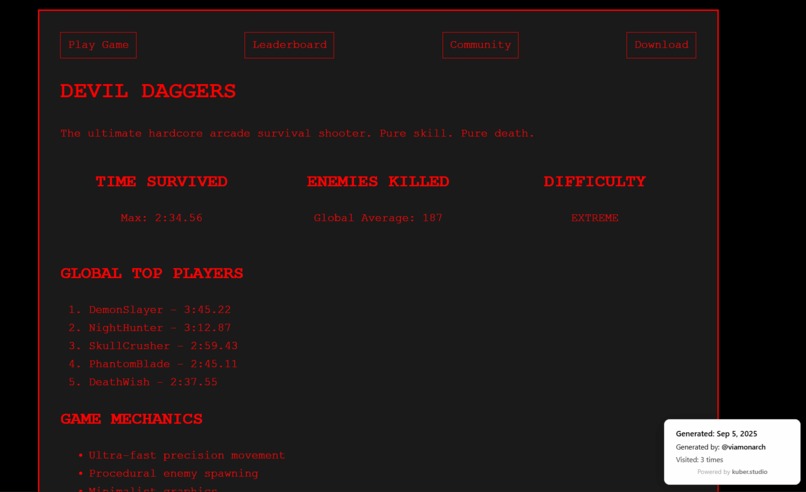
Example Site 3

Inspiration
You know that feeling when you have a completely ridiculous idea that should be impossible, but then you realize... wait, with today's AI, maybe it's not? That's exactly what happened here. I've always been fascinated by projects that push the boundaries of what seems feasible, especially those "impossible" concepts that suddenly become possible thanks to rapid AI advancement.
The spark came from a simple thought: what if literally every URL path that could ever exist actually led somewhere meaningful? Not a 404 page, not a redirect, but a fully realized, unique website tailored to whatever random thing someone typed after the domain. It sounded absurd but I thought... why not give it a shot?
Plus, I had some OpenRouter credits to couple with the new OSS model, so it felt like the perfect time for a weekend experiment!
What it does
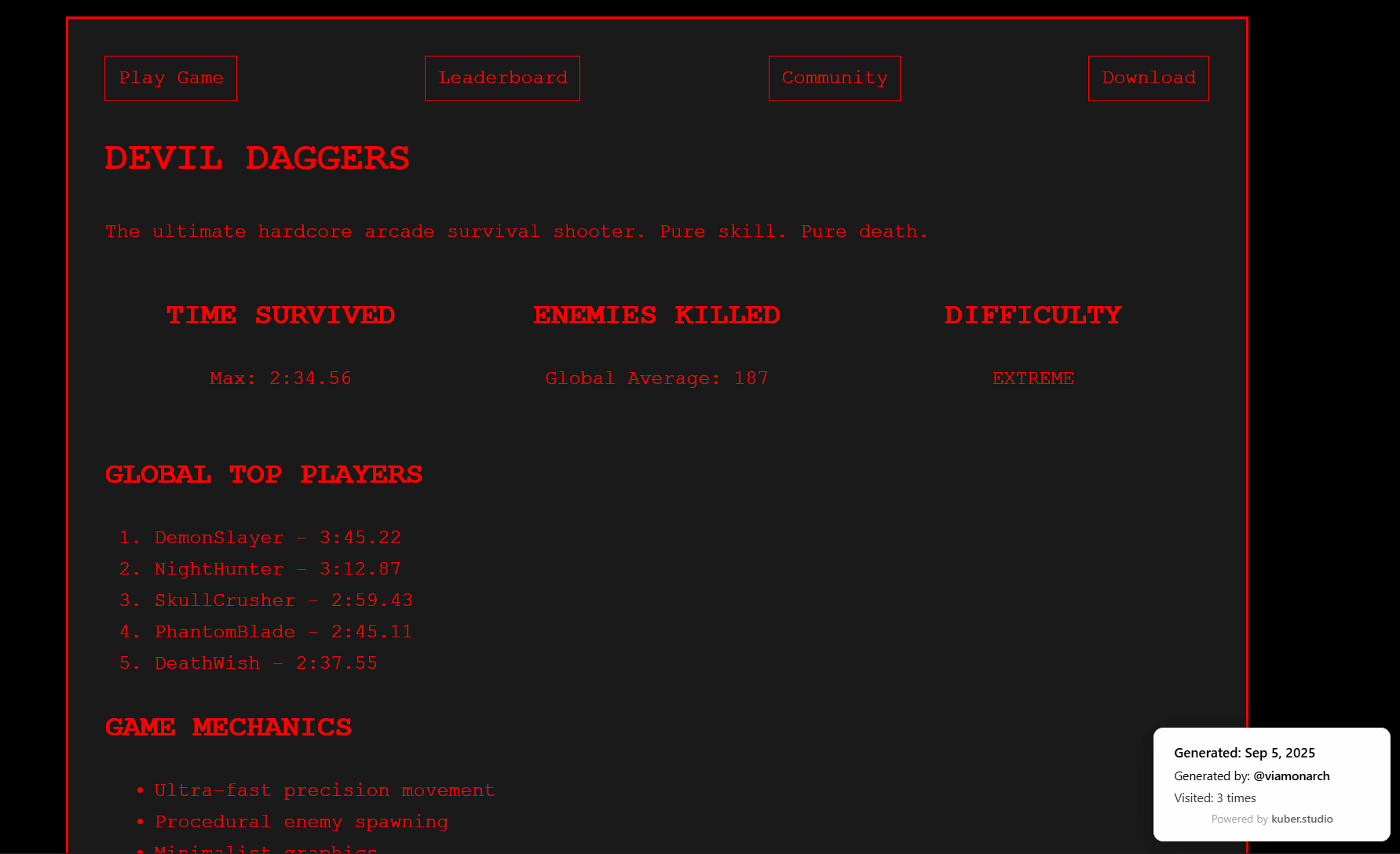
This Website is Not Online is exactly what it sounds like - an infinite website generator. Visit thiswebsiteisnot.online/anything and GPT-OSS creates a completely unique website based on your URL path.
But here's the fun part: if you're the first person to generate a specific URL, you can claim it with your Twitter handle. Every generated page includes backlinks to my websites and, if claimed, to the creator's Twitter account.
In less than 48 hours after launch, there were 400+ websites generated, each one completely unique.
How I built it
The technical stack is surprisingly simple but effective:
Prototyping: v0 and Figma for Design Backend: Node.js + Express.js with a wildcard route that catches everything AI: OpenRouter's GPT-OSS 120B model (with local GPT-OSS 20B from Hugging Face/ Ollama support for those who want to run it locally themselves) Frontend: All websites generated are just HTML/CSS so it doesn't take ages to generate Storage: Supabase for all generations and tracking who claimed the pages Deployment: Vercel
All generated websites are also post processed for heavy SEO optimization and validity, another script runs for generating a RSS feed and sitemap dynamically.
There is also a page at /stats that dynamically tracks all pages, it's visits, popularity and owner - which replaces the need for chaotic management of analytics software.
Challenges we ran into
The biggest challenge was prompt engineering for consistency while maintaining creativity. Getting the AI to consistently generate valid HTML while being wildly creative was tricky. Finding a sweet spot between random websites that make no sense and extremely boring websites took a bit of trial and error.
Rate limiting was another (not) fun challenge - with an open-ended generator like this, you have to be very careful about costs. I implemented generation rate limits and kept some pages like stats, rss feeds etc separate from this.
Accomplishments that I'm proud of
400+ unique websites generated in under 48 hours - people are way more creative than I expected Successfully created a working "infinite internet" concept that actually functions
Created a leaderboard system that shows the most popular generations without relying on external software
The fact that it actually works and people are having fun with it is honestly the biggest win. Seeing the creative URLs people come up with and the websites the AI generates has been endlessly entertaining.
What I learned
AI content generation has reached a point where you can build genuinely useful (and fun) tools with minimal infrastructure. The quality of generated content from modern models is surprisingly good - good enough that each generated "website" feels like it could be a real project someone spent time on.
I also learned that people love the concept of digital ownership, even when it's silly. The ability to "claim" a URL with your Twitter handle has been way more popular than I expected.
What's next for This Website is Not Online
Right now it's in "early access" mode while I figure out sustainable scaling (and pray my credits don't run out too fast). I'm considering:
- Adding more AI models for different types of content generation
- Building in collaborative features so claimed website owners can iterate on their pages
- Maybe even letting people mint their claimed URLs as NFTs (kidding... or am I?)
as fast as it is, who knows what wild features we'll be able to add next
Thanks a lot for taking the time to read this, hope you found it as fun as I did :)
Built With
- figma
- gpt-oss
- huggingface
- javascript
- node.js
- ollama
- openrouter
- postgresql
- supabase
- v0
- vercel

Log in or sign up for Devpost to join the conversation.