-
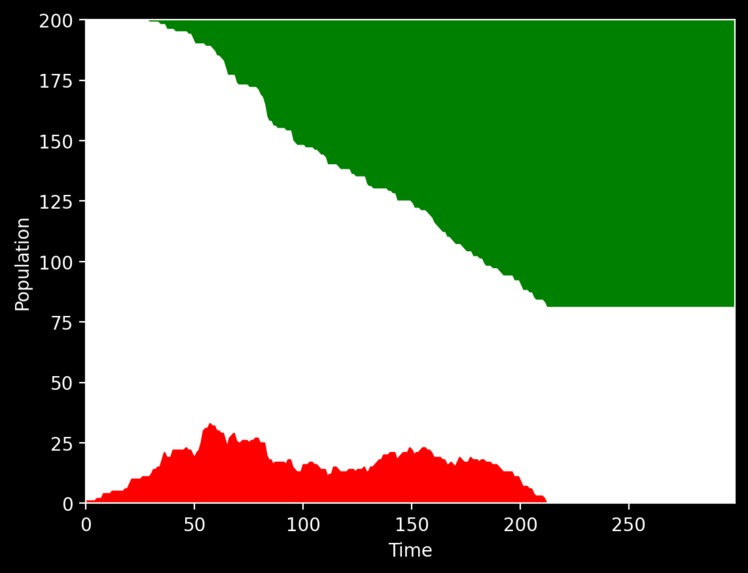
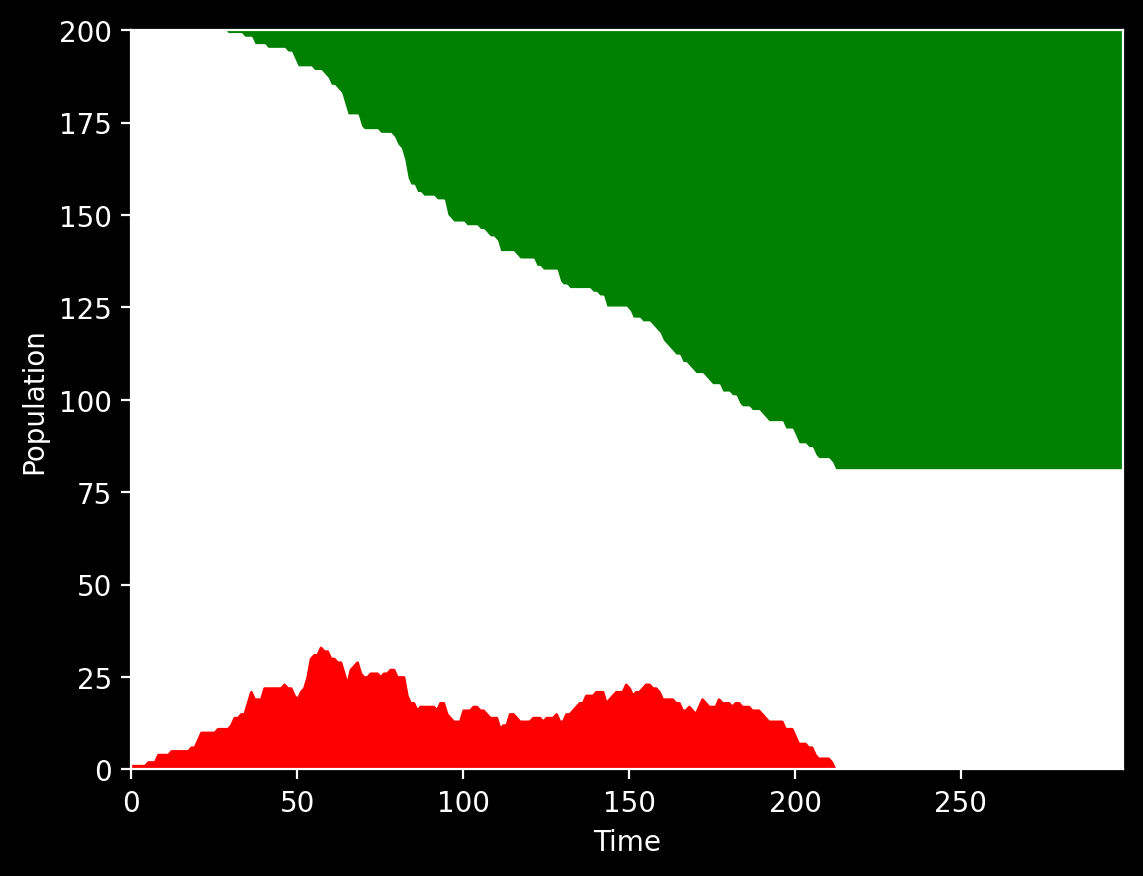
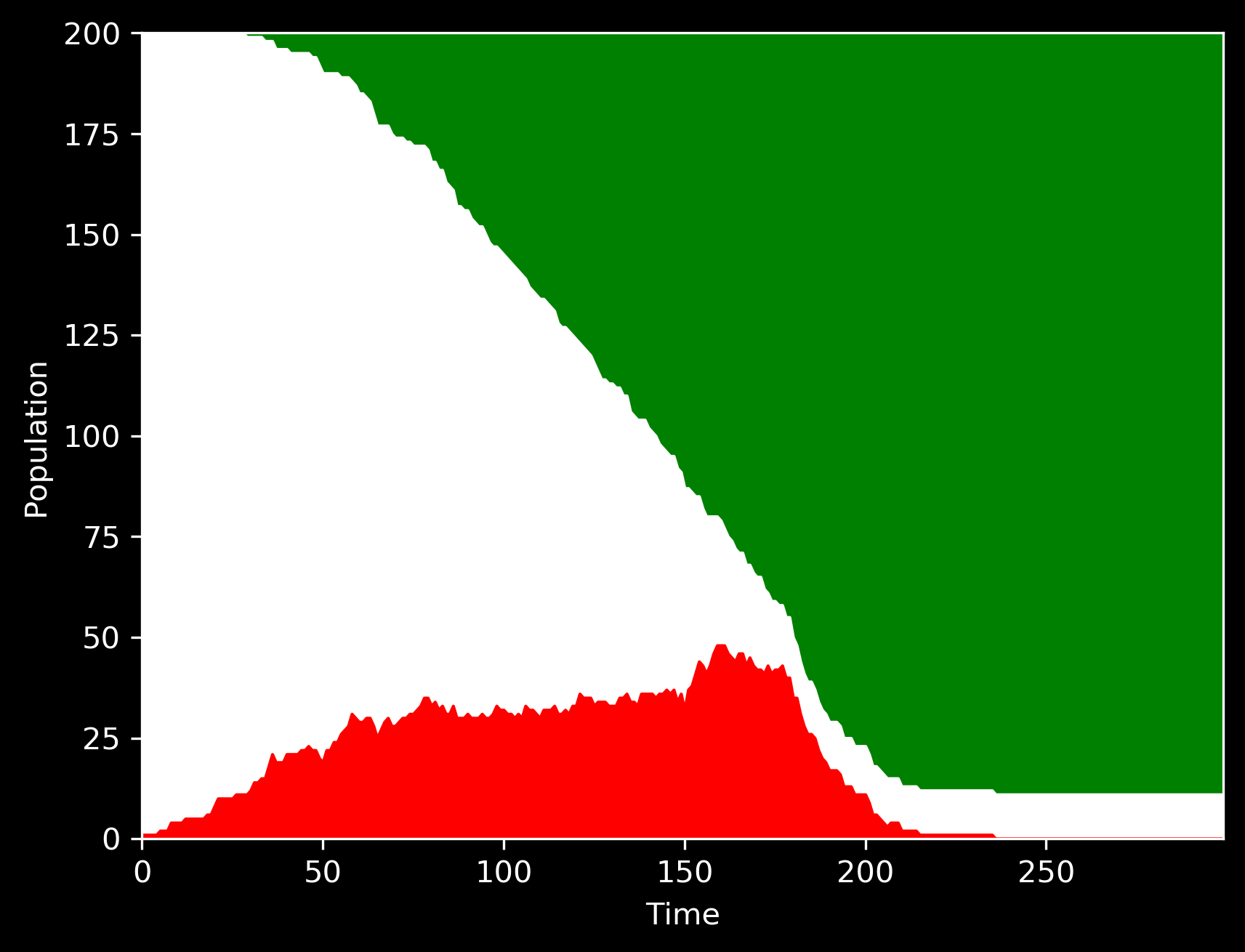
Final infection curve. With contact tracing.
-
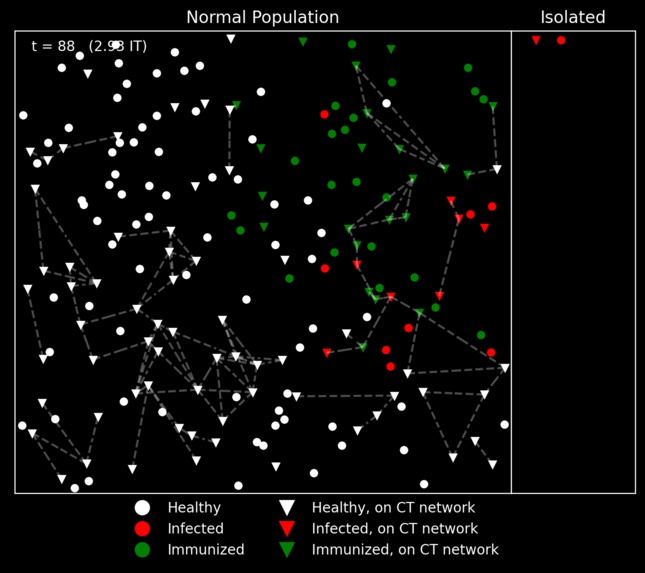
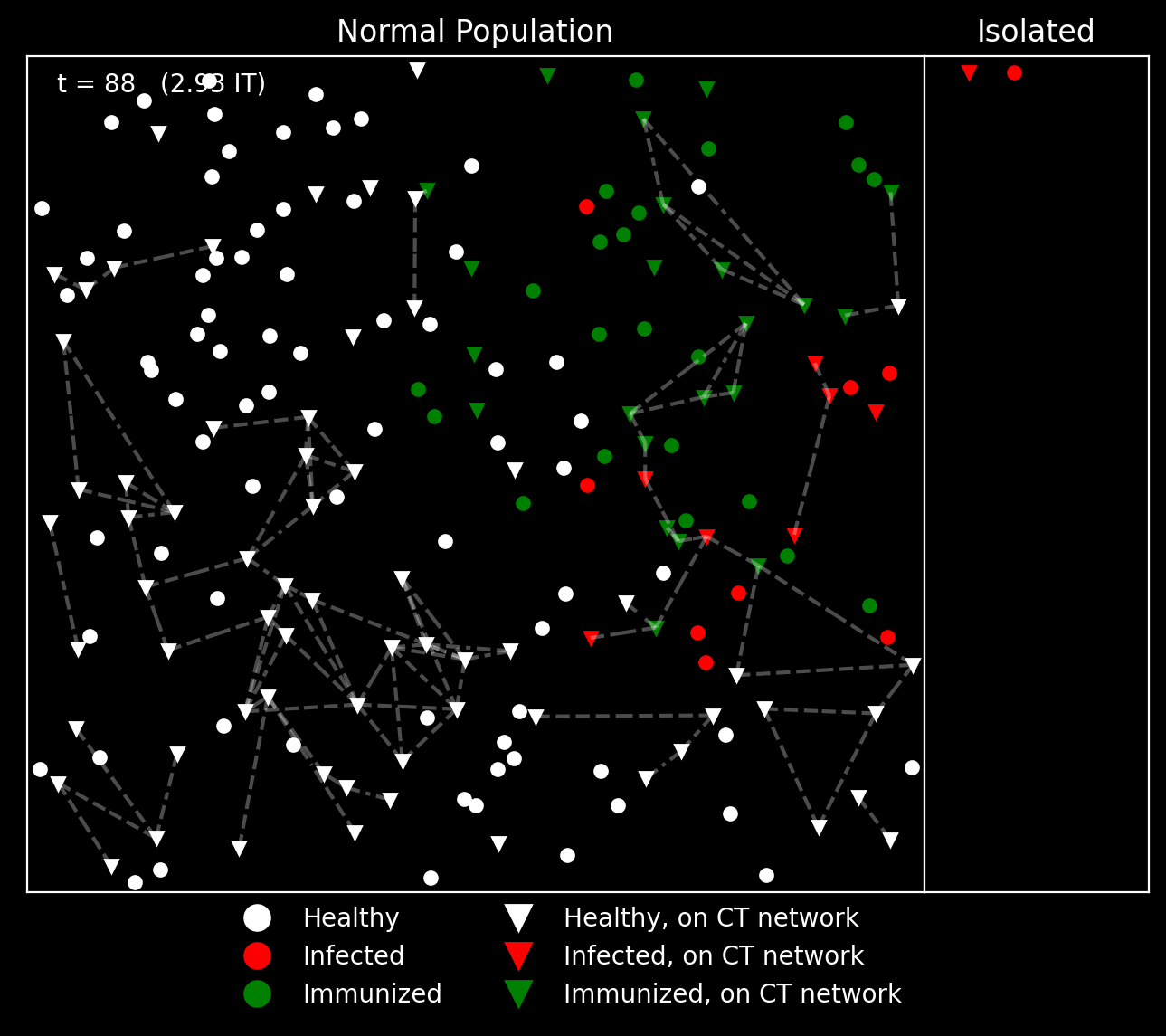
Snapshot of the simulation. With contact tracing.
-
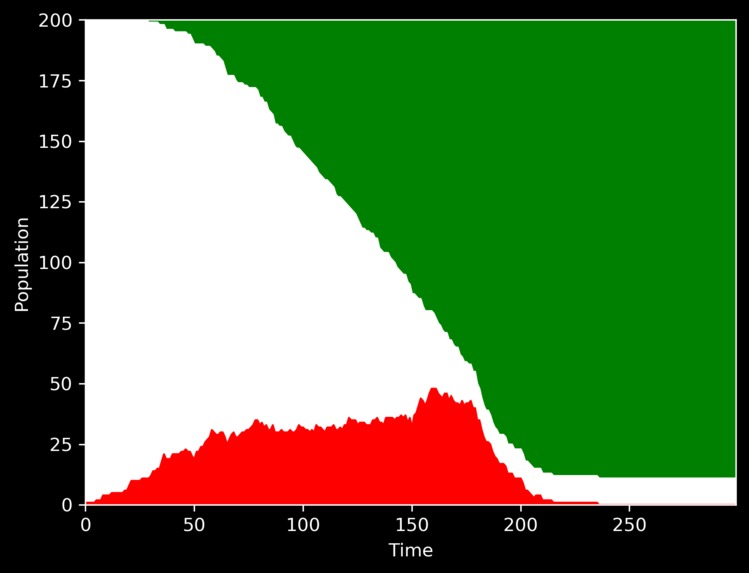
Final infection curve with no contact tracing or isolation.
Inspiration
There has been much discussion recently about the potential for "digital" herd immunity using contact tracing and cellphones. See for example Bulchandani, Vir B., et al., arXiv:2004.07237, 2020. We wanted to see if we could use a simple particles in a box simulation to model the spread of an epidemic, and use graph theory to design efficient algorithms for contact tracing.
What it does
For a range of box, particle, and disease parameters, a "patient zero" begins to infect others in the box. Infected individuals stay in the box, infecting others, throughout the pre-symptomatic phase of the disease. They isolate once they develop symptoms. Nevertheless, the epidemic spreads. We implement a contact tracing network for a fraction of the population to alert people who have been in contact with a sick person, alerting them to get tested. This allows us to isolate these people while they are still pre-symptomatic, thus controling the epidemic.
How we built it
Python classes for each object. "Breadth first search" algorithm for the contact tracing tree.
Challenges we ran into
The basic particles in a box simulation was more difficult than expected. We had to fine-tune parameters to prevent particles from leaving the box, or suddenly accelerating to high speeds.
Accomplishments that we are proud of
It looks pretty cool. It demonstrates the power of contact-tracing.
What's next for This is fine
Adjusting the parameters to make the simulation more applicable to a real epidemic, e.g. COVID-19.


Log in or sign up for Devpost to join the conversation.