
Inspiration
The project was inspired by our friends who had been overwhelmed by the sheer amount of their homework, thus neglecting their plants - and our parents, who enjoy gardening and take care of their diverse collection of plants very much!
What it does
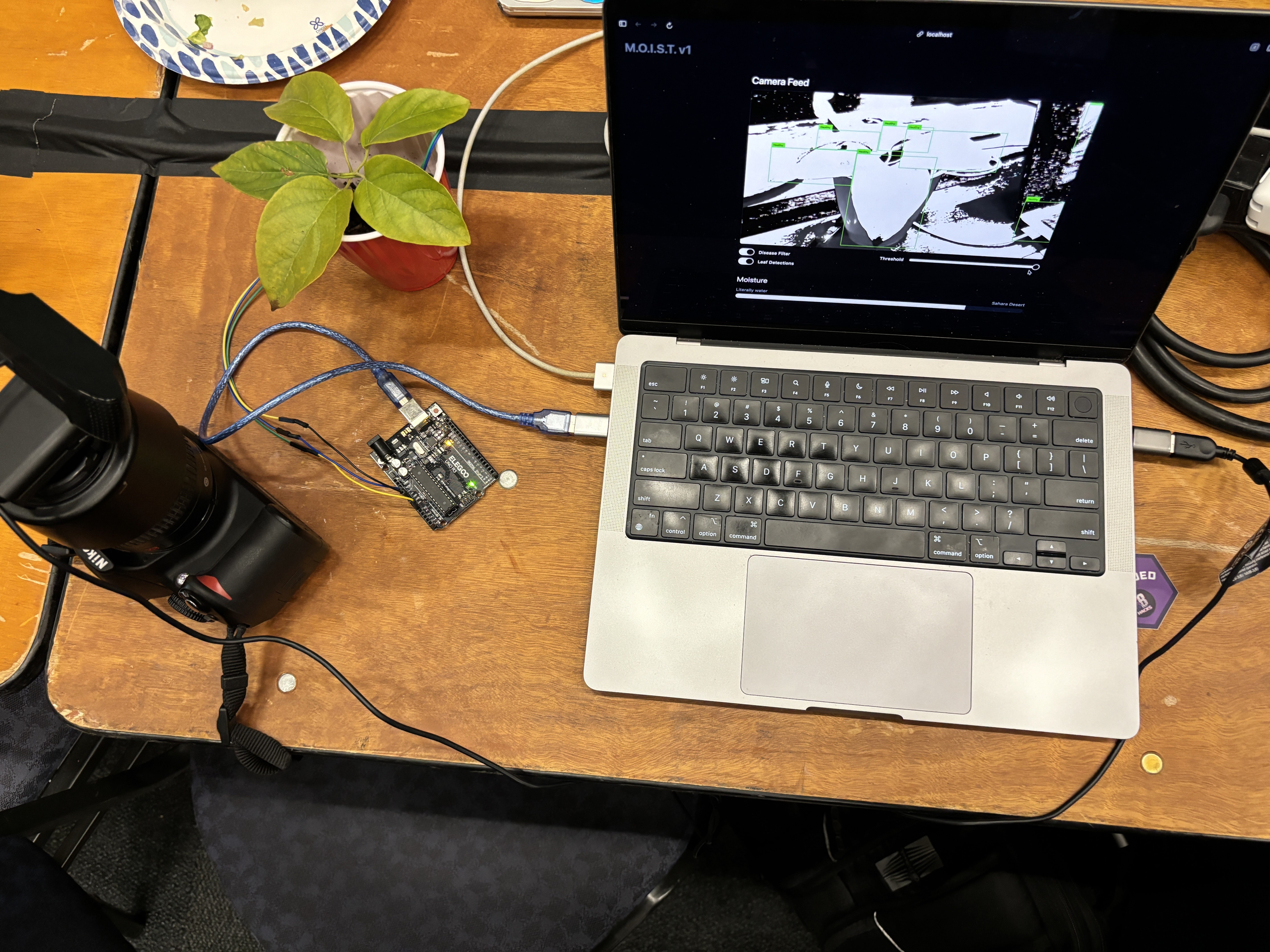
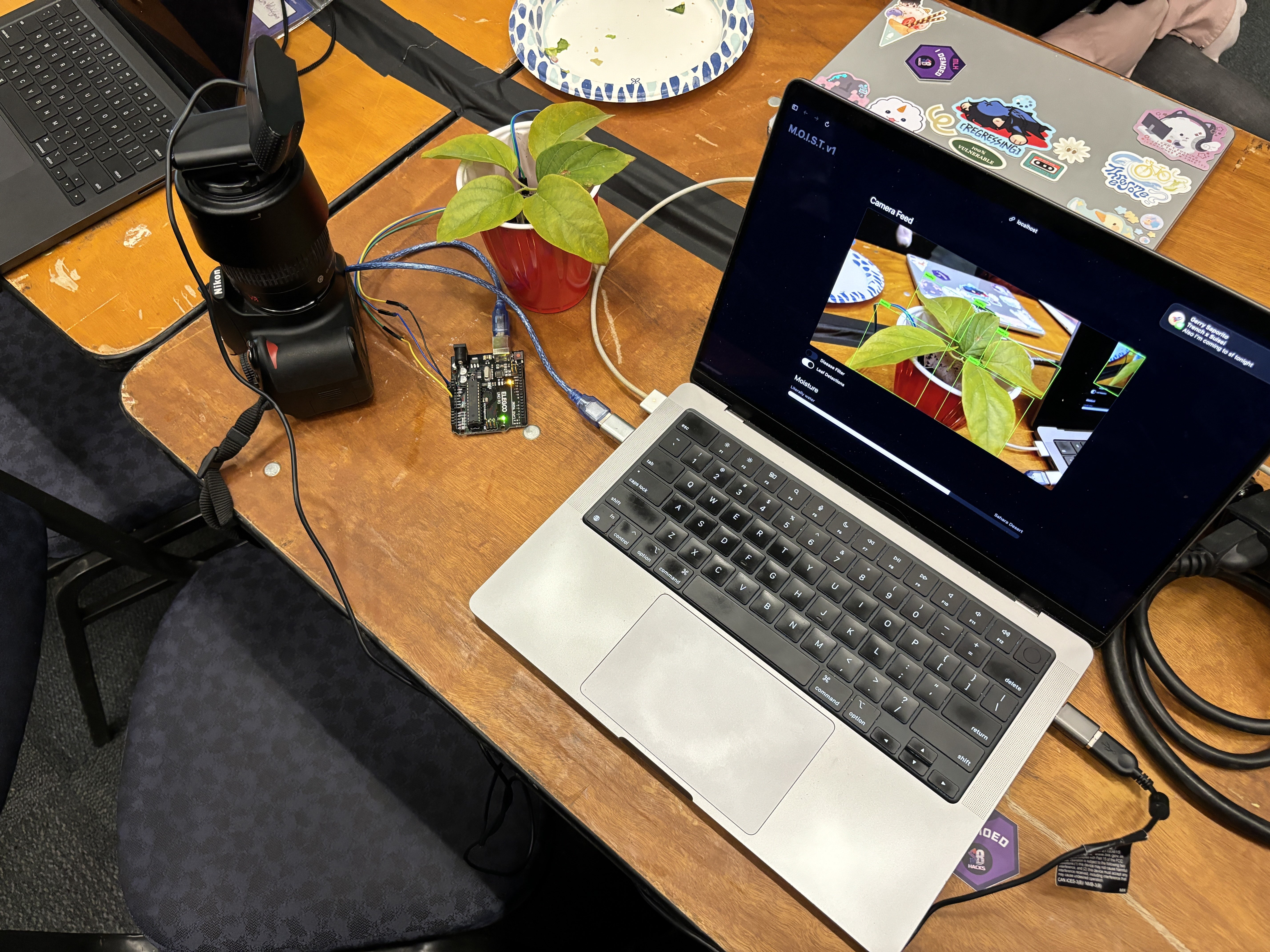
MOIST is a user-friendly embedded system designed to assist in plant care. It is a compact device embedded with moisture, humidity, and temperature sensors. The device would be placed into the soil of a plant. It continuously monitors environmental conditions, powered by rechargeable batteries, transmitting this data to a server. The real-time information displayed through an interactive website enables users to understand and respond effectively to their plants' needs, ensuring optimal growth conditions.
How we built it
Due to the limitations of the hackathon-provided hardware, we settled on using the Arduino as the basis for our device. The Arduino collects analog data from the sensors and uploads it in real time to a Flask-hosted server. The system also includes an interactive camera linked to a third-party webcam. This camera utilizes a Yolov5-lite trained model to identify the health status of plant leaves. Besides passive forms of data display, the user will be able to toggle between normal and “disease detection” modes to grasp a better understanding of their plants’ current states.
Challenges we ran into & Accomplishments that we're proud of
Initially, we intended to use an IoT development kit for wireless data transmission of the nRF9160DK but had to switch to Arduino due to our limited experience with microcontrollers and communication protocols. Even then, we had to overcome Arduino’s limitations, where we implemented multi-threaded processing and advanced data handling techniques. The Yolov5 model training also proved to be a challenge, as only one of our members had experience with verifying and deploying machine models. Their familiarity with the Yolov5 labeling format allowed us to quickly locate the available public data online. However, training the model took a substantial amount of time which could not be finished within the time range of the Hackathon. Therefore, we took into consideration a pre-trained model to resolve this issue. Accomplishments we are proud of included the ability to implement the data reading and transfiguration with something as simple as an Arduino. We were able to integrate the model’s output with the camera’s “disease detection” mode and sensor data from the Arduino to produce meaningful results for users.
What we learned
As a group, we all became much more familiar with embedded protocols, machine learning, and website hosting and UI, respectively. Under the time constraint of the Hackathon, we learned to efficiently handle all the challenges we faced in order to provide a substantial project at the end. Even though some of our initial efforts were discarded, the knowledge and skills we gained this weekend would lay the groundwork for a long but bright road of learning ahead of us.
What's next for MOIST - Monitor Online Interactive System for Thirsty Plants
MOIST’s potential societal implications are far-reaching. It democratizes plant care, provides access, and is manageable for busy individuals and avid gardeners alike. Its affordable technology is designed for mass commercialization, aiming to encourage people to engage in plant care, as a green planet is a healthy planet. MOIST gives the possibility to enhance personal well-being without worry and also contributes positively to the environment. By simplifying plant maintenance, we encourage a greener lifestyle and foster deeper connections to nature. Our technology is just only one small simple step to additionally contribute to sustainable living practices.

Log in or sign up for Devpost to join the conversation.