## Inspiration

We wanted to bring a familiar feeling to the internet: sitting on a park bench, meeting someone new, and finding something to do together.

**ThirdSpace** turns that idea into a shared garden on your TV. Instead of another feed to scroll through, it offers a place to participate—sharing a song, adding to a picture, or reflecting on your day.

## What it does

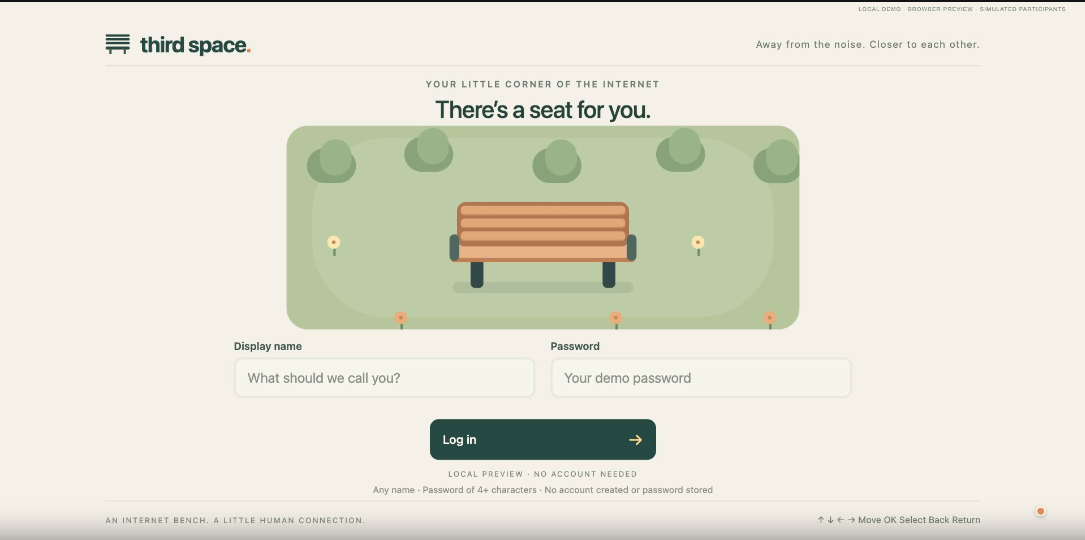
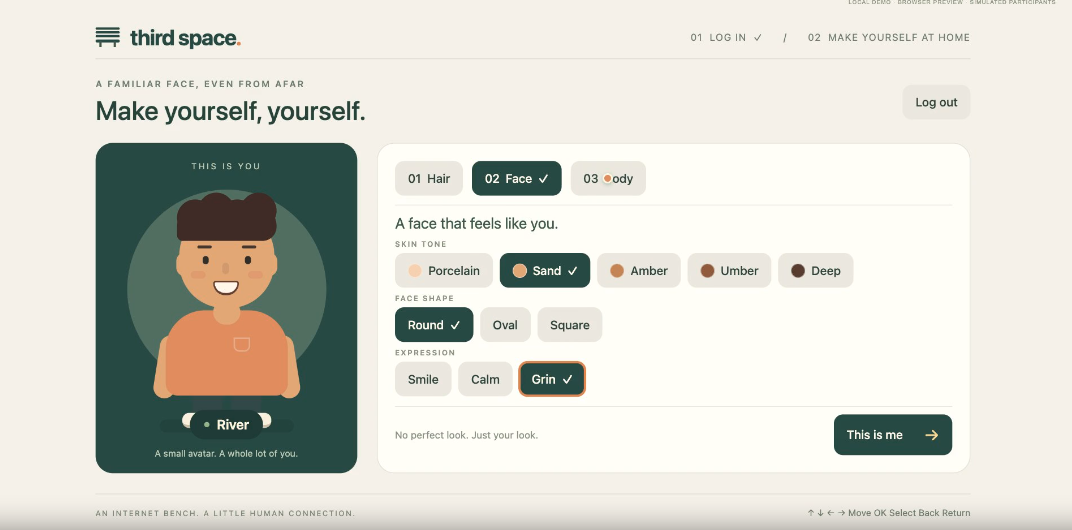
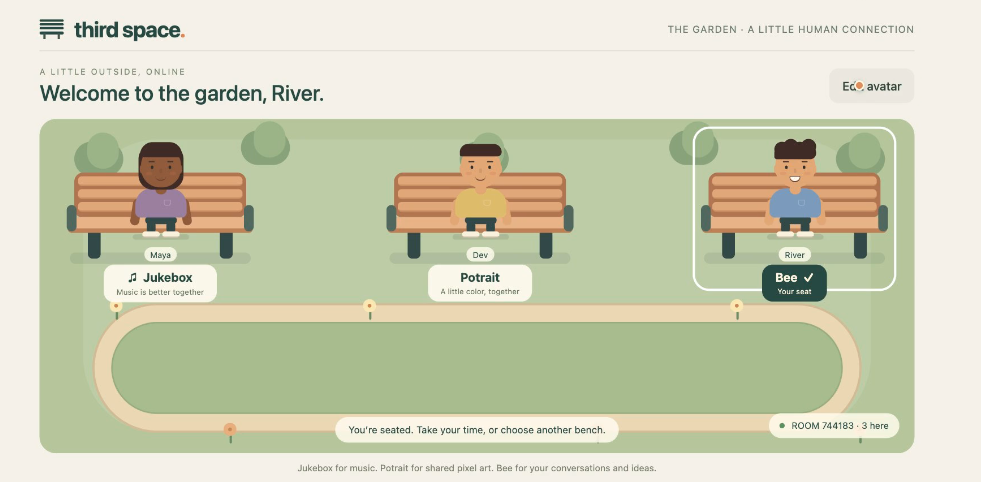
Create an avatar, enter the garden, and choose one of three benches:

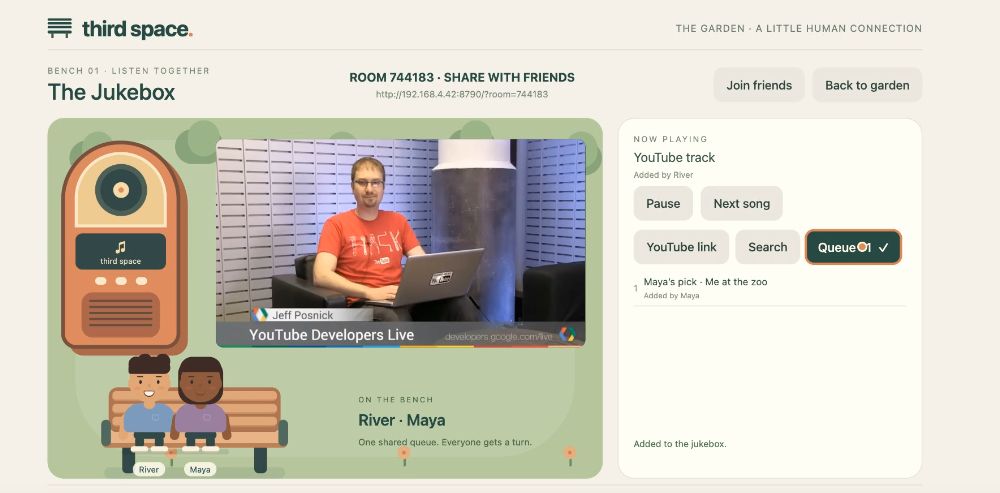
- **Jukebox:** Join a listening room, share its code with friends, and add YouTube videos to a shared queue. Players can contribute the next pick, pause playback, or skip a track.
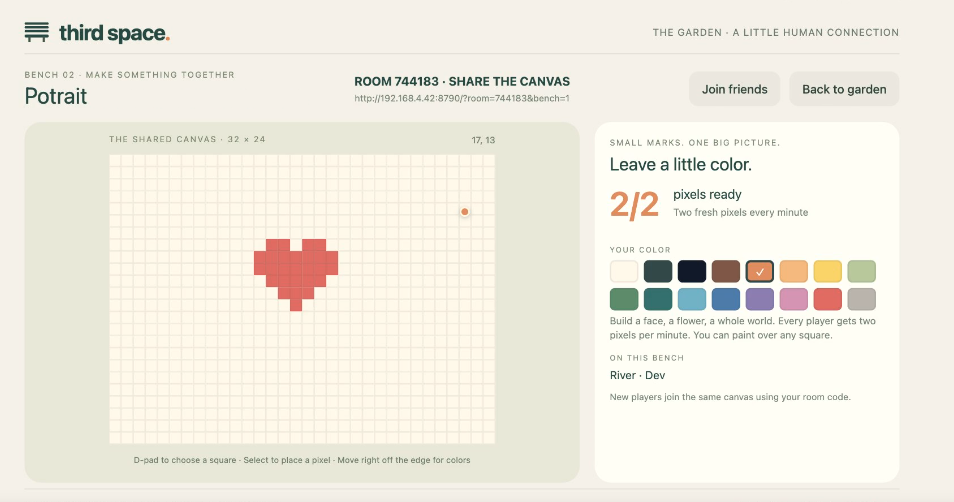
- **Potrait:** Make pixel art together on a shared canvas inspired by Reddit’s r/place. Each player gets **two pixel placements per minute**, encouraging small contributions to a collective picture.
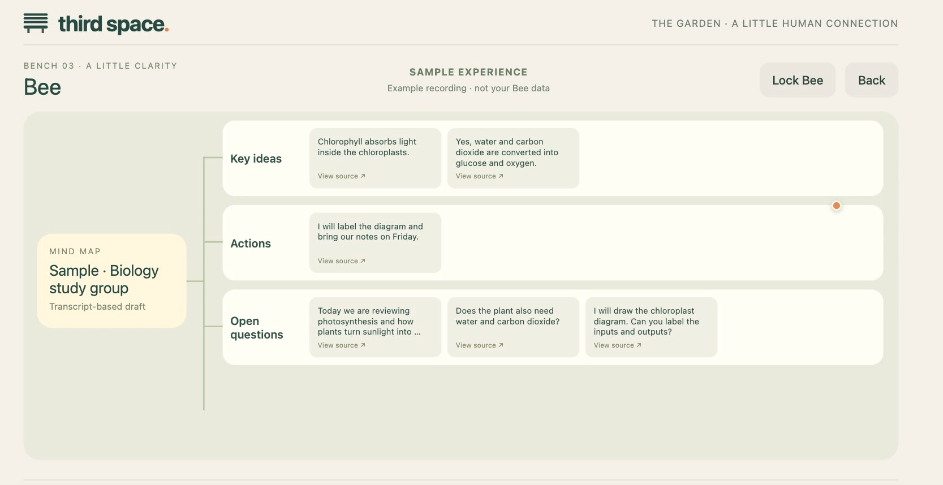
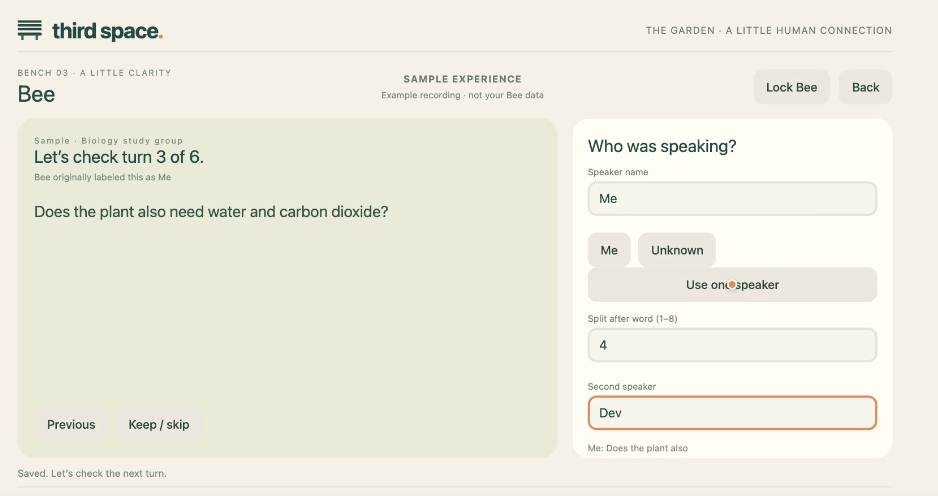
- **Bee:** Choose between **Bee Rectification**, a guided review for correcting speaker labels, and **Mind Map**, which organizes a class or meeting transcript into source-linked ideas.

## How we built it

We built the TV app with **React Native for Vega**, using customizable native shapes for the avatars, garden, benches, and jukebox.

A **Node.js server** coordinates shared rooms, participants, music queues, and canvas updates. Pixel-placement limits are enforced on the server so every participant follows the same rules.

Jukebox uses YouTube’s visible embedded player.

The Bee integration uses the **official Bee CLI** on the host computer. A separate private pairing flow protects access to recordings. Reviews preserve the original transcript text, while mind-map nodes link back to the passages behind them.

## Challenges we ran into

Designing for a TV required us to think beyond touchscreens. Navigation, focus indicators, text size, and layout all needed to work with a remote.

Shared activities introduced another challenge: keeping participants synchronized while handling simultaneous actions. We added safeguards against duplicate song advances and enforced pixel allowances independently for each player.

We also had to work within integration limits. YouTube videos can have playback restrictions, and Bee’s documented CLI does not provide a speaker-label update command. We addressed this by keeping corrections local and clearly distinguishing transcript-based maps from optional Bee-agent generation.

The Vega simulator also disconnected repeatedly during testing, making reliable deployment and capture more difficult.

## Accomplishments that we're proud of

We turned one simple metaphor—an **internet bench**—into three distinct experiences within a consistent garden.

The prototype supports cross-device music queues and collaborative pixel art, alongside a private Bee review workflow. We also built source-linked mind maps so users can check the context behind an idea.

## What we learned

Community experiences need more than a shared screen. They need understandable rules, visible participation, and reasons to contribute.

We learned how different TV interaction is from mobile interaction, how to coordinate shared state across devices, and why personal data needs a separate access boundary from social features.

We also learned to make integration limits visible without overwhelming the user—and to preserve source material when working with potentially inaccurate transcripts.

## What's next for ThirdSpace

More benches with more activities.

Our longer-term goal is simple: make ThirdSpace a place people return to—not just for its activities, but for the connections they build there.

Log in or sign up for Devpost to join the conversation.