-
-
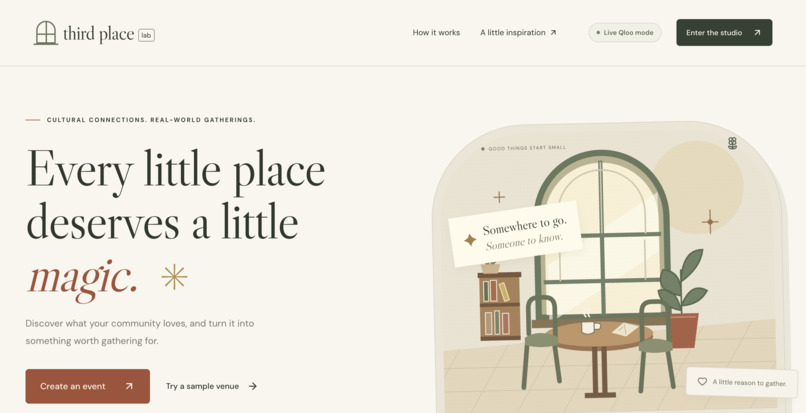
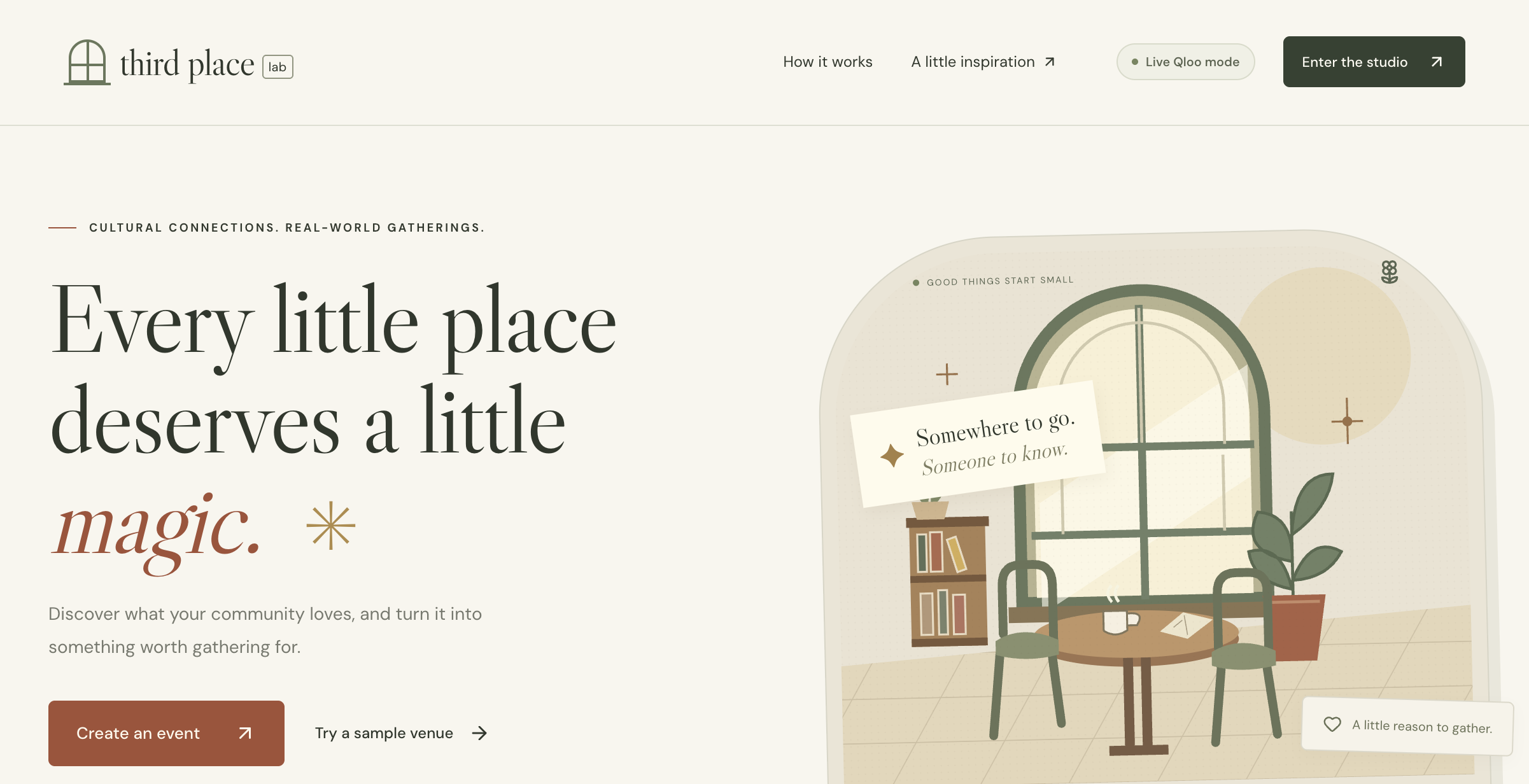
Landing Page: Every little place deserves a little magic. Welcome to Third Place Lab!
-
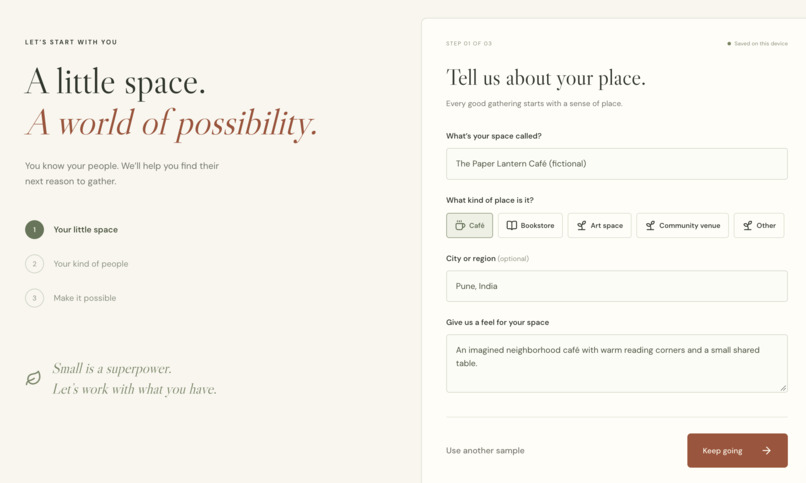
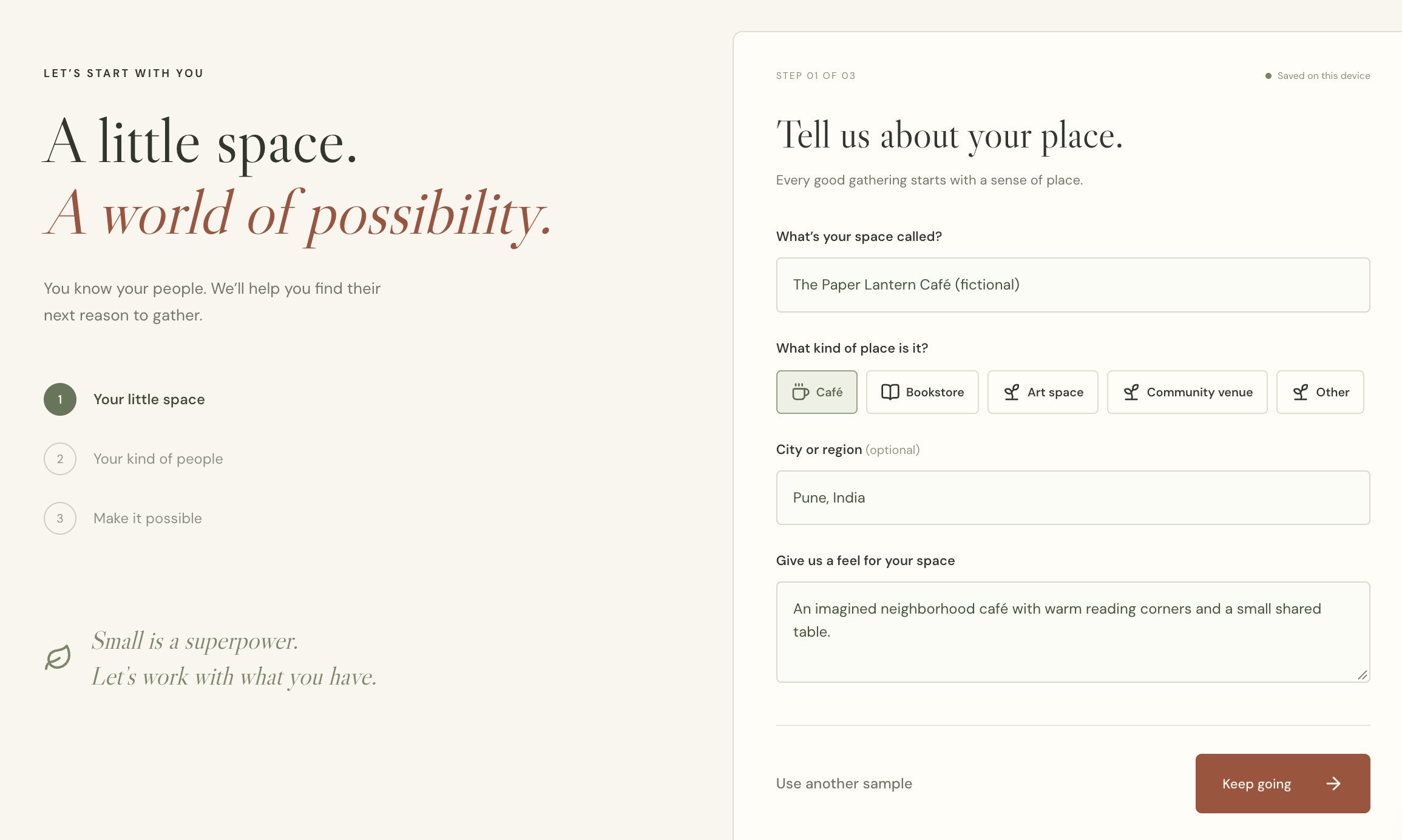
Venue Studio: Tell us about your space, its personality, and the people who make it special.
-
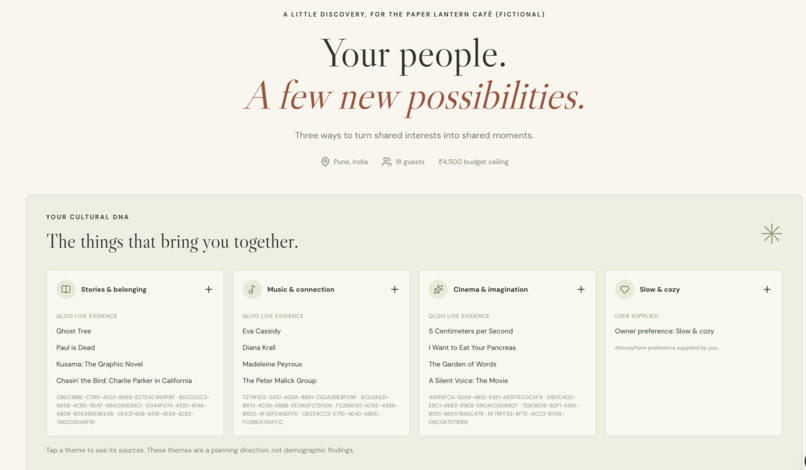
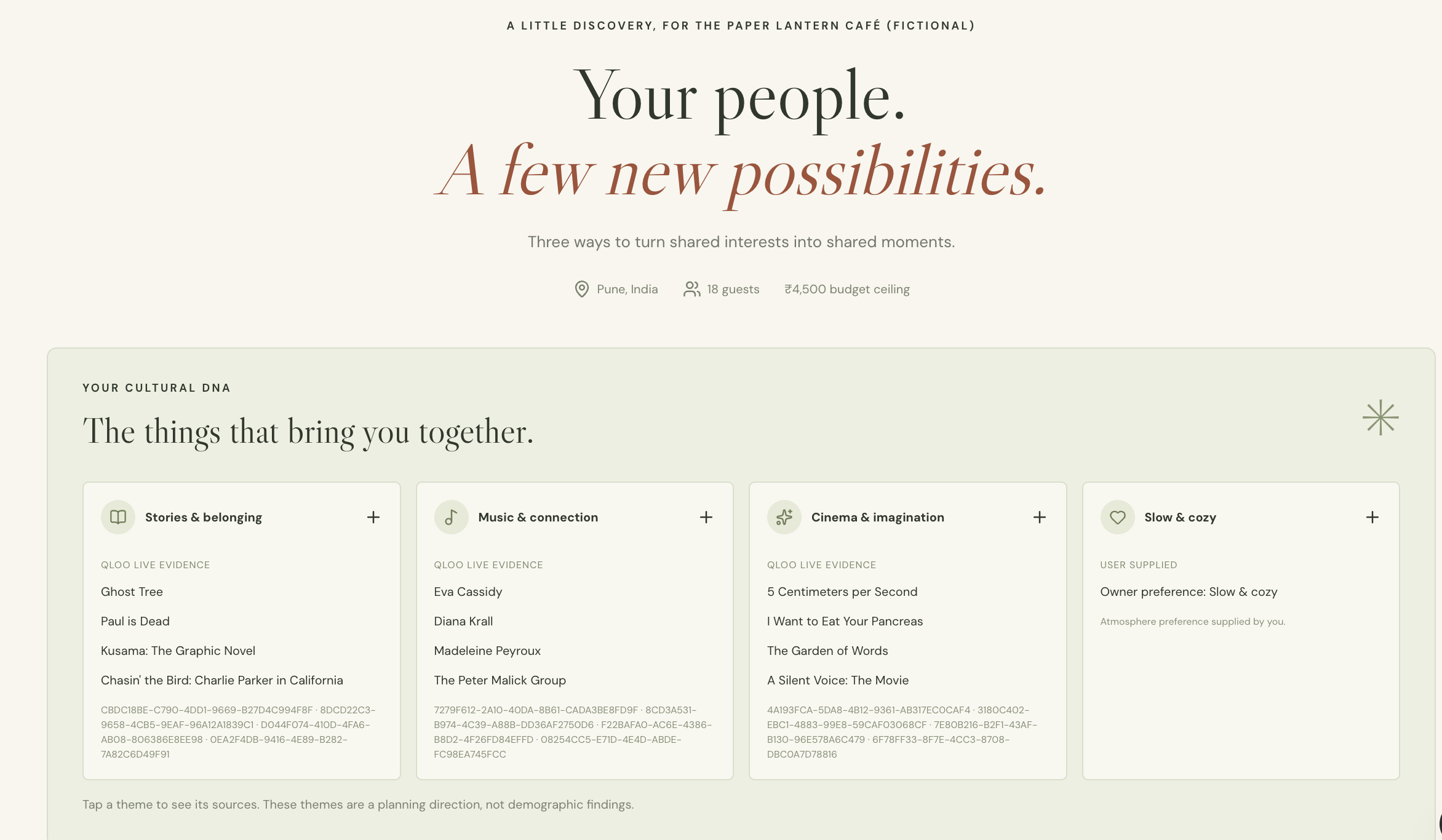
Cultural DNA: Real Qloo insights reveal the cultural connections behind personalized community events.
-
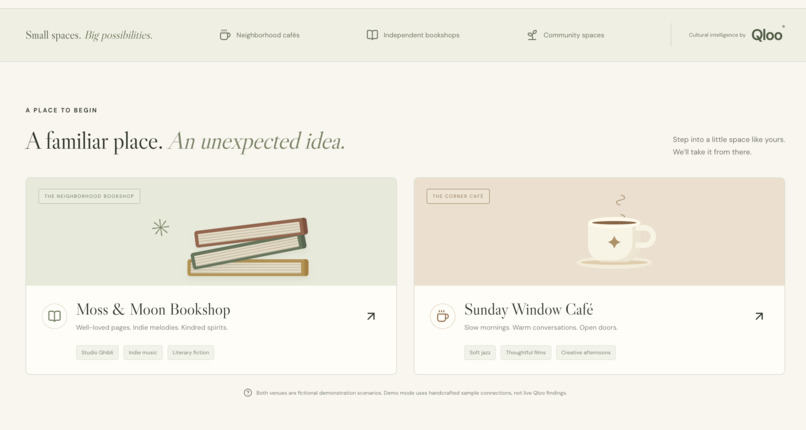
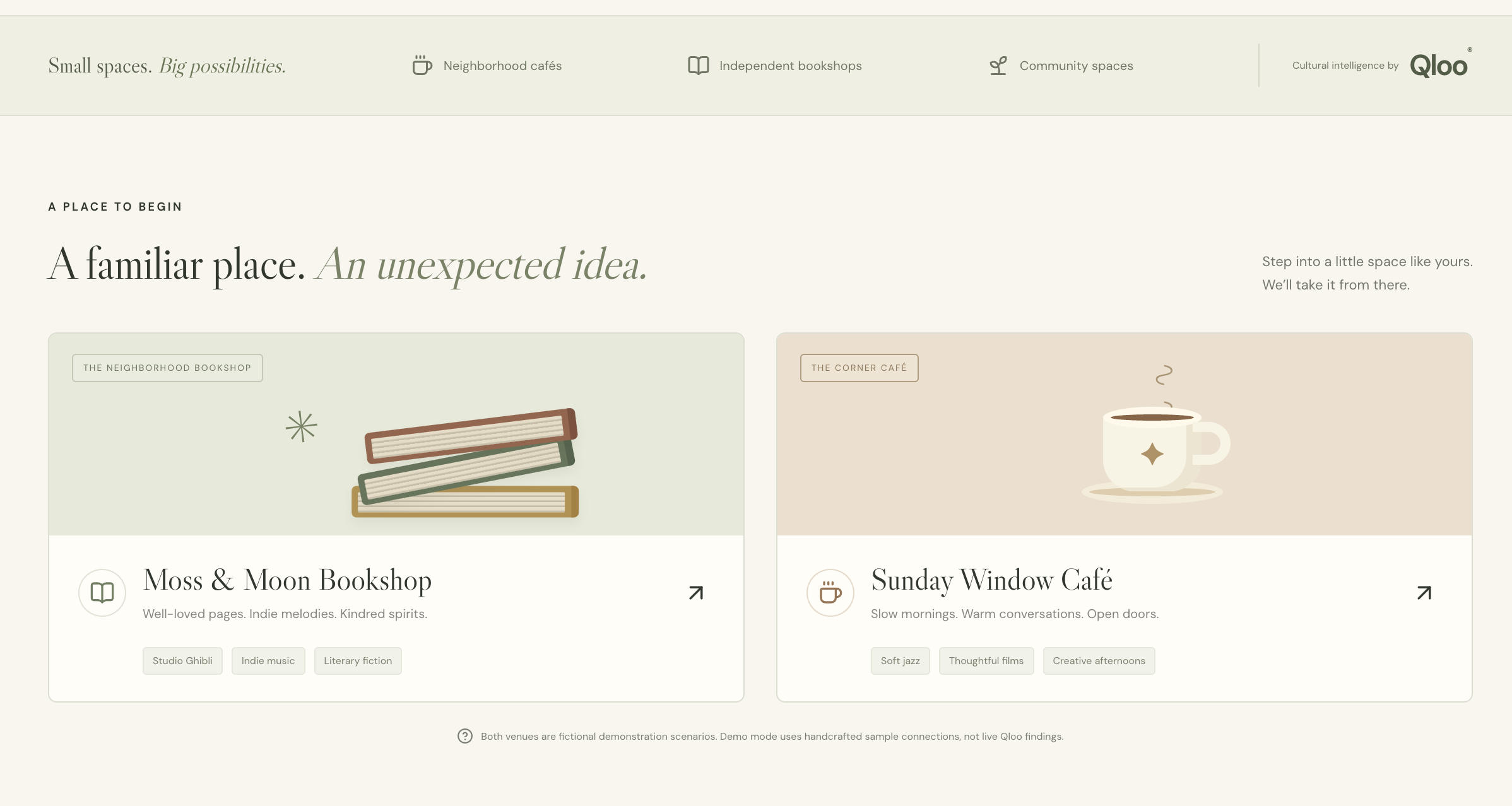
Sample Venues: Explore cozy bookstores and cafés to discover what Third Place Lab can create.
Third Place Lab ☕🌷
Turning little spaces into places of belonging.
Inspiration
A quiet café. A tiny bookstore. An empty chair waiting for someone.
Some of our most meaningful memories happen in these little spaces between home and work — our third places.
But small venues often struggle to create experiences that bring their communities together. They have the space and the heart, but not always the resources to understand what people would genuinely enjoy.
We wondered: What if AI could discover what connects people culturally and turn those connections into real-world gatherings?
That's how Third Place Lab began.
Because every little place deserves to become someone's favorite memory. 💛
What it does
Third Place Lab is a Qloo-powered agentic event planner that helps cafés, bookstores, and community spaces create meaningful gatherings.
Venue owners introduce their space, audience, favorite cultural interests, budget, and constraints.
Our agent then:
- Discovers Cultural DNA — Uses Qloo's Taste Graph to explore connections across music, films, books, and other cultural interests.
- Creates three unique events — Develops evidence-grounded concepts with activities, schedules, and estimated budgets.
- Explains its choices — Shows real Qloo references, cultural affinities, and supporting evidence.
- Refines intelligently — Adapts plans when budgets, capacities, atmospheres, or requirements change.
- Delivers a blueprint — Produces an editable, printable plan that owners can actually use.
Instead of another generic recommendation, Third Place Lab creates a reason for people to come together.
How we built it
We built Third Place Lab using TypeScript, React, Next.js, and Qloo's API, combining a warm, responsive frontend with a structured agentic planning engine.
The agent follows an observable workflow:
Understand → Research → Plan → Evaluate → Refine
Qloo's /search endpoint resolves cultural interests, while /v2/insights discovers related entities and cross-domain affinities.
Our system preserves entity provenance, affinity scores, and explainability metadata, distinguishing verified Qloo evidence from creative AI interpretations.
The planning engine evaluates budgets, capacity, accessibility considerations, and event formats. Users can inspect the agent's actions and request meaningful revisions.
We also built server-side credential protection, bounded API requests, explicit mock/live modes, and automated verification.
Challenges we ran into
Our biggest challenge was making Qloo essential to the experience, rather than merely attaching cultural references to generic event templates.
Early tests showed that different interests sometimes changed event descriptions without changing the underlying activities. We redesigned the planning logic so cultural evidence genuinely influenced event structures.
We also tackled cumulative refinements, budget calculations, ambiguous cultural matches, and accessibility constraints.
Another challenge? Building before receiving our Qloo API key! We created a clearly labeled mock provider first, then successfully transitioned to real API testing.
Finally, we had to balance reliable public hosting, API usage protection, and our strict ₹0 additional-spending goal.
Accomplishments that we're proud of
- Real Qloo integration: Eight successful live API calls across two different cultural scenarios.
- Grounded results: 24 cultural references with affinity and explainability metadata.
- Meaningful agentic behavior: Cultural evidence influences activities, while refinements adjust practical event details.
- Transparent recommendations: Users can inspect the cultural evidence behind their plans.
- Reliable implementation: 108 passing unit/integration tests, eight desktop/mobile browser tests, and a successful production build during release preparation.
- A memorable experience: A cozy, approachable interface designed around warmth, creativity, and community.
But our proudest achievement is turning cultural intelligence into something that can inspire real human connection.
What we learned
We learned that cultural intelligence becomes most valuable when it moves beyond recommendations into real decisions and experiences.
We also discovered that effective agents don't need to be unpredictable. Structured tool use, transparent evidence, and thoughtful refinement can make AI both powerful and trustworthy.
Most importantly, we learned that technology doesn't always need to keep people on their screens.
Sometimes, its greatest contribution is helping people put their phones away and pull up a chair together.
What's next for Third Place Lab
We want to bring Third Place Lab to real independent cafés, bookstores, and community organizers.
Our next steps include expanding cultural discovery across more Qloo categories, gathering feedback from venue owners, supporting collaborative event planning, and helping spaces develop recurring community traditions.
Long-term, we imagine a cultural programming companion that gives even the smallest businesses access to thoughtful, data-informed event planning.
Because the next unforgettable experience might not happen in a famous concert hall.
It might happen in a tiny bookstore with twelve chairs.
An empty chair is just a chair. Until someone finds a reason to sit beside it.
We're building those reasons. ☕💛
Built With
- codex
- github
- next.js
- node.js
- playwright
- qloo-api
- qloo-taste-graph
- react
- tailwind-css
- turso
- typescript
- vercel
- vitest
- zod


Log in or sign up for Devpost to join the conversation.