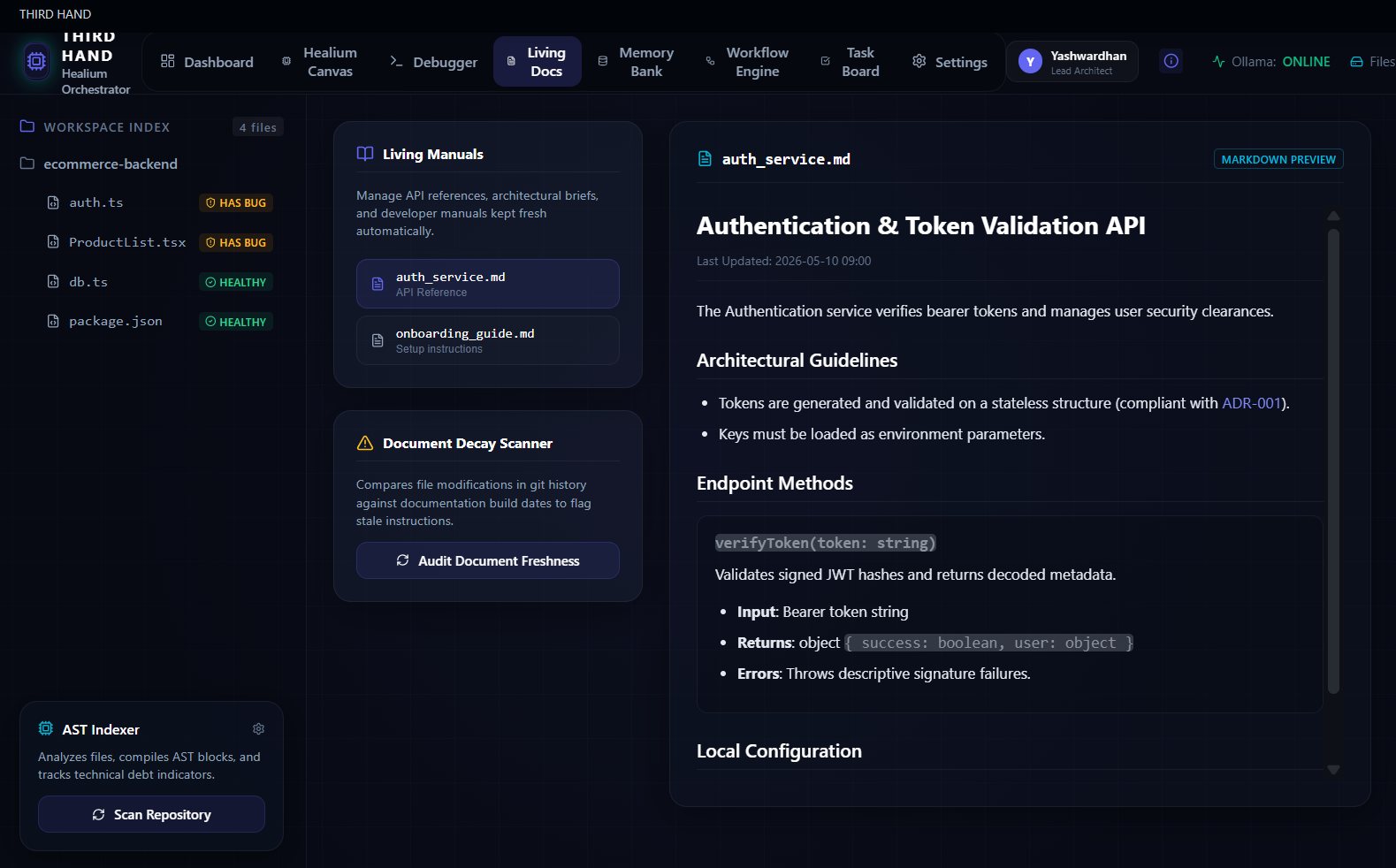
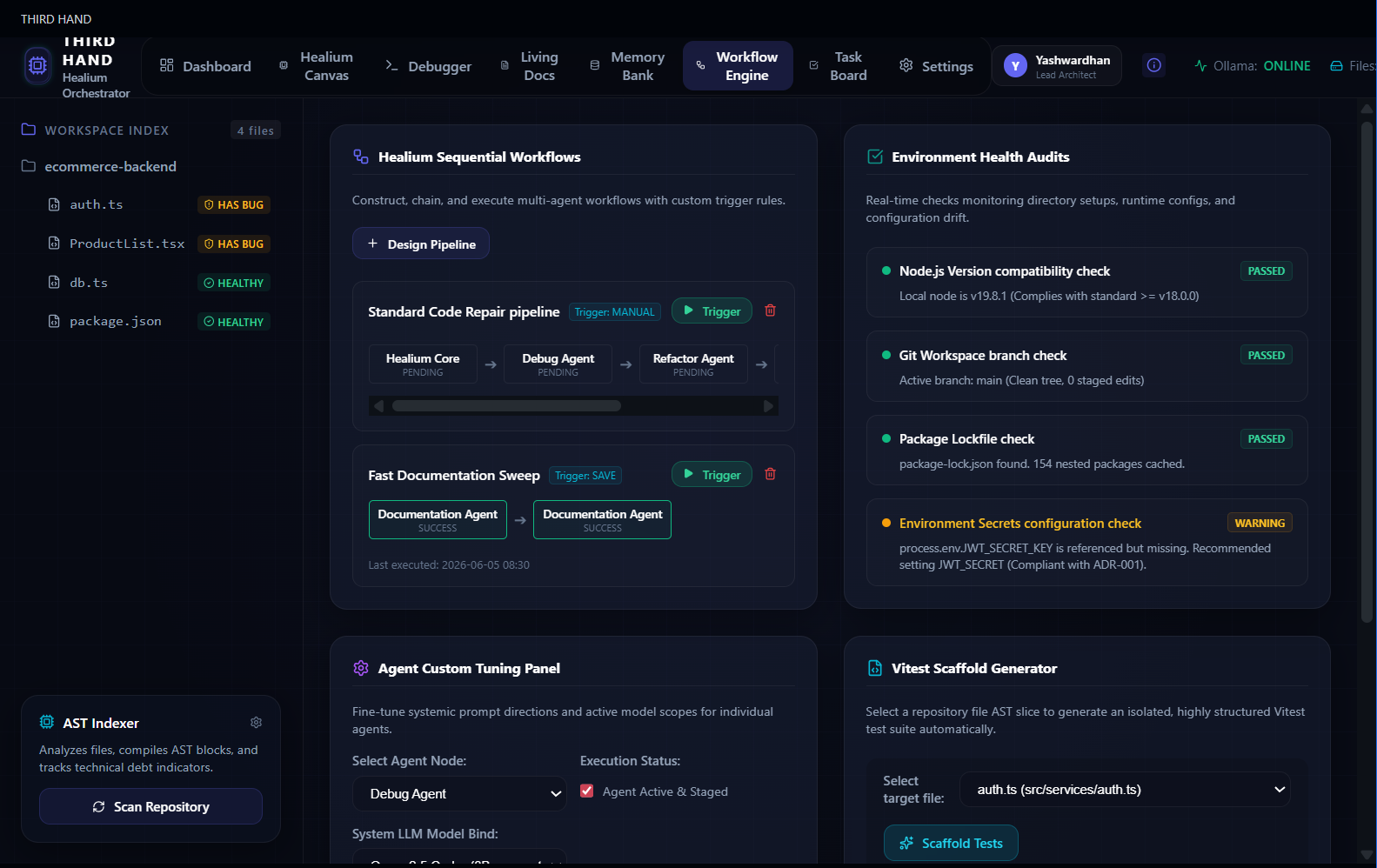
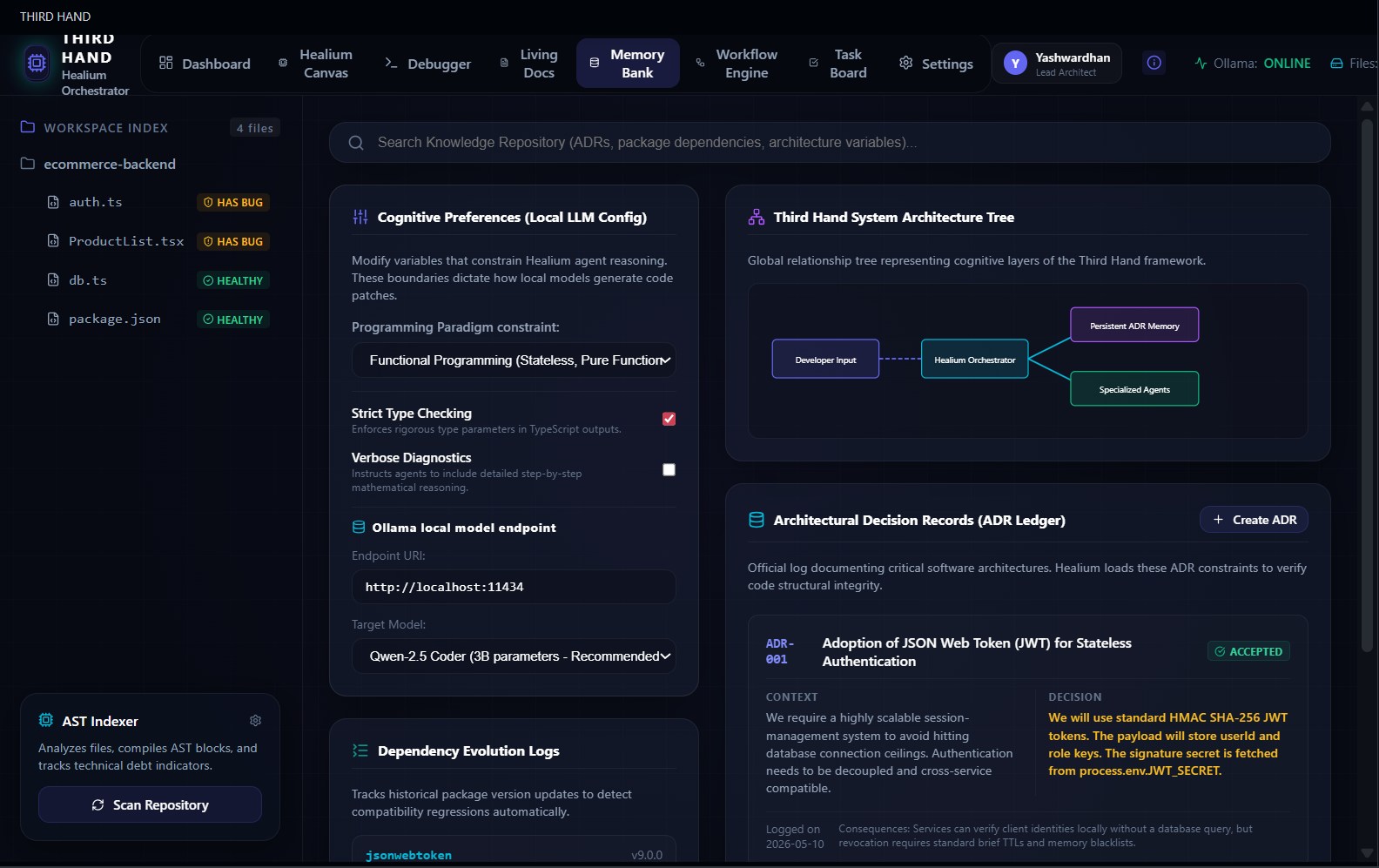
Third Hand
Inspiration
Modern AI tools are powerful, but most still function as assistants that wait for instructions and respond one task at a time. We wanted to build something that acts more like a true collaborator—an intelligent "third hand" that helps users think, plan, research, create, and execute complex workflows.
The inspiration came from observing how students, developers, researchers, and professionals constantly switch between multiple tools to complete a single objective. Research, planning, coding, documentation, validation, and deployment are often fragmented processes. We envisioned a system where specialized AI agents could work together seamlessly, reducing cognitive load and accelerating productivity.
Third Hand was created to bridge the gap between simple AI assistants and fully autonomous digital collaborators.
What it does
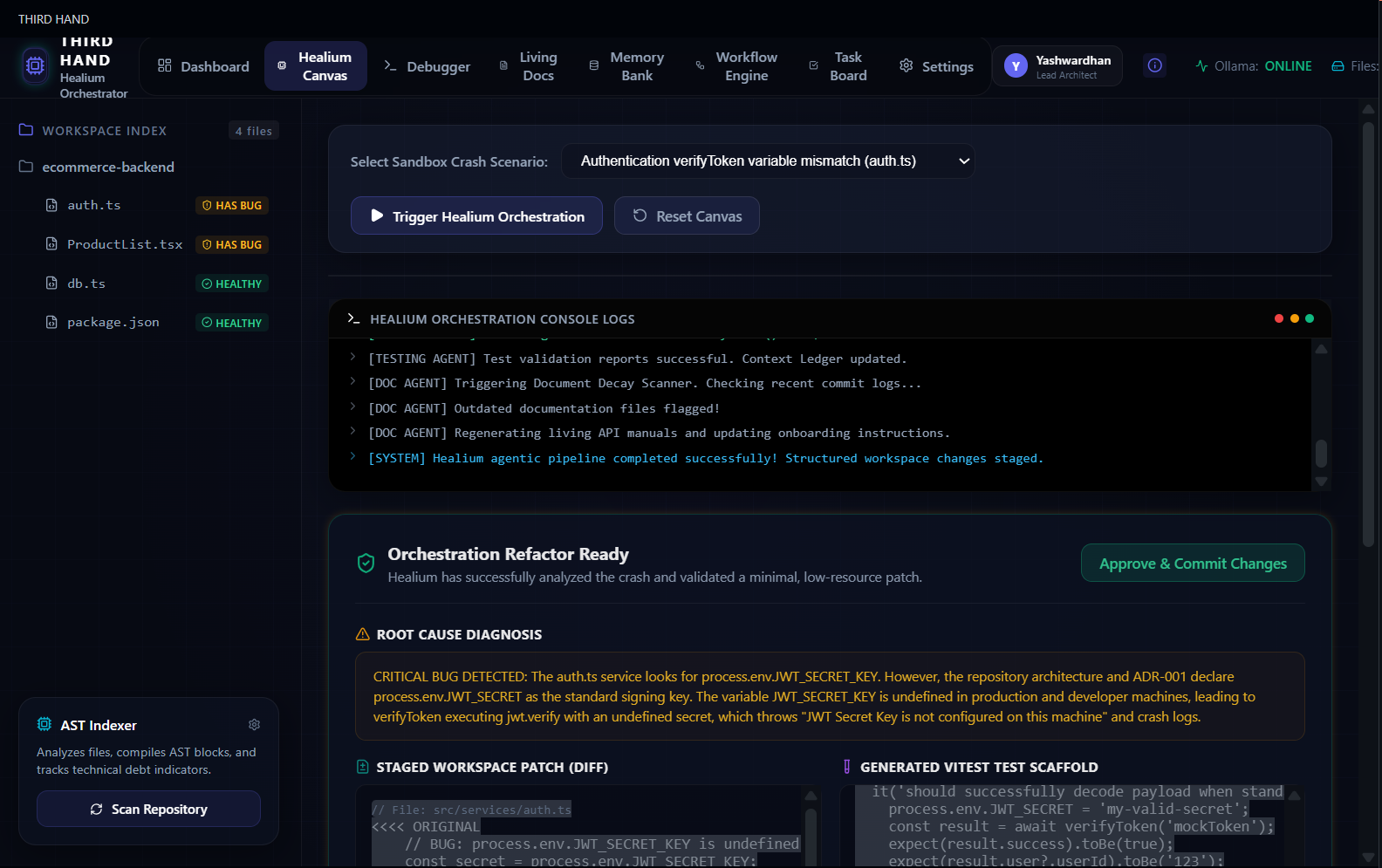
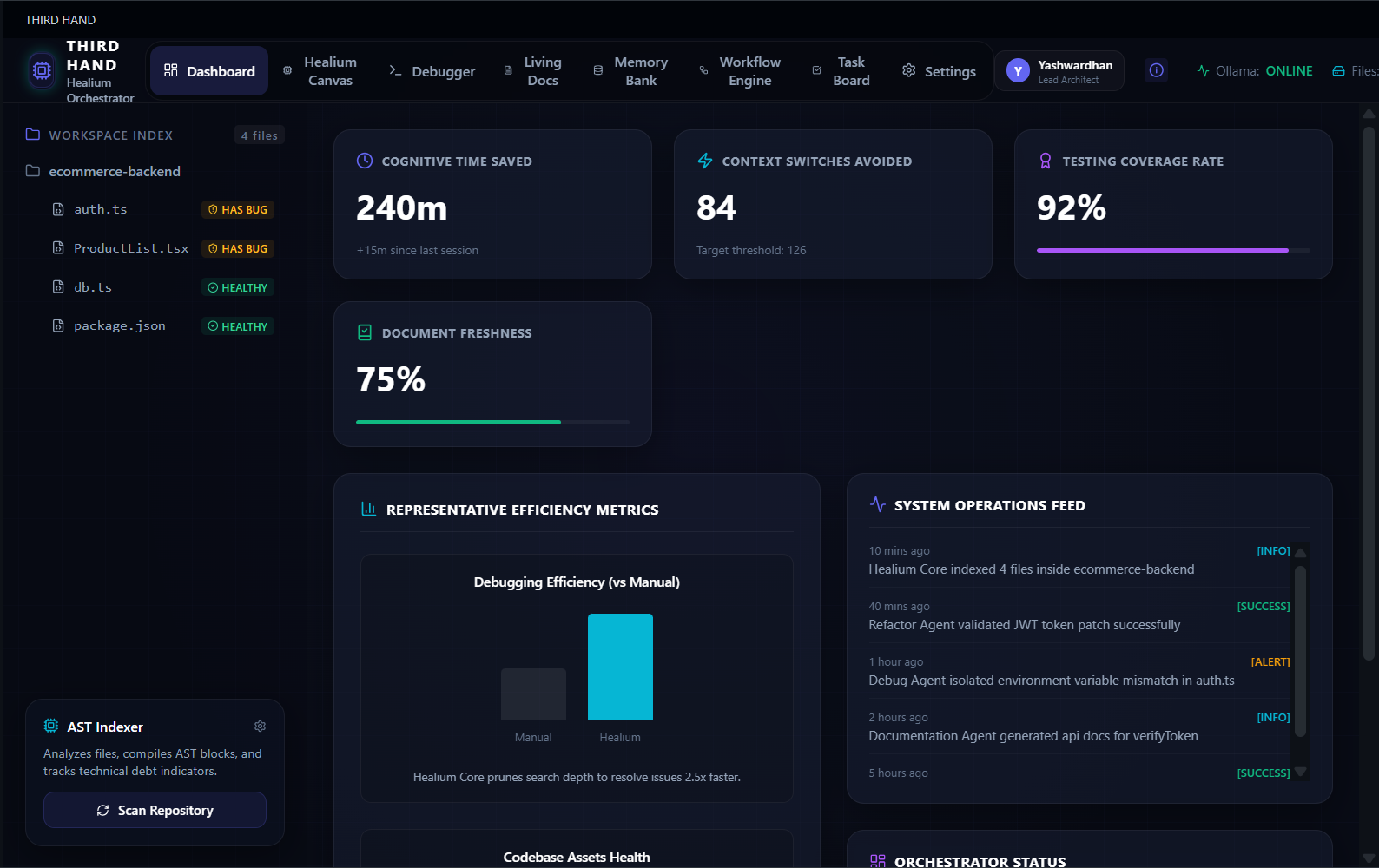
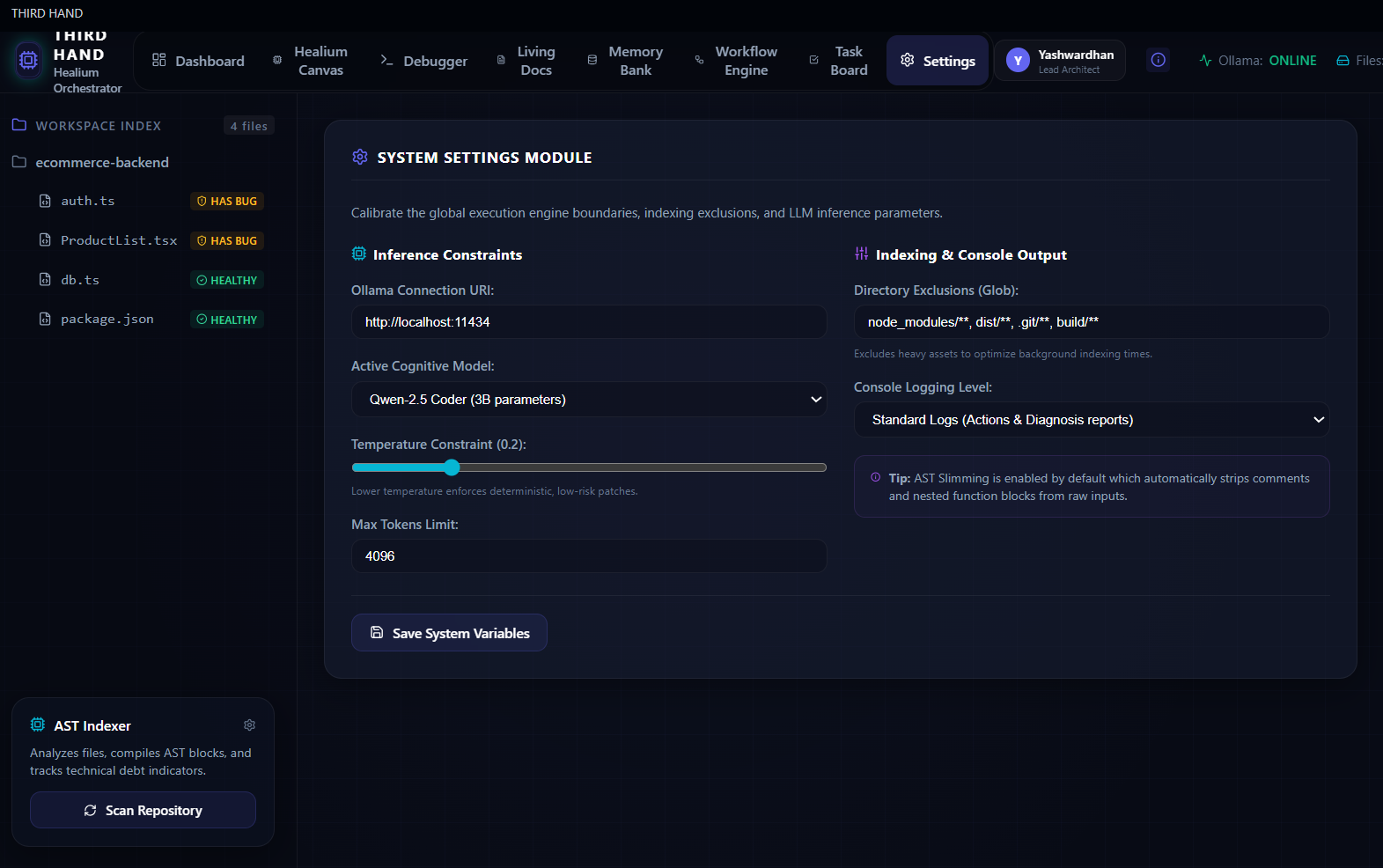
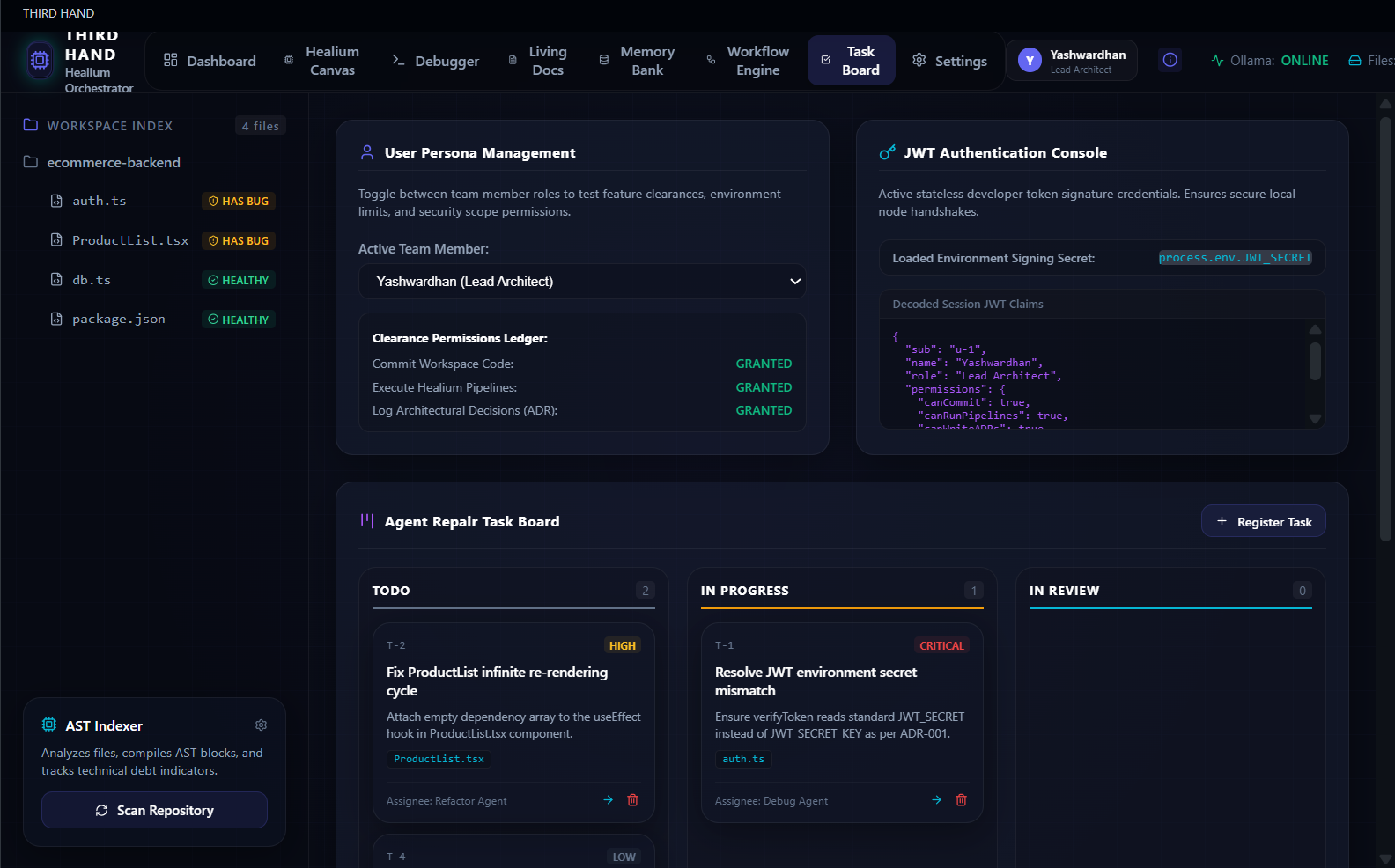
Third Hand is a multi-agent AI orchestration platform that transforms complex objectives into coordinated workflows executed by specialized AI agents.
Users provide a goal instead of a sequence of instructions. Third Hand then:
- Understands the user's intent.
- Breaks complex tasks into manageable subtasks.
- Assigns subtasks to specialized AI agents.
- Enables agents to share structured reasoning and context.
- Synthesizes outputs into a coherent final result.
- Continuously validates and refines generated solutions.
The platform supports:
- Research and knowledge synthesis
- Software development workflows
- Documentation generation
- Project planning and management
- Academic assistance
- Business analysis
- Automated decision support
Rather than operating as a single large model, Third Hand functions as an intelligent team of AI specialists collaborating toward a common objective.
How we built it
Third Hand was built using a modular multi-agent architecture designed around specialization, communication, and orchestration.
Core Components
1. Orchestrator Agent
- Receives user goals.
- Decomposes objectives into subtasks.
- Coordinates workflow execution.
- Tracks progress and dependencies.
2. Research Agent
- Gathers and analyzes information.
- Identifies relevant sources and insights.
- Produces structured research outputs.
3. Planner Agent
- Creates execution roadmaps.
- Prioritizes actions and milestones.
- Optimizes workflow sequencing.
4. Builder Agent
- Generates implementations, code, documents, and artifacts.
- Converts plans into executable outputs.
5. Reviewer Agent
- Evaluates quality and consistency.
- Detects errors and missing requirements.
- Suggests improvements.
6. Synthesizer Agent
- Merges outputs from all agents.
- Produces unified, user-ready results.
Architecture Highlights
- Agent-to-agent communication framework.
- Shared contextual memory system.
- Structured reasoning transfer between agents.
- Dynamic task delegation.
- Iterative feedback loops.
- Modular architecture enabling future agent expansion.
The system employs sequential cohesion where each agent contributes specialized expertise while maintaining awareness of the broader project context through a shared repository.
Challenges we ran into
Building a collaborative AI ecosystem introduced several challenges:
Agent Coordination
Ensuring multiple agents remained aligned on a shared objective without generating conflicting outputs required robust orchestration logic.
Context Preservation
Maintaining relevant information across long workflows while avoiding unnecessary context expansion was a significant engineering challenge.
Reasoning Consistency
Different agents often approached problems from different perspectives. Creating a structured communication protocol was necessary to maintain consistency.
Quality Assurance
Balancing autonomy with reliability required introducing validation layers and review mechanisms.
Scalability
As the number of agents increased, workflow complexity and communication overhead grew rapidly, requiring optimization of task routing and memory management.
Accomplishments that we're proud of
- Successfully developed a functional multi-agent AI ecosystem.
- Achieved seamless collaboration between specialized agents.
- Built a reusable orchestration framework for future expansion.
- Reduced user effort by transforming goals into executable workflows.
- Implemented structured inter-agent communication.
- Created a scalable architecture capable of supporting additional specialized agents.
- Demonstrated autonomous planning, research, execution, and review cycles.
- Established a foundation for next-generation collaborative AI systems.
Most importantly, we transformed the concept of AI from a reactive assistant into an active collaborator.
What we learned
Through the development of Third Hand, we learned that:
- Specialized agents often outperform a single general-purpose system on complex workflows.
- Communication protocols are just as important as model intelligence.
- Context management is a critical factor in multi-agent systems.
- Human-AI collaboration benefits significantly from explainable intermediate reasoning.
- Orchestration and coordination become the central challenge as agent ecosystems grow.
We also gained valuable experience in system architecture, agent design, workflow automation, and collaborative AI engineering.
What's next for Third Hand
The future roadmap for Third Hand includes:
Autonomous Workflow Execution
Allowing agents to independently complete end-to-end workflows with minimal human intervention.
Persistent Memory
Developing long-term memory systems that learn from previous projects and user preferences.
Domain-Specific Agent Marketplace
Enabling users to deploy specialized agents for engineering, healthcare, education, finance, and research.
Real-Time Collaboration
Supporting teams where humans and AI agents collaborate simultaneously on shared projects.
Tool Integration Ecosystem
Connecting Third Hand with external platforms, APIs, repositories, and productivity tools.
Self-Improving Agent Networks
Implementing mechanisms for agents to learn from outcomes and continuously improve coordination strategies.
Our vision is to evolve Third Hand into a universal AI collaboration platform—an intelligent digital workforce that helps people achieve more by turning ideas into reality.
Built With
- anthropic-api
- docker
- express.js
- git
- github
- github-actions
- jest
- jwt-authentication
- langchain
- langgraph
- mcp-(model-context-protocol)
- mongodb-atlas
- next.js
- node.js
- openai-api
- playwright
- posthog
- python
- react
- redis
- rest-apis
- sentry
- tailwind-css
- typescript
- vercel
- websockets

Log in or sign up for Devpost to join the conversation.