-
-
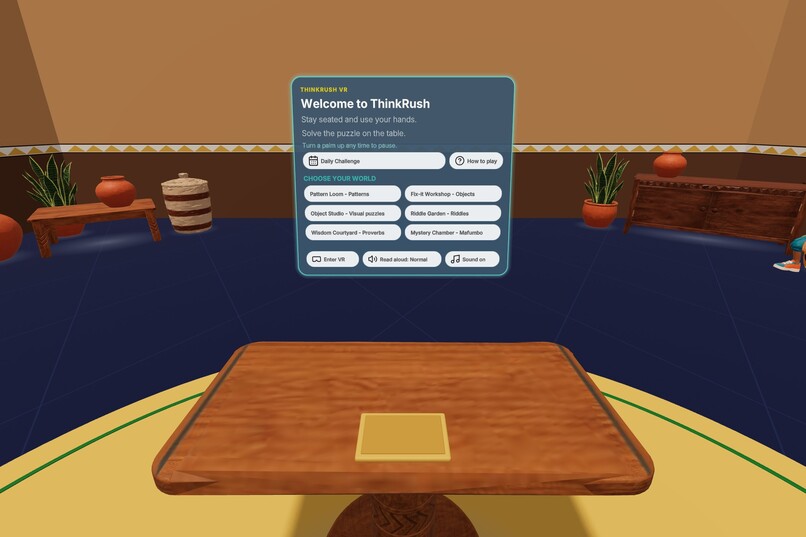
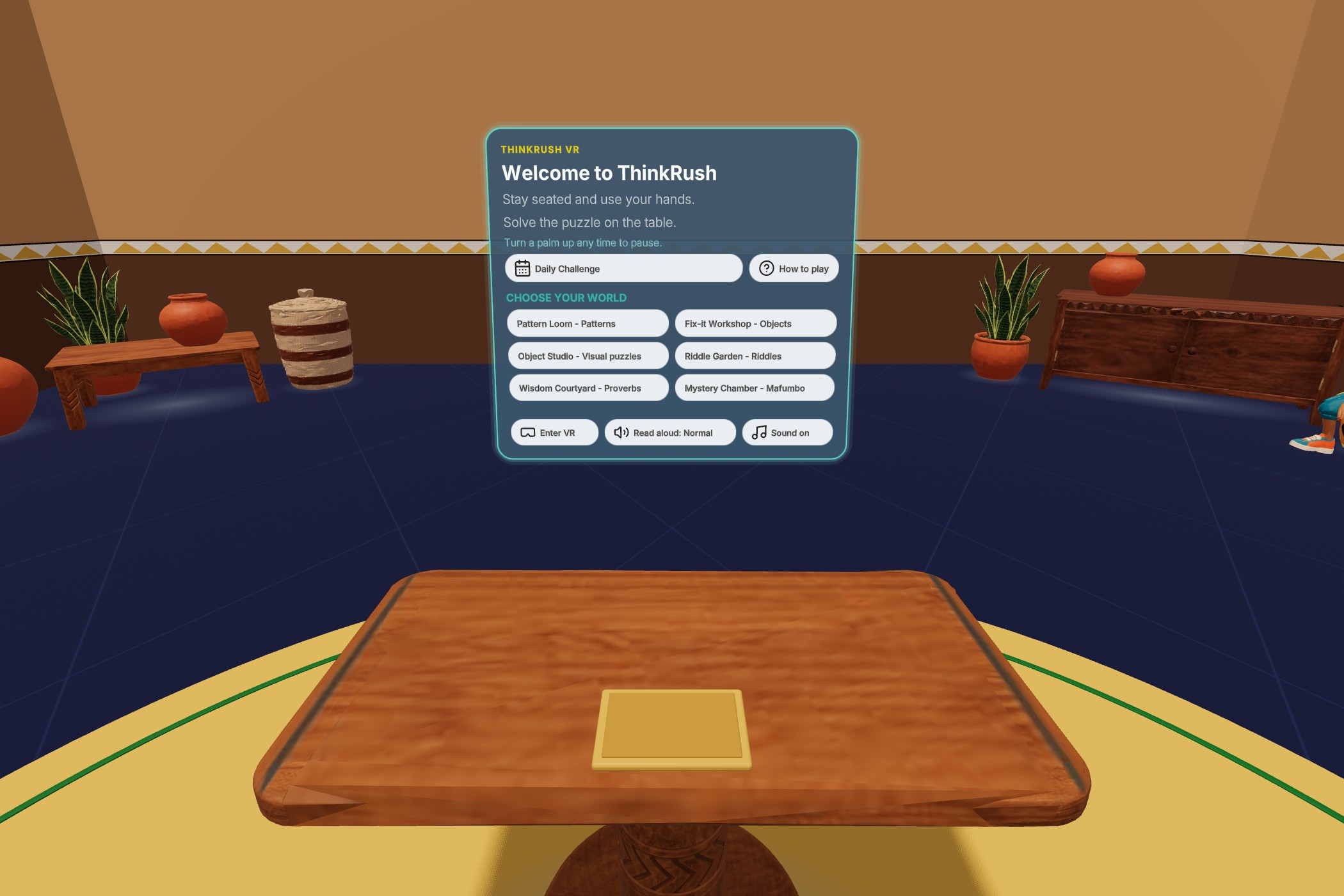
Pick a world, play the Daily Challenge, or learn by playing.
-
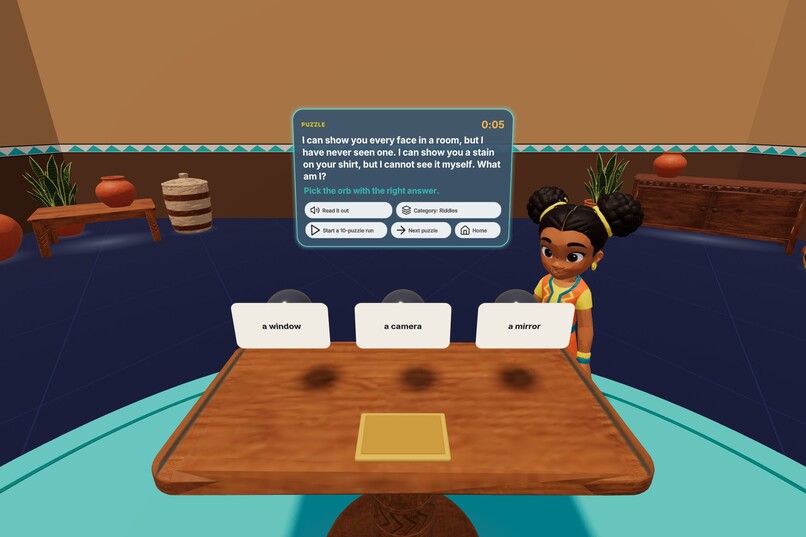
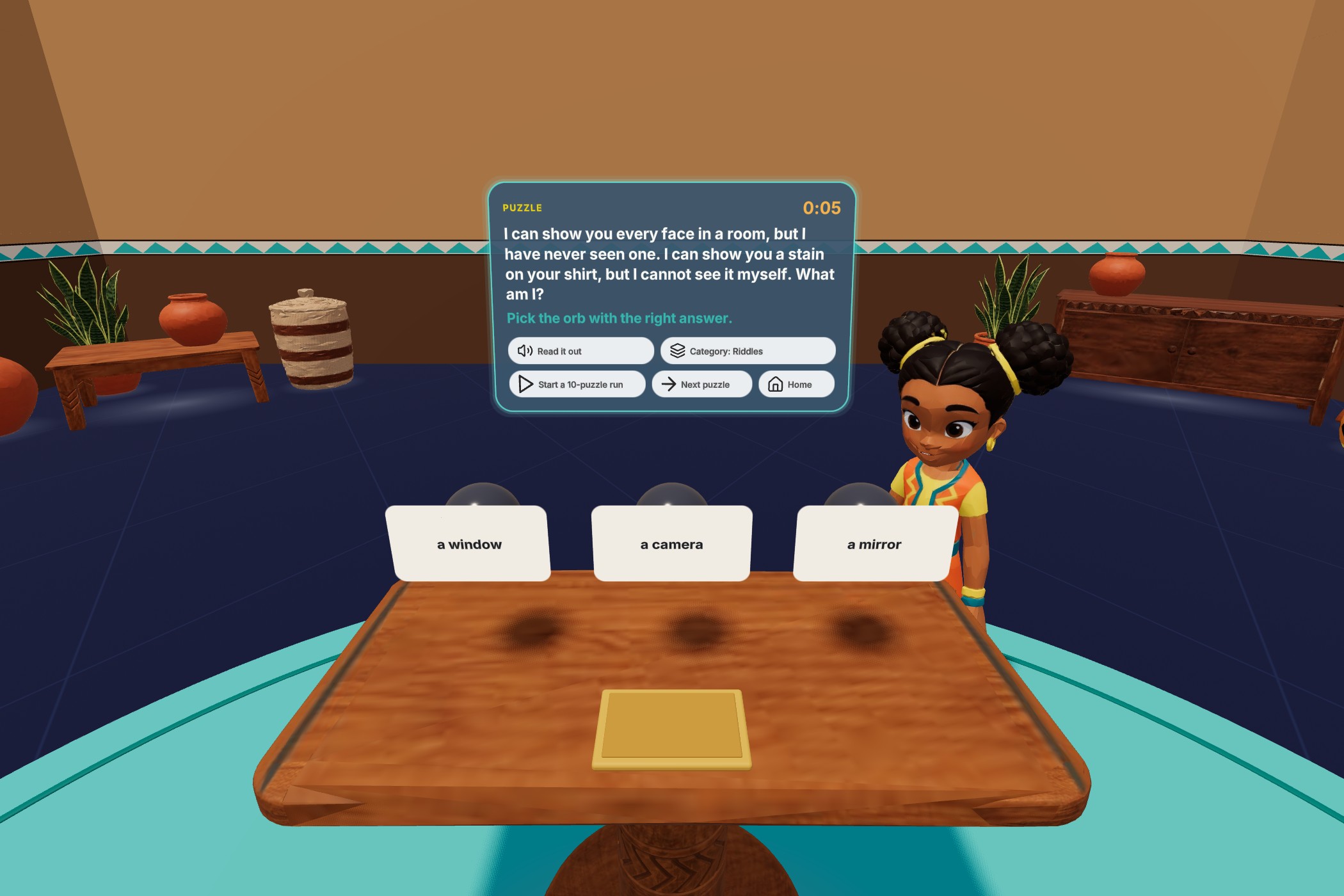
RUSH reads each riddle aloud; point at the right orb and pinch.
-
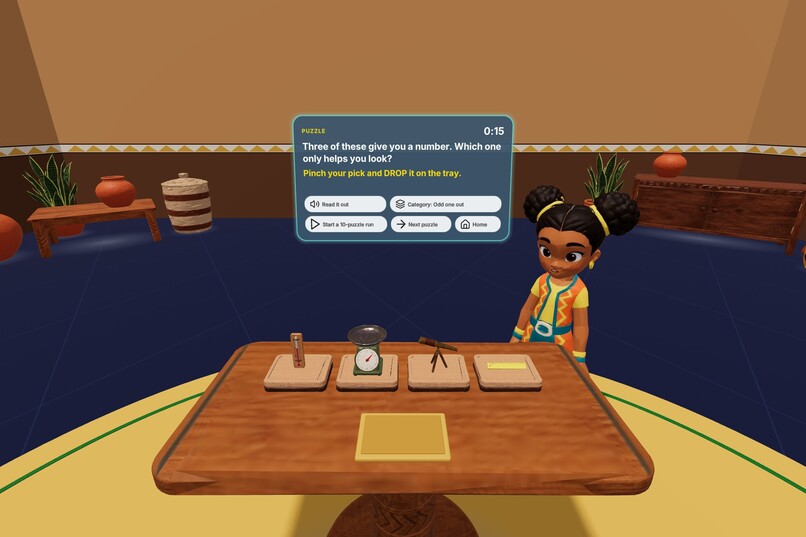
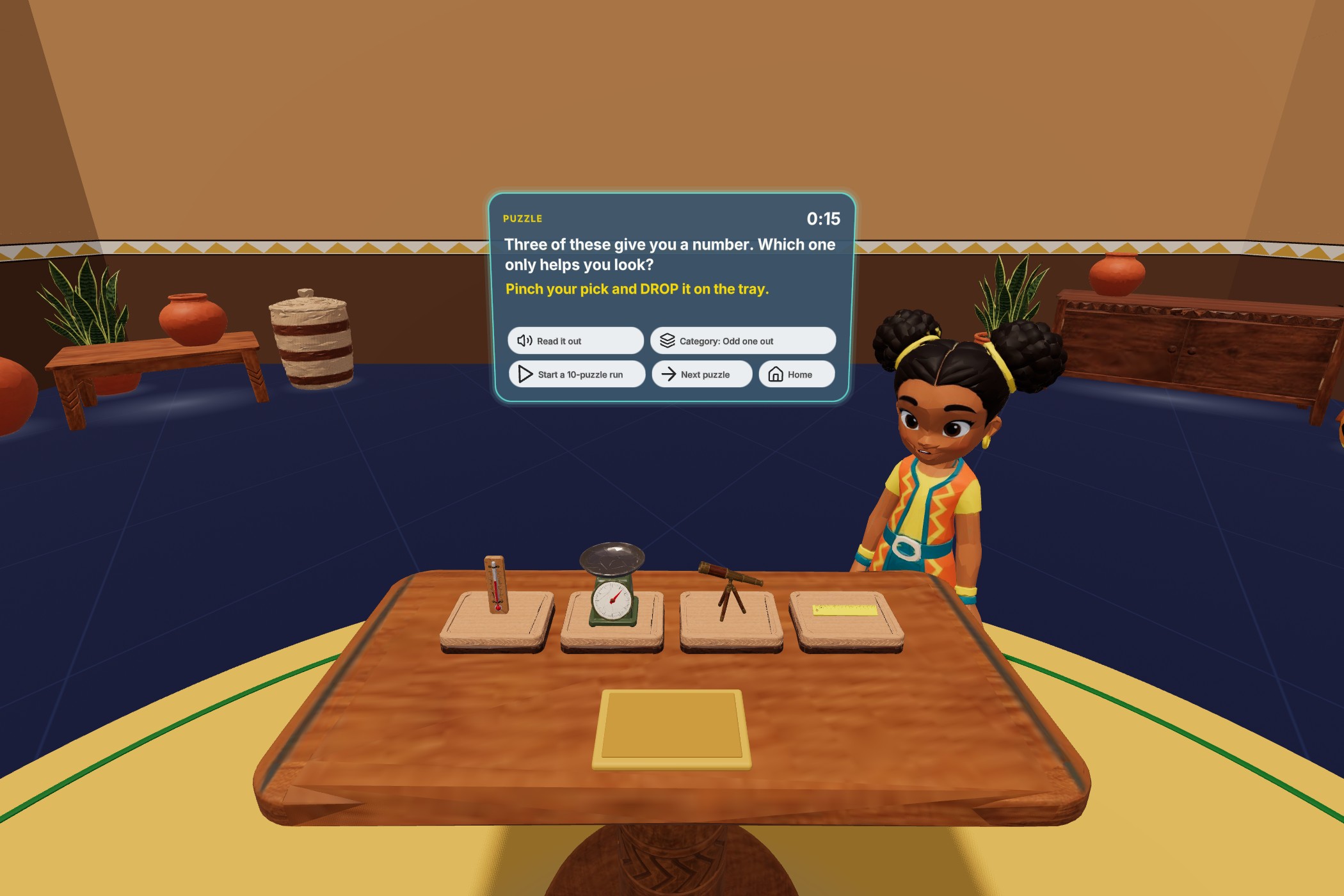
Three of these give you a number... pick it up and drop it on the tray.
-
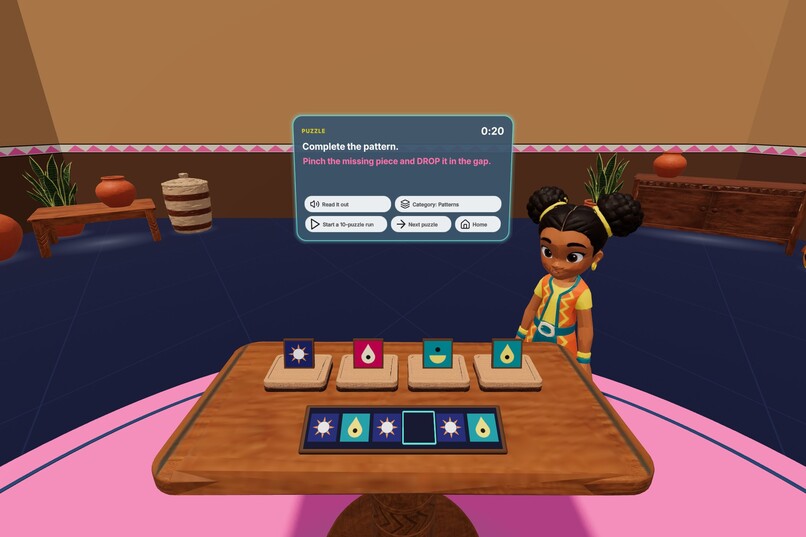
Pattern Loom: every fabric board is generated fresh.
-
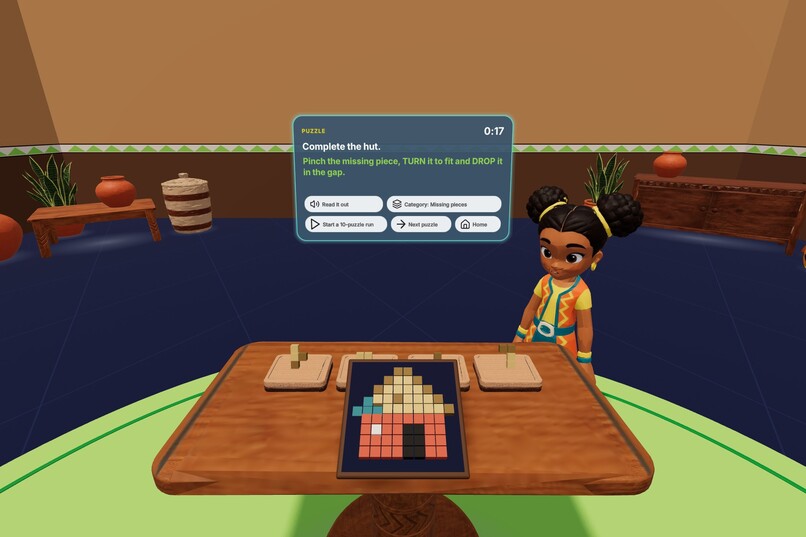
Fix-it Workshop: find the missing piece and turn it to fit.
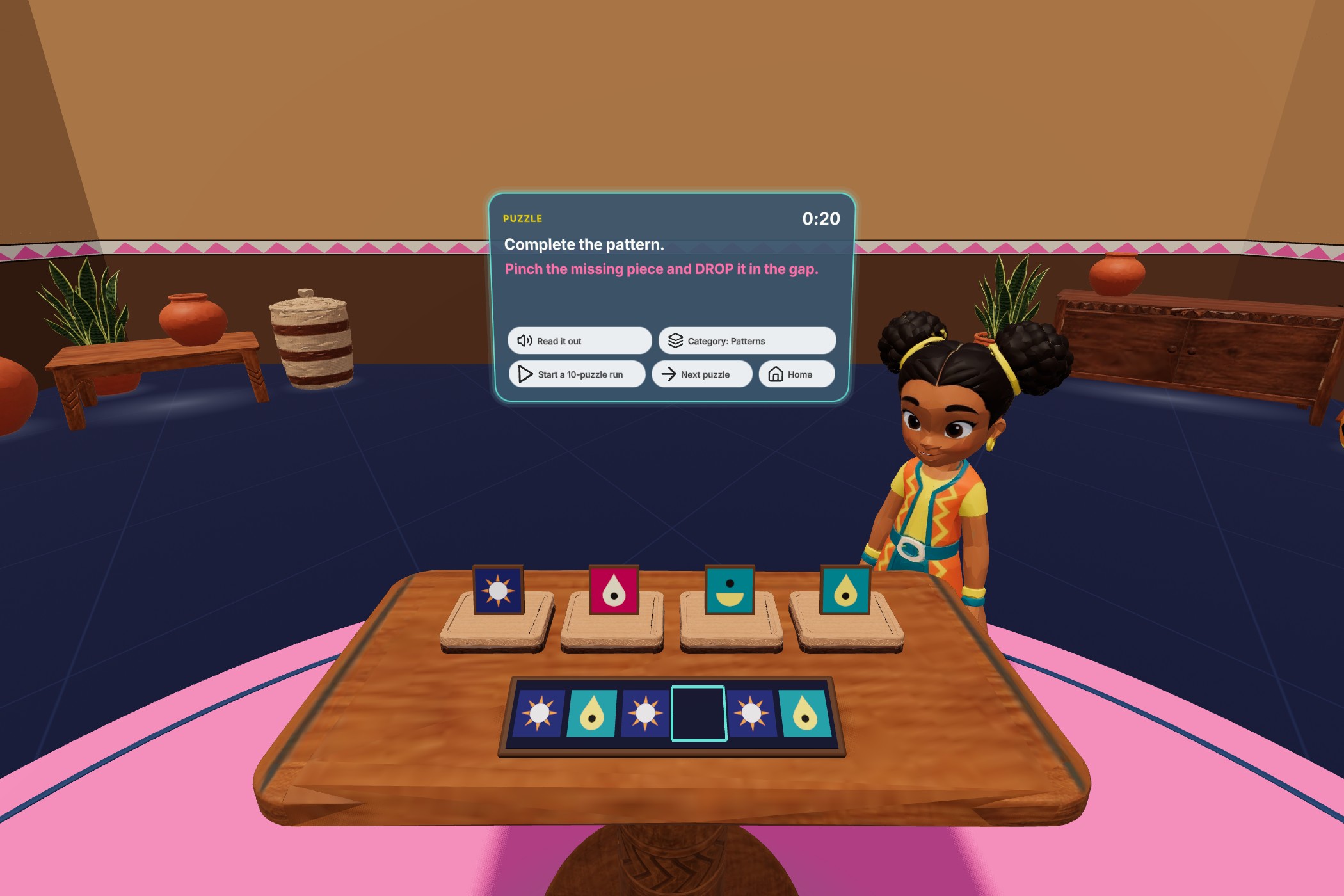
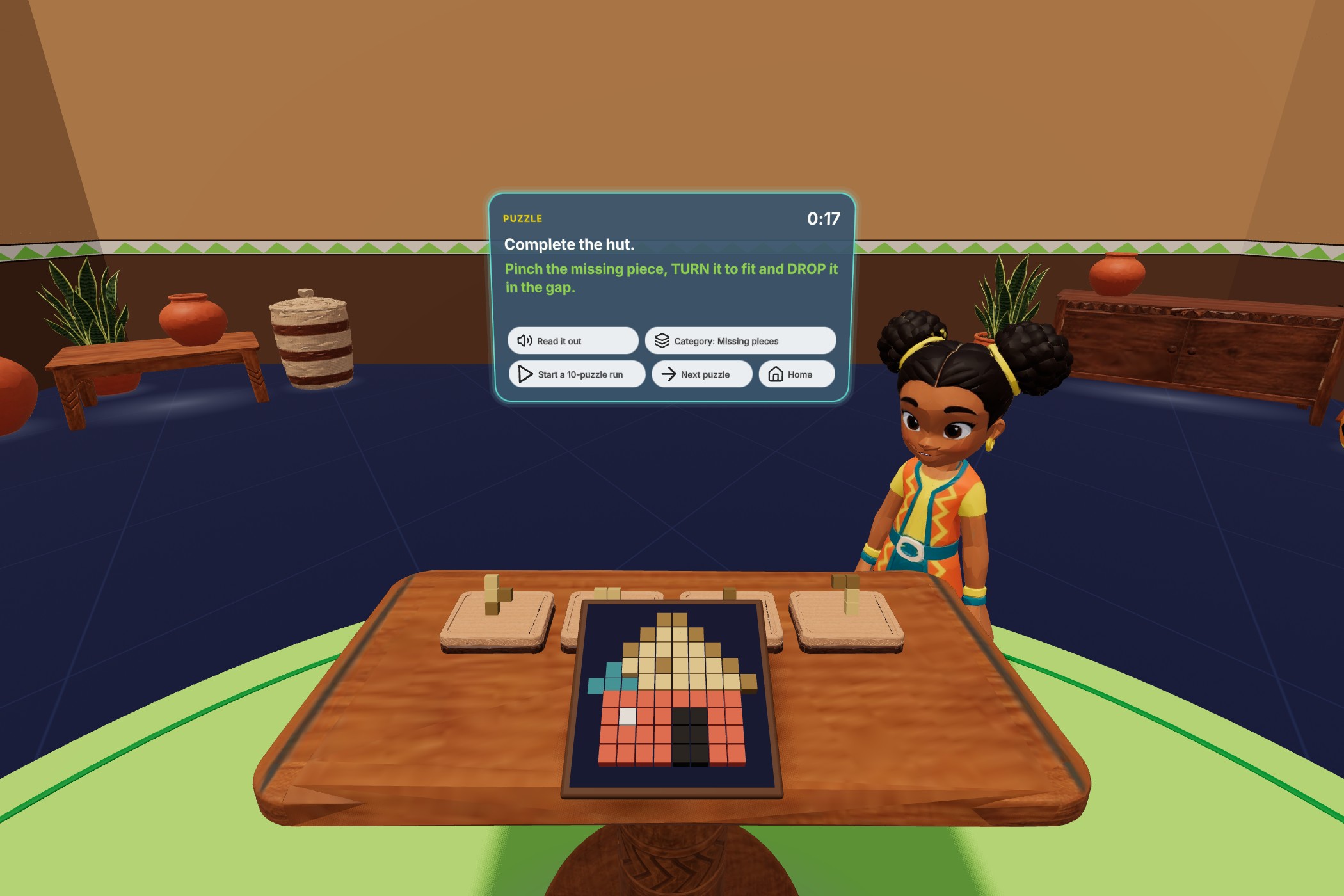
ThinkRush VR is a seated puzzle game you play with your bare hands. You sit at a table in a clay-walled studio while RUSH, a cheeky cartoon host, reads each puzzle aloud, names the choices, and reacts to every answer. A ten-puzzle run takes about four minutes.
Inspiration
I love games that test your mind: the ones that make you think fast and make smart decisions under pressure. That is where the name comes from: think, then rush. I wanted to bring that feeling into VR with nothing between you and the puzzle but your hands. A puzzle is read to you, you answer with your hands before the clock runs out, and RUSH answers back. The look is Kenyan and pan-African at heart, with fabric-style patterns generated in code, but no puzzle needs cultural knowledge to solve.
How it plays
Six worlds, sixty puzzles:
- Riddles, proverbs and mafumbo (short cryptic stories): point at one of three floating answer orbs and pinch.
- Object Studio: four 3D objects stand on the table; pick up the one the clue points to.
- Pattern Loom: complete a fabric strip. Every board is dealt fresh.
- Fix-it Workshop: find the piece missing from a block figure, then turn it until it fits the gap.
The twist: picture puzzles ask for a move with your answer. Drop it on the tray, flip it over, lift it above your head, or show it to RUSH. The right object with the wrong move still loses, so habit becomes the trap.
Each puzzle gets a short answer clock (10 to 20 seconds) once RUSH has read it, and the music speeds up as time runs out. Practise freely, play 10-puzzle runs for a score, or take the Daily Challenge: the same six puzzles for everyone each day, with streaks. The first time you enter VR, a five-step tour teaches by doing, not by reading. Turn a palm up to pause.
Built for hands, seats and glasses
Everything works without a controller and within arm's reach of a chair, and nothing ever moves your view. The screen, the answers, and RUSH are laid out for the narrower Meta VR Glasses view (checked in its emulator profile), and gaze plus pinch works on every button and orb.
How I built it
Immersive Web SDK (WebXR) and TypeScript, with Claude Code as my AI coding partner. It runs in the browser: no install, no account, no backend, no ads, no analytics. All music and sound effects are synthesized live with Web Audio (kalimba, shaker, hand drums). The room, the patterns, and the puzzle pieces are built in code. RUSH, the furniture, and the 3D objects are models I generated with Meshy (RUSH from my own character design), then optimized. The whole build is about 16 MB.
Challenges
Meta VR Glasses see far less than a Quest, so the screen, the answers, and RUSH were lowered and pulled in until everything fit both. RUSH's model came with a painted-on face, so her blinking eyelids and talking mouth are built in code and fitted to it.
What's next
A Swahili edition with English subtitles, more puzzles, moves for the answer orbs, lip-synced speech and eye contact for RUSH, and a Meta Horizon Store release.
Try it
Open https://oreghun.github.io/thinkrush-vr/ in the Meta Quest Browser, tap Enter VR, put the controllers down, and play with your hands.
Built With
- github
- immersive-web-sdk
- meshy
- three.js
- typescript
- vite
- web-audio
- webxr

