-
-
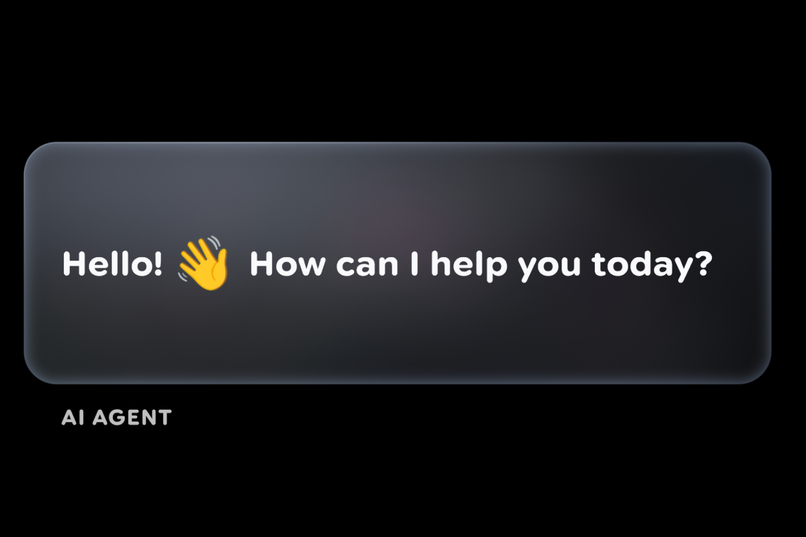
Connections don't fit in a chatbox: a flat prompt waves hello while hiding an entire 3D knowledge world behind frosted glass.
-
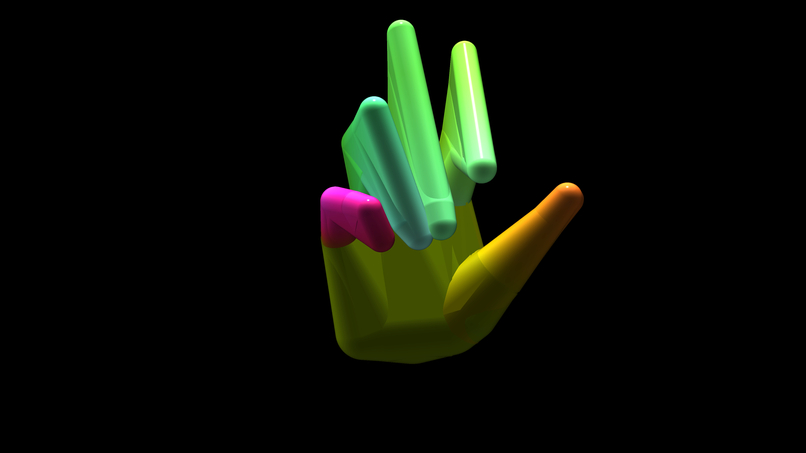
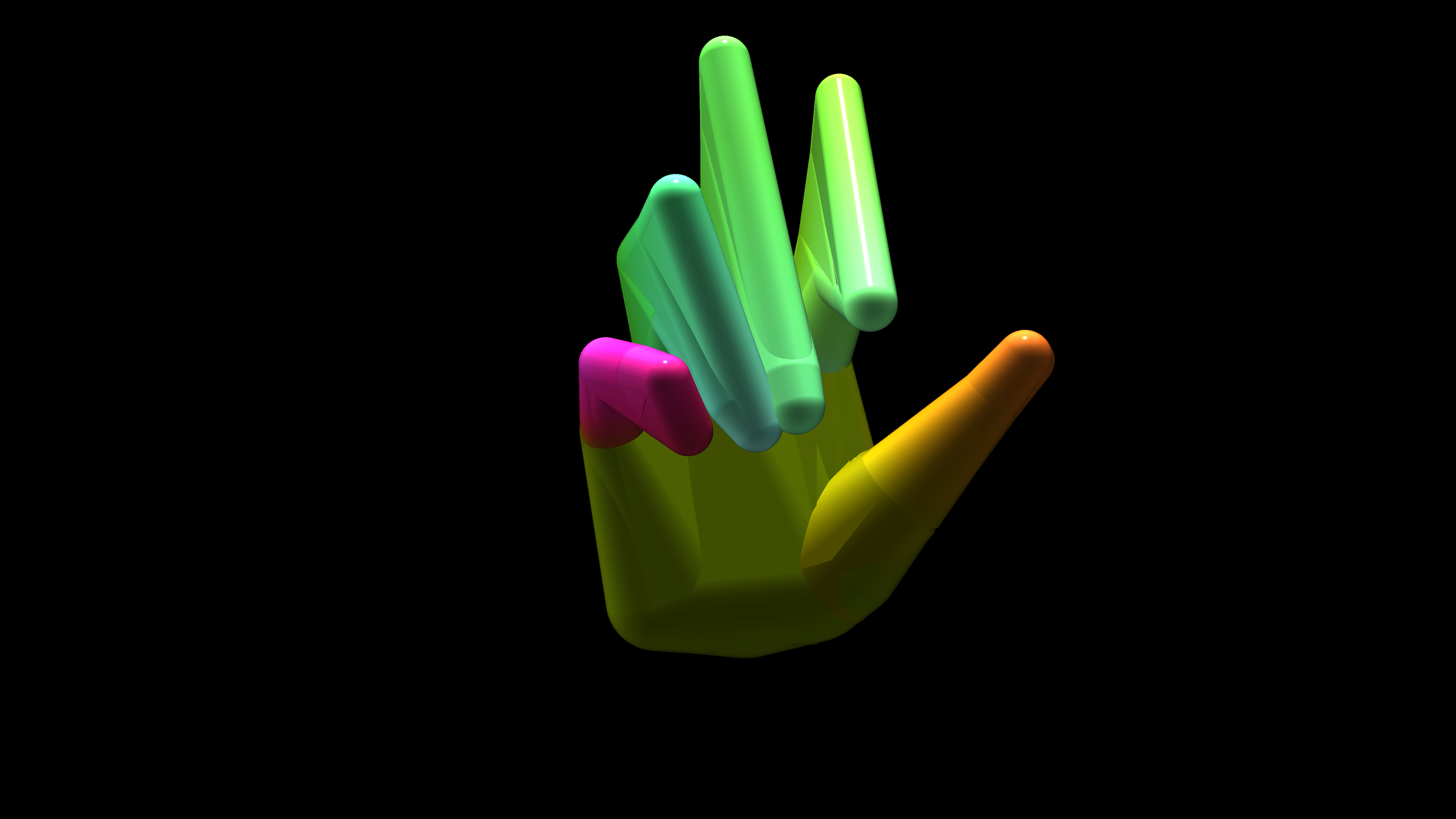
Thinking Hand Extruded SDF
-
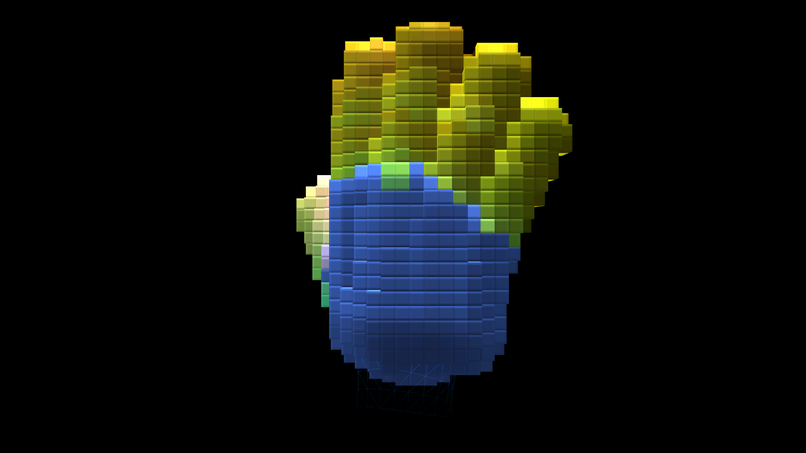
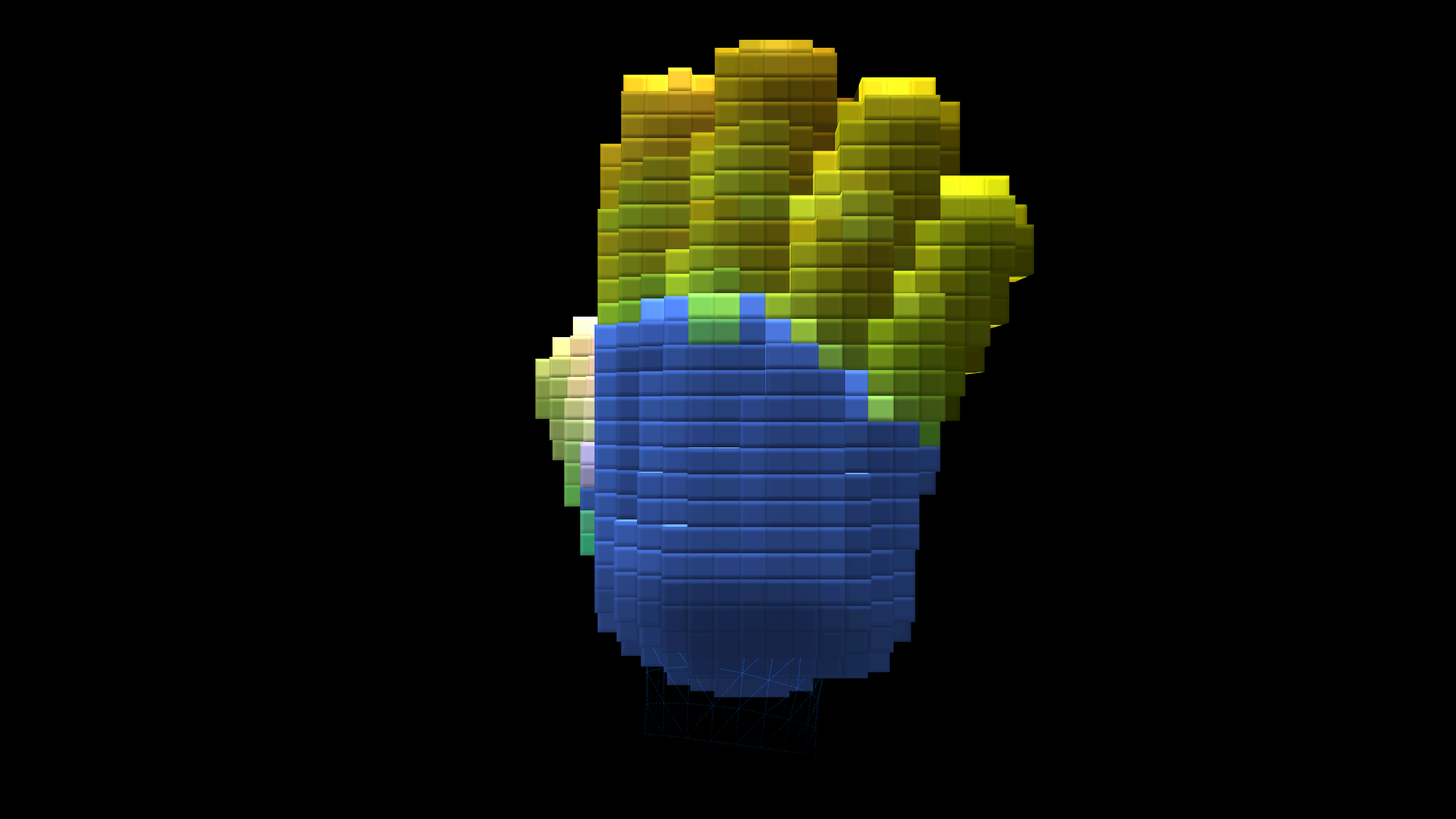
Thinking Hand Voxels
-
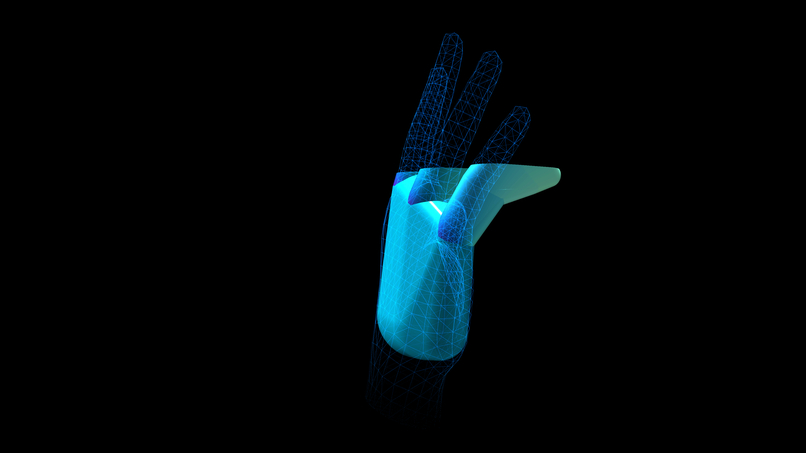
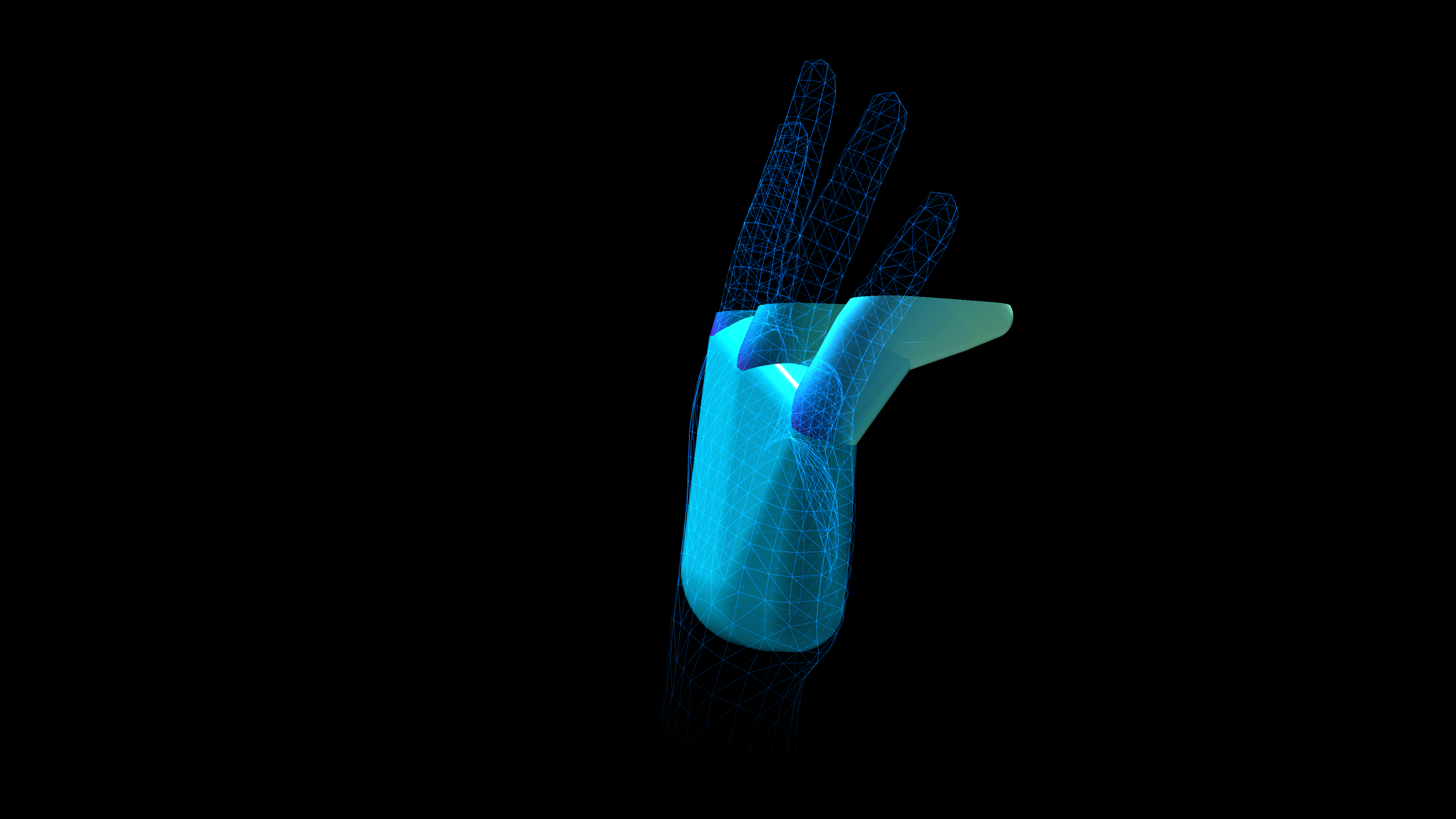
Thinking Hand SDF
-
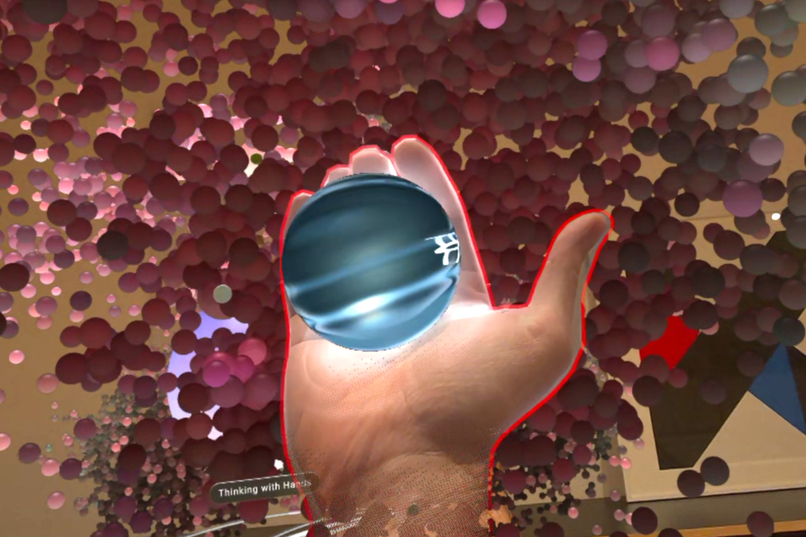
WebXR Inspect Neuron
-
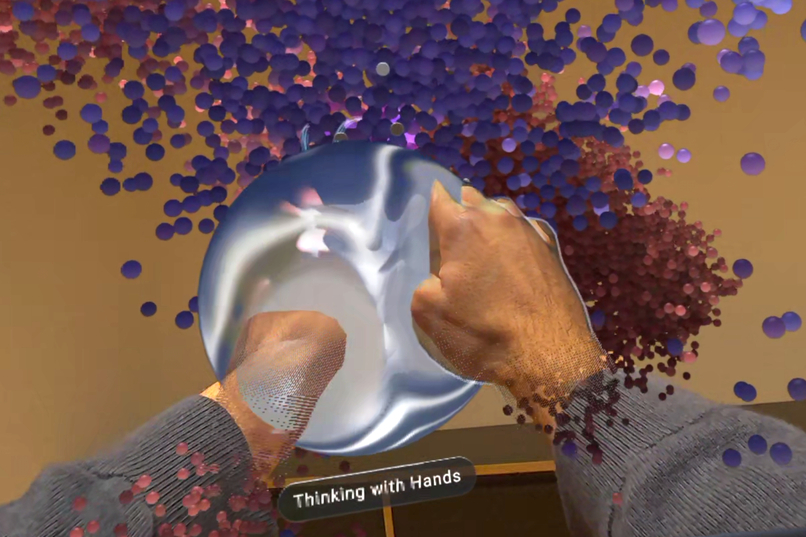
WebXR Open Neural Core
-
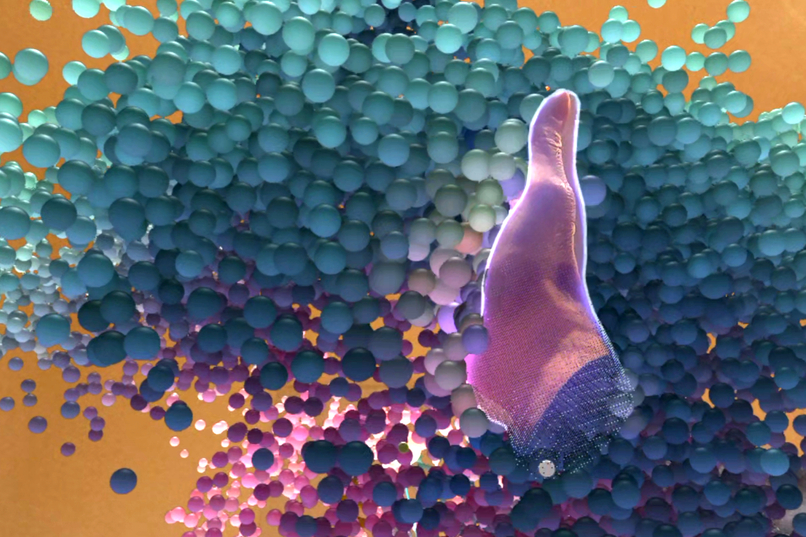
WebXR Fluid Simulation
Inspiration
Humans evolved for three million years to think and communicate with their hands in physical space, while AI organizes knowledge in vector space. Yet since the ChatGPT moment, chatboxes and voice still force both minds through a single stream of words—hiding the whole picture and how everything connects until you guess a question, leaving our hands out of the loop.
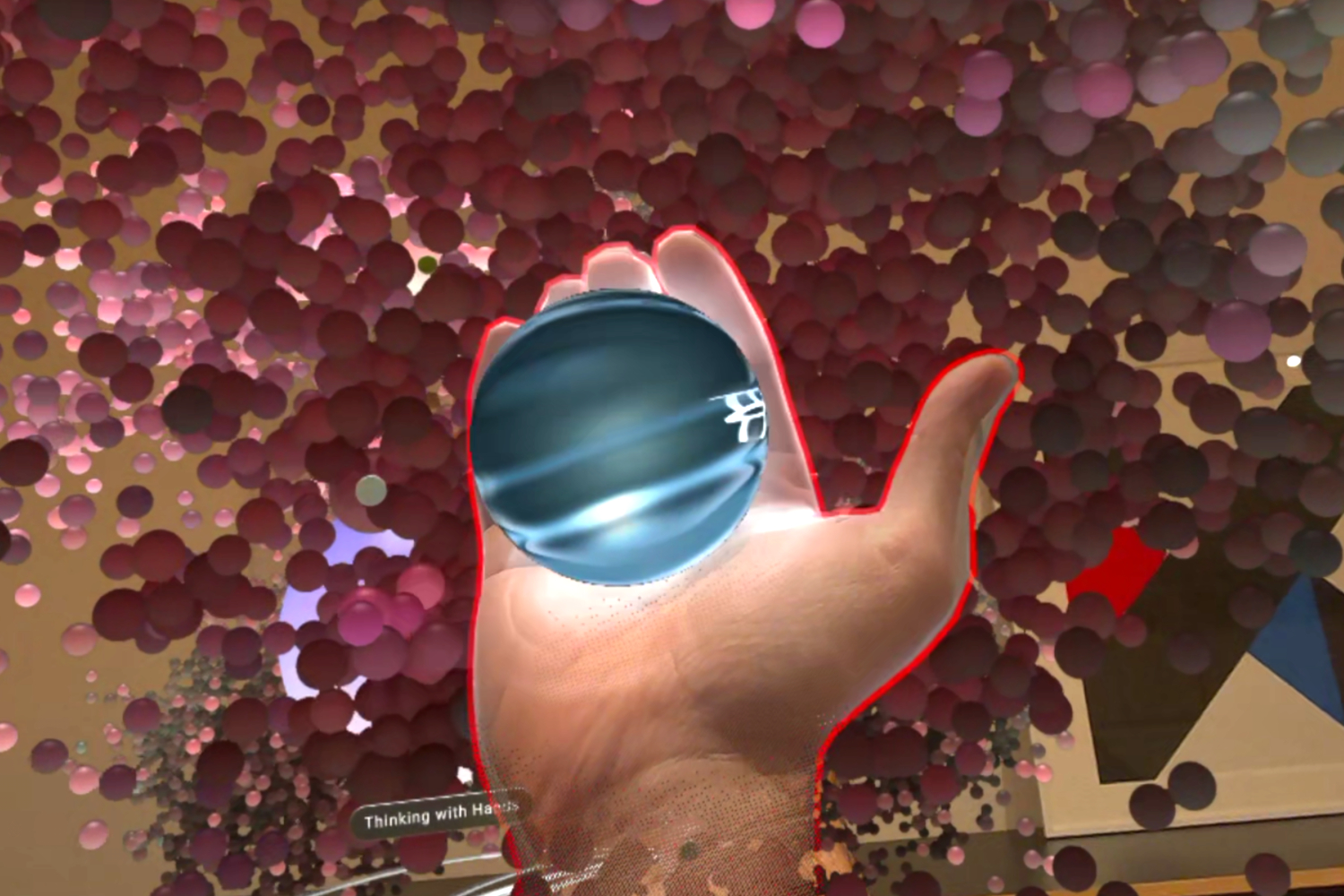
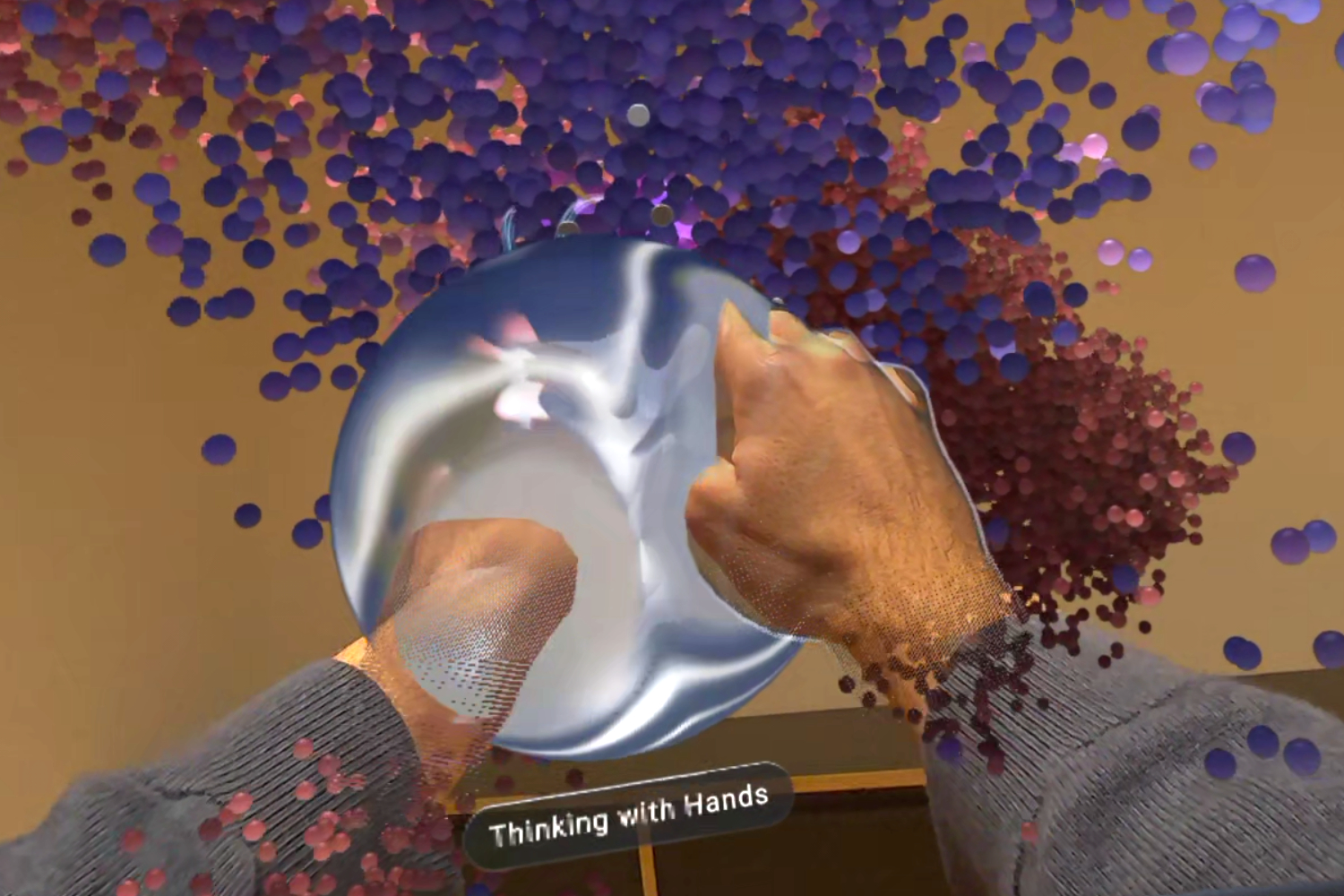
Connections don't fit in a chatbox. Thinking with Hands embodies a live knowledge base on Meta Horizon OS as a 3D Neural Organism you can touch, hold, and converse with in your room.
What it does
Connected to a headless Drupal CMS, thousands of articles, media, and Q&A pairs (3,072-D UMAP embeddings in a <100 KB binary layout) form living Neural Clusters across 16,384 luminous particles in passthrough. Designed as a lean-back, seated experience within a 2-foot reach, a 12-step voice-guided Coaching Dock teaches a controller-free, one-handed spatial grammar:
- Sign Language (
Move · Rotate · Stop): Pump one flat hand to glide the organism within reach (with automatic eye-level tracking), circle one finger to spin clusters, or raise an open palm to brake—confirmed by color-coded hand outlines. - Conductive Touch &
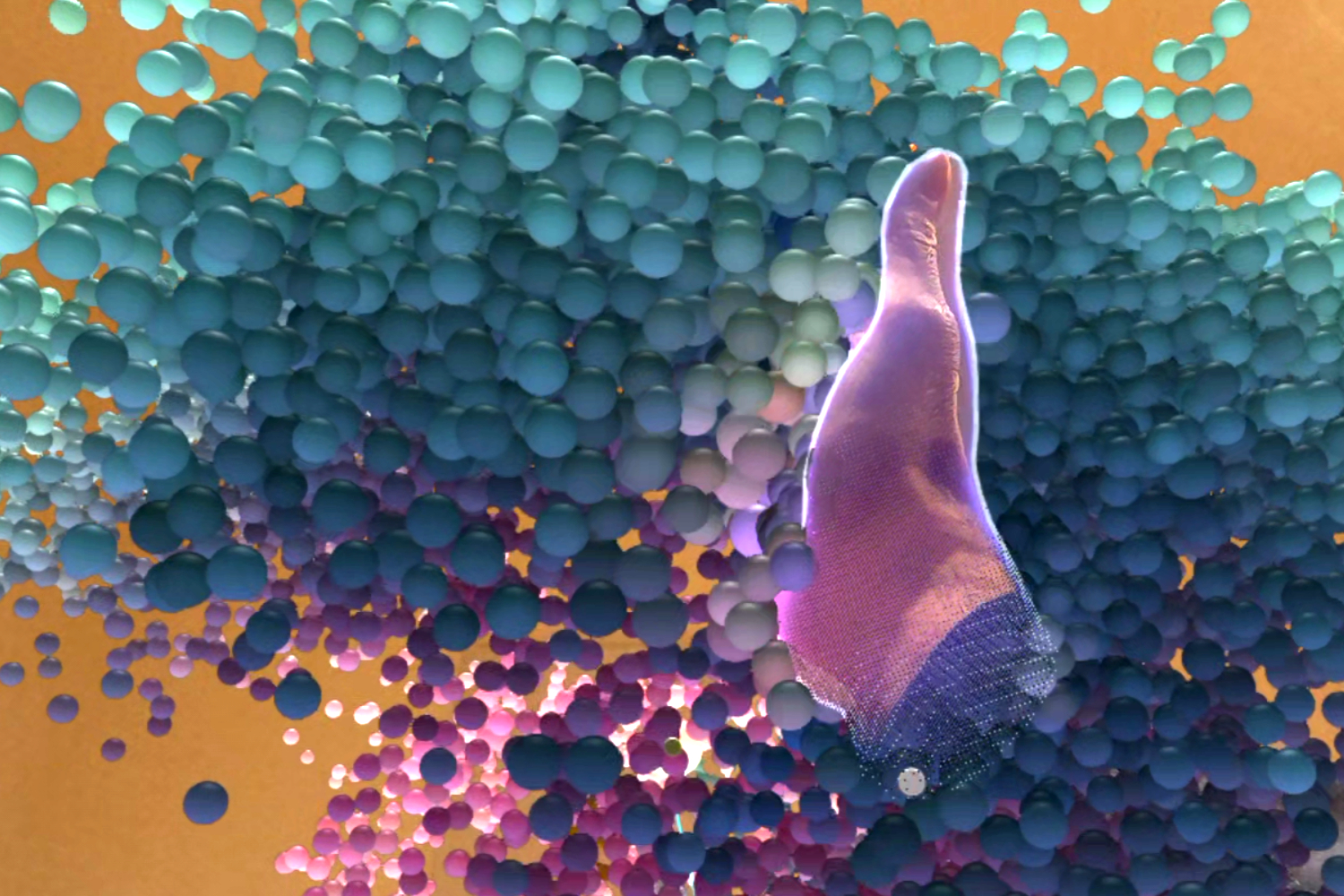
Phantom Touch: Reach bare-handed into any cluster and neurons part like fluid around all 25 finger joints while refractive ripples and spatial chimes create tactile tension in empty air—at zero LLM token cost. - Cradle, Select & Open
Core Space: Turn an open palm upward to cradle the 4 nearest neurons with live interior text; curl your fingers to draw one into The Neural Core (lighting Fiber Connections and Spatial Labels); submerge your hand and squeeze into a fist to open Core Space (0.50 mplane) uniting verified Context, Dialogue history, Connect, and a spatial Cinema Player with interactive creator commentary. - Natural Voice & Agentic Web: Speak or interrupt mid-sentence anytime, while 28 client-side W3C WebMCP tools (
document.modelContext.registerTool) let AI agents co-steer the scene without screenshot scraping.
How I built it
Built solo from scratch with zero game engine and zero install (~800 KB Brotli PWA in Meta Horizon Browser at 72–90 fps on Meta Quest 3):
- WebGL2/WebXR Engine: Custom
OVR_multiview2stereo renderer, deferred supersampling, fixed foveation, volumetric raymarching, Spherical Harmonics room lighting, andframe.detectedMeshesroom-mesh obstacles inside a64³GPU Navier–Stokes fluid and voxel grid. - The Thinking Hand: Analytical 25-joint SDF hand volume (
sminpalm webbing + phalanx capsules) keeping Meta's system palm-pinch untouched, with FoV-aware UI verified for Meta VR Glasses (53°×38°p90 FoV). - Spatial Audio & Hybrid RAG: Procedural
AudioWorkletsynthesis andHRTFspatial audio with Neo4j/Solr Genkit RAG and streamed 24 kHz TTS.
New in the competition window (Adapted)
Across 388+ core commits since September 24, 2026, I built the WebXR hand-SDF & fluid engine, room-mesh obstacles, one-handed gesture grammar, 12-step onboarding, Core Space cinema UI, score_organism CMS module, and 28 WebMCP tools.
What's next
Multi-tenant CMS onboarding, showroom kiosk mode, and Spring 2027 Meta VR Glasses support. Target launch: Q1 2027.
Built With
- apache-solr
- audioworklet
- docker
- drupal
- genkit
- glsl
- hand-tracking
- html5
- javascript
- meta-horizon-os
- meta-quest
- mixed-reality
- neo4j
- node.js
- passthrough
- pwa
- python
- traefik
- umap
- web-audio-api
- webgl2
- webmcp
- websockets
- webxr


