-
-
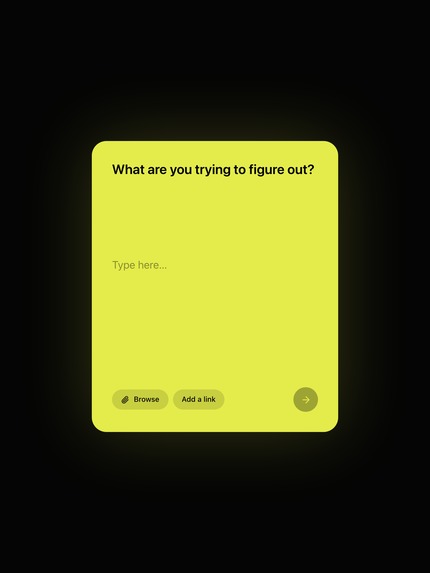
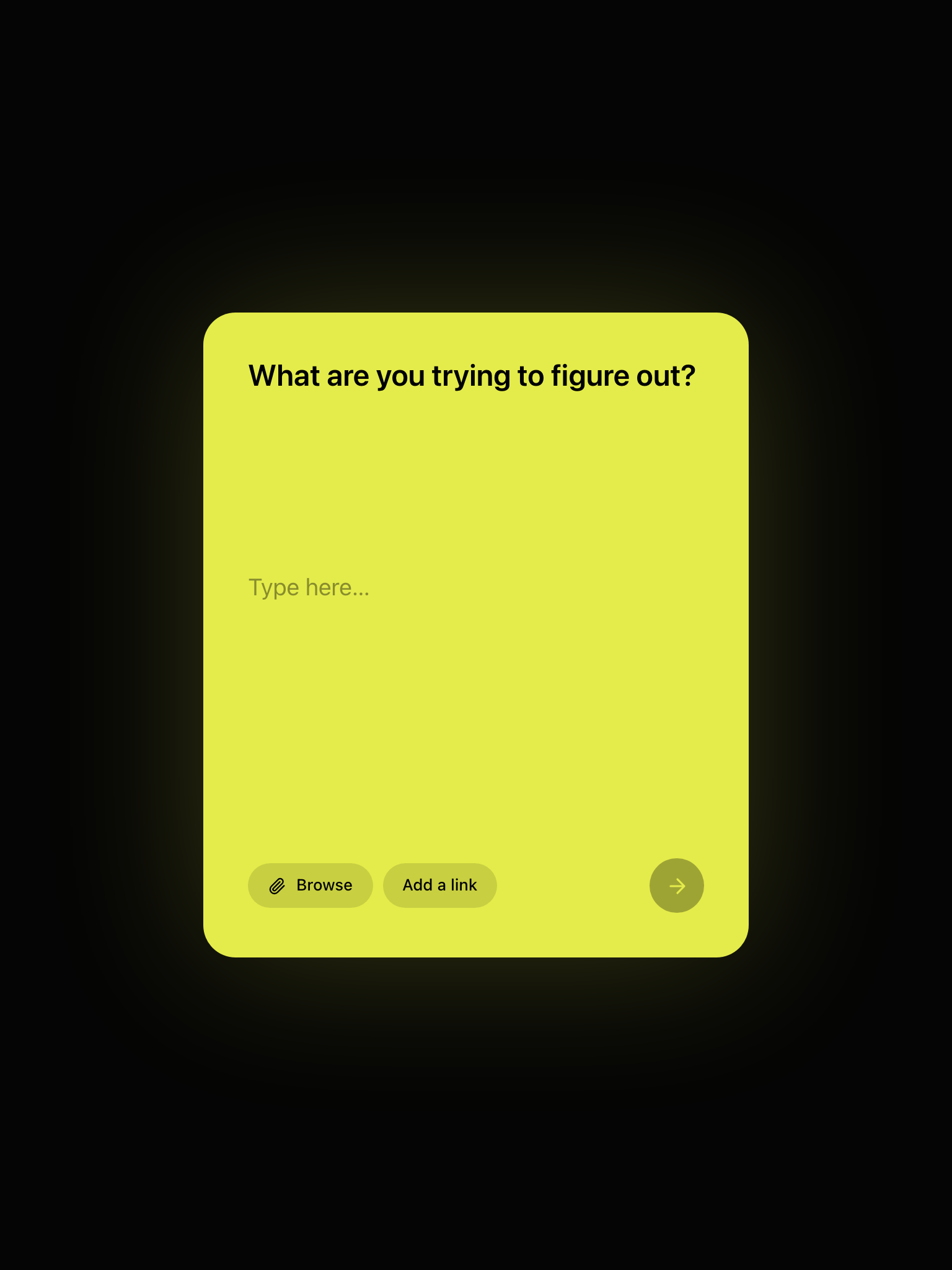
The opening area to set your goal. You can also attach files with information.
-
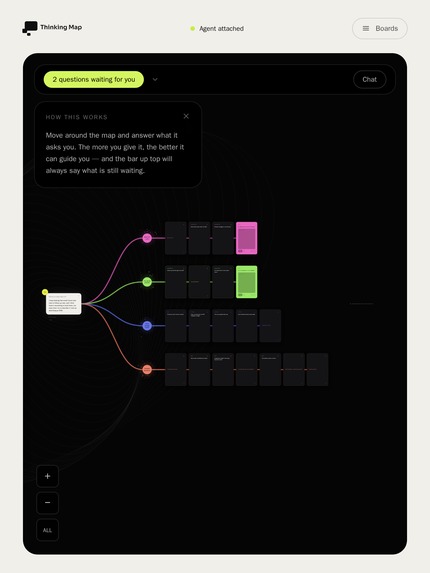
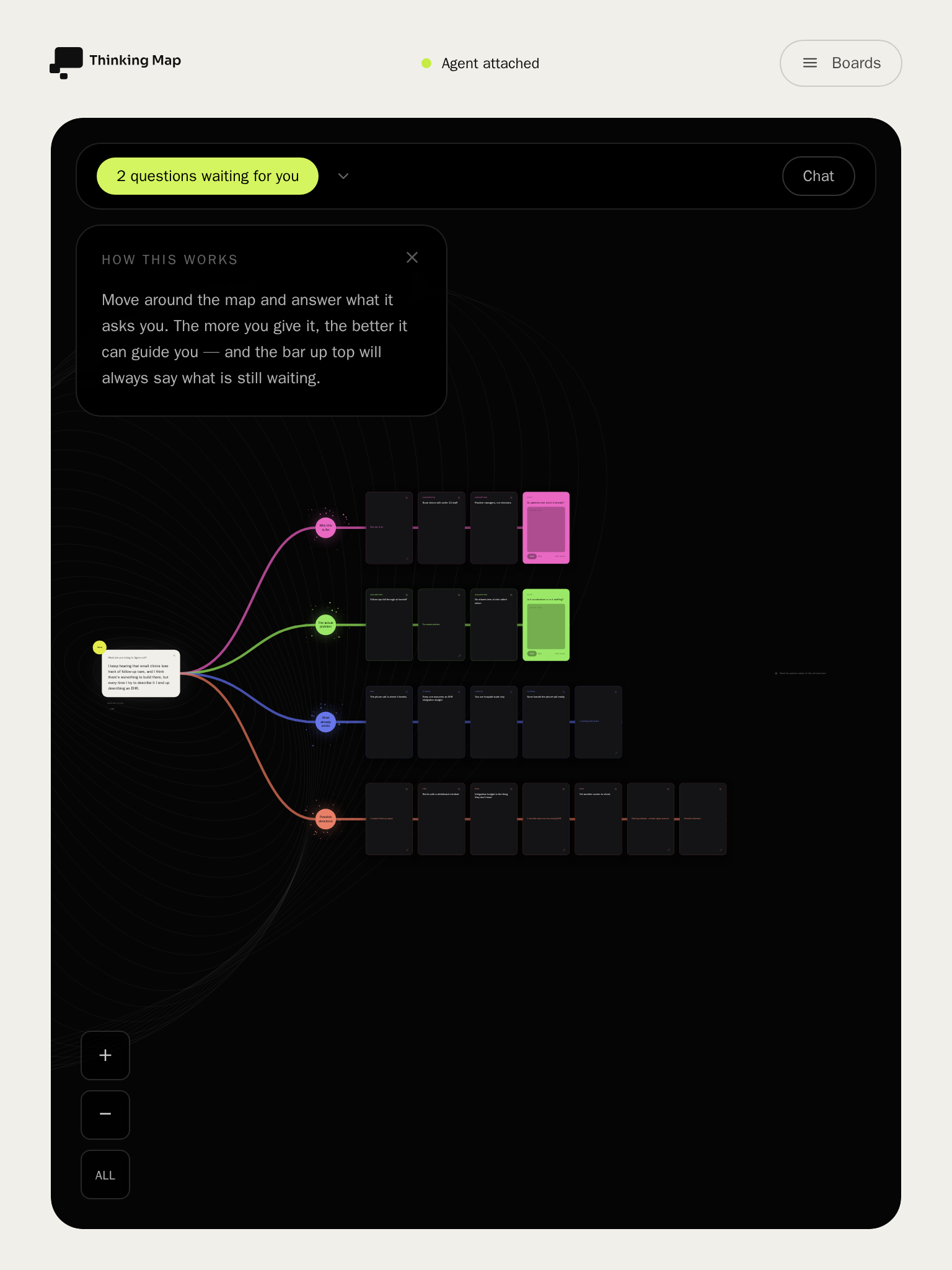
Your idea sits on the left. The cards hanging off it are what it wants to know.
-
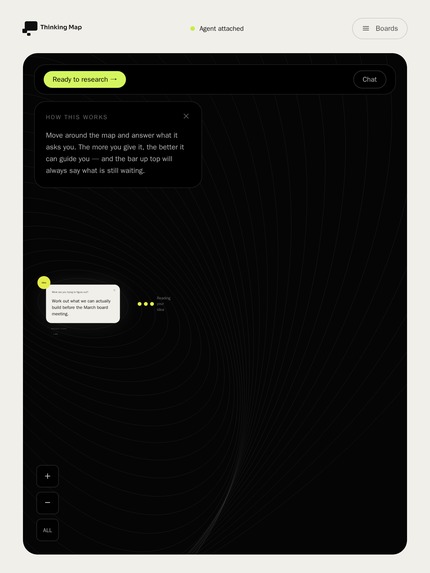
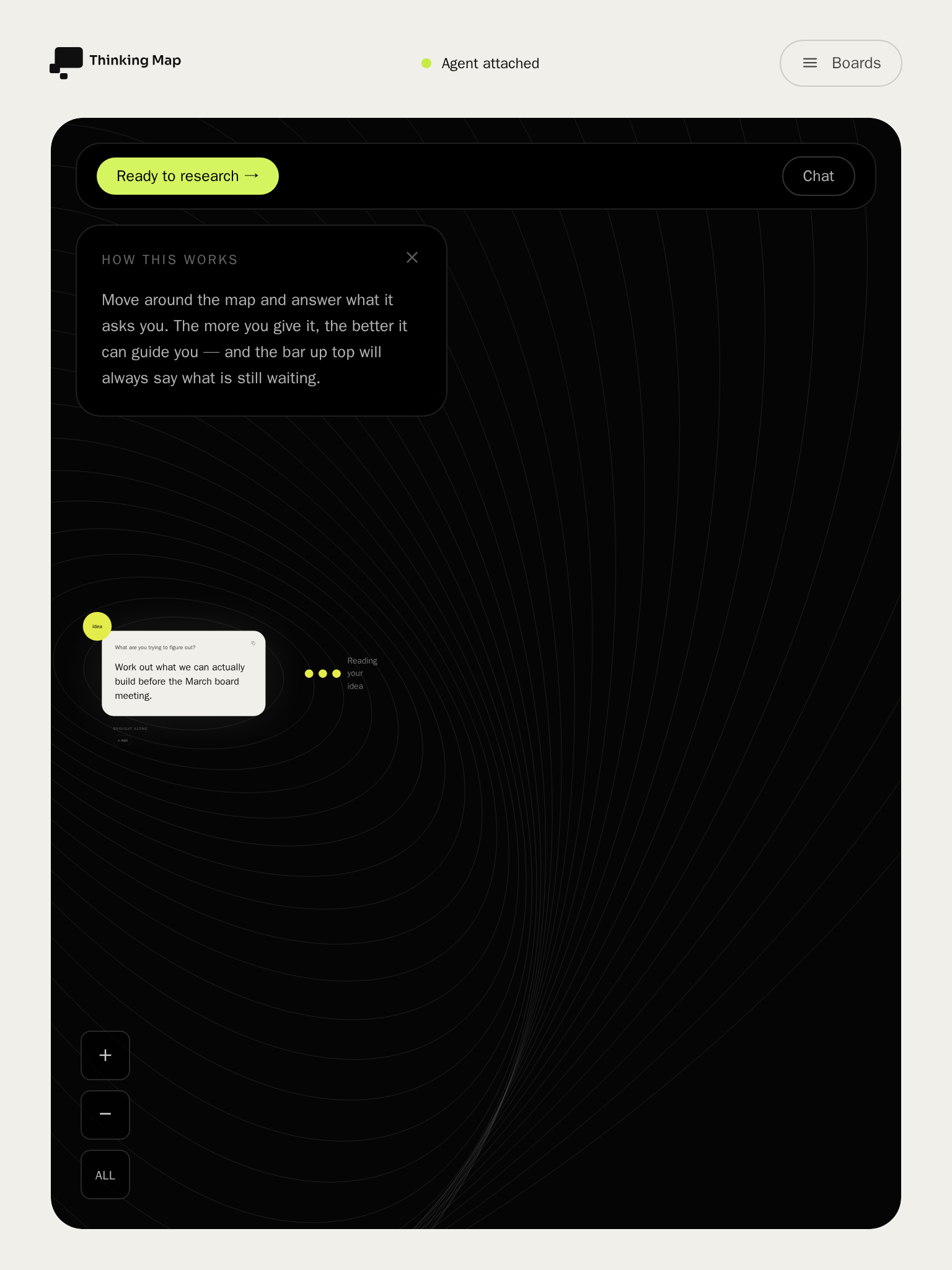
A twenty-page spec is stored whole as the map's source. The agent reads uses the document to begin deconstructing the concept.
-
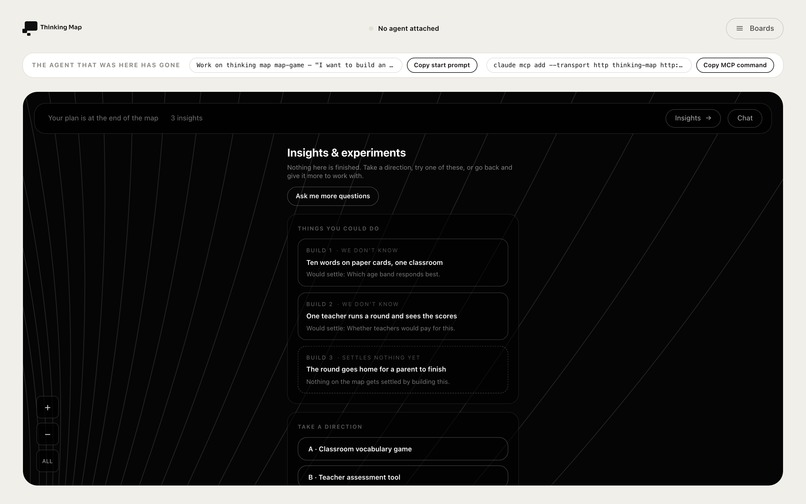
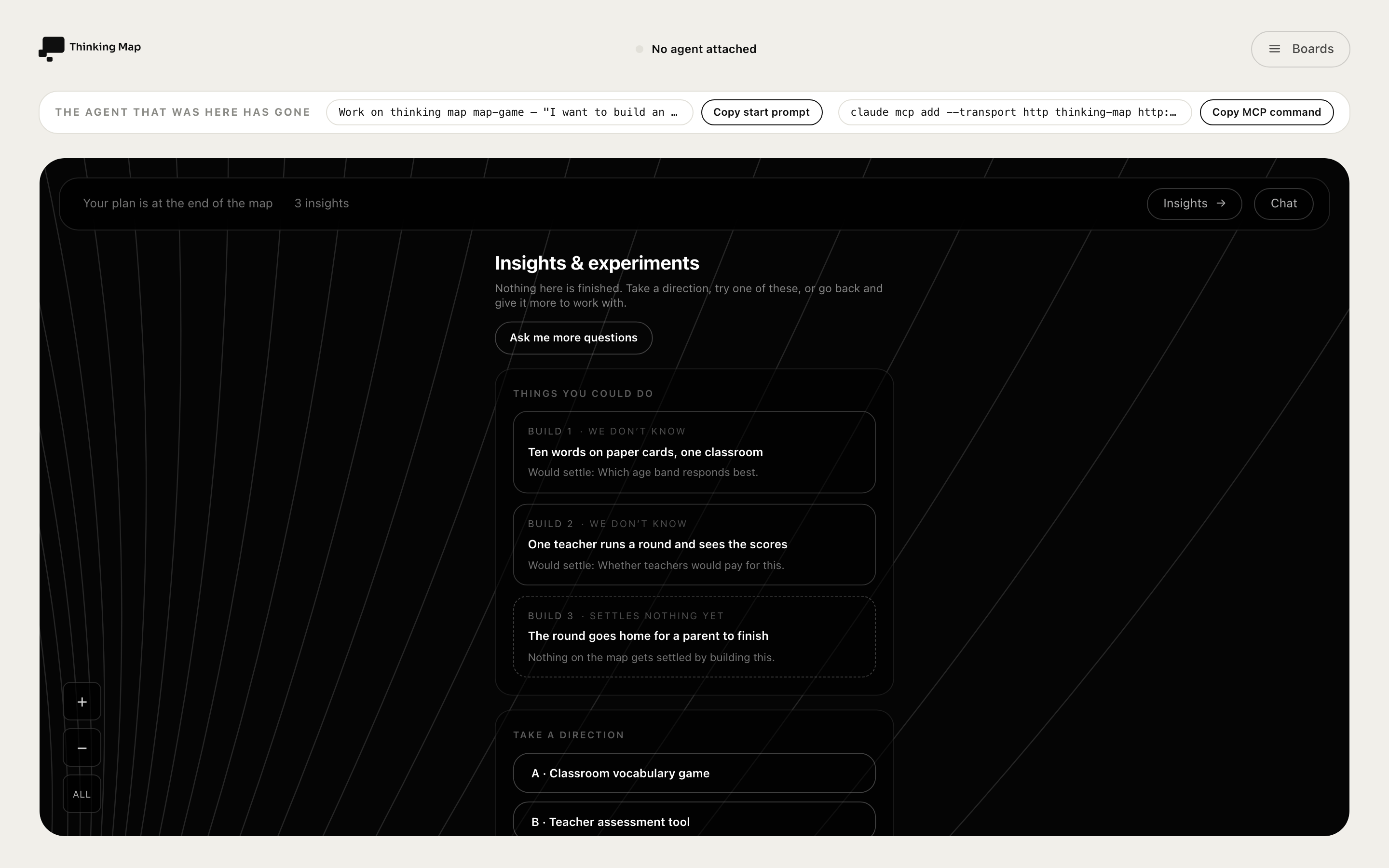
As information is gathered insights and possible experiments are drafted.
Inspiration
We were inspired to build Thinking Map after seeing people struggle to communicate their ideas about what they wanted to build with CodeYam. CodeYam makes it easy to vibe code complex software applications but you still need to think deeply about what that software should do and how it should behave in various situations. Thinking Map helps with this but is not limited to software challenges. It is a general thinking tool.
What it does
Thinking Map is designed to help you think. Whether you want to plan a party, go on a trip, or build a software application, Thinking Map creates a robust user-experience for you and an AI agent to think about complex situations and challenges from multiple different perspectives while coming up with insights and devising experiments to move you forward. The visual experience and interactions complement the available agent chat, making the complexity of the project more understandable and easier to iterate on as you learn more and engage in experiments.
How we built it
Thinking Map was built using CodeYam to ensure a highly maintainable application. CodeYam let us vibe code it using both Codex and Claude Code. We were able to rapidly build and iterate on it over the course of just three days.
Challenges we ran into
Our biggest challenge was creating a useful user-experience while sharing screen real estate with the agent in ChatGPT Desktop. We are still working to improve this.
Accomplishments that we're proud of
We were able to build and iterate across a number of possible designs quickly over the course of just three days to create our submission.
What we learned
We were not aware of the WebMCP format but have been looking for a high quality way to supplement agent chat experiences with robust browser-based user experiences. We plan on leveraging WebMCP more going forward.
What's next for Thinking Map
We want to continue to improve the user-experience and the different ways Thinking Map can help you deconstruct your challenge and look at it from different perspectives. We also want to make it easier to engage in the experiments it suggests.
Built With
- claude
- codex
- codeyam
- supabase
- typescript
- vercel


Log in or sign up for Devpost to join the conversation.