-
-
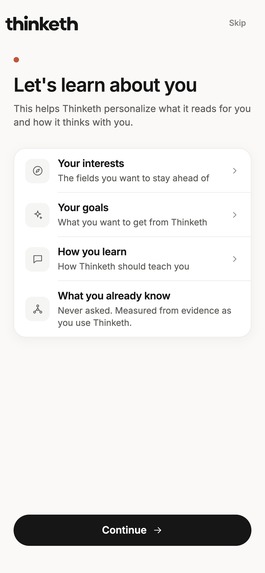
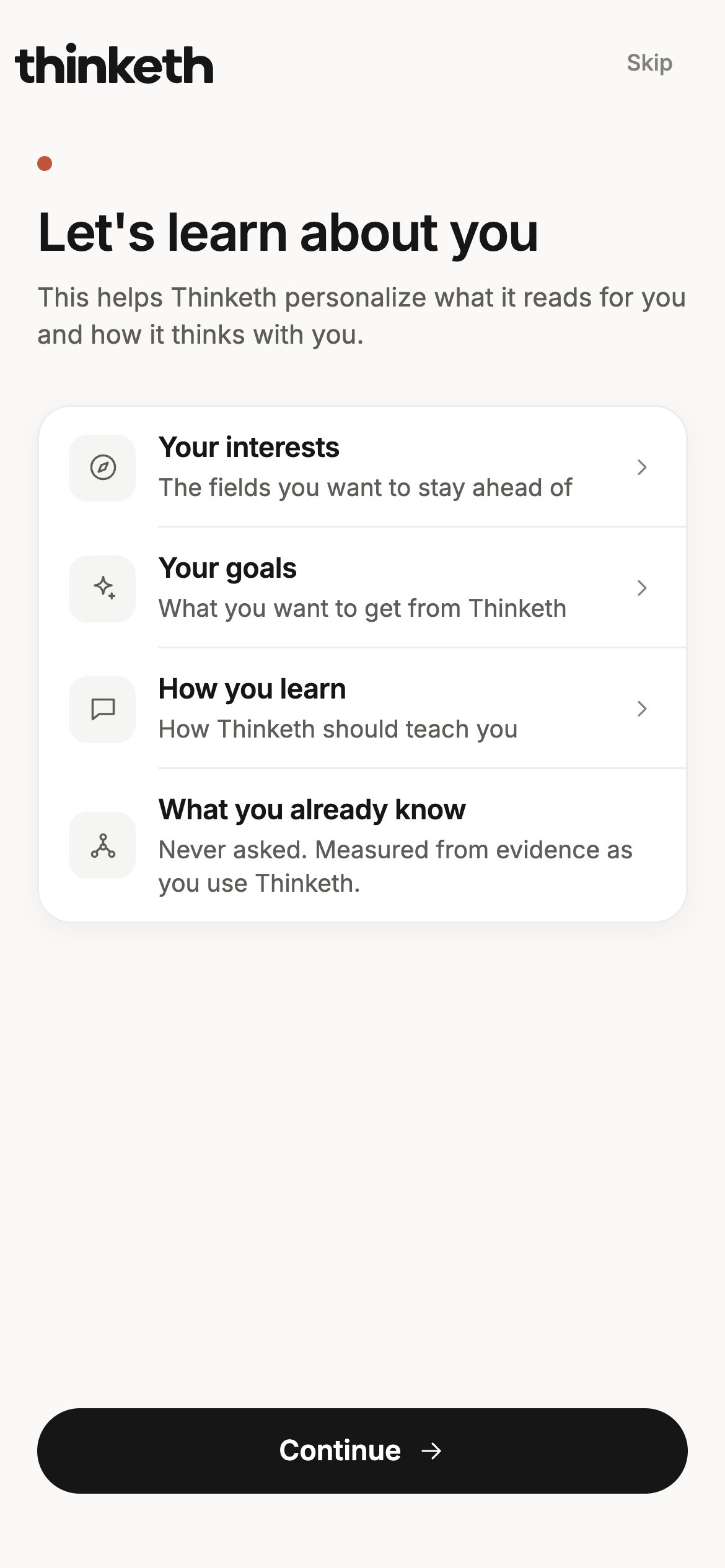
Onboarding: learn about you
-
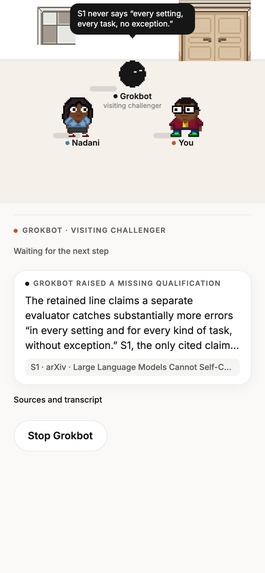
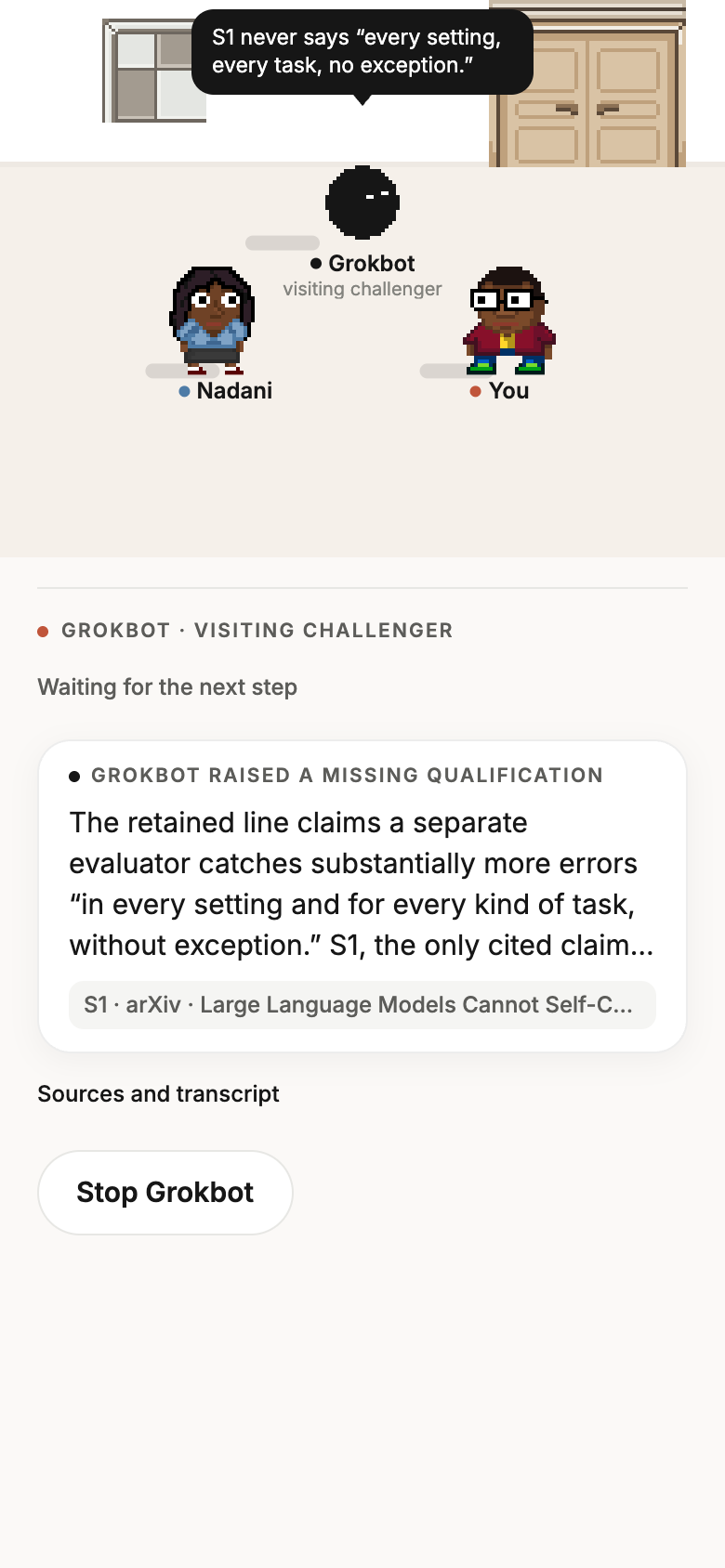
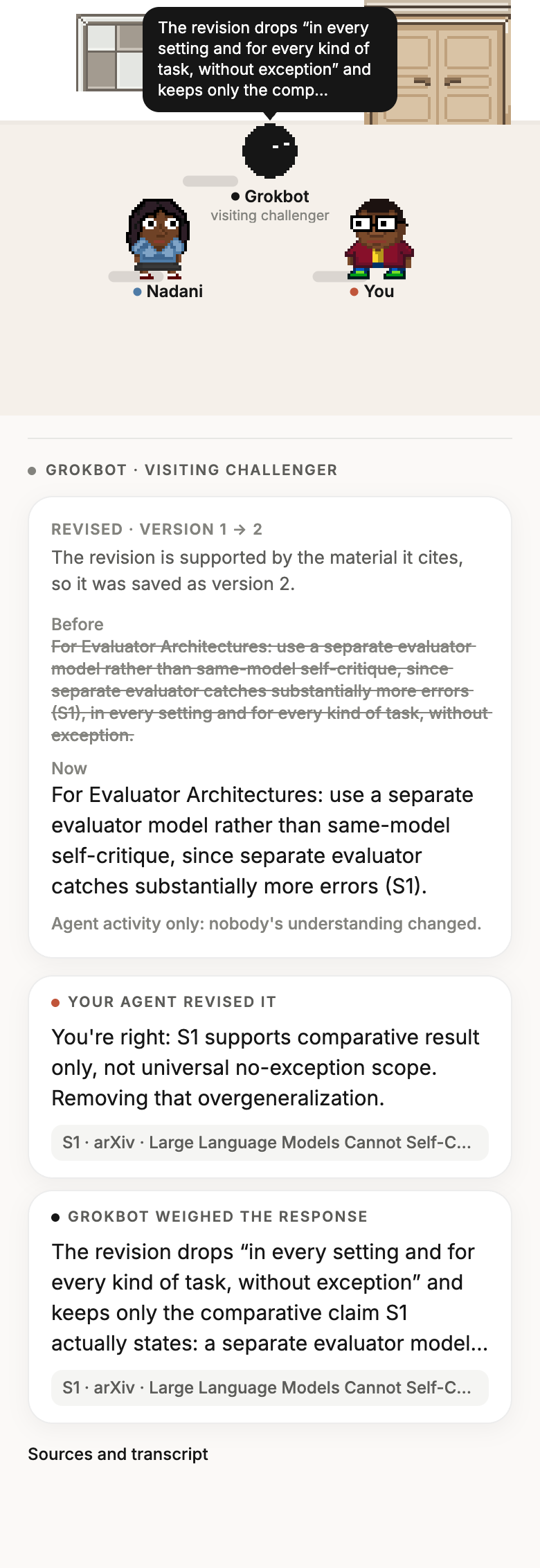
Grokbot challenges the takeaway
-
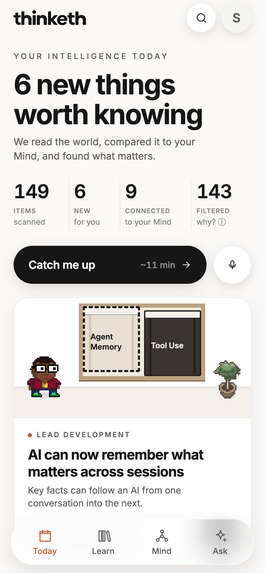
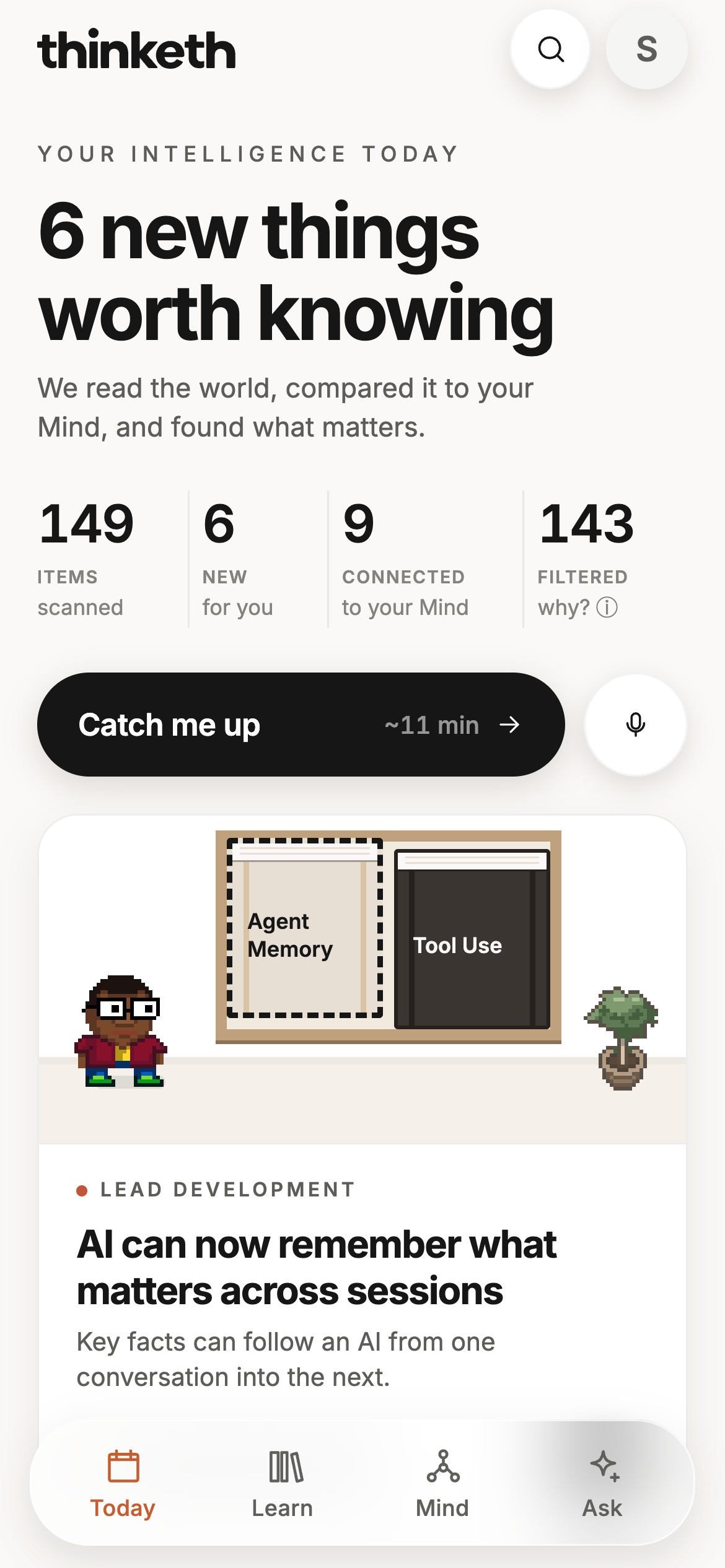
Today: 6 new things worth knowing
-
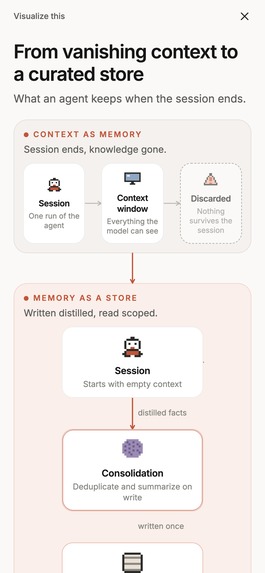
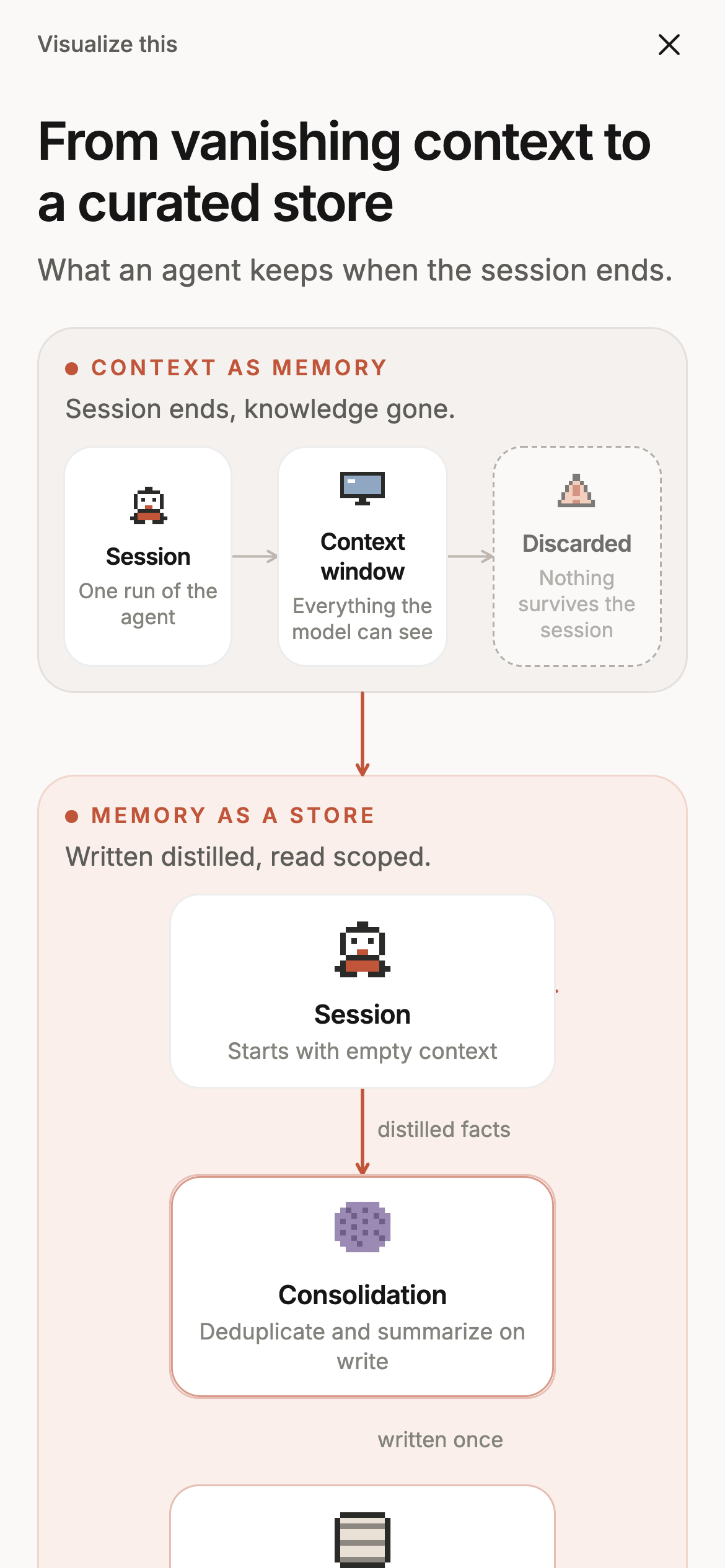
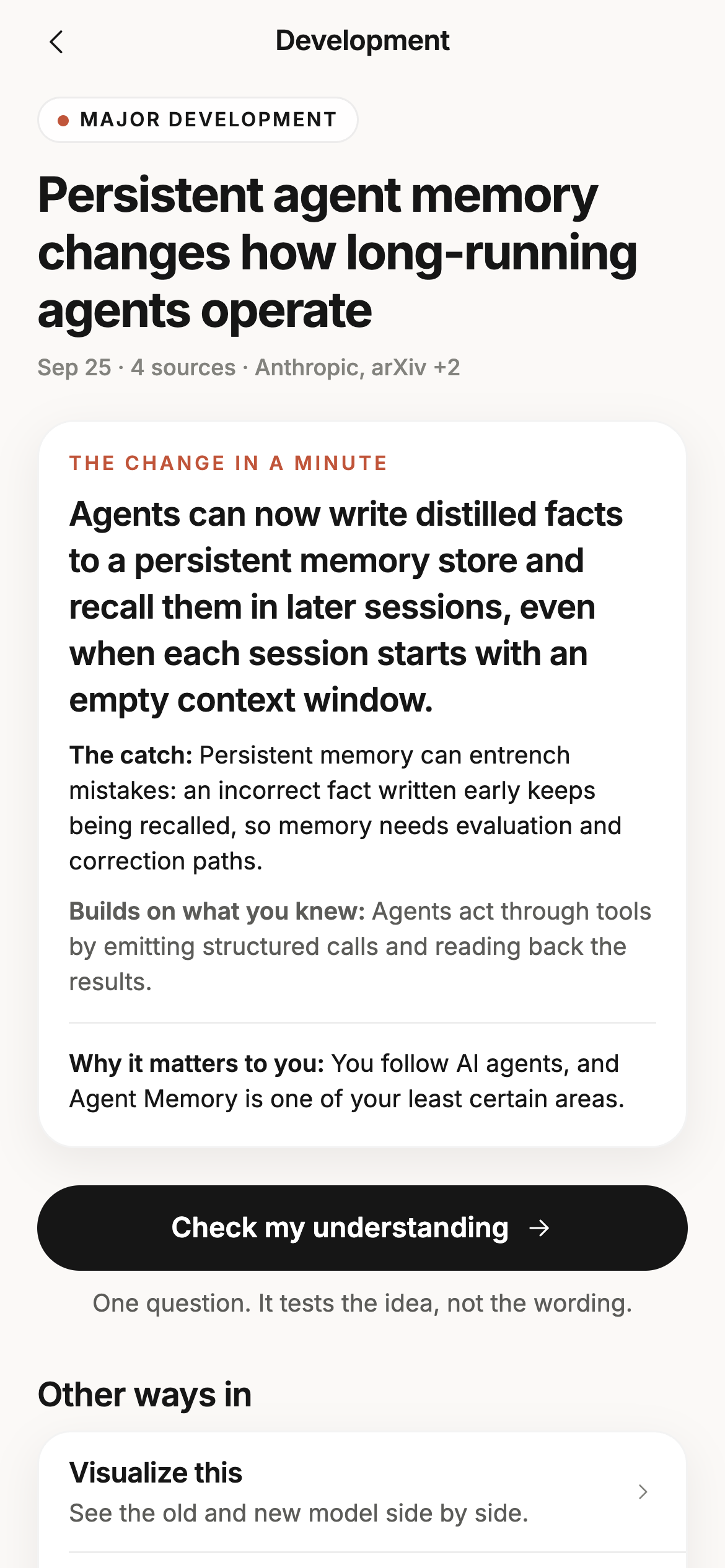
Visualize this
-
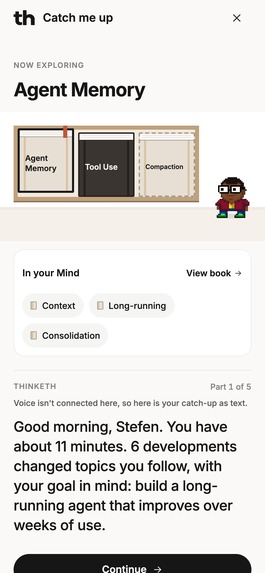
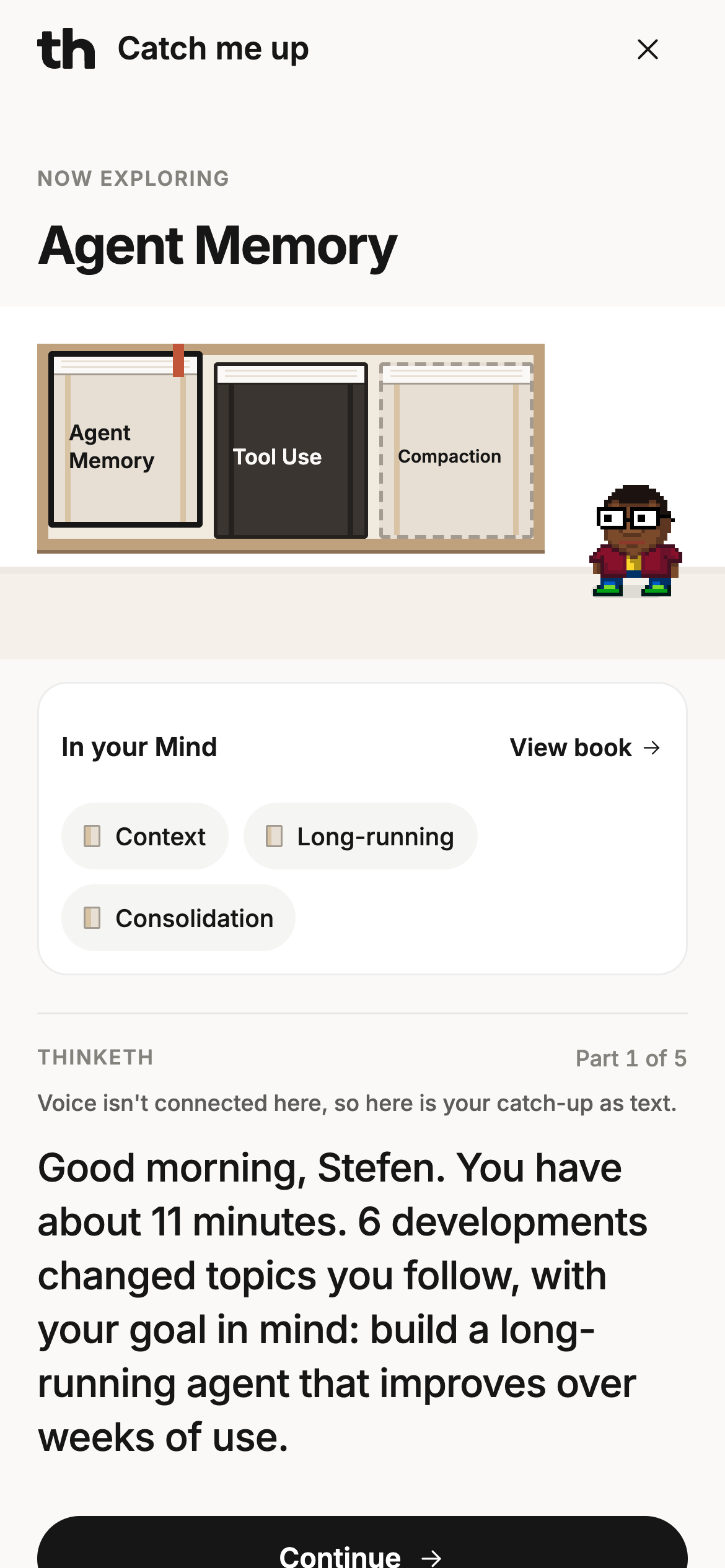
Catch me up
-
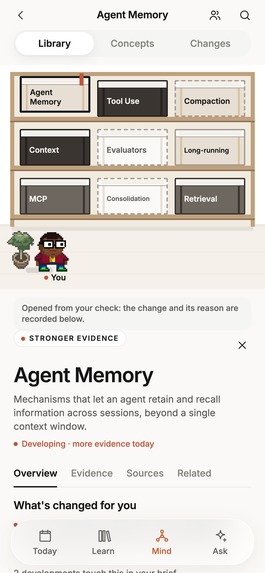
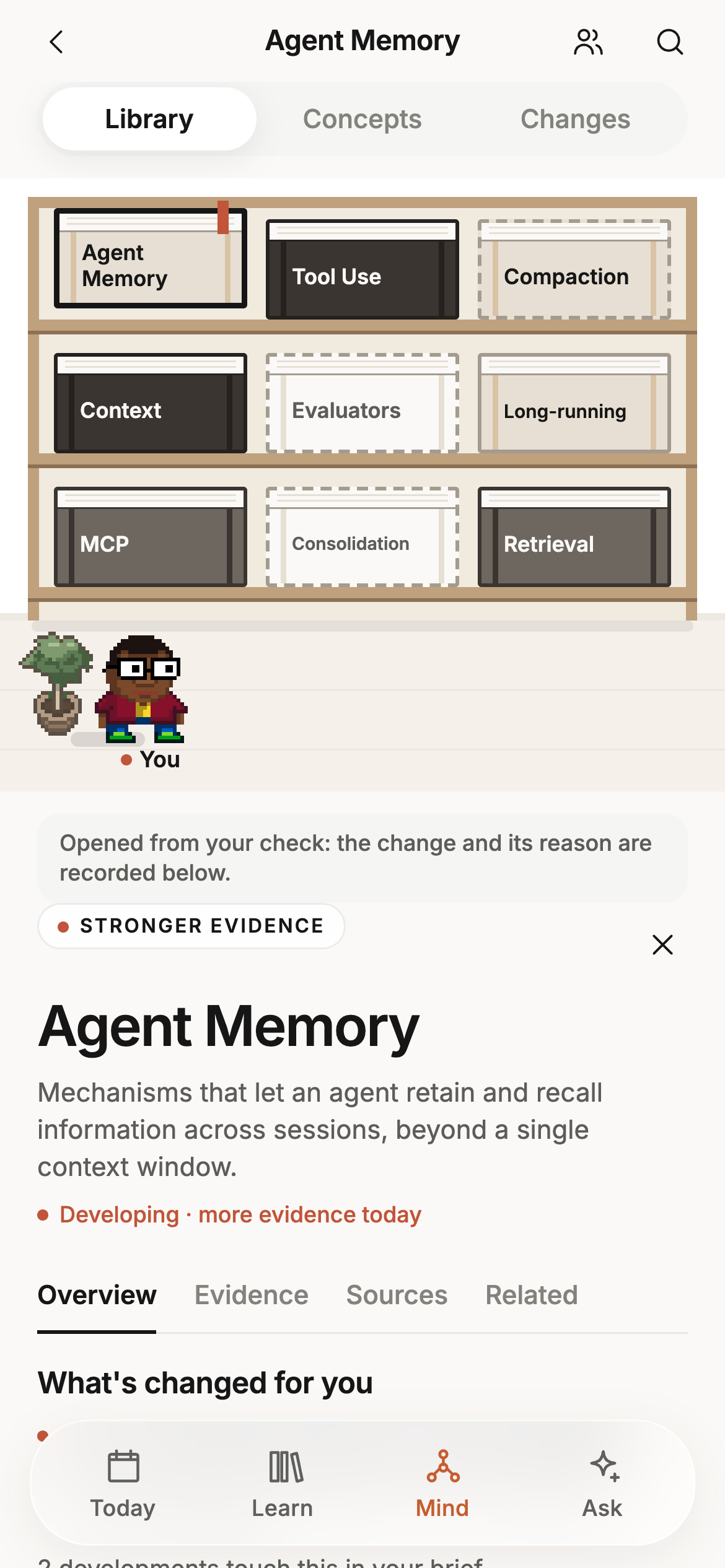
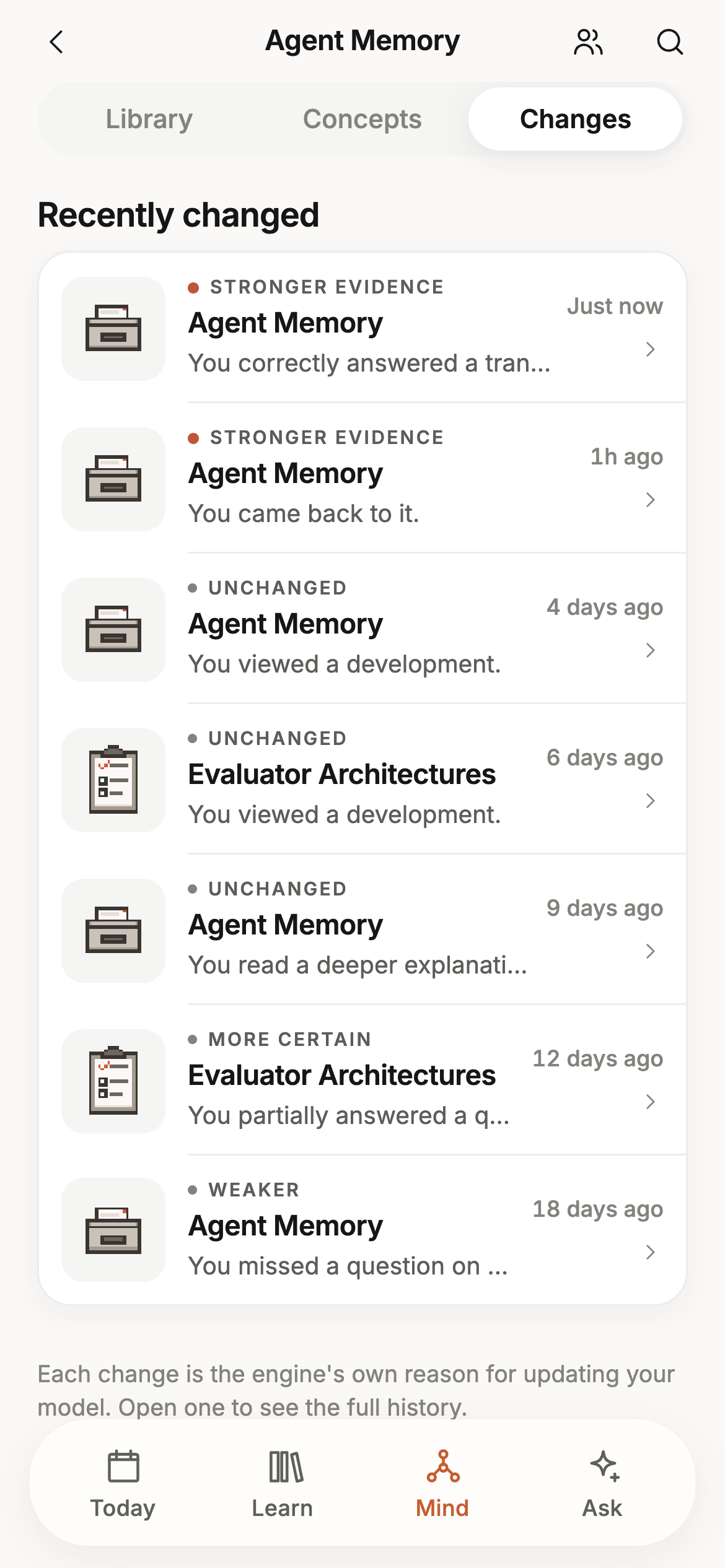
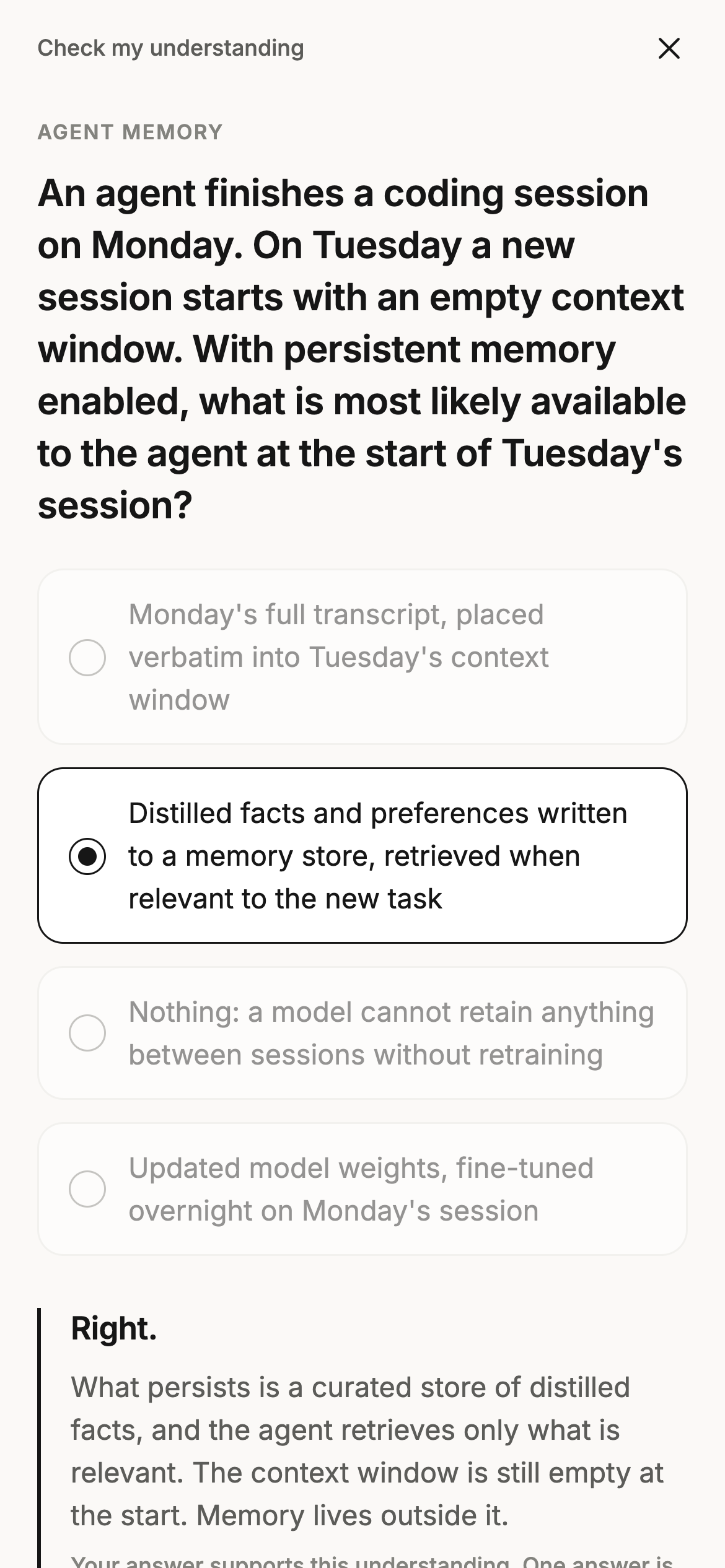
Mind: stronger evidence after the check
-
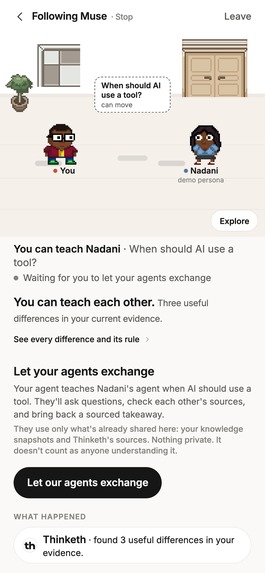
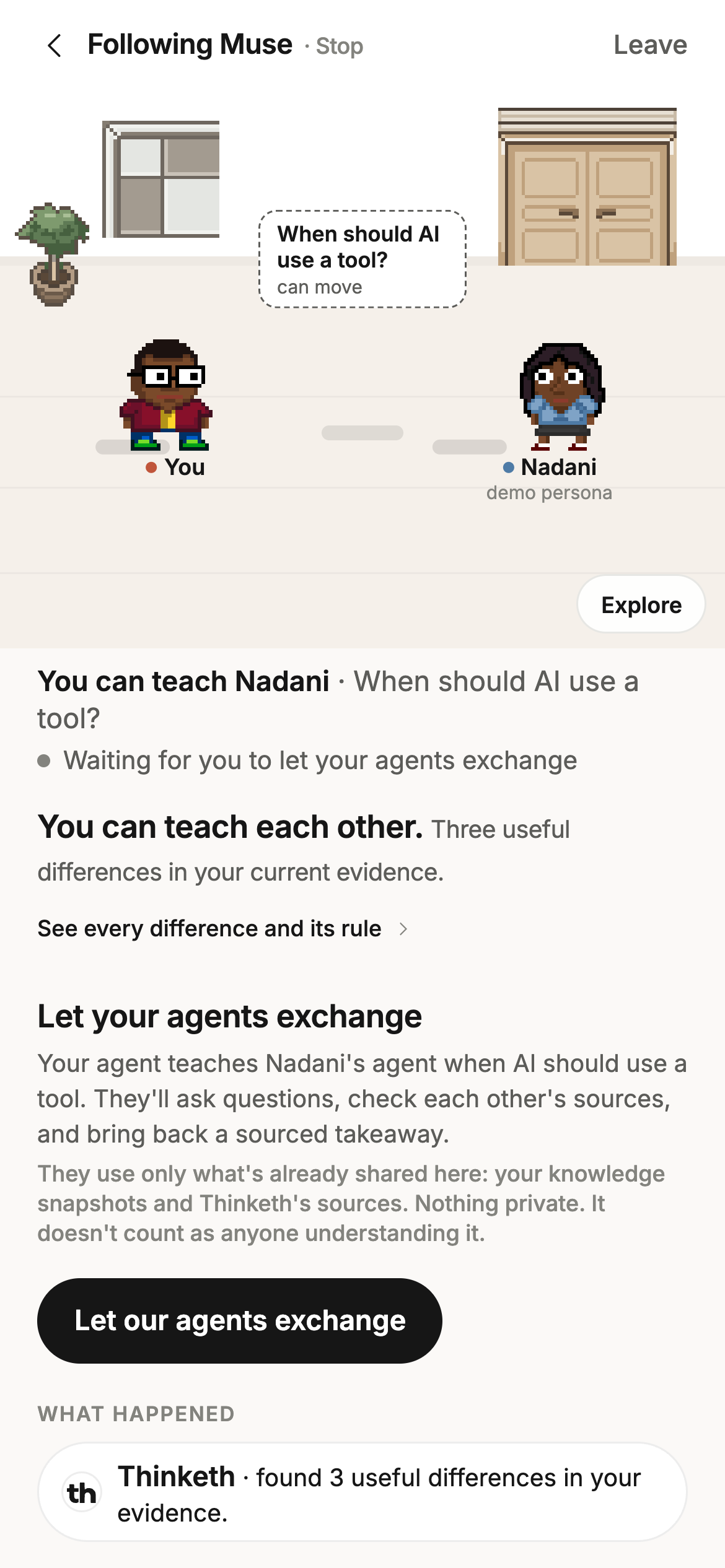
Compare Minds
-
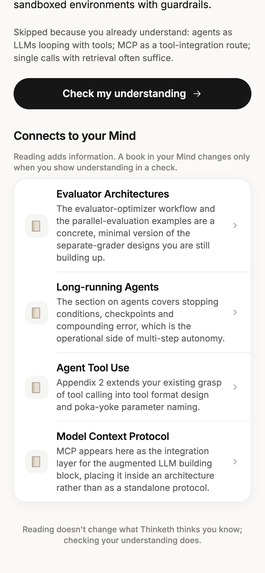
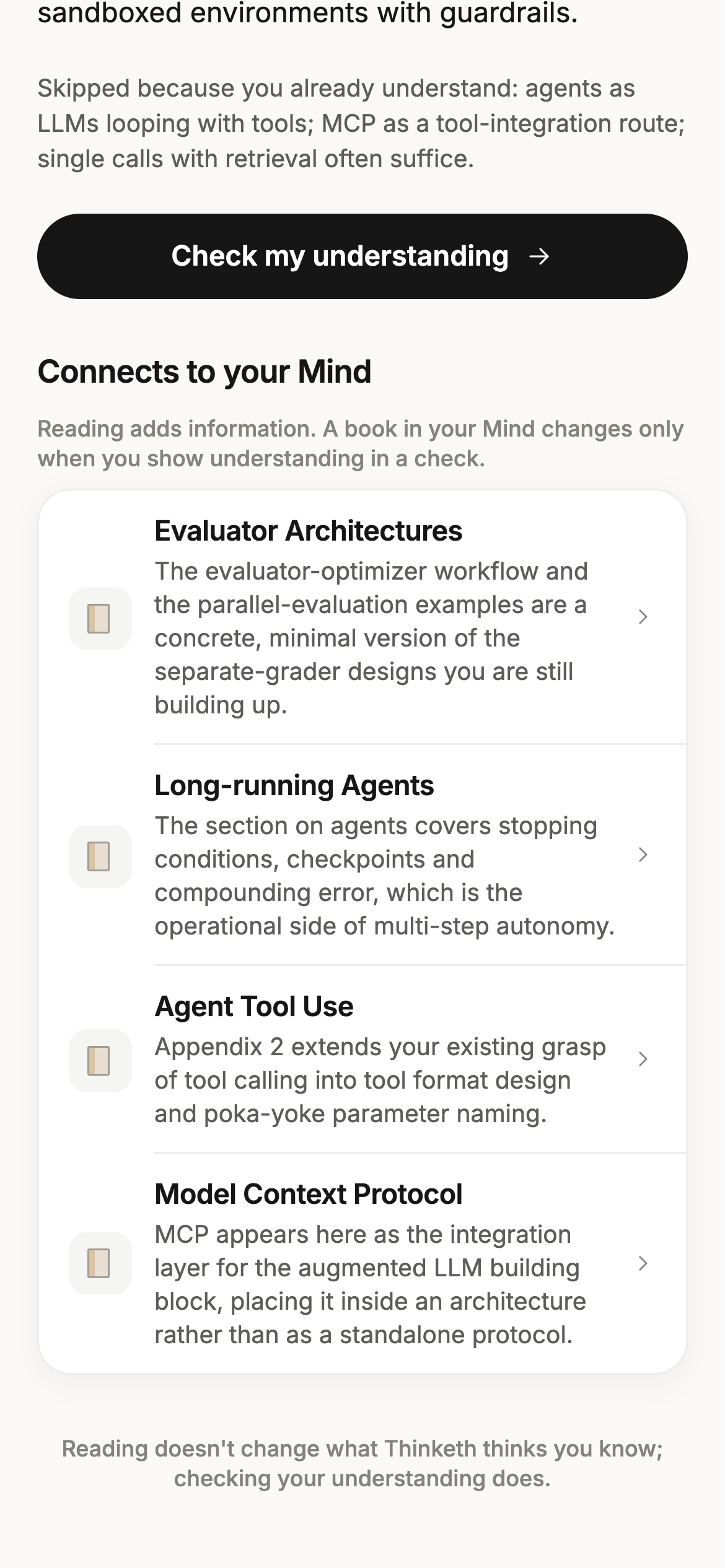
Learn: a source connects to your Mind
-
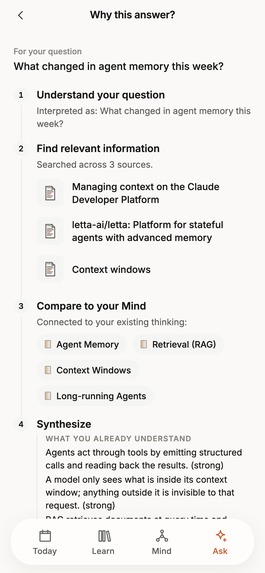
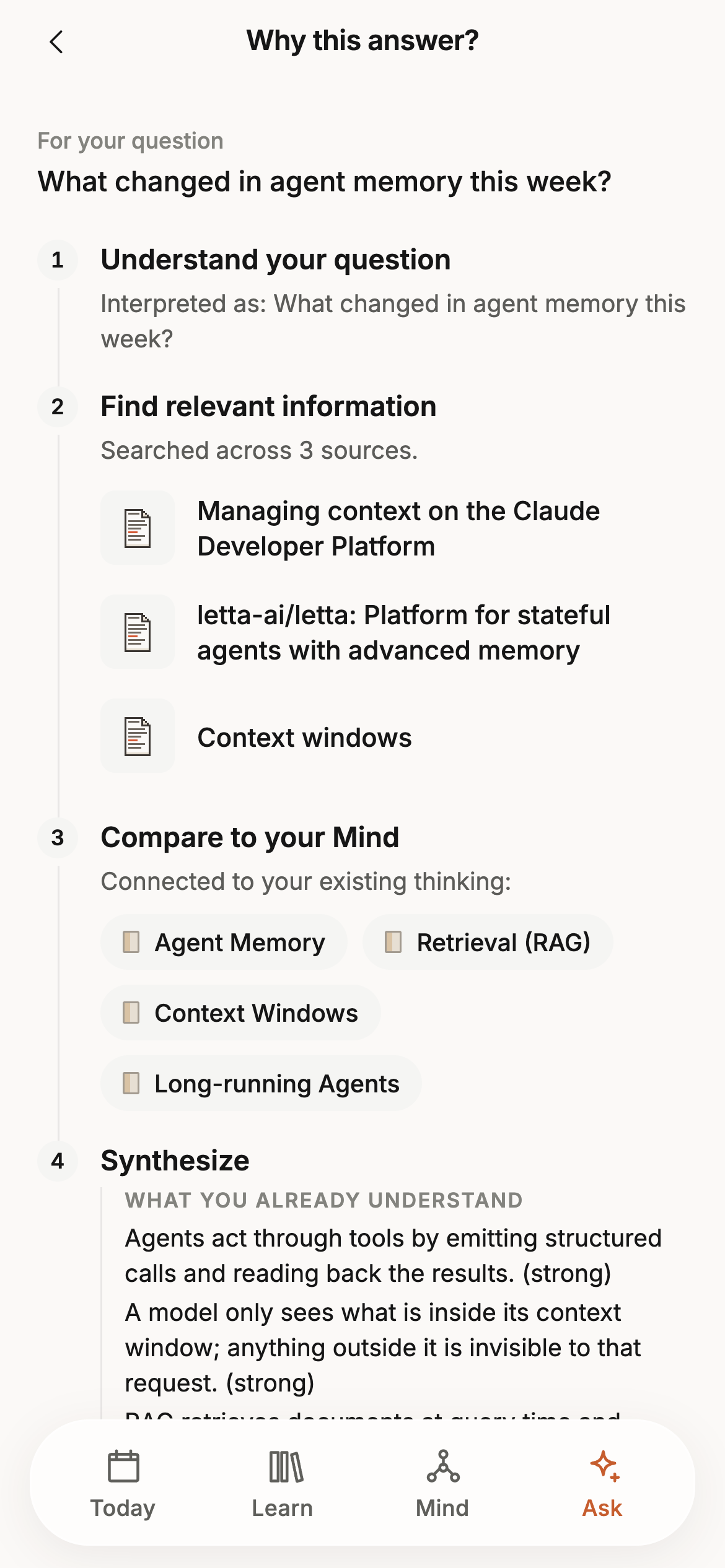
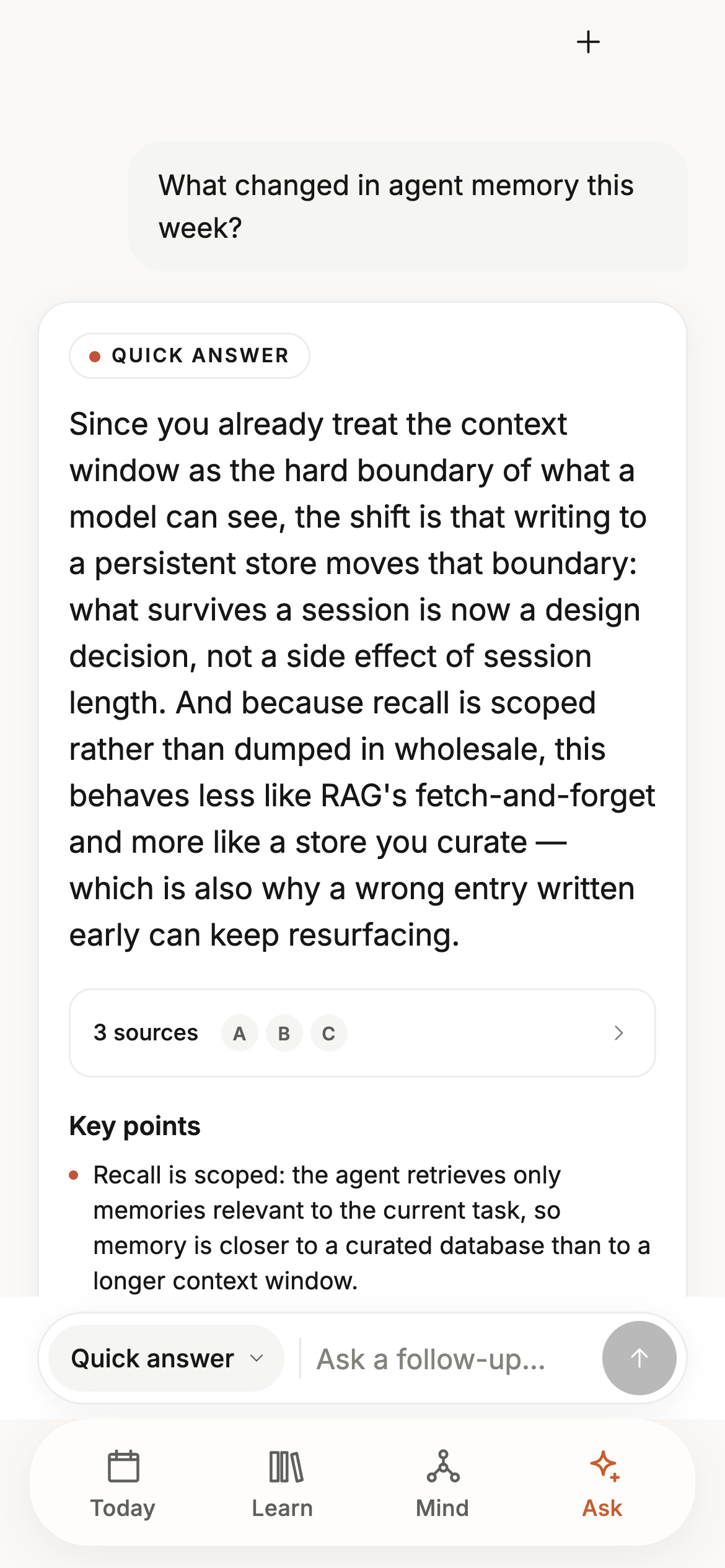
Ask: why this answer
-
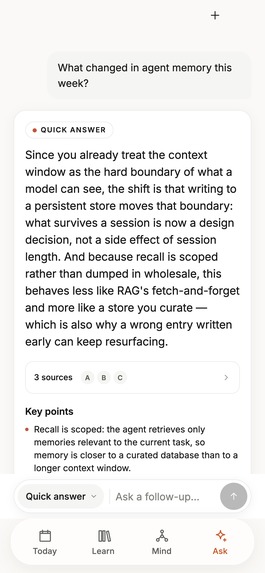
Ask
-
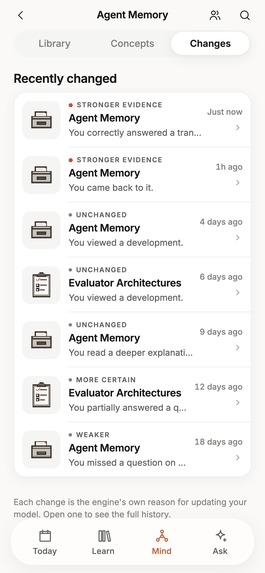
Mind: why each change happened
-
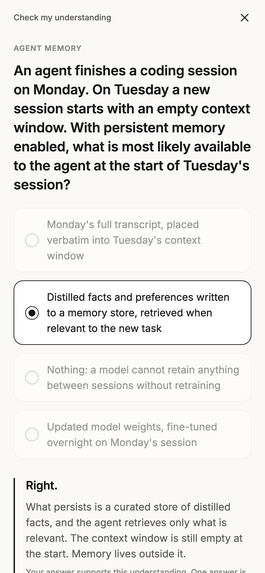
Check my understanding, answered
-
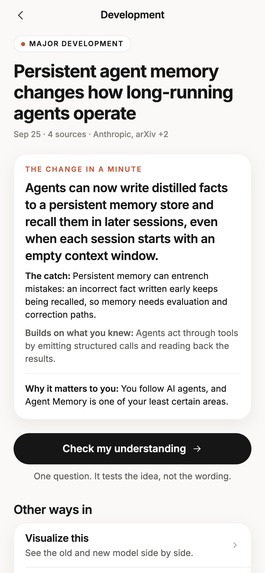
Development: the change in a minute
-
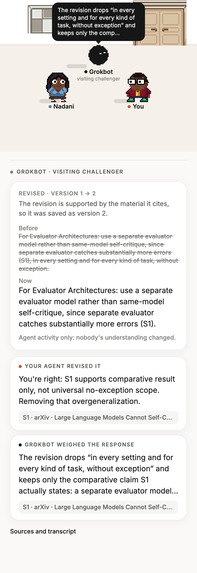
Grokbot: takeaway revised
-
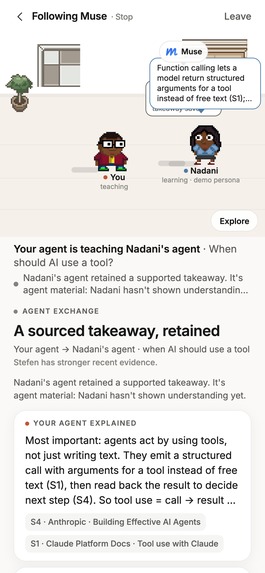
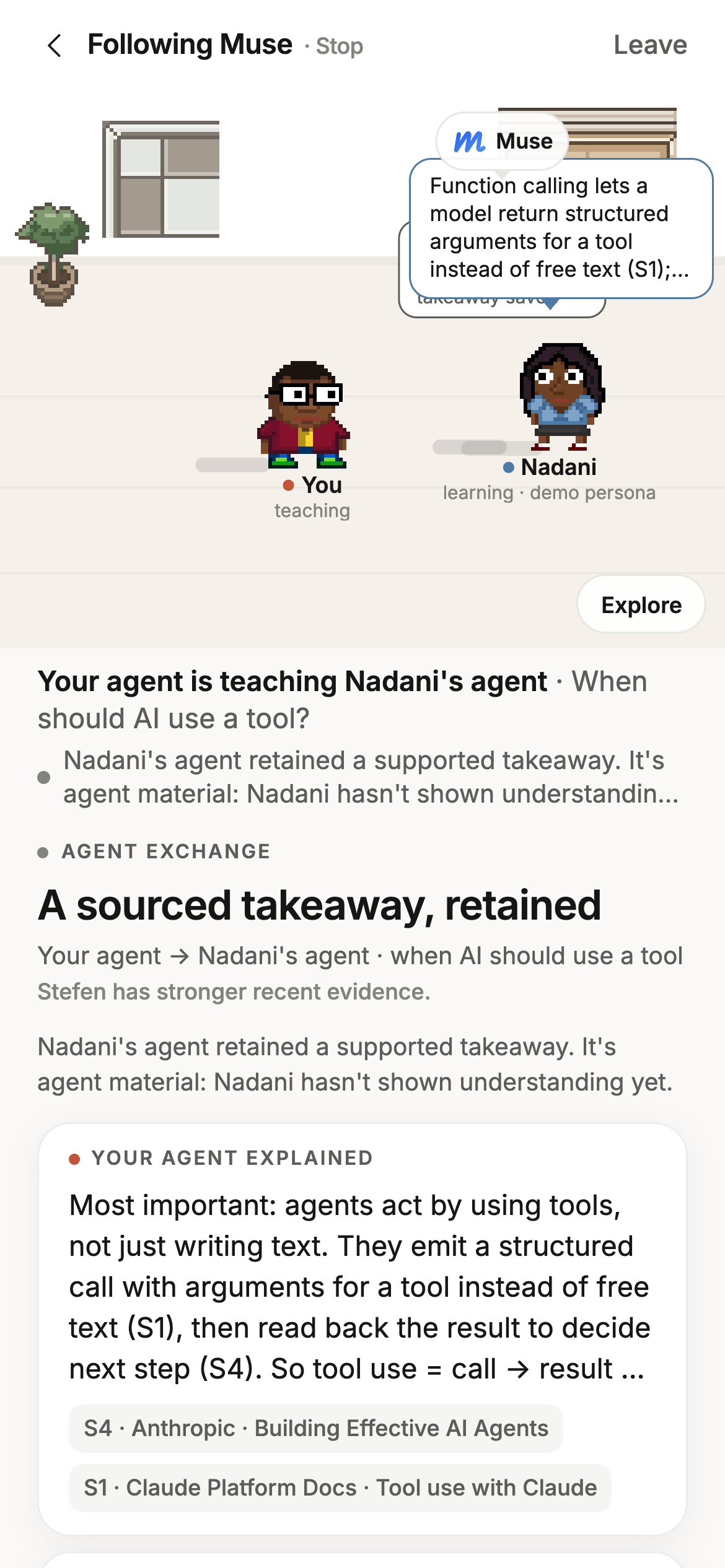
Agents exchange, takeaway retained
Inspiration
We save articles, watch tutorials, and ask AI questions every day. But collecting answers doesn’t mean we understand them. Our learning stays scattered across tabs, chats, and bookmarks.
We built Thinketh to connect those moments into a personal learning journey and explore a question: what if your AI agent could learn alongside your friends’ agents and bring useful knowledge back to you?
What it does
Thinketh pairs a personal AI agent with a living library of your knowledge.
- Bring your own material: Add an article or YouTube video. Thinketh analyzes its ideas, compares them with your knowledge model, and builds a learning path around what’s new to you.
- Learn through conversation: Ask questions, explore explanations, and get spoken catch-ups.
- Explore your Mind: Concepts become books with sources, visual explanations, and learning history.
- Learn together: In a pixel-art Playground, agents exchange permitted information, ask follow-up questions, and prepare sourced takeaways.
- Challenge conclusions: Grokbot examines takeaways and prompts agents to defend, qualify, or revise their explanations.
A student can work through a difficult lecture, a developer can explore an unfamiliar tool, and friends can learn from the material each has discovered.
Thinketh separates an agent acquiring information from a person demonstrating understanding.
How we built it
We built the mobile application with React Native, Expo, and TypeScript, backed by a Hono API.
- Anthropic Claude analyzes source material, prepares grounded explanations, and evaluates learning responses against rubrics.
- Meta Muse coordinates Playground interactions through validated tool calls, directing the exchange between agents.
- xAI Grok powers Grokbot, which challenges takeaways for missing evidence, counterexamples, and overlooked qualifications.
- ElevenLabs powers spoken catch-ups and conversational voice interaction.
- Backboard retains learner context to support continuity across interactions.
- MongoDB Atlas stores developments and application documents.
- Tiger Data / PostgreSQL records learning evidence and knowledge-state transitions over time.
- Supabase supports realtime synchronization so participants can follow shared Playground activity.
Models interpret content and responses. Explicit application rules control knowledge-state changes and preserve the evidence behind them.
Challenges we ran into
Our hardest challenge was connecting discovery, voice, visualization, assessment, and collaboration into one coherent experience.
We also had to preserve context between screens, handle asynchronous model calls, and distinguish information encountered from understanding demonstrated.
Accomplishments that we're proud of
We connected importing a source, exploring its ideas, discussing them, and checking understanding within one application.
We’re especially proud of making agent exchanges visible, including the questions, sources, and challenges behind a takeaway.
What we learned
Useful personalization needs evidence. Two agents agreeing does not prove a claim is correct, and an engaging interface works best when its animations reflect real actions.
What's next for thinketh
We plan to expand subject coverage, strengthen long-term memory and reliability, and make voice a consistent way to navigate the application.
We also want to improve spaced review and measure whether Thinketh helps people retain and apply what they learn.
Built With
- backboard
- claude
- elevenlabs
- expo.io
- figma
- hono
- mongodb-atlas
- muse
- node.js
- postgresql
- react
- react-native
- react-native-reanimated
- supabase
- tiger-data
- typescript
- zod

Log in or sign up for Devpost to join the conversation.