-
-
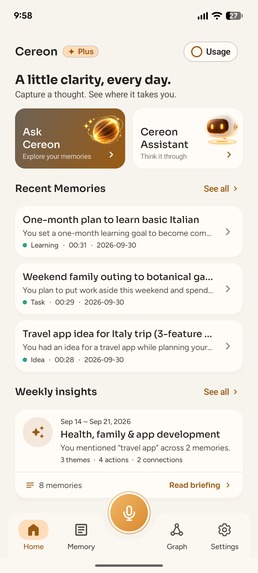
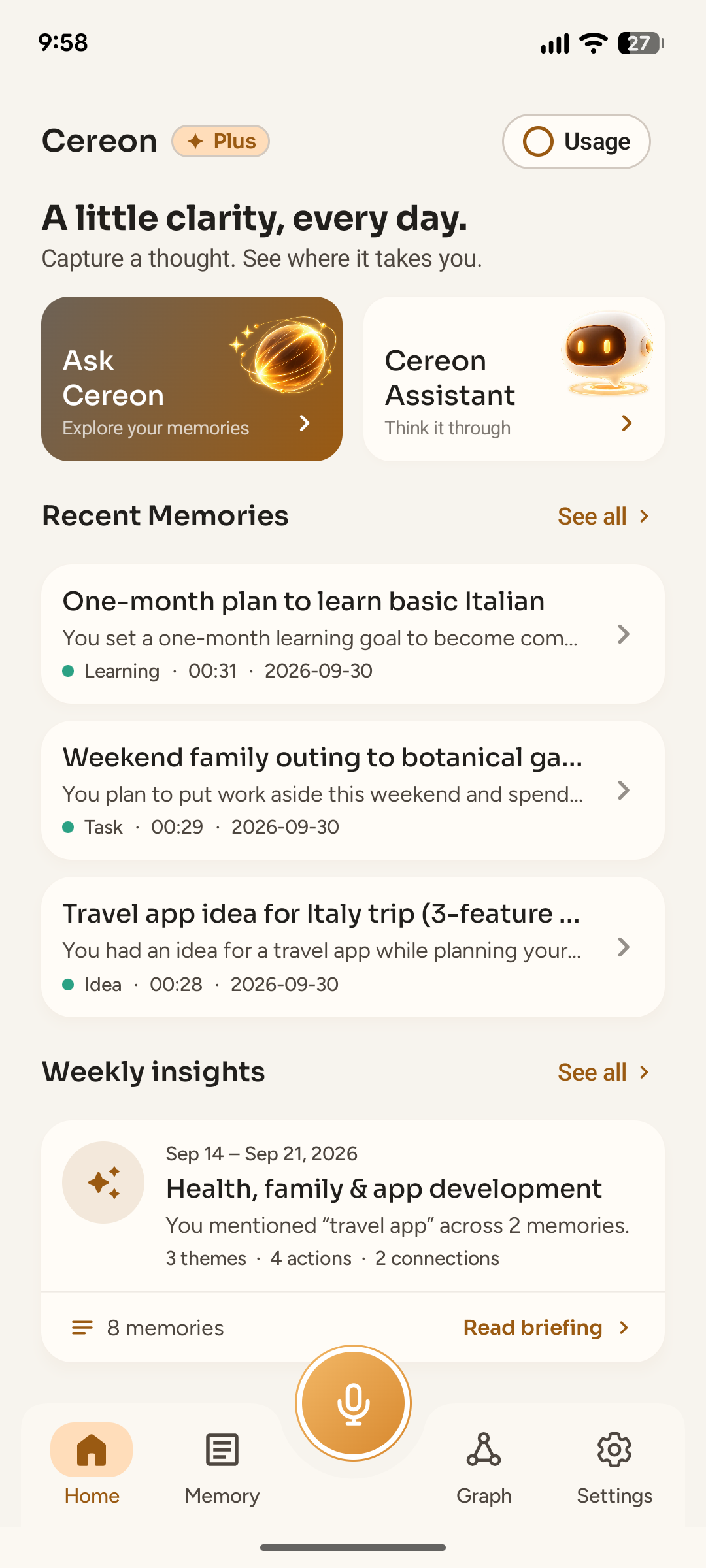
Your second brain at a glance: recent memories, weekly insights, Ask Cereon, and voice assistant access.
-
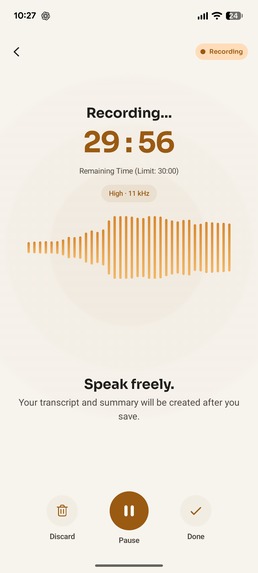
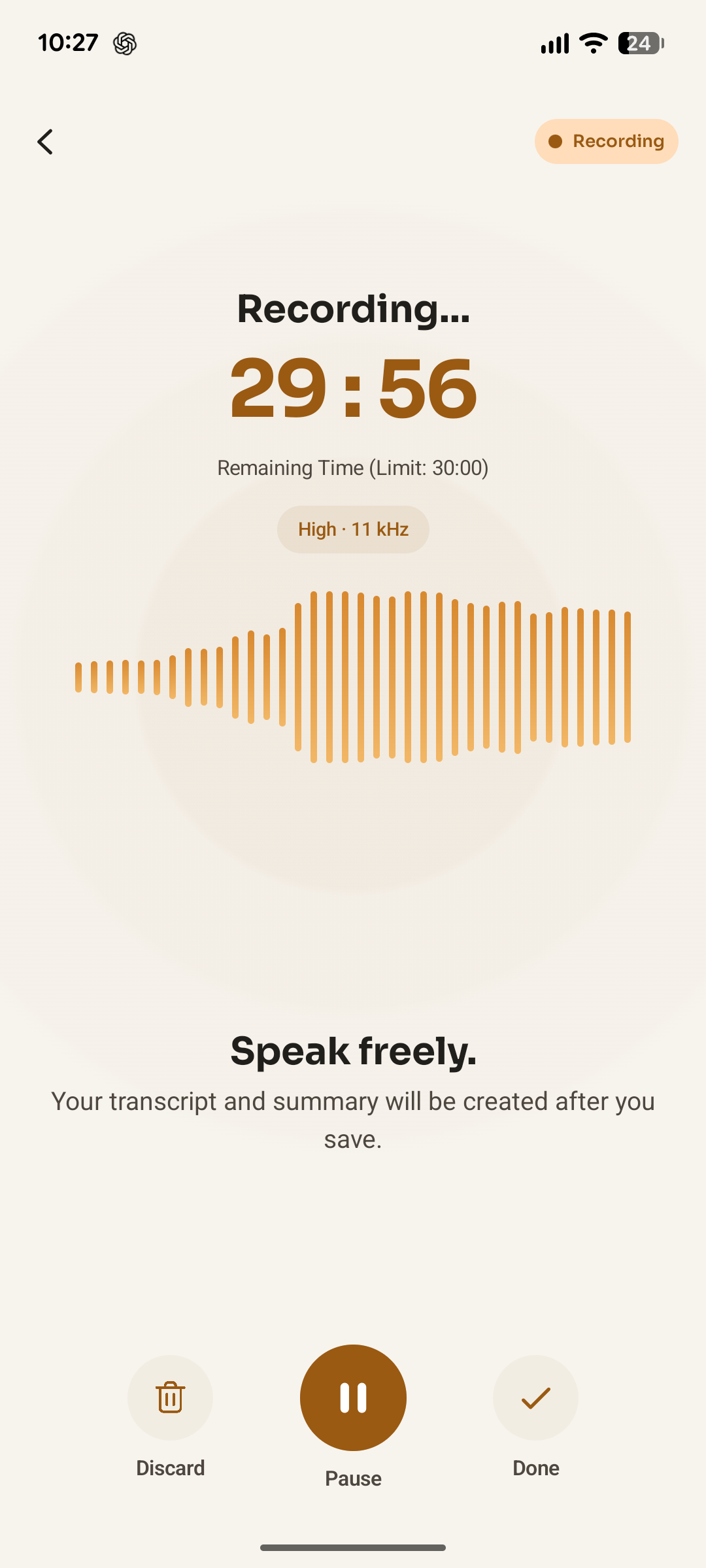
Capture thoughts naturally with a focused recording experience, live waveform feedback, and clear controls.
-
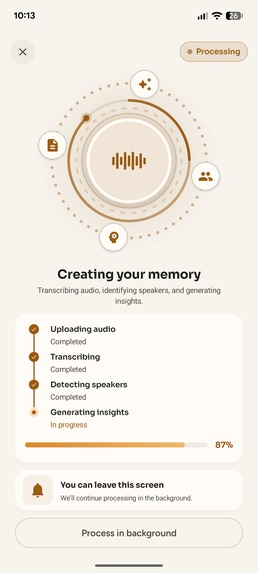
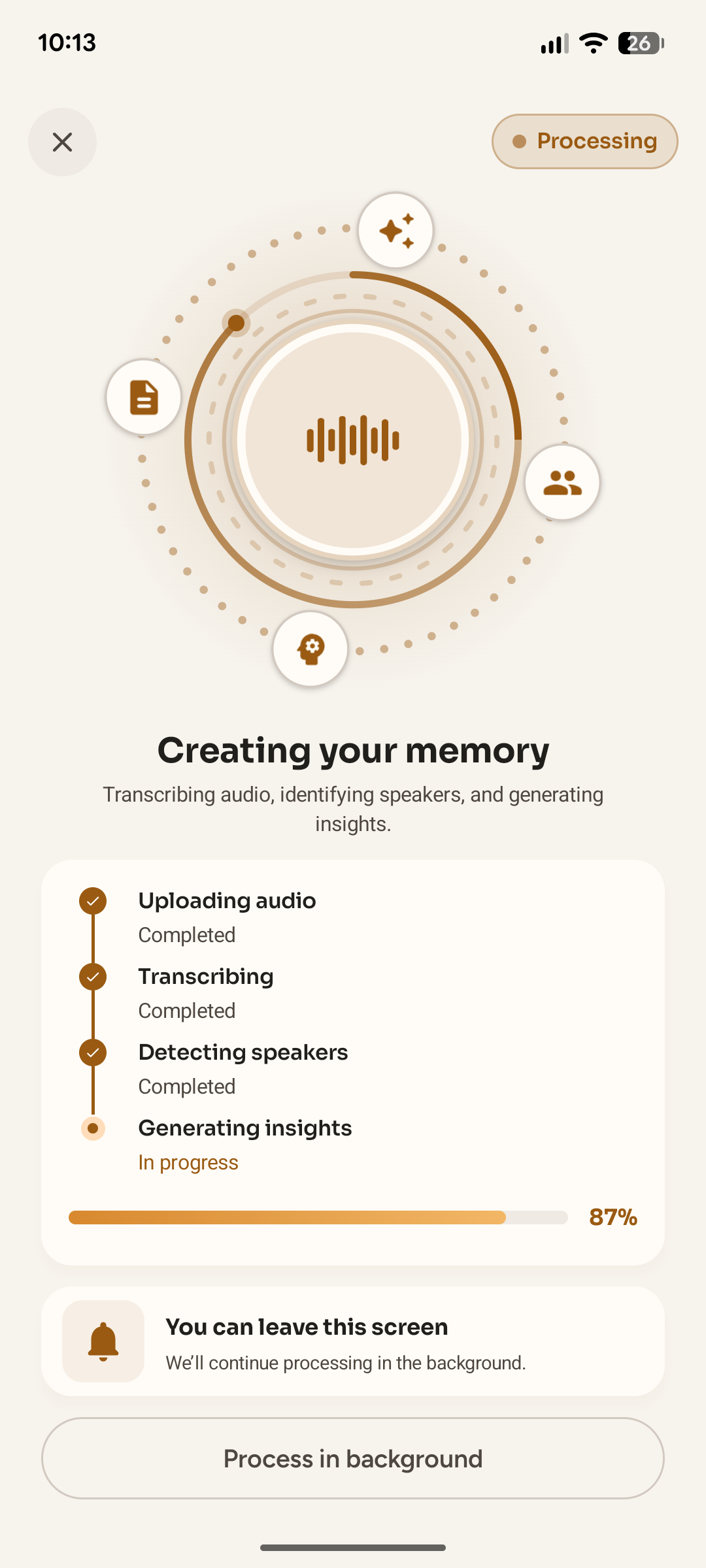
Follow each stage as Cereon turns raw audio into a structured, searchable, connected memory.
-
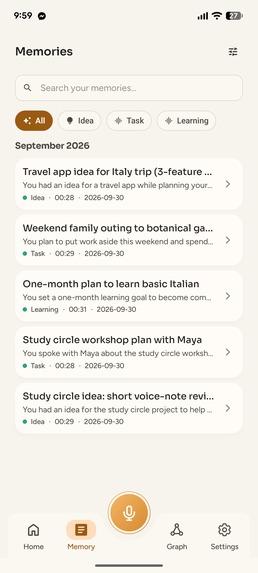
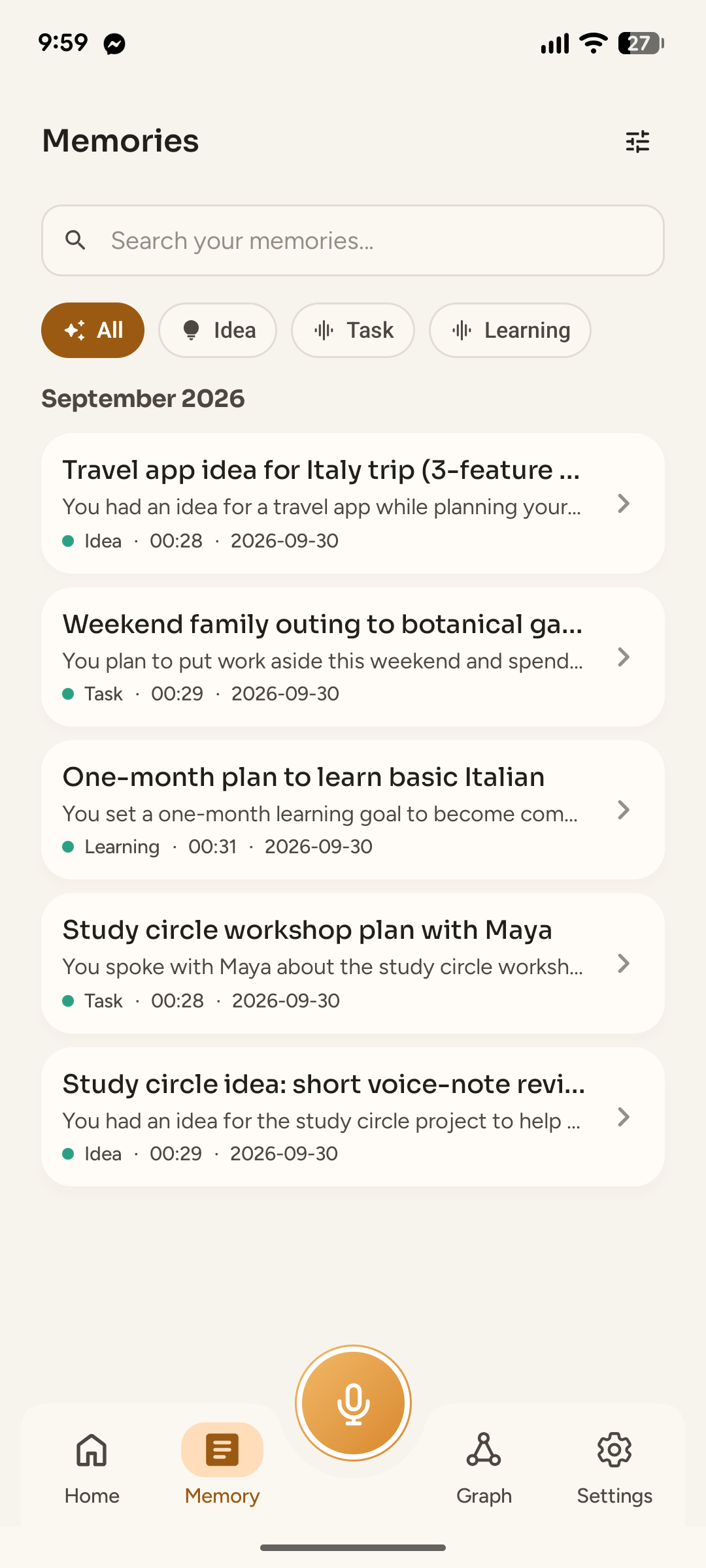
Search, filter, and revisit structured memories created from your recordings and imported audio.
-
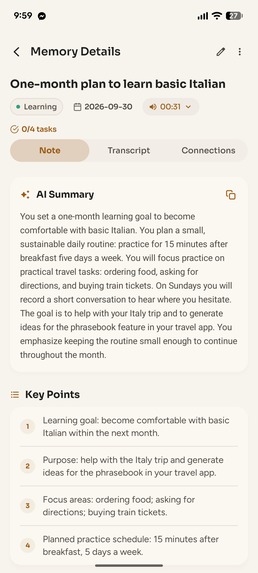
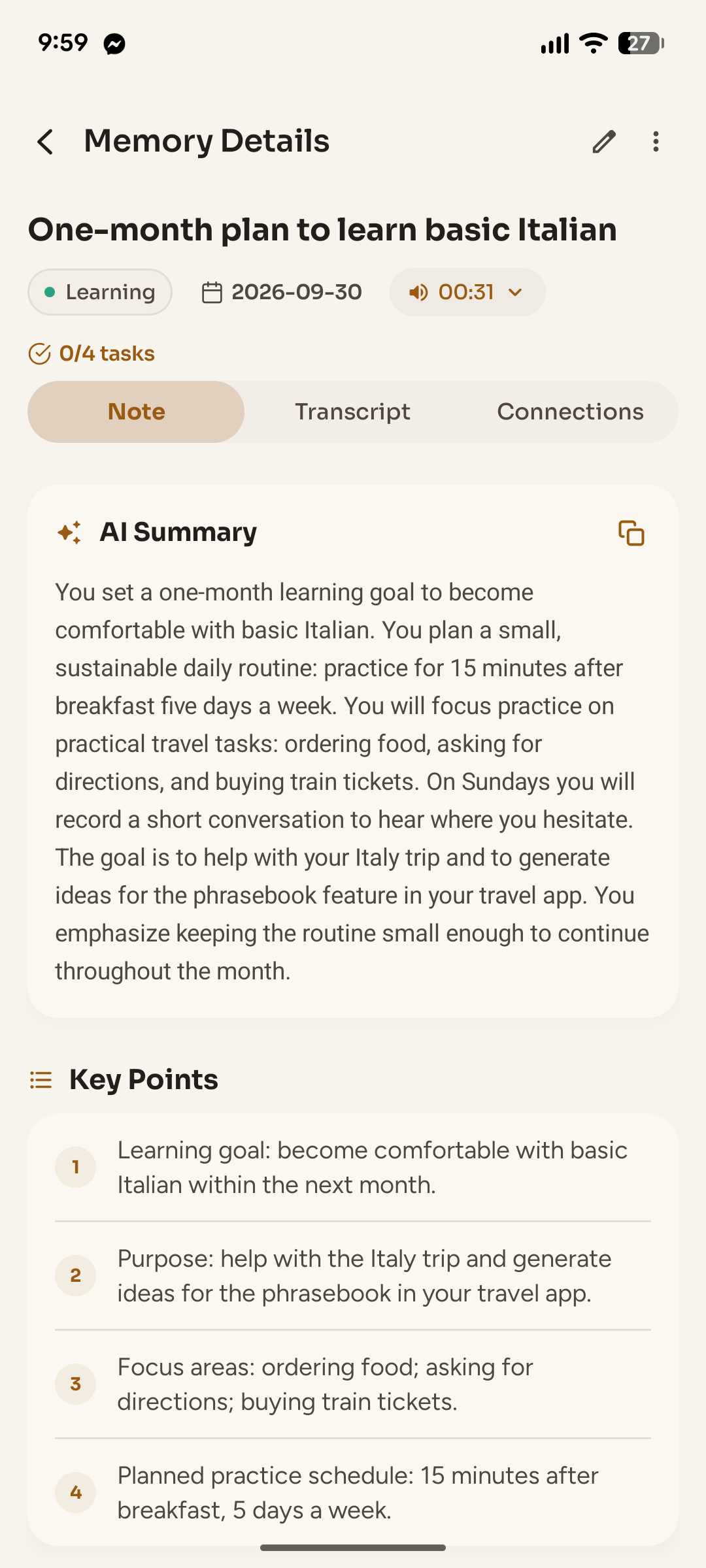
Cereon transforms spoken thoughts into clear summaries, key points, and organized knowledge.
-
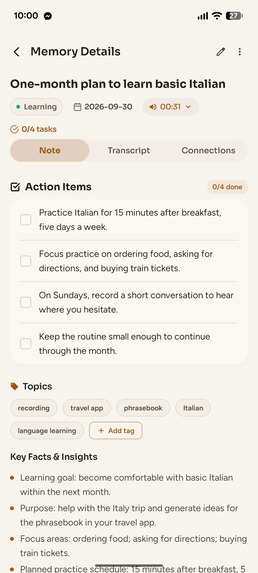
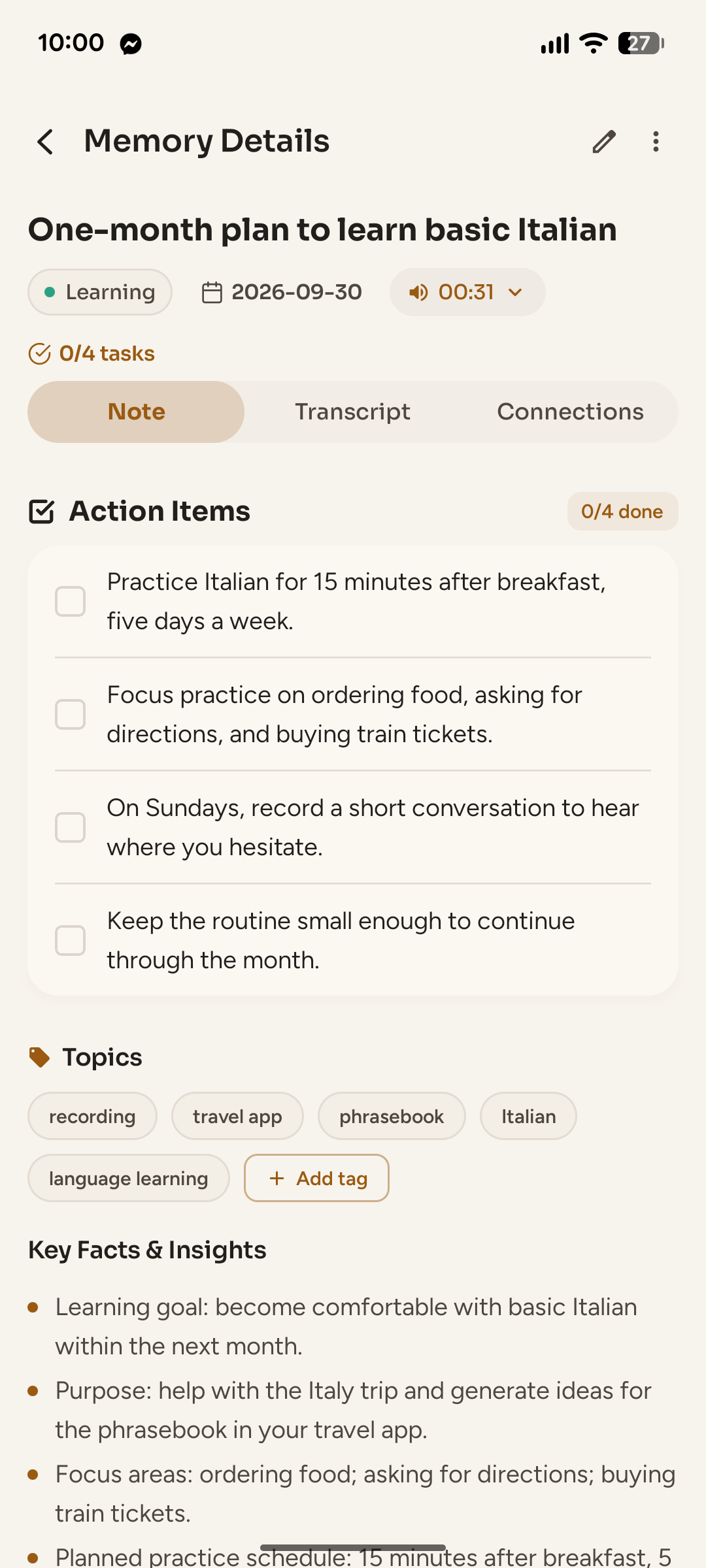
Automatically turn conversations into actionable tasks, topics, key facts, and useful insights.
-
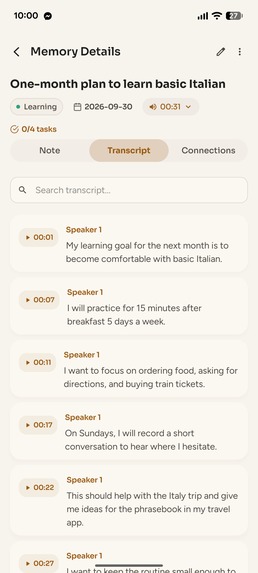
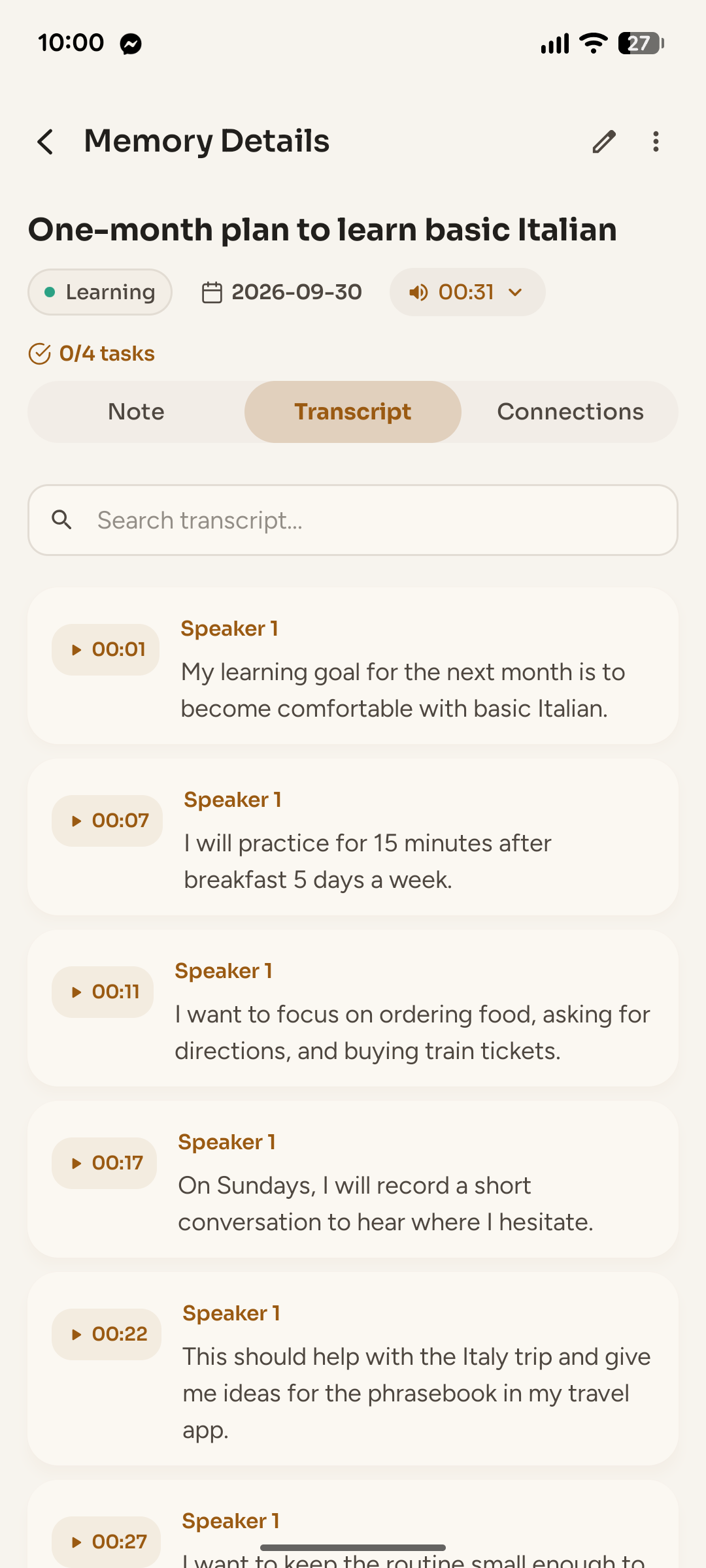
Search transcripts, identify speakers, and jump directly to the exact moment in the original audio.
-
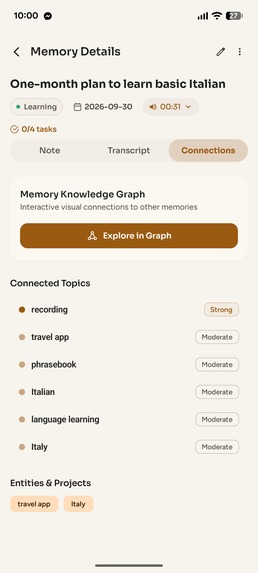
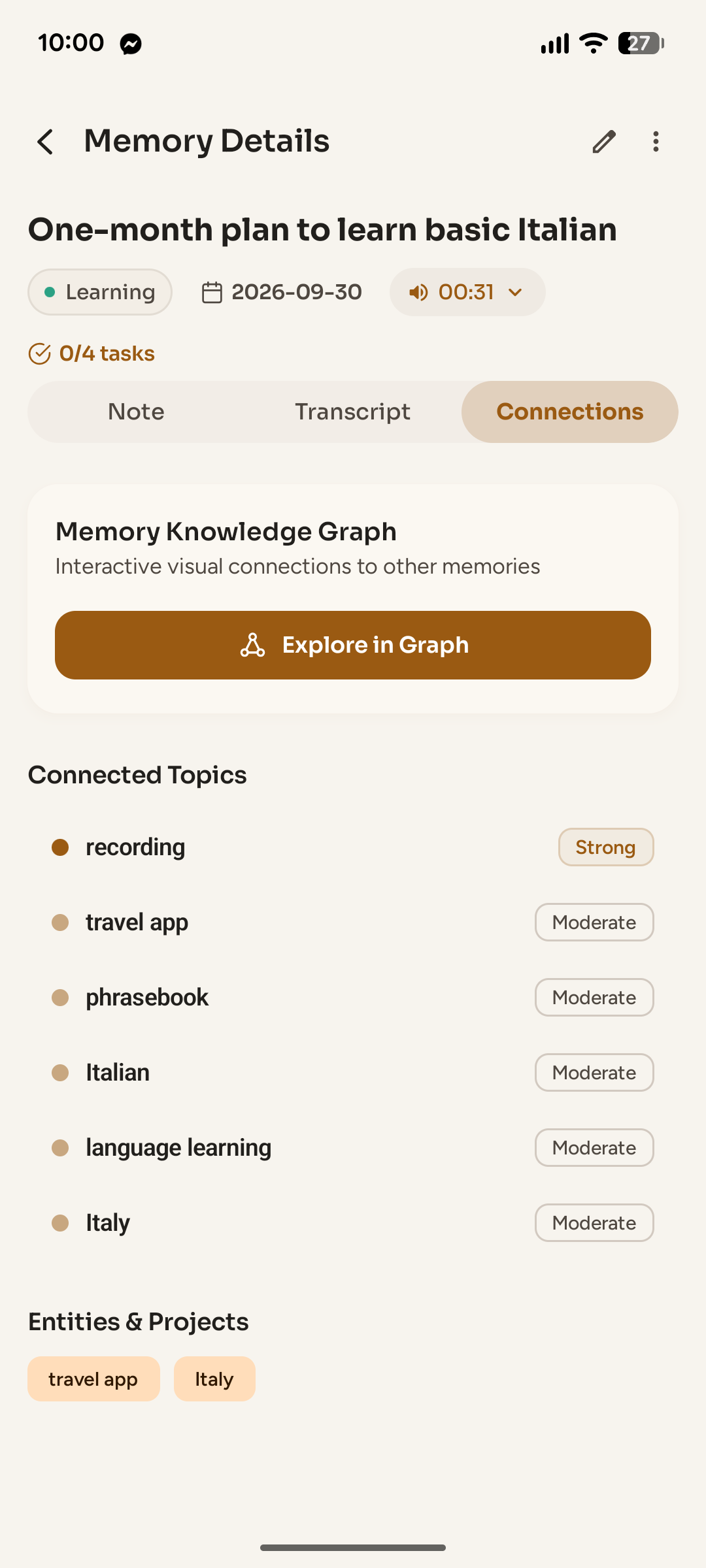
Discover related topics, entities, projects, and connections extracted from each memory.
-
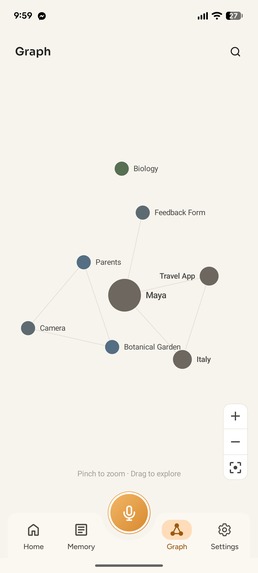
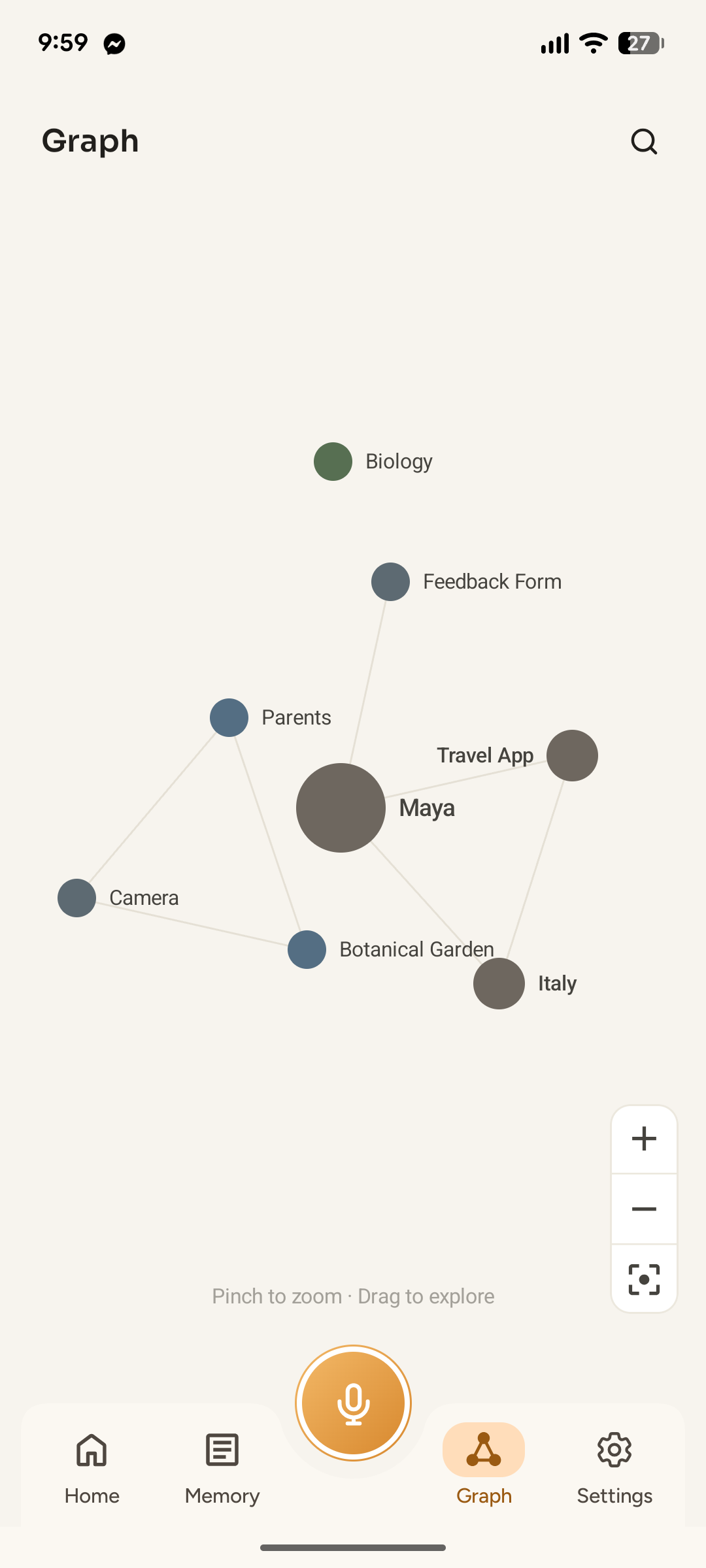
Explore relationships between memories, people, topics, projects, and recurring ideas visually.
-
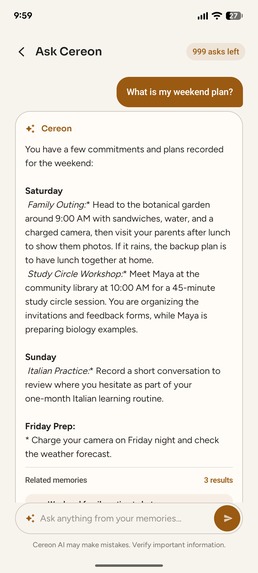
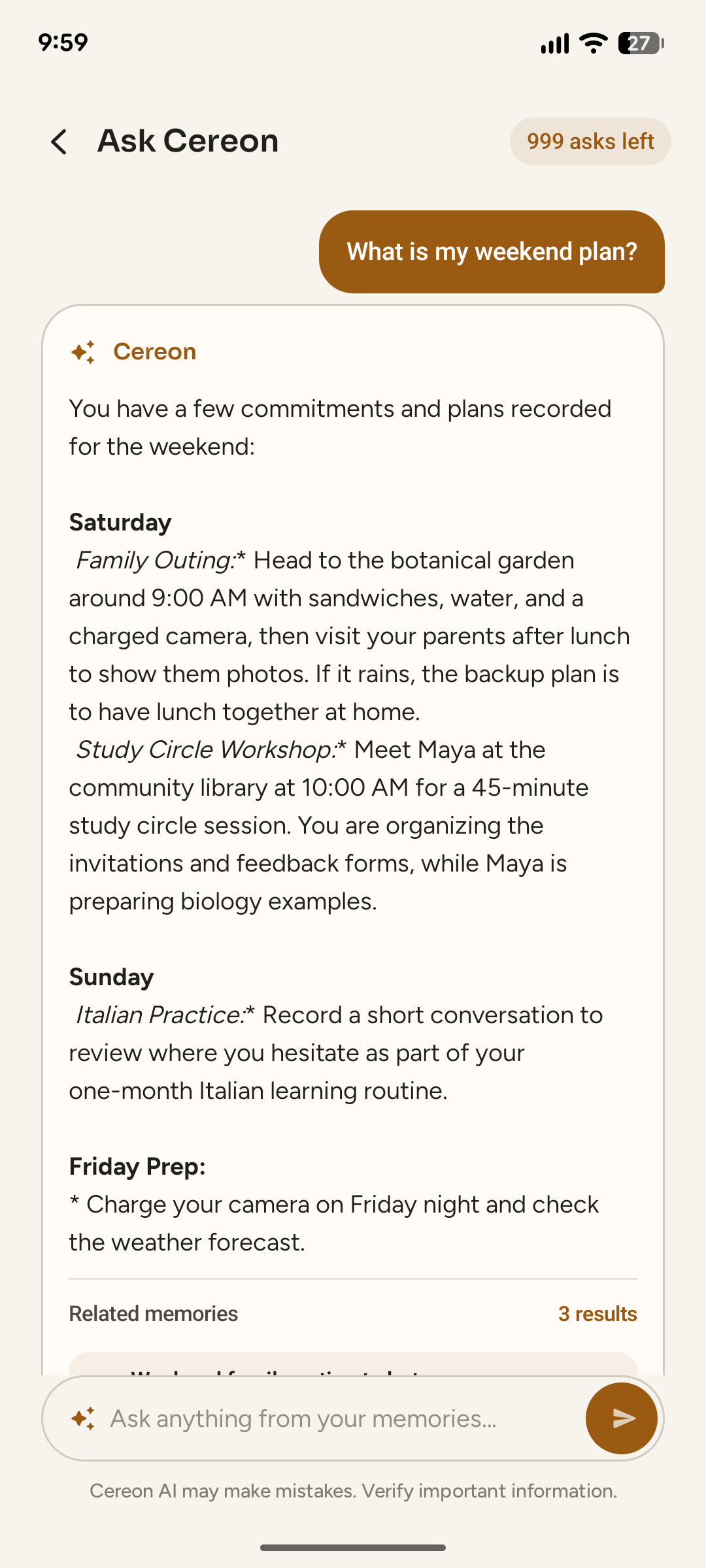
Ask questions across your memories and get context-aware answers grounded in what you previously recorded.
-
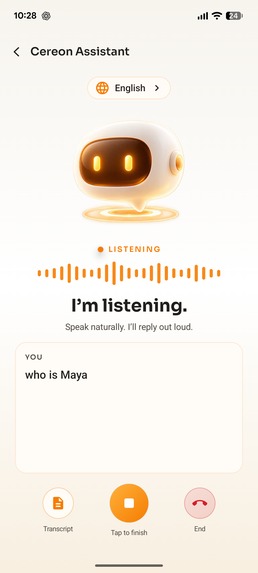
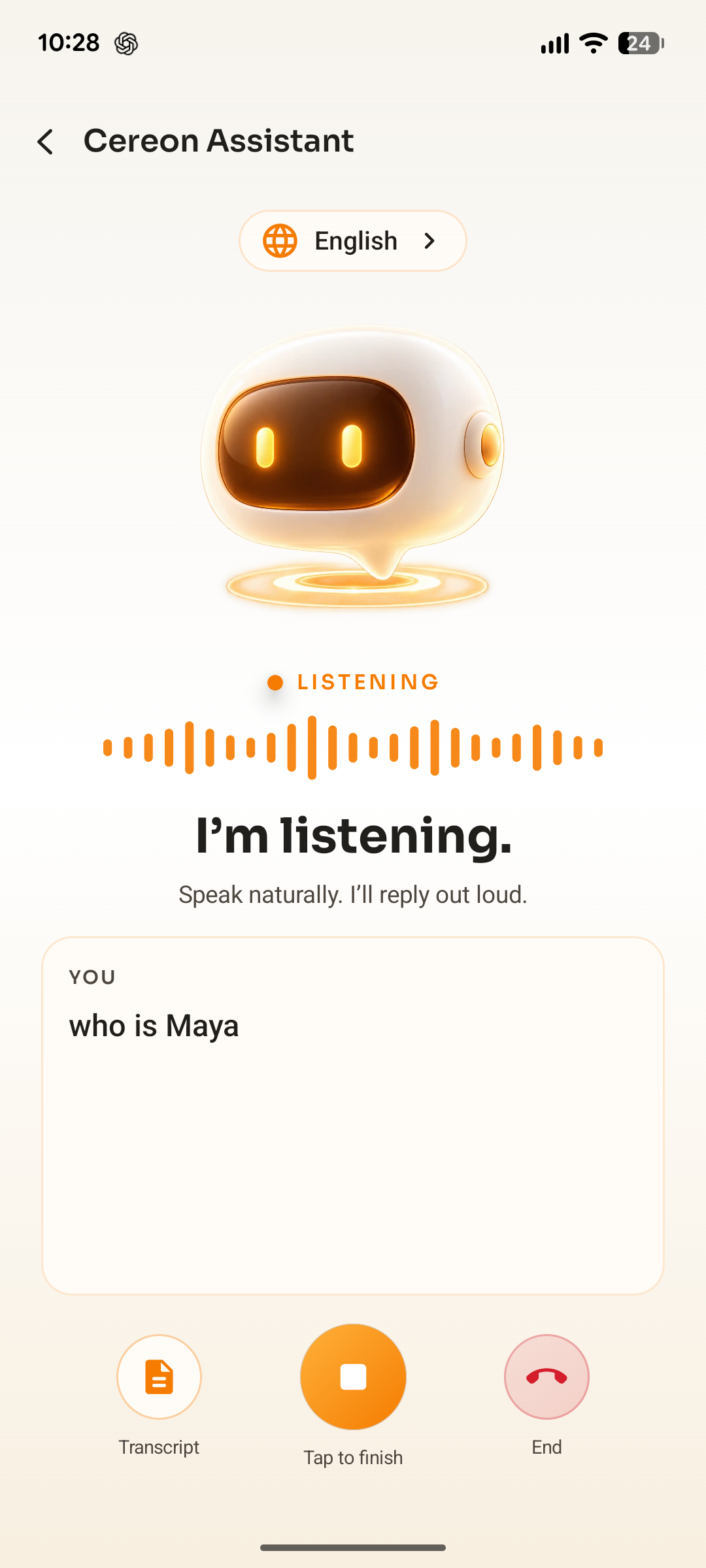
A voice-first AI assistant that listens, understands your memory context, and responds naturally out loud.
-
App icon
Cereon — Your Second Brain
Inspiration
Some of our most valuable ideas happen when we are speaking — during meetings, lectures, conversations, brainstorming sessions, or spontaneous moments of clarity.
The problem is that traditional voice recorders only preserve audio. Even after transcription, users are often left with long transcripts, scattered notes, and information that becomes difficult to find again.
That inspired us to build Cereon, a voice-powered second brain designed around a simple idea:
Speak naturally. Cereon helps you remember, recall, and connect what matters.
Instead of treating every recording as an isolated file, Cereon transforms voice into structured, searchable, connected memories.
What it does
A user can record directly in Cereon or import existing audio.
Cereon then processes that audio into a structured memory containing:
- Transcript with speaker information
- Title and summary
- Key takeaways
- Important facts
- Action items
- Topics and entities
- Searchable semantic chunks
- Connections with related memories
The original audio remains available, so users can move from a transcript or search result back to the exact moment in the recording.
Ask Cereon
Ask Cereon lets users ask natural-language questions about their own memories.
Instead of responding like a general chatbot, Cereon retrieves relevant information from the user's memory library and generates an answer grounded in those sources, including citations back to the memories used.
This makes Cereon useful for questions such as:
What did we decide about the Android launch?
What action items came from my recent meetings?
What have I discussed about this project over the last few weeks?
Connected memories
One of Cereon's core ideas is that memories should not remain isolated.
The Knowledge Graph visualizes relationships between memories, topics, entities, people, and recurring ideas.
The goal is to help users discover relationships they may not have noticed themselves.
Voice AI Assistant
Cereon also includes a conversational voice assistant.
Users can speak naturally, Cereon processes the request against their memory context, and the assistant responds using device text-to-speech.
The experience moves through clear states:
Listening → Thinking → Speaking
It supports multilingual input, live conversation history, message feedback, and source-aware answers.
How we built it
Cereon is built with Kotlin Multiplatform and Compose Multiplatform, allowing us to share the core architecture, business logic, networking, persistence, state management, and much of the UI.
The current Shipaton release is focused on Android through Google Play.
The mobile stack includes:
- Kotlin
- Compose Multiplatform
- Material 3
- Koin
- Ktor
- Room
- DataStore
- RevenueCat
- OneSignal
- Firebase
The backend is built with Laravel and PHP.
Our processing pipeline looks roughly like:
Audio → Transcription → Structured Memory → Semantic Chunks → Embeddings → Search & Recall
Gemini handles transcription, while our backend processes the transcript into structured memory data and searchable semantic chunks.
For Ask Cereon, we combine semantic and keyword retrieval, rerank the most relevant passages, and generate an answer from the resulting context.
RevenueCat
RevenueCat powers Cereon's mobile subscription infrastructure.
We designed three levels of access: Free, Plus, and Pro, with higher tiers expanding transcription capacity, Ask usage, recording limits, and advanced memory features.
Our current pricing includes:
Plus
- $7.99 monthly
- $59.99 yearly
Pro
- $12.99 monthly
- $99.99 yearly
RevenueCat handles purchases, entitlements, restoration, and subscription state, while our backend processes RevenueCat webhooks for server-side entitlement reconciliation.
Personalized engagement with OneSignal
Cereon becomes more valuable as users build a larger memory library, so retention is an important part of the product.
We use OneSignal for personalized push notifications, designed around meaningful moments rather than generic engagement messages.
Examples include:
- Letting a user know when a recording has finished processing
- Bringing users back when a new insight is available
- Weekly memory and activity reflections
- Relevant action-item reminders
- Resurfacing useful memories
- Personalized re-engagement based on user activity
Our principle is:
A notification should give the user a reason to return, not simply ask them to open the app.
Challenges
Turning transcripts into memories
One of our first challenges was realizing that transcription alone was not enough.
A transcript can contain everything that was said while still being difficult to use later.
We had to build a processing pipeline that identifies important information, creates semantic chunks, extracts entities and topics, identifies action items, and connects related memories.
Building trustworthy recall
Ask Cereon needed to answer questions using the user's own memories instead of behaving like a general-purpose chatbot.
We therefore built retrieval and reranking into the workflow and attach source references to generated answers.
Building the knowledge graph
Too few connections make a graph useless, while too many make it unreadable.
Creating a graph that remains understandable required custom rendering, force simulation, visual hierarchy, and careful handling of different node and relationship types.
Cross-platform architecture
Kotlin Multiplatform gave us a strong shared foundation, but platform-specific capabilities such as audio, authentication, billing, notifications, biometrics, and lifecycle behavior still required native integration.
Subscription reliability
Purchases can succeed while networks fail, subscriptions can change outside the application, and webhook events can arrive more than once.
RevenueCat simplified the store integration, while our local cache and backend reconciliation help keep entitlement state consistent.
What we learned
The biggest lesson from building Cereon is that AI is most useful when it becomes part of a clear product workflow instead of becoming the product itself.
Users should not have to think about models, embeddings, retrieval, or processing pipelines.
They should be able to speak, leave, and later find exactly what they need.
We also learned that:
- Original audio still matters even when a transcript exists.
- Source citations make AI recall significantly more trustworthy.
- Memory connections create increasing value as the library grows.
- Good notifications should be contextual and useful rather than frequent.
- Subscription design must balance user value with the real cost of AI processing.
- Complex intelligence works best when the interface remains simple.
What's next
Our goal is to make Cereon increasingly valuable as a user's memory library grows.
We want to improve long-term memory synthesis, relationship discovery, personalized resurfacing, speaker understanding, voice interaction, and the ability to identify meaningful patterns across months or years of memories.
Cereon started with one question:
What if speaking was enough to remember?
We are building Cereon so that ideas, decisions, conversations, and moments of insight do not disappear simply because they were spoken instead of written.

Log in or sign up for Devpost to join the conversation.