-
-
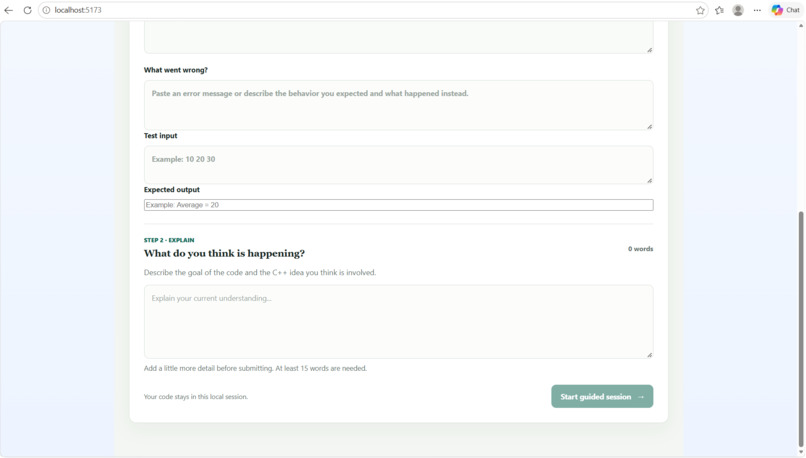
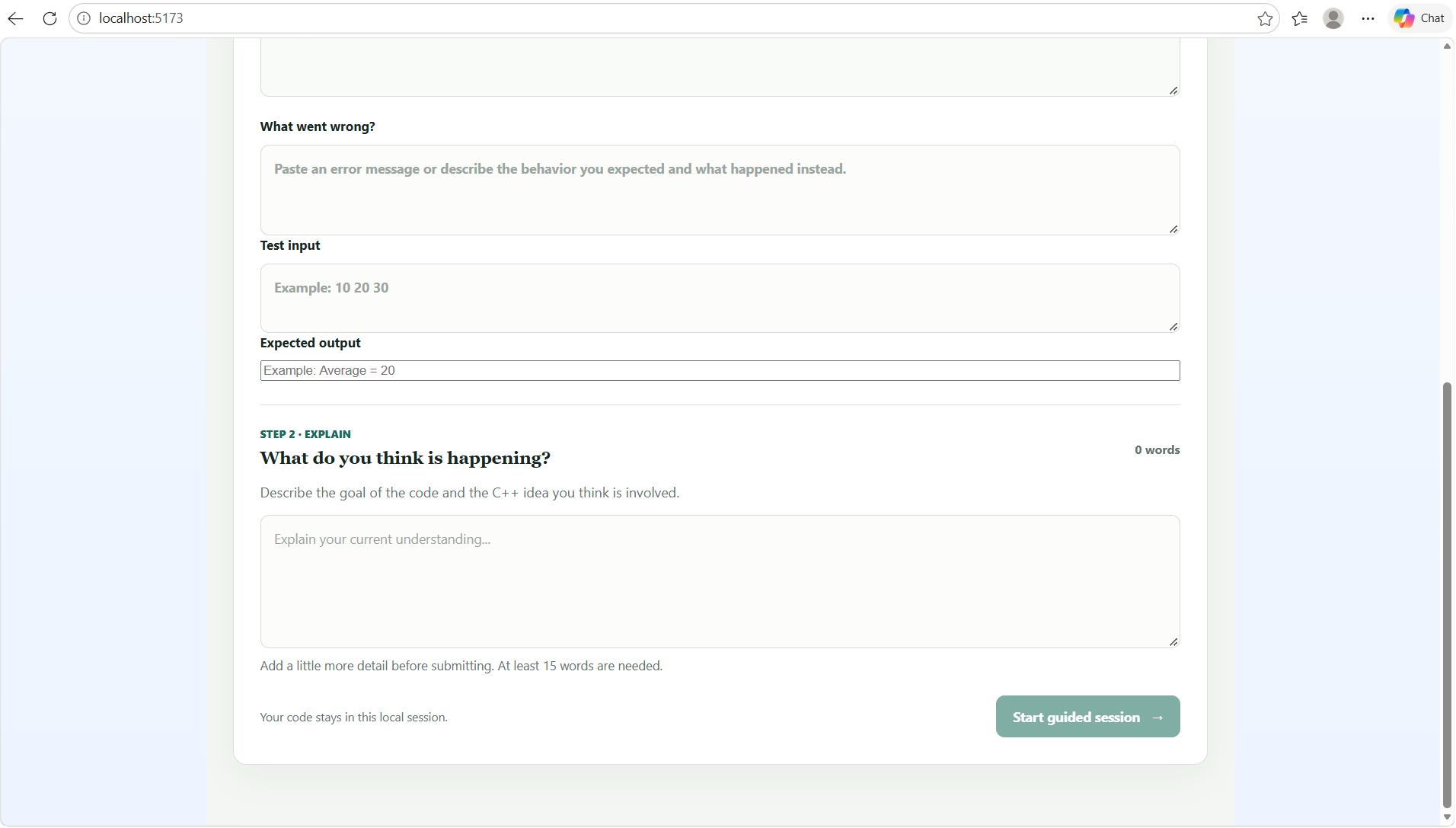
The Submit Page 2
-
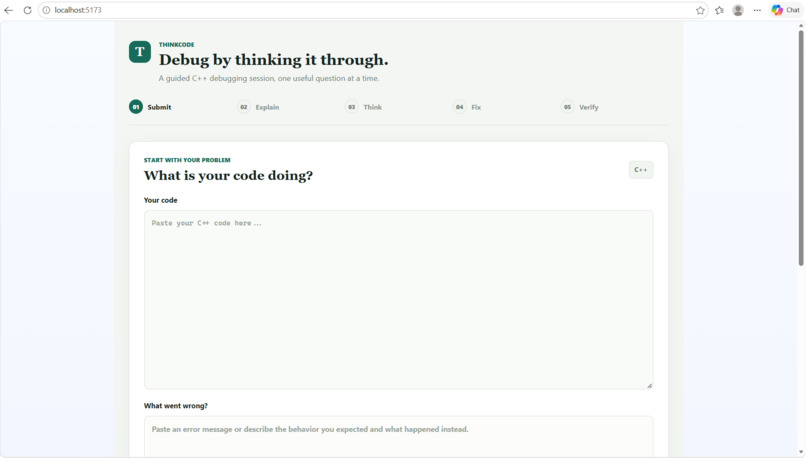
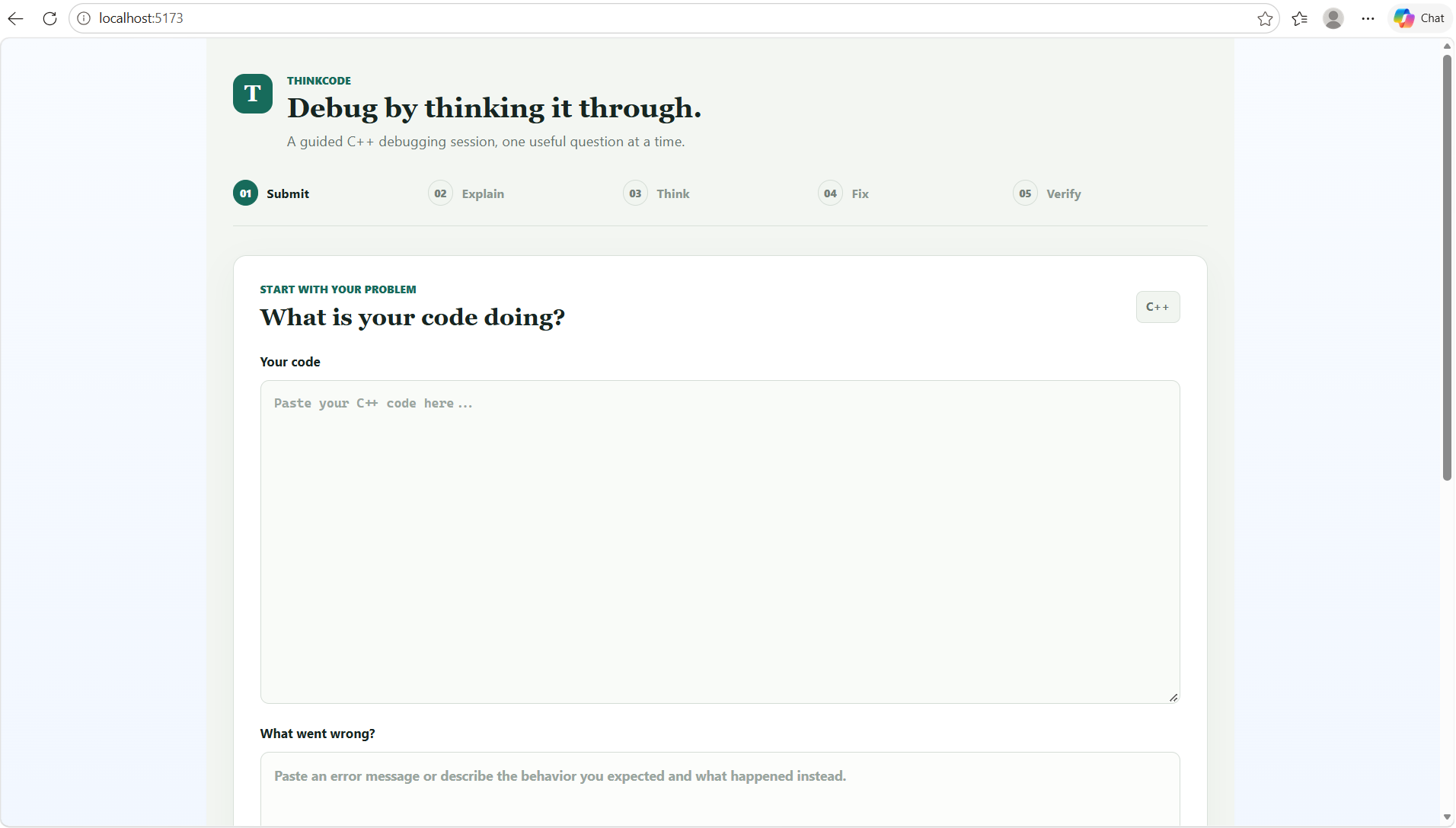
The Submit Page 1
-
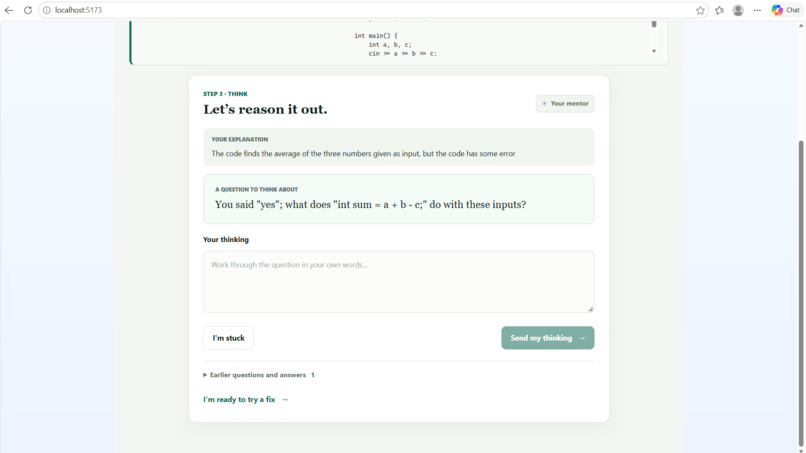
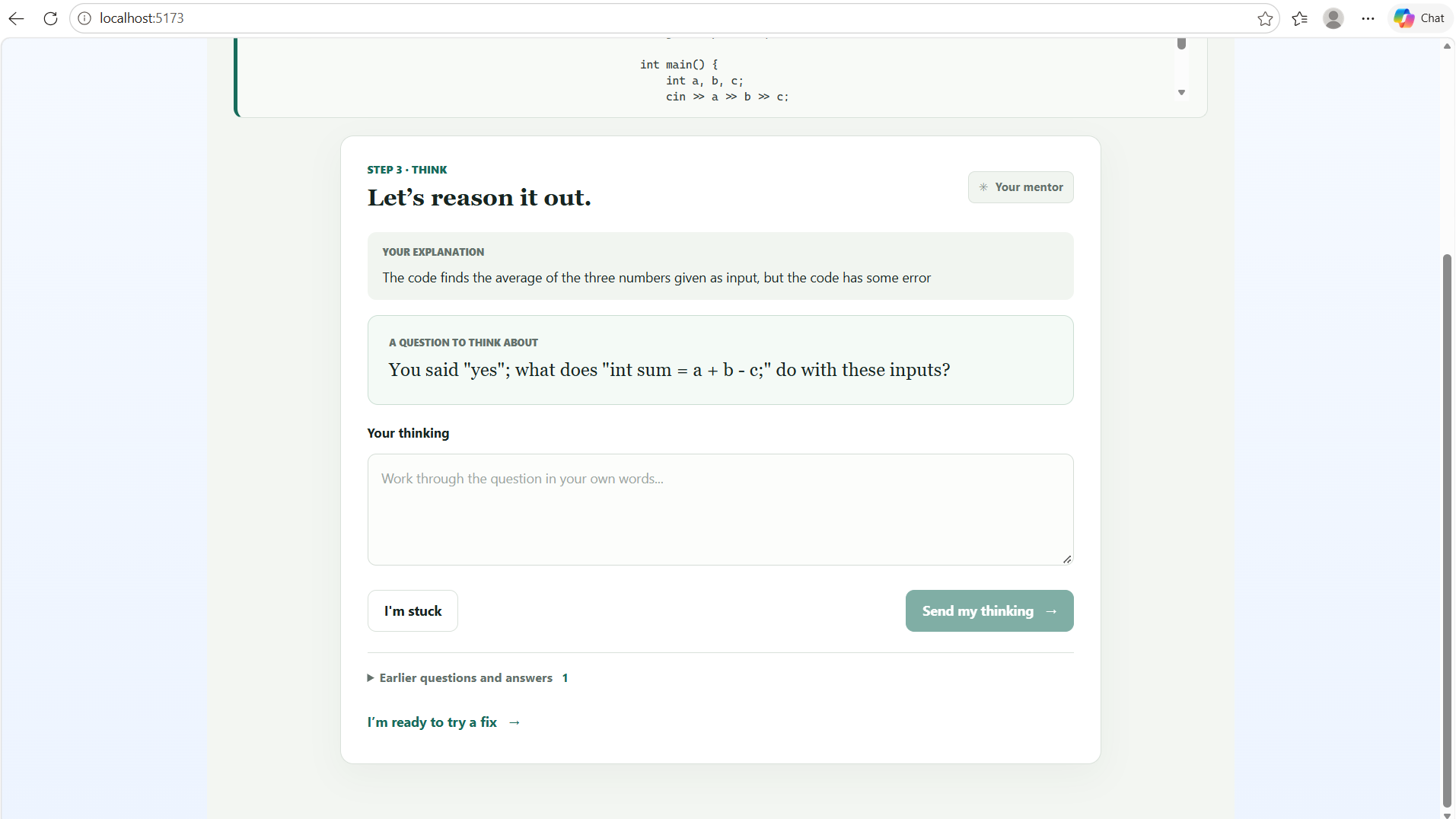
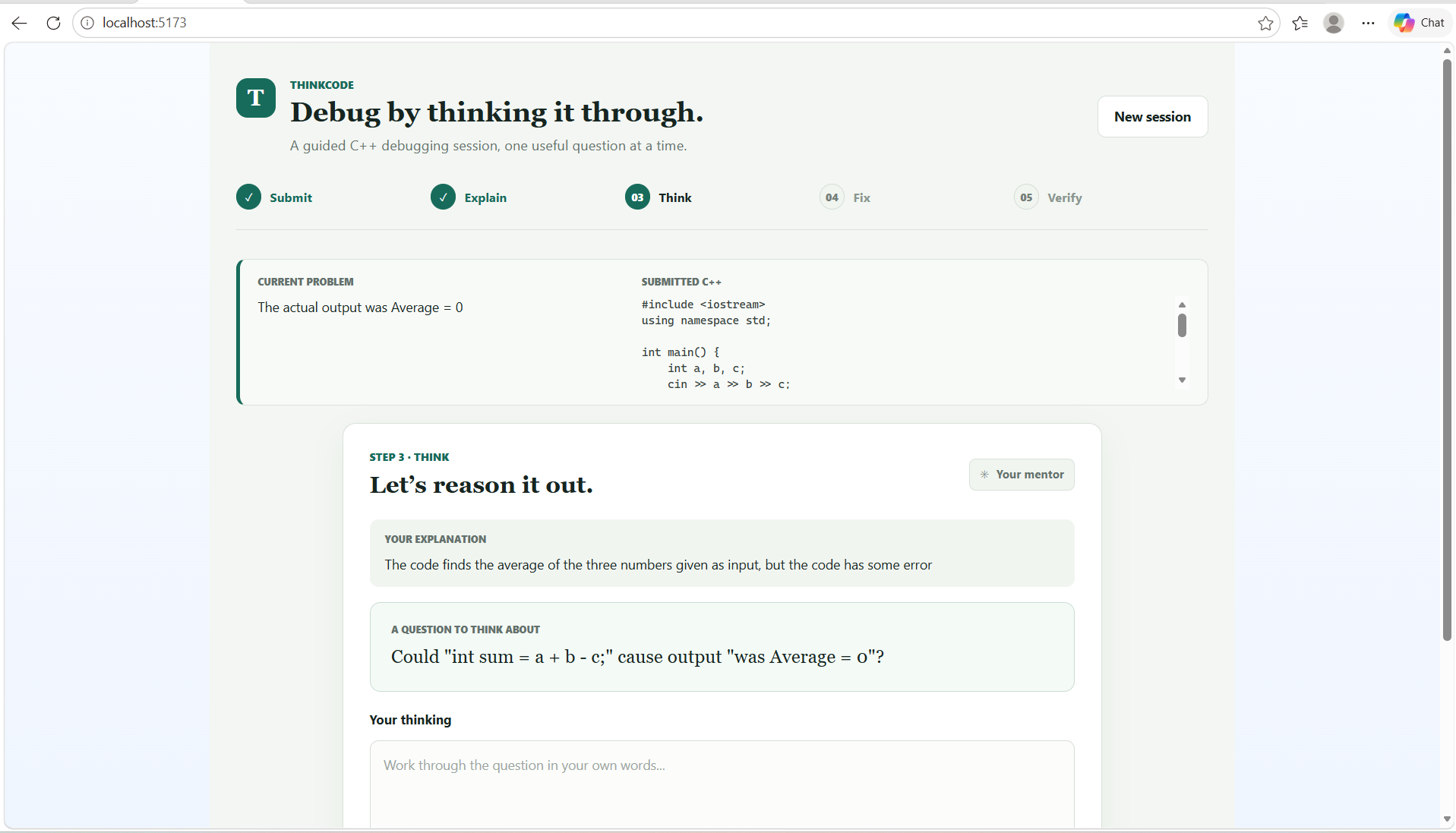
The Think Page
-
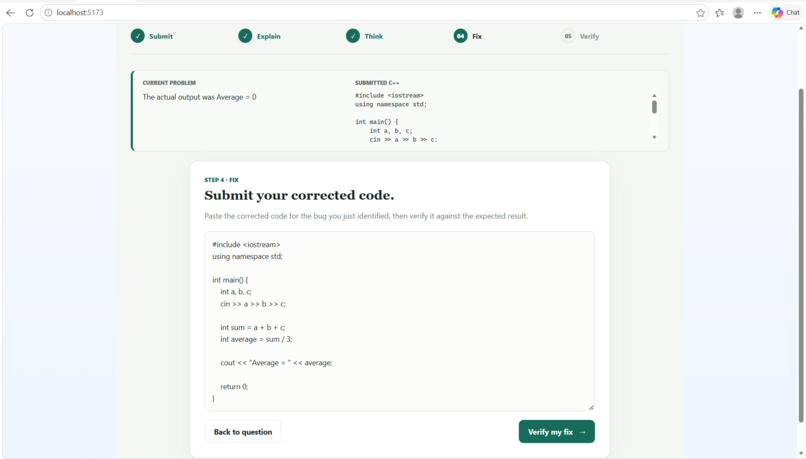
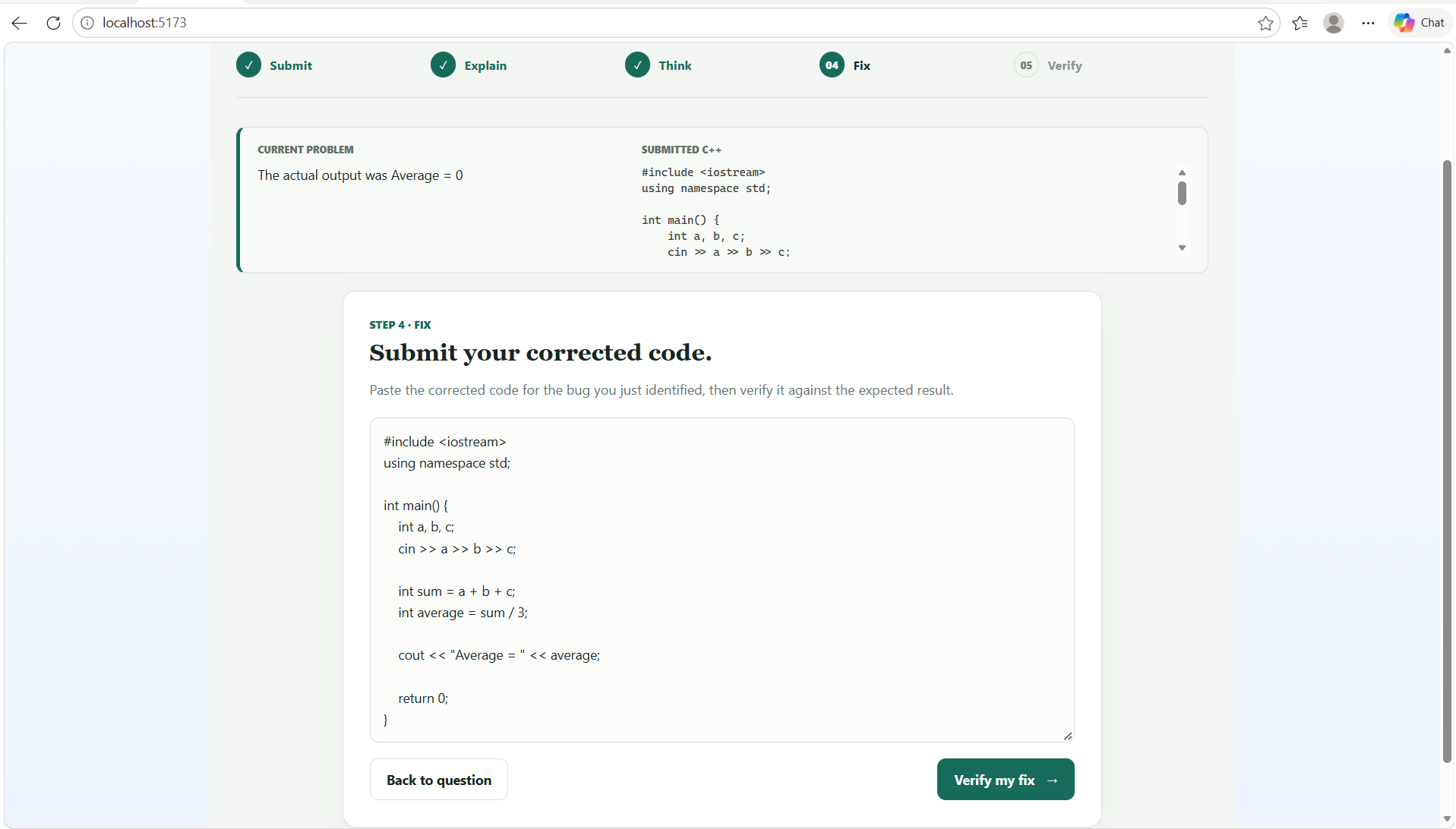
The Fix Page
-
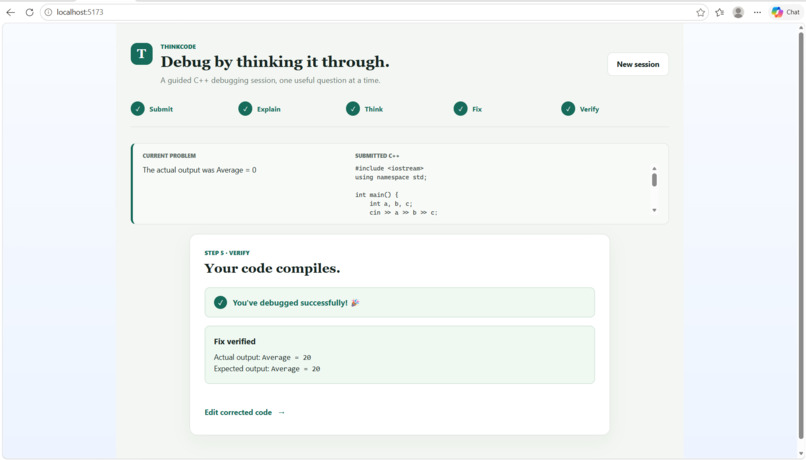
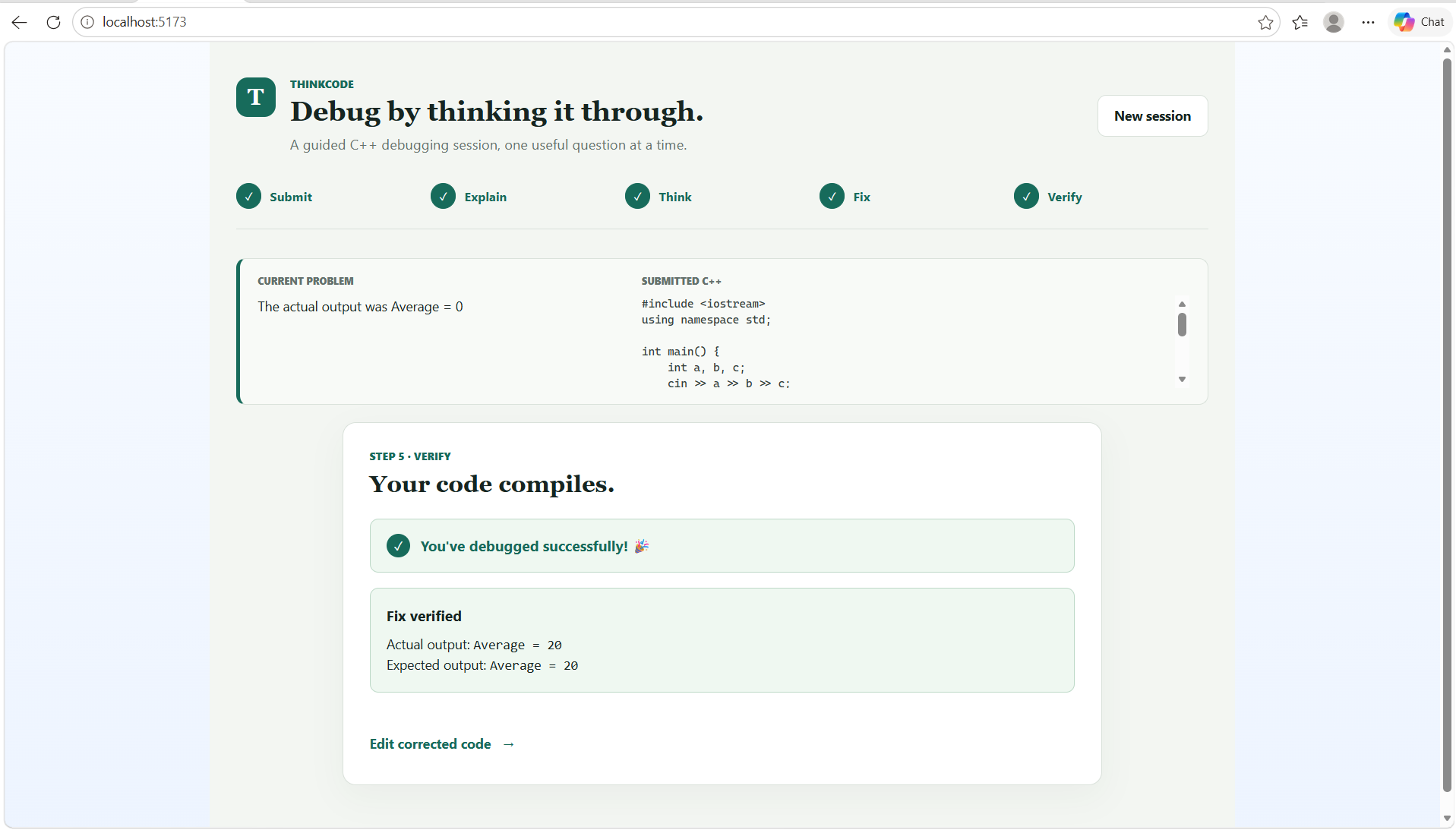
The Verified Page
-
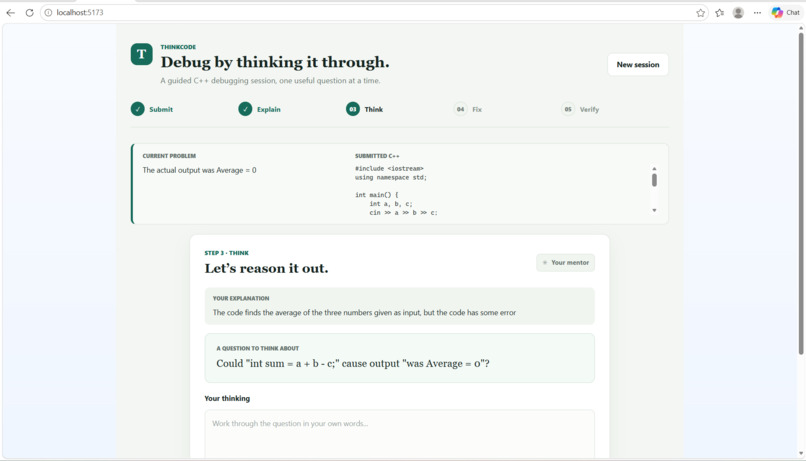
The Explain Page
Inspiration
I noticed that beginners often use AI coding tools to get instant solutions, but this can make them dependent on answers instead of learning how to debug. I wanted to create an AI that acts more like a mentor than an answer generator. That led me to ThinkCode.
What it does
ThinkCode is an AI-powered debugging mentor for beginner C++ programmers. Instead of immediately fixing the code, it asks the learner to explain their thinking, identifies what they need to understand, and asks targeted questions to guide them toward the solution. Once the learner fixes the code, ThinkCode runs it with the same test input and verifies the result.
How I built it
I built ThinkCode as a local browser-based application using React and Vite for the frontend and Node.js with Express for the backend. I designed a structured learning flow: Submit → Explain → Think → Fix → Verify.
I implemented adaptive debugging prompts based on the learner's code and responses, along with C++ compilation and execution for automatic verification. I also added validation so the learner must explain their reasoning before receiving guidance.
During development, I used VS Code Chat as my coding agent to help me work through the project using a spec-driven workflow. I also explored the flipped interaction approach, where the learner explains and reasons first while the AI guides them with questions instead of immediately providing the solution. This approach strongly influenced the way I designed ThinkCode.
Challenges I ran into
One of my biggest challenges was making code verification reliable on Windows. Local execution was blocked by system security policies, so I had to rethink my approach and integrate remote C++ compilation and execution.
I also had to make sure test input and expected output were correctly preserved throughout the debugging session. Designing questions that guide the learner without simply revealing the answer was another important challenge.
Accomplishments I'm proud of
I'm proud that I turned the idea of an AI debugging mentor into a working end-to-end prototype. ThinkCode can take buggy C++ code, understand the debugging context, guide the learner through targeted questions, accept their corrected code, run it, compare the output with the expected result, and confirm successful debugging.
I'm especially proud that the learner remains involved in the reasoning process instead of simply copying an AI-generated fix.
What I learned
I learned that building an AI learning tool is not just about generating good answers. The way an AI guides a learner matters just as much.
Through this project, I learned how to design a Socratic learning flow, work with VS Code Chat as a coding agent, use a spec-driven development approach, handle real-world code execution challenges, connect frontend and backend components, and iterate on the experience based on actual debugging scenarios.
I also learned from the flipped interaction approach that AI can be more useful when it encourages the learner to think first rather than doing all the thinking for them.
What's next for ThinkCode
I want to make ThinkCode more adaptive and personalized as learners progress. Future versions could support more programming languages, richer visual dry-runs, progress tracking, difficulty adaptation, and more sophisticated debugging conversations.My long-term goal is to make ThinkCode a learning companion that helps beginners gradually become confident enough to solve coding problems independently.
Built With
- express.js
- githubcopilot
- node.js
- react
- visualstudiocode
- vite

