Inspiration
What it does
How we built it
Challenges we ran into
Accomplishments that we're proud of
What we learned
What's next for ThinkCode
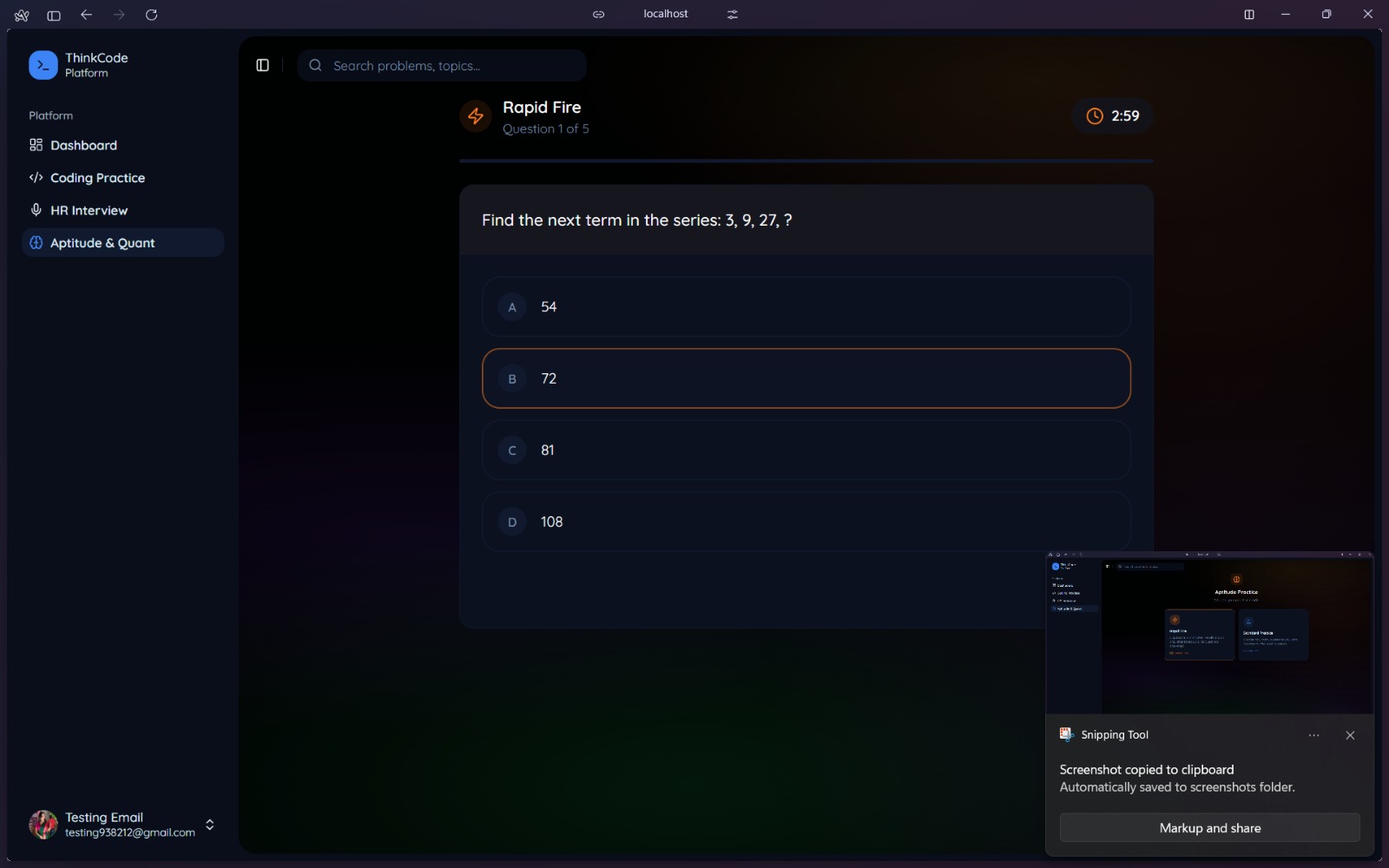
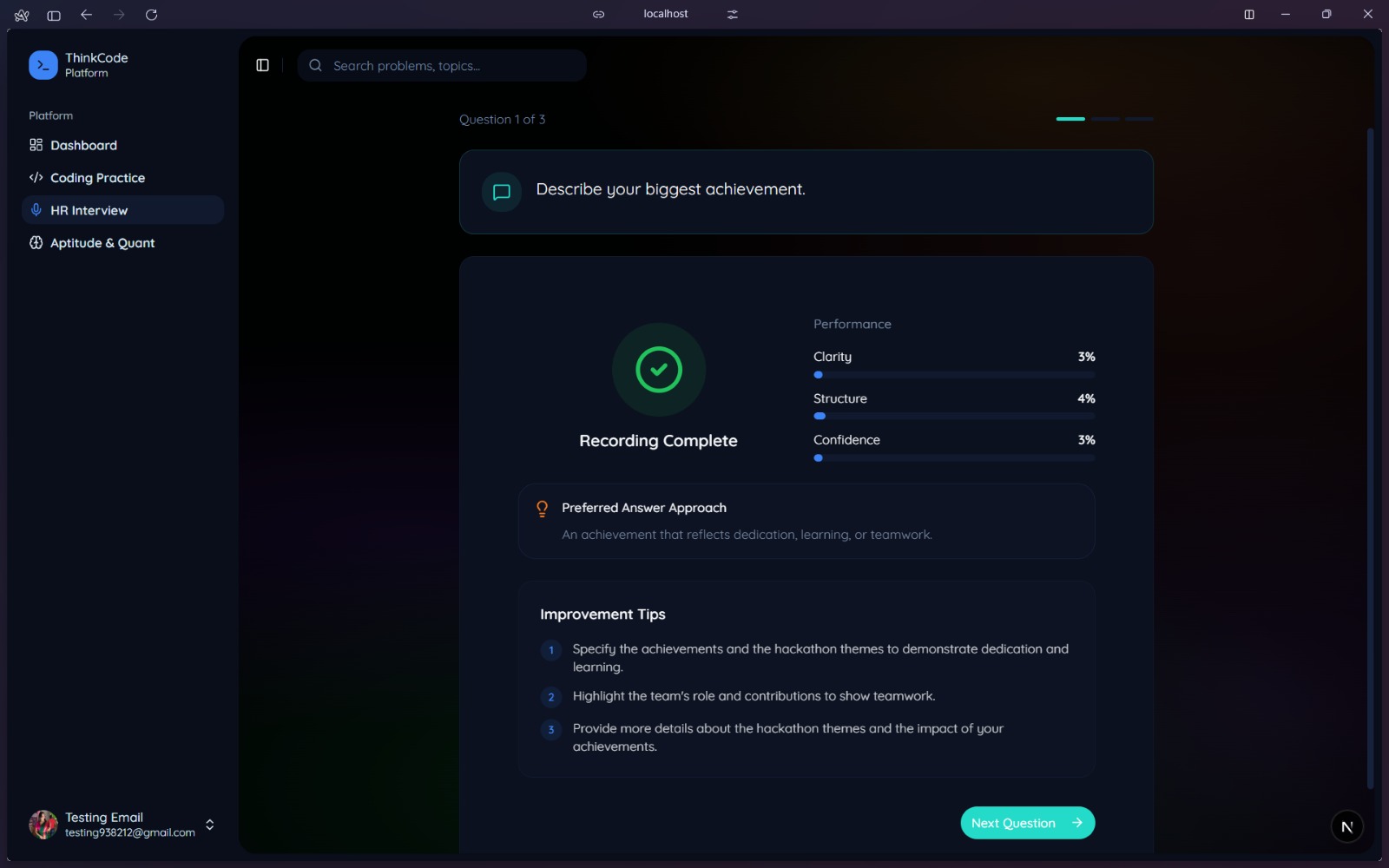
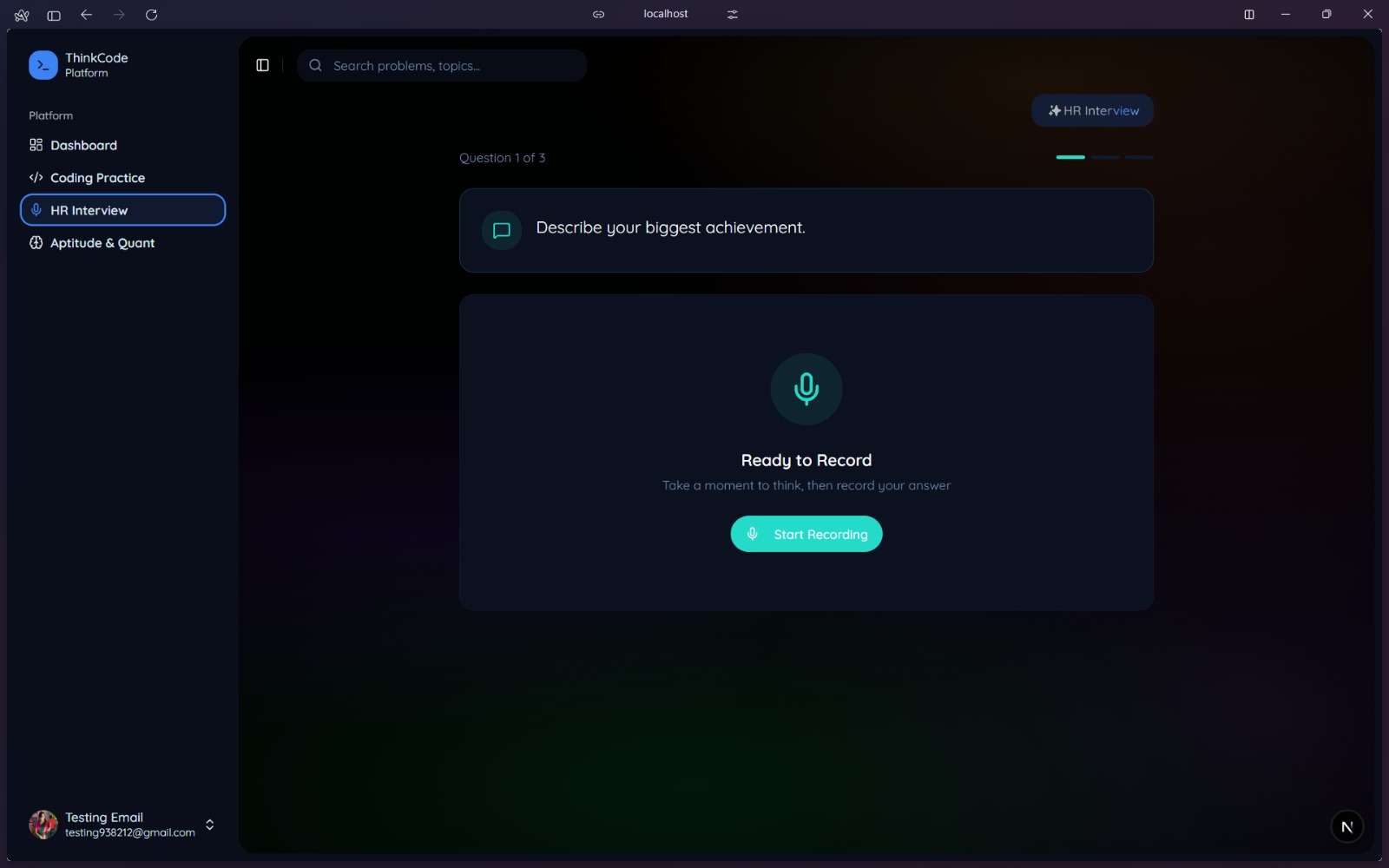
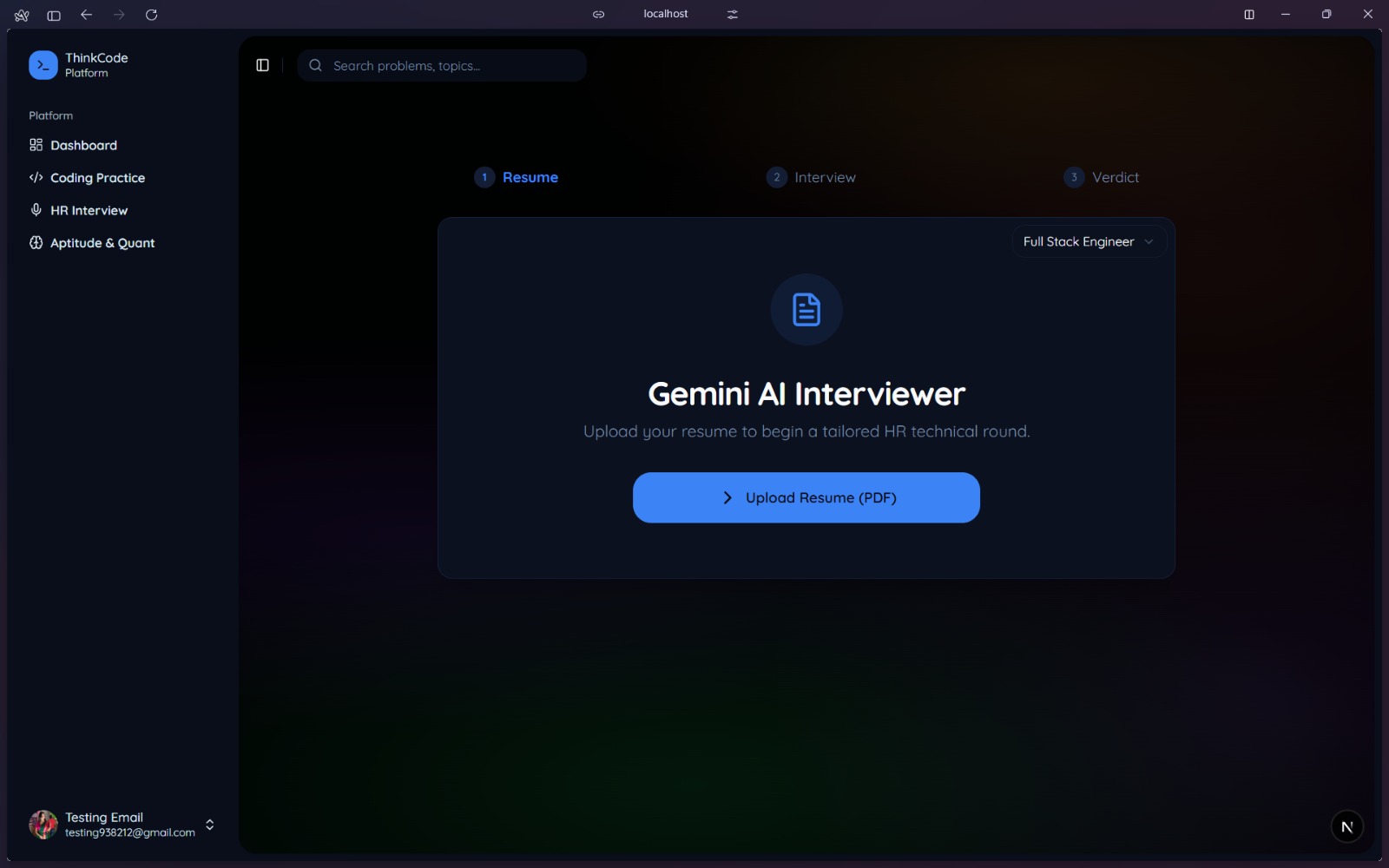
Inspiration Interview preparation today is broken. Most tools throw static questions, generic feedback, or mock tests that don’t actually think like a real interviewer. We wanted to build something closer to a real experience — an interviewer that adapts, probes weaknesses, and forms an actual hiring opinion. The inspiration behind ThinkCode was simple: What if an AI could interview you the way a FAANG interviewer would — based on your background, your answers, and how you think, not just what you say? What it does ThinkCode is a Gemini-powered AI interview agent that conducts a personalized interview from resume to final verdict. Users upload their resume (PDF) Gemini analyzes the resume to understand skills, seniority, strengths, and gaps The AI conducts a live, adaptive interview (HR + technical-style questions) Each response is evaluated on clarity, confidence, and depth The interview dynamically adjusts difficulty and follow-up questions At the end, ThinkCode generates a structured interview report: Hire / Borderline / No-Hire verdict Confidence score Strengths and growth areas Actionable improvement suggestions In short: it’s not a chatbot — it’s an interviewer agent. How we built it We built ThinkCode end-to-end within the hackathon timeframe with a strong focus on Gemini-first design. Tech stack & approach: Google Gemini API (gemini-2.5-flash-lite) for all reasoning and evaluation NestJS backend with a clean service-based architecture Next.js frontend for a smooth, guided interview experience Resume parsing via PDF extraction → Gemini context generation Prompt-driven structured outputs (JSON) instead of hardcoded logic In-memory interview sessions to keep the system fast and demo-safe Strict rate-limiting to stay within free-tier Gemini constraints Every major decision was optimized for stability, speed, and clarity in demo. Challenges we ran into Gemini ≠ OpenAI: We had to unlearn OpenAI-style assumptions (schemas, function calling) and rely on precise prompt engineering instead. Free-tier rate limits: Required careful throttling and batching to avoid runtime failures. PDF parsing inconsistencies: Not all resumes extract cleanly, so we added guards to ensure Gemini only processes meaningful text. Balancing scope: We intentionally dropped features like profiles, history, and analytics to focus on what judges actually see — the AI behavior. These constraints forced us to design smarter, not bigger. Accomplishments that we're proud of Built a true AI agent, not a static Q&A bot Successfully combined multimodal input (PDF + voice/text) with reasoning Achieved resume-aware, adaptive interviewing within hours Delivered a clear, end-to-end demo flow that judges can immediately understand Made Gemini the core decision-maker, not a side feature Most importantly, the product feels intelligent when you use it. What we learned Hackathons reward clarity and AI impact, not feature count Prompt engineering is more powerful than rigid schemas for Gemini Reliability > sophistication in live demos Cutting features is often the fastest way to improve a product AI agents are about state + reasoning, not just responses This project sharpened both our technical execution and product thinking. What's next for ThinkCode After the hackathon, we plan to: Add real-time speech-to-text for fully voice-based interviews Expand to role-specific interviews (Backend, Frontend, Data, System Design) Introduce multi-round interview simulations Persist interview history and progress tracking Explore enterprise use cases for candidate screening and training ThinkCode has the potential to evolve from a hackathon prototype into a full-fledged AI interview platform.


Log in or sign up for Devpost to join the conversation.