Inspiration
Our inspiration for HealthGuardian stems from the critical need for accessible and timely health assessments based on common symptoms. In a world where healthcare access can be limited or delayed, we wanted to create a tool that provides users with immediate insights into their potential health conditions. By leveraging technology, we aimed to offer a solution that supports early detection and informed decision-making for better health management.
What it does
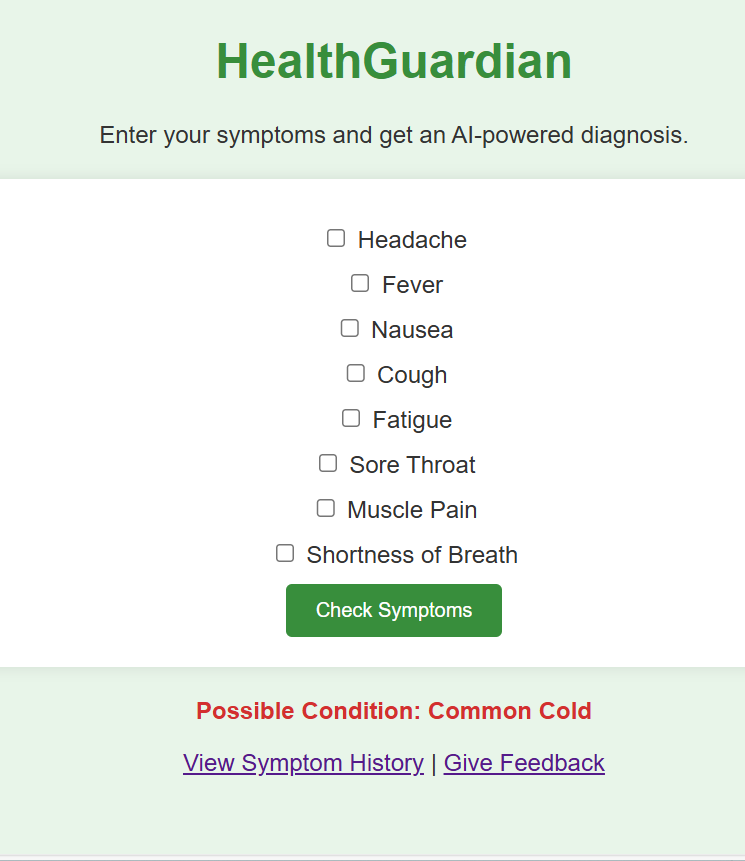
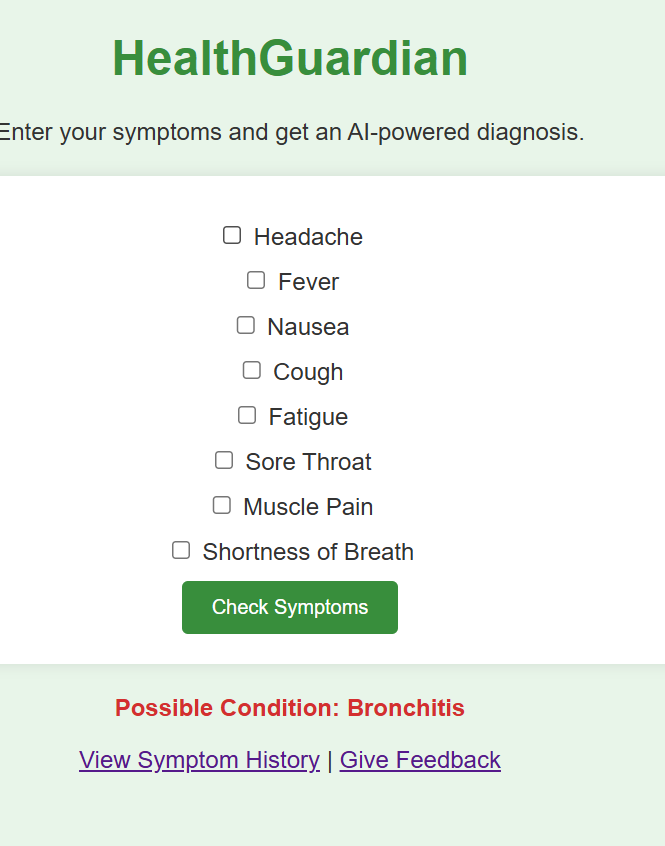
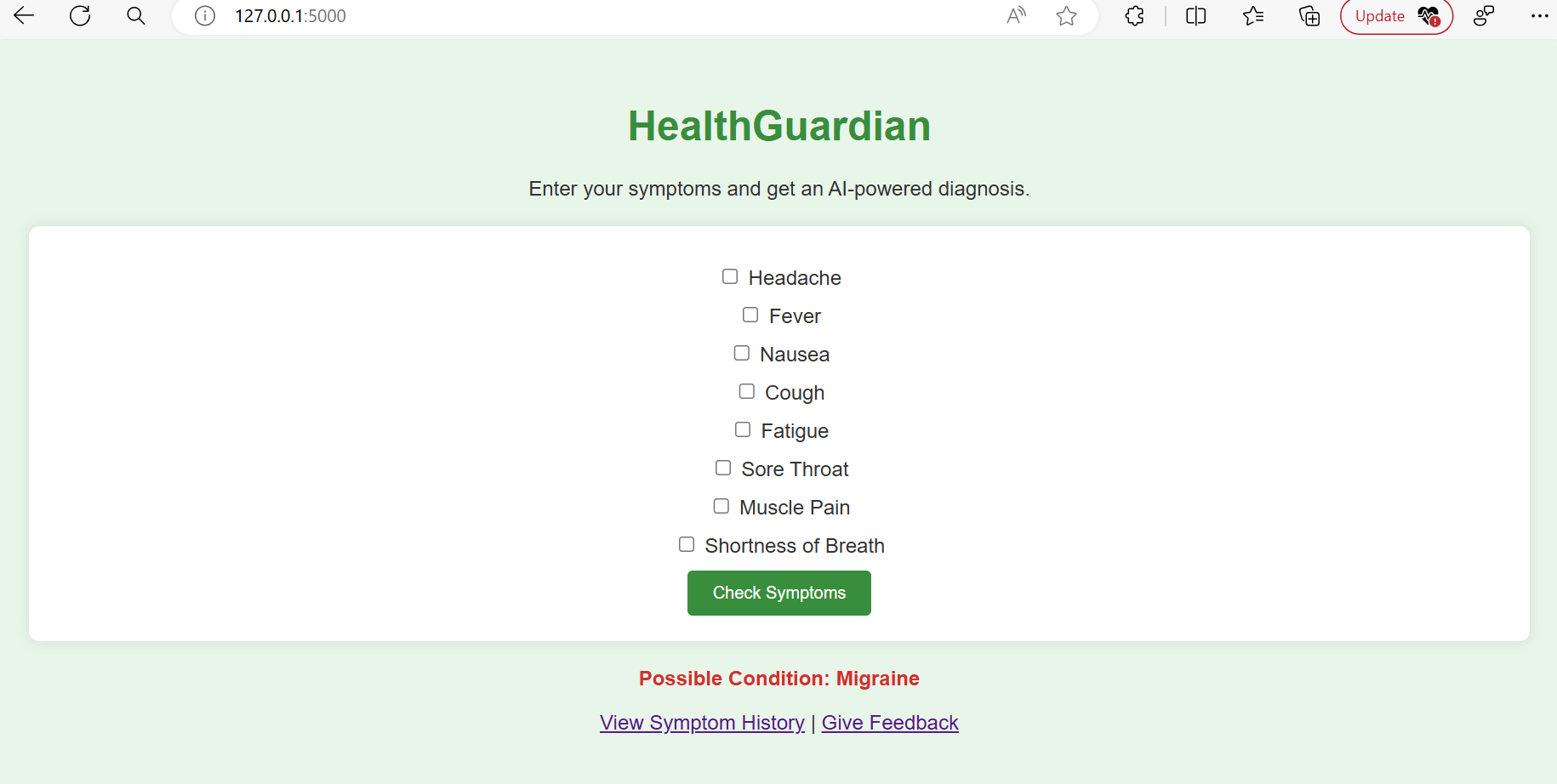
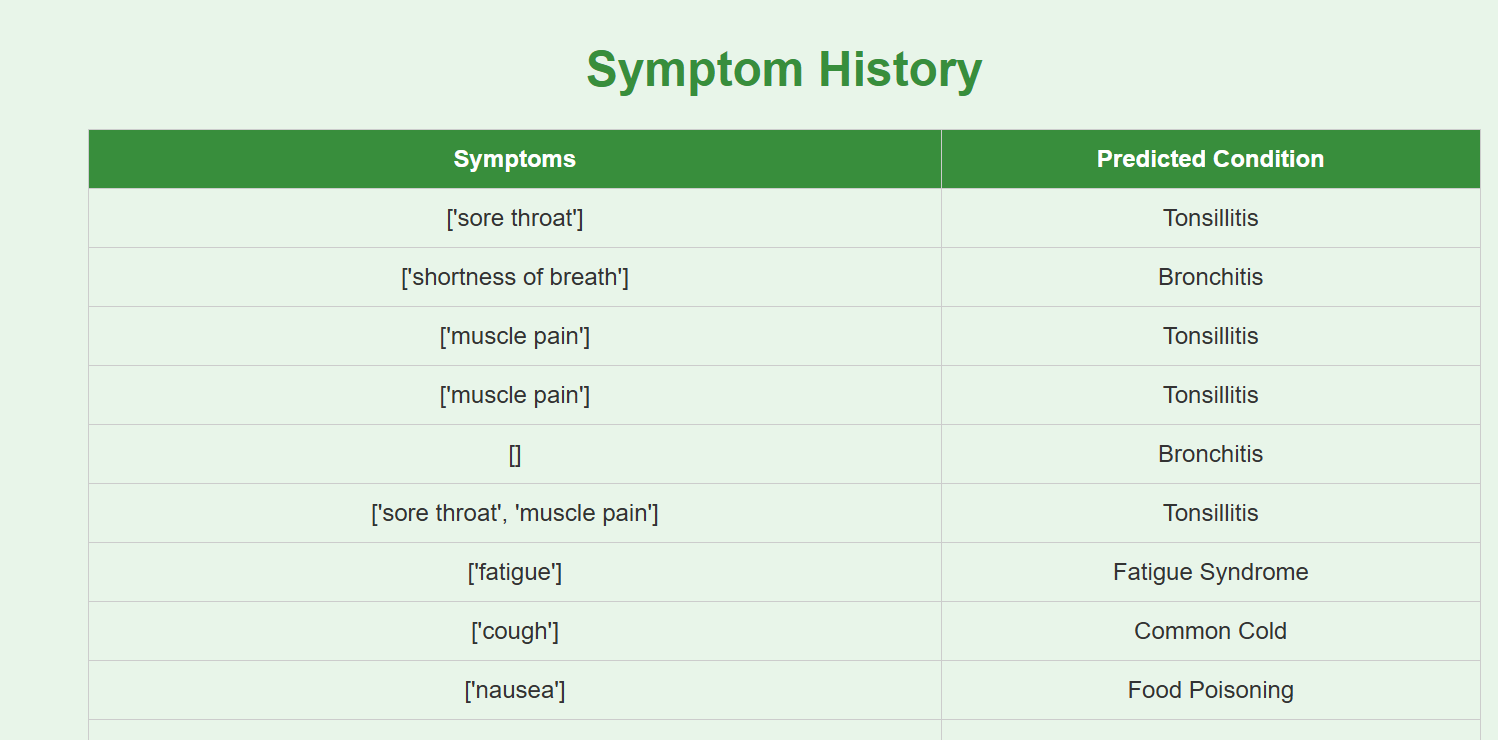
HealthGuardian is an intelligent health assessment tool designed to predict possible health conditions based on user-reported symptoms. By simply inputting their symptoms into the web interface, users receive a list of potential conditions that may be causing their symptoms
How we built it
To bring HealthGuardian to life, we began by curating a dataset containing common symptoms and their associated health conditions. Using TensorFlow and Keras, we developed and trained a neural network model to classify symptoms into various conditions. The model was then integrated into a Flask-based web application, with a user-friendly frontend built using HTML and CSS. This integration allows users to interact with the model seamlessly and receive real-time predictions.
Challenges we ran into
Throughout the development process, we encountered several challenges. Initially, we faced difficulties with the quality and quantity of our dataset, which needed to be comprehensive and accurate.
Accomplishments that we're proud of
We take pride in having developed a functional prototype of HealthGuardian that reliably predicts health conditions based on symptoms. The creation of an intuitive and user-friendly web interface was a significant accomplishment, making the tool accessible and easy to use.
What we learned
The project taught us several valuable lessons. We learned about the critical importance of data quality and preprocessing in training effective machine learning models. We gained insights into optimizing neural network models to enhance their performance. Additionally, we discovered best practices for integrating machine learning models with web applications, which was crucial for creating a seamless user experience.
What's next for Think Smart
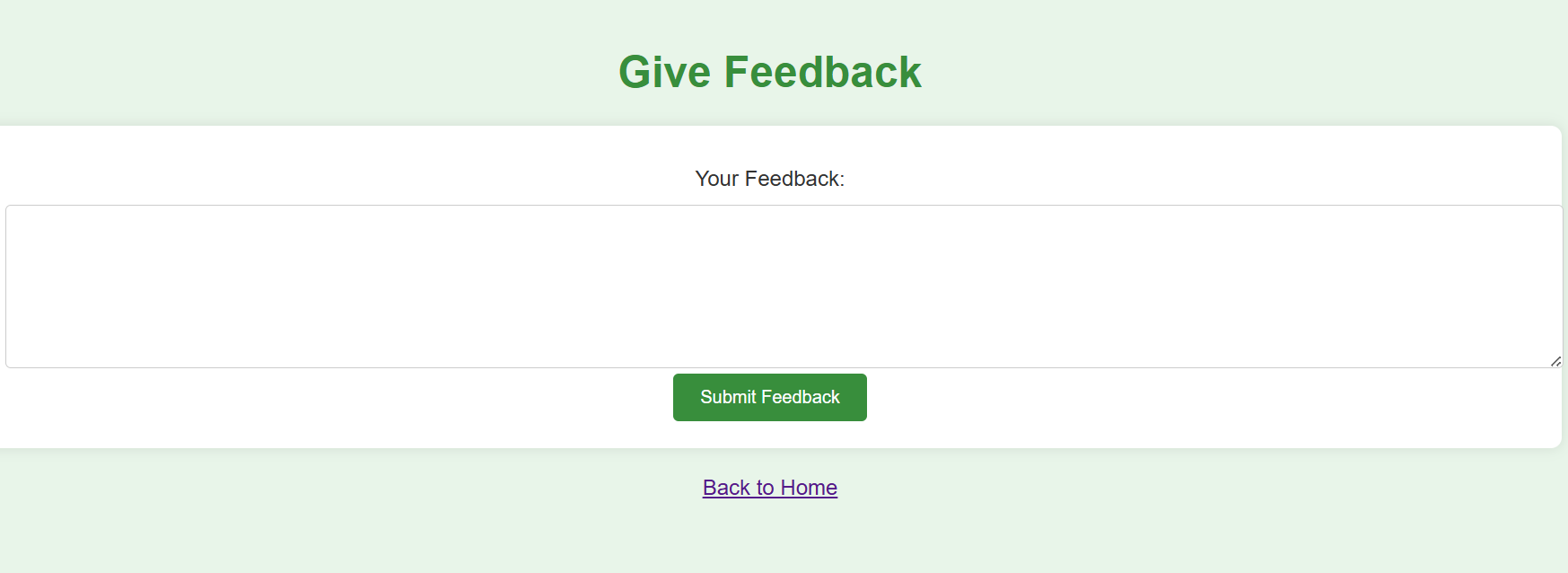
Looking ahead, we plan to expand our dataset to include a wider range of symptoms and conditions, further improving the model's accuracy and applicability. We also aim to explore advanced machine learning techniques to enhance the model’s predictive capabilities. Collecting and analyzing user feedback will be vital for refining the interface and overall functionality.
Built With
- flask
- html/css
- javascript
- python
- tensorflow

Log in or sign up for Devpost to join the conversation.