🧠 Think-Aloud Debugger
💡 Inspiration
The inspiration for Think-Aloud Debugger came from a simple but recurring frustration I faced as a developer: traditional debugging tools are excellent at pointing out what is broken, but they almost never explain why the mistake happened in the first place. Most bugs are not syntax errors—they are the result of incorrect assumptions, flawed mental models, or misunderstood control flow.
I wanted to build something different: a debugger that behaves more like a thinking partner than a static analyzer. Instead of just fixing code, it should help developers understand their own reasoning, reflect on mistakes, and improve how they think about programming. This idea naturally aligned with the reasoning-first capabilities of Gemini 3.
🛠️ How I Built the Project
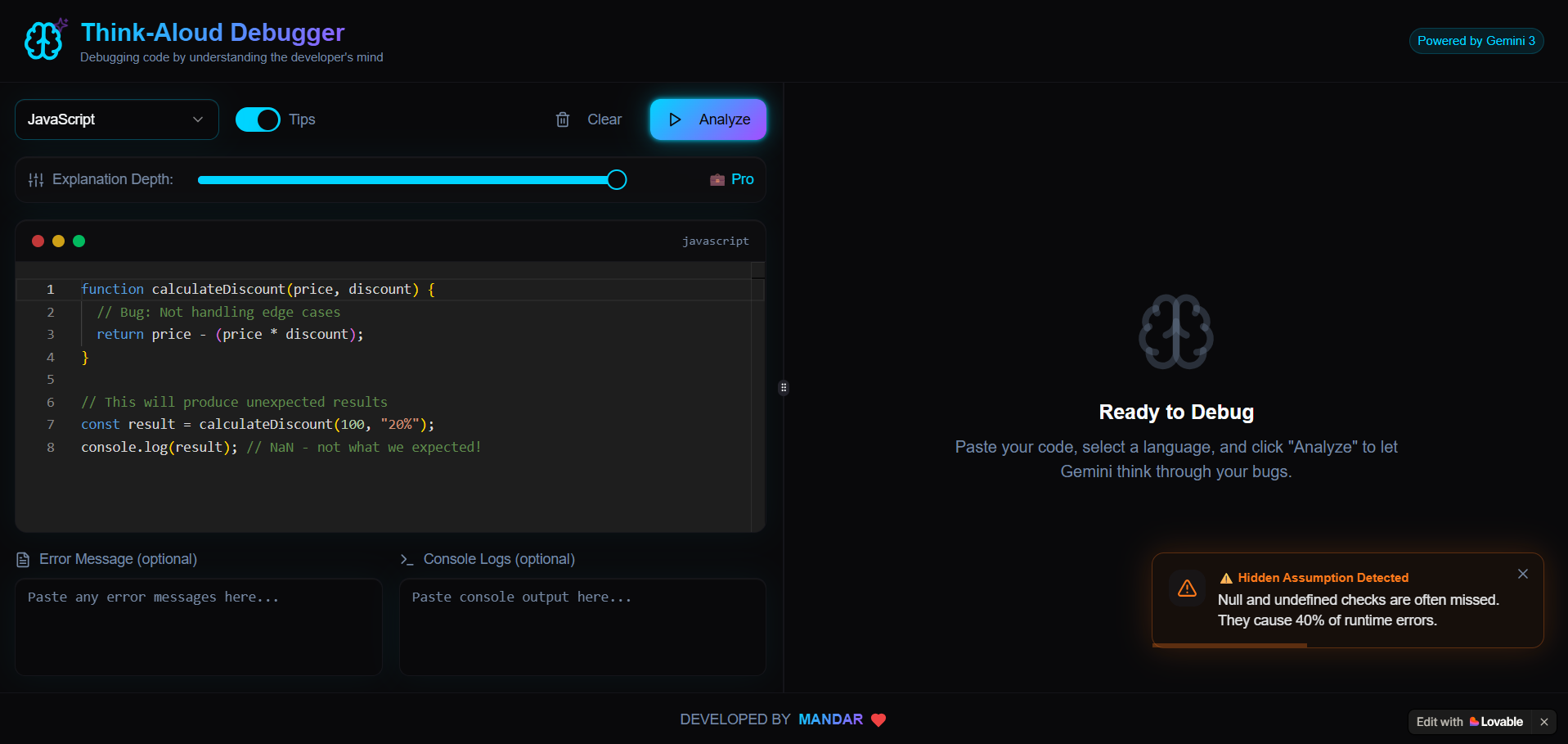
The application was built as a web-based debugging tool and deployed using Lovable, which enabled rapid iteration and public accessibility. The frontend provides a dark-themed, developer-friendly interface with a code editor where users can paste code written in any programming language.
At the core of the system is the Google Gemini 3 API, which acts as the sole intelligence layer. When code is submitted, the backend sends the code (and optional error messages or logs) to Gemini 3. Gemini performs long-context reasoning to analyze the logic, infer the developer’s likely assumptions, and generate a structured explanation of the issue.
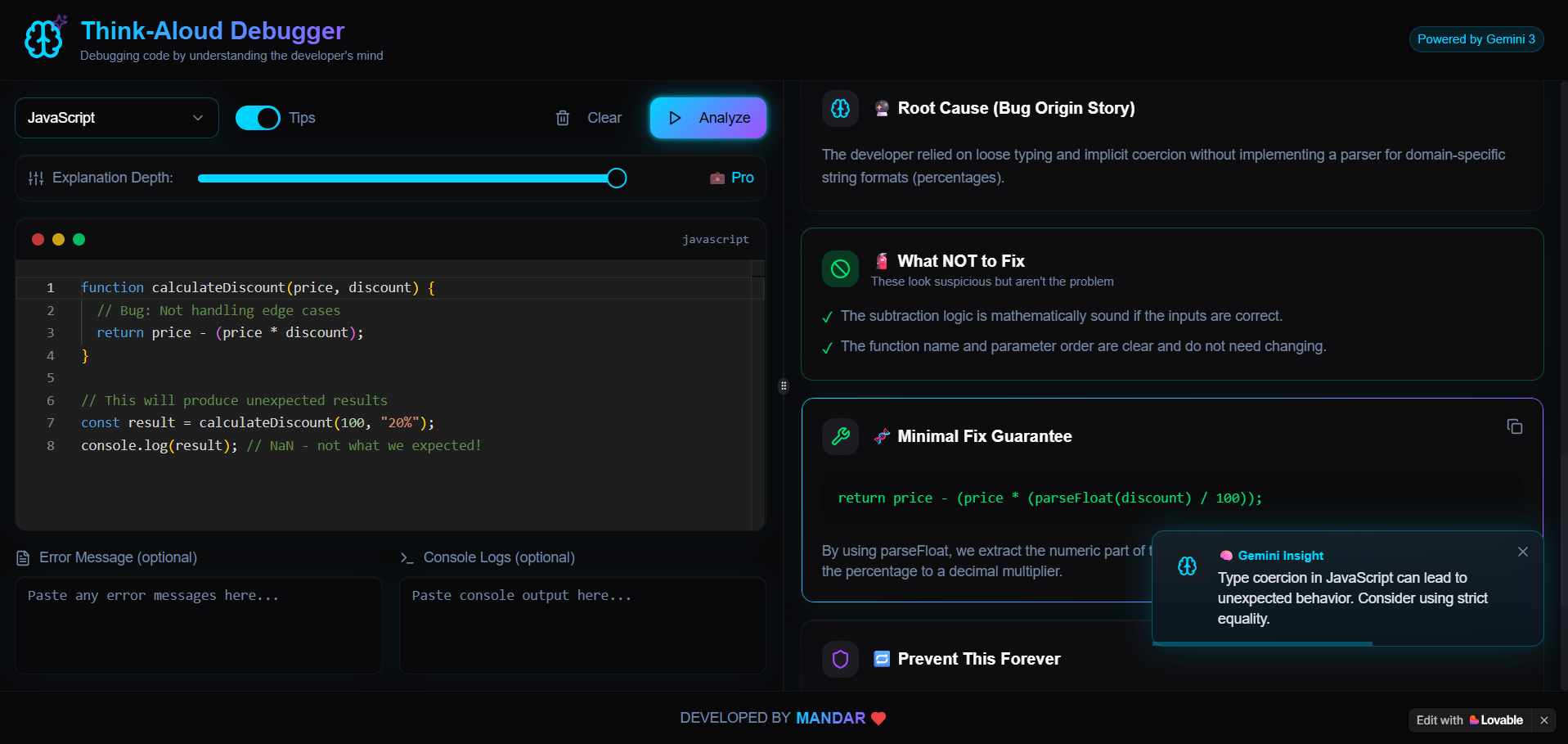
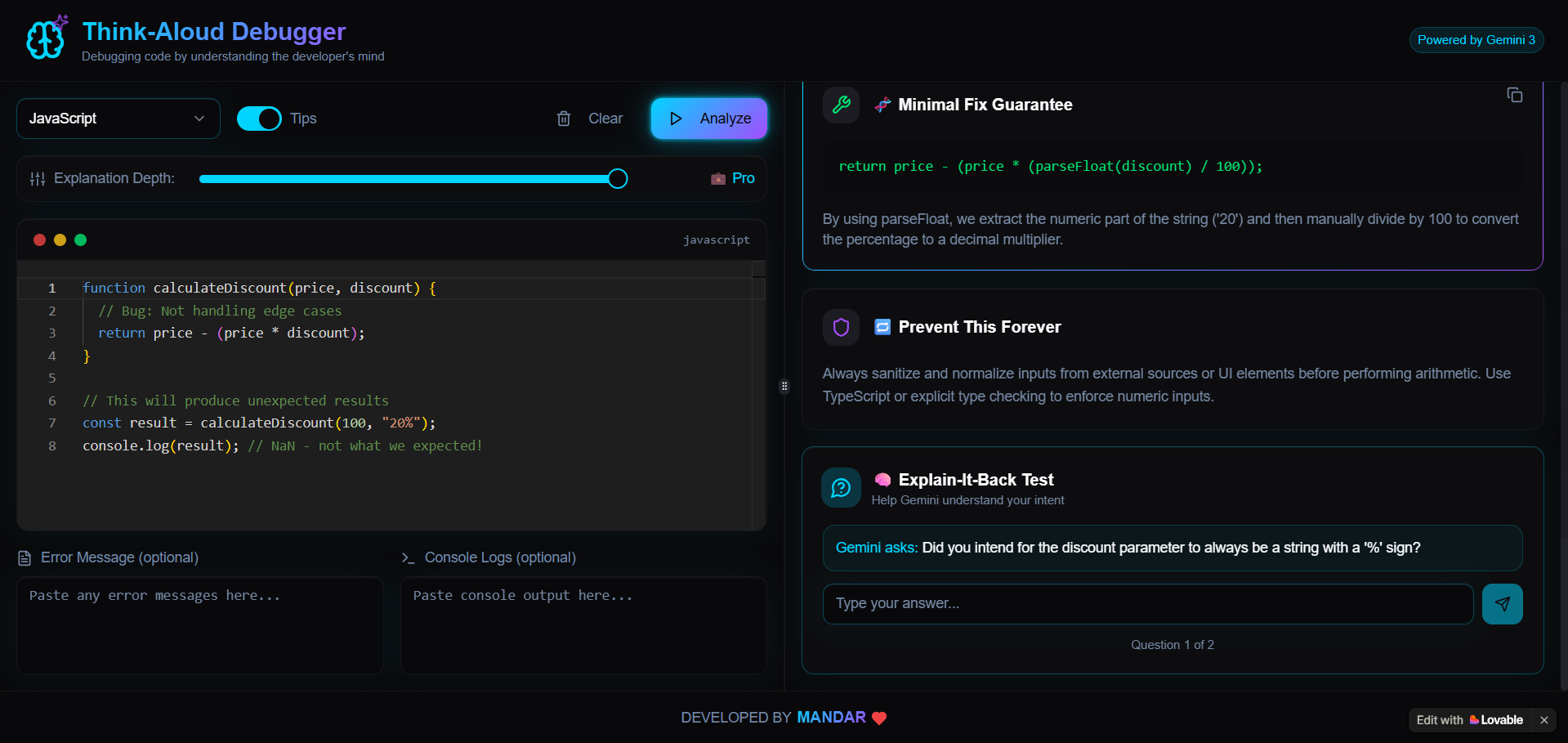
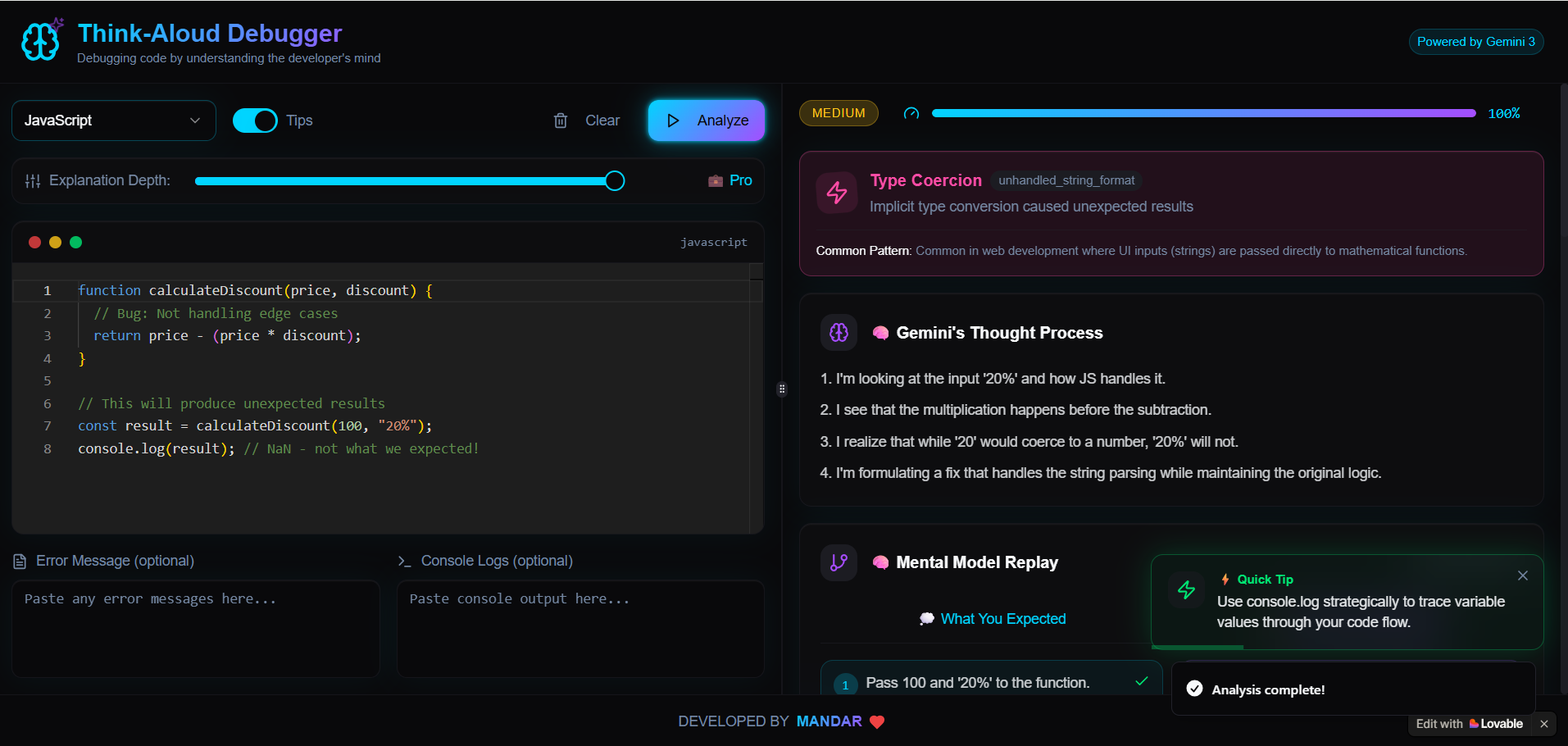
Gemini’s output is organized into clear sections such as observed behavior, inferred assumptions, reasoning breakdown, and minimal fixes. This design ensures that the AI is not just correcting errors, but explicitly explaining the thinking patterns behind them.
📚 What I Learned
Through this project, I learned how powerful large-context reasoning models can be when they are used for cognitive analysis, not just text generation. Prompt design played a crucial role—small changes in structure significantly affected whether Gemini explained logic versus merely restating errors.
I also gained practical experience designing AI-first products, where the model is not an add-on but the central feature. This shifted my mindset from “building around AI” to “building with AI.”
⚠️ Challenges Faced
One of the main challenges was balancing depth and clarity. Debug explanations can quickly become overwhelming, so I had to carefully guide Gemini to produce explanations that were detailed yet easy to follow.
Another challenge was encouraging the model to infer developer intent and assumptions, which required iterative prompt refinement. Ensuring multilingual support and consistent explanations across different programming languages was also non-trivial.
Despite these challenges, the result is a tool that transforms debugging into a learning experience rather than a trial-and-error process.
Think-Aloud Debugger represents my vision of the future of developer tools—AI systems that don’t just solve problems, but help humans think better.
Developed by Mandar
Built With
- css3
- express.js
- gemini3api
- git
- googleaistudio
- html5
- javascript
- lovable
- monacoeditor
- node.js
- restapi
- vercel


Log in or sign up for Devpost to join the conversation.