Thikra

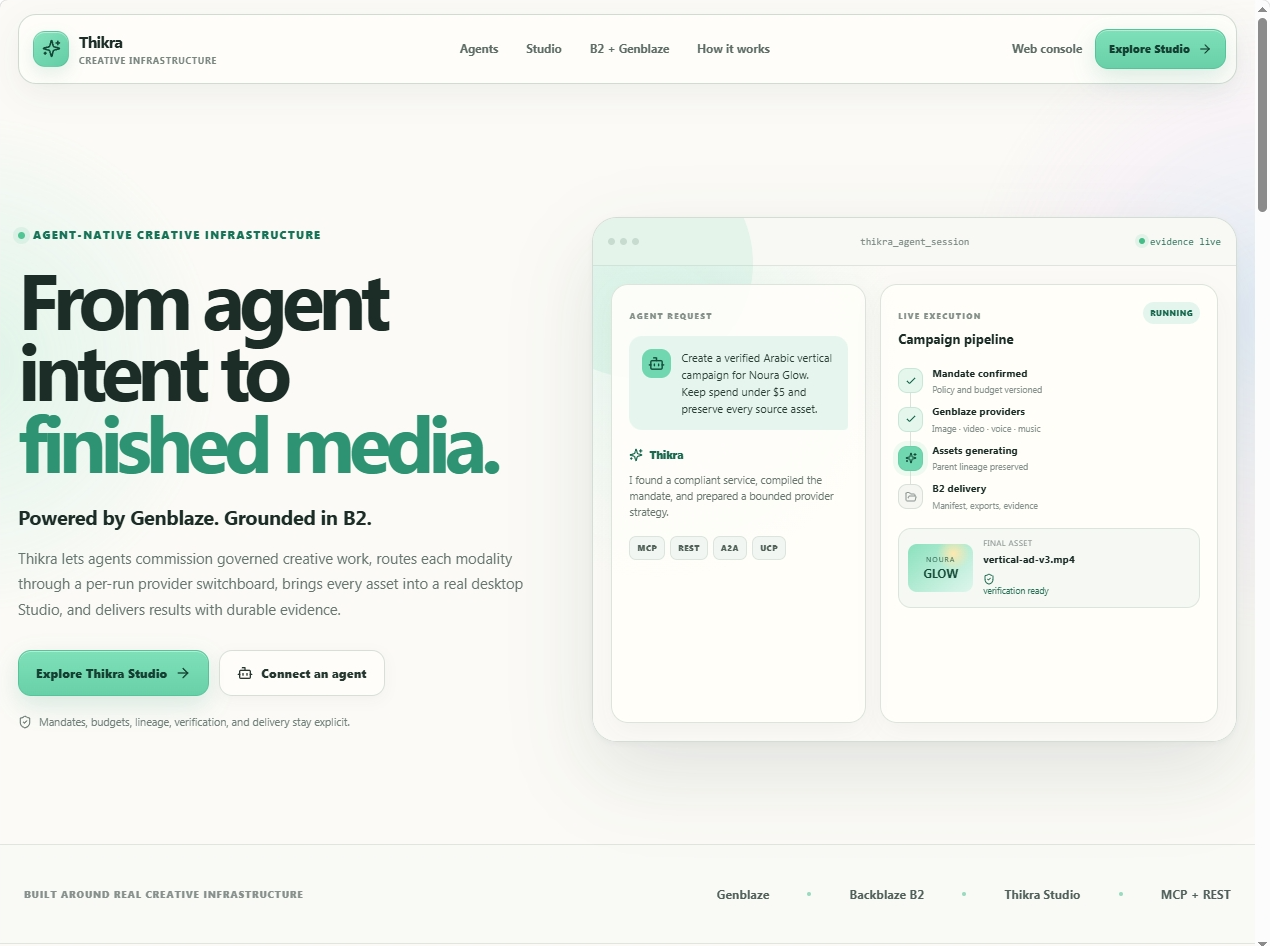
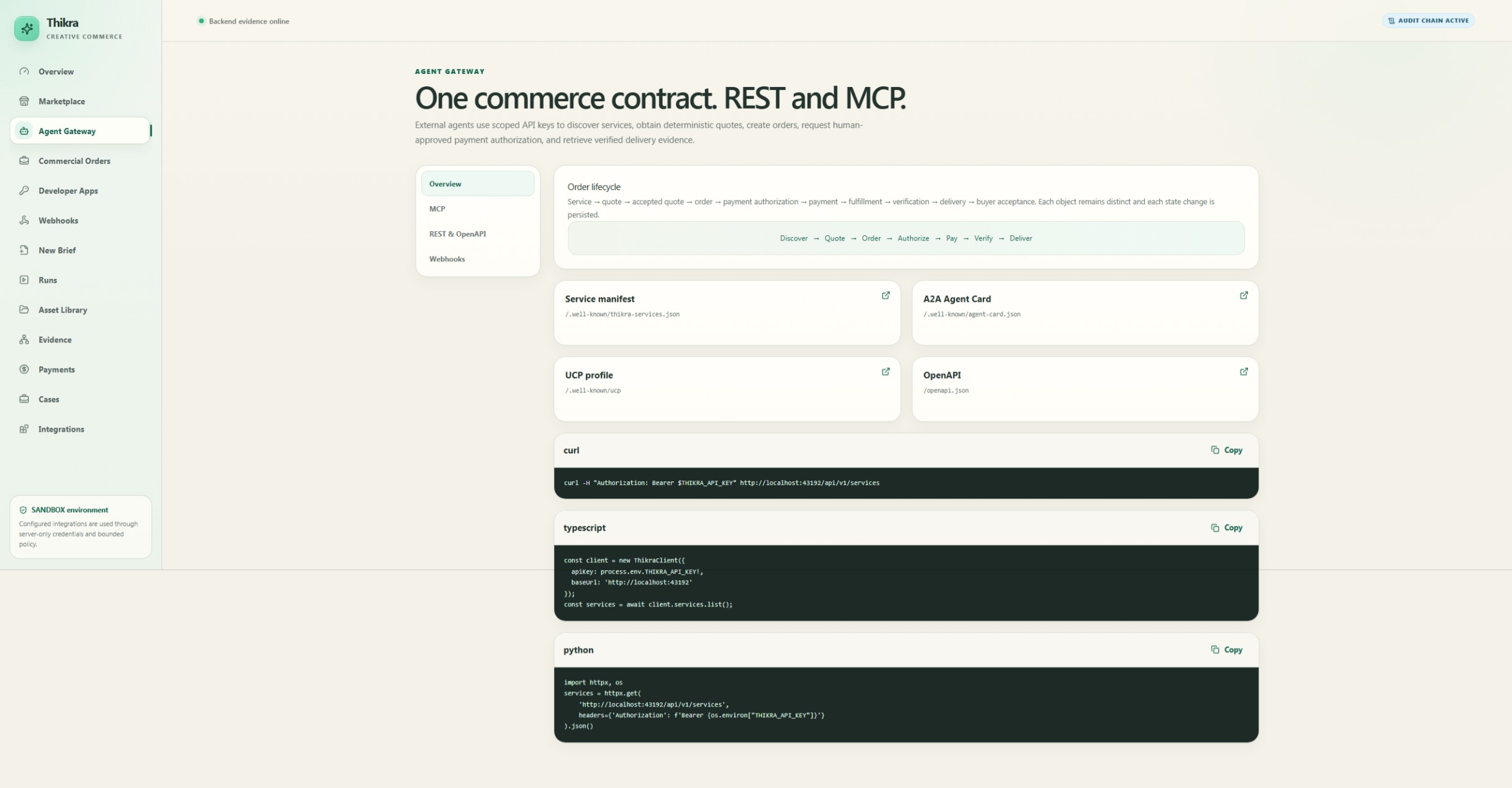
Thikra is an agent-operated media generation and oversight platform. It allows autonomous agents to create media, select AI providers, make payments, and preserve the complete history behind every action.
Every instruction. Every action. Every payment. Remembered.
Inspiration
Thikra was inspired by three tools and ideas we wanted to bring together.
The first was CapCut, which makes complex media creation feel like one connected workflow rather than a collection of disconnected tools. The second was ComfyUI, where generation is treated as a visible pipeline made of models, providers, inputs, and outputs. The third was Codex, one of our favorite tools for building and operating software through natural-language instructions.
We wanted to explore what would happen if Codex, or any other autonomous agent, could generate complete media projects across multiple AI providers without forcing the user to manually move between image, video, voice, music, storage, and payment services.
However, once agents can independently choose providers and spend money, generation is no longer only a creative problem. It also becomes a question of authority, budgets, approvals, traceability, and accountability.
That led us to Thikra, an Arabic word meaning memory: a system that allows agents to create and pay while preserving the complete history behind every output.
What it does
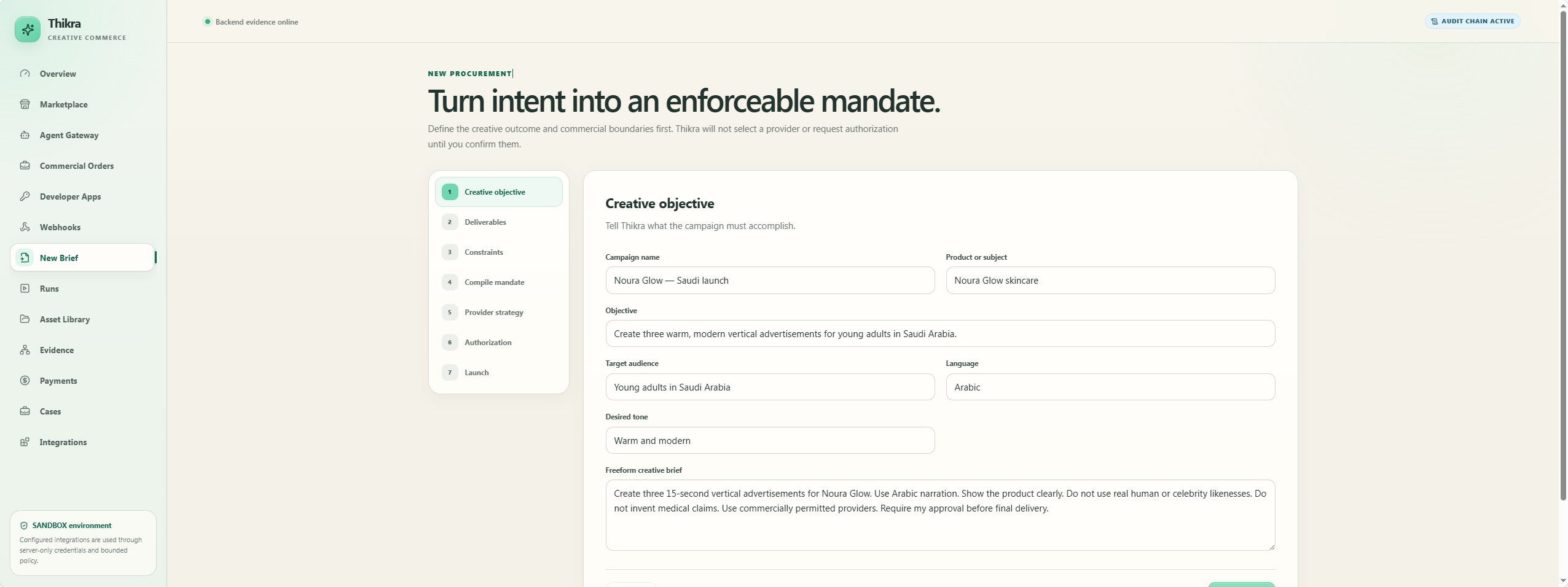
Thikra turns a user or agent request into a controlled media-generation workflow.

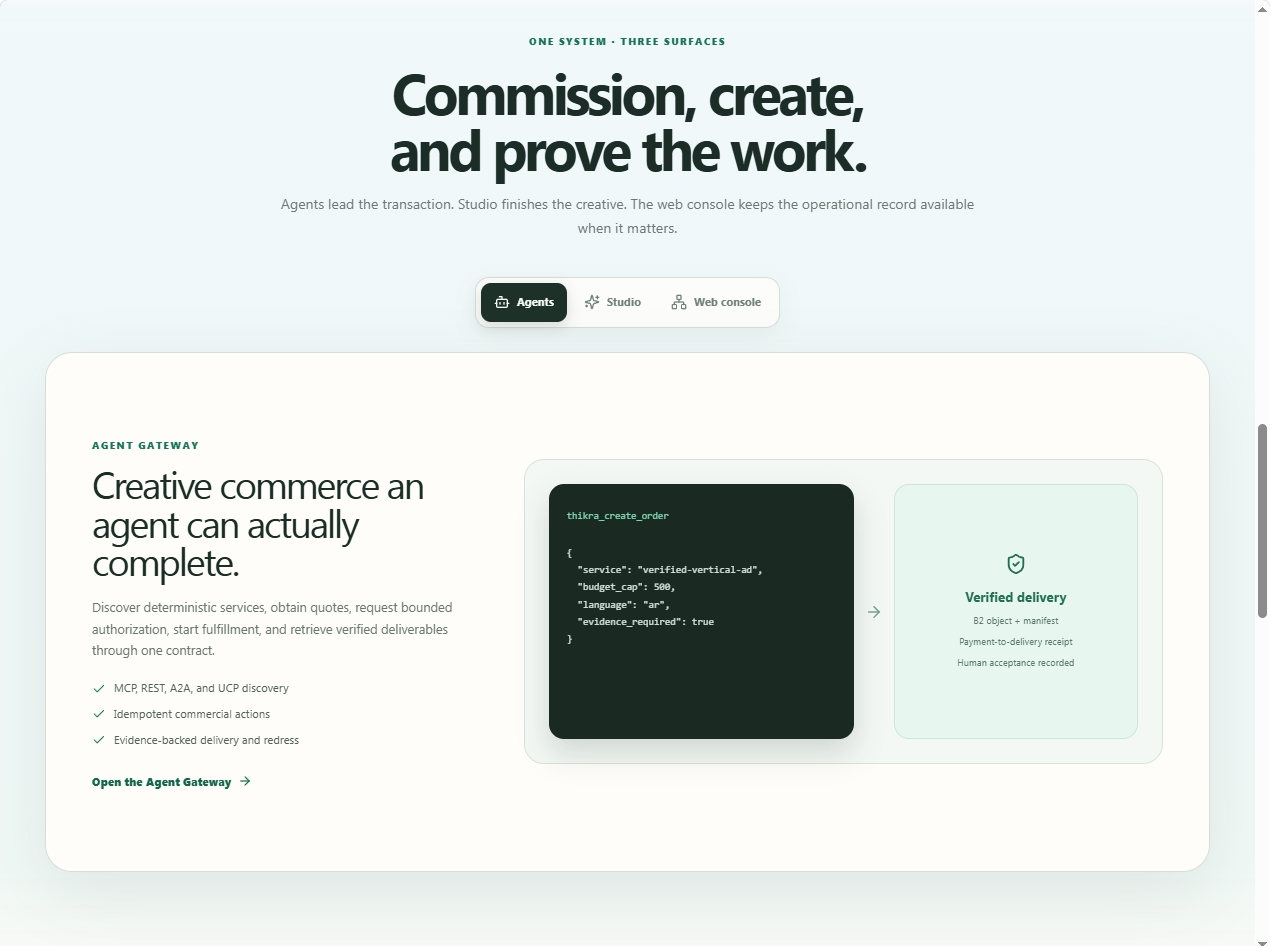
A user or external agent describes the media it wants to create. Thikra converts that request into a structured workflow that can generate images, videos, narration, and music through Genblaze.
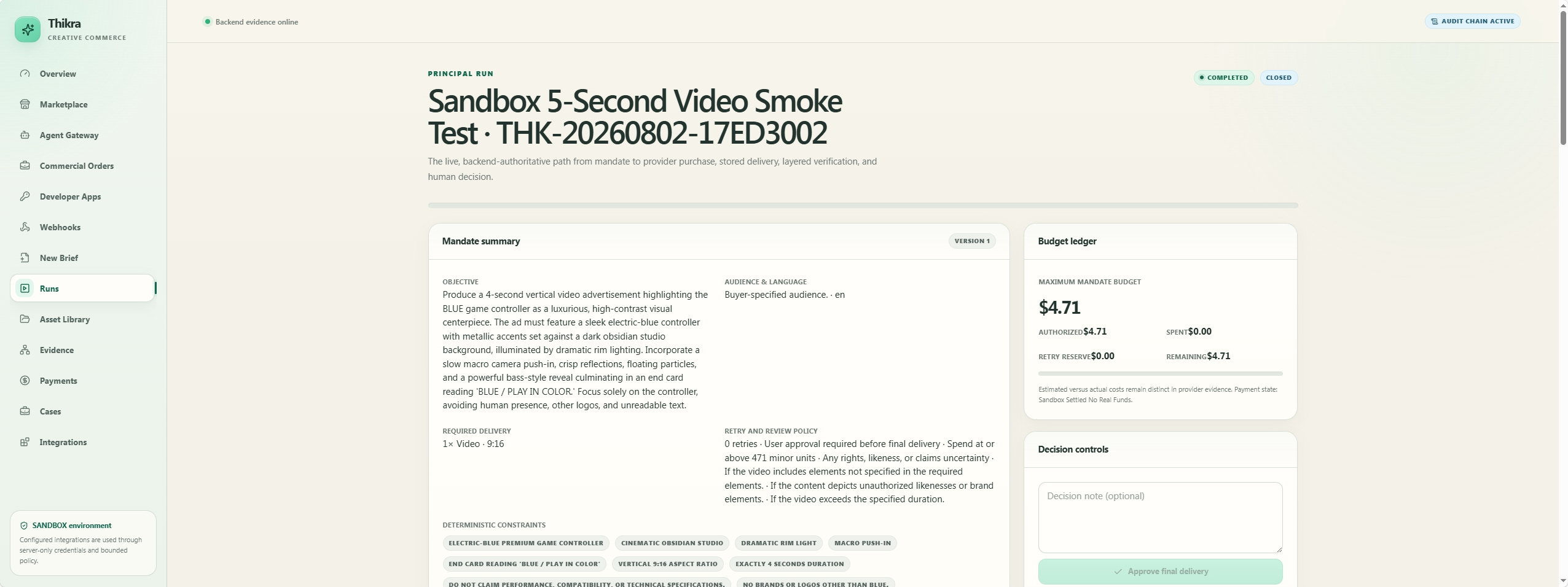
Before execution, Thikra checks the agent’s mandate:
- What the agent is allowed to create
- Which providers and models it may use
- How much it may spend
- Whether human approval is required
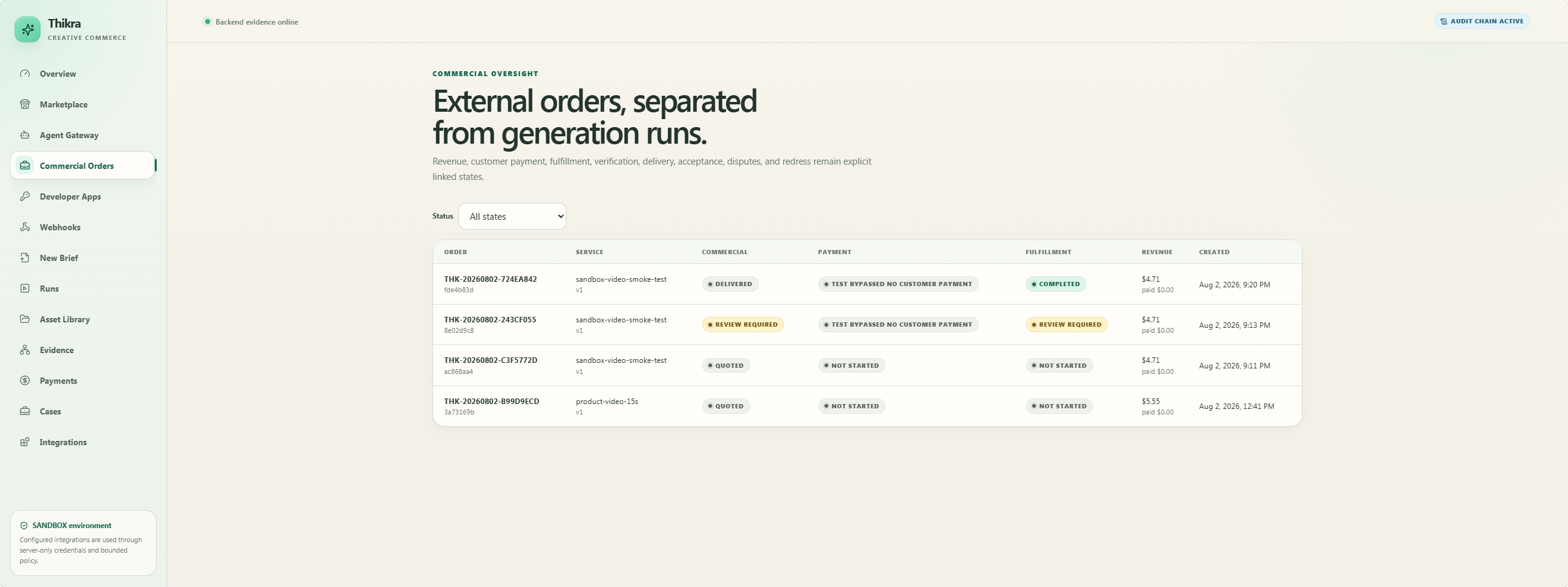
Payments are handled through Prava, allowing agents to pay for generation jobs under explicit permissions and spending limits rather than unrestricted wallet access.
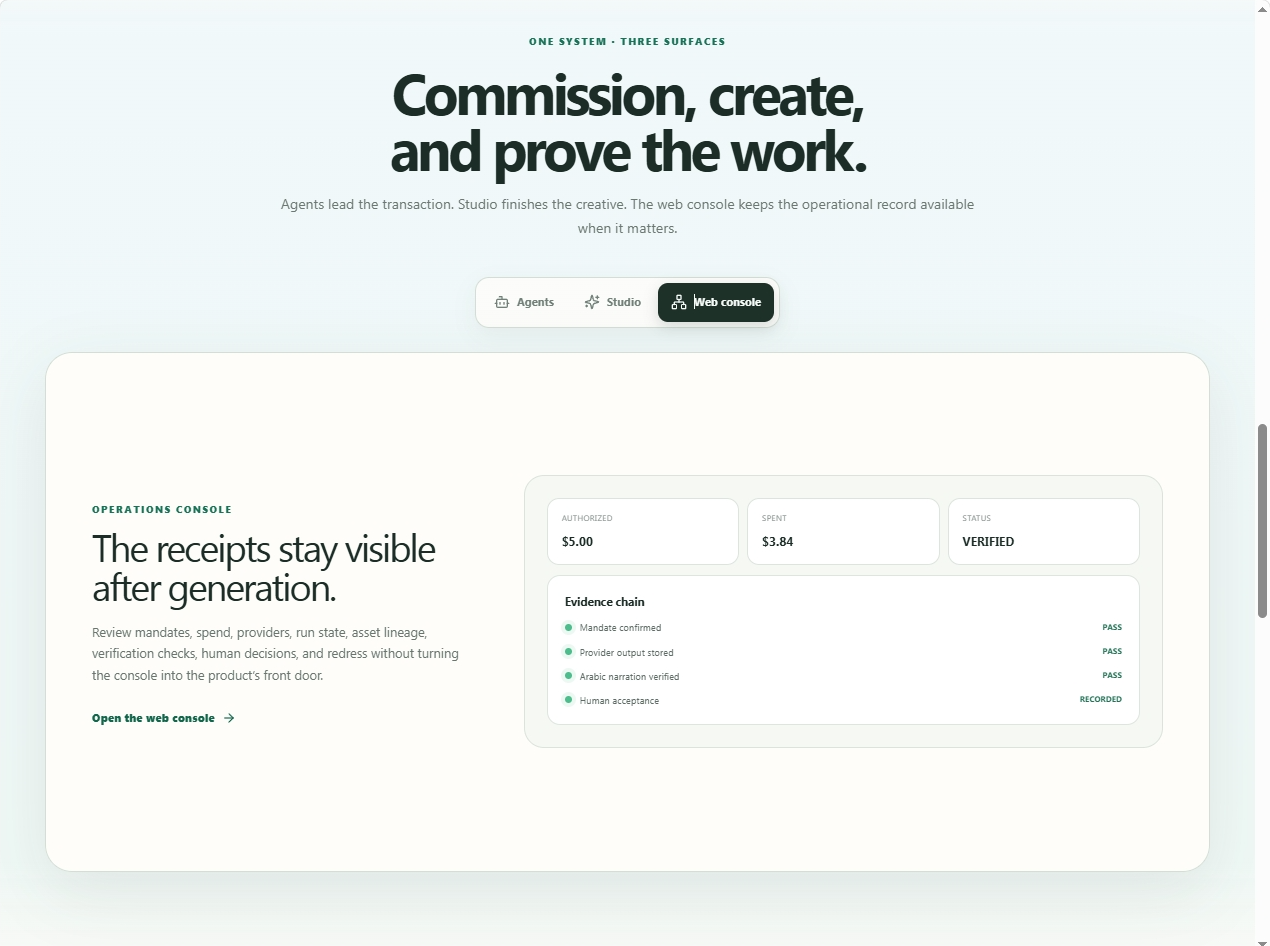
For every completed job, Thikra records:
- The original instruction
- Agent identity and mandate
- Selected provider and model
- Approval decisions
- Payment details
- Generated assets
- Asset hashes and provenance metadata
This makes Thikra the memory and accountability layer between autonomous agents, AI providers, payments, and storage.
How we built it
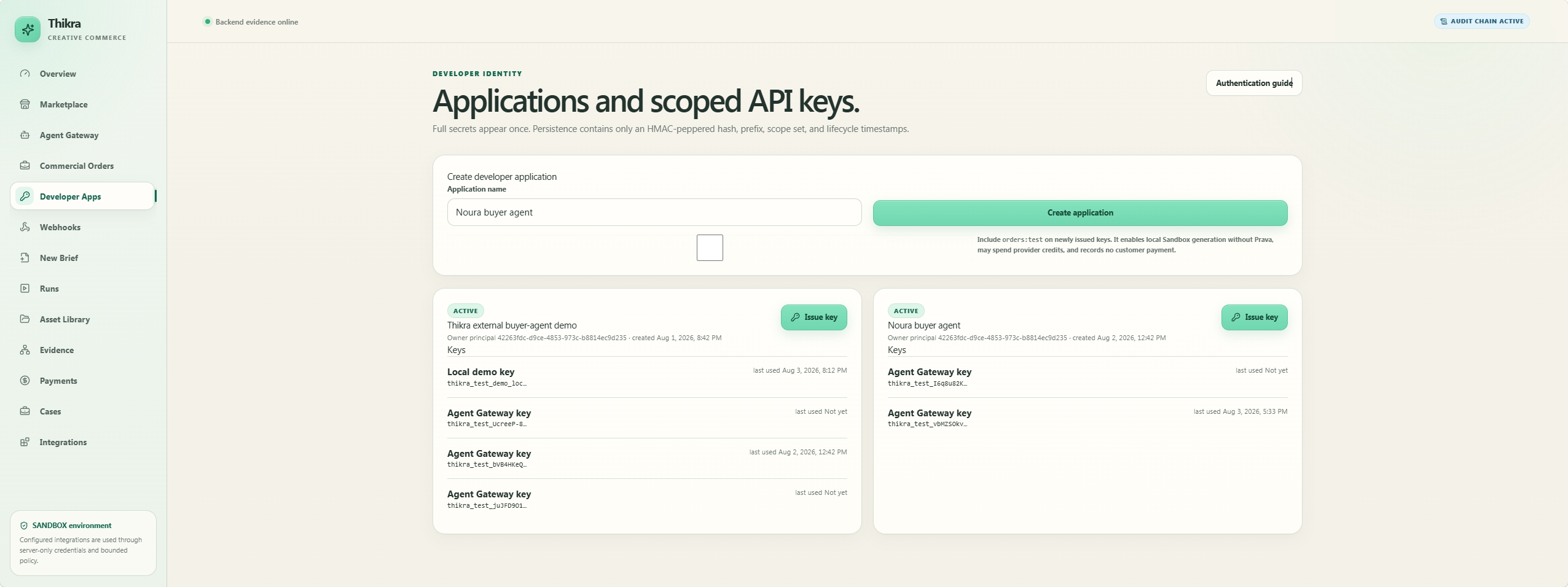
We built Thikra as a SvelteKit application inspired by visual media editors and node-based generation tools, while keeping the workflow accessible to external coding agents such as Codex.

Genblaze
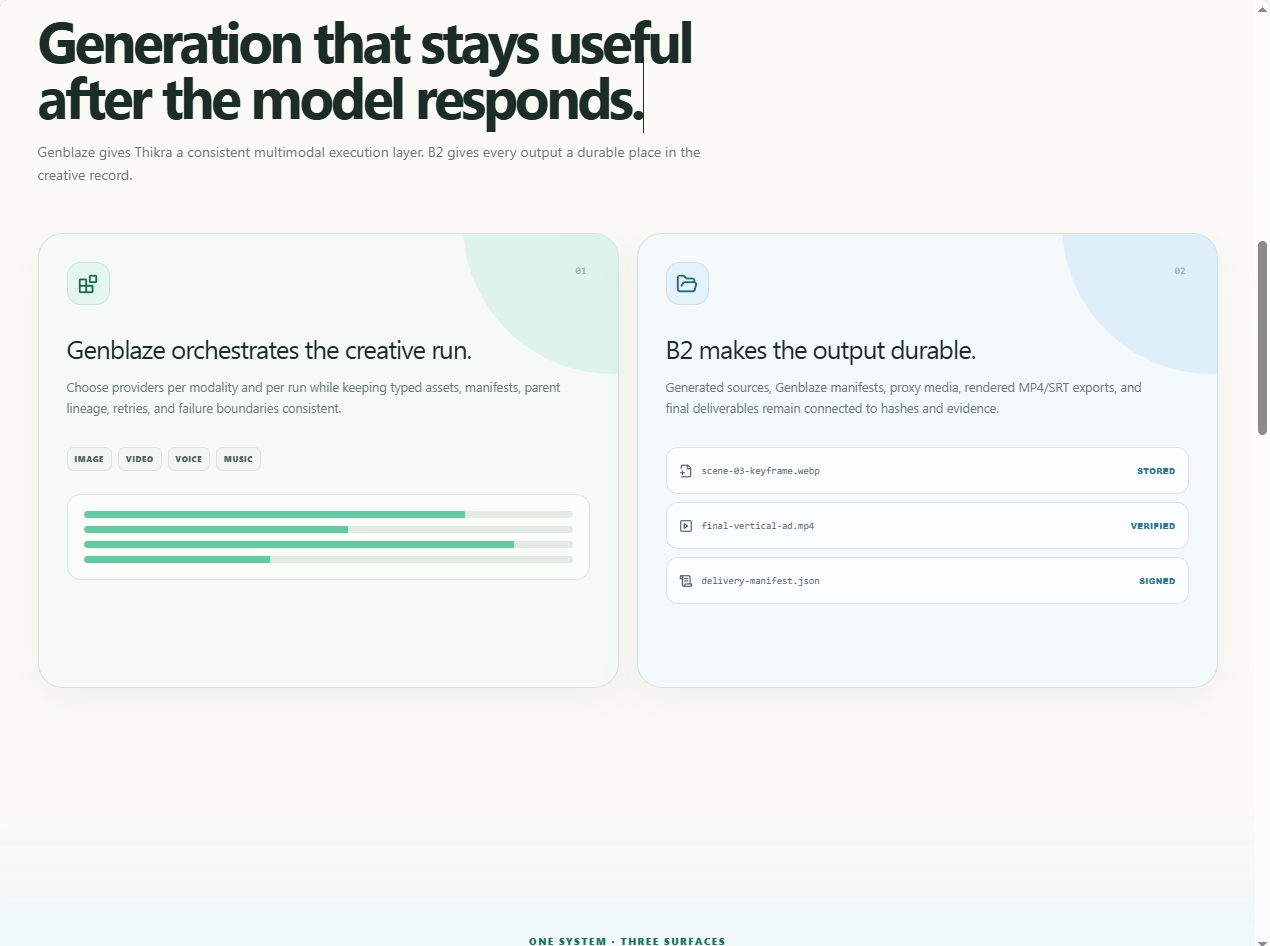
We use Genblaze as the multi-provider media-generation layer. It routes different parts of a project to specialized providers and models for:
- Image generation
- Video generation
- Narration
- Music
Prava
We use Prava as the agent-payment layer.
Each agent operates under a mandate containing permissions, provider restrictions, spending limits, and approval conditions. Before a paid generation job is executed, Thikra validates the action against that mandate and records the resulting payment.
Backblaze B2
We use Backblaze B2 as the durable asset and evidence archive.
Generated media is stored together with manifests containing:
- Provider and model information
- Asset hashes
- Payment references
- Approval records
- Generation metadata
- Evidence exports
The complete pipeline is:
User intent → Agent mandate → Thikra oversight → Genblaze generation → Prava payment → B2 evidence archive
This architecture allows an autonomous agent to generate and pay for media while ensuring every decision, transaction, and output remains understandable, traceable, and auditable.
Built With
- b2
- fastapi
- genblaze
- prava
- svelte
- tuki

Log in or sign up for Devpost to join the conversation.