-
Your personal advisor
-
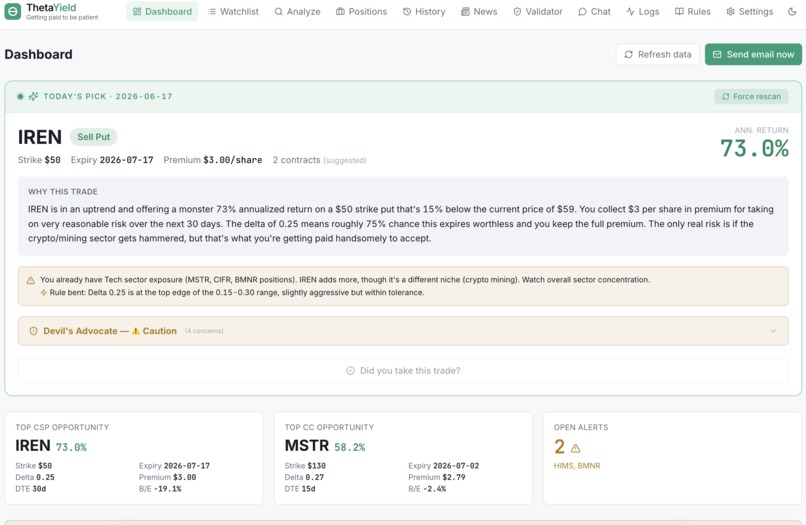
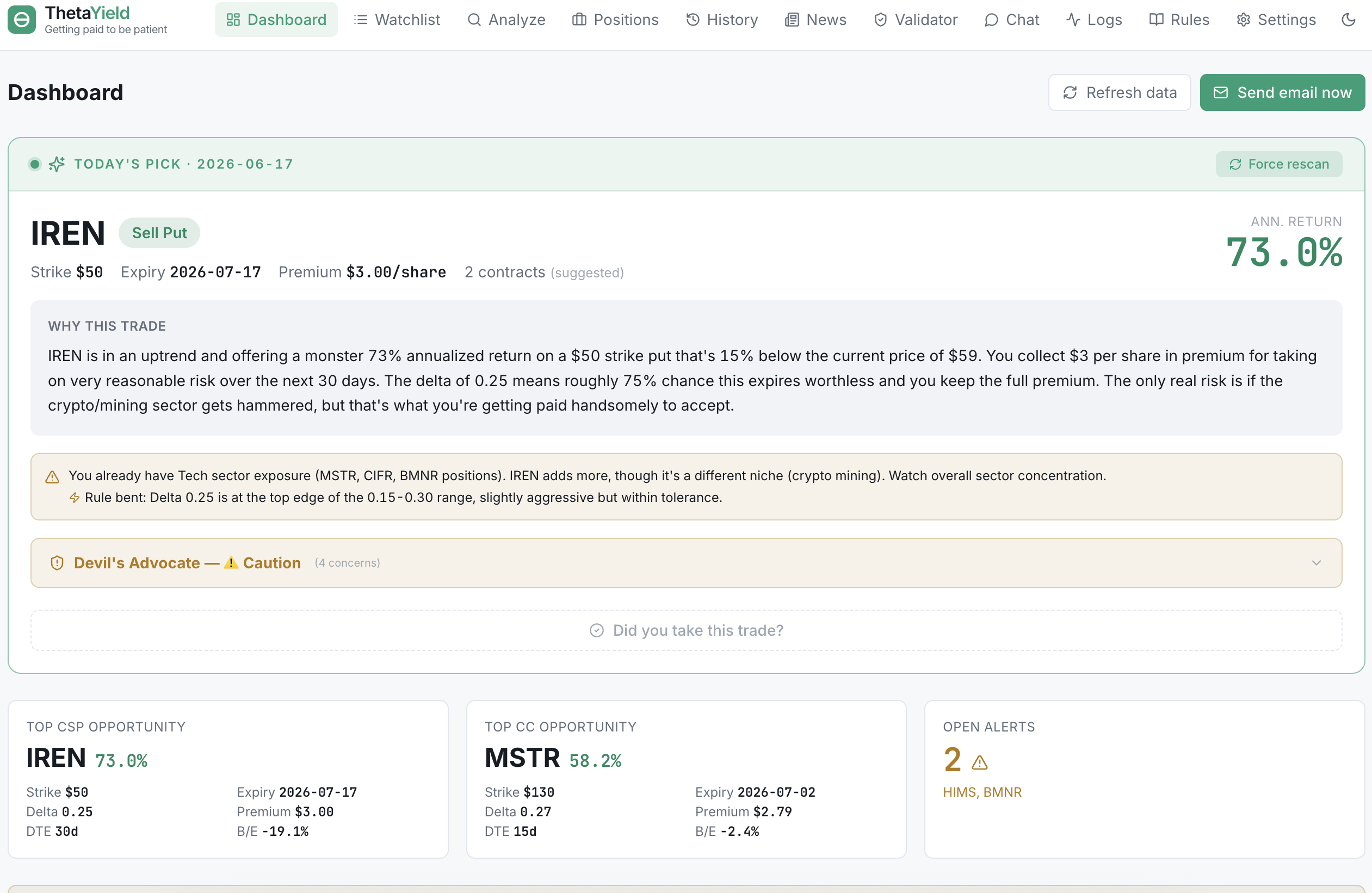
Dashboard with recommendations
-
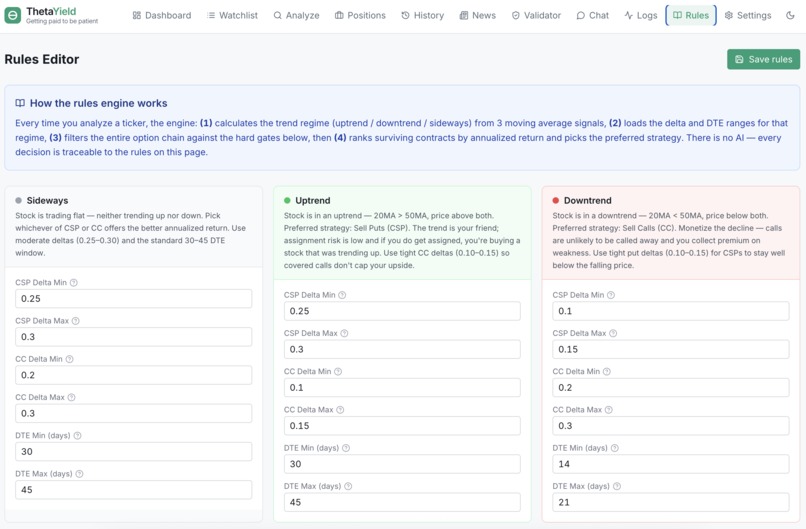
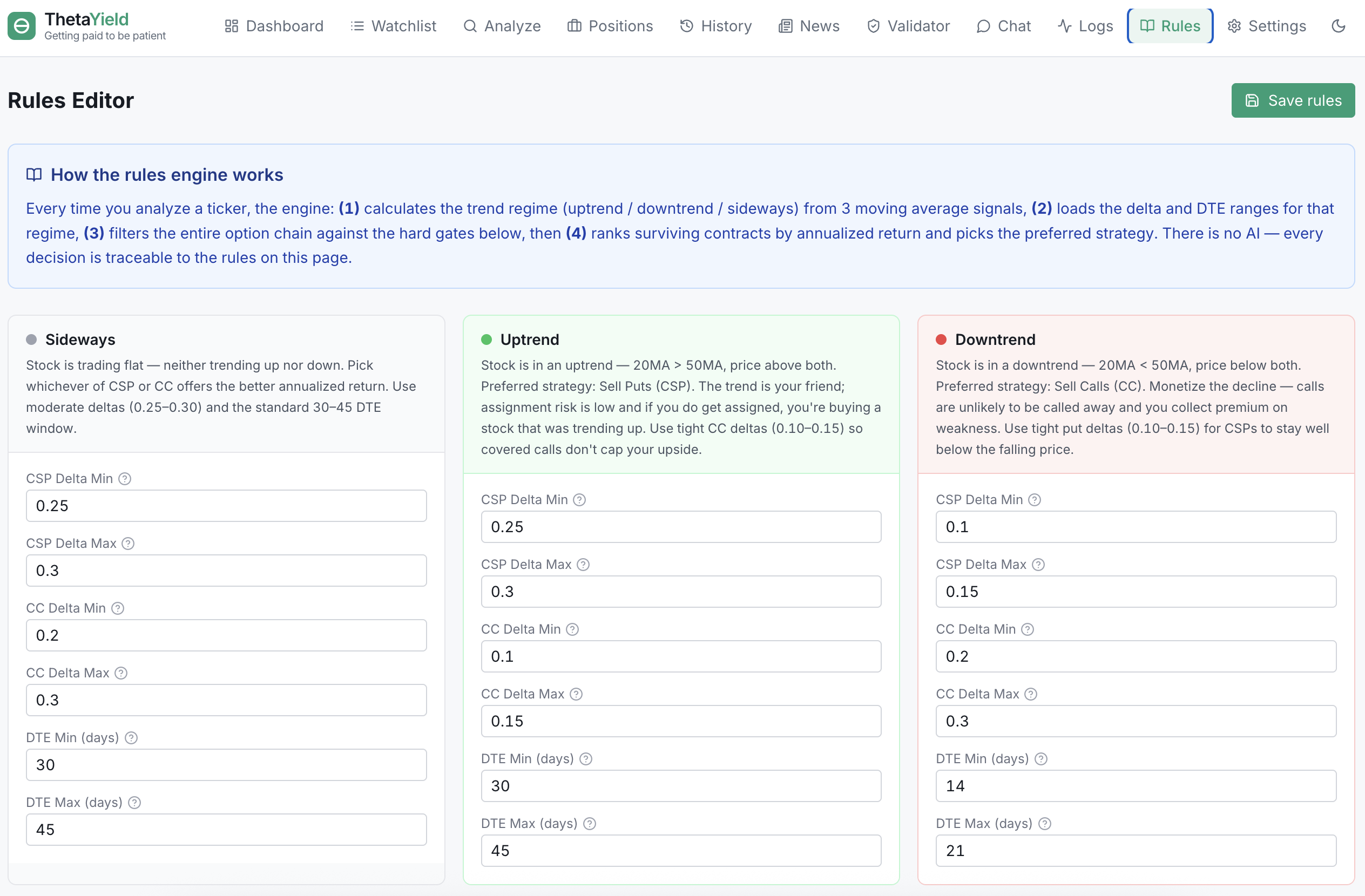
Define your rules
-
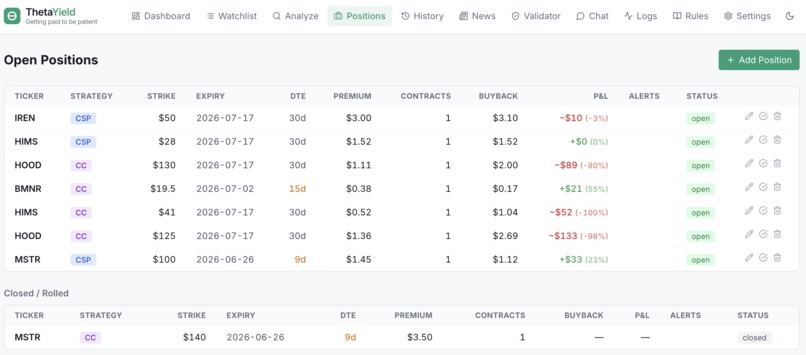
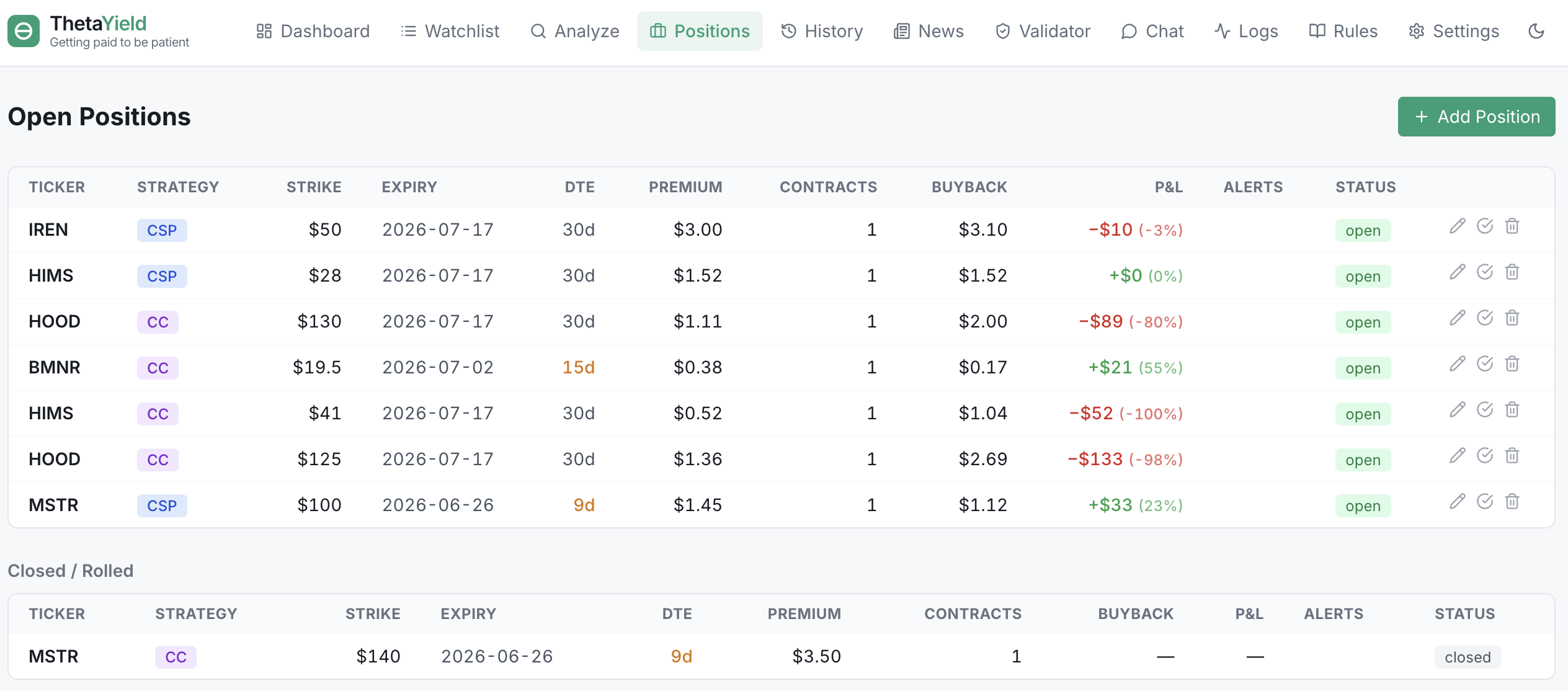
Track your open positions
-
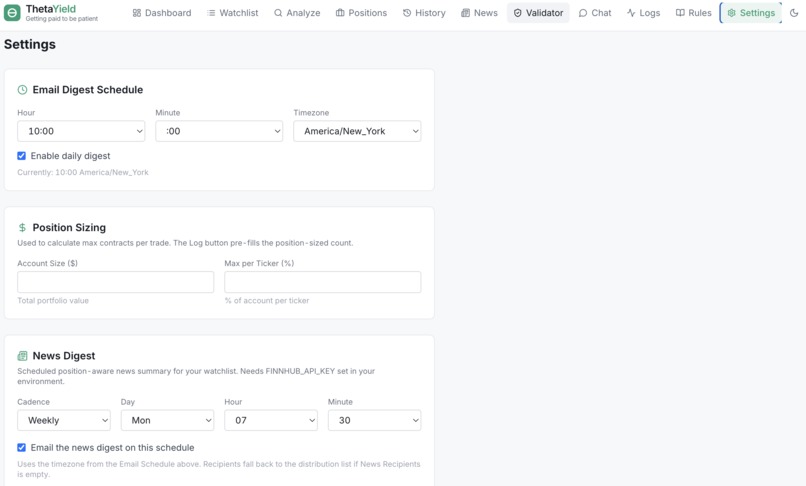
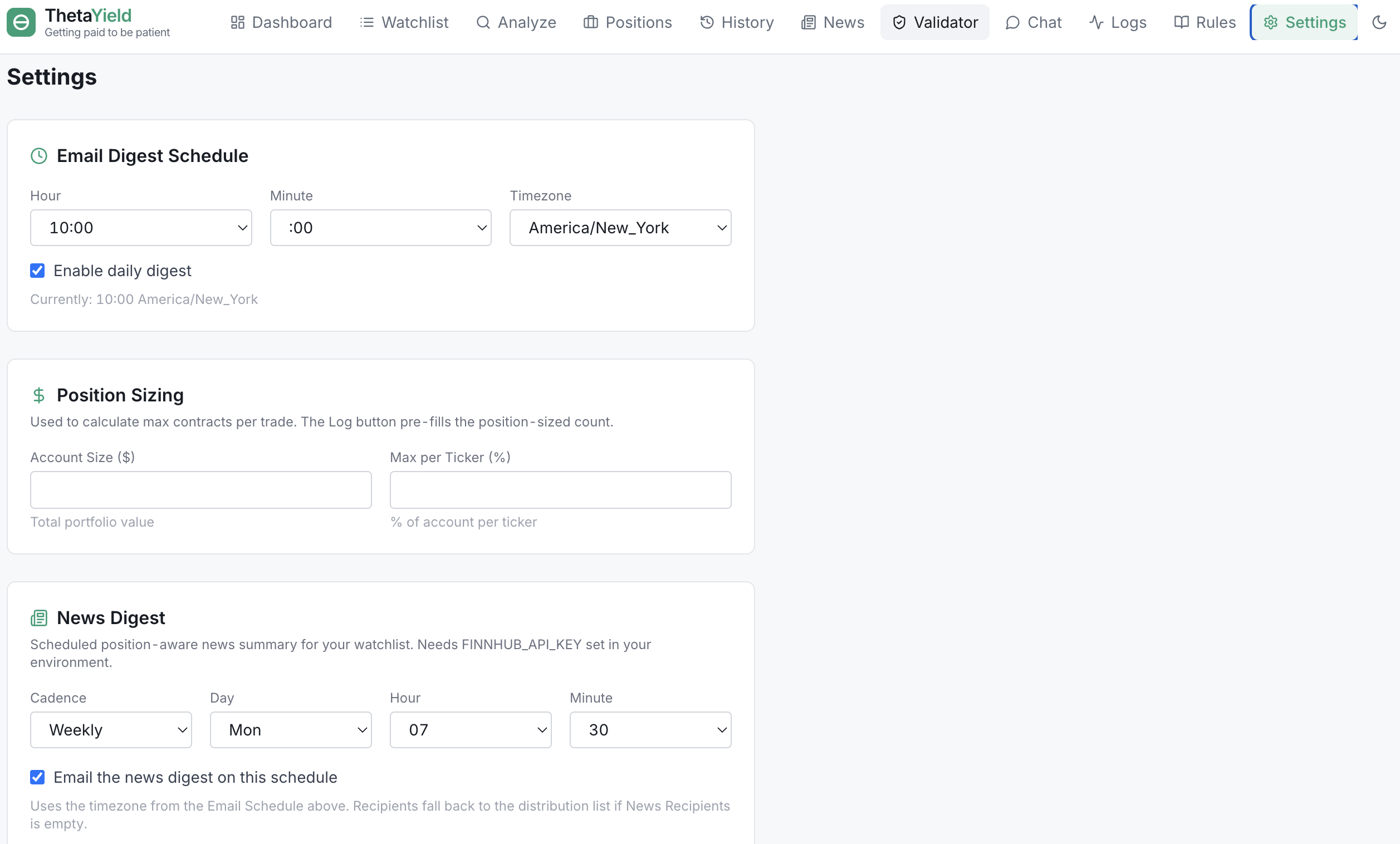
configure your notification
Inspiration
I have a 9-to-5. I'm not a trader.
I sell options for a little extra income — basically getting paid to be patient with stocks I already like. The strategy works. The problem is me. Doing it right meant drowning in information every single morning: trends, strikes, expiry dates, risk, news. I'd overthink it, let emotion creep in, and end up missing the good trades anyway.
And honestly, I didn't want to trade every day. I just wanted the handful of high-conviction ones — without spending hours I don't have hunting for them. So I built Thetayield to do the analyzing, so I can just execute.
What it does
Thetayield is a personal analyst for selling options for income.
Every morning it scans my watchlist and ranks the best trades to sell — top cash-secured puts and covered calls — after running my own rules. It gives me one top pick with a plain-English reason, and a second voice that argues against it, so I don't fall back into overthinking. It watches my open trades and tells me when to take the money and walk — or when something's going wrong. It reads the news on my stocks and tells me: go, wait, or stay away. It emails me the whole thing, so I open it on my lunch break, place one order, and get back to work. Nothing is a black box — every suggestion traces to rules I can read and change. It's a tool that helps me decide; it's not financial advice.
How we built it
A React + TypeScript front end and a Python (FastAPI) back end with a SQLite database. It pulls live market data from Tradier (option chains, greeks, expirations), company news from Finnhub, and extras like VIX and earnings dates from yfinance. Claude does the reasoning — a Sonnet model runs the agent that picks and explains the trade and argues against itself, and a cheaper Haiku model classifies the news. It emails through SendGrid and runs on its own schedule in the cloud (Railway, with a custom domain on Cloudflare).
The core idea: a rules engine the AI serves. The computer does the math; Claude reasons and explains on top of it — but the code always owns the actual numbers.
Challenges we ran into
For a whole week the emails I was so proud of went straight to spam. It emailed me a trade with the wrong expiry date — one day off — and I realized if I can't trust the date, I can't trust anything; turned out the AI had been typing dates itself, so I stopped letting it. At one point I put the app online and realized the entire world could see it. Every time I fixed one thing, two more popped up. I just kept chipping away until it all held together — and finishing it anyway is the part I'm proudest of.
Accomplishments that we're proud of
It's real, and I actually use it every day — not a demo that dies after the weekend. It's honest: you can see exactly why it suggests anything. It manages risk, not just opportunity — it tells me when to stop a trade, not only start one. The emails now come from my own domain, it routes the AI by cost (smart model where it matters, cheap where it doesn't), and it finally feels like a real product I'd show people.
What we learned
AI is amazing at explaining things — but it should never be the source of truth for an exact number; keep those in plain code. "Getting an edge from news" is mostly a myth — the real value is awareness, knowing not to sell right before a known event. Email deliverability is infrastructure, not luck. And the unglamorous work — correct dates, locking the site, emails that actually arrive — is exactly what makes a tool trustworthy.
What's next for ThetaYield
Connect it to my brokerage so it knows what I actually own, let it learn from my past trades to get smarter, open it up so a few friends can run their own watchlists, and track full "wheel" cycles from the first trade to the last.
Built With
- anthropic-claude
- apscheduler
- cloudflare
- fastapi
- finnhub
- python
- railway
- react
- sendgrid
- sqlalchemy
- sqlite
- tailwindcss
- tradier
- typescript
- vite


Log in or sign up for Devpost to join the conversation.