-
-
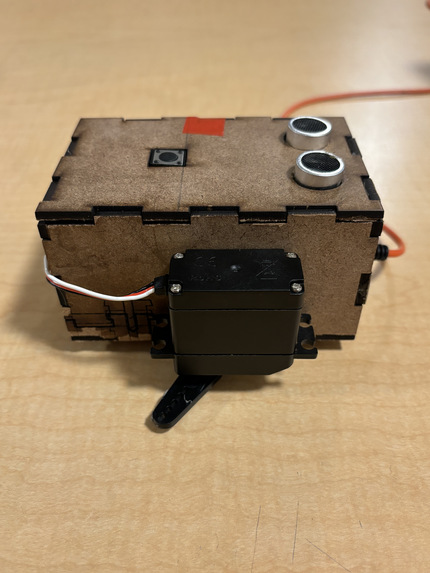
flipIt in its natural habitat
-
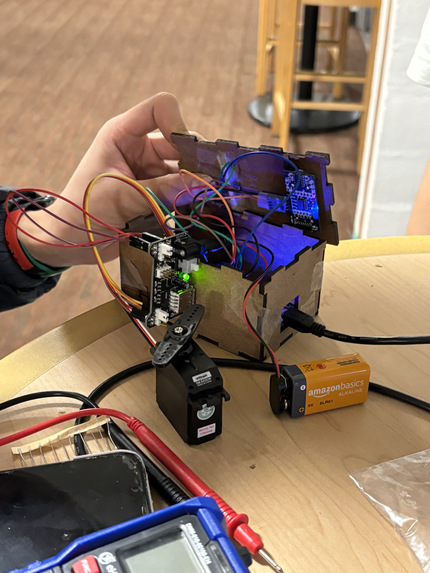
flipIt disassembled
-
flipIt crazy
Inspiration
Existing smart light systems often cost hundreds of dollars to outfit a home and require intensive work to remove previous lighting. That’s why we’ve come up with flipIt, a cheap smart light switch that is easily attachable in your home.
What it does
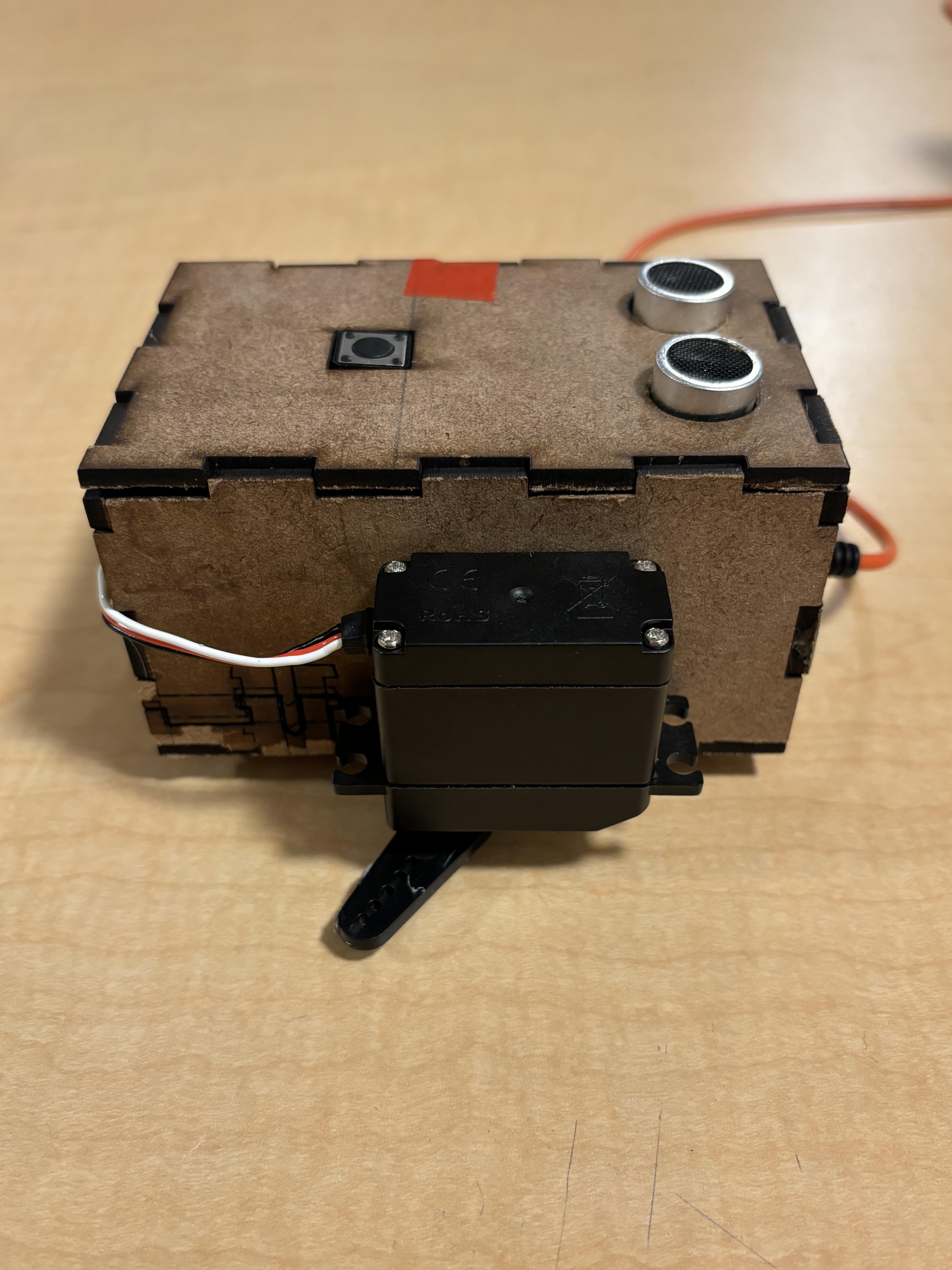
flipIt toggles a light switch on and off through the usage of a rotating motor. The rotating motor in our device can be activated in three different ways: remotely through a mobile device, through a motion detection sensor, and manually through a physical button. Additionally, we sought to improve the installation process of smart switches by using an adhesive instead of conventional electrical processes. Using a strong adhesive (such as those of command strips) allows for simple attachment and removal of the device to light switches that existing options do not have.
How we built it
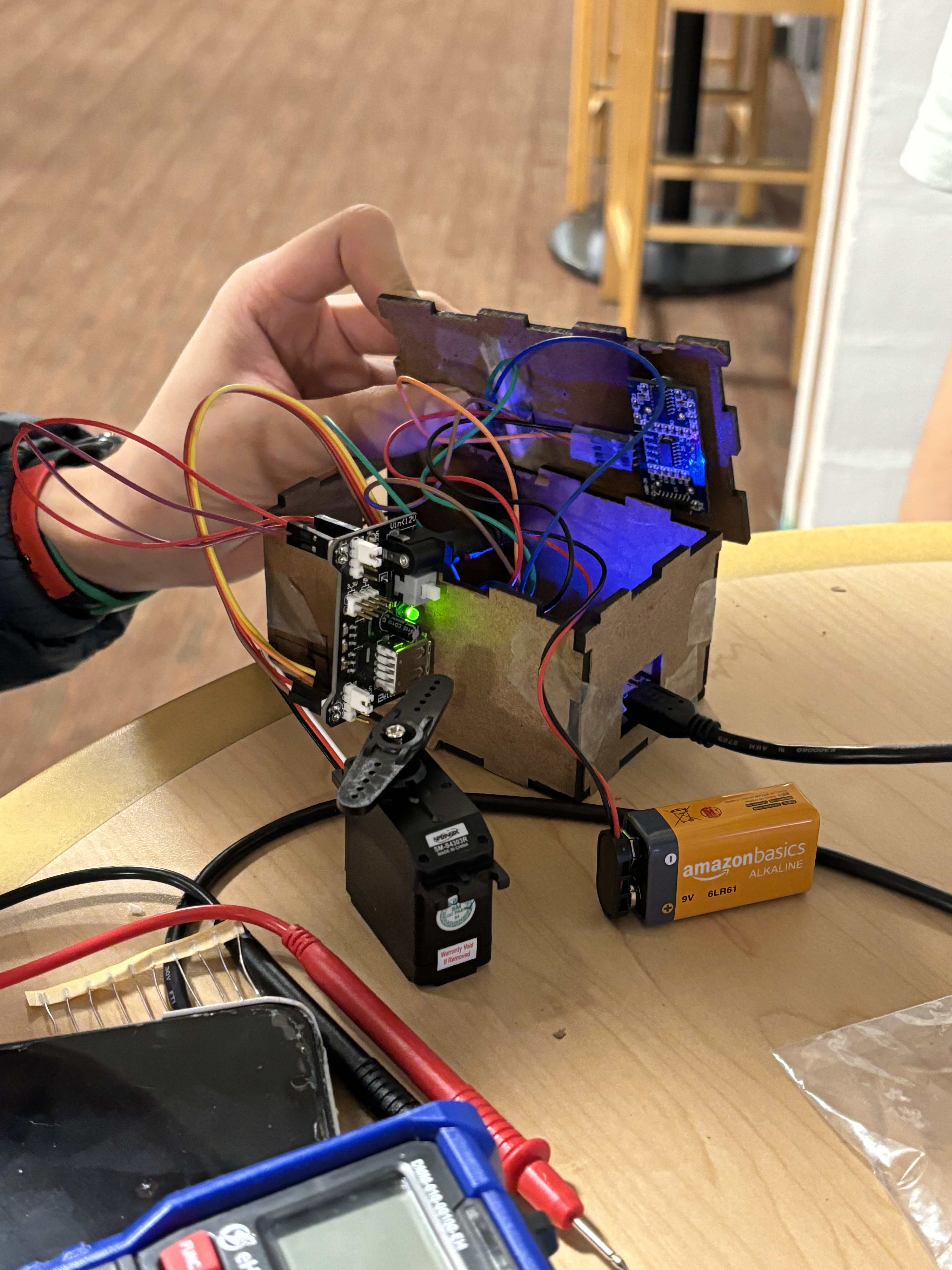
We based our design on the ESP32 microcontroller, which has access to WiFi capabilities. On the software side, we used Arduino Cloud and the Arduino IoT libraries to connect the mobile Arduino IoT app to the ESP32 microcontroller. On the hardware side, we used an HC-SR04 ultrasonic sensor for motion detection, S4303R continuous servo motor to flip the switch, and a breadboard power supply in order to supply adequate power to the motor. Most components were assembled on a breadboard, while some of the buttons were soldered.
Challenges we ran into
A major challenge we encountered was with our push button, which would occasionally "bounce". We resolved this issue by establishing a time delay for all of our toggle buttons. In addition, we faced issues with the motor drawing too much current, causing the sensor to report faulty values and sometimes leading the board to shut down. We overcame this problem by driving the motor through a separate power supply from the board. Another challenge we faced was in selecting a suitable WiFi network to connect to as the available networks either caused too much lag or required complex login processes. We found a workaround by using a mobile hotspot, and conventional home WiFi networks will have better performance.
Accomplishments that we're proud of
We have used inexpensive, off-the-shelf components throughout the entire build. The estimated cost of our prototype is around $10, and this could easily be reduced if produced at scale. We were also able to construct a working prototype within the timeframe of the hackathon.
What we learned
We all learned a great deal about the Internet of Things and gained experience with Arduino.
What's next for flipIt
For future avenues of growth, our product has a few attributes that merit further development. First, we are interested in further streamlining the design to not only use fewer materials but also improve aesthetic quality. Second, we would like to look into other designs for our product that can handle other types of light switches, especially rocker switches.
Built With
- arduino
- esp32


Log in or sign up for Devpost to join the conversation.