-
-
ThesisGuard Shield
-
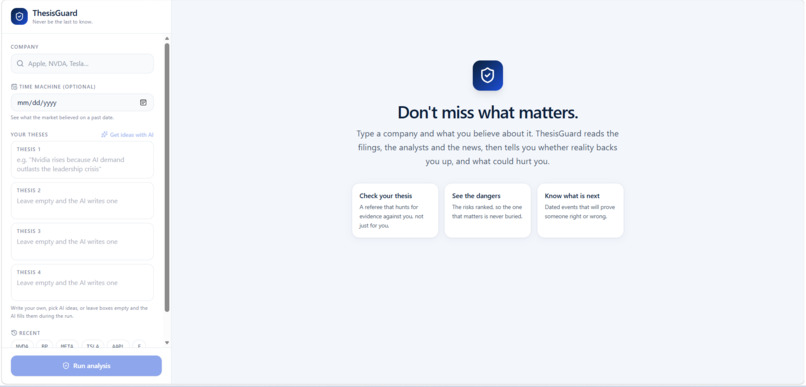
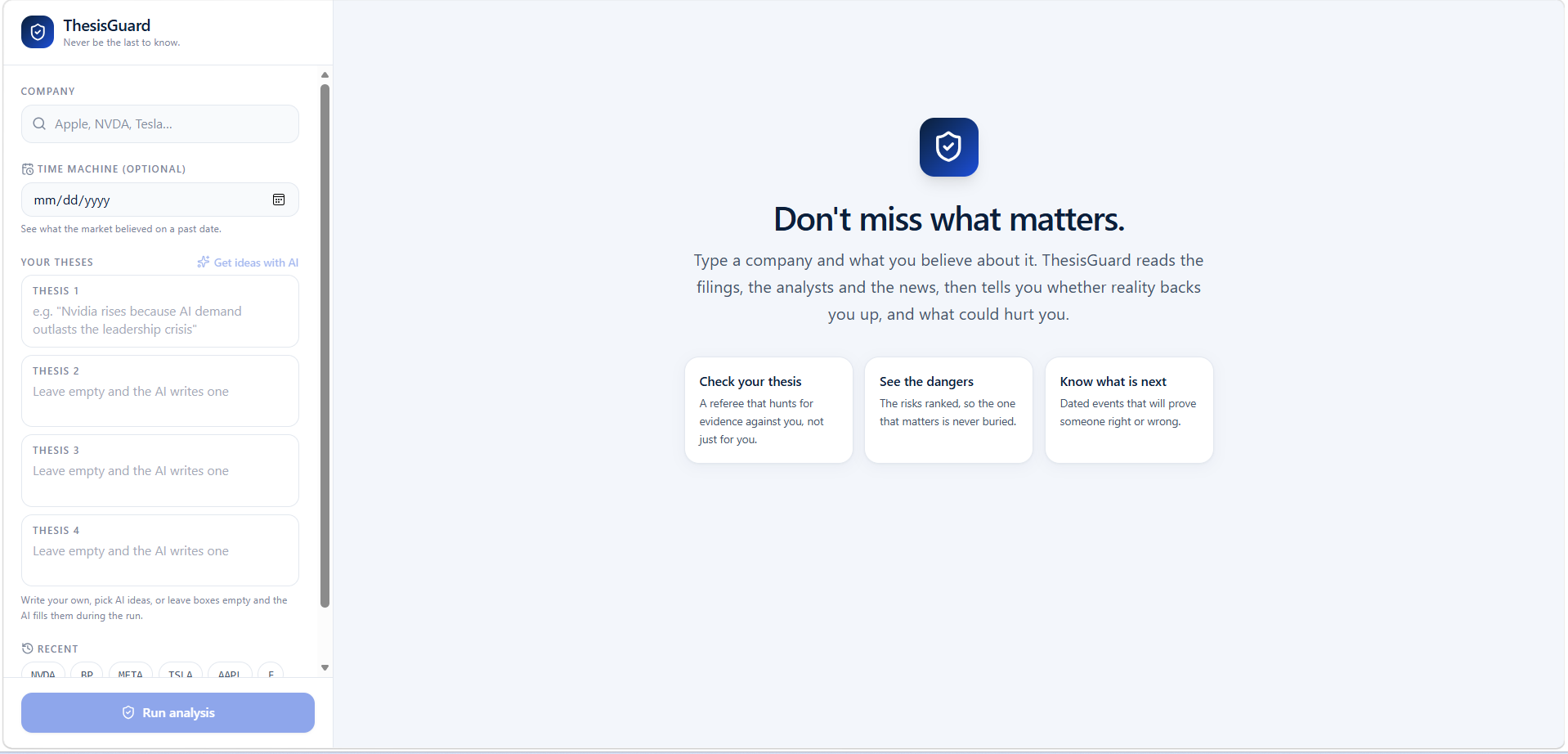
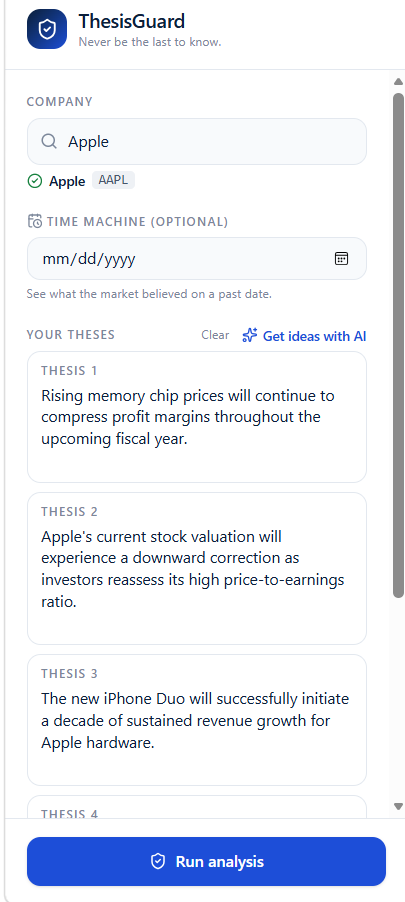
ThesisGuard Site
-
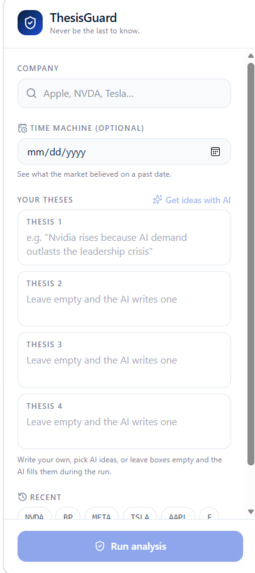
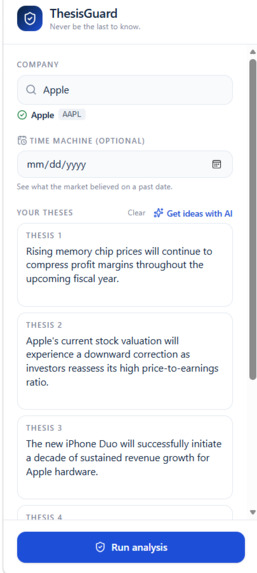
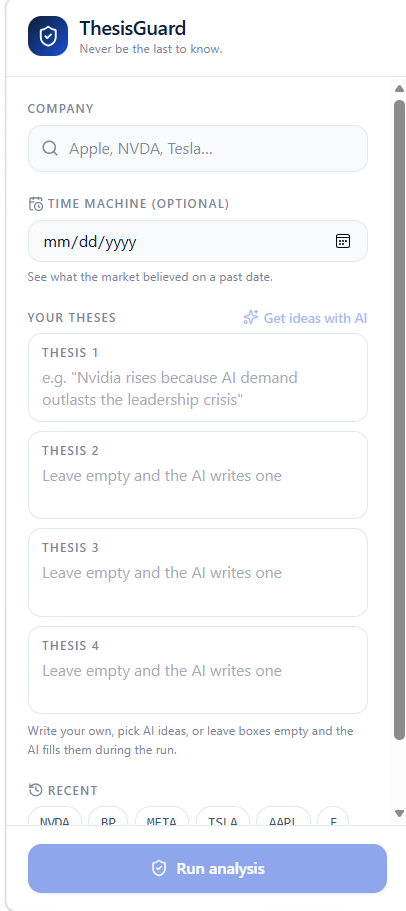
Input Boxes
-
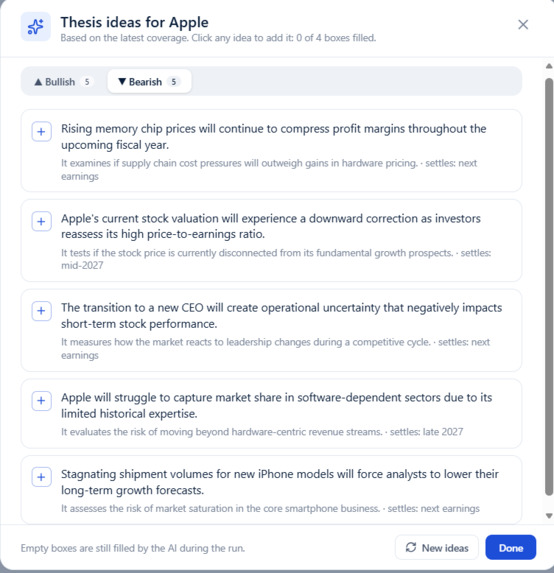
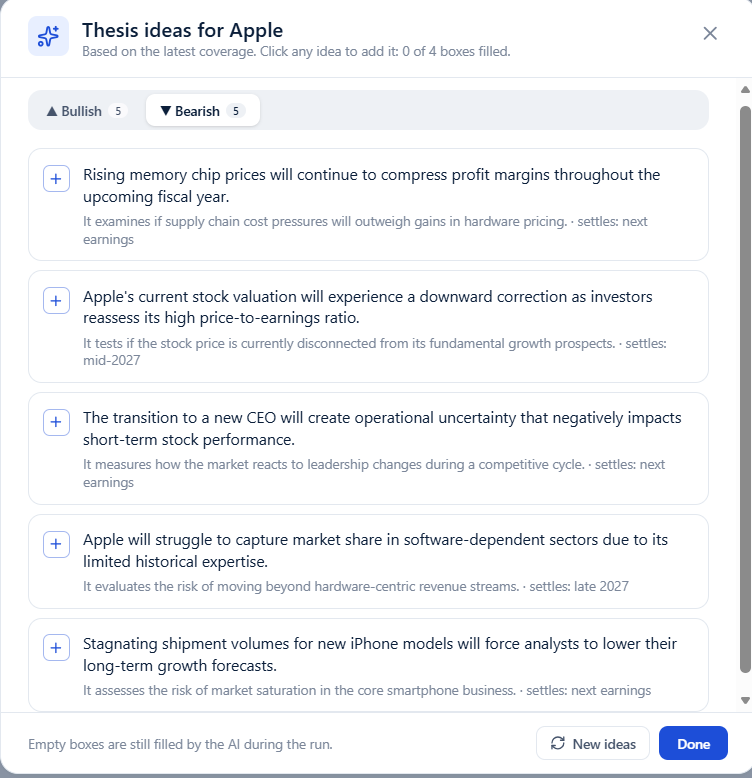
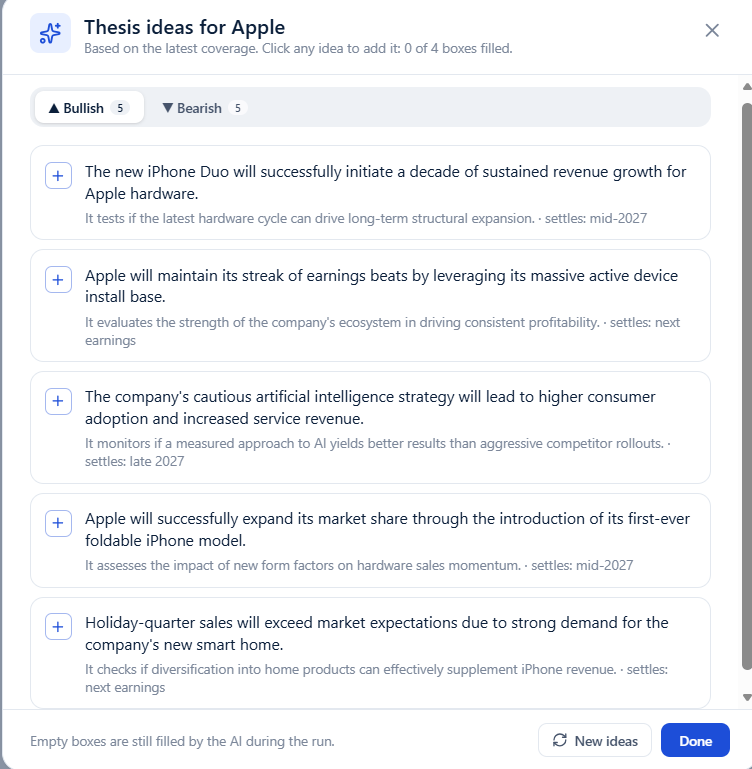
AI Bearish Thesis
-
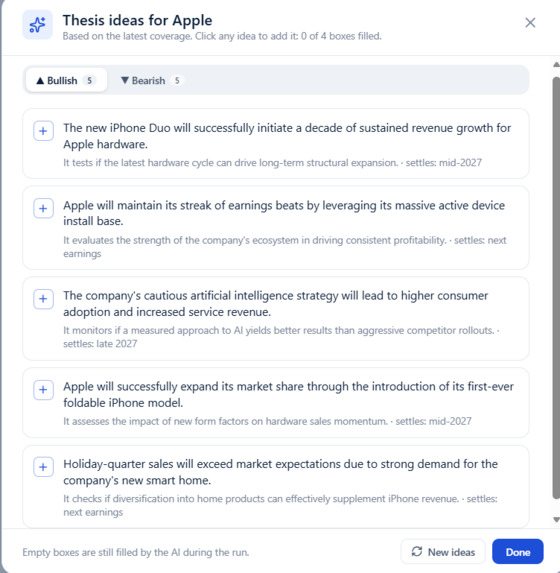
AI Bullish Thesis
-
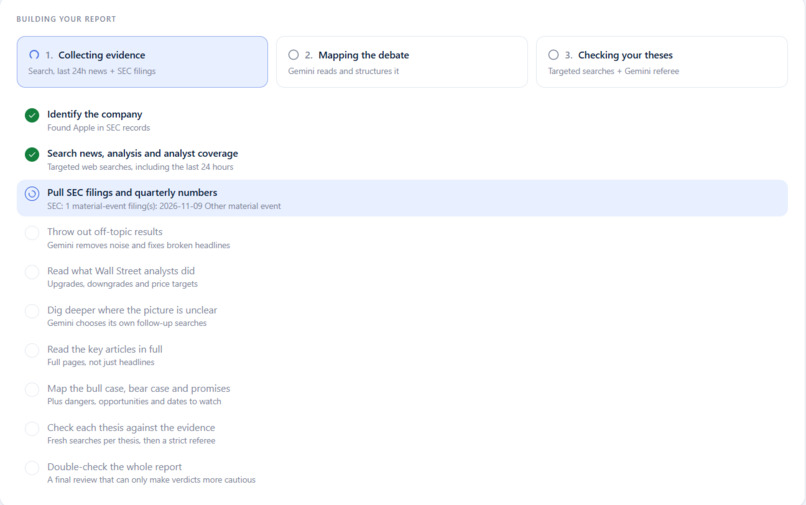
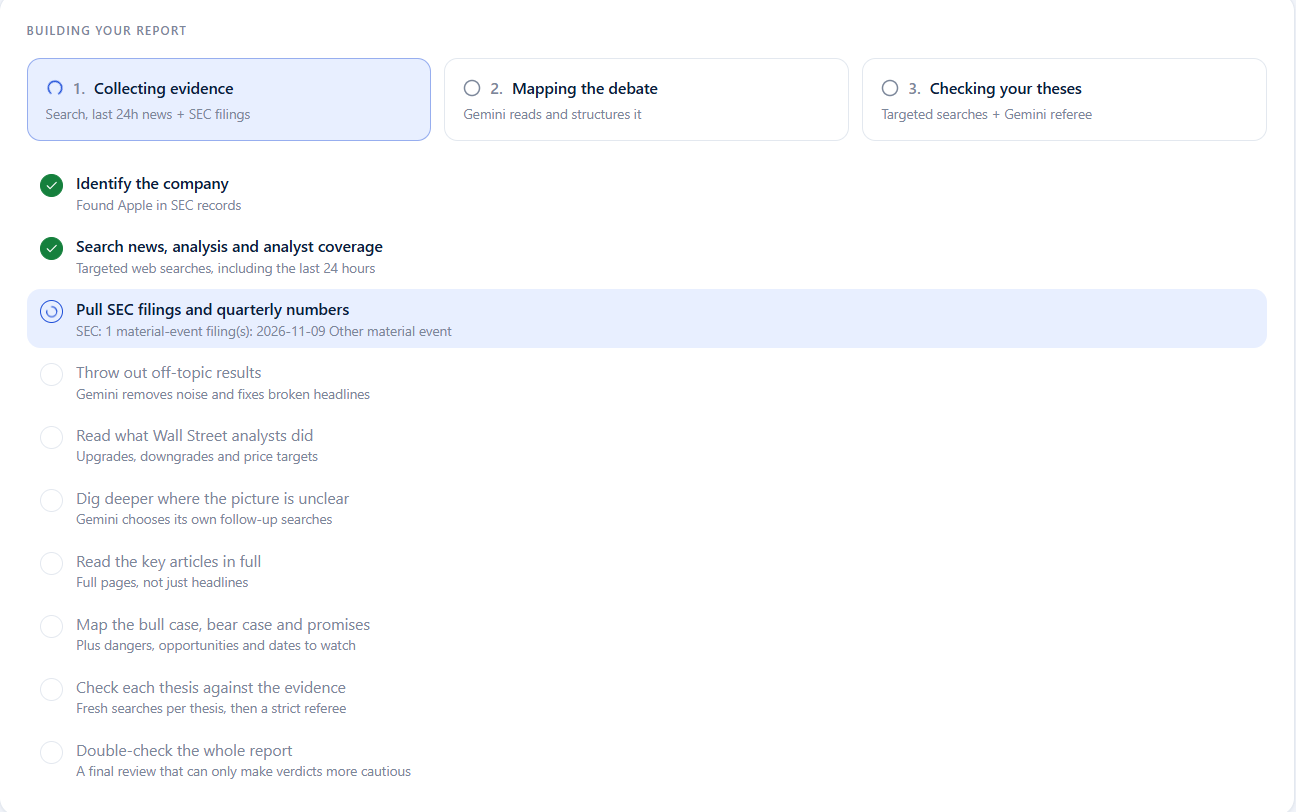
Building Report
-
-
-
-
-
-
Inspiration
On November 12th, 2026, Jensen Huang, the CEO of Nvidia, resigned. Within a week over half a trillion dollars of value was wiped out. The health of companies like Nvidia impacts the lives of ordinary people. For example, a teacher named Maya with Nvidia in her retirement portfolio has her prosperity directly linked to the health of the company. When Maya hears that Jensen Huang has resigned, she needs to weigh her future against the information from a headline. Like millions of retail investors, she is the last to know, and she knows too late. Maya did not do anything wrong; she just did not have the proper tools to parse the information that was out there. This situation does not arise from bad luck or carelessness; it arises from the information gap. Information is not scarce; in fact, its abundance can often be the reason data is difficult to act on in time. That is the inspiration for why I built ThesisGuard. With ThesisGuard the gap can be closed. In about a minute ThesisGuard can check if reasons for owning a stock still hold up against the information of the market, such as news and regulatory data. ThesisGuard turns hours of research into a simple task that can be done before coffee. Next time Maya would not be confused about the market implications of the headlines.
What it does
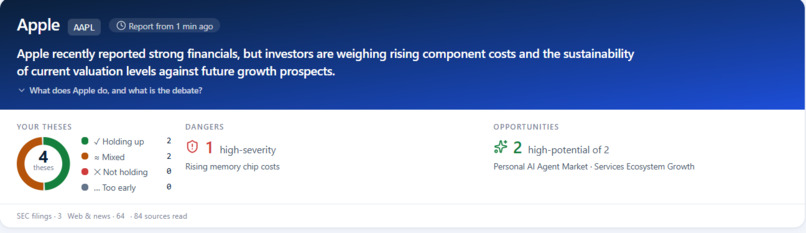
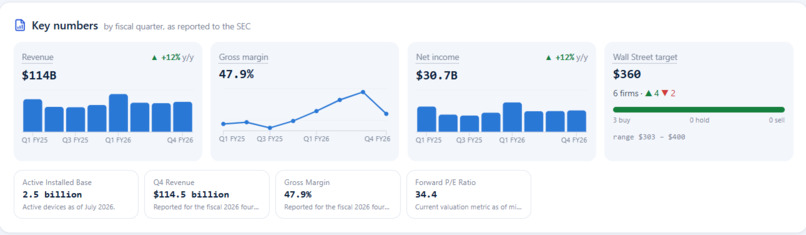
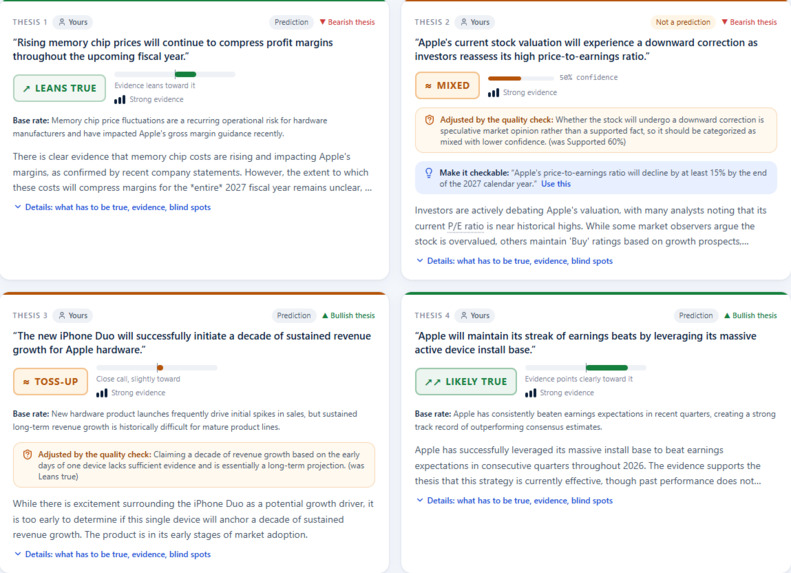
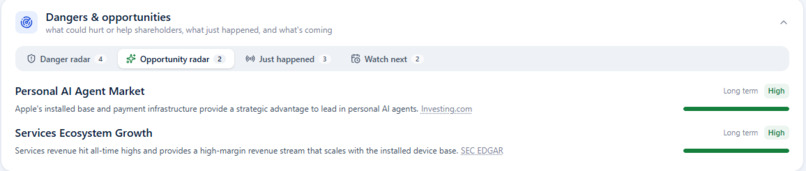
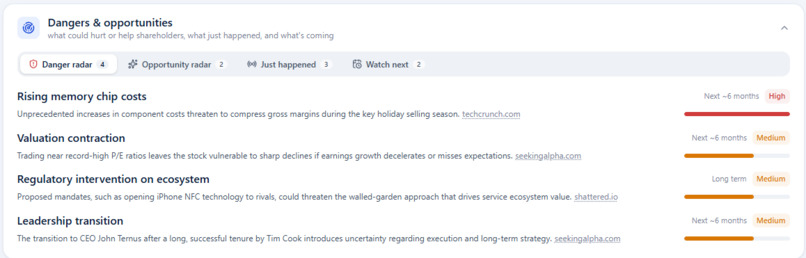
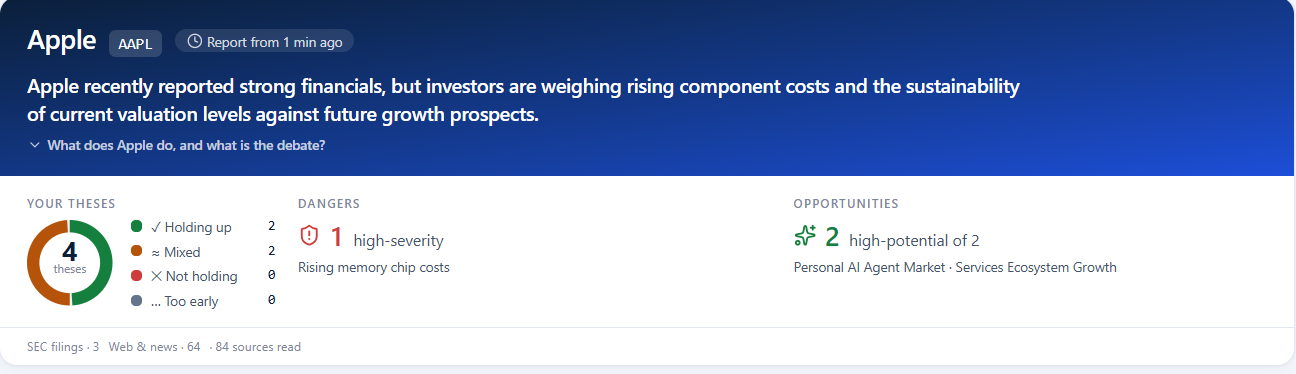
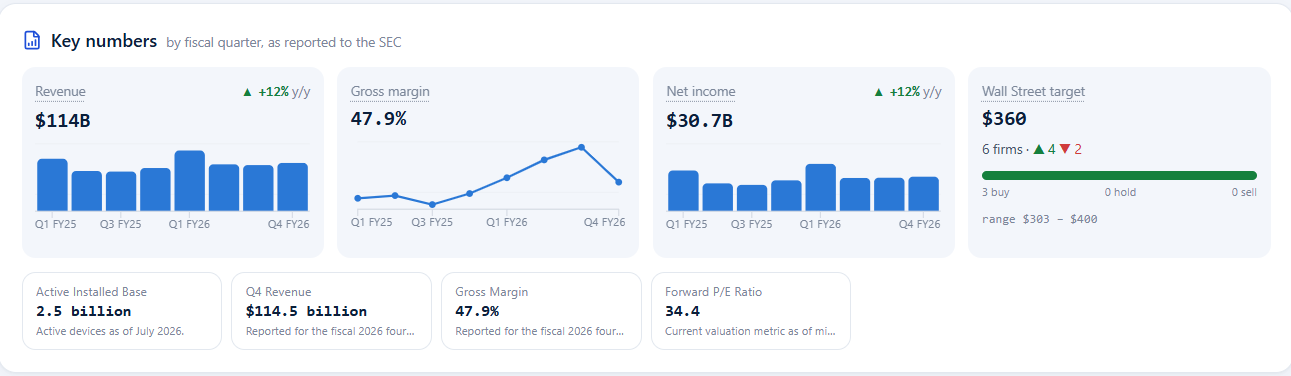
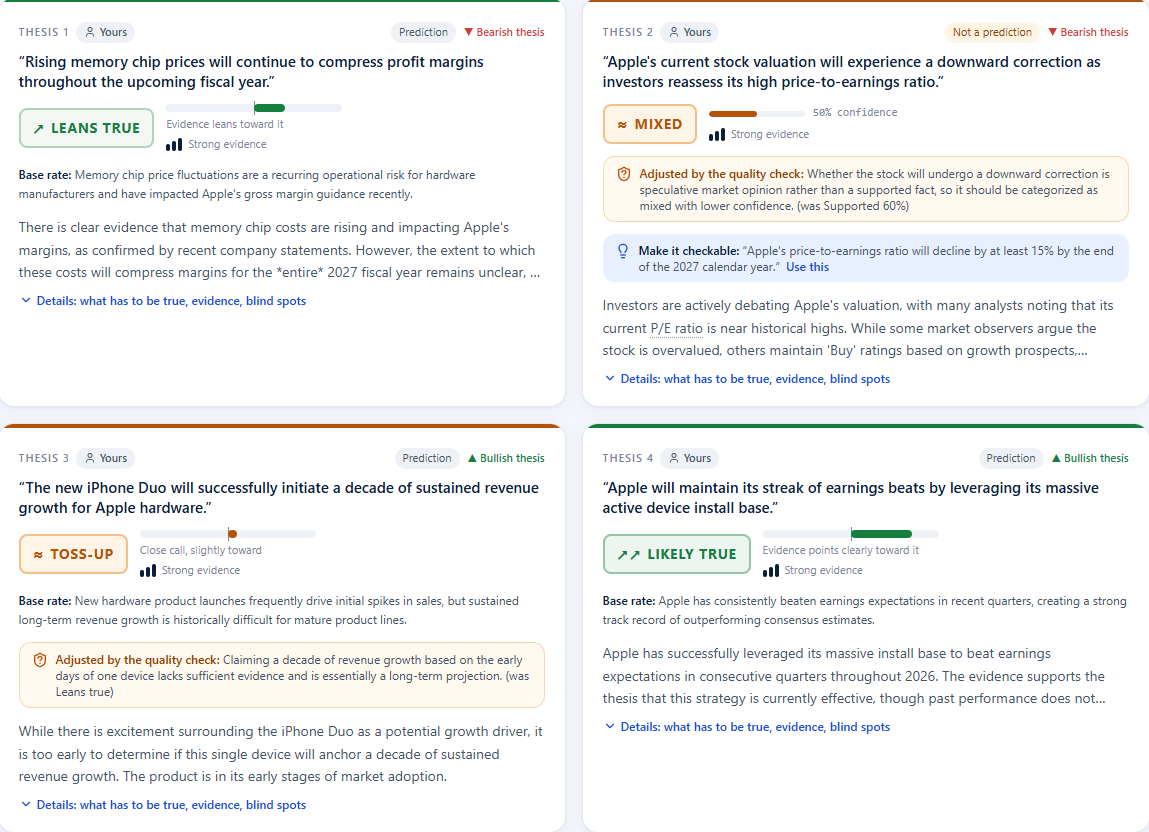
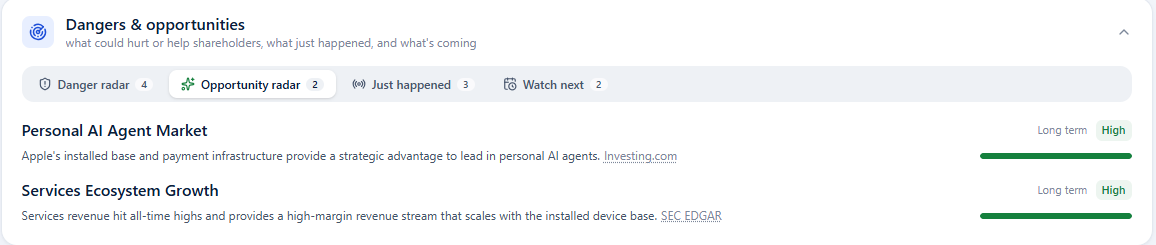
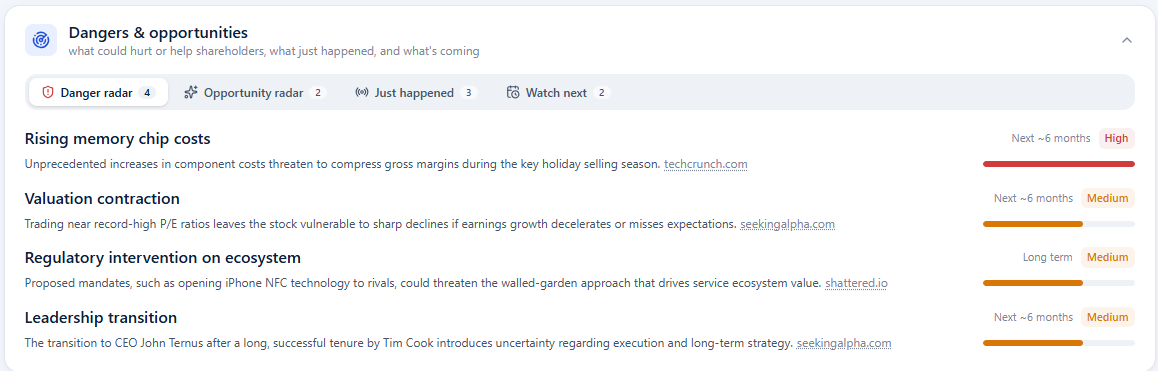
ThesisGuard is a powerful tool for retail investors to conduct hours of research in about a minute. It reads over a hundred sources, including SEC filings, news data, the calls of Wall Street analysts, and the freshest news with the highest market impacts. The program builds a report about the reasons why someone owns a stock and compares the extant data to ask the question, "Is the reason for investing still true?” Each thesis is compared against the market and gets a rating in understandable terms. Likely true, leans true, toss-up, leans false, likely false, and switches to confirmed or failed modes once the matter is settled by data. The evidence is the company's track record, its profit, its operations, its goals, and where Wall Street analysts price it at and think it will go. It contains both a danger radar to stay ahead of risks and an opportunity radar to know what's coming. It tells investors the actual situation, not just from one source, and not boilerplate data that is impossible to act on. The results are informative, relevant, and actionable.
How we built it
Thesisguard is built to act as a research desk for its users. It collects facts, and decides what other pieces of information it needs based on the facts. The backend was built using Django and the frontend built using React. It utilizes Gemini 3.1 flash-lite to parse large quantities of information in under a minute. The script targets the collections of SEC financial information, along with financial news and articles. The documents received are turned into evidence for points, and it uses this to check the theses the user adds for accuracy. The pipeline functions in 8 distinct stages. Collect - SEC filings, analyst sentiment, news documents, financial articles are collected to be used as evidence. Filter - Nonrelevant articles are dropped in order to ensure that trustworthy and accurate data is all that remains. Plan - Gemini chooses follow up searches, giving it the power to shape the research based on what the process requires. Read - The articles are read in order to gain important contents to use as evidence. Map - The data is mapped onto sentiment, and compared against the user-given theses. Referee - Each thesis is compared to the pool of data, and judged to determine if the data goes in favor of or against the thesis. Audit - A final quality check is run of the report to ensure it is informative and meets the standards of quality. Hindsight - Older documents are scored against the numbers that occurred to make patterns out of the data.
Challenges we ran into
Thesisguard ran into many challenges that needed to be fixed. One of the main problems was calibration. The first version would always either mark things as 90 percent confident or unclear. It either was 100 percent certain or had no idea what was going on. This was fixed by adding more data to compare to and adding a scale from likely true to likely false instead of forcing it into oversimplified binaries. Relevance was also an important part of calibration. When Ford was put in to analyze the motor company, it would analyze anything to do with anything called Ford or anything to do with the ticker. The ticker for Ford Motor Company is just "F," so often it would get completely unrelated data, such as basketball scores, F-16s, and golf. This was fixed by adding relevance checks, as well as making the searches more relevant to the company, by adding keywords such as “company” afterwards. Gemini is also able to control what searches it makes, helping ensure data relevance. Data freshness was another problem. Markets can be moved by hours of old information, so it is vital to ensure that the data is fresh enough for usage. Using quarters and dates on articles, it can be made so fresher information is obtained.
Accomplishments that we're proud of
ThesisGuard has many accomplishments that I am proud of. It is a real product, not just a mockup, and it is built with commercial economics that can survive contact with real paying users. The data is sourced in ways that are commercially allowed, with no non-commercial APIs, no unallowed web scraping, just a pipeline that functions properly and can be commercially deployed. Another accomplishment is that documents are able to run at healthy margins and economies of scale, allowing the product to make for a healthy business. The concept is that the product would be priced at 17 dollars per month; each run takes about 5 cents to run, allowing for 4 automated runs per day, allowing users to get fresh data throughout the day. This adds up to about 6 dollars a month in resource costs on the API, giving a healthy profit margin. I am very proud that the bot cannot be fooled into nonsensical claims and that it always checks too. If something nonsensical did happen in reality, it would be able to pull up information to know, allowing it to determine if a claim is easily disprovable or actually happened. One run of a thesis was put in that stated on the NIKE stock that “The sun is about to explode, so no NIKE can be bought.” It responded by saying the claim was completely false, but I am not just proud of it for that; I am proud that it actually decided to make a search call of “2027 solar stability” to ensure for certain that the users' claim that the sun was exploding was false instead of dismissing it out of hand.
What we learned
The lesson learned from this was the applied commercial and research usage of the Gemini API and AI systems. It shows how to make a system not just a boilerplate chatbot but a proper and useful tool. It shows how AI can be used to conduct research and how an AI can be shown a way to conduct research better. Without proper setup, Gemini was either sure of everything or nothing, but when the rules and calibration are changed, the model can be kept honest, useful, and actionable. I learned how prompts are not enough to get the results you want with an AI system; it needs structure, rules, and access to tools. Gemini is not just receiving scripted input from the news and government sources; it is actively taking part in looking for them and, as a result, has the power to shape its own reporting. Finally, I learned about solving issues that are shared by millions of people. A tool that can locate the danger in owning a stock is more valuable than a tool that does nothing but tell the user what they want to hear. This tool aids in making users safer and makes the world a more informed place.
What's next for ThesisGuard
The next step for ThesisGuard is building a real, deployed, purchasable product out of it. Every stock someone has is checked every day for new information, and alerts them when something happens. Future features would include sending texts or emails to users whenever something big happens. In the future a full sign-up and login page would be built for users to have their own dashboard. They would be able to save their data. The goal going forward is to get ThesisGuard in the hands of people who need it.


