Video Link: https://drive.google.com/drive/folders/1ahXRjXTJTSTcfi7SrjSYbhpwtCjNA_hE?usp=sharing
INSPIRATION
Most investing apps tell beginners what to buy and never explain why. Canadians opening their first TFSA face a wall of tickers and hot takes, and the apps that do offer guidance blur the line between research and advice. We wanted a daily feed that does the research, shows its work, and never tells anyone what to do with their money.
Our inspiration also came from Investly, a platform helping people navigate investing with human support. We realized that when beginners have questions about investments, they may have to wait for someone to be available to answer them. That sparked an idea: what if users could explore their questions, understand financial concepts, and research investments independently, whenever they wanted?
That became the vision behind THESIS: an AI-powered research companion that helps beginners learn at their own pace, while complementing rather than replacing human guidance.
WHAT IT DOES
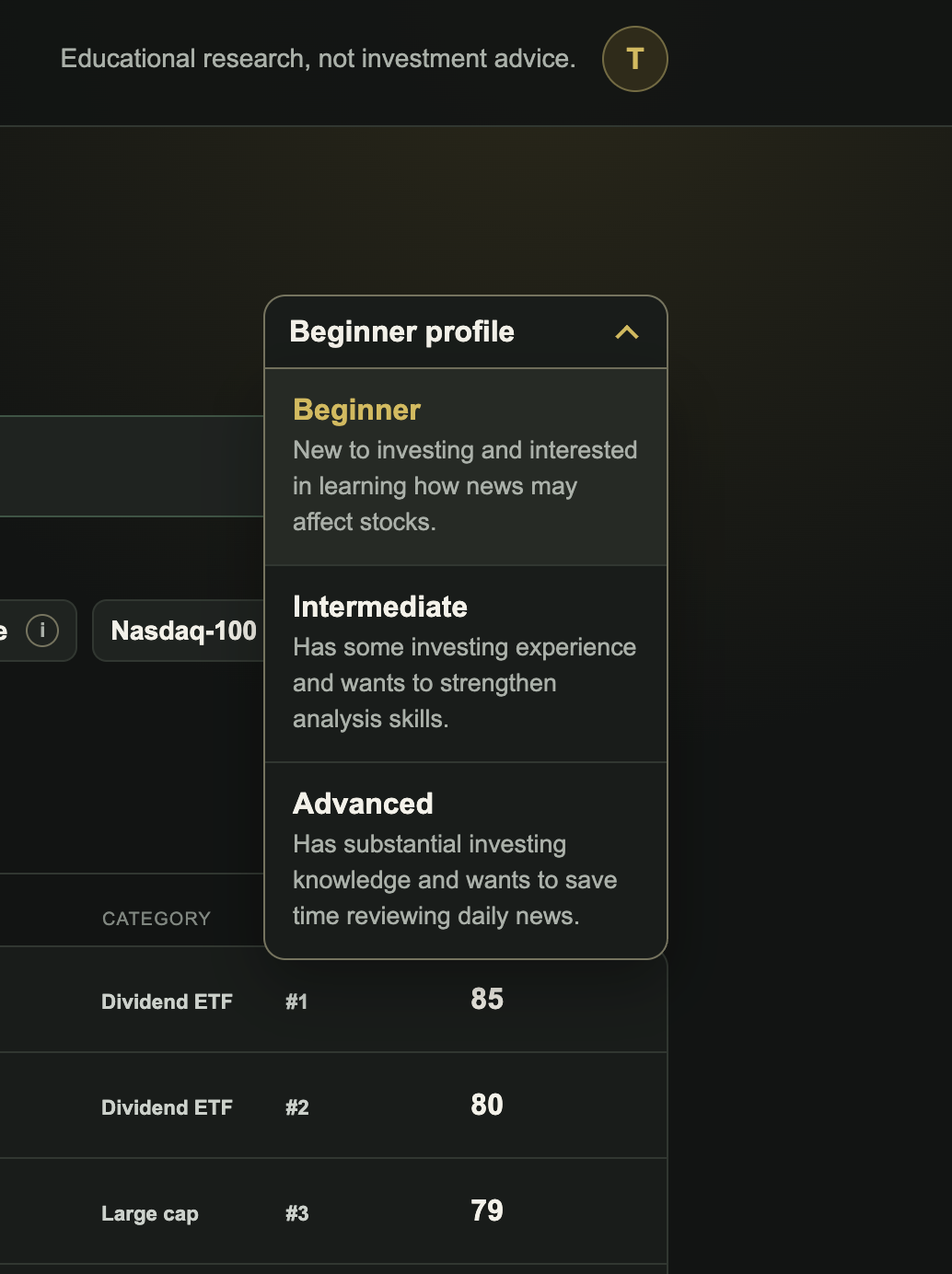
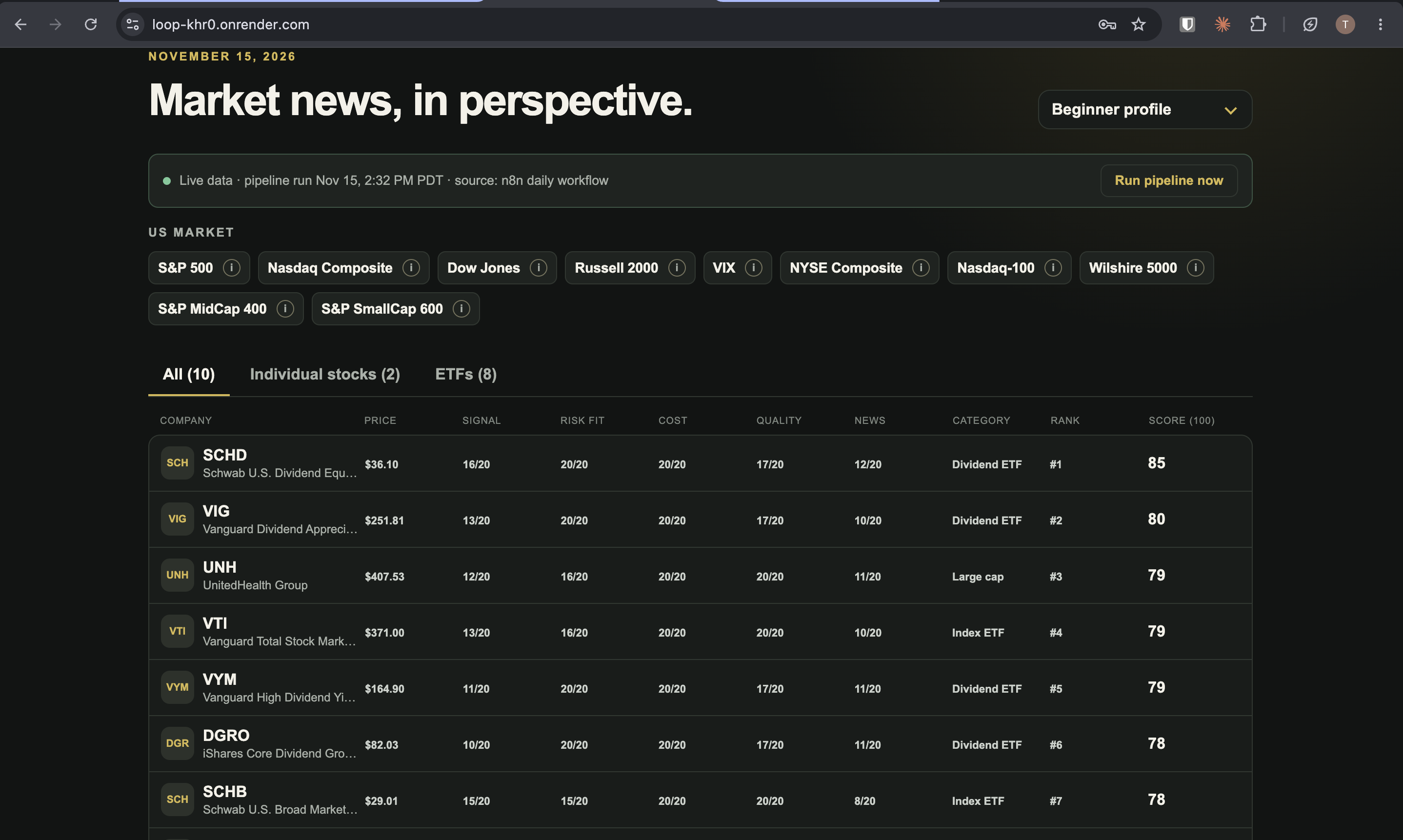
THESIS is a daily research feed for Canadian beginners. Every morning it produces ten candidate stocks and ETFs matched to the user’s risk tier.
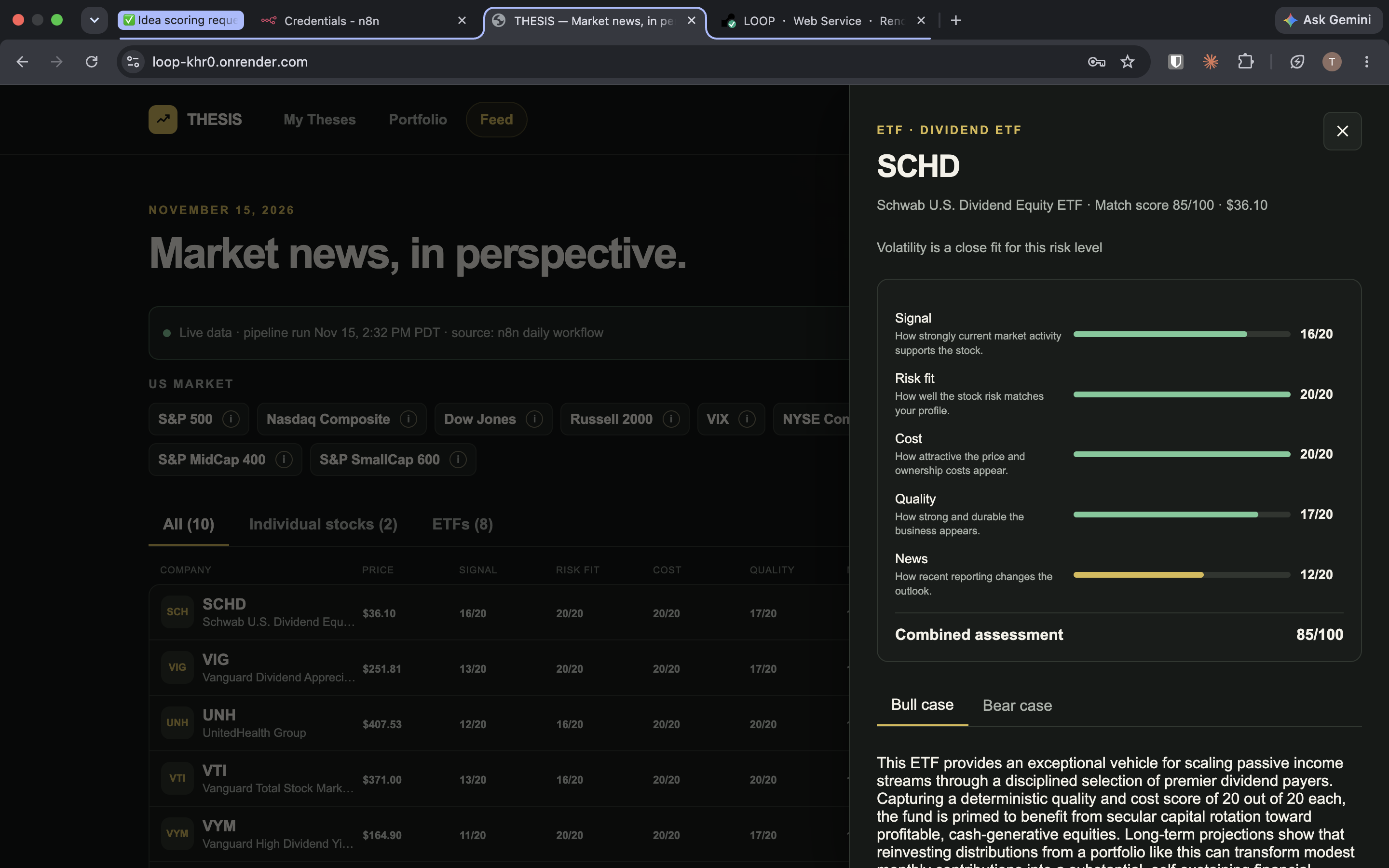
Deterministic scoring: each candidate gets a 0 to 100 score built from five visible parts: signal, risk fit, cost, quality and news. No model is involved in the number, so every score can be explained.
Gemini council: Gemini writes a bull case, a bear case and an overall read, and tags the stance of each headline. A filter in code rejects any output that sounds like buy or sell advice.
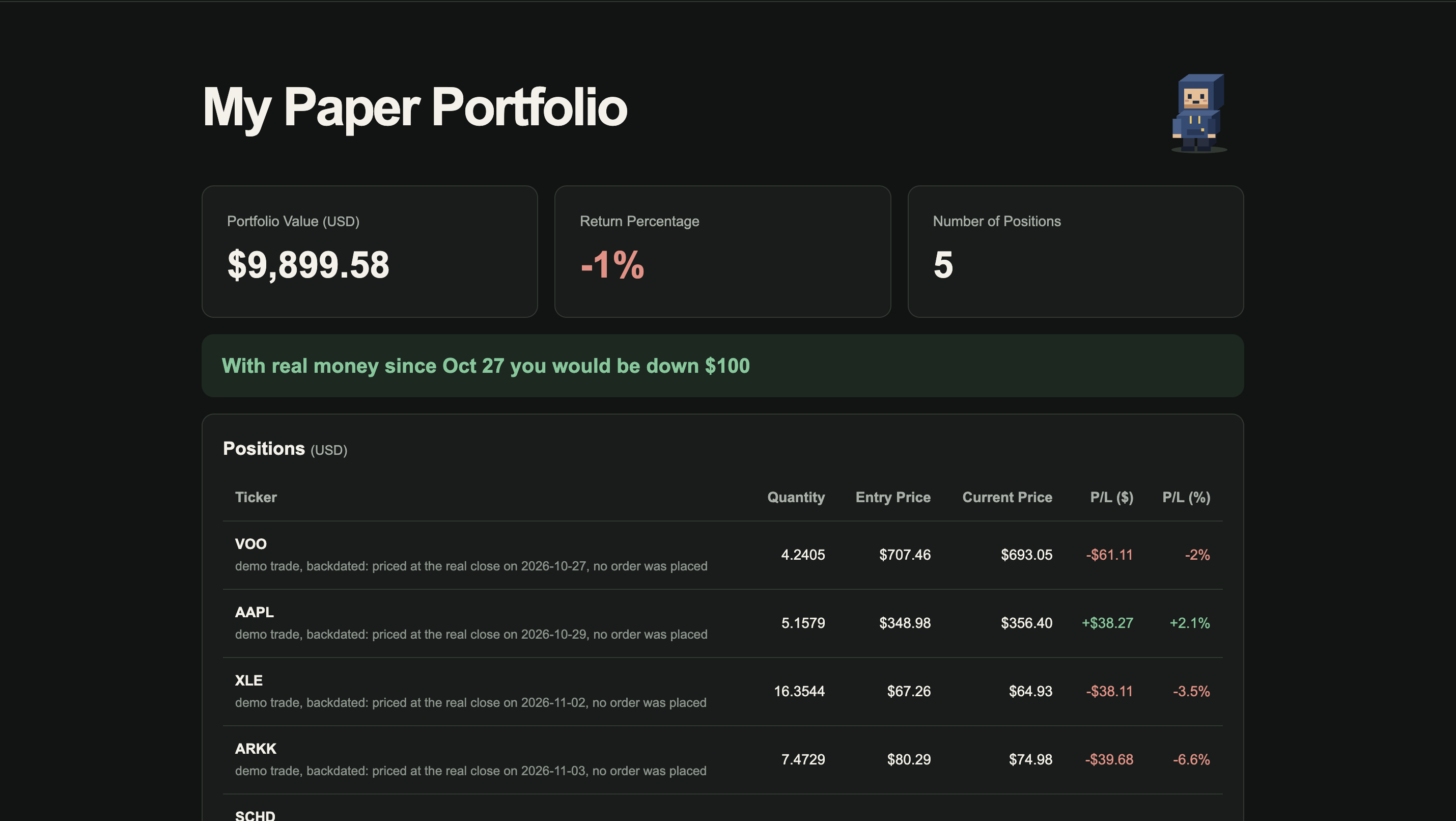
Paper trading: users can act on an idea with practice money through Alpaca’s paper trading API. No real order is ever placed.
Thesis monitoring: users write down why they bought, and the system emails them when news breaks that reason.
HOW WE BUILT IT
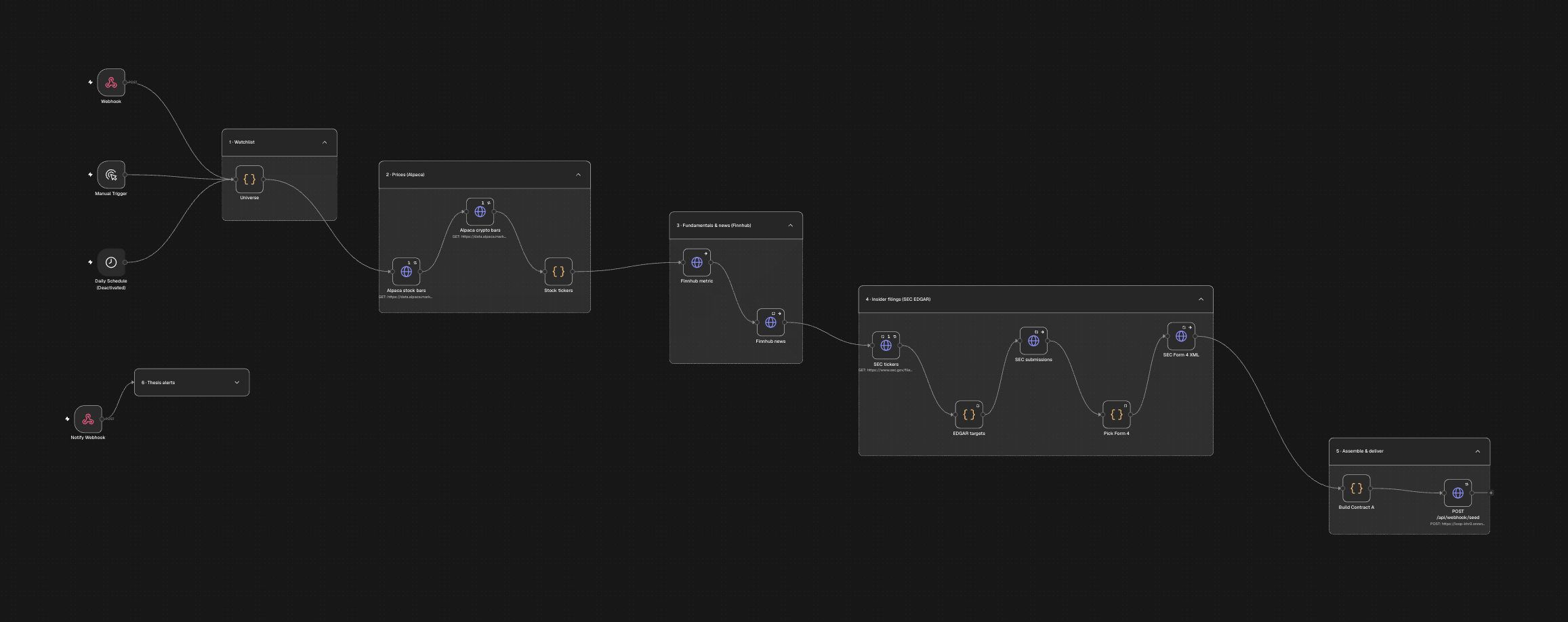
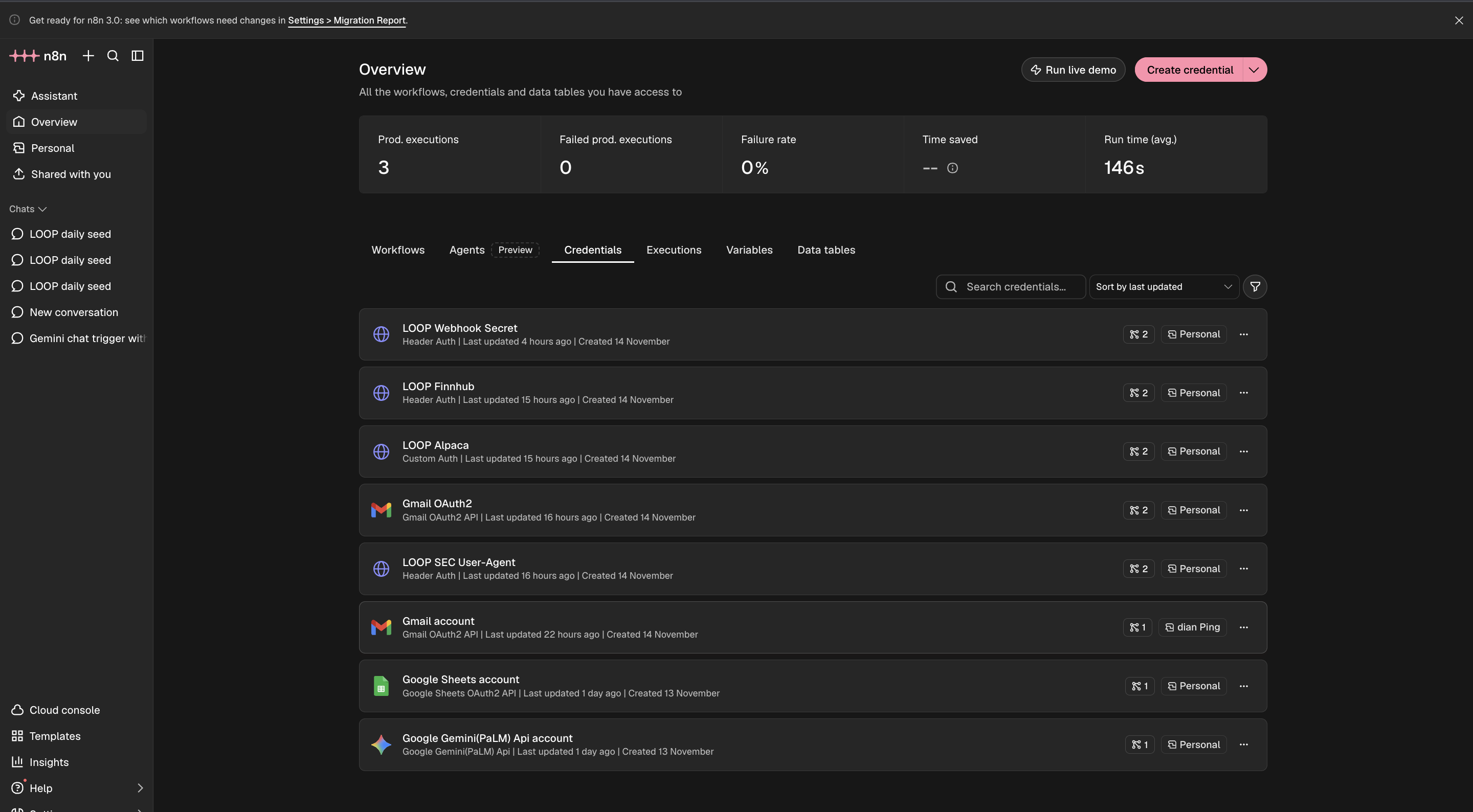
The engine is an n8n workflow of 19 nodes that runs daily. It starts from a fixed watchlist of sixty instruments, pulls prices from Alpaca, fundamentals and news from Finnhub, and insider buying from SEC EDGAR Form 4 filings. It assembles everything into one payload and posts it to our Node and Express backend on Render. The backend scores the candidates, runs the Gemini council and serves the feed. We agreed on five JSON contracts up front, so four people could build the pipeline, the feed UI, the portfolio and thesis pages, and the alerts in parallel.
CHALLENGES
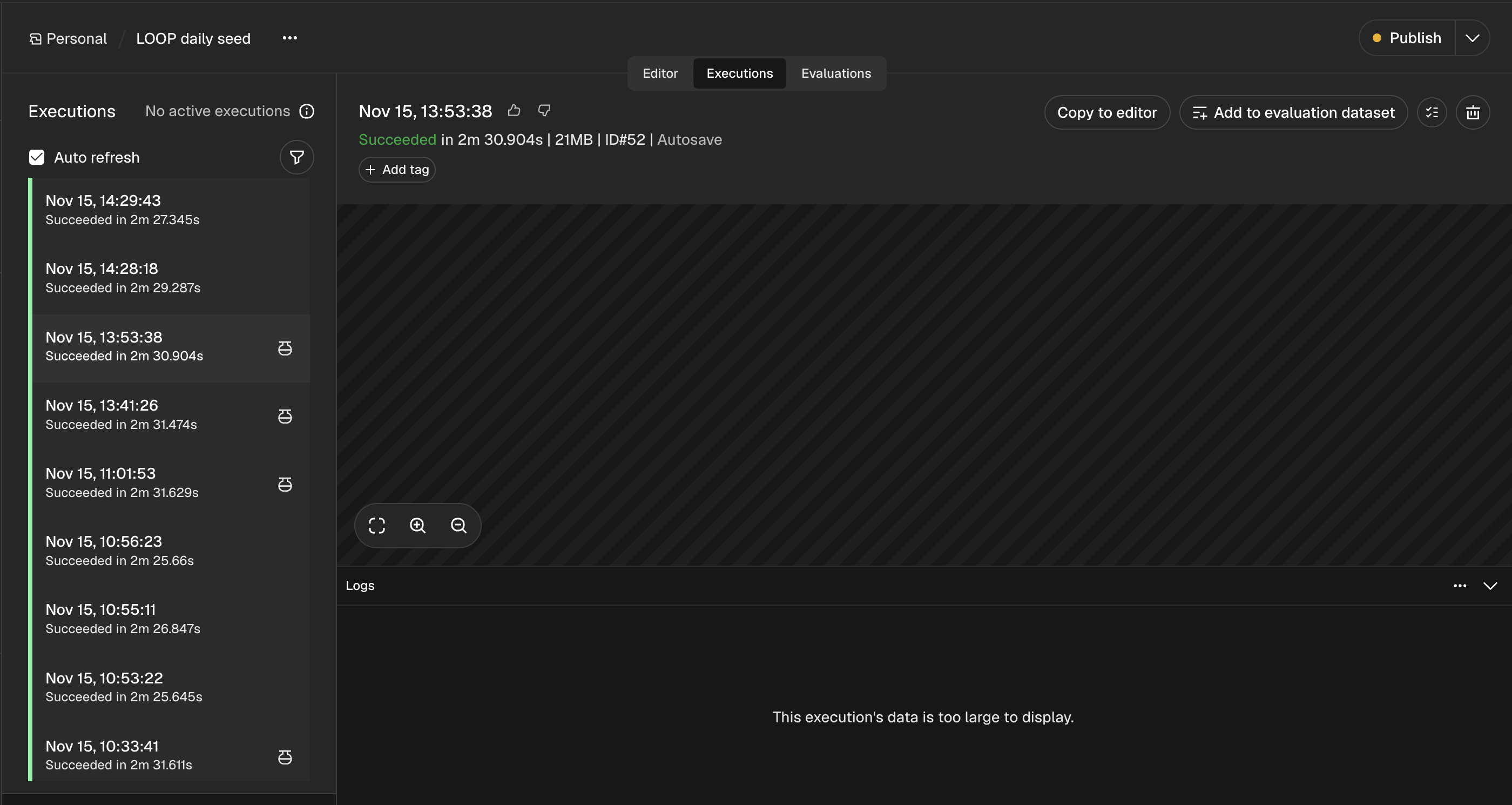
Silent failures: our POST node had a 1 millisecond timeout, so the data never arrived and nothing looked wrong. We found it by reading the execution logs node by node.
Guardrails that were too strict: our advice-language filter rejected a harmless phrase like “insider buying” and wiped out the whole council output. We narrowed the filter and changed it to keep partial results.
Free-tier infrastructure: Render sleeps when idle and loses its in-memory feed on every deploy, so we learned to reseed before every demo.
API limits and closed markets: we batched Finnhub calls to stay inside rate limits, and paper trades placed while markets are closed fill at the last real close and are labeled that way.
WHAT WE LEARNED
Constraints make better products. Keeping the score deterministic and the AI limited to language made the app more trustworthy and easier to debug. We also learned to treat every pipeline stage as something that can fail quietly, and to log each one.
WHAT’S NEXT
Authenticating the n8n webhooks, storing the feed in a database so deploys no longer wipe it, keying Finnhub metrics by symbol, and adding Canadian-listed securities and TFSA contribution tracking.
PERSONALIZED AI RESEARCH COMPANION — THESIS CHATBOT
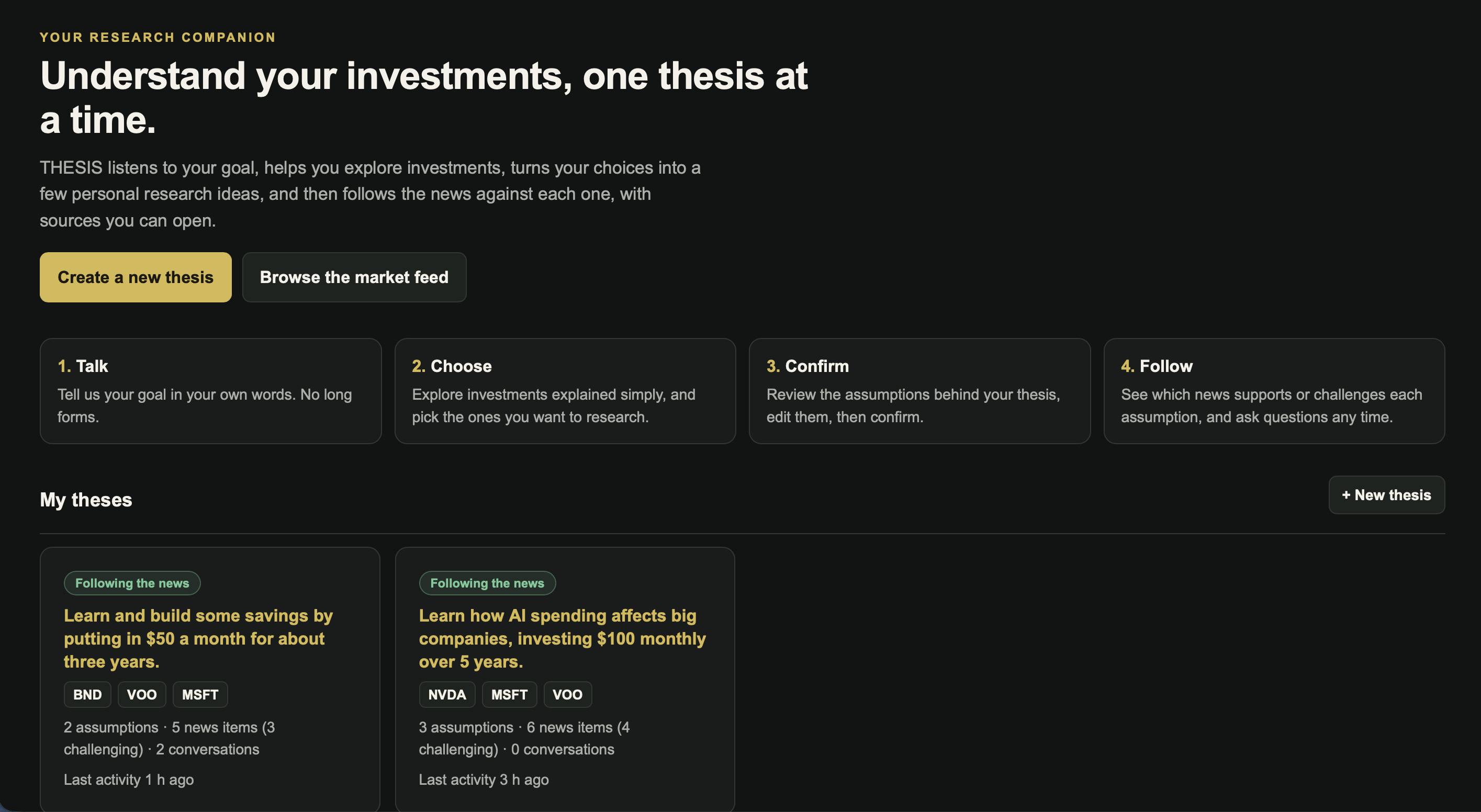
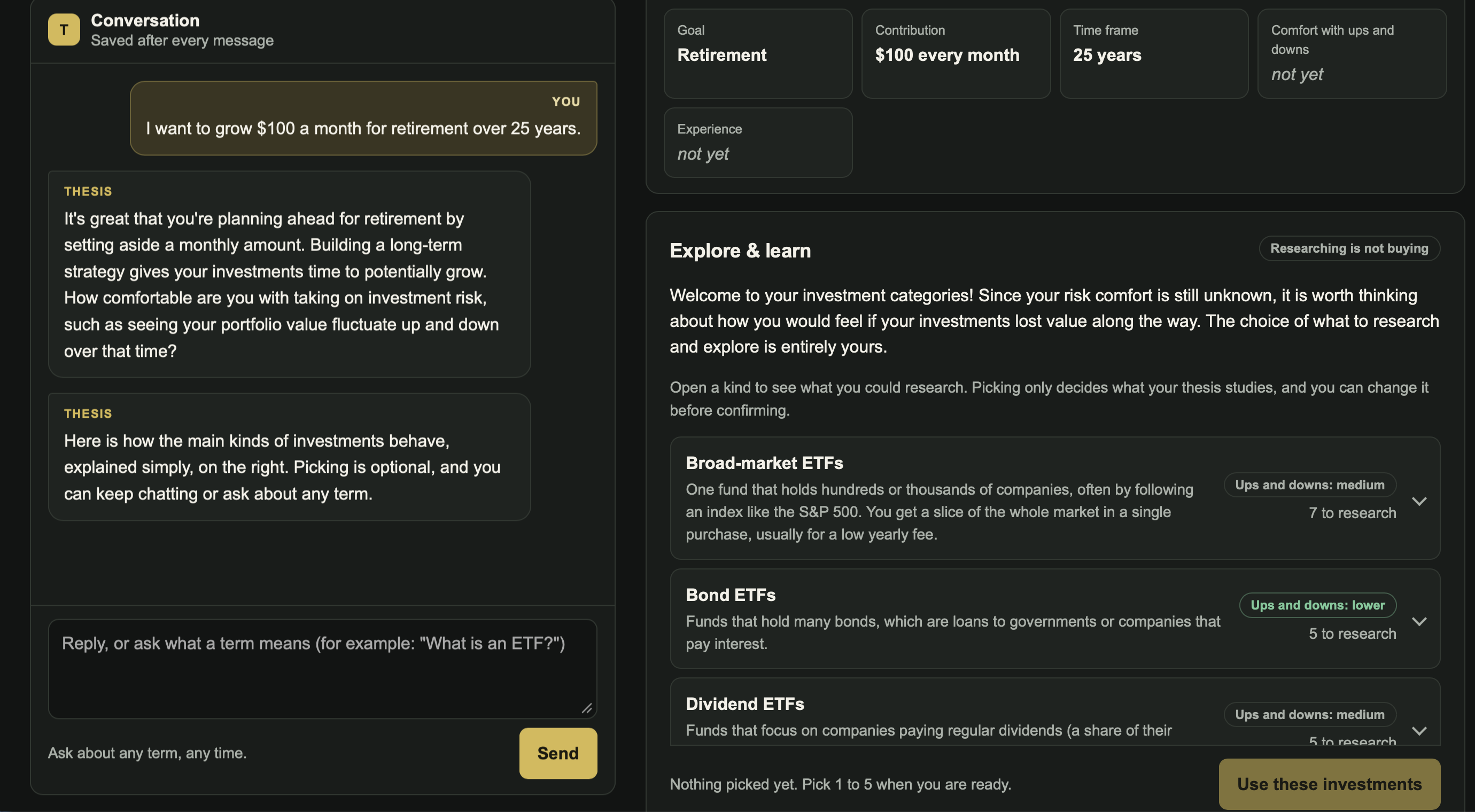
Alongside the research feed and paper portfolio, we built a personalized AI investment research companion powered by Google Gemini. Instead of making beginners complete complicated financial questionnaires, THESIS lets them start with a natural conversation.
Conversational onboarding: Users explain their goals in everyday language. Gemini answers beginner questions, explains unfamiliar financial concepts, and builds a research profile around their savings goals, monthly contributions, time horizon, investing experience, and comfort with risk.
Explore & Learn: Based on their conversation, users can explore stocks and ETFs with simple explanations of how each investment works. They can select multiple investments to research without actually buying anything.
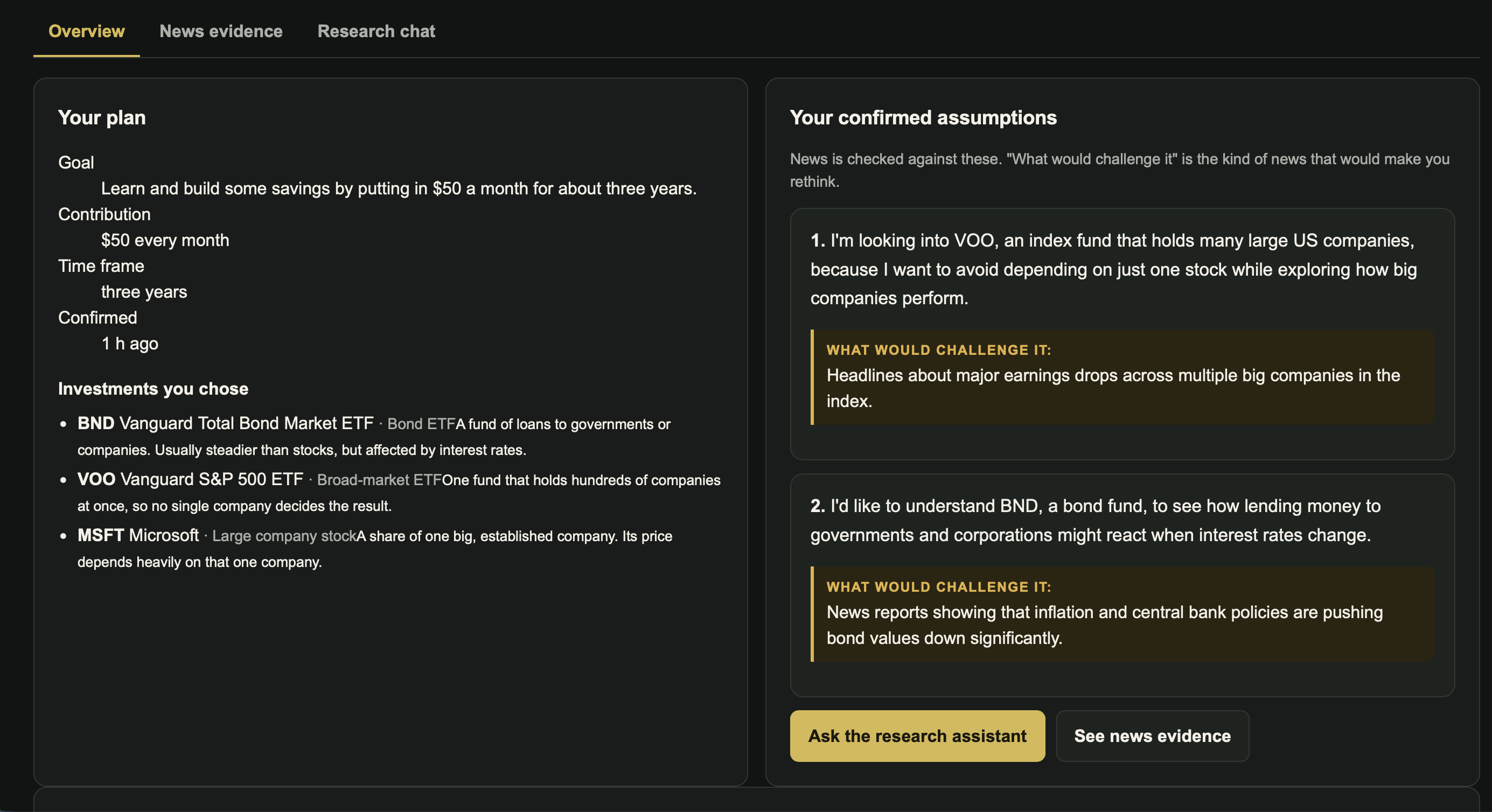
AI-generated research assumptions: Gemini uses the conversation and selected investments to generate personalized research ideas. Each idea includes conditions that could challenge the user's thinking. Users can edit these assumptions and must explicitly confirm them before saving their thesis.
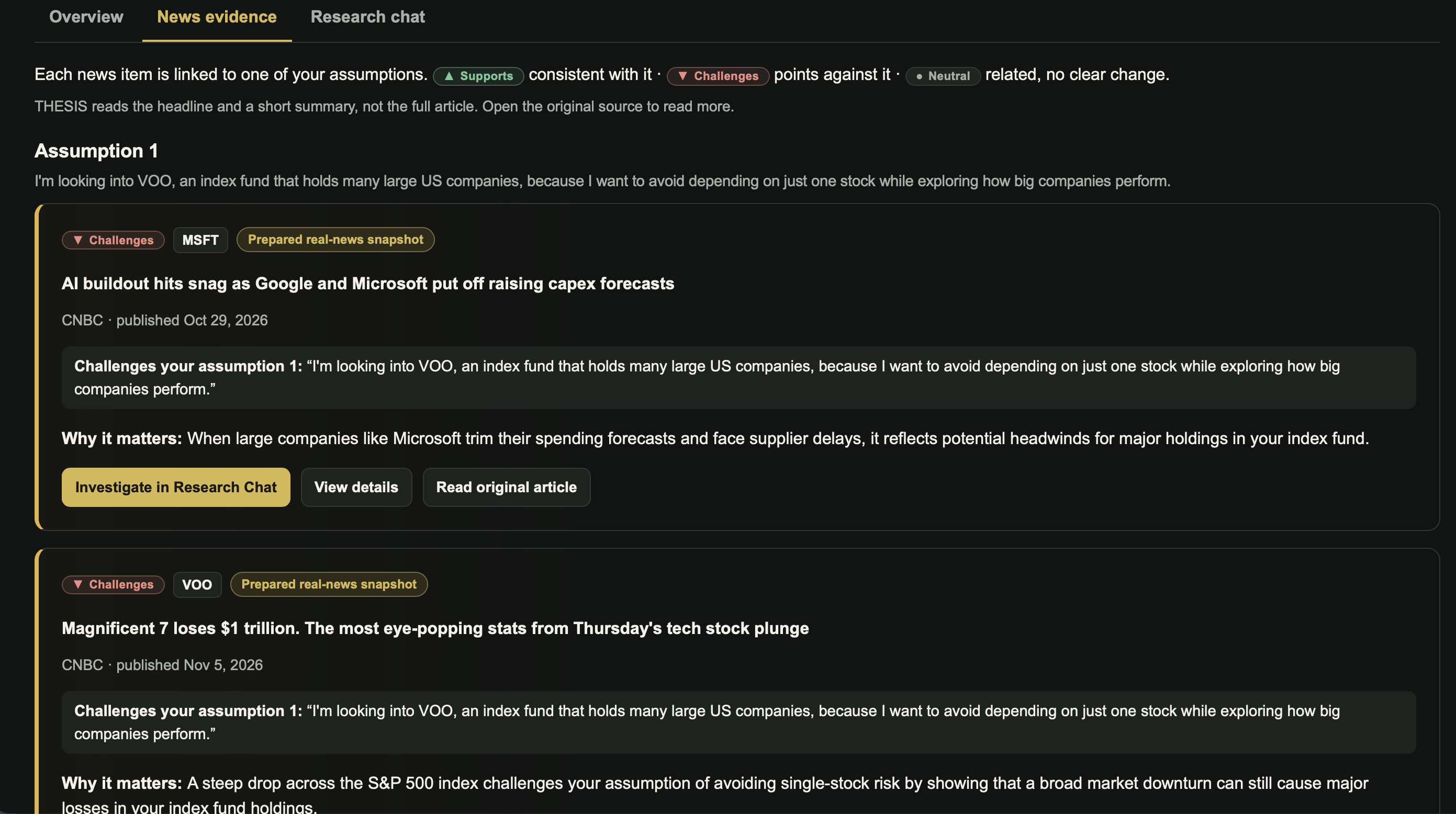
Personalized News Evidence: Once a thesis is saved, THESIS evaluates relevant financial articles against the confirmed assumptions. It identifies whether the evidence supports, challenges, or is neutral toward an idea, explains why, and links to the original news source. Our prototype demonstrates this functionality using a prepared snapshot of real financial news articles.
Thesis-specific Research Chat: Every saved thesis has its own AI research conversation. Users can ask questions about their selected investments, investigate news articles, and receive beginner-friendly explanations grounded in their confirmed research assumptions and source-linked evidence.
Multiple independent theses: Users can create and save different research scenarios, each with its own goals, investments, assumptions, news evidence, and AI research conversations.
We built the personalized research experience using Google Gemini, Node.js, Express, and TigerData PostgreSQL, allowing user profiles, confirmed theses, and news evidence to persist across sessions.
Our long-term vision is to bring this research experience into platforms like Investly, giving beginners a way to learn and investigate financial questions at any time. THESIS is not designed to replace human financial advisors or make investment decisions for users. It is designed to help people understand their options, question their assumptions, and arrive at conversations with advisors better informed.
Built With
- alpac
- alpaca-api
- css
- express.js
- finnhub
- gemini
- gmail-api
- google-gemini
- html
- javascript
- n8n
- node.js
- render
- rest-api
- sec-edgar
- webhooks
