Inspiration
Fomo proved something: social trading has enormous demand when distribution is done right. Fomo reached a large valuation with 625K+ traders on memecoins alone, because copying a good trader was one tap and the people worth copying got paid. We asked what that looks like for opinions backed by real assets. Market takes already live in group chats and on X, but "AI power demand is underrated" has no ticker, the chat has no buy button, and nobody keeps score.
So we built around three bets:
- Distribution: go where takes already are (X replies and iMessage) instead of asking people to open another app.
- Creator rewards: half of every trade's fee goes to the take's author, so the best callers bring their followers.
- UX so easy the crypto disappears: sign in with X, no seed phrase, no gas, one tap.
What it does
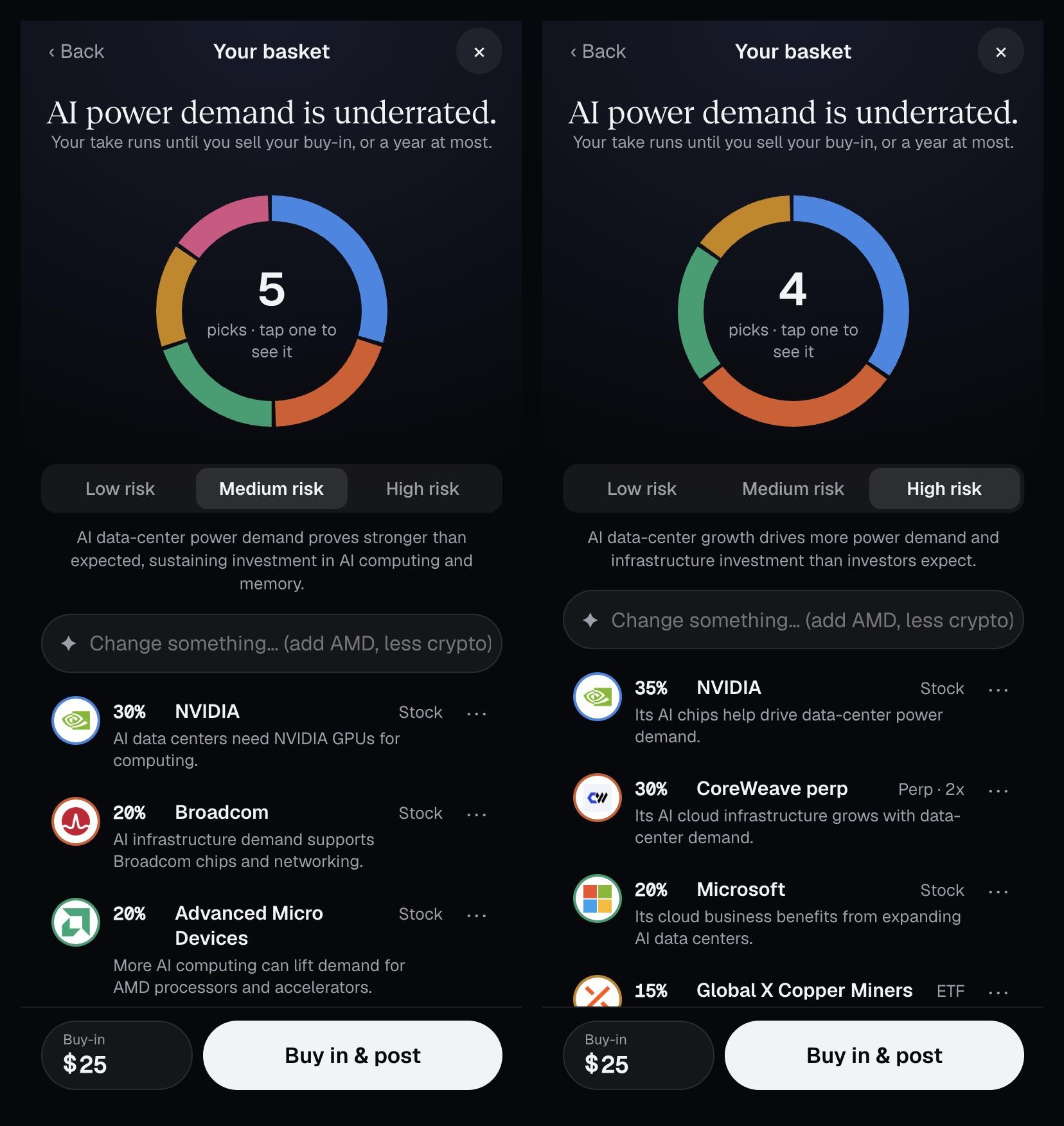
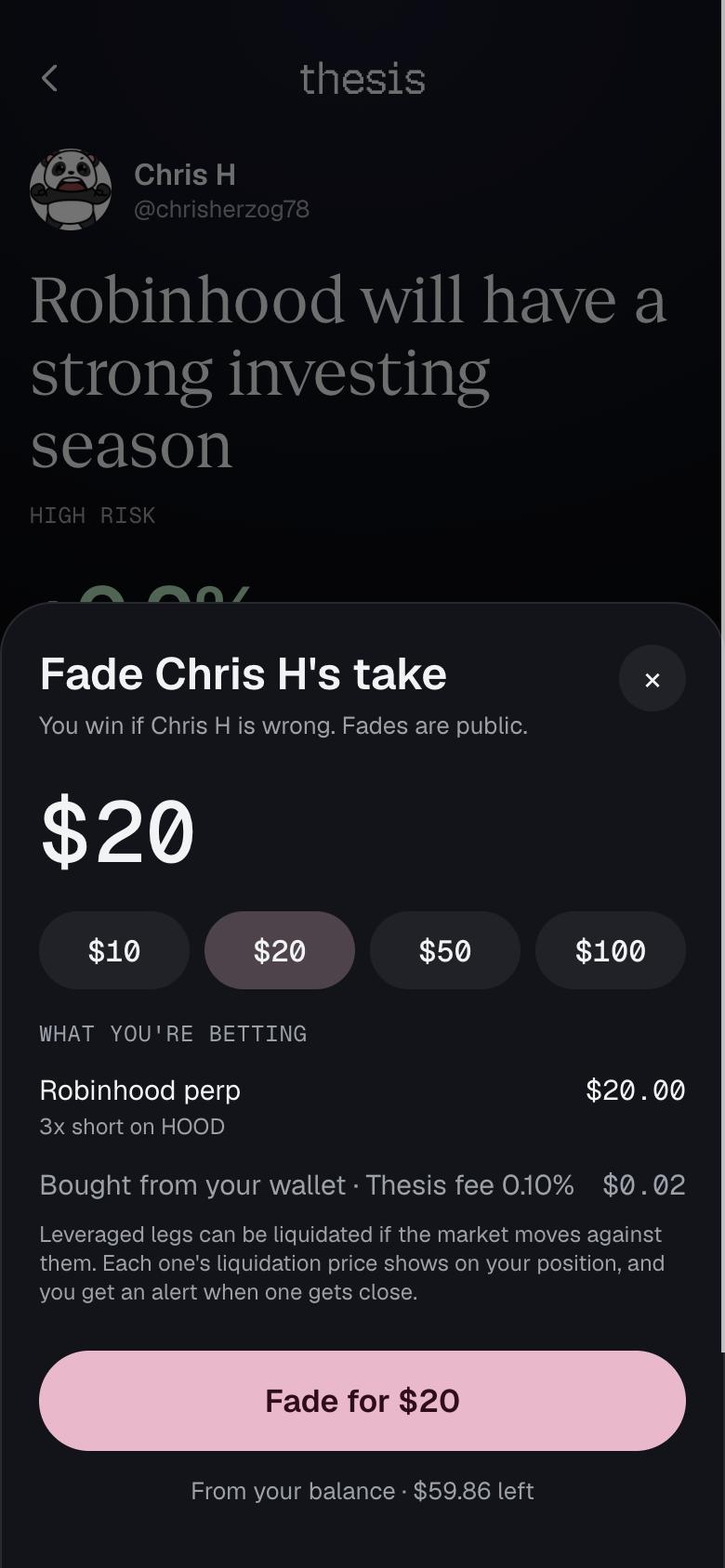
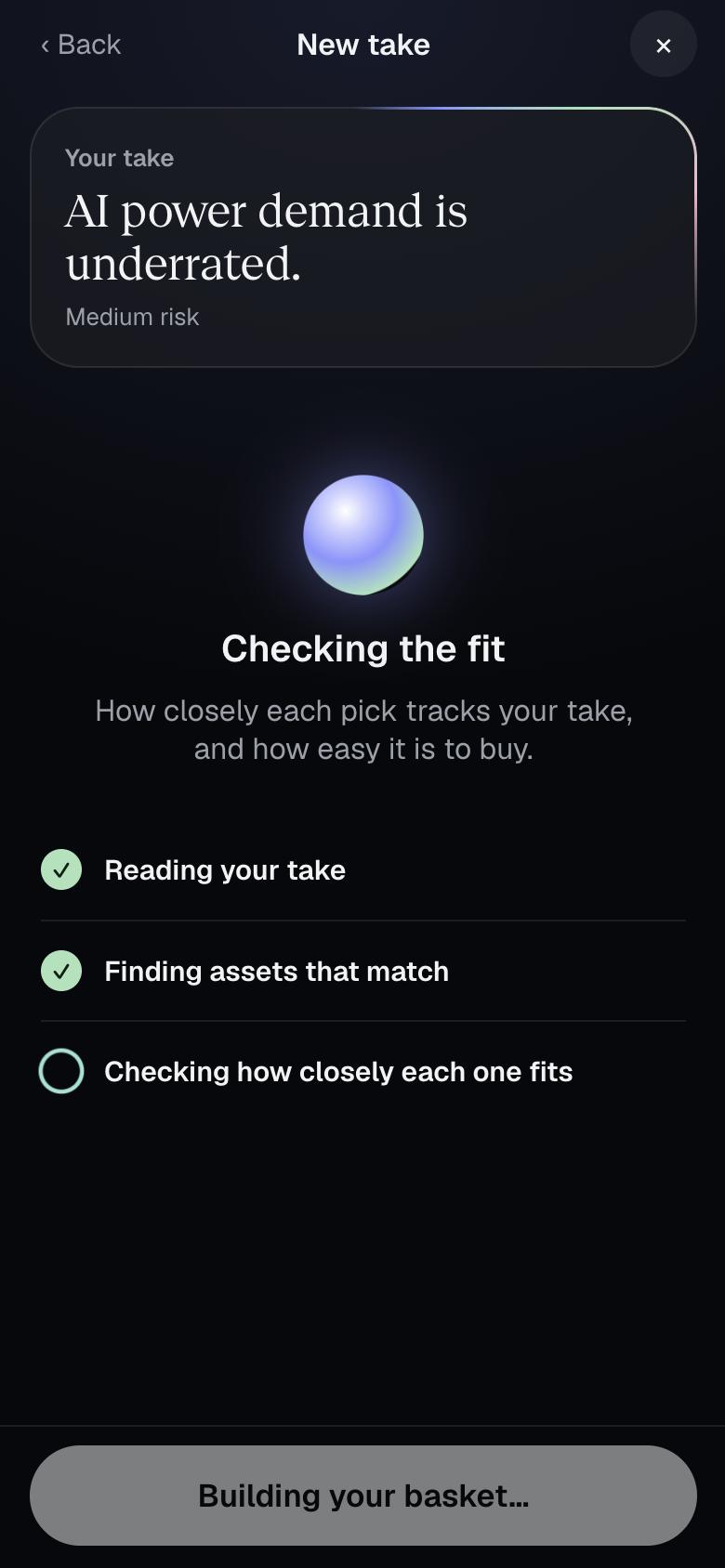
You type a take. An AI builds a basket of real assets for it: tokenized stocks, Phoenix perps, Gemini prediction markets, Collector Crypt cards and Jupiter Lend yield, with a reason for every pick and a risk dial that changes the instruments. You buy in with one tap, and the take, its basket and your entry prices are frozen on-chain by our Anchor program. Anyone can then trade it (buy the same basket) or fade it (bet against it):
- In the app, at yourthesis.xyz.
- On X: reply
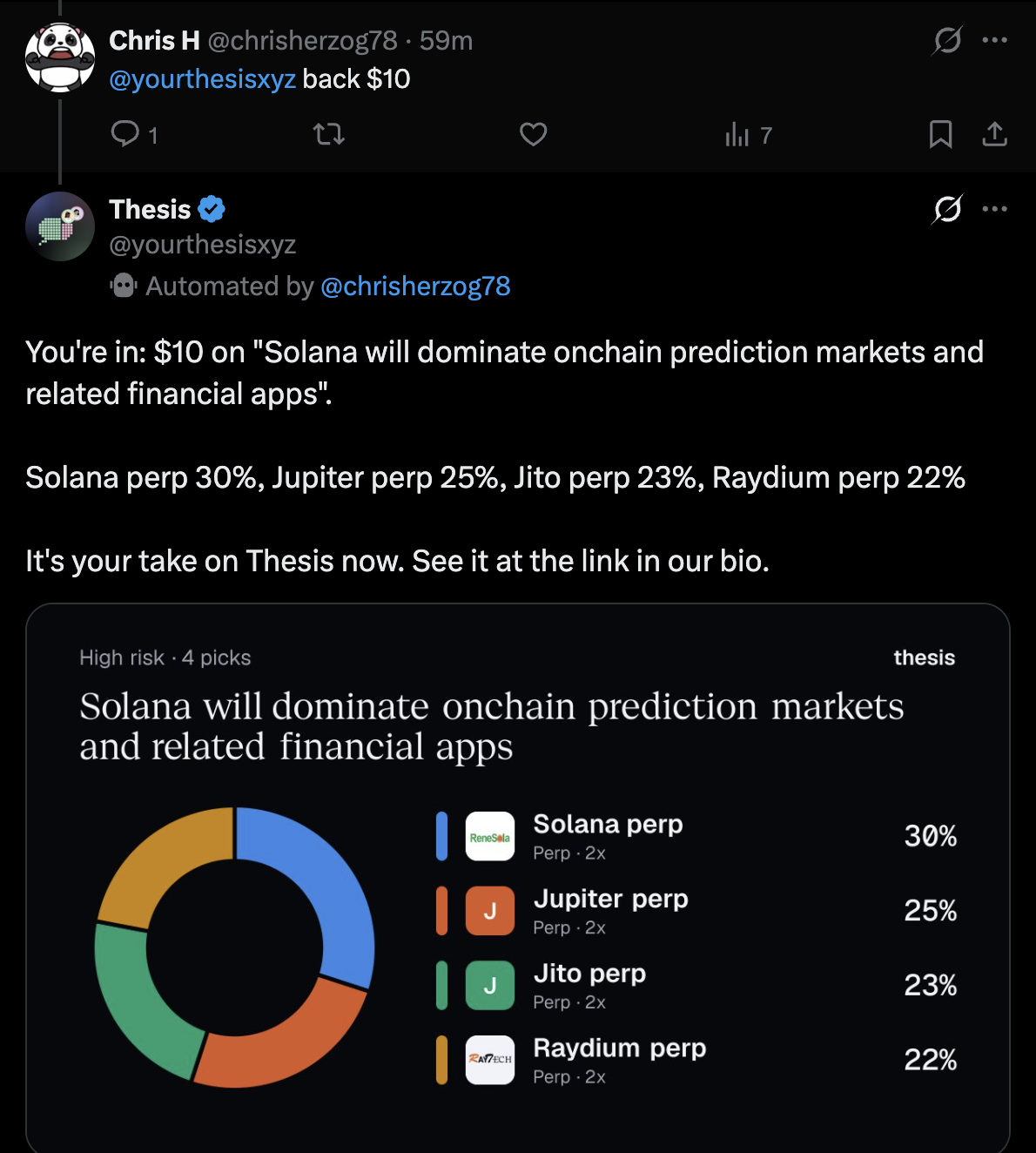
@yourthesisxyz back $20under any post and the bot builds a basket from the post, trades it from your wallet within your limits, and replies with the basket picture. It also doesfade,sell,score @handleandcopy(auto-copy an account's calls). - Over iMessage: "I'm in for $50 on Jake's take."
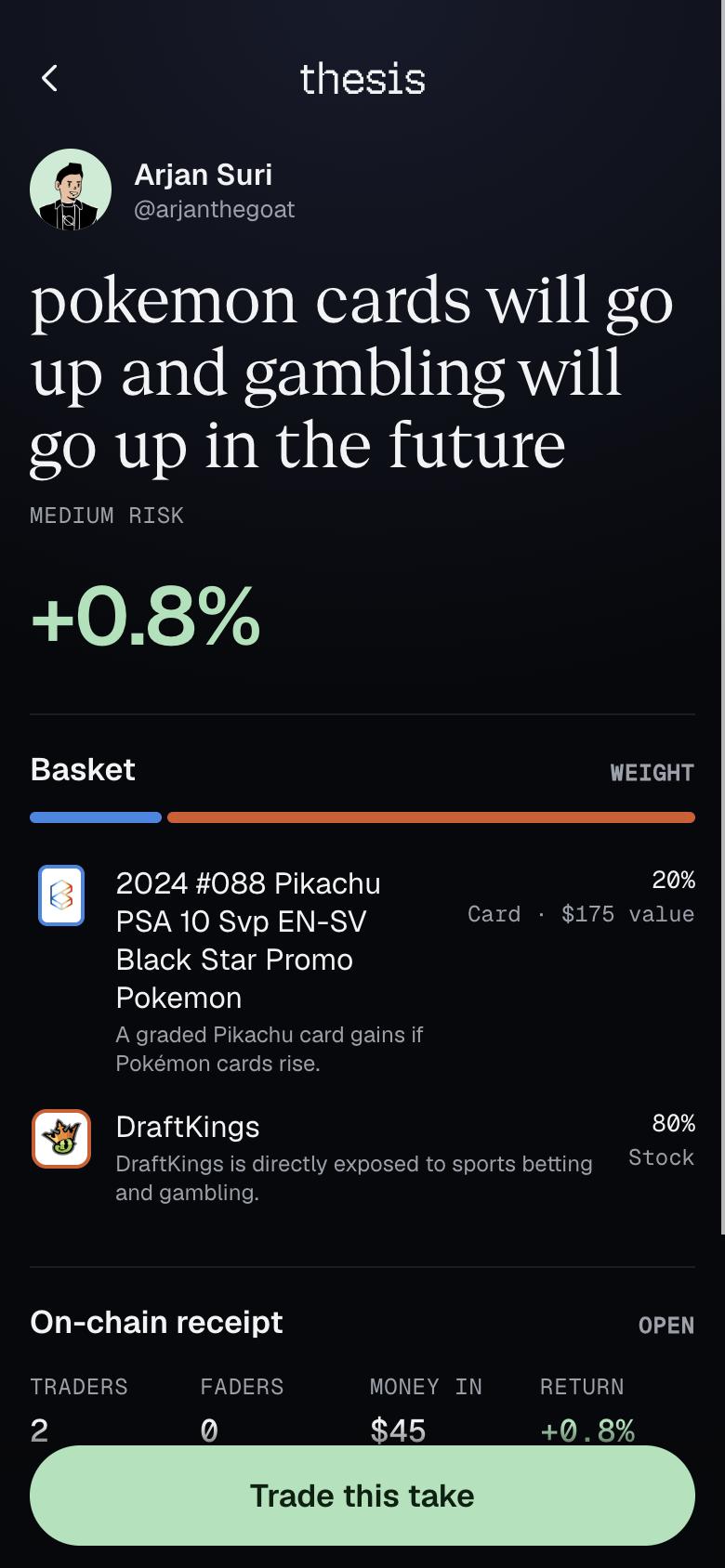
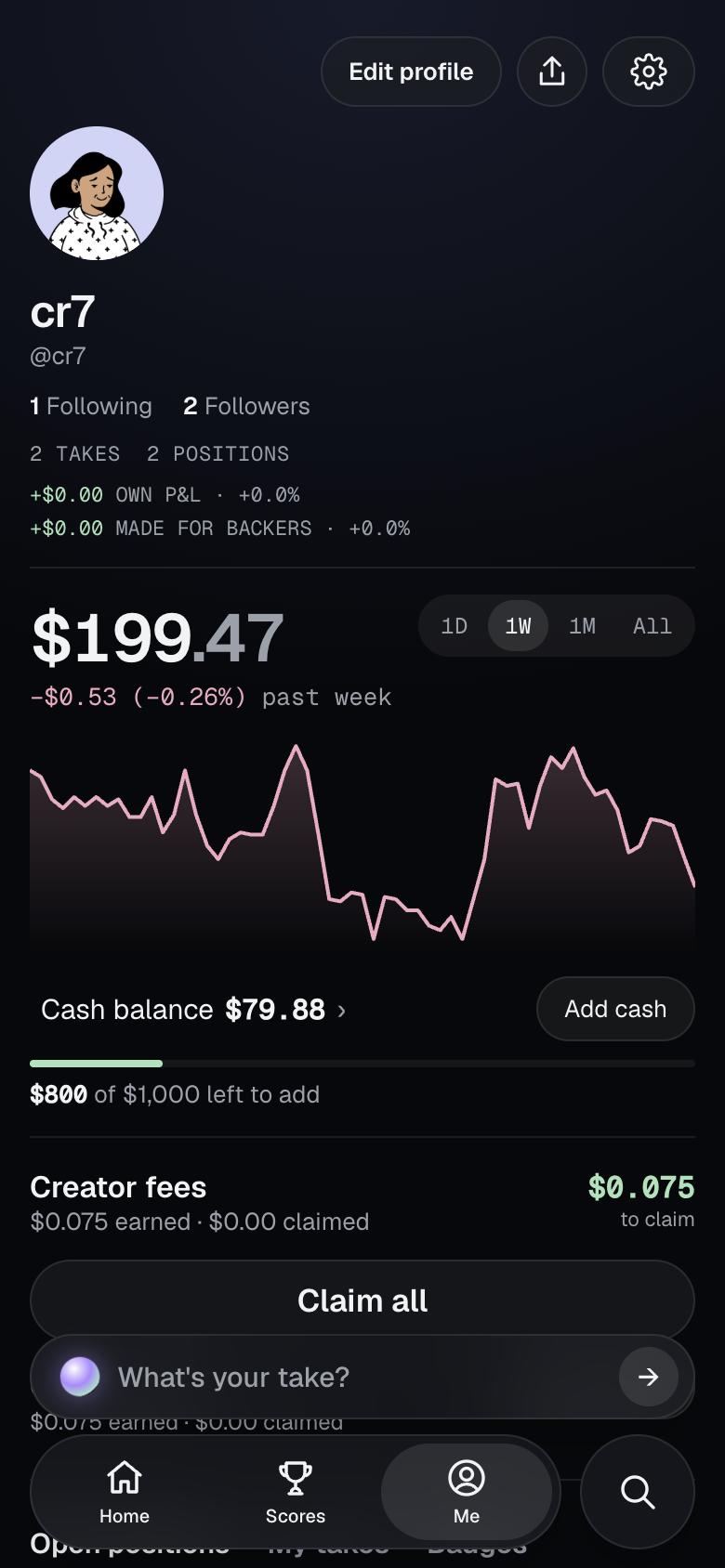
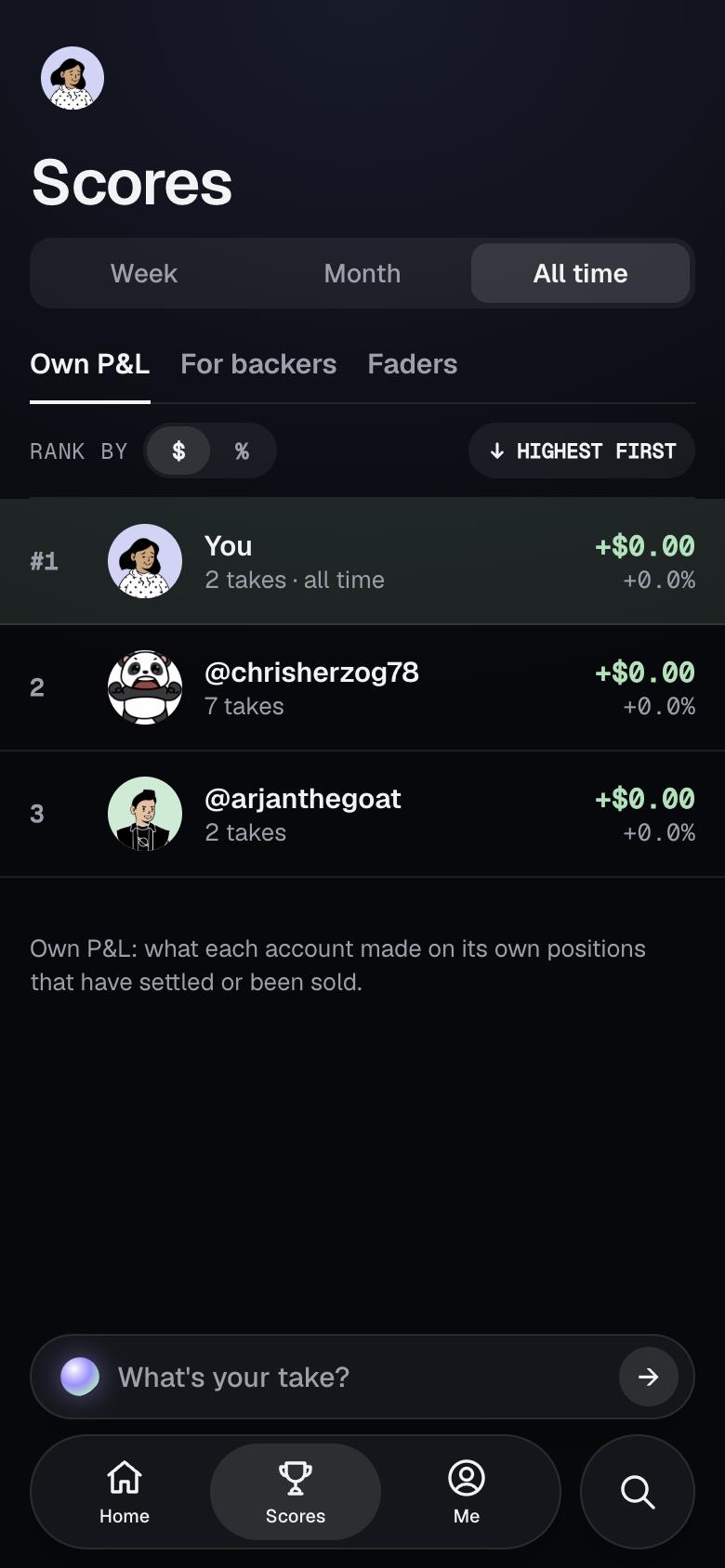
Every account gets two on-chain scores (own P&L, and what its takes made for backers), plus leaderboards, a faders board, non-transferable Token-2022 badges and public receipts. Creators earn 5 bps of every trade and fade on their takes.
How we built it
- Solana program (Anchor): non-custodial receipts recorded in the same transaction as the user's own swaps. Proof-of-trade brackets read the Instructions sysvar to prove the stake was really traded. The fee split, settler-signed prices, settlement and badges are all on-chain.
- Composition: Jupiter swaps, Jupiter Lend deposits and Phoenix orders are packed with the receipt into v0 transactions with address lookup tables, split into per-transaction brackets when a basket doesn't fit 1,232 bytes.
- A full mainnet fork (Surfpool) on an Oracle VM, with QuickNode as its mainnet datasource, so every venue is the real one. A fork API builds trades, and the user's Privy wallet signs them.
- Data: a QuickNode Streams filter decodes program events into Supabase, which drives the feed, notifications and scores.
- AI: a take builder (catalog in a cached prompt, BM25 over every Gemini contract) and one chat agent behind the X bot and iMessage, trading through Privy session signers within user-set limits.
- Apps: a Next.js installable web app, a native SwiftUI iOS app, and a settler that signs prices from Jupiter, Gemini and Collector Crypt.
Challenges we ran into
- Running a real market on a fork. Surfpool copies mainnet accounts once, so pools went stale within minutes and prop AMMs rejected stale quotes. We re-copy each trade's pools right before sending and route only through state-based DEXes. Phoenix was harder: its market makers only update on mainnet, so fork fills piled up against them until a thin market (CoreWeave) panicked on every order. We now write mainnet's maker inventory back into the fork's trader buffer before every Phoenix send, which in effect keeps mainnet's market makers trading on the fork.
- Jupiter rate limits across many legs. A 5-leg take costs ~10 Jupiter calls cold. We built routes kept per token for 10 minutes and repriced with one batched price read, swap templates shared across wallets, routes scaled to new stakes, and separate lanes for taps vs. prebuilds. Most trades now cost one Jupiter call or none.
- Speed. Profiling in Surfpool cost ~145 ms per instruction (1–1.5 s per send). Turning it off, prebuilding trades when the sheet opens and an accept-then-confirm submit got tap to "You're in" down to ~0.35–0.5 s.
- Making the LLM good and fast. Embeddings picked off-topic names and bought what bearish takes were against. We moved to BM25 plus the full listed catalog in a cached prompt, added "no clean exposure", inverted (bearish) baskets and per-pick "gains if right" checks, and ran blind A/B evals with LLM judges. The shipped builder wins 57–15 over the old one at a 2.1 s median.
- Proving trades without custody. A receipt has to prove the money was really traded, even when a basket is split across transactions. Each transaction is its own bracket with an allowlist, an exact USDC drop and output accounts that must grow, and every attack has a failing test.
- Agents that trade for you, safely. Privy session signers let the X and iMessage agents sign within per-trade and daily limits that are checked under a lock, keyed so a retried mention never trades twice.
Accomplishments that we're proud of
- A live public beta with every feature on the fork: AI baskets across five asset classes, trade, fade and partial sales, the X bot, copy trading, iMessage trading, scores, leaderboards, badges and creator fees.
- A real X trade from a single reply: the bot reads the post, builds the basket, trades it and replies with the picture.
- The program deployed on devnet for anyone to inspect, plus verifiable builds, property tests and an internal security review.
- Our GTM campaign has started: the bot is replying with tradable baskets under popular accounts' hot takes, and we expect early results by demo day.
- **GOT RESPONSE FROM KOL with 20k+ followers
What we learned
- Distribution is a product feature, not a marketing step. Putting the trade inside the reply where the take already lives changes everything about activation.
- Mainnet forks beat devnet for DeFi. Real venues and real liquidity surfaced the actual problems: stale pools, transaction sizes, market makers.
- Rate limits are architecture. Designing around a scarce API (caching, sharing, scaling, lanes) mattered more than any single optimization.
- Evaluate LLMs like products. Blind judges over 100 real takes caught failure modes we never would have spotted by hand.
- Non-custodial and seamless can coexist with embedded wallets, a fee payer and scoped session signers.
What's next for Thesis
- Distribution first: scale the X reply campaign, "score @handle" as a growth hook, creator onboarding, and more chat surfaces (Telegram, Discord, WhatsApp).
- Mainnet: deploy the verifiable build behind a safe upgrade key, with a QuickNode Stream on the live program.
- Real money: USDC in over CCTP, an Apple Pay onramp, withdrawals, and the iOS app on the App Store.
- The Thesis MCP server, so AI assistants can score accounts and trade takes for users, within their limits.
Built With
- anchor
- collector-crypt
- deno
- gemini
- imessage
- jupiter
- litesvm
- next.js
- node.js
- openai
- phoenix
- postgresql
- privy
- quicknode
- quicknode-streams
- react
- rust
- solana
- supabase
- surfpool
- swiftui
- token-2022
- typescript
- vercel
- x-api


