-
-
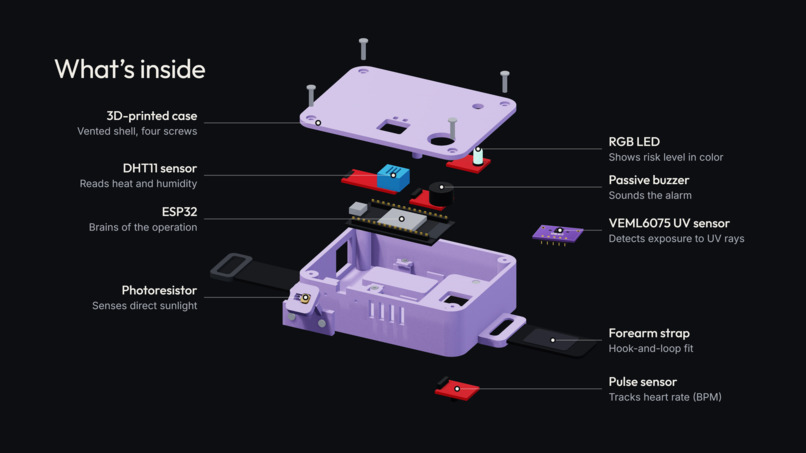
ThermoSafe Diagram
-
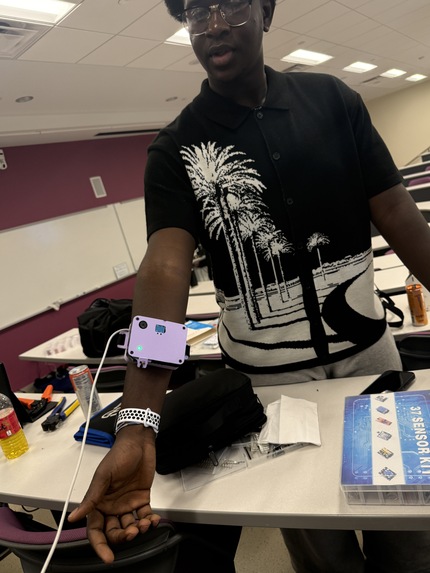
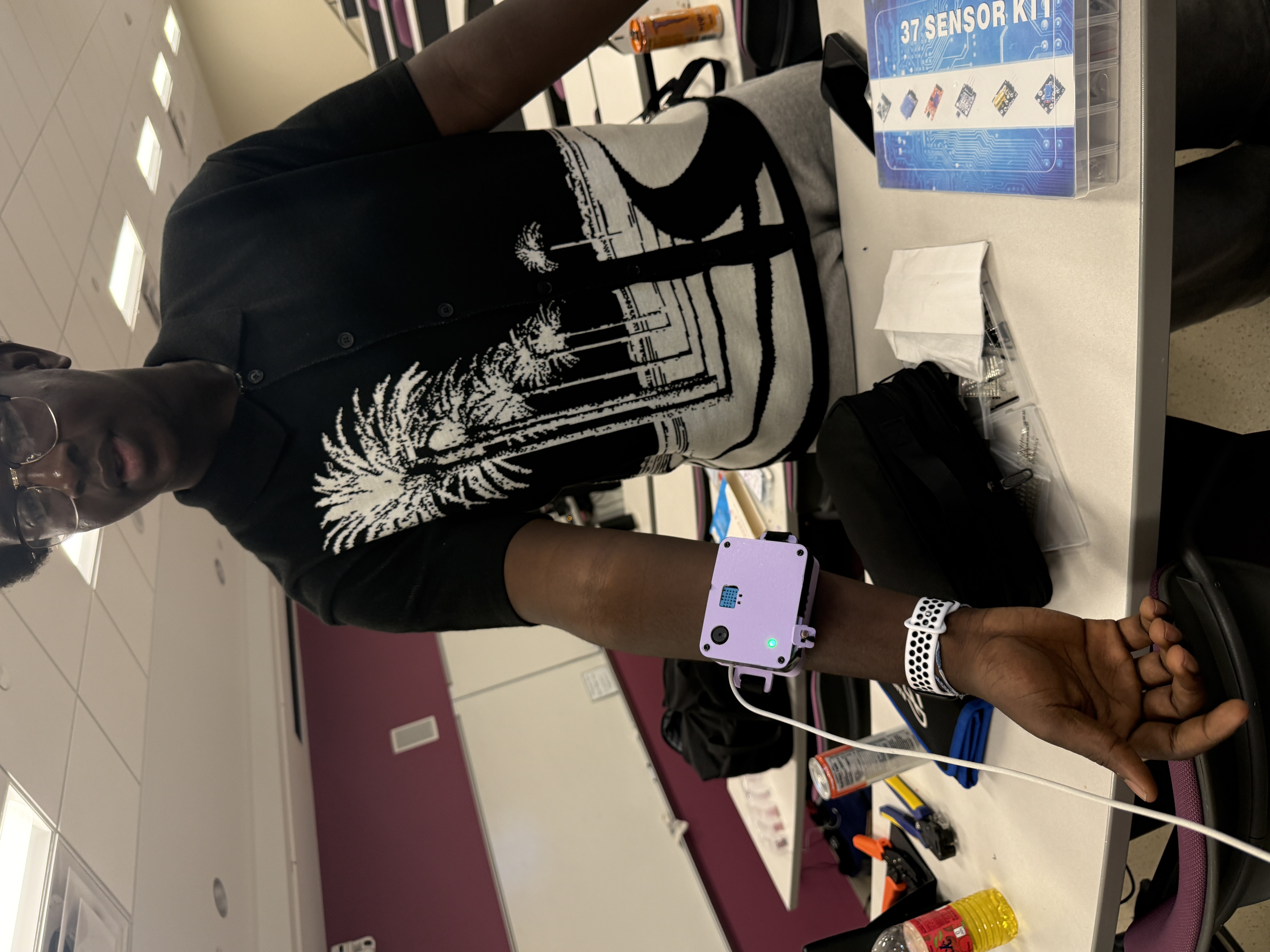
Our Lovely Hussein Wearing ThermoSafe
-
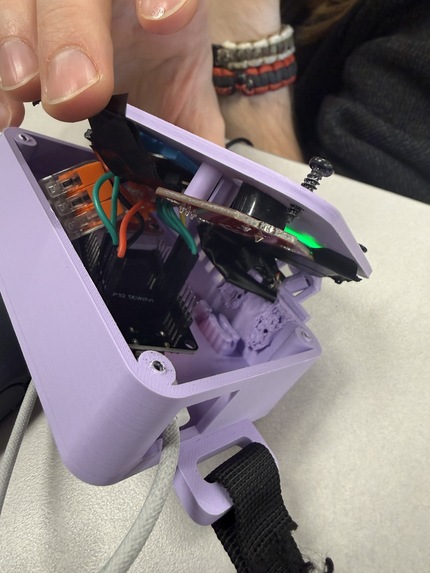
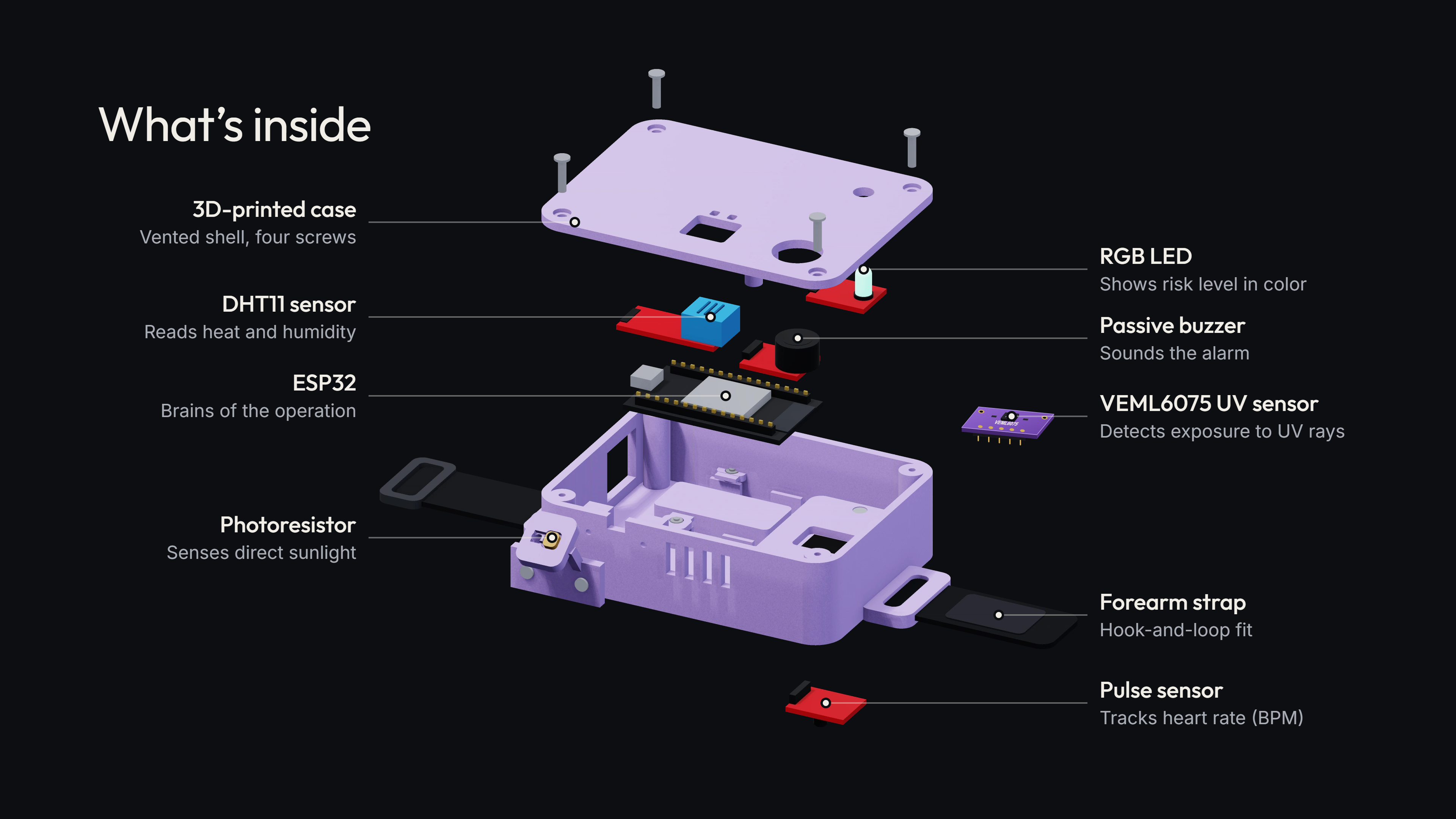
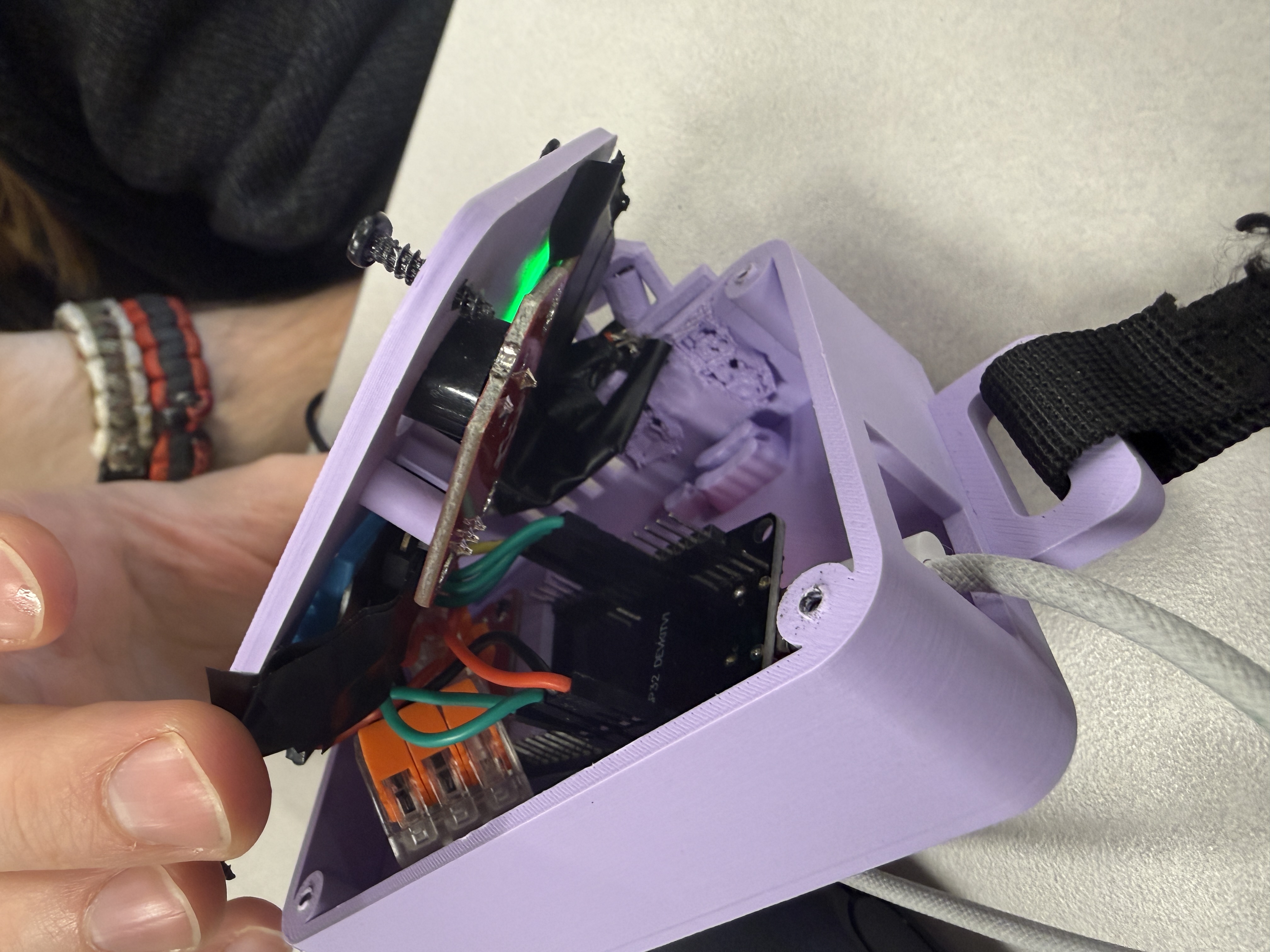
Inside ThermoSafe
-
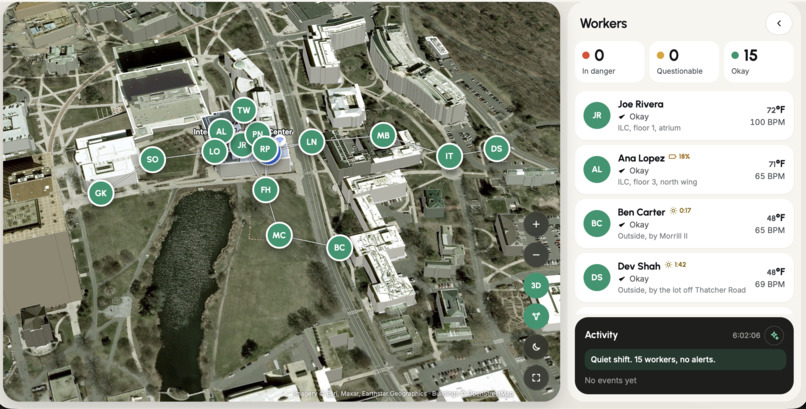
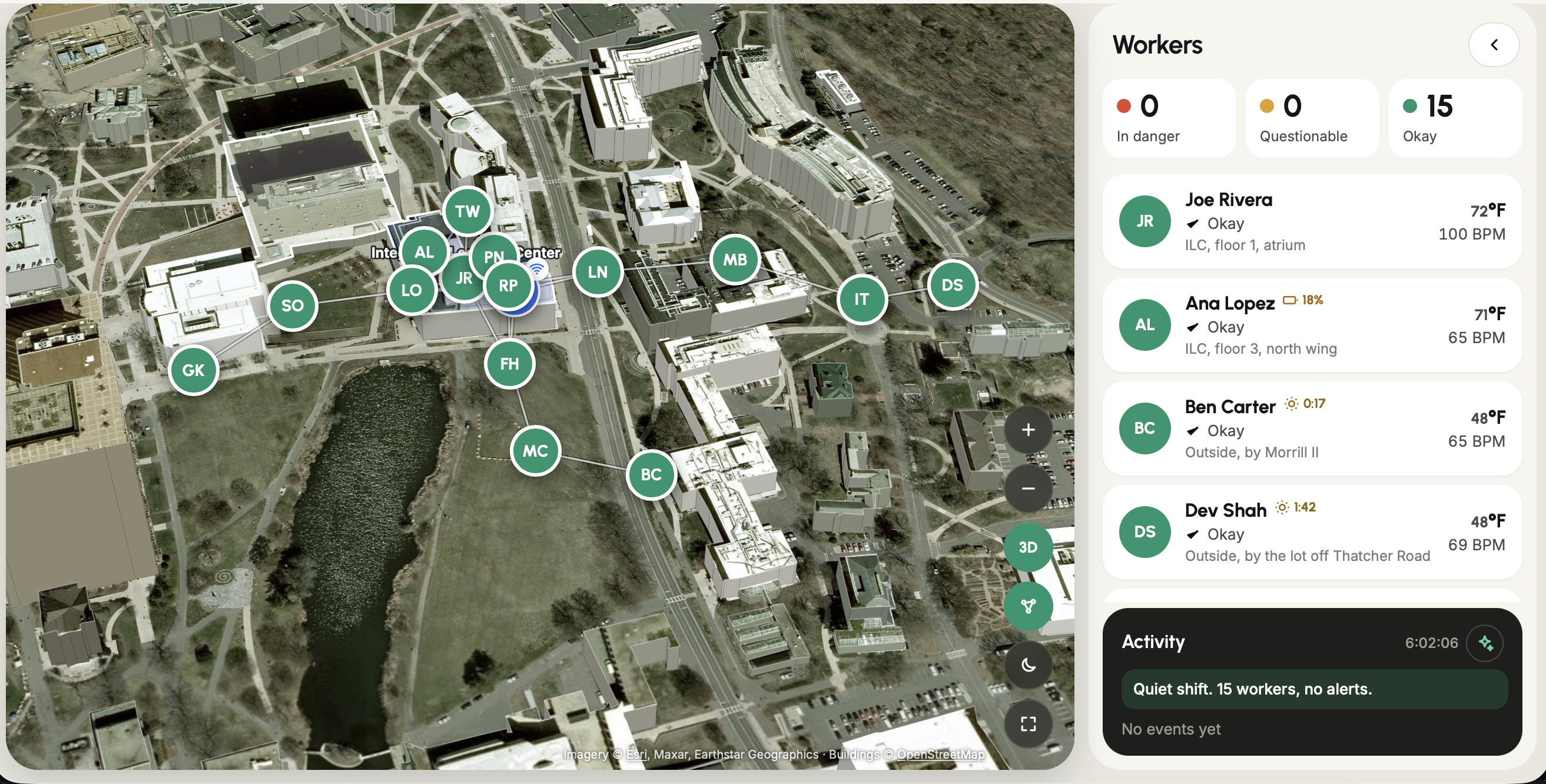
ThermoSafe - Site Manager - Dashboard
-
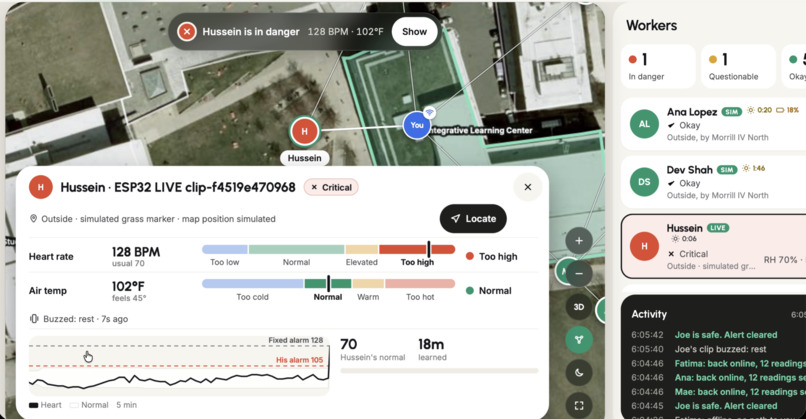
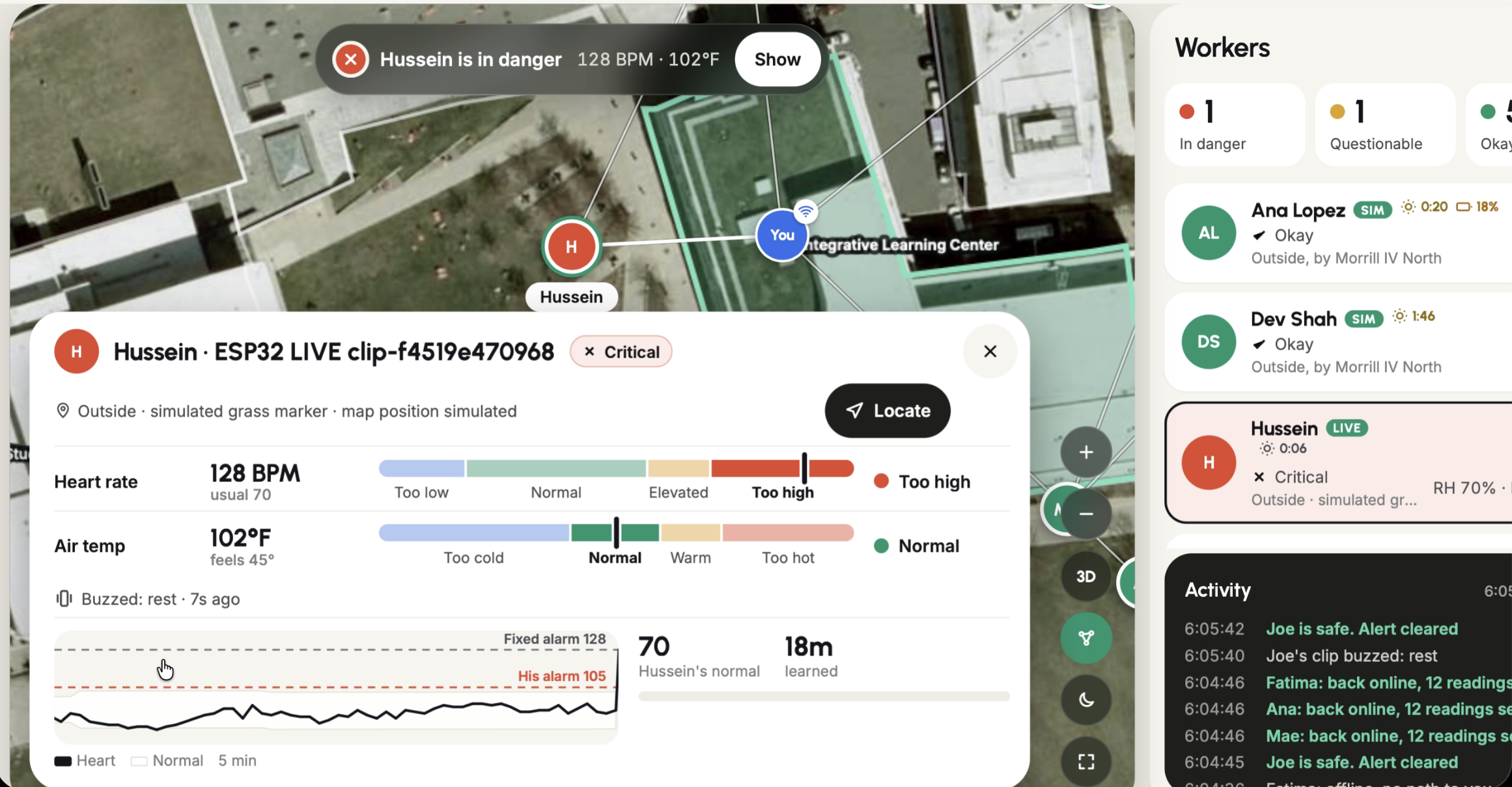
Worker in Critical Risk Condition on ThermoSafe Site MaP
-
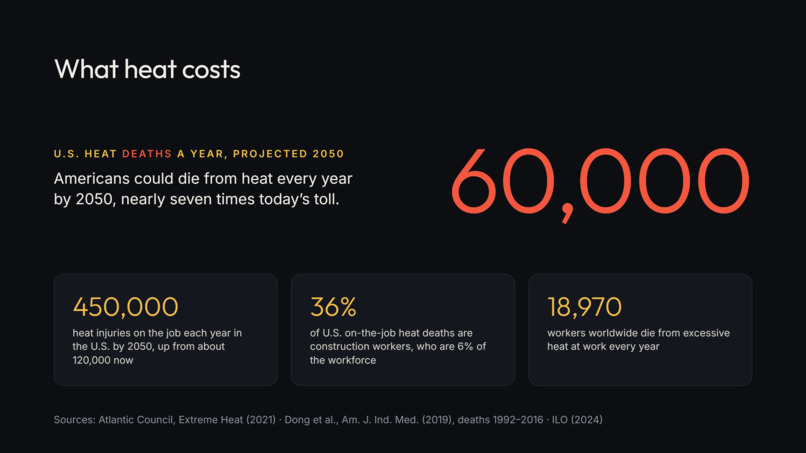
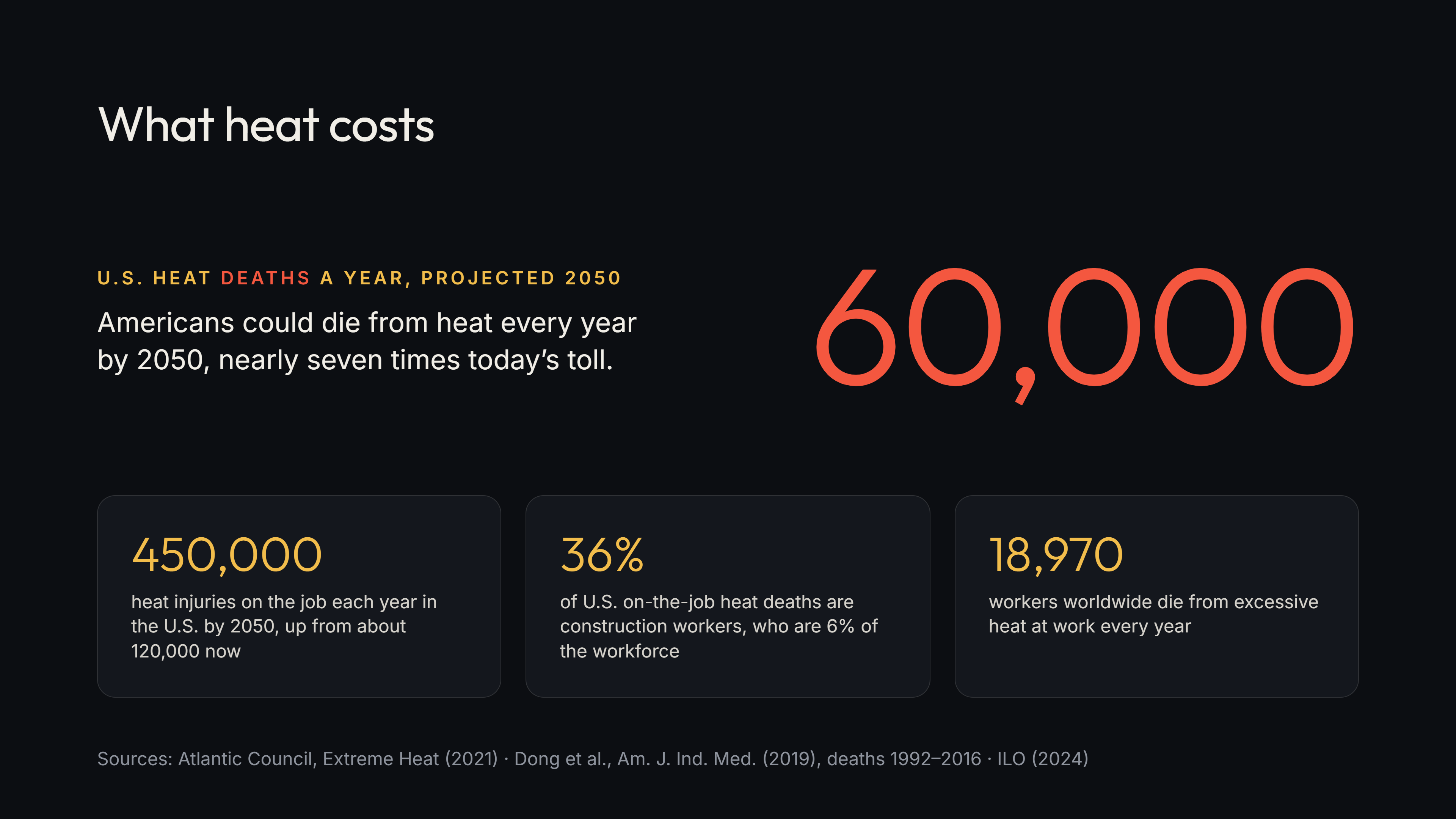
Problem ThermoSafe Aims To Solve
Inspiration
Taking a climate economics class made me think about what a warming world means for people who work outdoors. By 2050, U.S. studies project about 59,000 deaths a year linked to days averaging above 90°F without additional adaptation, while heat-related cardiovascular deaths could more than triple under high emissions. The people building our homes, repairing our roads, and maintaining our cities cannot simply stop working when the world gets hotter. So how do we protect them? ThermoSafe.
What it does
Two workers can share the same forecast and spend very different amounts of their shift in extreme heat or cold. ThermoSafe is a wearable arm band designed to combine heart rate, temperature, humidity, UV exposure, and time spent in harsh conditions into a risk score for each worker. Local forecasts help flag when conditions are likely to worsen. A color-coded LED and buzzer warn the worker on the job.
The supervisor dashboard shows who may need a break and what’s driving the warning. A supervisor can ask, “Who can rotate in for Marcus?” The AI assistant uses the crew’s exposure and break status to suggest a swap, so Marcus can step away while the crew adjusts.
How we built it
ESP32 sensors: The ESP32 devices collect worker safety readings, including temperature, pulse, and light exposure, then send them to the ThermoSafe backend. The system uses the readings to track conditions and assess risk.
Backend and SQLite: The Python backend receives device data, keeps a local record in SQLite, and serves it to the dashboard. SQLite also holds telemetry awaiting upload to TigerData.
Twilio: Twilio supports automated safety calls to workers. Gemini can help write call messages and interpret spoken replies; if Gemini is unavailable, the call flow falls back to a fixed script.
Weather data: The backend retrieves weather information to add outdoor conditions to the safety picture, alongside the readings from the devices.
Gemini API: We used Gemini to give the ThermoSafe dashboard a conversational assistant that answers supervisor questions using current crew and safety data, such as worker status, temperature, heart rate, sun exposure, battery, and recent alerts. The app sends that data with instructions to keep answers brief and grounded in the supplied information. Gemini also supports the phone-call flow: it can draft call messages and interpret workers’ spoken replies, with a fixed-script fallback if the API is unavailable or slow. The API key is kept in the browser for dashboard chat and in a local environment variable for the call server.
TigerData: We used TigerData (Tiger Cloud/TimescaleDB) as a cloud store for telemetry from the ESP32 devices. The backend saves readings locally first, then uploads them in the background through a durable retry queue, so temporary connection problems don’t lose data. The database stores sensor readings, device and worker details, mesh and location fields, and the associated risk assessment; simulator readings are labeled separately. The TigerData connection credential stays on the backend, and the project includes a status endpoint and terminal display for upload health.
Challenges we ran into
Fitting six sensors into an armband took several different 3d printed designs. We had to source all the parts, and desolder and rewire several sensor connections to make everything fit without bulky pin headers.
The crowded hackathon floor made testing tricky, we had to identify our own ESP32 boards and troubleshoot the mesh in a room full of Bluetooth and Wi-Fi devices. Our heartbeat sensor readings were inconsistent because of interference from nearby sensors.
Integrating Gemini into the supervisor dashboard took several rounds of debugging, and getting worker location pins to line up with the satellite map was trickier than we expected. Setting up Twilio to call workers whose armbands went offline took a lot of trial and error. Several test calls failed before we got the call flow working.
Accomplishments that we're proud of
We went from a bench full of parts to a compact armband we could actually wear. It took several tries to get the 3D-printed case right, and none of us had soldered before. By the end of the weekend, we’d learned to remove bulky pin headers and solder the sensor wires directly to the ESP32 so everything fit inside. It was also our first time working with ESP32s. We got several boards talking over ESP-NOW in one weekend and built a wearable that can still warn the worker when its connection drops.
What we learned
We learned how important working as a team is, taking sleeping shifts for one another so we have the energy to go on, we couldn't have completed this doing it solo, at least to such a fully developed extent. Learned a lot more about the potential future risk of climate change and global warming and how death tolls will rise at an alarming rate if we do not do something about this crisis.
What's next for ThermoSafe
We want to create our own custom boards and not use ESP32s so we can have the sensors built in and compact the design even more. Right now, the design we have is a bit bulky and uncomfortable to wear but we'd like to make it a lot smaller and lighter weight so that it's not in the way of workers. Also we'd like to invest in stronger sensors to get more accurate readings for better risk assessment and emergency prevention.


