Inspiration
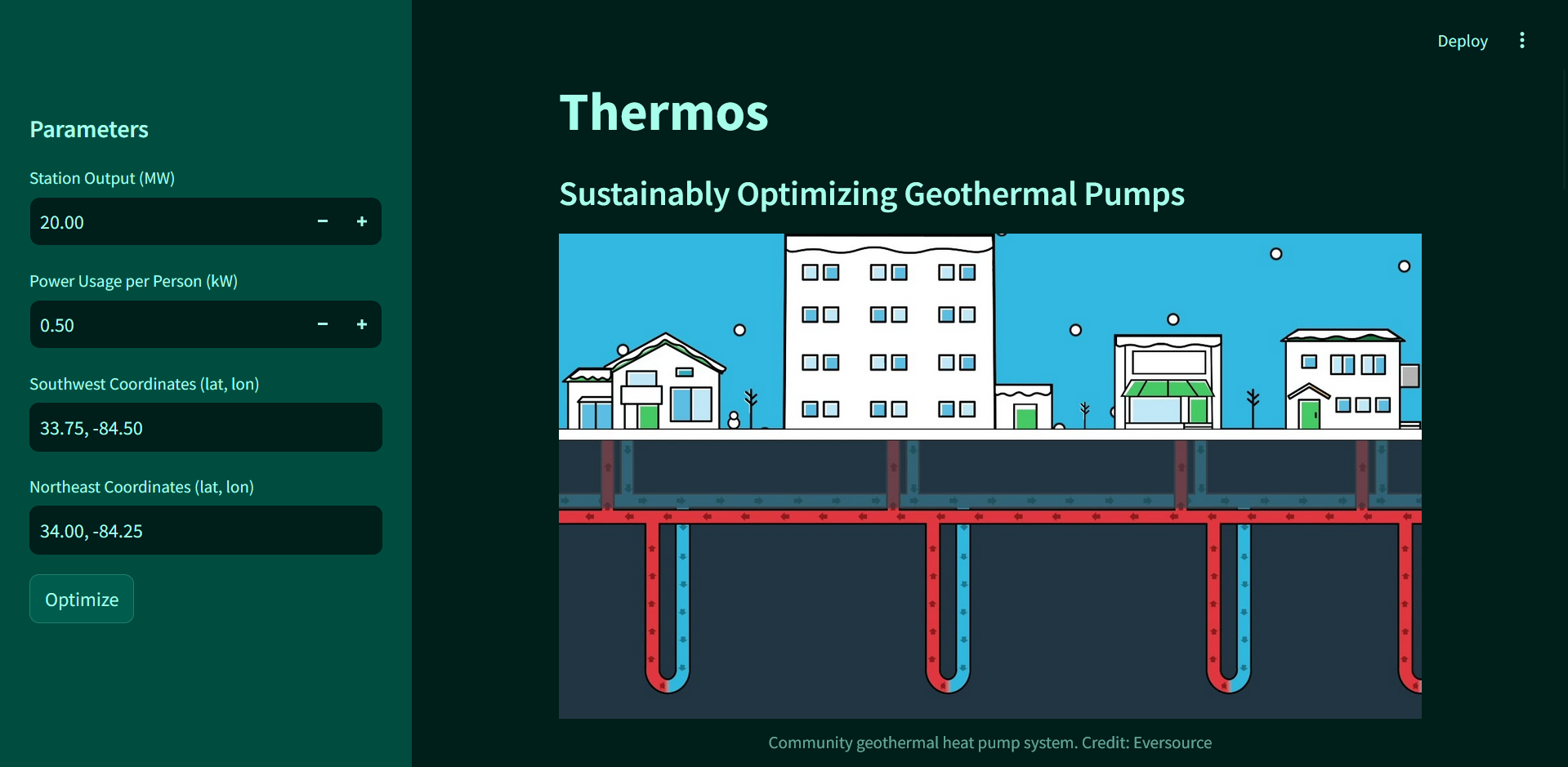
When making Thermos, we were inspired by the Geothermal Pilot Program in Framingham, Massachusetts, which showed us the potential of community geothermal systems to replace fossil fuel-based heating and cooling with a sustainable alternative. This project aims to expand on that idea by providing city planners with a tool to optimize geothermal pump placements, using population density and environmental impact as metrics.
What it does
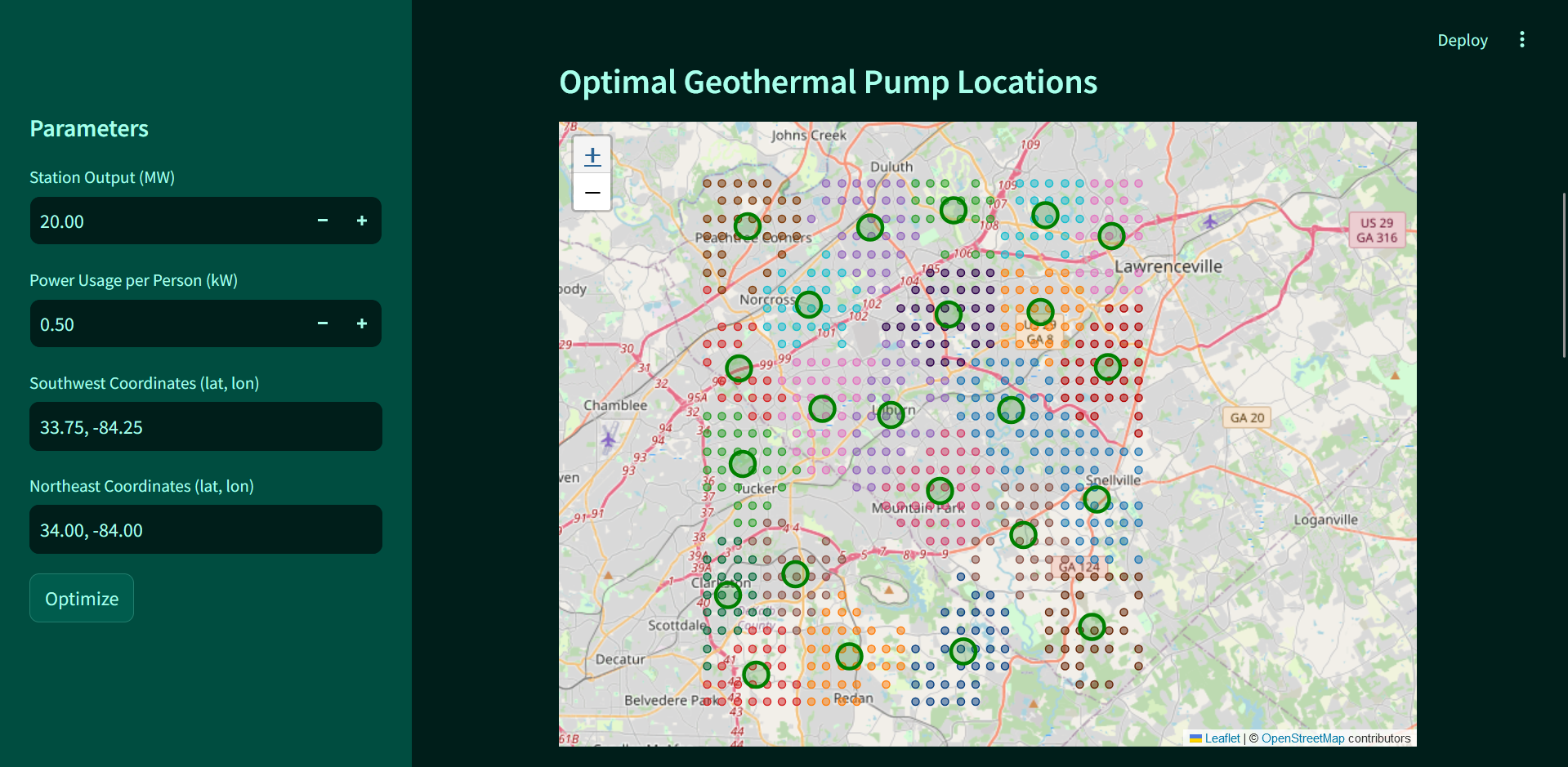
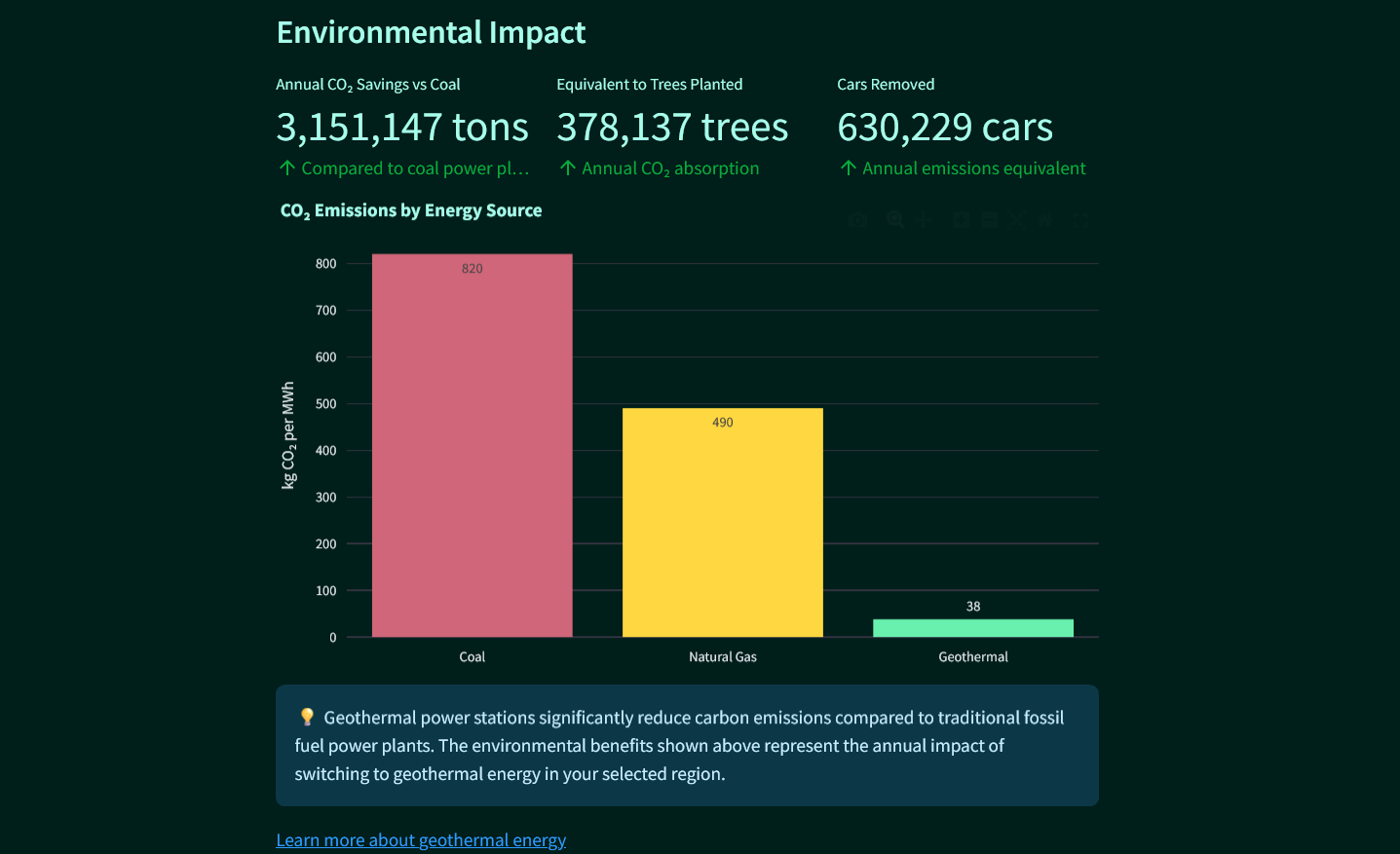
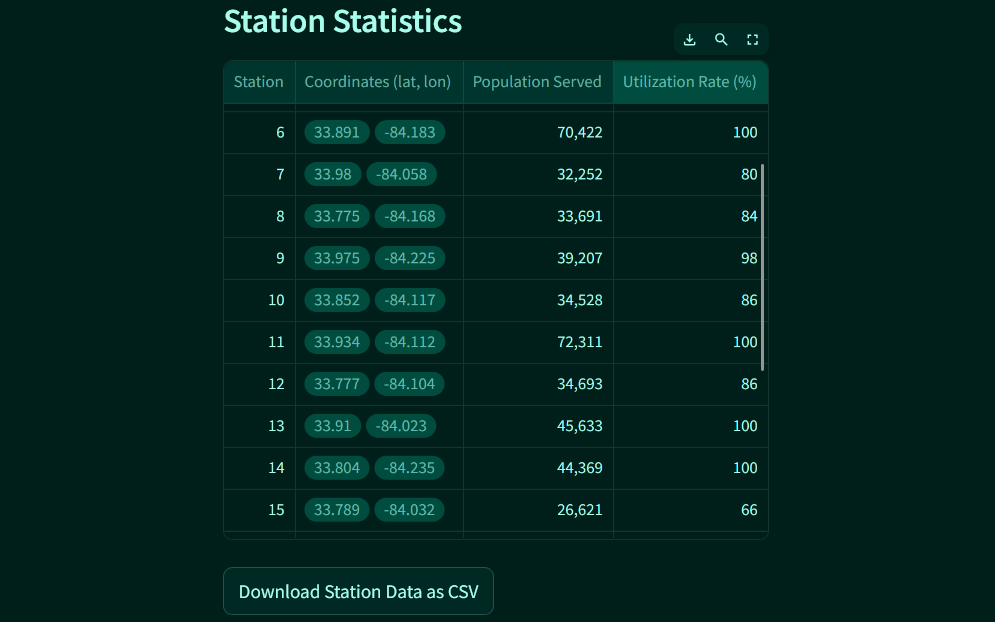
Thermos is a powerful tool that analyzes population density data to help city planners identify optimal locations for geothermal pumps. It visualizes clusters, calculates environmental savings, and ensures efficient utilization of geothermal energy systems while reducing carbon emissions.
How we built it
We used Python with Streamlit to build an interactive UI, Folium for map visualizations, and the K-means clustering algorithm. Population density data was processed using custom clustering algorithms, while environmental impact metrics were calculated based on emissions data for various energy sources.
Challenges we ran into
One major challenge was refining our K-means clustering algorithm to balance both location and population density. Another was creating an intuitive UI that could handle user input for dynamic map updates while ensuring accurate environmental impact calculations.
Accomplishments we're proud of
We are proud of creating a user-friendly platform that merges data analysis and decarbonization goals, enabling city planners to make informed decisions about sustainability. The ability to calculate and visualize environmental savings aligns with our mission of expanding decarbonization to new communities.
What we learned
We learned about how we can advance sustainable urban planning using data. By experiencing the the challenges of working with real-world demographic information, we also gained knowledge in clustering algorithms and how they can be applied for tangible purposes. Another field that improved in through this project is creating a user interface for a specific professional audience.
What's next for Thermos
Next, we plan further improve our placement algorithm, including by integrating demographic and infrastructure data, to maximize the number of people we can reach. Additionally, we aim to simulate energy grid impacts, explore integrations with renewable energy sources, and develop a mobile-friendly version to broaden accessibility.
Built With
- python
- sklearn
- streamlit


Log in or sign up for Devpost to join the conversation.