Inspiration
The inspiration for ThermoDetect stemmed from a critical observation: while the world rapidly embraces "smart cities" and interconnected environments, the foundational physical infrastructure that powers these innovations is often overlooked. We realized that countless unseen components—from cooling systems in data centers to critical pumps in city utilities—are prone to unexpected failures. These breakdowns lead to significant costs, service disruptions, and can compromise the reliability of an entire smart ecosystem. Our goal was to build a solution that proactively safeguards these vital, yet frequently ignored, systems, ensuring uninterrupted operation and true resilience in our increasingly complex urban landscapes.
What it Does
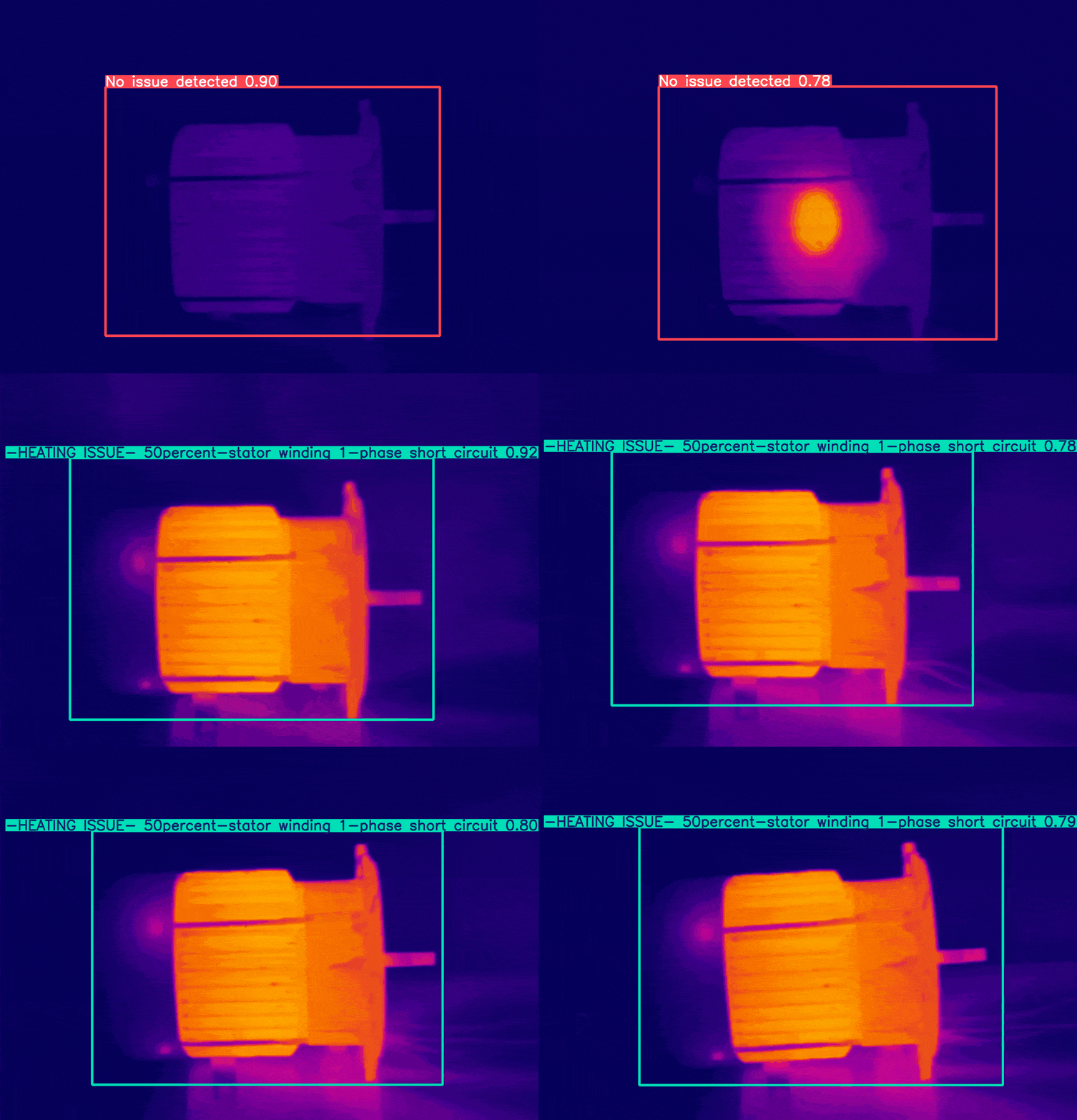
ThermoDetect is an AI-powered system designed for predictive maintenance of critical infrastructure. It goes beyond simple temperature monitoring. By analyzing thermal video, our system can:
- Accurately detect the specific type of failure an underlying component is undergoing (e.g., overheating, electrical faults, mechanical issues).
- Provide immediate, actionable insights into the detected problem.
- Offer helpful information on how to fix, prevent, or remedy the situation, enabling proactive intervention before catastrophic failures occur.
This ensures the continuous and reliable operation of essential smart city components, from public transport systems to energy grids.
How We Built It
Our development process for ThermoDetect involved several key steps:
- Custom Dataset Creation: We started by meticulously gathering and annotating a unique dataset of thermal images captured from various systems exhibiting different failure types. This was crucial for training our AI to understand the subtle heat signatures of specific issues.
- Model Training: We chose the YOLOv8 model from Ultralytics as the backbone of our detection system. Its robust capabilities allowed us to train a highly accurate model capable of identifying diverse failure patterns from thermal data.
- User Interface Development: We utilized Gradio to build an intuitive and accessible web interface. This allows users to easily upload thermal footage and receive instant diagnostic reports and actionable recommendations.
- Insight Generation: We integrated OpenCV-Python for image processing, along with Numpy, Pillow, and Matplotlib, to process the model's output. This enabled us to translate raw AI detections into clear, concise, and actionable advice for maintenance and prevention.
Challenges We Ran Into
Building ThermoDetect presented several interesting challenges:
- Data Acquisition and Annotation: Sourcing a diverse and high-quality dataset of thermal images showcasing various types of component failures was a significant hurdle. Each failure mode has unique thermal characteristics that needed precise labeling.
- Translating AI Output to Actionable Advice: One of the key difficulties was transforming raw AI detections into practical, understandable recommendations for users. It wasn't enough to just identify a fault; we needed to guide users on what steps to take next.
- Balancing Performance and Accuracy: Achieving a balance between the model's inference speed (important for real-time monitoring) and its diagnostic accuracy required extensive fine-tuning and optimization during the training phase.
Accomplishments That We're Proud Of
We are incredibly proud of several key accomplishments with ThermoDetect:
- Achieving high accuracy in detecting specific failure types from thermal images, which is a significant leap beyond simple temperature alarms.
- Developing a user-friendly Gradio interface that makes complex AI diagnostics accessible to maintenance personnel.
- Creating a system that provides actionable, preventive insights, truly shifting the paradigm from reactive fixes to proactive maintenance for critical infrastructure.
- Successfully demonstrating how AI can address a crucial, often overlooked, need in the burgeoning smart city landscape.
What We Learned
Our journey with ThermoDetect provided valuable lessons:
- The critical importance of data quality: The success of an AI model heavily relies on the precision and diversity of its training data, especially in specialized fields like thermal analysis.
- The power of interdisciplinary thinking: Combining computer vision, AI, and an understanding of mechanical systems was essential to create a truly effective solution.
- User-centric design: Making powerful AI tools accessible and useful for end-users, even those without technical expertise, is paramount for real-world adoption.
What's Next for ThermoDetect
For ThermoDetect, the future holds exciting possibilities:
- Expanding Dataset and Model Capabilities: We plan to broaden our thermal dataset to include more types of critical components and failure modes, further enhancing our model's diagnostic versatility.
- Real-time Monitoring Integration: We envision integrating ThermoDetect with real-time thermal camera feeds and IoT platforms for continuous, automated infrastructure health monitoring.
- Predictive Analytics Enhancements: Developing more sophisticated algorithms to predict failure timelines with greater accuracy, allowing for optimized maintenance scheduling.
- Scalability for Smart Cities: Exploring partnerships to deploy ThermoDetect across various urban sectors, solidifying its role as a key tool for building truly resilient and sustainable smart cities.
