-
-
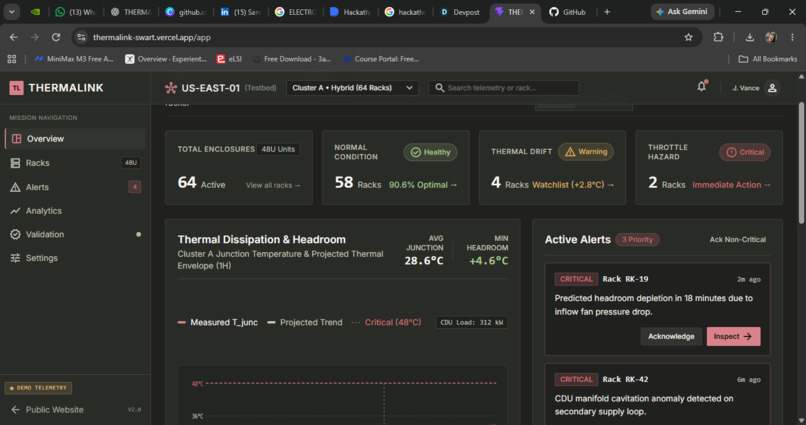
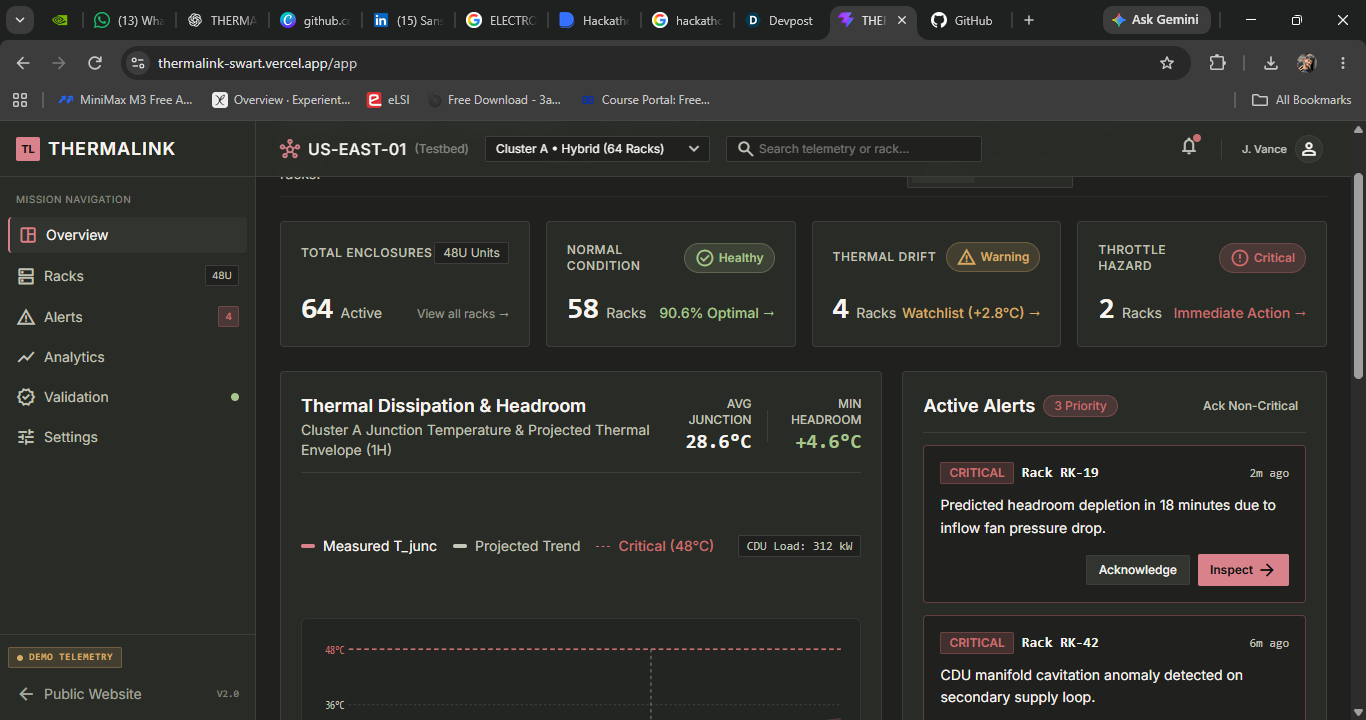
Main dashboard
-
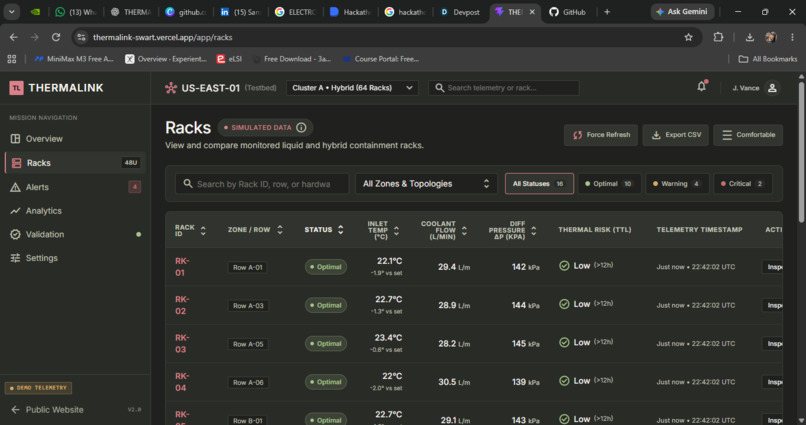
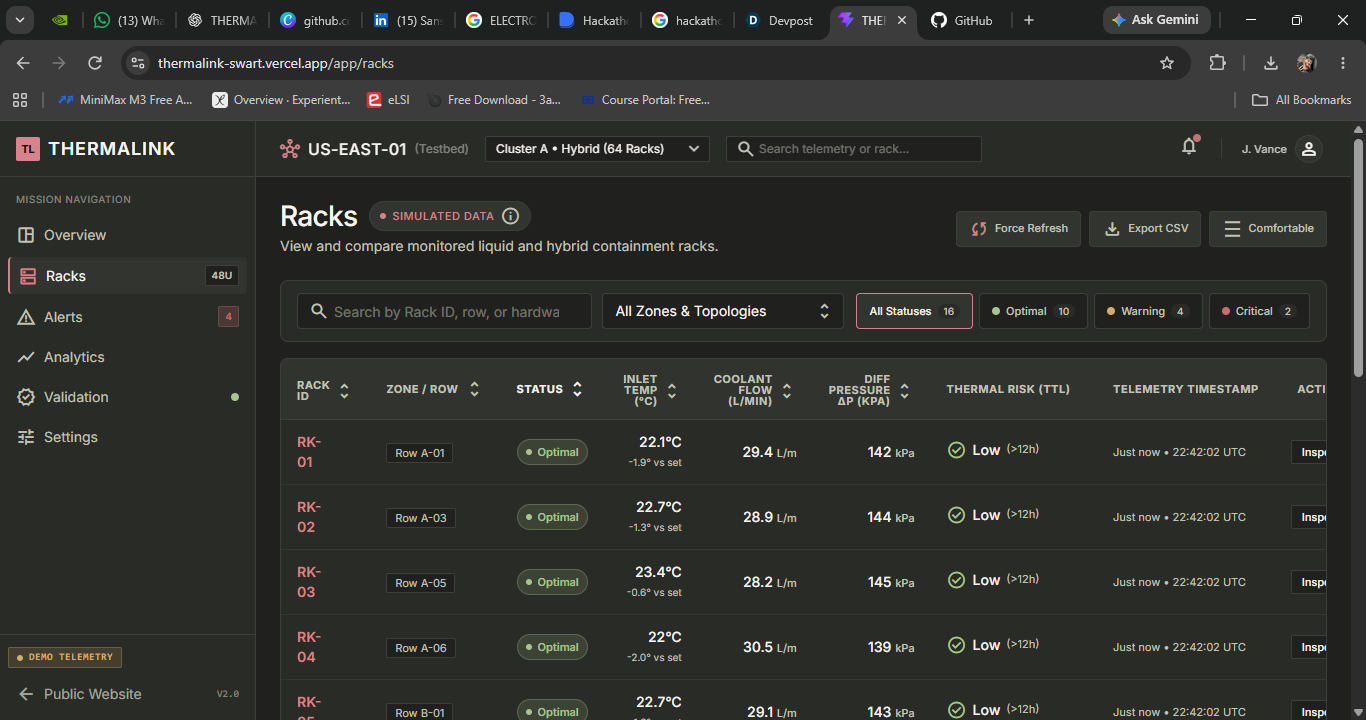
Thermal monitoring / rack view
-
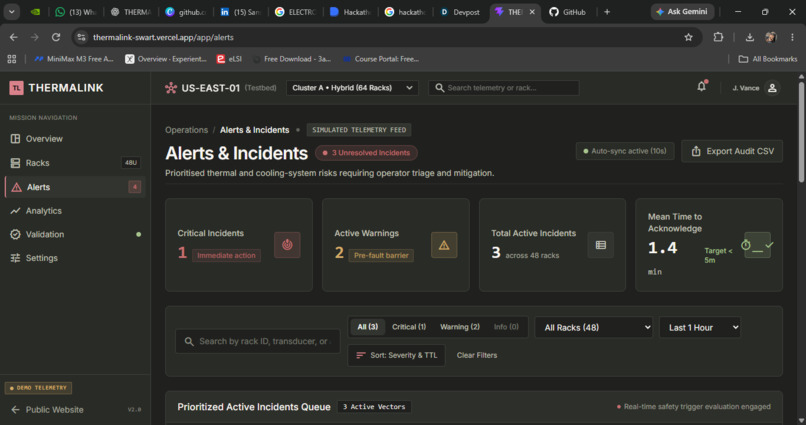
Alerts and incidents
-
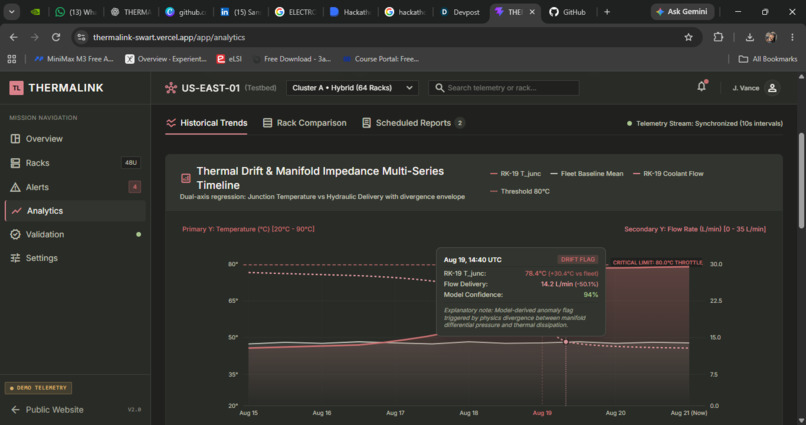
Analytics dashboard
-
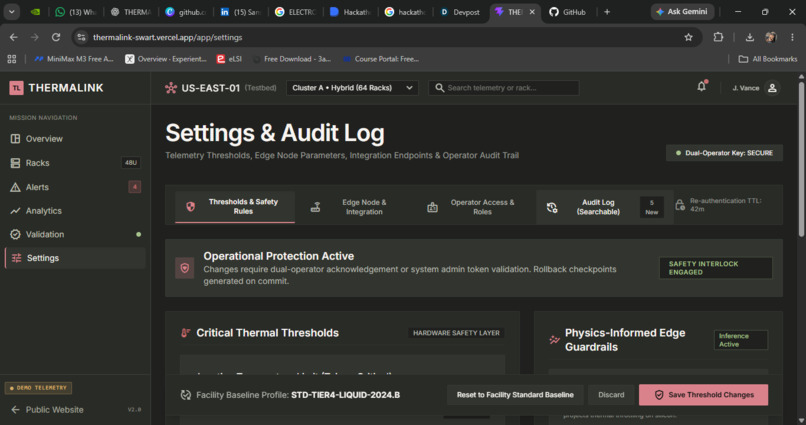
System settings
-
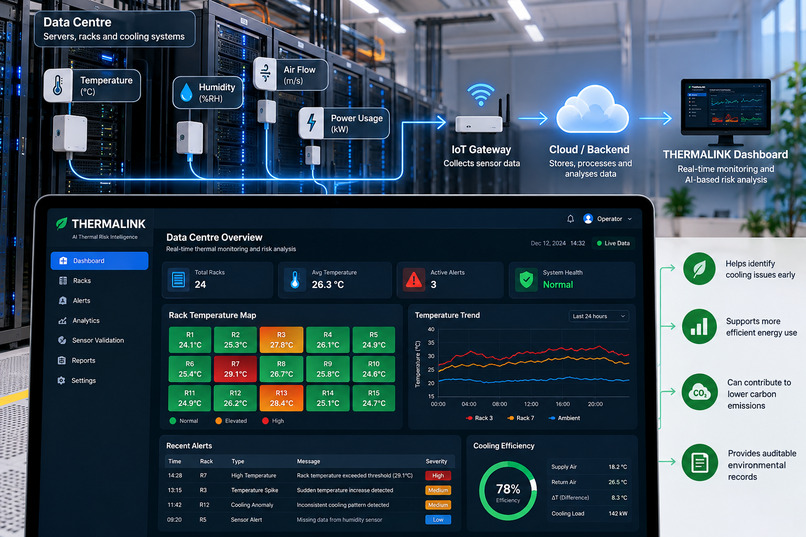
How it works
Inspiration
Data centres are essential to the digital world, but they require cooling to keep equipment operating safely. Cooling inefficiencies can contribute to unnecessary electricity consumption and associated carbon emissions.
We wanted to explore how AI-driven thermal monitoring could help operators understand cooling problems, make better-informed decisions, and support more sustainable data-centre operations.
What it does
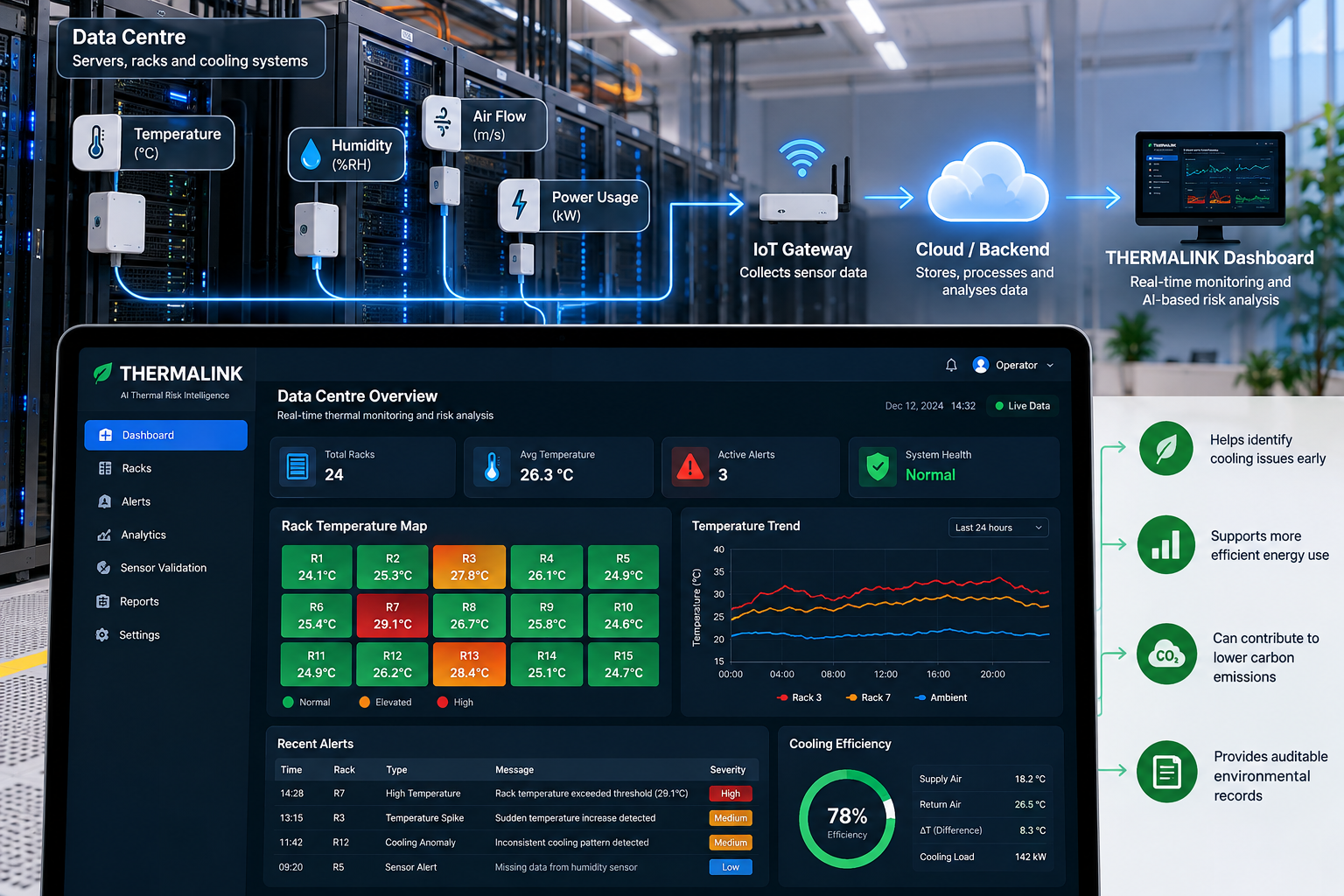
THERMALINK is an AI-oriented thermal risk intelligence platform designed to turn cooling-related measurements and prediction of a data center into useful operational insights.
Its current prototype provides:
- Thermal monitoring: View rack temperatures and cooling-related indicators.
- Risk visibility: Explore potential thermal problems and system-health information.
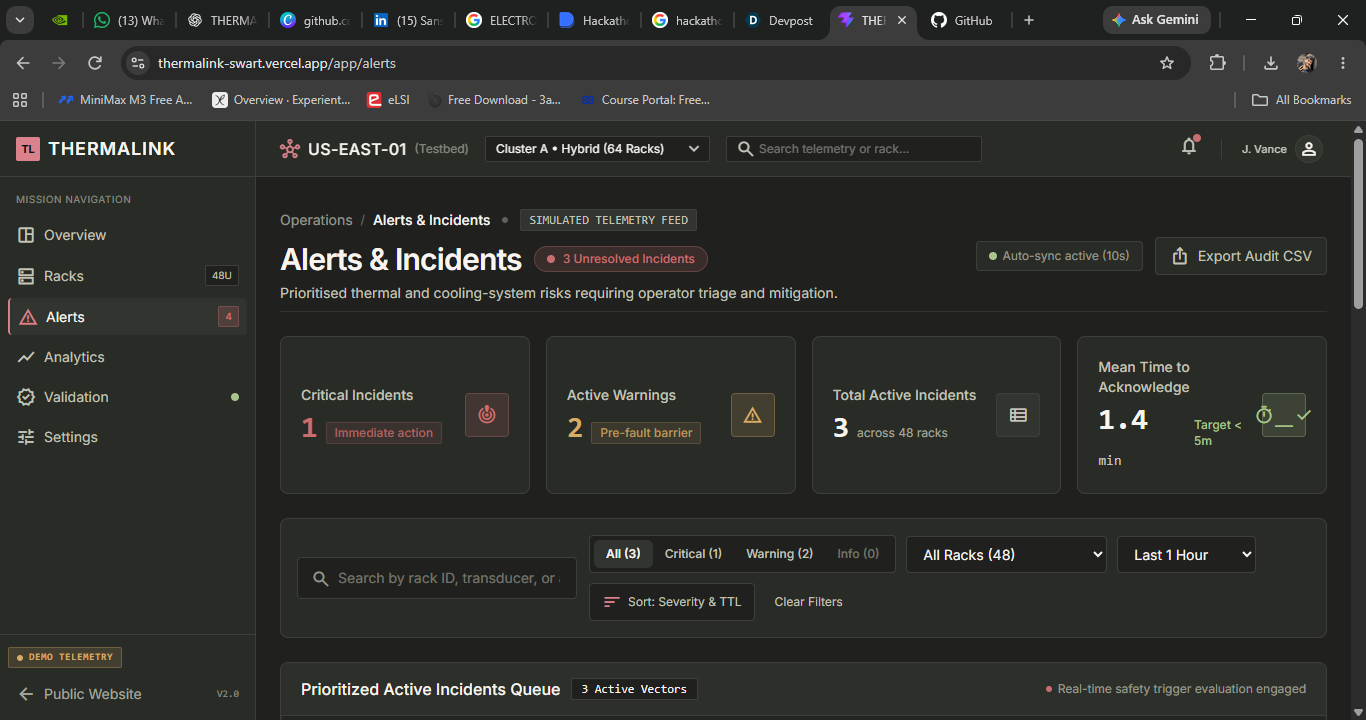
- Alerts and incidents: Search and investigate operational issues.
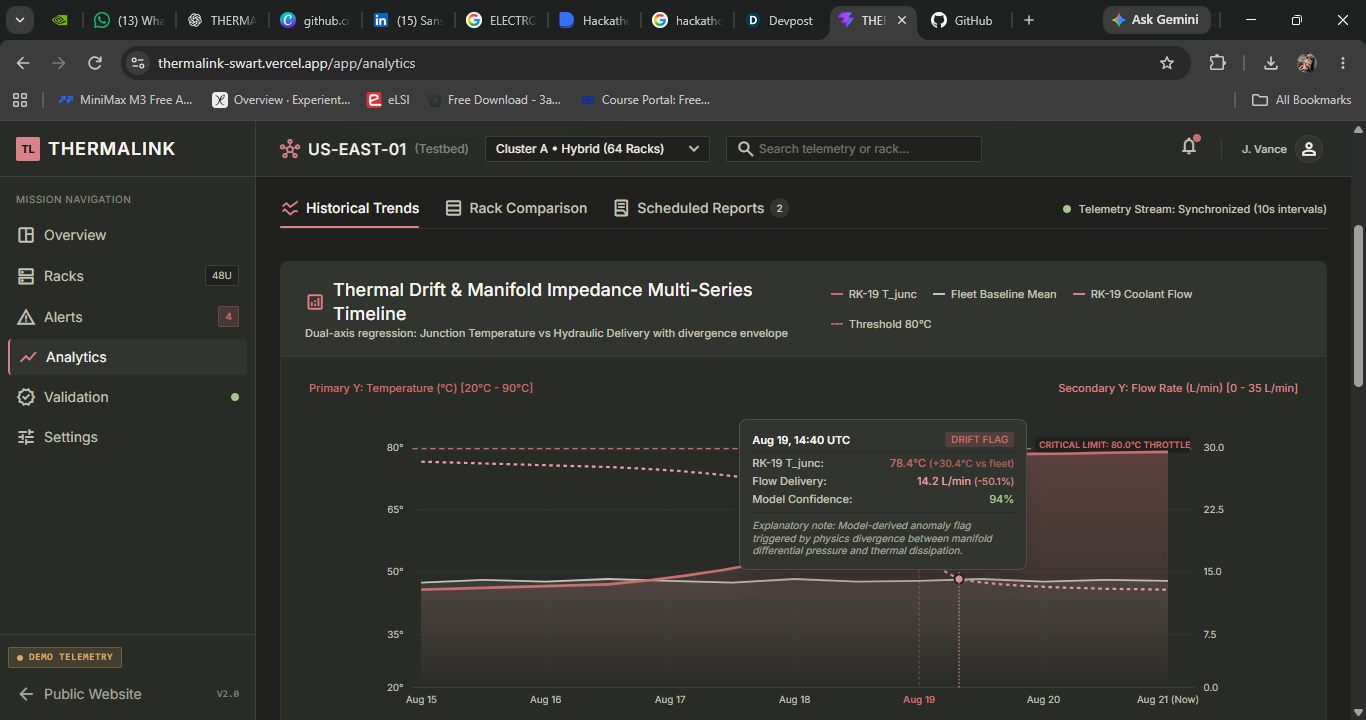
- Analytics and validation: Review trends and sensor-validation data.
- Data exports: Download structured CSV records for further analysis.
The goal is to help operators identify potential cooling issues and investigate opportunities to improve energy efficiency. Actual energy savings and emissions reductions must be measured and validated.
How we built it
We built THERMALINK as a web application using React, TypeScript, Vite, and Tailwind CSS.
The application brings rack monitoring, alerts, analytics, validation, and data exports into one interface. Its current prototype uses implemented dashboard functionality and available datasets to demonstrate the monitoring workflow.
Our planned next steps include integrating real environmental sensors, adding persistent backend services, improving thermal-risk analysis, and introducing cryptographic verification for environmental records. Blockchain integration is a planned extension, not a current feature.
Challenges we ran into
One challenge was presenting complex thermal and operational information in a clear interface without losing important technical context.
We also recognized that environmental monitoring requires more than attractive charts. Reliable measurements, consistent units, timestamps, data validation, and clear explanations are essential if operators are to make informed decisions.
Another challenge is distinguishing a working prototype from a production system that requires secure authentication, persistent storage, and live device integration.
Accomplishments that we're proud of
We developed an interactive prototype that brings multiple aspects of thermal monitoring into one platform.
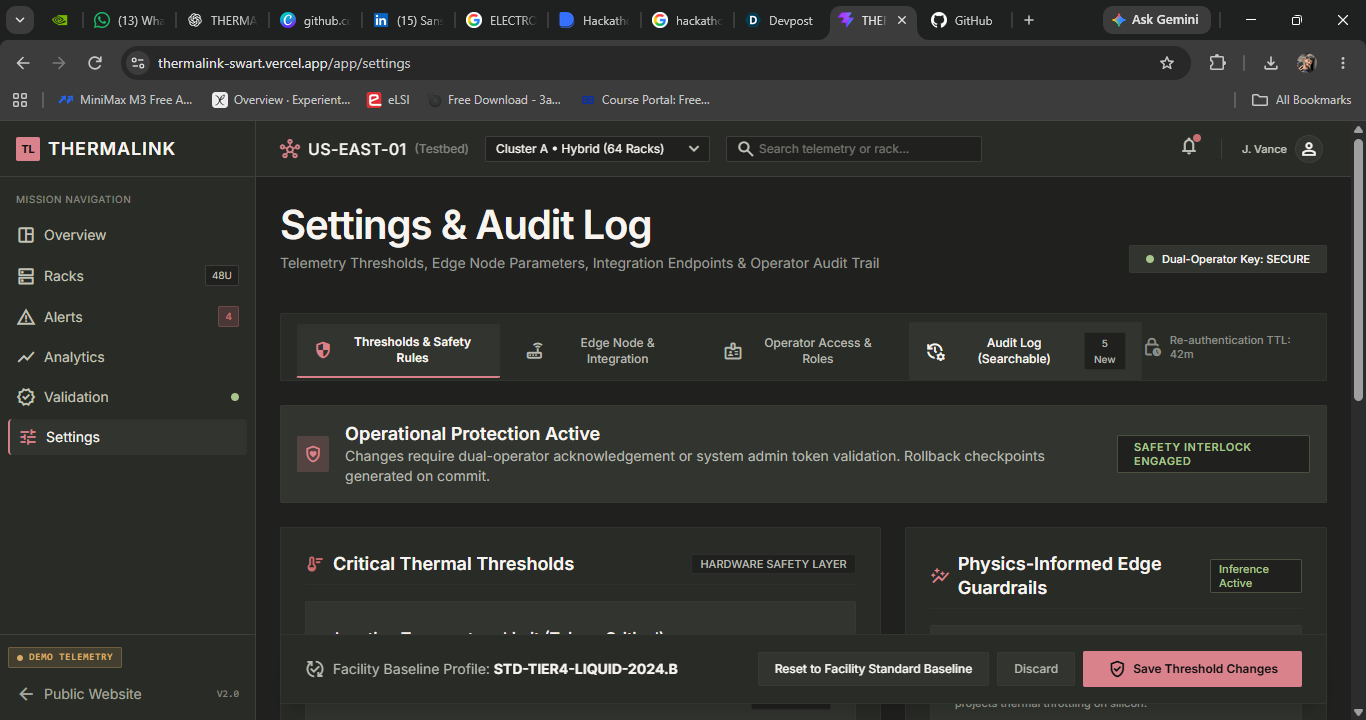
We are proud of the rack-level views, incident-management interface, analytics and validation pages, and structured CSV export functionality. Together, these features demonstrate how operational measurements can be organized into a workflow that supports investigation and decision-making.
We also established a foundation for future environmental-data integration and verification.
What we learned
We learned that useful climate technology must connect data to decisions.
Monitoring thermal conditions is only the first step. To demonstrate environmental benefits, a system must use reliable measurements, establish appropriate baselines, and evaluate whether operational changes actually reduce energy consumption or emissions.
We also learned the importance of transparent data handling and clearly communicating which capabilities are implemented, simulated, or planned.
What's next for THERMALINK — AI Thermal Risk Intelligence
Our next priorities are to:
- Integrate real sensor data through a secure backend.
- Improve and validate thermal-anomaly and risk-analysis methods.
- Connect thermal insights with measured energy-consumption data.
- Develop defensible estimates of associated carbon emissions using documented assumptions.
- Add cryptographic integrity verification and explore blockchain anchoring for environmental records.
- Evaluate the platform using representative datasets and, eventually, real operating conditions.
Our long-term vision is to help data-centre operators make more informed cooling decisions and evaluate environmental performance using reliable, explainable, and verifiable data.
Built With
- analytics
- carbon-emission
- climate
- cooling-systems
- css
- csv
- dashboard
- data
- data-centers
- environmental
- greencomputing
- html
- iot
- javascript
- monitoring
- react
- tailwind
- tech
- typescript
- visualization
- vite


Log in or sign up for Devpost to join the conversation.