Inspiration
Theresa was inspired by the way large language models reason through context using autoregressive generation. Modern LLMs generate outputs step by step based on prior context, and we became interested in the idea of making humans active participants in that process rather than passive consumers of answers. The original insight came from experimenting with simple token sampling systems where users could manually guide and steer generation themselves. That led to a bigger question: what if education focused less on final answers and more on navigating reasoning step by step? We realized that most learning platforms optimize for information delivery, while real understanding often comes from exploring how reasoning evolves.
What it does
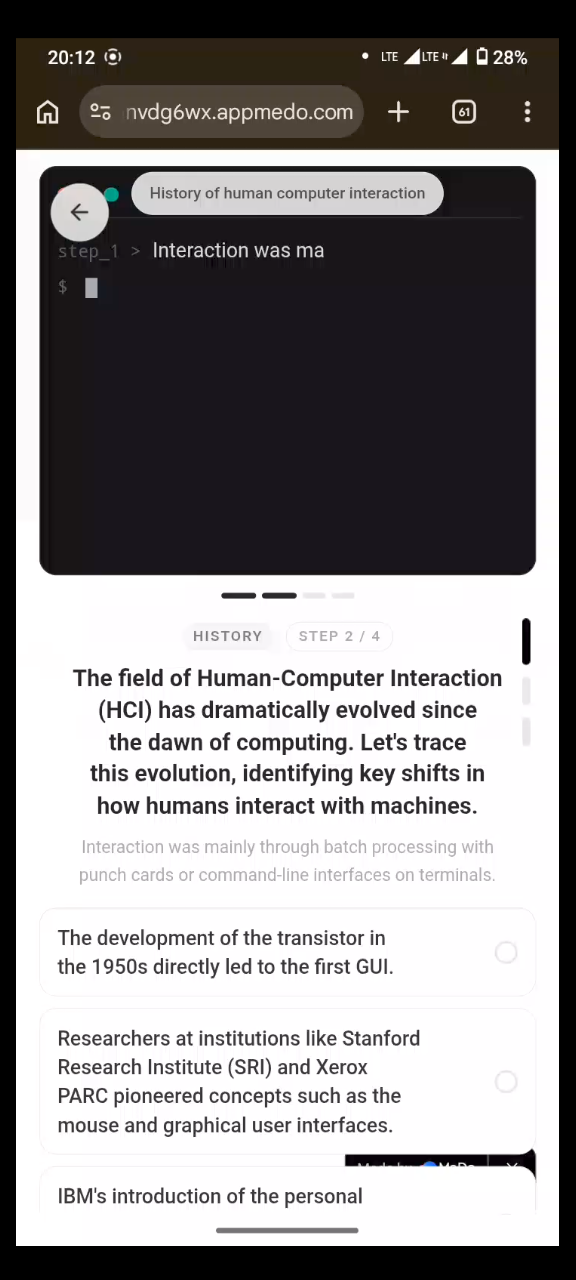
Theresa is a step-based problem solving and educational platform that breaks problems into interactive reasoning stages. Instead of presenting a single solution, the platform allows users to move through multiple reasoning paths, explore different approaches, and understand how context shapes decisions throughout the problem solving process. The goal is to make reasoning visible and interactive. Rather than simply consuming answers, learners actively participate in constructing them
How we built it
Theresa was built primarily on the agentic coding platform medo with typescript and sqlite
Challenges we ran into
UI issues and improvements of the UX. Plus running out of credits
Accomplishments that we're proud of
Completion of the project and participation of this Hackathon
What we learned
We learned that educational interfaces can become much more engaging when reasoning is treated as something interactive and explorable. We also learned that concepts from AI systems can inspire entirely new forms of human-computer interaction beyond simple chat interfaces. Autoregressive systems are not just useful for generating text. They can also become frameworks for structuring thought and exploration. Another major lesson was that people often learn better when they can see multiple possible reasoning paths rather than a single “correct” route.
What's next for Theresa
Theresa would be tested more with user and would hopefully be deployed live to the public, to help foster learning and better problems reasoning.

Log in or sign up for Devpost to join the conversation.