Inspiration
The idea for Therefore came from watching debate videos on YouTube. We noticed that many arguments sounded convincing at first, but often relied on logical fallacies or flawed reasoning. In many cases, people can be influenced by emotional language, misinformation, or manipulative arguments without even realizing it. Over time, this can shape opinions, spread harmful ideas, increase polarization, and make it harder for people to distinguish strong reasoning from weak reasoning.
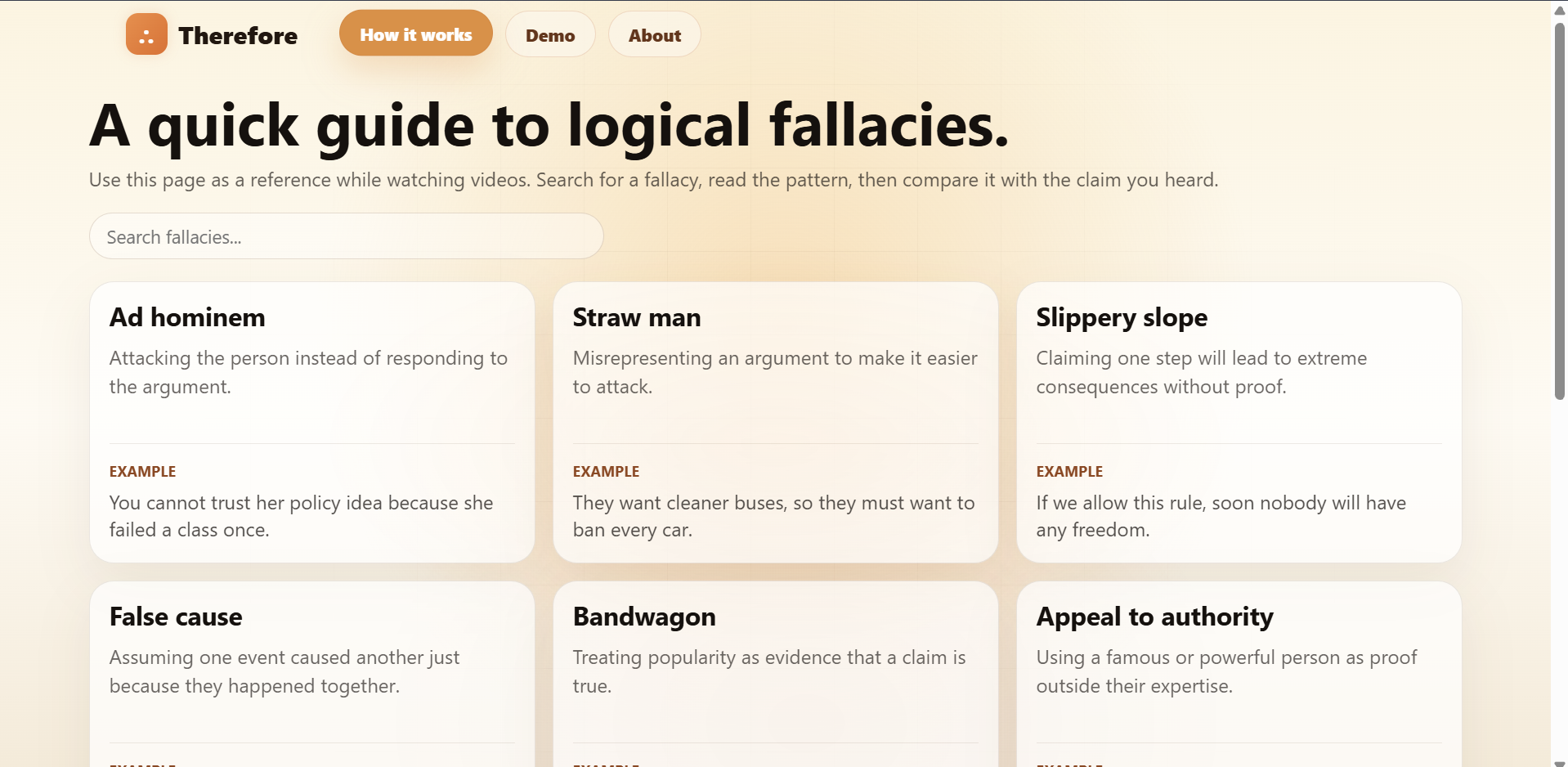
We wanted to create a tool that helps people think more critically about the content they consume online. Instead of simply accepting arguments at face value, Therefore encourages users to question claims, recognize misleading reasoning patterns, and better understand how arguments are constructed. Our goal is to promote healthier discussions, reduce the spread of misinformation, and help people make more informed decisions in a digital world where persuasive content is everywhere.
What it does
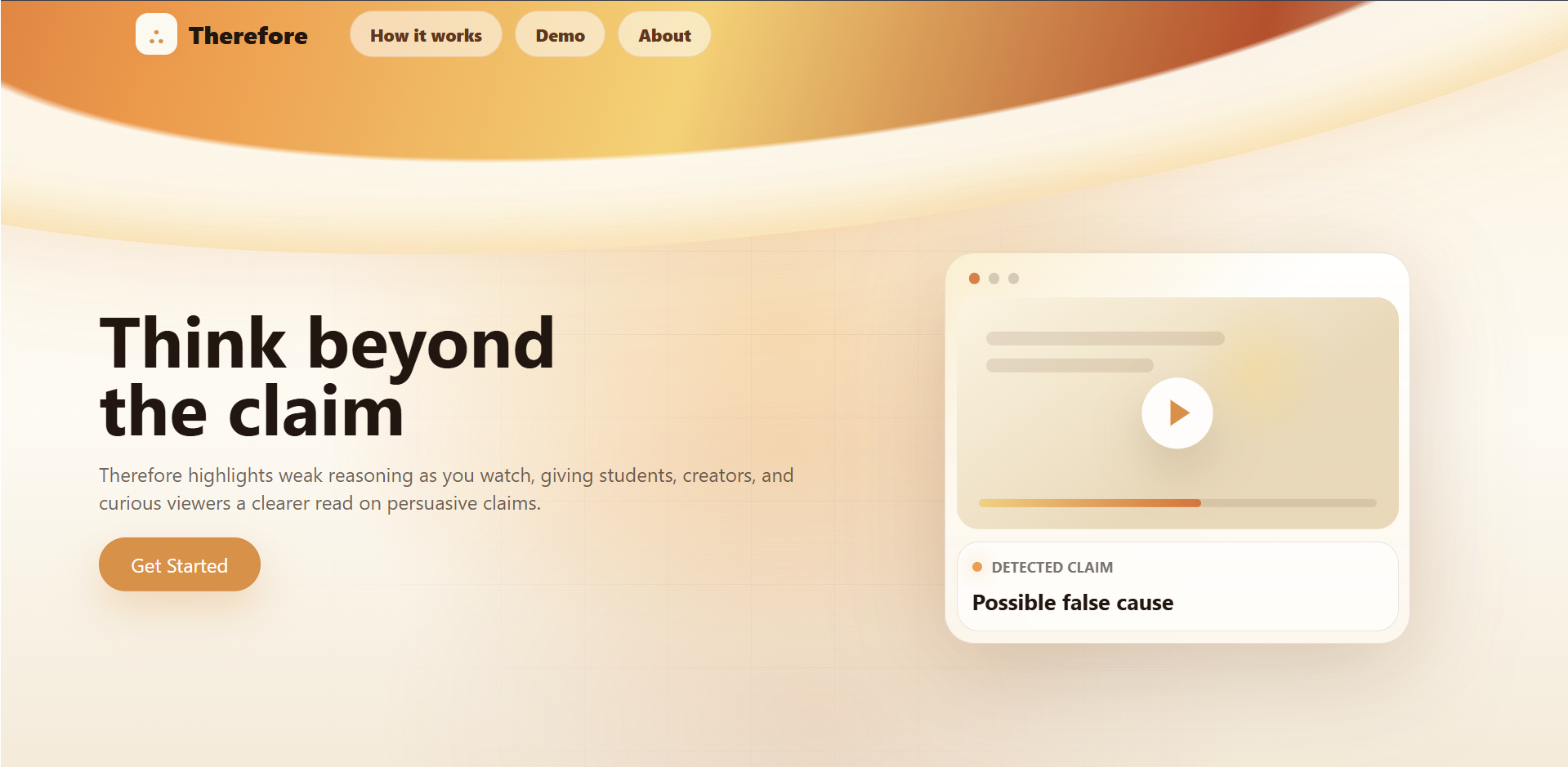
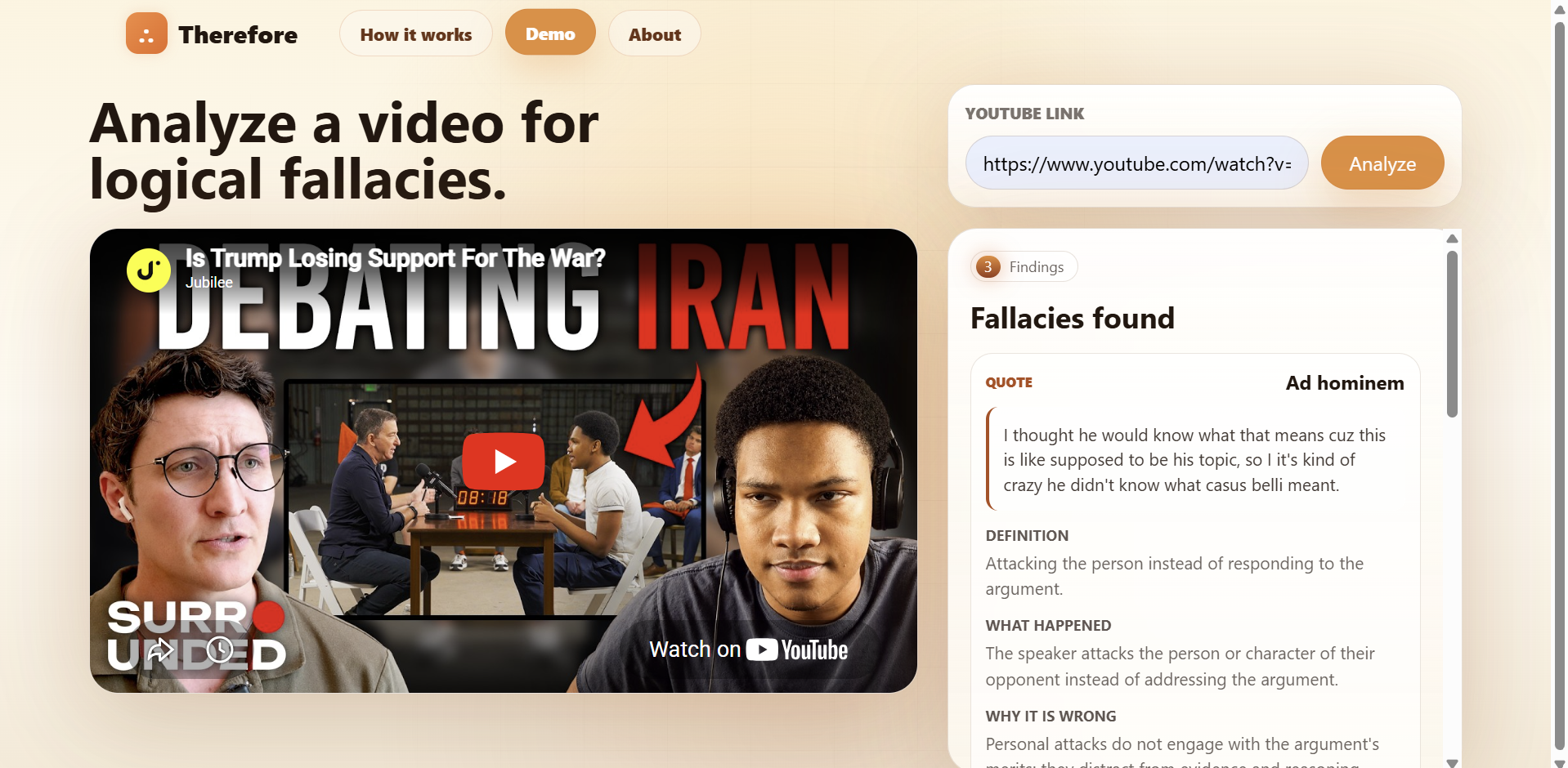
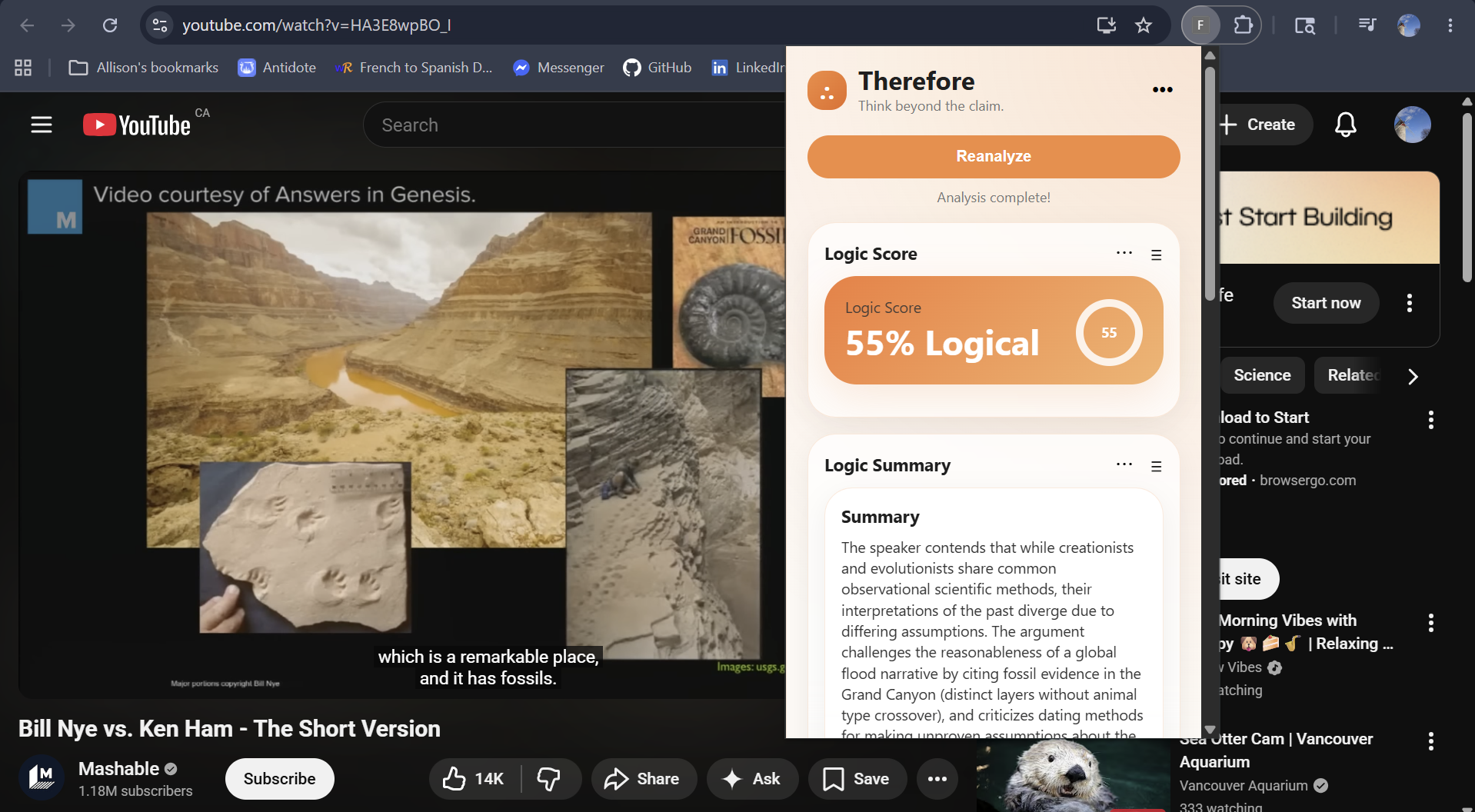
Therefore is an AI-powered website and browser extension that analyzes YouTube videos to detect logical fallacies in real time. It extracts the video transcript, identifies flawed reasoning, and explains why the argument may be misleading
How we built it
We built Therefore as both a web extension and a website. The extension works directly on YouTube, extracting video transcripts and sending them to an AI model that analyzes arguments for logical fallacies. The website allows users to paste a YouTube link and view a more detailed breakdown of the analysis. We combined transcript processing, prompt engineering, and a simple UI to present results clearly and in real time.
Challenges we ran into
One of the biggest challenges was working with messy or incomplete YouTube transcripts and making sure the AI could reliably detect logical fallacies without over-flagging normal speech. Another major challenge was integrating the backend with the web extension, ensuring smooth communication between the extension, the website, and the AI analysis pipeline. We also spent time refining prompts to balance accuracy, speed, and clarity in the results.
Accomplishments that we're proud of
We’re proud of the accuracy of the results, with the AI consistently identifying and explaining logical fallacies in a meaningful way. We’re also proud of the UI and overall ease of use, making it simple for users to analyze a YouTube video in just a few clicks through either the website or the web extension.
What we learned
We learned a lot about prompt engineering and the difficulty of evaluating arguments compared to simple fact-checking. We also gained experience building AI-powered tools that integrate directly into user workflows.
What's next for Therefore
Next, we plan to improve the system by using two different AI models to cross-check each other’s results to increase reliability and reduce false positives. We also aim to optimize performance to make the analysis faster and closer to real-time.

Log in or sign up for Devpost to join the conversation.