-
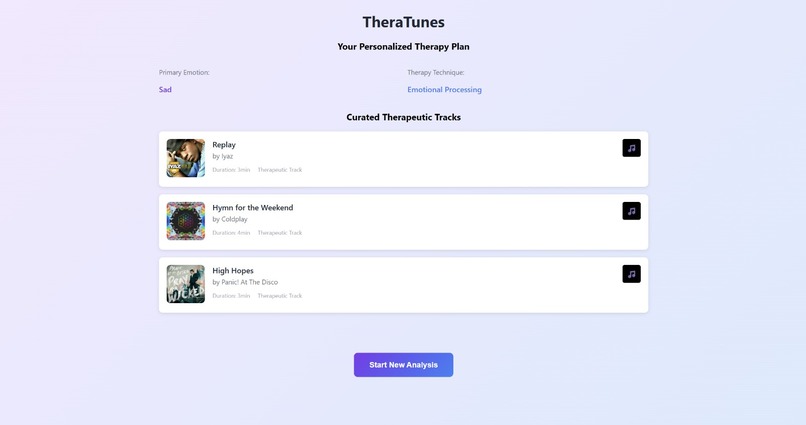
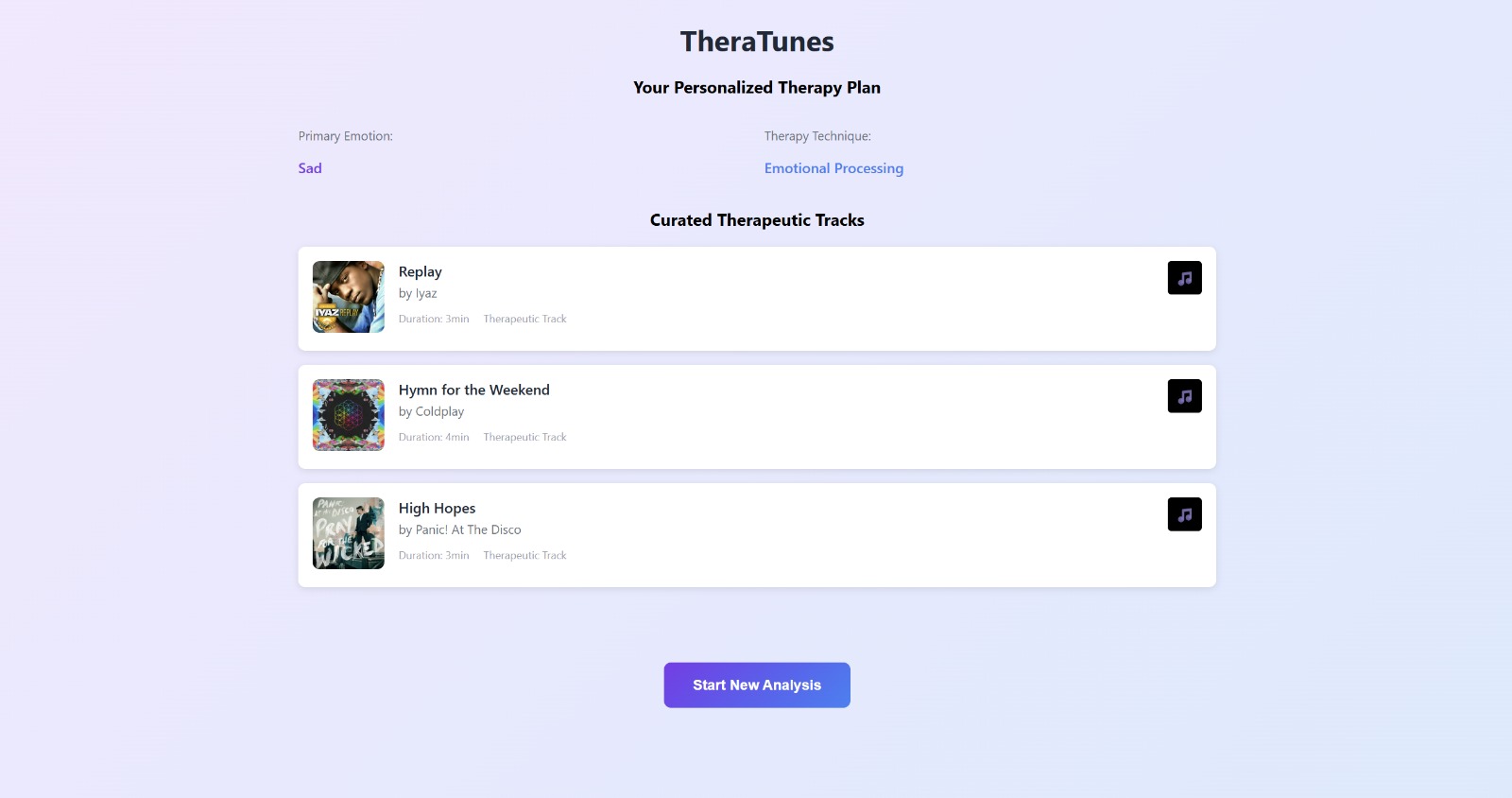
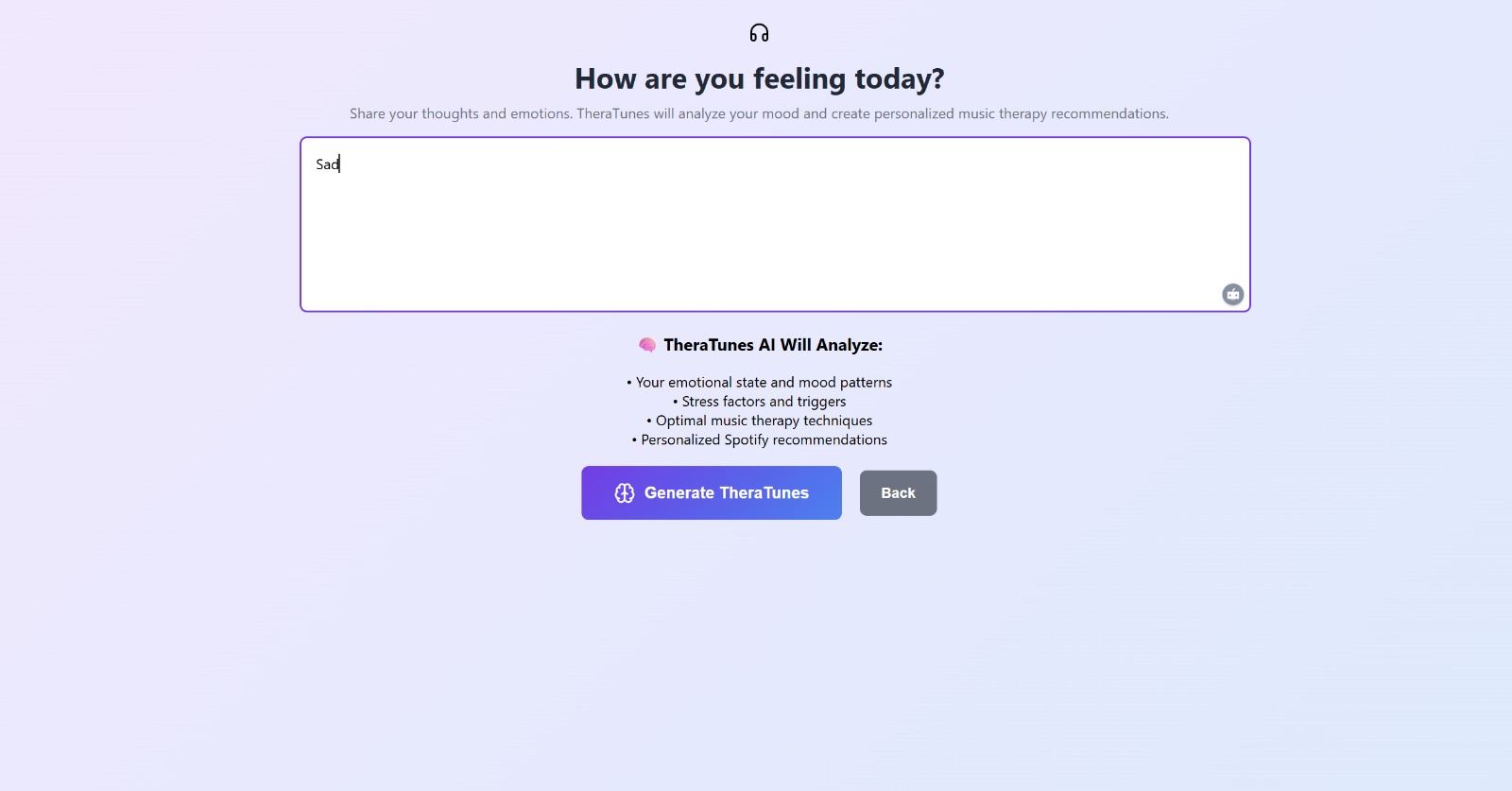
Results Screen
-
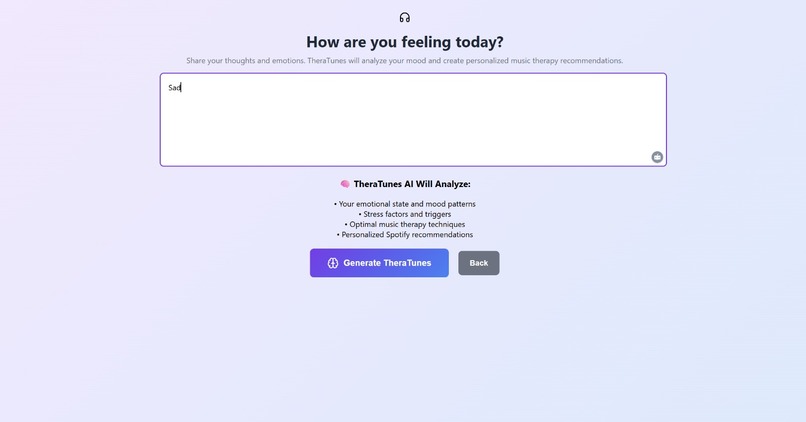
Assessment Screen
-
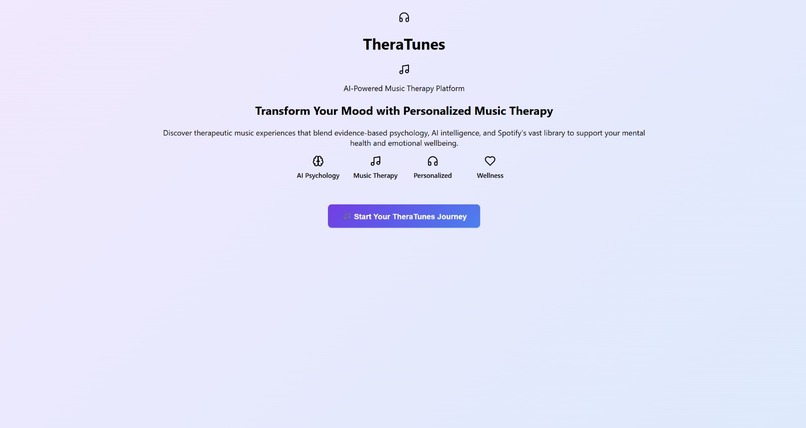
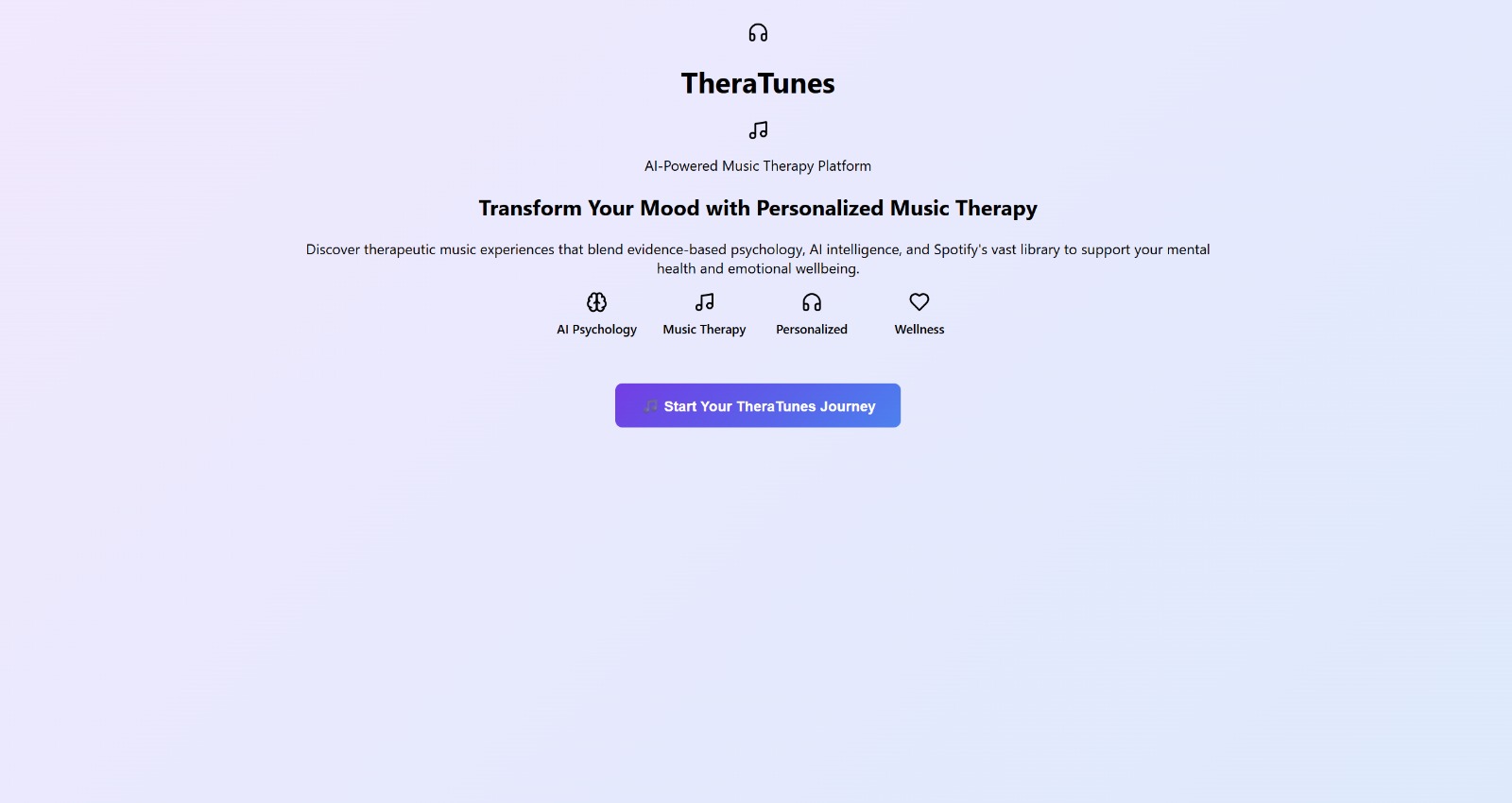
Home Screen
Inspiration
The inspiration for TheraTunes came from a deeply personal place. During my high school years, I witnessed friends struggling with anxiety and depression, often turning to music as their primary coping mechanism. I noticed how certain songs could instantly shift someone's mood, while others might deepen their emotional state. This got me thinking, what if we could harness the therapeutic power of music in a more intentional, scientifically-backed way? Research shows that music therapy can reduce cortisol levels by up to 38% and significantly improve symptoms of depression and anxiety. Yet despite having access to millions of songs through platforms like Spotify, most people struggle to curate playlists that truly support their mental wellness journey. I wanted to bridge this gap using AI to democratize access to personalized music therapy.
What it does
TheraTunes is an AI-powered music therapy app that creates personalized therapeutic playlists based on users' emotional states and mental wellness goals. Users complete a brief mood assessment describing how they're feeling or what they want to work on, whether it's anxiety, motivation, grief, or focus. Our AI then analyzes this input and applies music therapy principles to generate a scientifically-informed playlist designed to guide their emotional journey. The app provides explanations for why each song was chosen, showing users the therapeutic reasoning behind track selections. It considers factors like tempo progression, moving from slower calming tracks to gradually more uplifting ones, lyrical themes that avoid triggering content while including empowering messages, and musical elements like key signatures and energy levels that correlate with desired emotional outcomes. Users can save successful playlists, rate their effectiveness, and request variations for continuous personalization.
How I built it
I started by mapping out the complete system architecture, identifying key integration points with Spotify's Web API and potential psychology/therapy APIs. Even though I'd be using mock functions, I wanted to ensure the underlying structure could seamlessly transition to real API calls. For the frontend development, I built the interface using React with a focus on accessibility and calming design principles. I implemented a comprehensive mood assessment system with multiple input methods, created smooth therapeutic UI transitions that mirror the emotional journey concept, and designed playlist visualization components that show the therapeutic reasoning behind song selections. Instead of actual machine learning models, I created sophisticated mock functions that simulate the therapeutic playlist generation process. These functions analyze user mood input, calculate emotional journey arcs from current state to desired state, filter songs based on therapeutic criteria like tempo and lyrical content, and rank tracks by their calculated therapeutic value for the specific user situation. The user experience flow includes mood assessment using validated psychological scales, AI processing simulation with visual feedback, curated playlist generation with therapeutic explanations, and user feedback collection for future improvements. I created comprehensive mock datasets representing how real Spotify and psychology APIs would structure data, ensuring realistic user interactions throughout the demo.
Challenges I ran into
The biggest technical challenge was creating a convincing demonstration of API functionality without actual API access. I solved this by building robust mock functions that simulate realistic response times, data structures, and even occasional "loading" states that mirror real world API behavior. Managing user mood data, playlist generation states, and therapeutic progression required careful React state architecture. I implemented a context based system to ensure smooth data flow across components. Without access to Spotify's audio analysis features, I had to research and manually encode musical characteristics like tempo, valence, and energy levels for my mock database to demonstrate how the AI would analyze songs. From a design perspective, creating interfaces for users in vulnerable emotional states required extensive research into trauma informed design principles. Every color choice, transition, and interaction had to consider potential triggers while maintaining functionality. I also needed to balance AI transparency with simplicity, ensuring users could understand why certain songs were chosen without overwhelming them with technical details. Ethically, I had to ensure the app wouldn't replace professional therapy while still providing meaningful support, requiring careful positioning and clear disclaimers about the app's role in mental wellness. Creating meaningful success metrics and feedback systems in a demo environment required creative thinking about how to simulate user interactions and improvement cycles.
Accomplishments that I am proud of
I'm most proud of creating a functional prototype that demonstrates the complete therapeutic journey, even using mock APIs. The app successfully simulates the entire user experience from mood assessment to personalized playlist generation with therapeutic explanations. The interdisciplinary approach combining technical development with psychology research, music therapy principles, and trauma informed design shows the depth of consideration behind the project. I successfully built a convincing demonstration of complex AI functionality using sophisticated mock implementations that prove the concept's viability. The user interface design prioritizes mental wellness and accessibility, creating a calming, supportive environment for users in vulnerable emotional states. Most importantly, the project addresses a real need in mental health support, potentially making therapeutic music more accessible to people who might not otherwise have access to professional music therapy.
What I learned
Building TheraTunes was an incredible learning journey that pushed me across multiple disciplines. I gained advanced React development skills with complex state management for mood tracking, learned UI/UX design principles for mental health applications focusing on calming interfaces, and developed understanding of API architecture planning and mock implementation strategies. I dove deep into music therapy principles including the psychological impact of tempo, key signatures, and lyrical content, studied mental health frameworks and evidence-based therapeutic approaches, and learned about audio analysis techniques and how musical elements correlate with emotional responses. The mathematical foundation behind music therapy particularly fascinated me. For instance, research indicates that songs with tempos between 60 and 80 BPM can synchronize with resting heart rate, promoting relaxation through a process called entrainment.
$$ Therapeutic Effectiveness=f(Tempo Match,Key Consonance,Lyrical Sentiment) $$
I also learned about user-centered design for vulnerable populations, balancing algorithmic recommendations with user agency, and creating meaningful user feedback loops for continuous improvement. The project taught me that sometimes the most meaningful innovations happen at the intersection of technology and human empathy, requiring both technical skill and deep understanding of human needs.
What's next for TheraTunes
Moving forward, the primary focus would be integrating real APIs, starting with Spotify's Web API for music data and streaming capabilities, and psychology research databases for evidence-based therapy techniques. I'd implement actual machine learning models for natural language processing to better understand user emotional states and recommendation systems that improve based on user feedback. Feature expansion would include guided breathing exercises synced to music rhythms, therapist collaboration tools for professional integration, biometric integration with smartwatches for real-time mood tracking and automatic playlist triggering, and social features allowing users to share anonymized success stories and playlist recommendations. From a business perspective, I'd explore partnerships with mental health organizations, educational institutions, and healthcare providers to validate the therapeutic effectiveness through clinical studies. The goal is to launch a product that genuinely improves people's daily emotional wellbeing while maintaining the highest standards for mental health support and user safety. Long term, TheraTunes could serve as a bridge between traditional therapy and daily self-care, making evidence-based music therapy accessible to millions of users worldwide who struggle with mental wellness but lack access to professional therapeutic resources.
Built With
- css
- html
- javascript
- openai
- spotify
- vscode

Log in or sign up for Devpost to join the conversation.