-
-
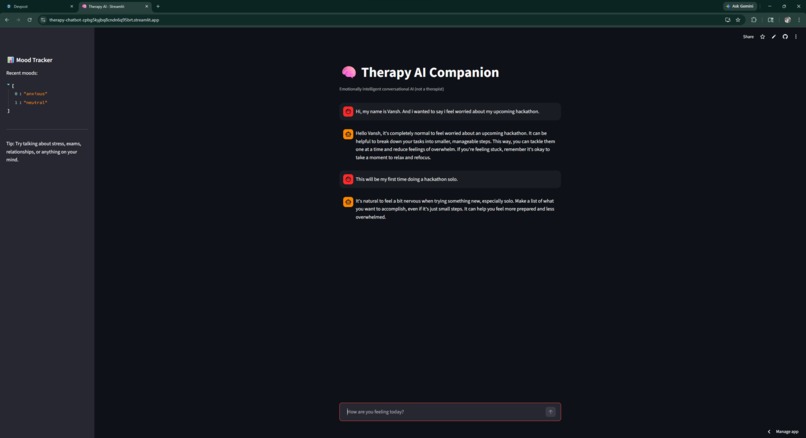
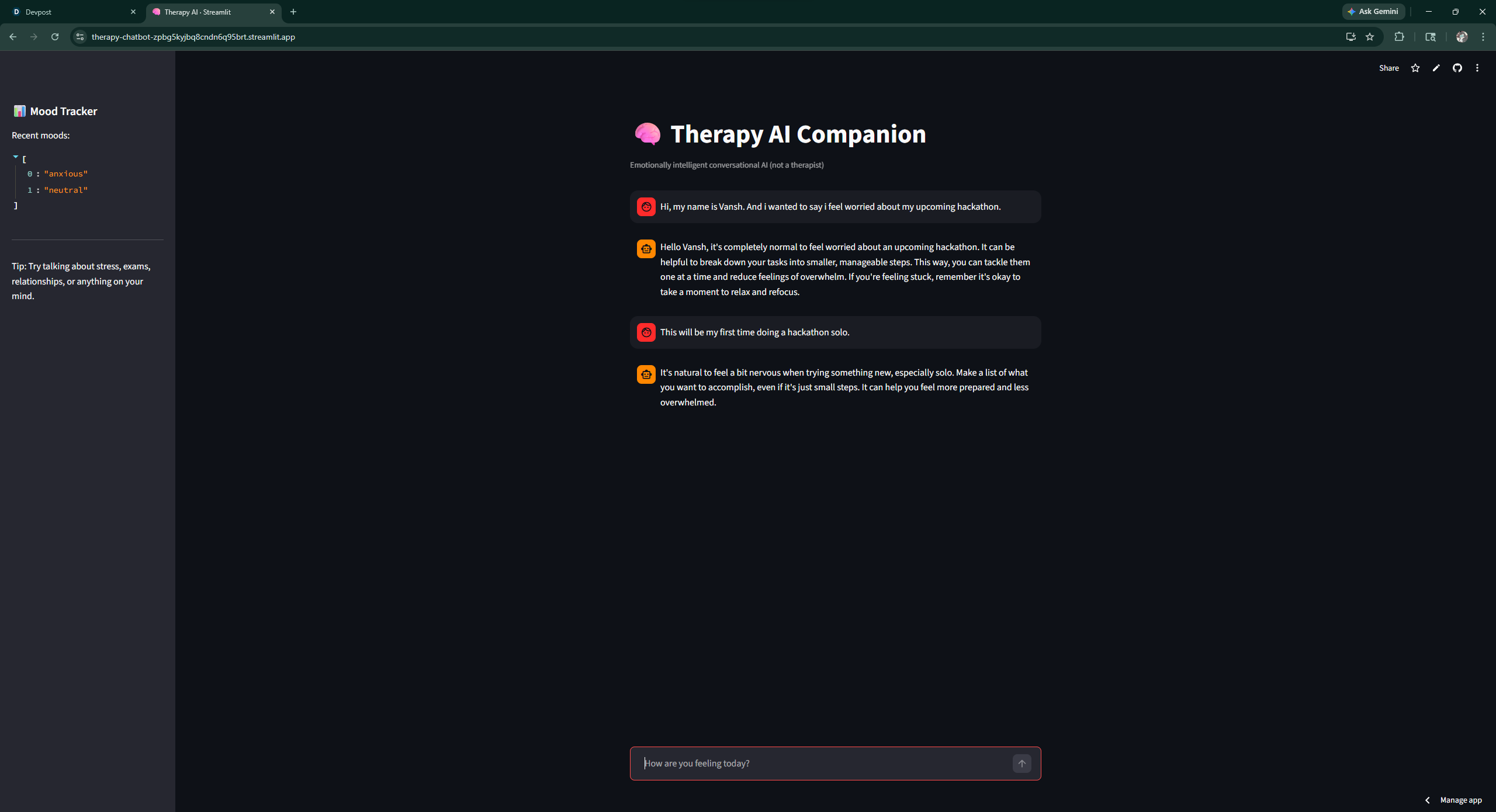
AI chatbot.
-
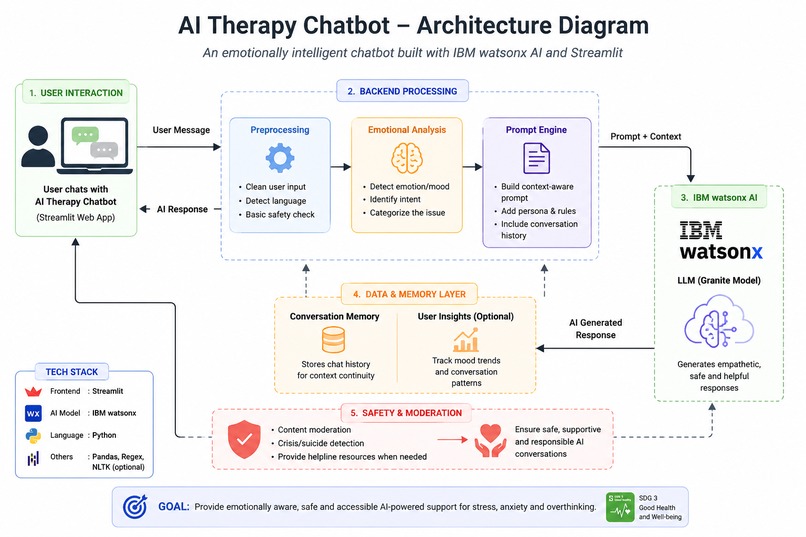
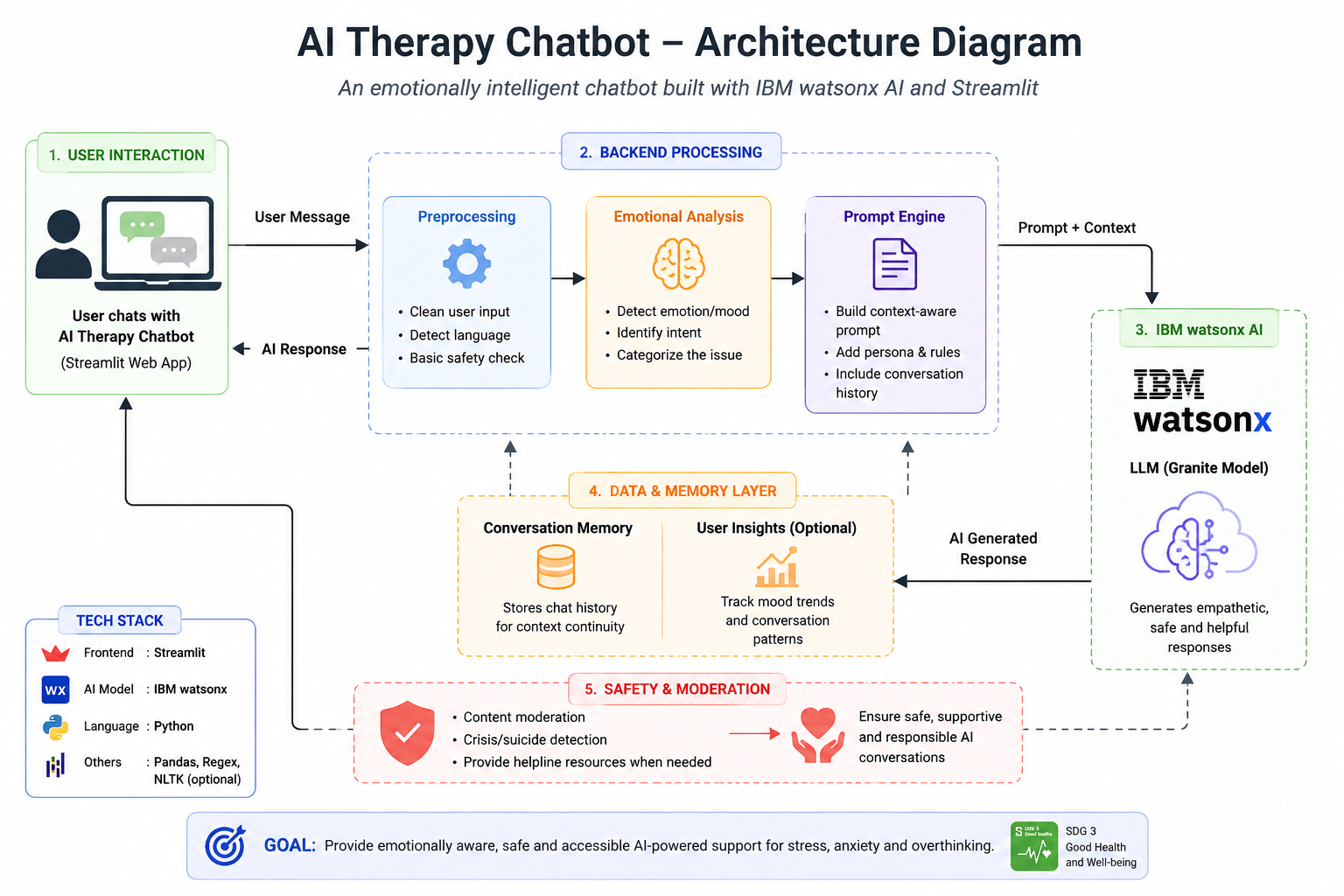
Working of AI chatbot.
Inspiration
This project was inspired by my own experience attending therapy sessions at university. I realized how helpful it can be to have a space to talk things through when life feels overwhelming. At the same time, I noticed that many people don’t access therapy due to cost, stigma, anxiety, or simply feeling too uncomfortable to open up in person. That gap motivated me to build something more accessible. I wanted to create an AI companion that feels calm, safe, and supportive, something that encourages emotional expression without judgment, especially for people who might be struggling silently.
What it does
This Therapy Chatbot is an emotionally intelligent AI companion designed to support users during moments of stress, anxiety, overthinking, or emotional overwhelm. It doesn’t act like a strict advisor or productivity tool. Instead, it focuses on: Listening and validating emotions Responding in a calm, human-like tone Helping users feel grounded in difficult moments Encouraging reflection without pressure The goal is simple: make conversations feel safe and emotionally supportive.
How we built it
I built this project using Streamlit for the web interface and IBM Watsonx AI (Mistral model) for generating responses. The chatbot includes: A custom emotional reasoning prompt system Mood detection logic (stress, sadness, anxiety, etc.) Response safety filtering Memory of conversation using session state Typing animation for a more human-like feel A structured “emotional intelligence engine” prompt design I also iterated heavily on prompt engineering to reduce repetitive empathy loops and improve emotional stability in responses.
Challenges we ran into
One of the biggest challenges was controlling the AI’s emotional behavior. At the beginning, the chatbot either: Over-explained and gave too much advice, or Got stuck in empathy loops without actually helping the user move forward Balancing emotional validation with meaningful support was difficult. I solved this through multiple prompt system upgrades (v1 - v5), adding rules for grounding, intent detection, and response structure control. Another challenge was ensuring the chatbot felt natural and not robotic, while still staying safe and consistent.
Accomplishments that we're proud of
One of the biggest accomplishments I’m proud of is successfully designing and building an emotionally intelligent AI system from scratch. I didn’t just build a chatbot, I focused on shaping how it responds emotionally, which required multiple iterations of prompt engineering, testing, and refinement. I developed a custom “emotional reasoning engine” that helps the AI recognize user emotions, avoid harmful response loops, and provide grounded, supportive conversations instead of generic advice. I’m also proud of solving challenges like: Preventing empathy loops where the AI would repeat itself Making responses feel natural instead of robotic Balancing emotional support with helpful direction Building a full working web app using Streamlit and IBM Watsonx AI Most importantly, I’m proud that I built something aimed at helping people who may feel alone, anxious, or unable to access traditional therapy support.
What we learned
Through this project, I learned: How important prompt design is in shaping AI behavior How emotionally sensitive AI systems need structured boundaries How small prompt changes can drastically affect user experience How to build full-stack AI apps using Streamlit and cloud APIs Most importantly, I learned how AI can be designed not just for productivity, but for emotional support and accessibility.
What's next for Therapy Chatbot
I plan to continue improving this project over the next few months by: Involving feedback from real users Working with a professional therapist for guidance Improving emotional reasoning accuracy Adding personalization and long-term memory Turning it into a more polished, accessible web app Making sure the chatbot remains a safe and private place for my users
Built With
- ibm
- ibm-watson
- mistralai
- promptengineering
- python
- regex
- sessionstatememory
- streamlit

Log in or sign up for Devpost to join the conversation.