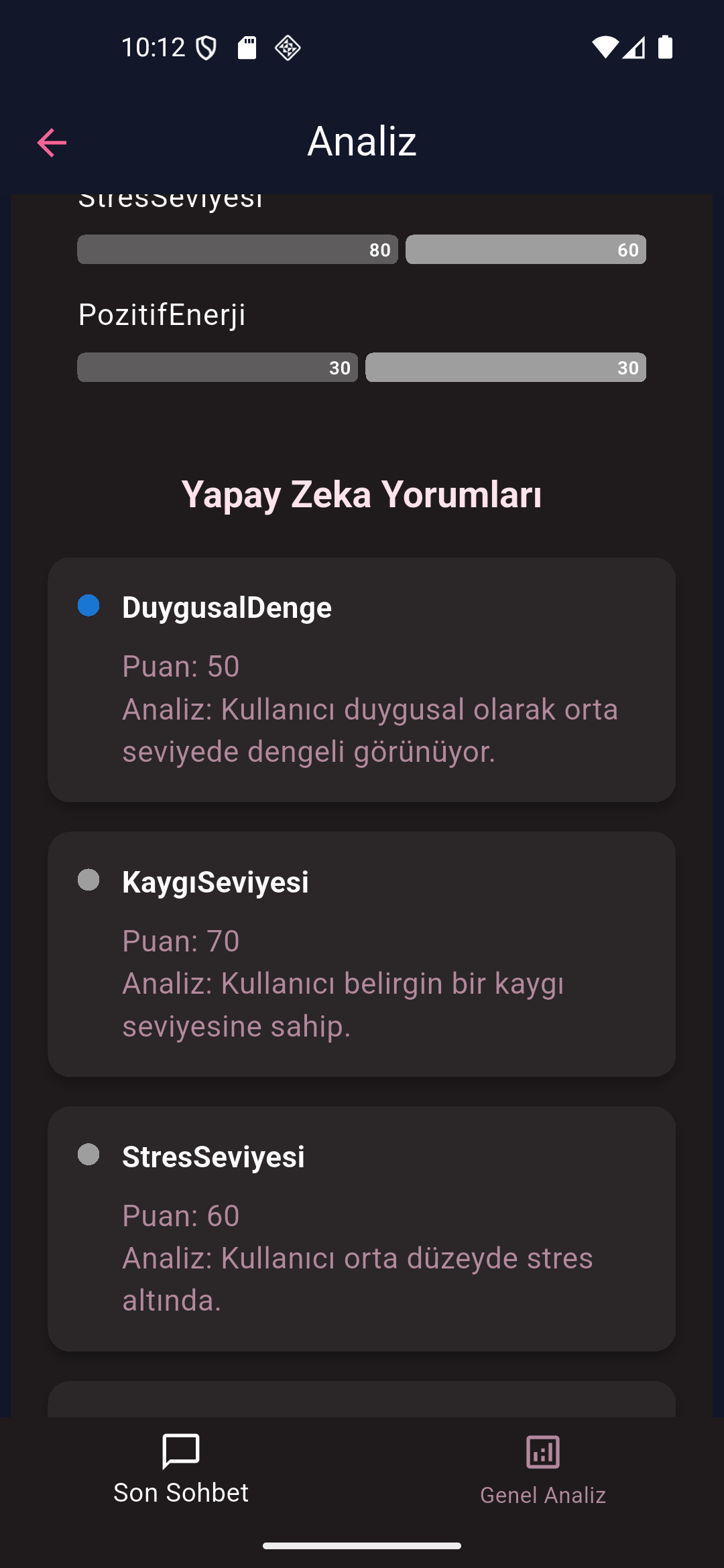
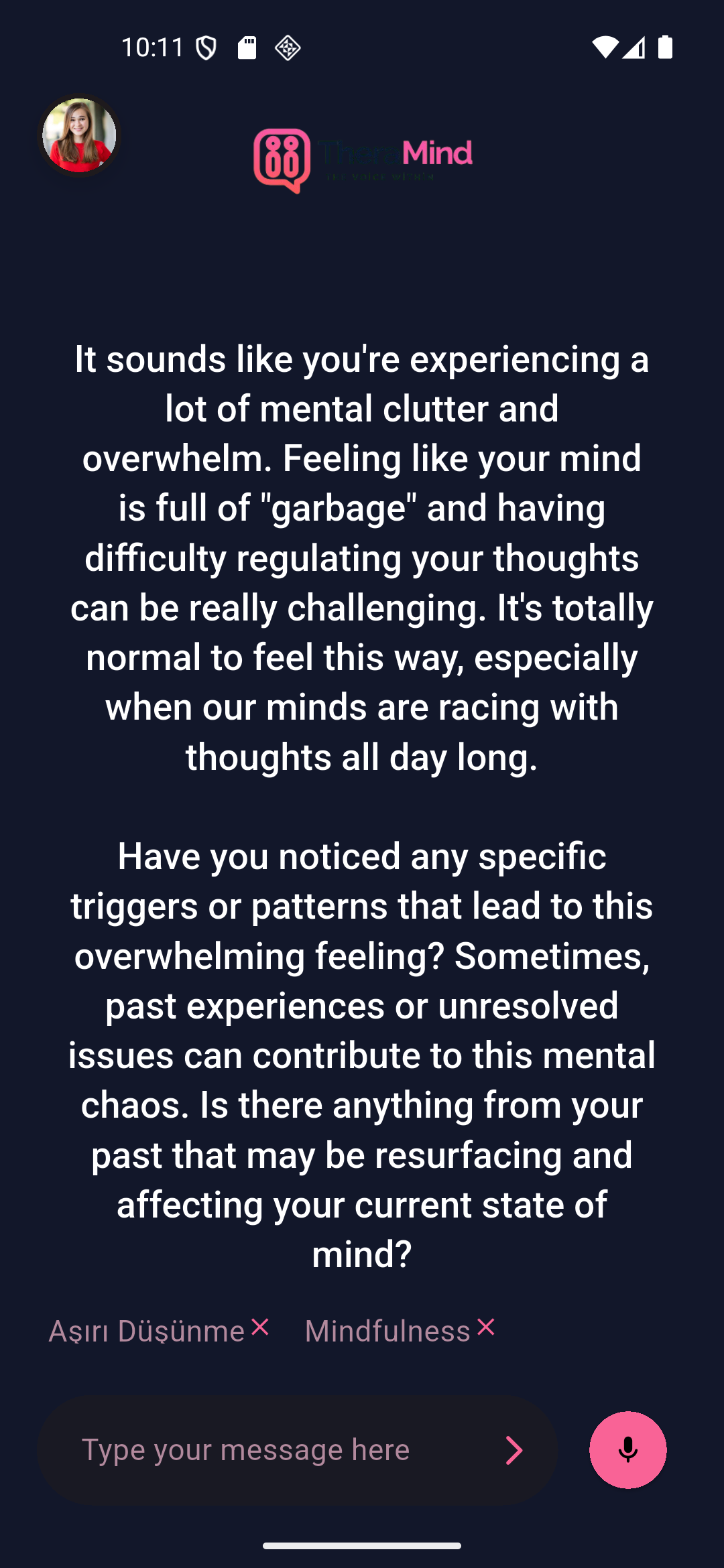
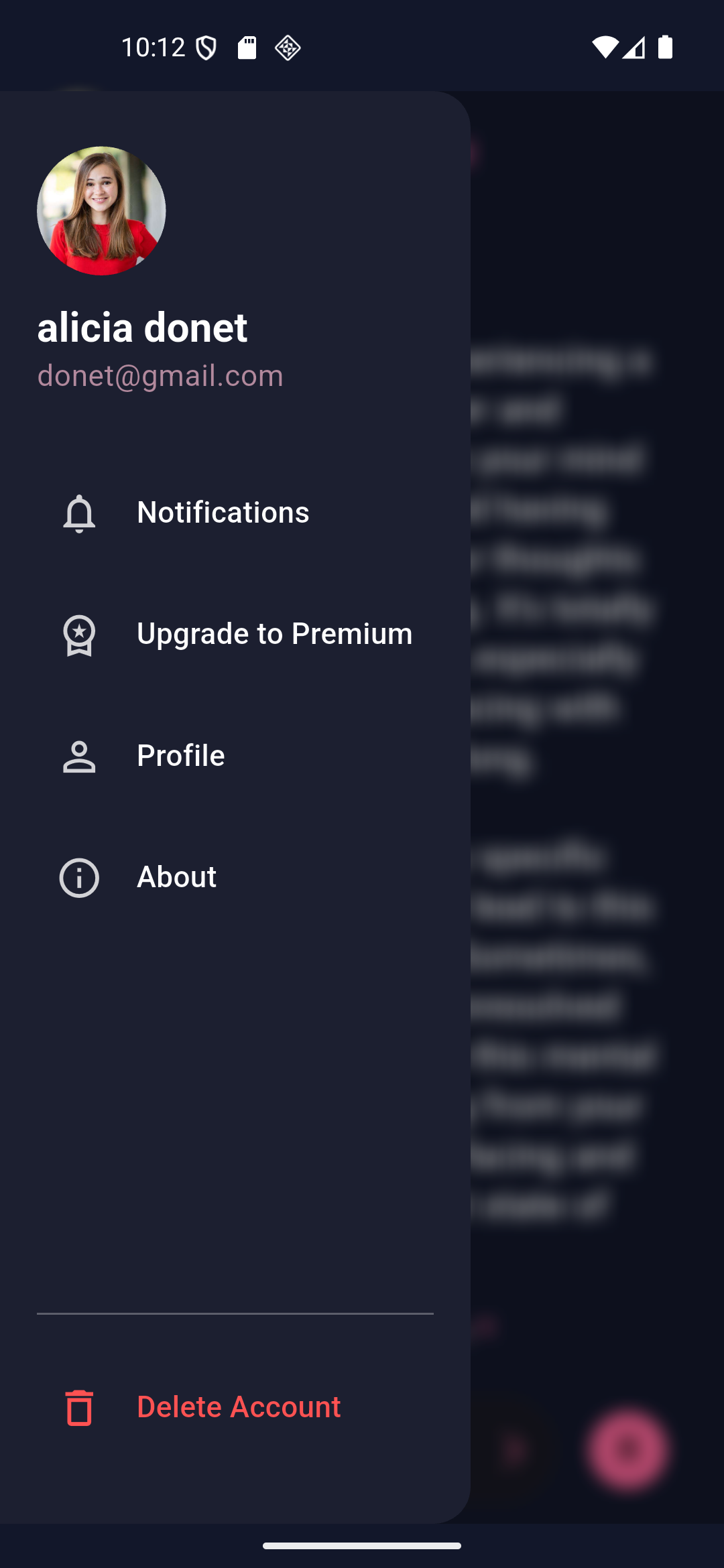
The Spark: What motivated you to build this project? My greatest motivation in creating TheraMind was the desire to build an AI-powered companion that would make people feel less alone when dealing with mental health challenges. I wanted the application to feel like a guiding friend supporting them through their struggles.
The Idea: What problem does your project solve? TheraMind is designed to help users cope with their mental and emotional difficulties. Users can converse with the AI through the application, sharing their problems and receiving support and suggestions on how to find solutions. It listens to them, identifies issues from the conversation, and opens up a space for them to find ways to solve their problems.
The Tech Stack: What technologies did you use to build it? I developed TheraMind using the Flutter framework and the Dart language. I enriched the interaction within the application by utilizing the Gemini and OpenAI artificial intelligence APIs. I also used various other services to ensure the application's effectiveness and efficiency.
The Challenge: What was the hardest part of the project? The most significant challenge during the development process was the AI integration. However, an equally difficult task was designing a user-friendly interface that allowed users to converse with the AI as if they were speaking to a real person—a close friend or therapist. This required finding the right balance between AI capability and empathetic UX design.
The Triumph: What is your proudest accomplishment in this project? My proudest accomplishment in this project is the seamless functioning of the AI integrations and the fact that the UI design exactly matched my vision and expectations. Achieving a smooth, natural conversational flow was a major win.
What We Learned The core learning from this project was the critical balance between technological sophistication and human-centered design. We learned that for an emotional support application, the AI model's accuracy is only half the battle; the other half is creating a non-judgemental, intuitive interface that fosters trust. Specifically, we discovered that designing conversation flows that mimic natural human dialogue—including listening, pausing, and gentle redirection—is key to user engagement and therapeutic utility.
The Future: What is the future vision for this project? My vision is to transform TheraMind into a platform where the boundaries between human and AI interaction in emotional sharing and problem-solving are lifted. I aim for an application that fosters deeper, more emotional connections, where people can openly share their issues and receive actionable solutions. Though this vision is currently abstract, I believe it has the potential for great success in the future.

Log in or sign up for Devpost to join the conversation.