-
-
Logo
-
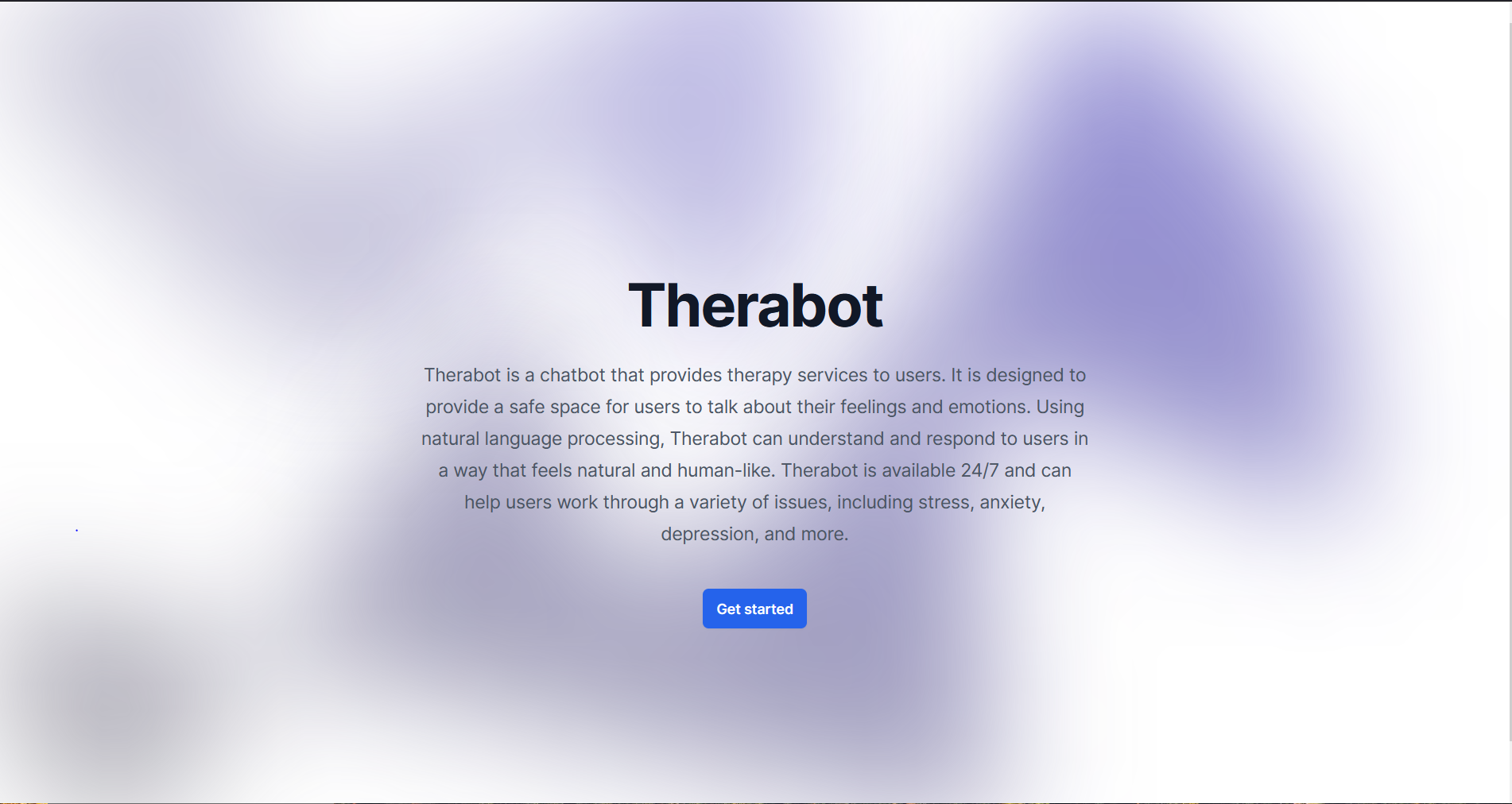
Landing Page
-
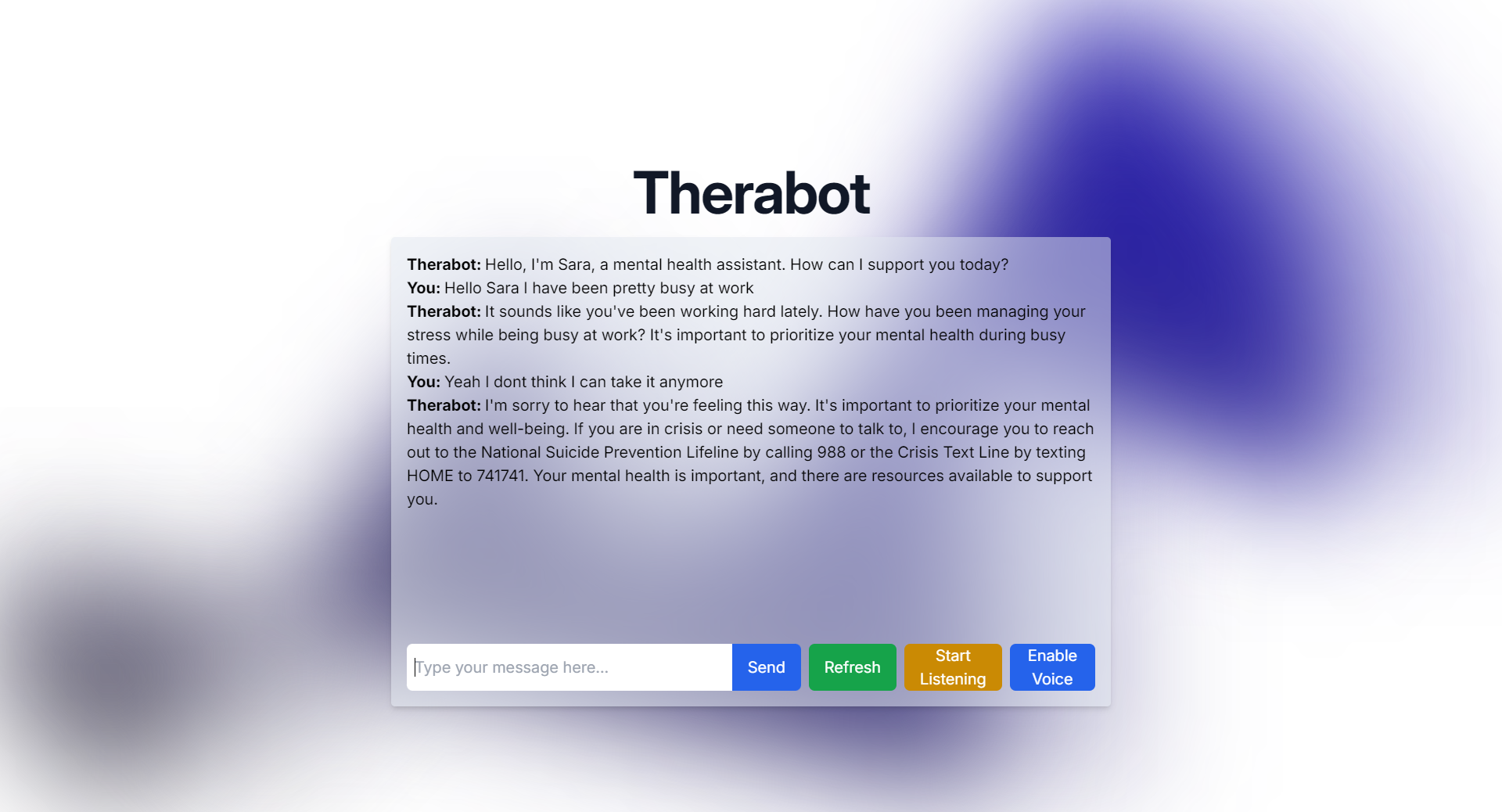
ChatBox
Inspiration
The inspiration for Therabot came from the increasing need for accessible mental health support. In today's fast-paced world, many individuals struggle with stress, anxiety, and other mental health issues but may not have immediate access to professional help. I wanted to create a solution that offers round-the-clock support, providing a safe space for individuals to express their feelings and receive guidance.
What I Learned
Building Therabot was a journey filled with learning experiences:
- Natural Language Processing (NLP): I gained a deeper understanding of how NLP can be leveraged to create empathetic and supportive chatbot interactions.
- API Integration: Integrating the OpenAI API taught me the intricacies of managing and processing API responses to create meaningful conversations.
- Frontend and Backend Coordination: Ensuring smooth communication between the frontend and backend components of the application was crucial for delivering a seamless user experience.
- Mental Health Awareness: I learned about the importance of sensitive communication and the critical resources available for mental health support, ensuring the bot could provide immediate help in crisis situations.
How I Built It
Therabot was built using a combination of modern web development technologies and AI:
- Backend: I used Flask, a lightweight Python web framework, to handle API requests and integrate with the OpenAI GPT-3.5-turbo model for generating responses.
- Frontend: The frontend was built with React, utilizing Tailwind CSS for styling to create a responsive and user-friendly interface.
- Version Control: Git and GitHub were used for version control, allowing for efficient collaboration and code management.
- Deployment: The application was deployed on Heroku, ensuring it is accessible online and can handle user interactions in real-time.
Challenges I Faced
Building Therabot was not without its challenges:
- Handling Sensitive Topics: Ensuring the bot could respond appropriately to sensitive topics like suicide and self-harm required careful consideration and extensive testing.
- User Experience: Creating an intuitive and supportive user experience was paramount, and I faced challenges in designing interactions that felt natural and empathetic.
Additional Features and Enhancements
In addition to the core functionalities, I implemented several other features to enhance the user experience and the bot's capabilities:
- Customizable Responses: Implemented mechanisms to customize and fine-tune the bot's responses based on user feedback and interaction patterns.
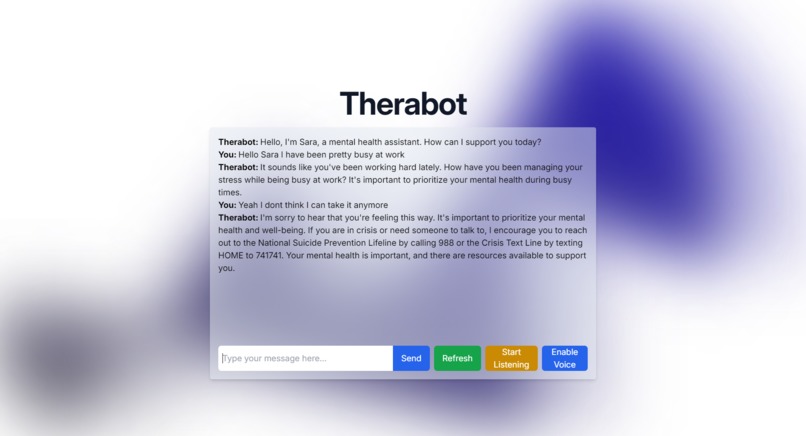
- Resource Links: Integrated a feature to provide users with links to valuable mental health resources and emergency contacts when critical keywords are detected.
- Persistent Conversations: Added functionality to maintain conversation history, allowing users to continue their interactions seamlessly across sessions.
- UI/UX Improvements: Enhanced the user interface with animations and transitions to make the interaction more engaging and visually appealing.
- Voice Interaction: Introduced voice interaction capabilities to provide a more natural and convenient way for users to communicate with Therabot.
Conclusion
Despite the challenges, building Therabot was an incredibly rewarding experience. I hope that this project can provide valuable support to those in need and contribute positively to the mental health landscape. With continued development and enhancements, Therabot has the potential to become a robust tool for mental health support, making a meaningful impact on people's lives.
Deployment
- Heroku: Deployed the application on Heroku to make it accessible online.
- Buildpacks: Configured buildpacks for both Python (Flask backend) and Node.js (React frontend).
- Procfile: Set up a
Procfileto run the application usinggunicornfor the Flask backend.
By incorporating these elements, Therabot is not just a chatbot but a comprehensive tool designed to offer meaningful mental health support.
Built With
- flask
- heroku
- javascript
- openai
- python
- react
- tailwind.css


Log in or sign up for Devpost to join the conversation.