-
logo
-
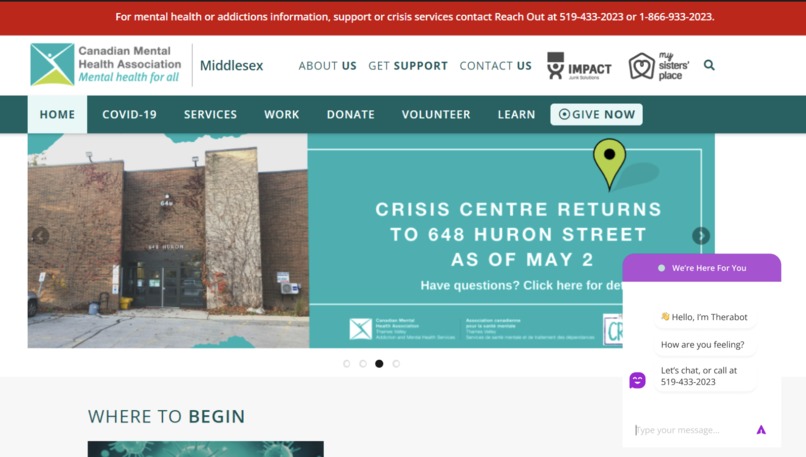
TheraBot partnering with health institutions to be included in their websites. Users will never find a dead end when searching for resources
-
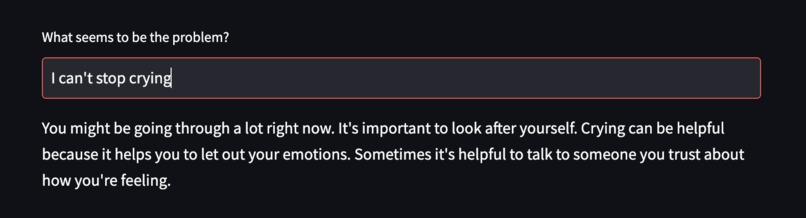
Using TheraBot
-
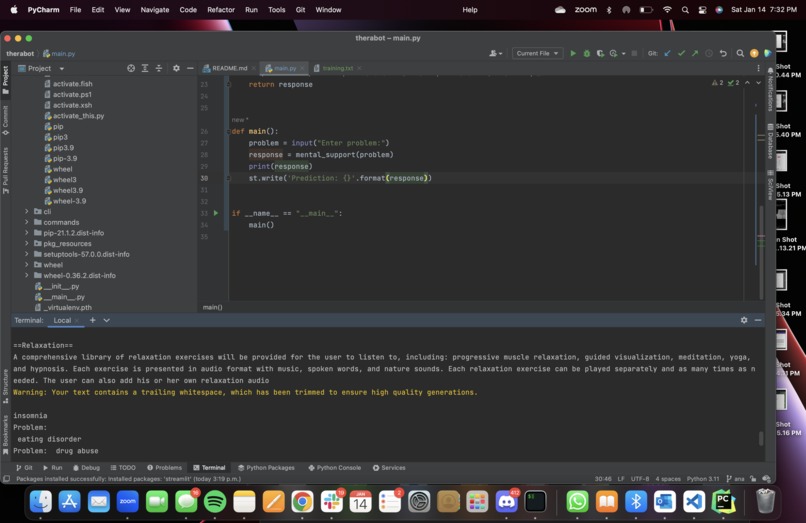
Early Development Stages
In any given year, 1 in 5 Canadians experiences a mental illness. Further, 39% of Ontario high-school students indicate moderate to severe psychological distress, like symptoms of anxiety and depression. A further 17% indicate an extreme level of psychological distress. Additionally, suicide hotlines may need 36 people handling calls to achieve a service level of 90 percent of calls answered in 20 seconds, given your workload, so someone might not always be available to answer those life-saving calls. What is the likelihood that in one's specific moment of psychological distress, for example, during a panic attack or suicidal thoughts, one will have access to a healthcare professional to walk one through the emergency? Even if one did find the courage and energy to reach out in those moments, how probable is it that they will find an available emergency therapist at the exact moment needed? Additionally, waiting for a resource, for example, waiting to speak to someone at a suicide prevention hotline, is precious time wasted. Every second that goes by is another second that one could take their life. As soon as someone questions taking their life, the situation becomes life-threatening and should be treated as so. If there is no bystander there to recognize the situation, as there often isn't, it is up to the person in distress to find their resources. But what if nothing is available? If someone, or something, can be there to coach them, it can save a life.
This is why we were inspired to create TheraBot, a last resort to emergency therapy. TheraBot is not meant to replace a licensed human therapist but instead to provide step-by-step solutions to walking through emergency and life-threatening mental health situations at the exact time needed when a therapist is not available. TheraBot can save lives as using Artificial Intelligence through the Cohere API, it is being trained to walk a user through exercises in their times of distress to bring them to a place where they are ready to ask a licensed therapist for help or to keep them alive long enough for one to be available.
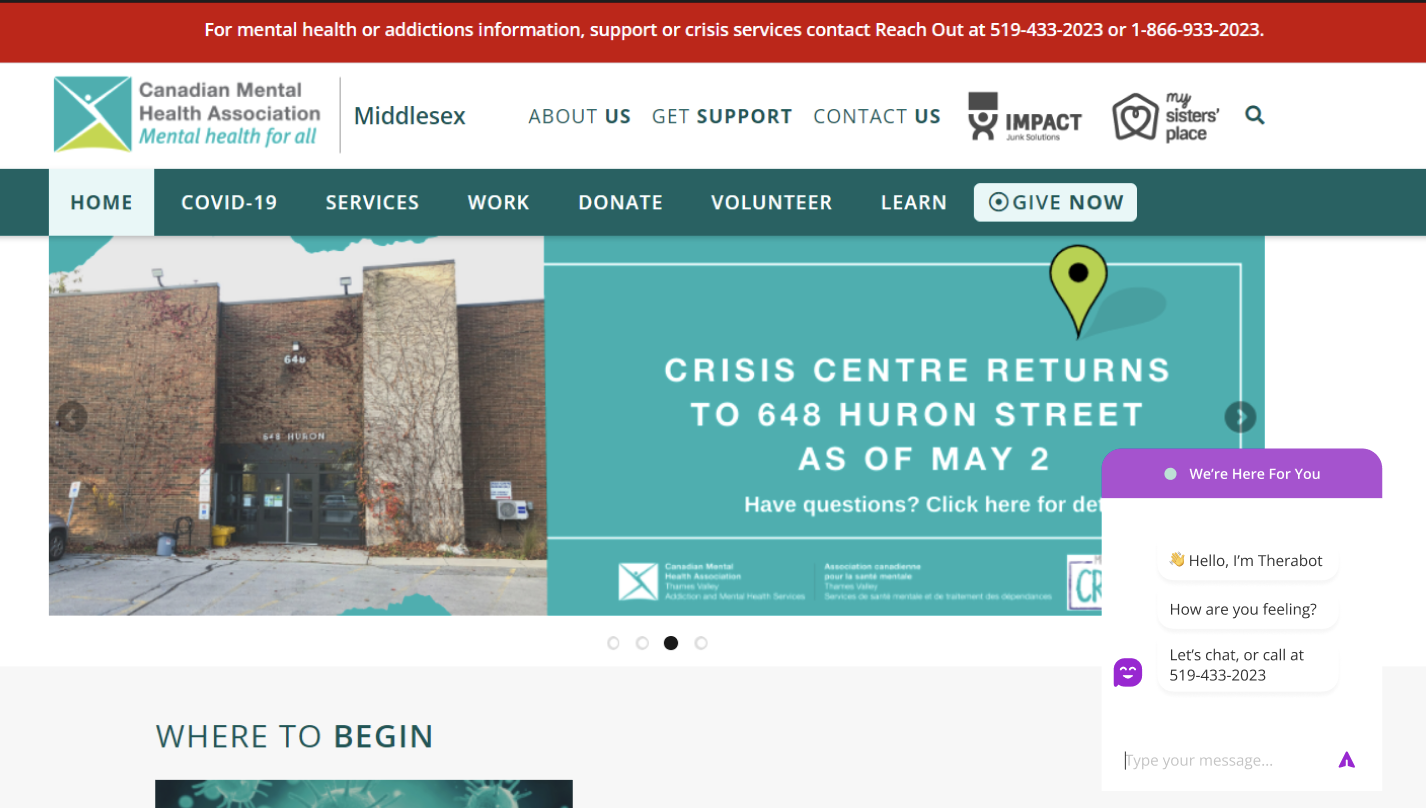
As mentioned, TheraBot is not meant to replace licensed therapy; Instead, it will be used to handle emergency mental health situations when no professional is available. It is intended to be an aid and addition to suicide hotlines, which can often be very overrun, and to provide coping strategies until a human resource becomes available. For instance, TheraBot can be used by a person in distress when waiting to be connected with a human during a call on a suicide hotline. We envision partnering with mental health associations as a pop-up on their "Get Support" website pages, providing a way to fill the time between going to in-person clinics or calling the hotline. So far, TheraBot is trained with some basic responses with our team's limited mental health knowledge, as none of us are mental health professionals. This is why we plan to partner with licensed therapists to help with professional response generation, so TheraBot will be able to provide step by step approaches and strategies to provide to users during a crisis.
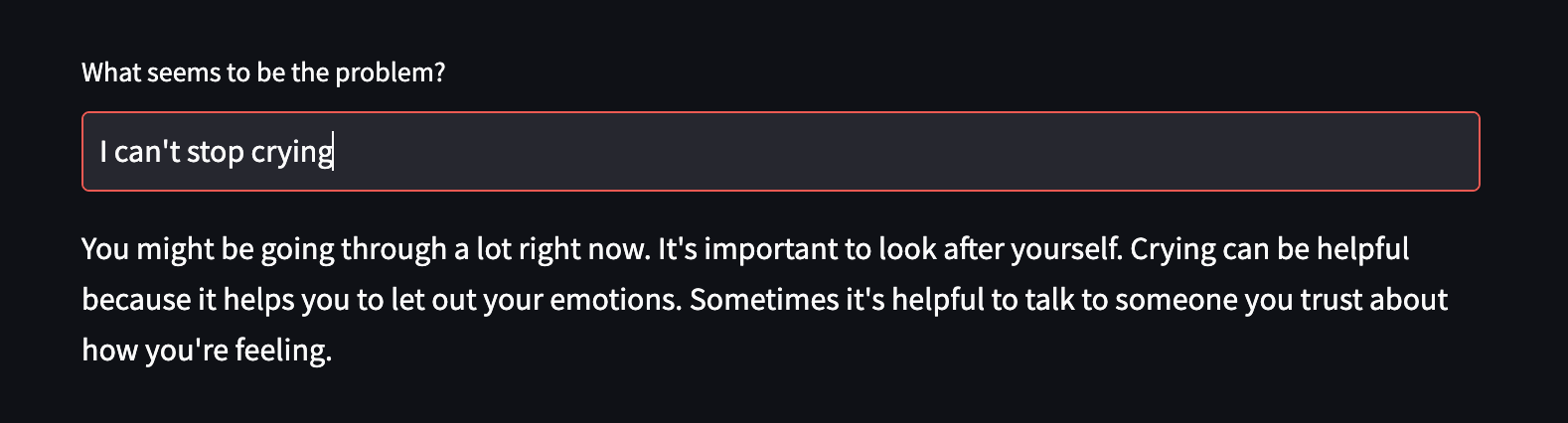
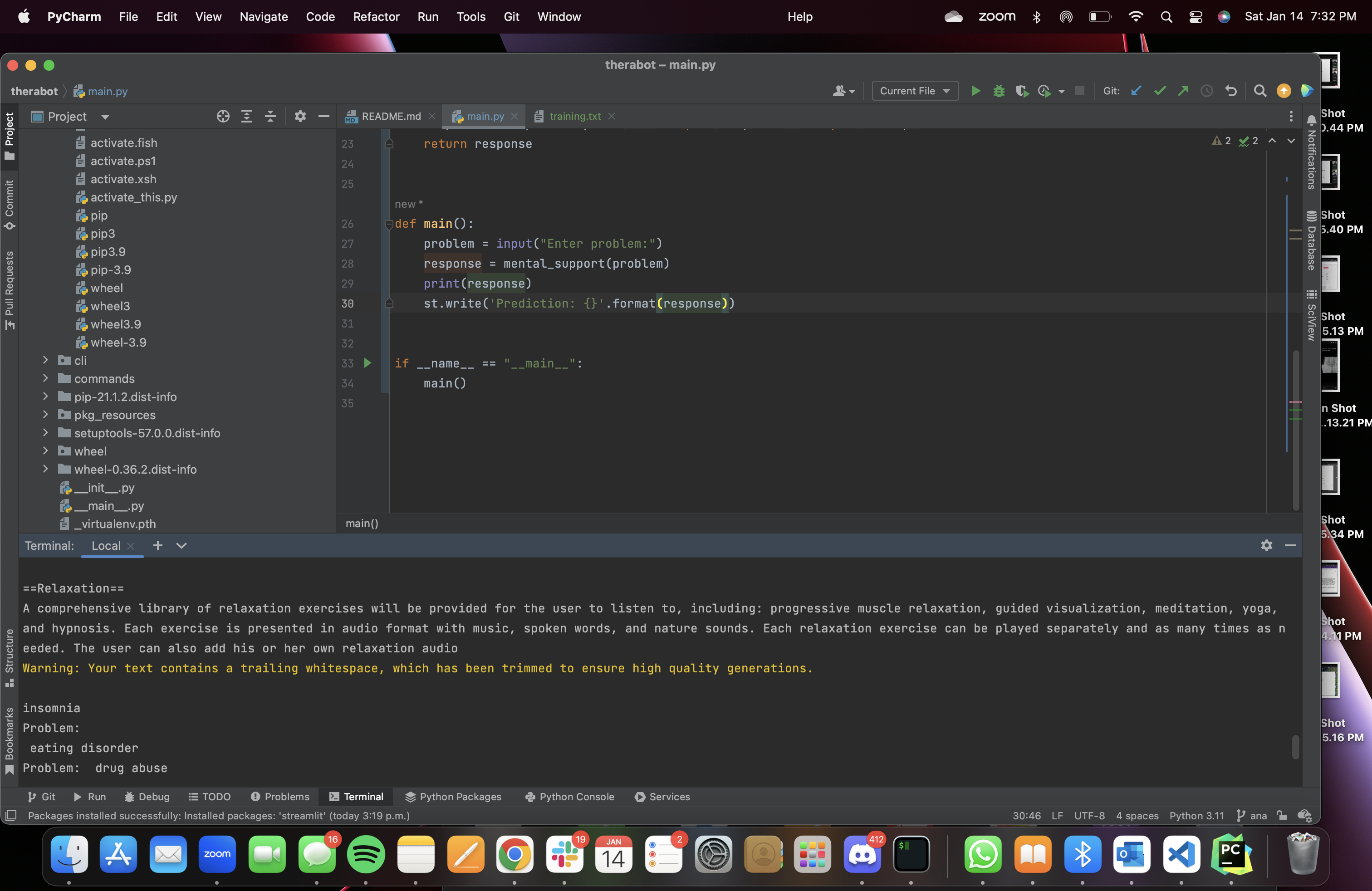
We used the Cohere API to classify the user's input with different keywords and trained the AI to respond in specific ways. TheraBot is built with a Python backend and a Streamlit frontend.
Challenges we ran into
Accomplishments that we're proud of
Our team is very proud of everything we have learned. We exceeded our expectations in what we would accomplish in this hackathon; for some of us, this was one of our first hackathons! We are extremely proud of the amount we learned about AI and the fact that we were able to find a way to implement it to solve such a prevalent issue.
What we learned
Statistics from https://www.camh.ca/en/driving-change/the-crisis-is-real/mental-health-statistics and https://988lifeline.org/wp-content/uploads/2019/02/CallCenterMetrics_final.pdf

Log in or sign up for Devpost to join the conversation.